
Thinking in New Boxes You need a systematic
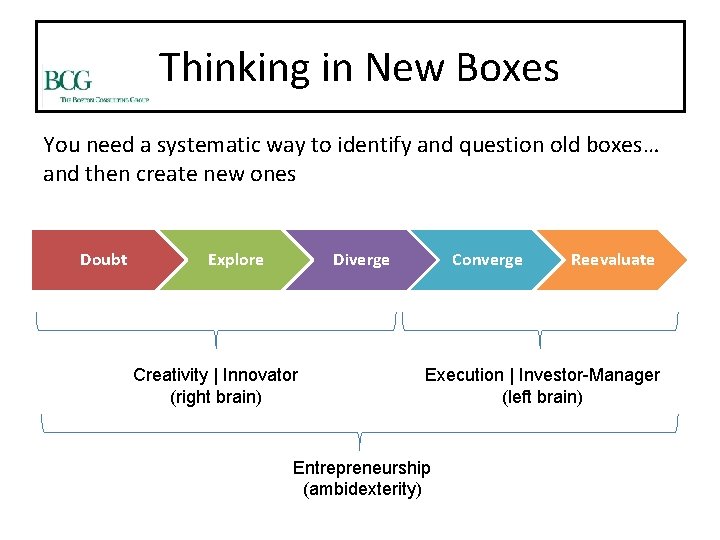
Thinking in New Boxes You need a systematic way to identify and question old boxes… and then create new ones Doubt Explore Diverge Creativity | Innovator (right brain) Converge Reevaluate Execution | Investor-Manager (left brain) Entrepreneurship (ambidexterity)
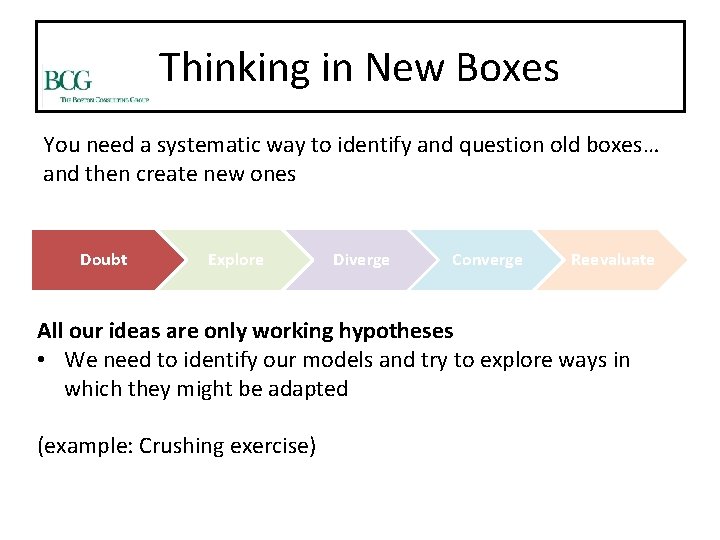
Thinking in New Boxes You need a systematic way to identify and question old boxes… and then create new ones Doubt Explore Diverge Converge Reevaluate All our ideas are only working hypotheses • We need to identify our models and try to explore ways in which they might be adapted (example: Crushing exercise)

Thinking in New Boxes You need a systematic way to identify and question old boxes… and then create new ones Doubt Explore Diverge Converge Reevaluate All our ideas are from the world • Research can help us understand the world in front of us, using tools including trends (CH 4), customer insight (IA#2), competitive analysis, etc.

Thinking in New Boxes You need a systematic way to identify and question old boxes… and then create new ones Doubt Explore Diverge Converge Reevaluate No idea is born good—and the best way to have a good idea is to have a lot of ideas • Brainstorming and other exercises (CH 4) • The key is to shift perspective, reframe the problem, and try new combinations (example: Collective notebook of 50 ideas)
Recap • • CH 1: CH 4: CH 2: CH 3: foundational definitions entrepreneurial thinking tools to floss minds encourage creativity everywhere implement ENT as a manager ride corp. elevator as an employee you’re you best critic so make it work what investors look at 3 -5
Chapter 3 Entrepreneurial Strategy: Generating and Exploiting New Entries Mc. Graw-Hill/Irwin Copyright © 2013 by The Mc. Graw-Hill Companies, Inc. All rights reserved.
Justin Parer • His entrepreneurial story in one sentence… (for example) • Learn from failure • Why a career jungle gym is better than a corporate ladder • Be your own best critic!
ENTREPRENEURIAL ACTION IS… (CH 1) Action through the creation of new products/processes and or the entry into new markets, which may occur through a newly created organization or within an established organization
“New Entry” includes… (3 elements) • New product in an established or new market • Established product in a new market • A new organization (1 more element based on the definition of ENT action in CH 1 and the purpose of CH 2) • Or a new operation within an established organization
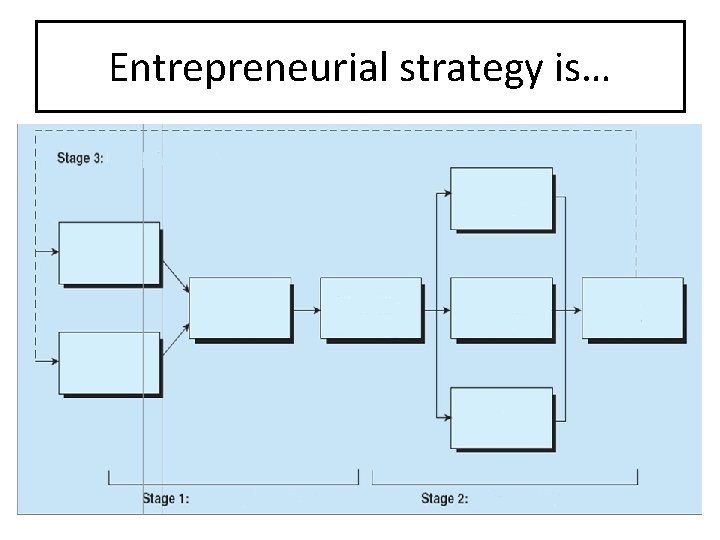
Entrepreneurial strategy is…
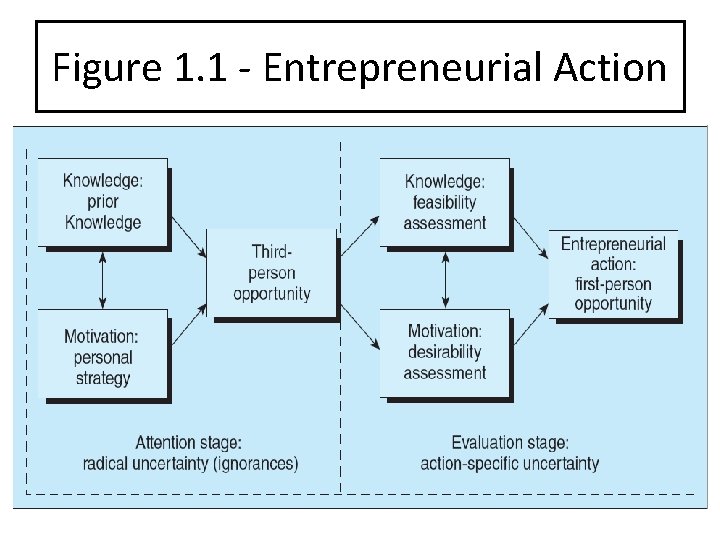
Figure 1. 1 - Entrepreneurial Action
HOW CAN WE DO IT? We need resources
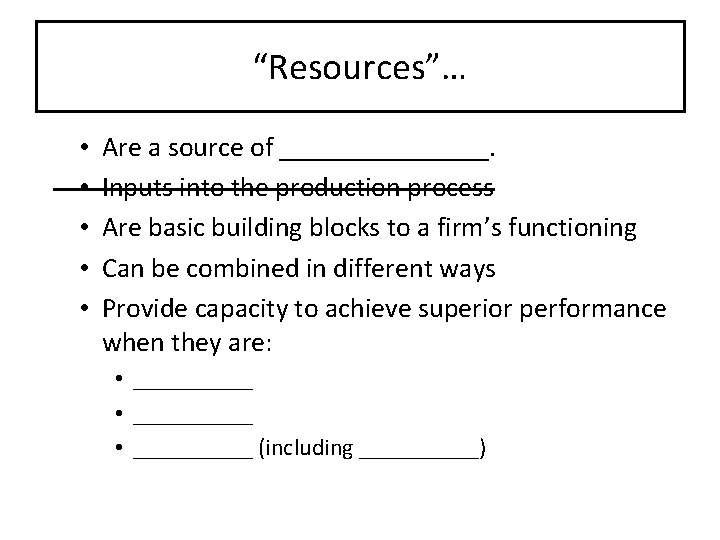
“Resources”… • • • Are a source of ________. Inputs into the production process Are basic building blocks to a firm’s functioning Can be combined in different ways Provide capacity to achieve superior performance when they are: • __________ • _____ (including _____)
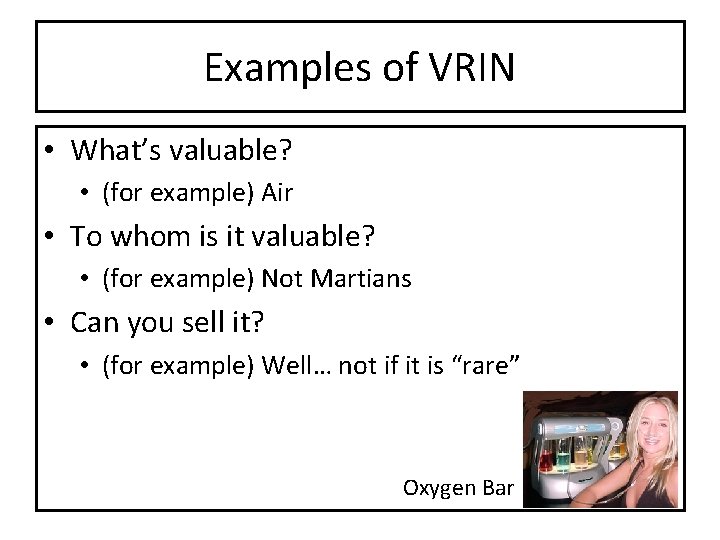
Examples of VRIN • What’s valuable? • (for example) Air • To whom is it valuable? • (for example) Not Martians • Can you sell it? • (for example) Well… not if it is “rare” Oxygen Bar
Examples of VRIN • What about inimitable? • What about nonsubstituable? • “Nothing lasts forever” – Maroon 5 Know your target customers Know yourself Know your competitors Know your suppliers
IS “LIGHT YEARS AHEAD” ALL GOOD? It depends
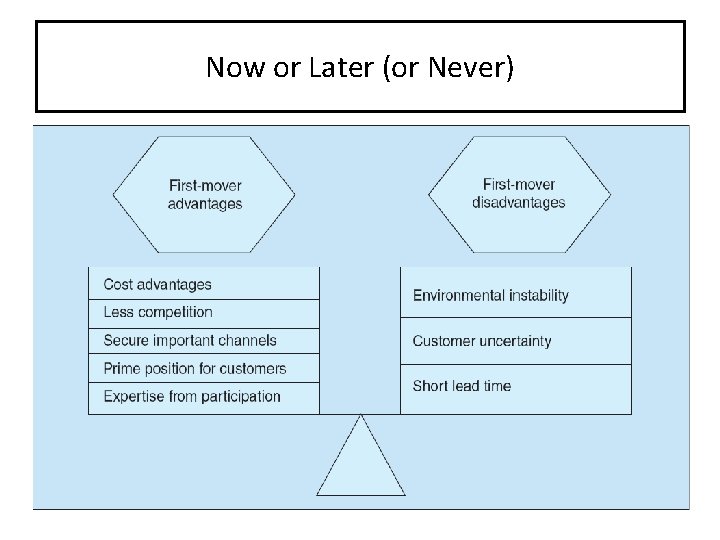
Now or Later (or Never)
First-mover (dis)advantages • Environmental instability • Demand uncertainty: • Potential size, growth, and the key dimensions along which a market will grow • Technological uncertainty: • The technology will perform • Alternate technologies will emerge and leapfrog over current technologies • Adaptation: • Persistence and determination can inhibit the ability to adapt
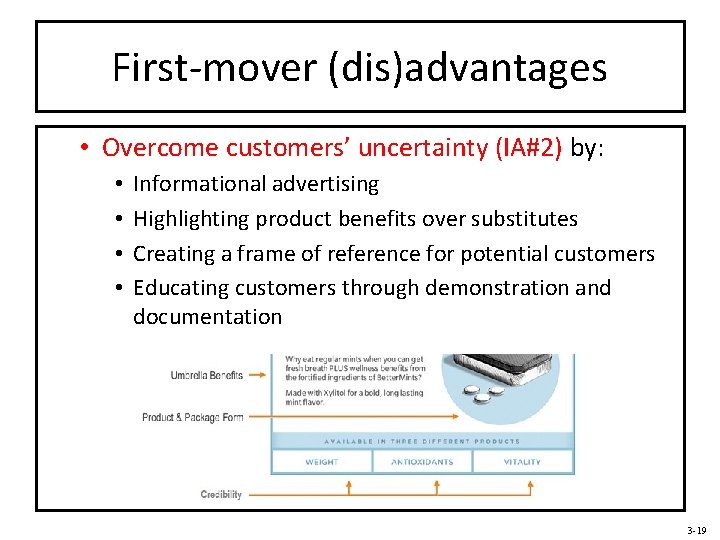
First-mover (dis)advantages • Overcome customers’ uncertainty (IA#2) by: • • Informational advertising Highlighting product benefits over substitutes Creating a frame of reference for potential customers Educating customers through demonstration and documentation 3 -19

First-mover (dis)advantages • Lead time • Is the grace period in which the first mover operates in the industry under conditions of limited competition • Can be extended by: • • Building customer loyalties Building switching costs Protecting product uniqueness Securing access to important sources of supply and distribution
To be or not to be The attractiveness of a new entry opportunity depends on (2 things): • The level of information • Willingness to make a decision under uncertainty • Error of commission • Error of omission Indecision is a decision!
- Slides: 21