
Thinking Geographyically Part 2 Formal Region Uniform region

- Slides: 31
Thinking Geographyically Part 2
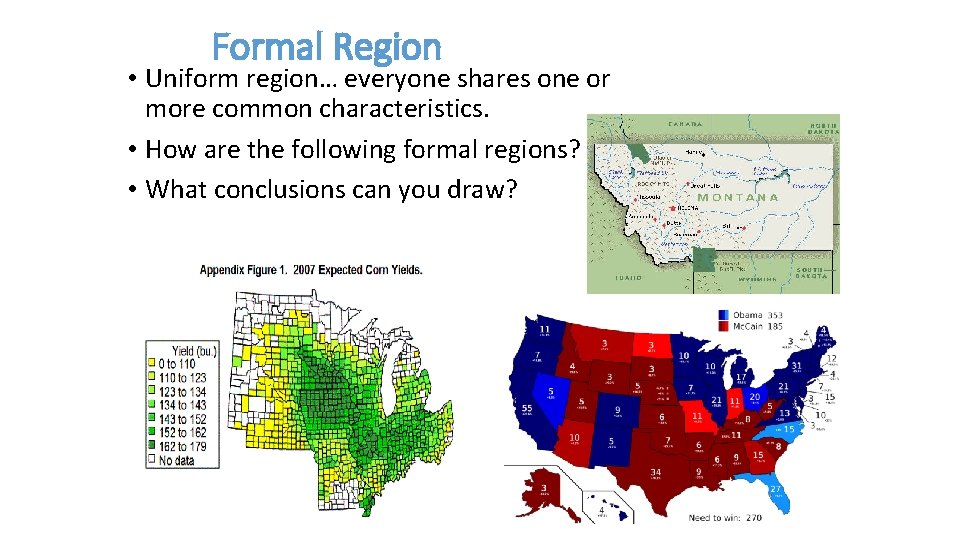
Formal Region • Uniform region… everyone shares one or more common characteristics. • How are the following formal regions? • What conclusions can you draw?
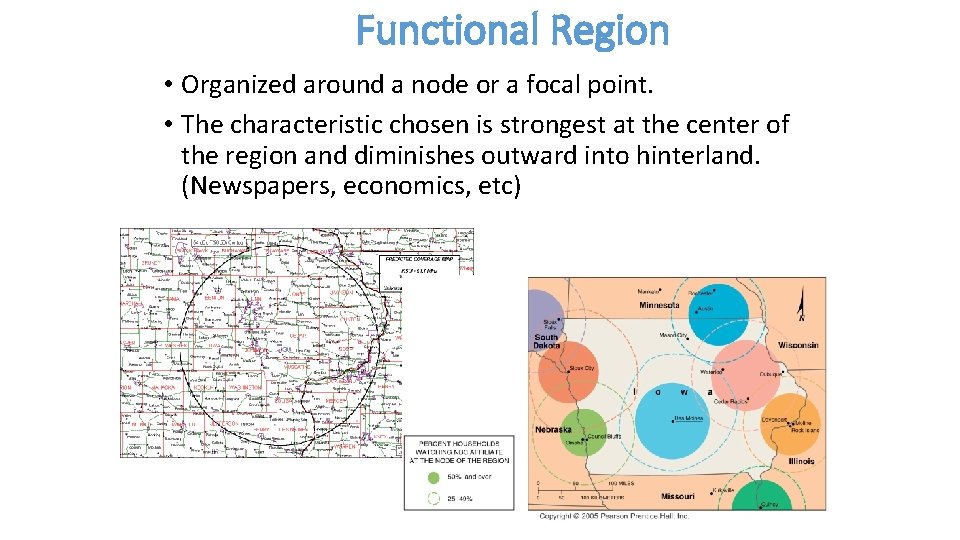
Functional Region • Organized around a node or a focal point. • The characteristic chosen is strongest at the center of the region and diminishes outward into hinterland. (Newspapers, economics, etc)
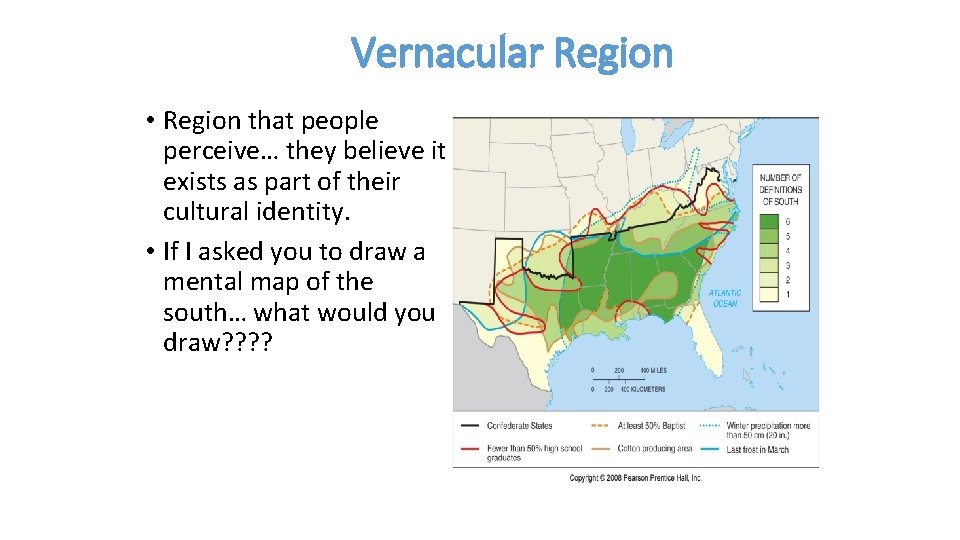
Vernacular Region • Region that people perceive… they believe it exists as part of their cultural identity. • If I asked you to draw a mental map of the south… what would you draw? ?
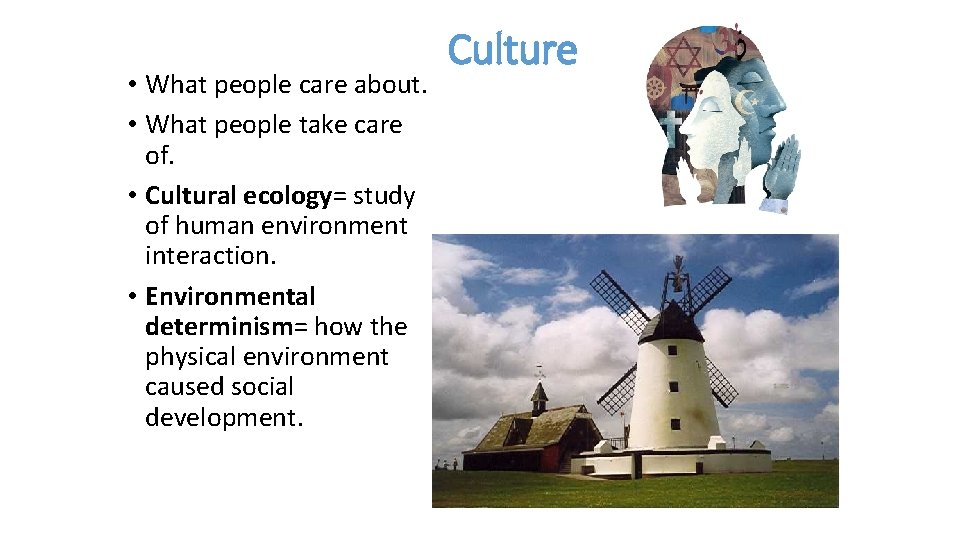
• What people care about. • What people take care of. • Cultural ecology= study of human environment interaction. • Environmental determinism= how the physical environment caused social development. Culture
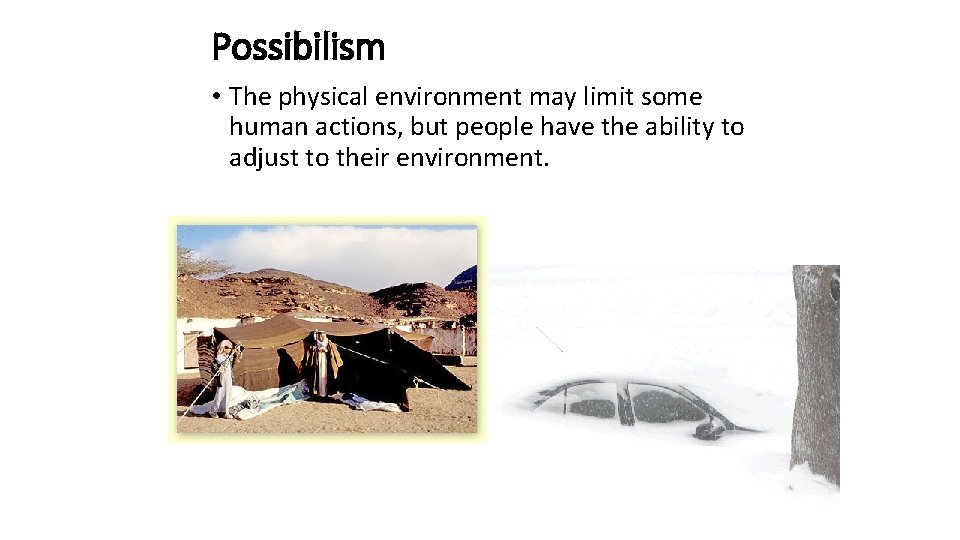
Possibilism • The physical environment may limit some human actions, but people have the ability to adjust to their environment.
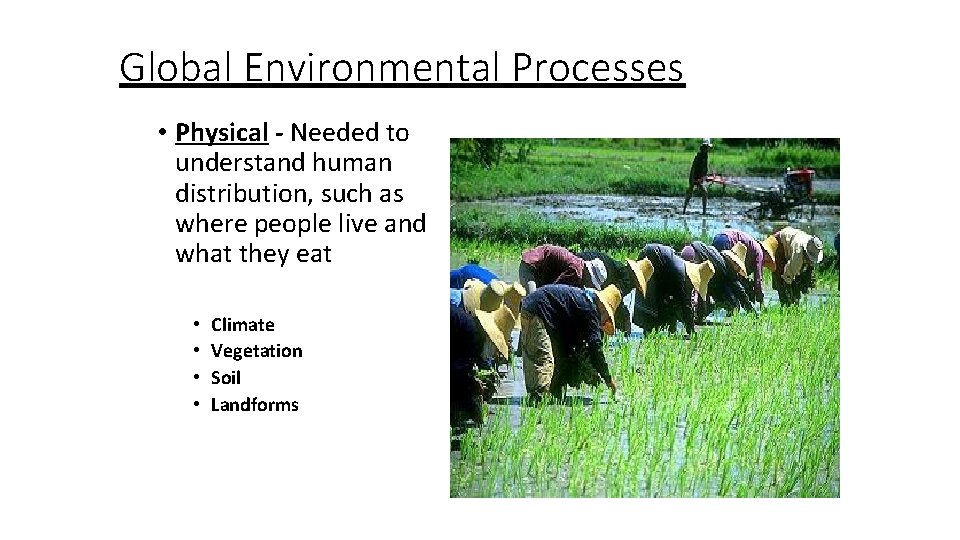
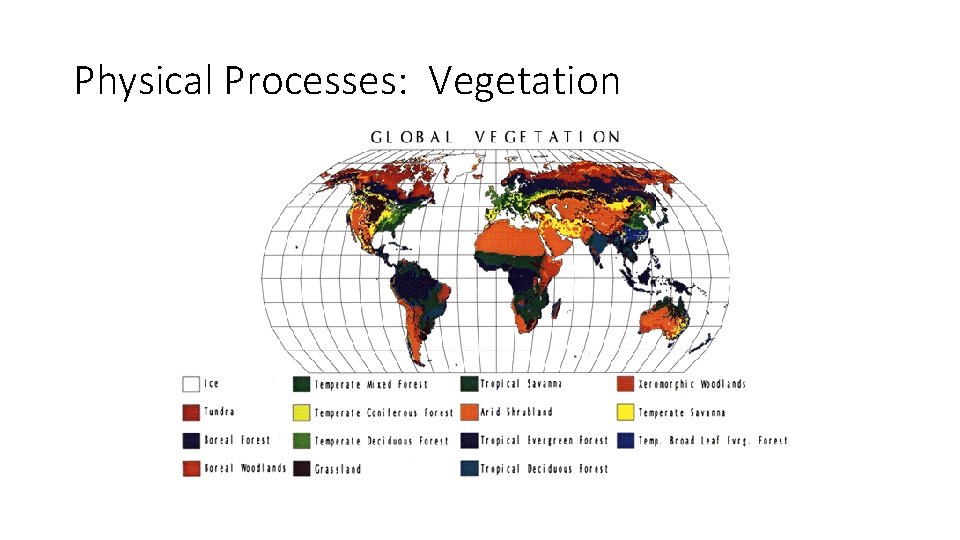
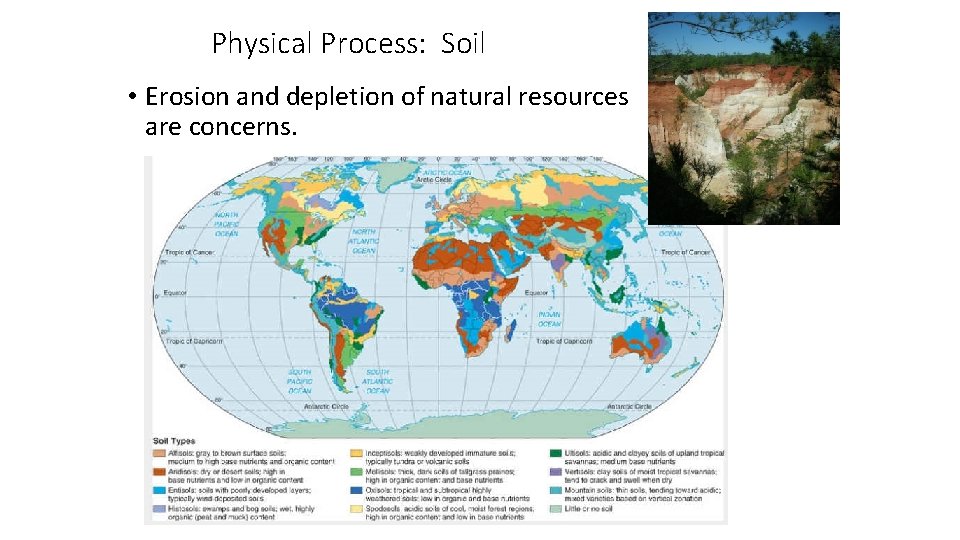
Global Environmental Processes • Physical - Needed to understand human distribution, such as where people live and what they eat • • Climate Vegetation Soil Landforms
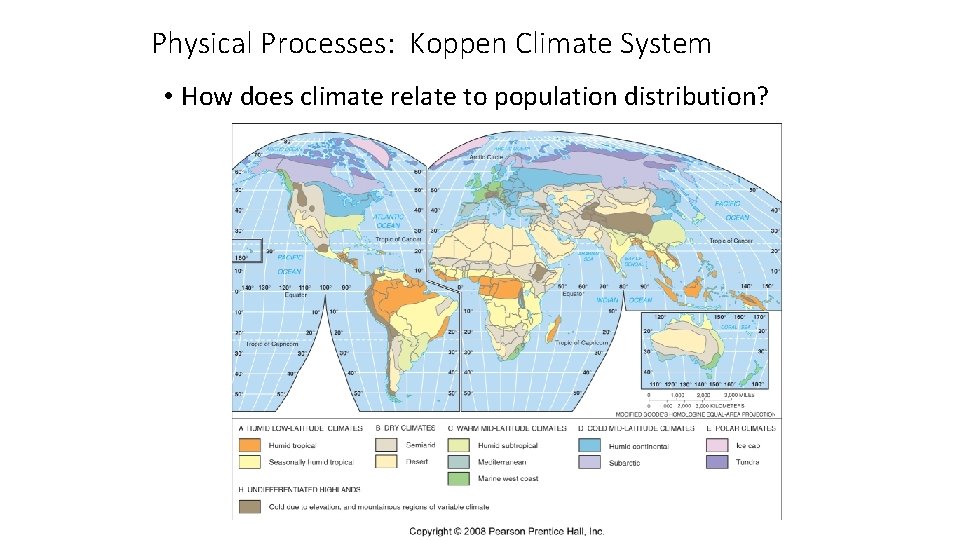
Physical Processes: Koppen Climate System • How does climate relate to population distribution?
Physical Processes: Vegetation
Physical Process: Soil • Erosion and depletion of natural resources are concerns.
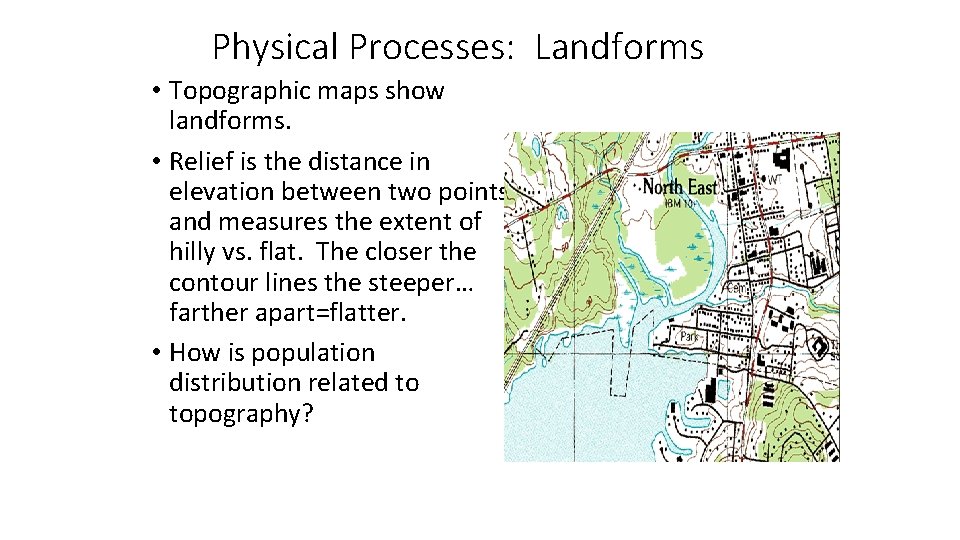
Physical Processes: Landforms • Topographic maps show landforms. • Relief is the distance in elevation between two points and measures the extent of hilly vs. flat. The closer the contour lines the steeper… farther apart=flatter. • How is population distribution related to topography?
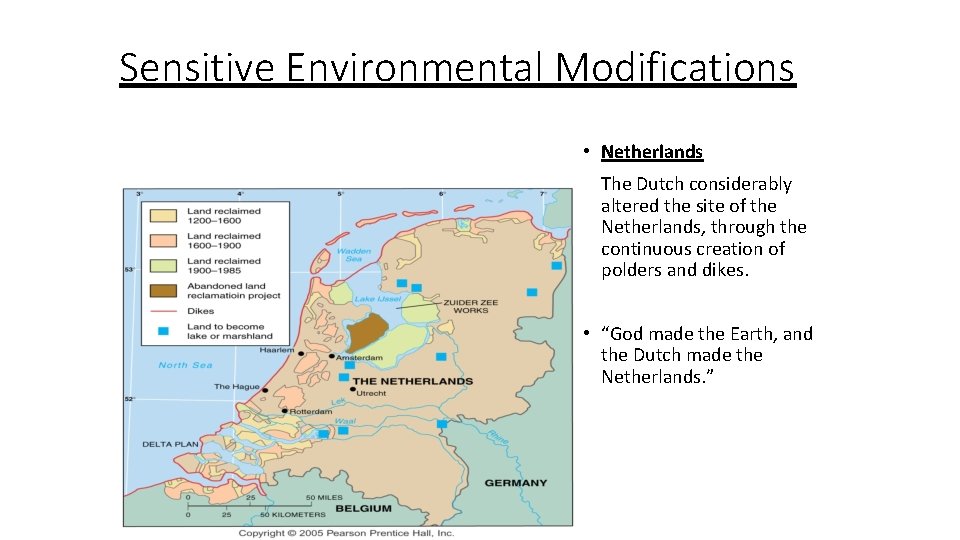
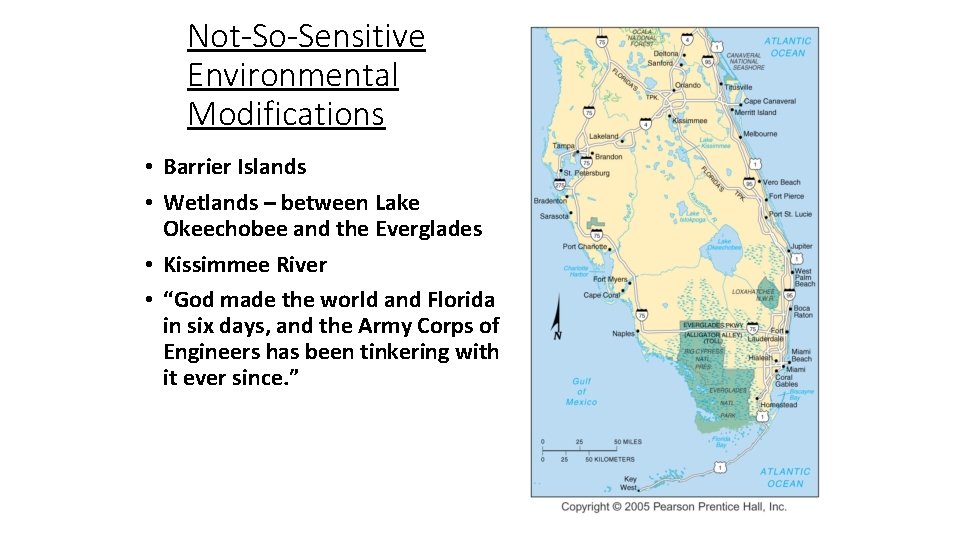
Case Study questions from your reading… (pages 28 – 30) • How/ why is The Netherlands an example of sensitive environmental modification? • How/ why is Florida an example of not-so-sensitive environmental modification?
Sensitive Environmental Modifications • Netherlands The Dutch considerably altered the site of the Netherlands, through the continuous creation of polders and dikes. • “God made the Earth, and the Dutch made the Netherlands. ”
Not-So-Sensitive Environmental Modifications • Barrier Islands • Wetlands – between Lake Okeechobee and the Everglades • Kissimmee River • “God made the world and Florida in six days, and the Army Corps of Engineers has been tinkering with it ever since. ”
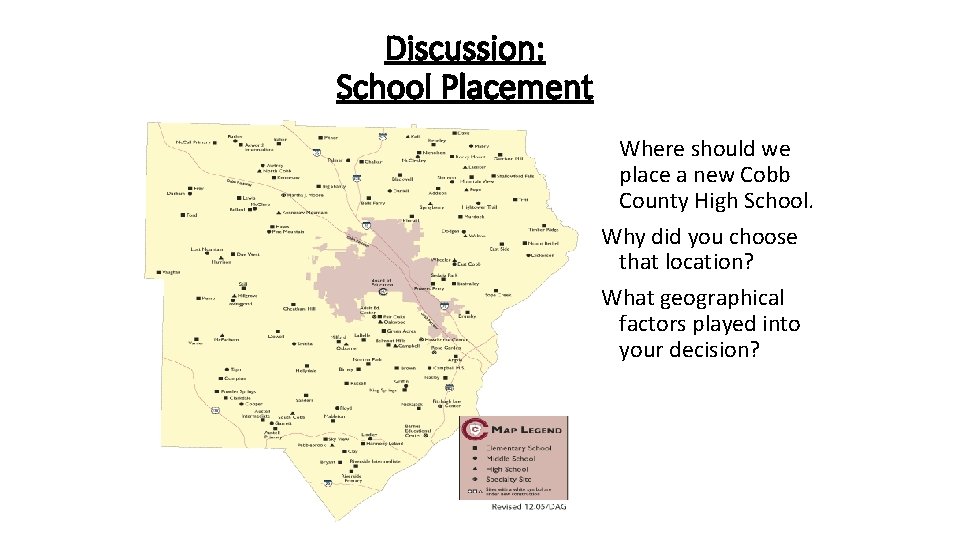
Discussion: School Placement Where should we place a new Cobb County High School. Why did you choose that location? What geographical factors played into your decision?
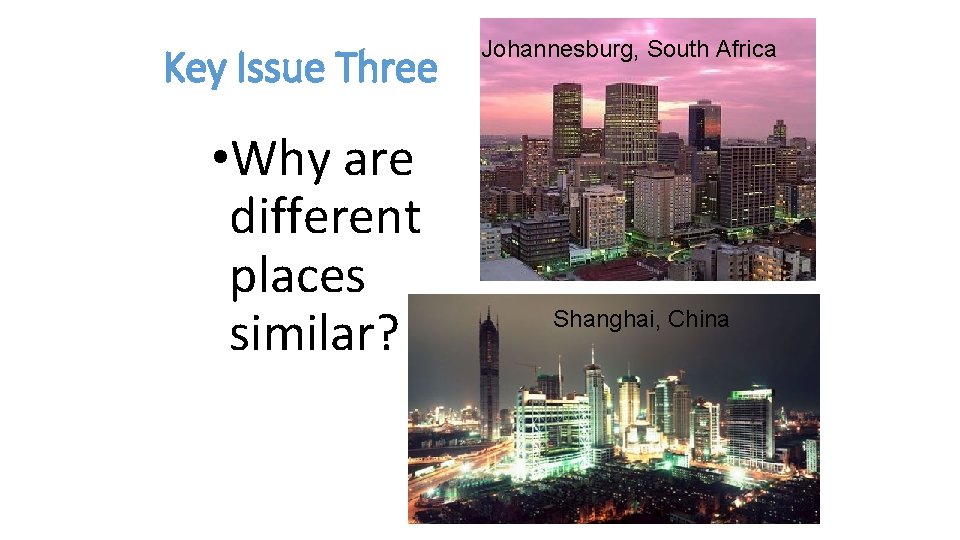
Key Issue Three • Why are different places similar? Johannesburg, South Africa Shanghai, China
Scale… from global to local. • Scale of the world is shrinking… globalization. • Globalization of economy led by transnational corporations.
Why can transnational corporations exist? ? • Modern technology provides the ability to • Move money easily • Move materials easily • Move and sell finished products easily. • ** Space-Time Compression is the reduction in time it takes for something to reach another place. Transnational corporations remain competitive by identifying the optimal location for all of their activities.
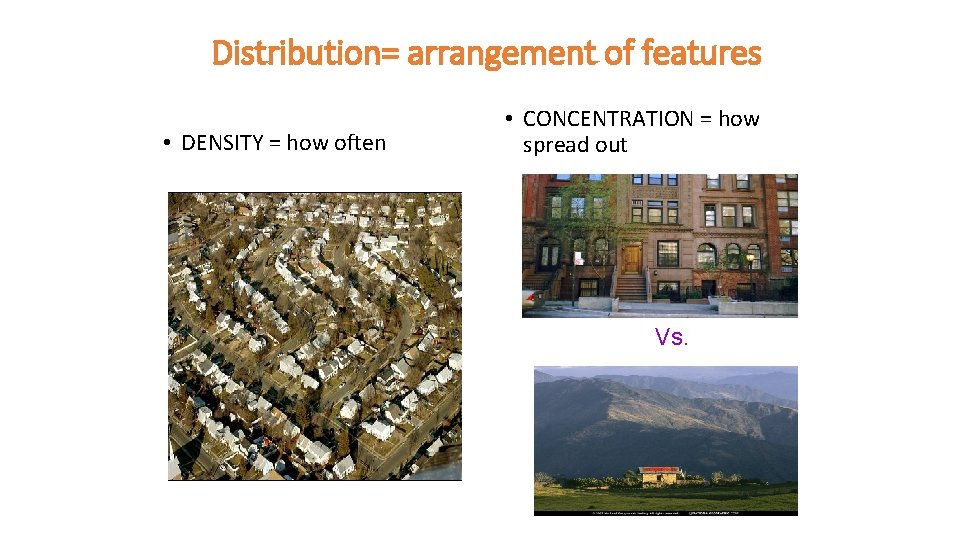
Distribution= arrangement of features • DENSITY = how often • CONCENTRATION = how spread out Vs.
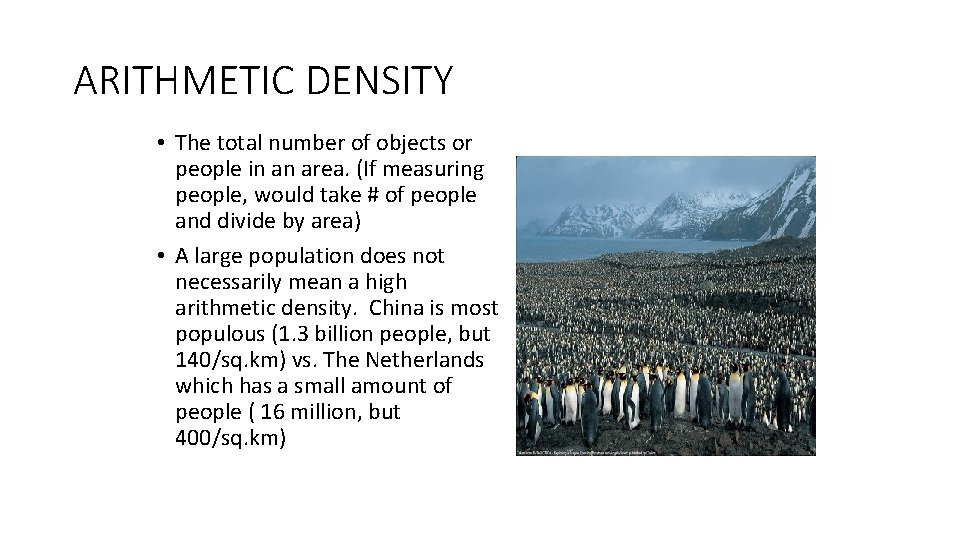
ARITHMETIC DENSITY • The total number of objects or people in an area. (If measuring people, would take # of people and divide by area) • A large population does not necessarily mean a high arithmetic density. China is most populous (1. 3 billion people, but 140/sq. km) vs. The Netherlands which has a small amount of people ( 16 million, but 400/sq. km)
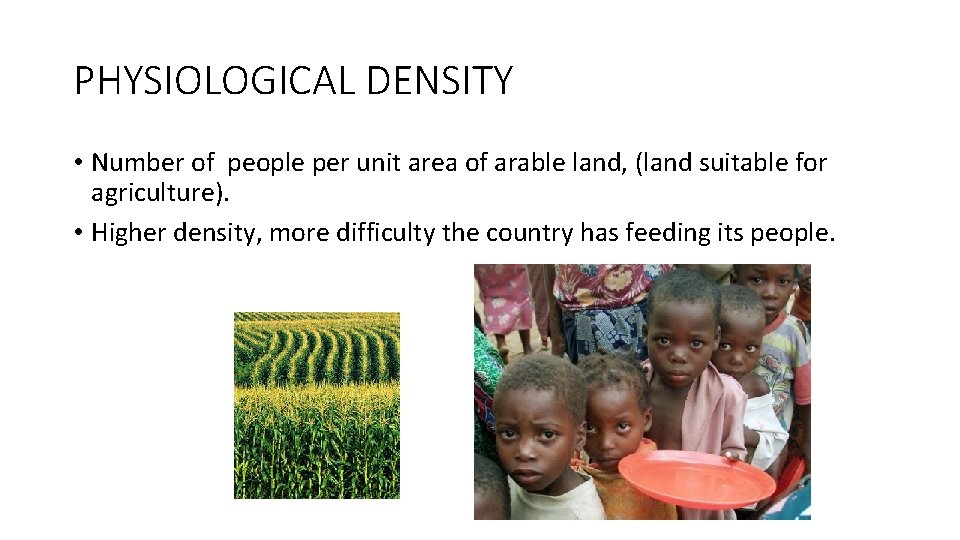
PHYSIOLOGICAL DENSITY • Number of people per unit area of arable land, (land suitable for agriculture). • Higher density, more difficulty the country has feeding its people.
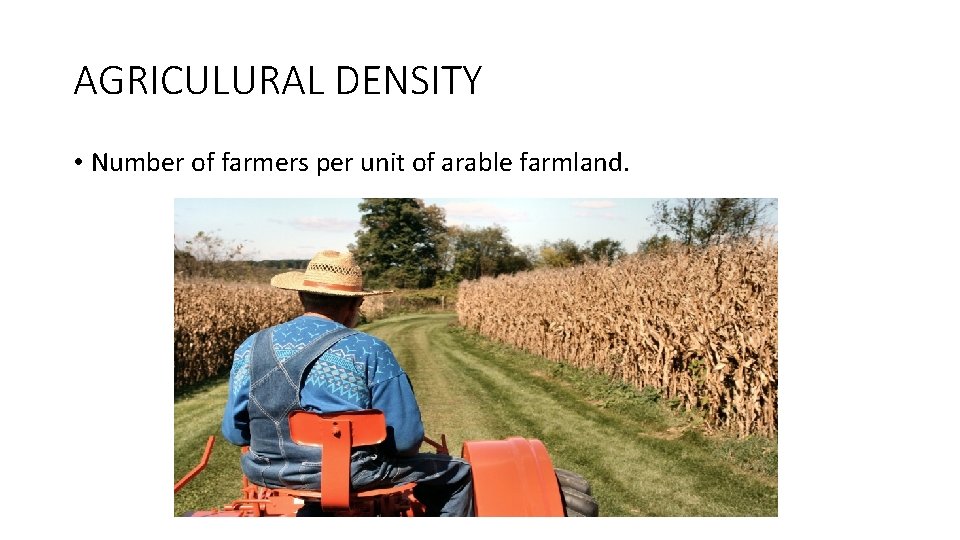
AGRICULURAL DENSITY • Number of farmers per unit of arable farmland.
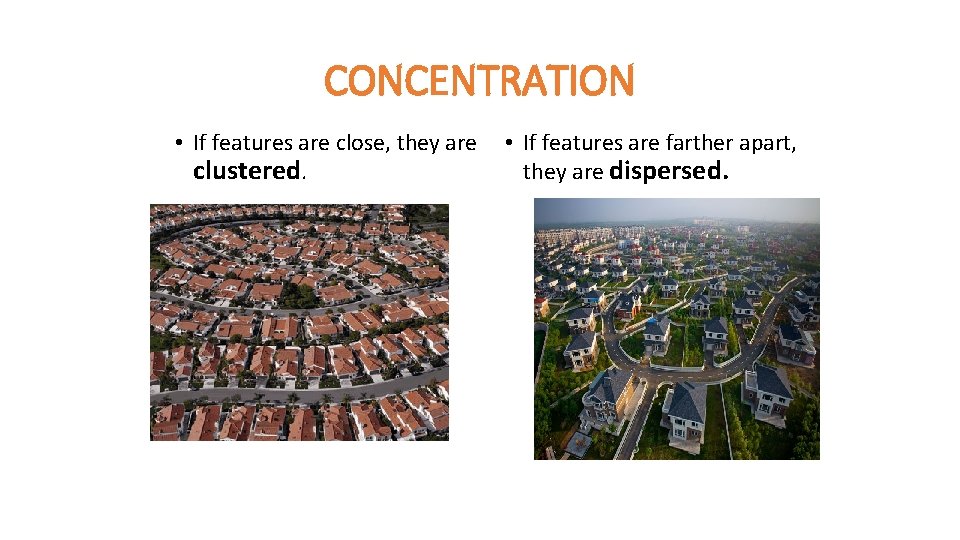
CONCENTRATION • If features are close, they are clustered. • If features are farther apart, they are dispersed.
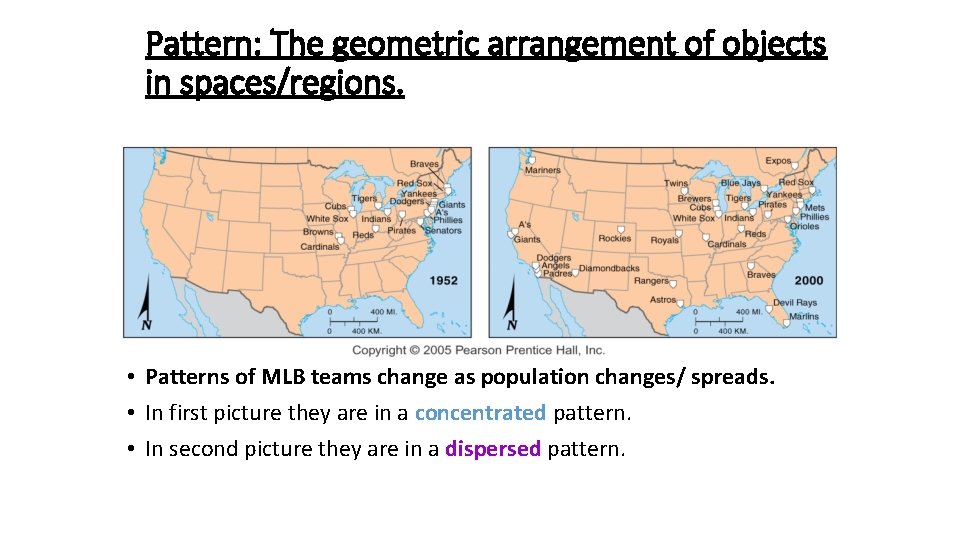
Pattern: The geometric arrangement of objects in spaces/regions. • Patterns of MLB teams change as population changes/ spreads. • In first picture they are in a concentrated pattern. • In second picture they are in a dispersed pattern.
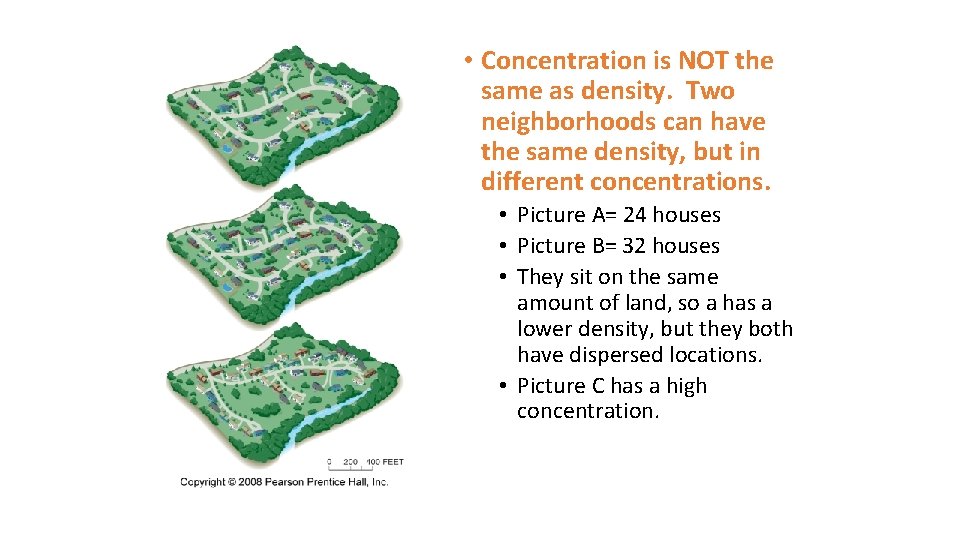
• Concentration is NOT the same as density. Two neighborhoods can have the same density, but in different concentrations. • Picture A= 24 houses • Picture B= 32 houses • They sit on the same amount of land, so a has a lower density, but they both have dispersed locations. • Picture C has a high concentration.
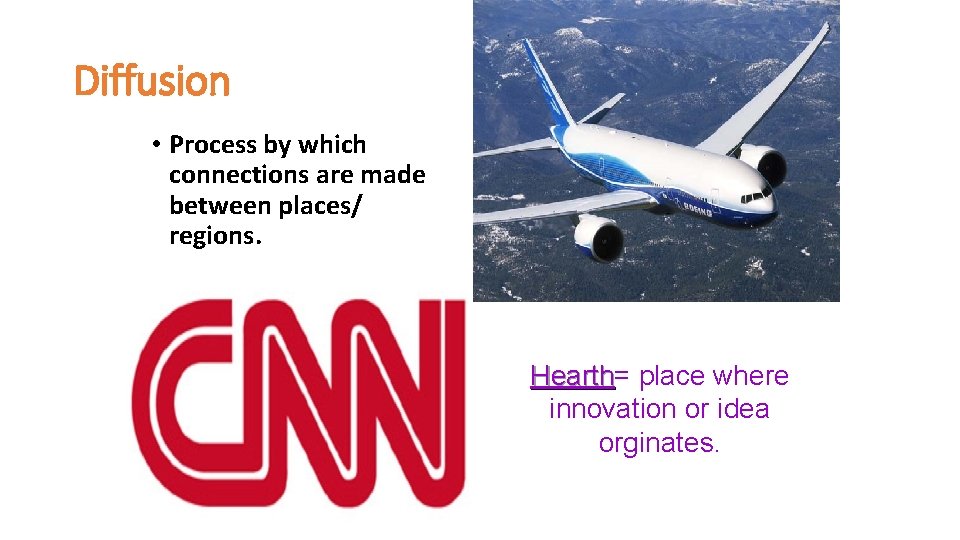
Diffusion • Process by which connections are made between places/ regions. Hearth= Hearth place where innovation or idea orginates.
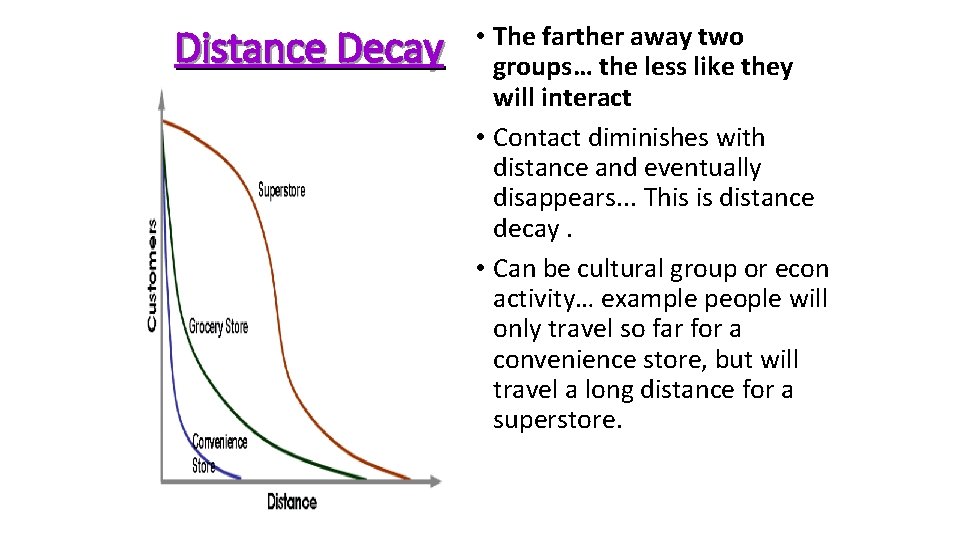
Distance Decay • The farther away two groups… the less like they will interact • Contact diminishes with distance and eventually disappears. . . This is distance decay. • Can be cultural group or econ activity… example people will only travel so far for a convenience store, but will travel a long distance for a superstore.
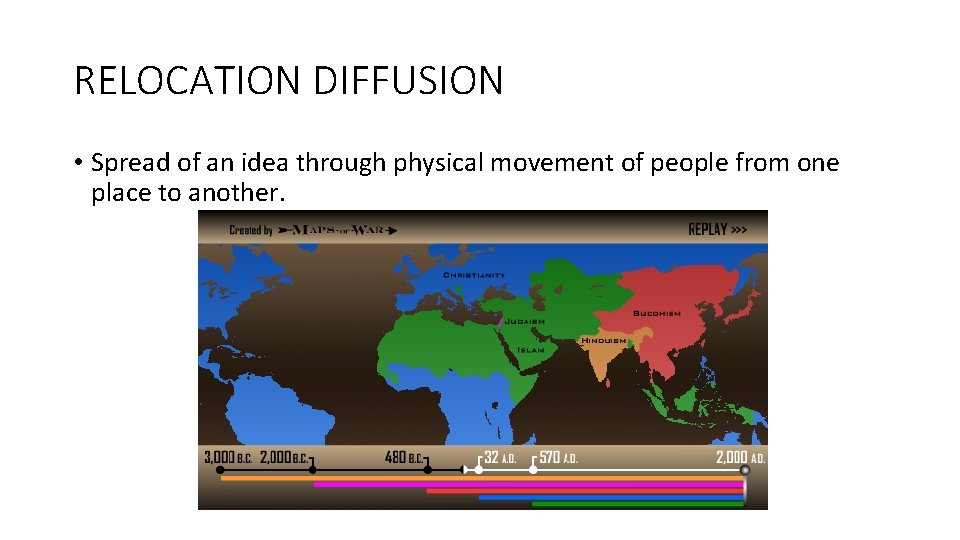
RELOCATION DIFFUSION • Spread of an idea through physical movement of people from one place to another.
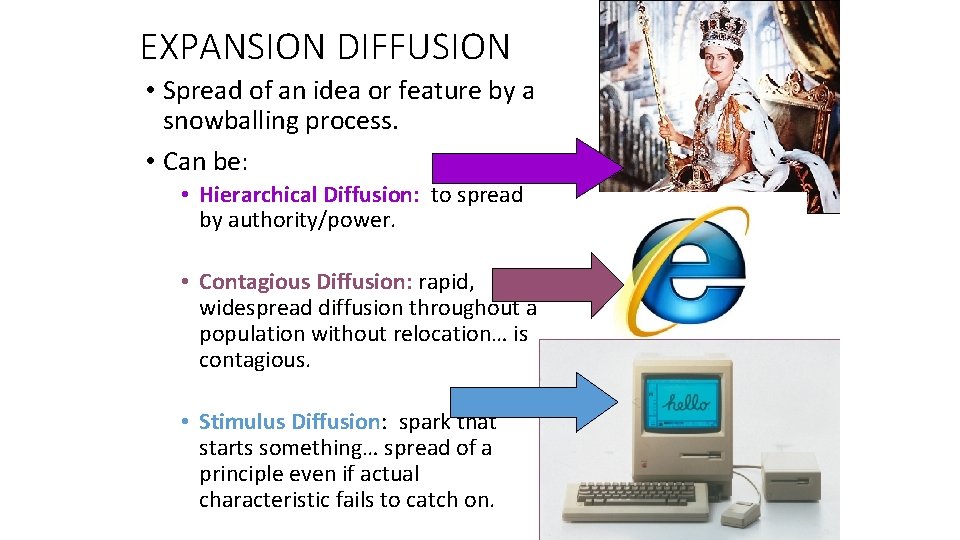
EXPANSION DIFFUSION • Spread of an idea or feature by a snowballing process. • Can be: • Hierarchical Diffusion: to spread by authority/power. • Contagious Diffusion: rapid, widespread diffusion throughout a population without relocation… is contagious. • Stimulus Diffusion: spark that starts something… spread of a principle even if actual characteristic fails to catch on.
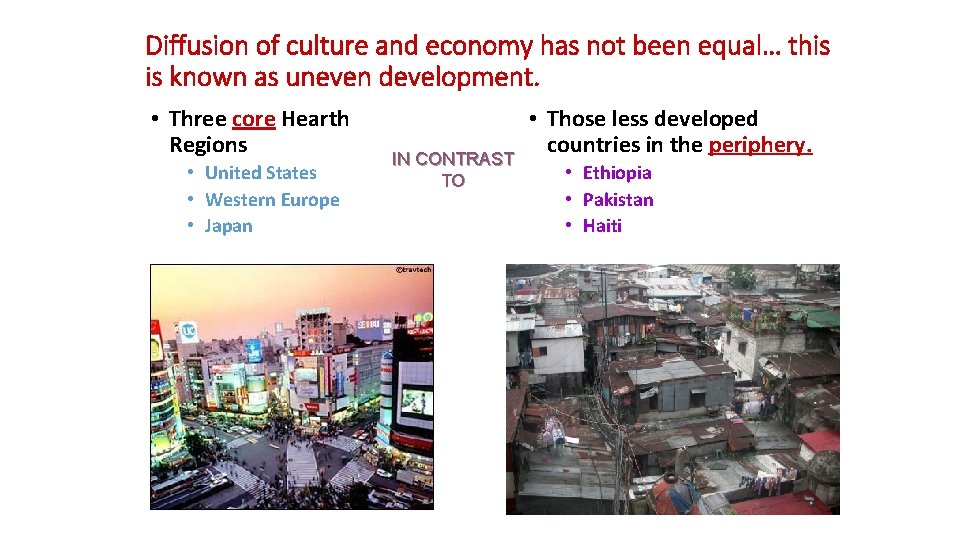
Diffusion of culture and economy has not been equal… this is known as uneven development. • Three core Hearth Regions • United States • Western Europe • Japan IN CONTRAST TO • Those less developed countries in the periphery. • Ethiopia • Pakistan • Haiti