
Thinking and Language What is Thinking Mental activity

- Slides: 25
Thinking and Language
What is Thinking? • Mental activity involved in understanding, processing, and communicating information.
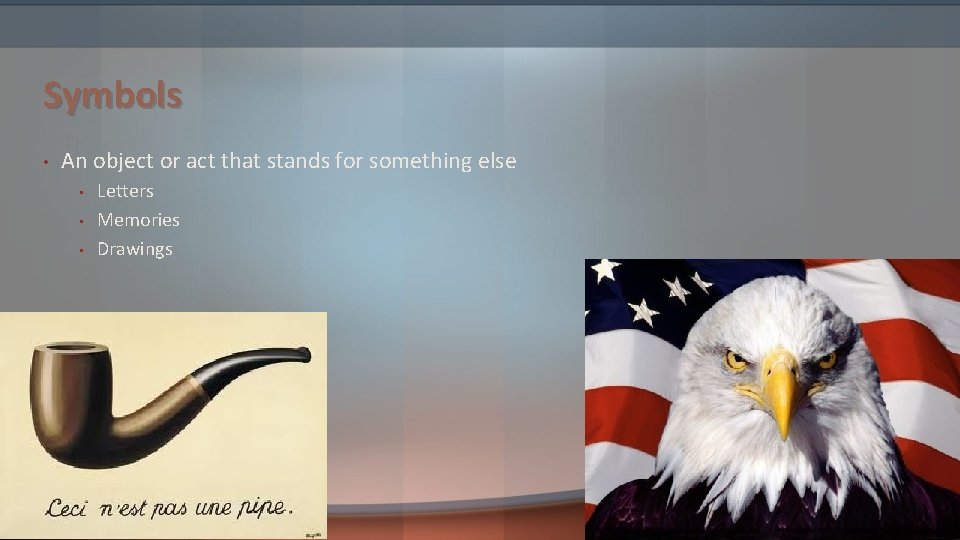
Symbols • An object or act that stands for something else • • • Letters Memories Drawings
Concepts • • Mental grouping What do dogs, elephants, humans, pigs, and whales have in common? • • • Animals Mammals Learn concepts through experiences • Added to schema
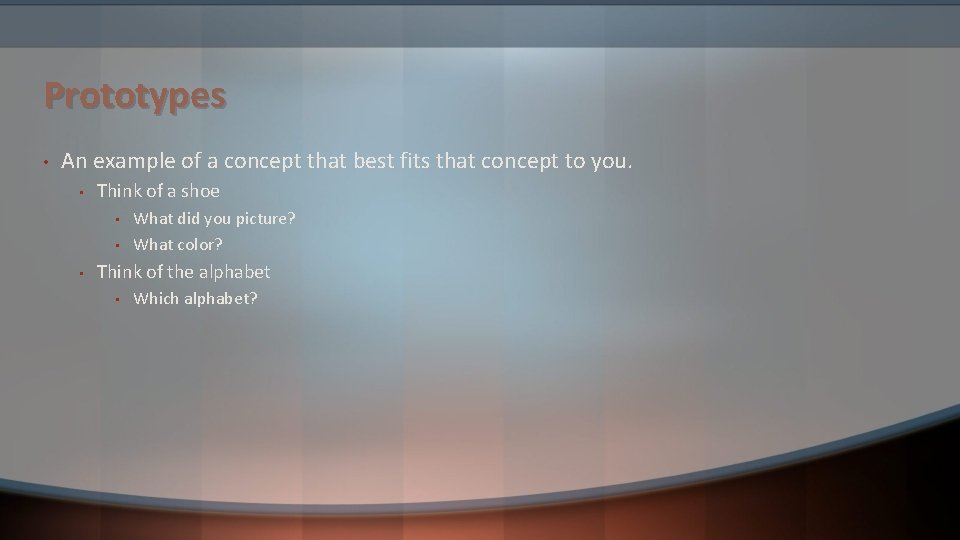
Prototypes • An example of a concept that best fits that concept to you. • Think of a shoe • • • What did you picture? What color? Think of the alphabet • Which alphabet?
Problem Solving
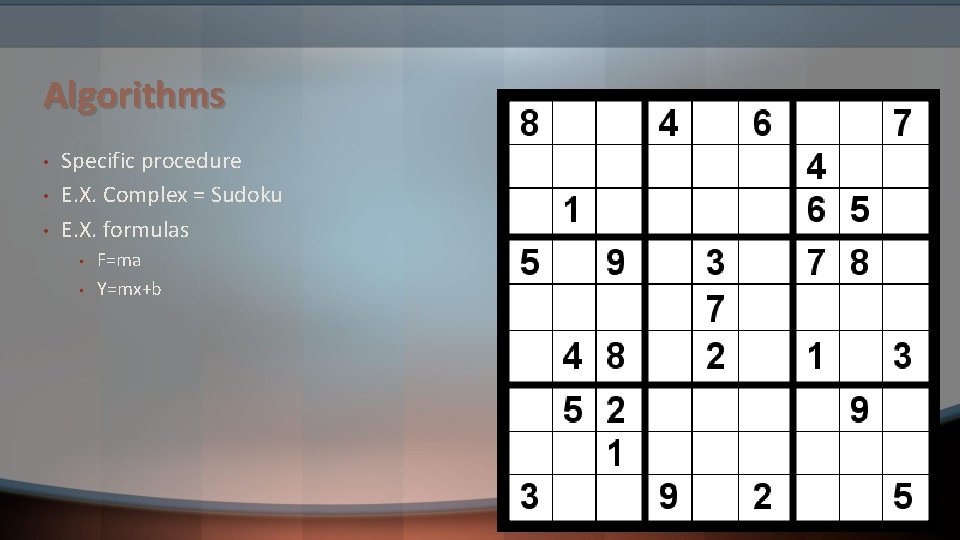
Algorithms • • • Specific procedure E. X. Complex = Sudoku E. X. formulas • • F=ma Y=mx+b
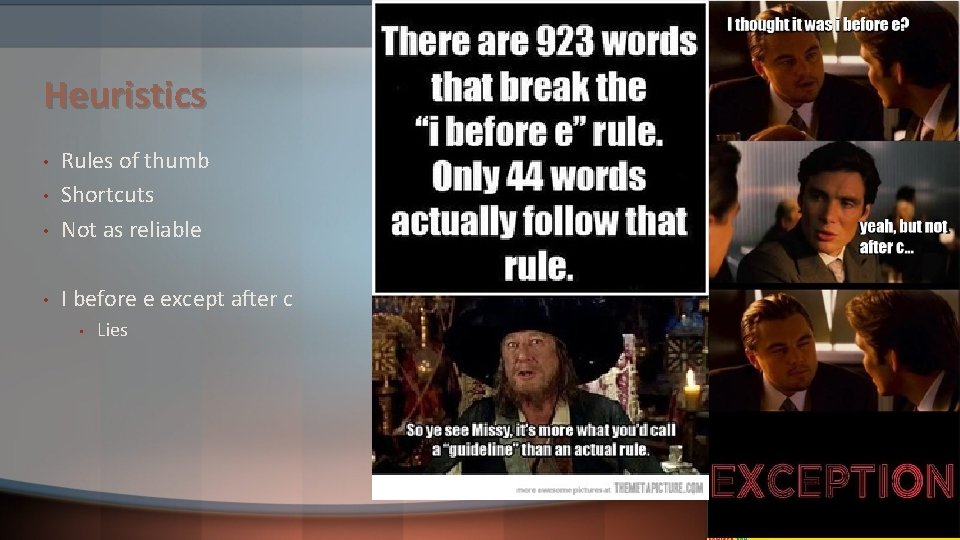
Heuristics • Rules of thumb Shortcuts Not as reliable • I before e except after c • • • Lies
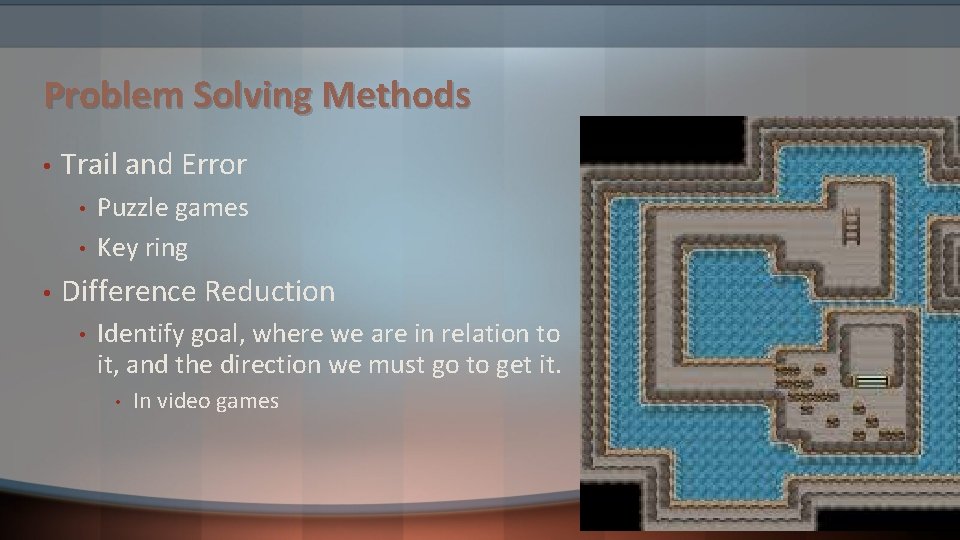
Problem Solving Methods • Trail and Error • • • Puzzle games Key ring Difference Reduction • Identify goal, where we are in relation to it, and the direction we must go to get it. • In video games
Problem Solving Methods • Means-End Analysis • • • Certain things we do (means) have certain consequences (end) “What can I do to get there? ” Working Backward • • Break a problem into parts Examine the goal and work back to where you are
Problem Solving Methods • Analogies • • Similarity between two or more items/events/situations Use the same approach that solved another problem • How to measure volume
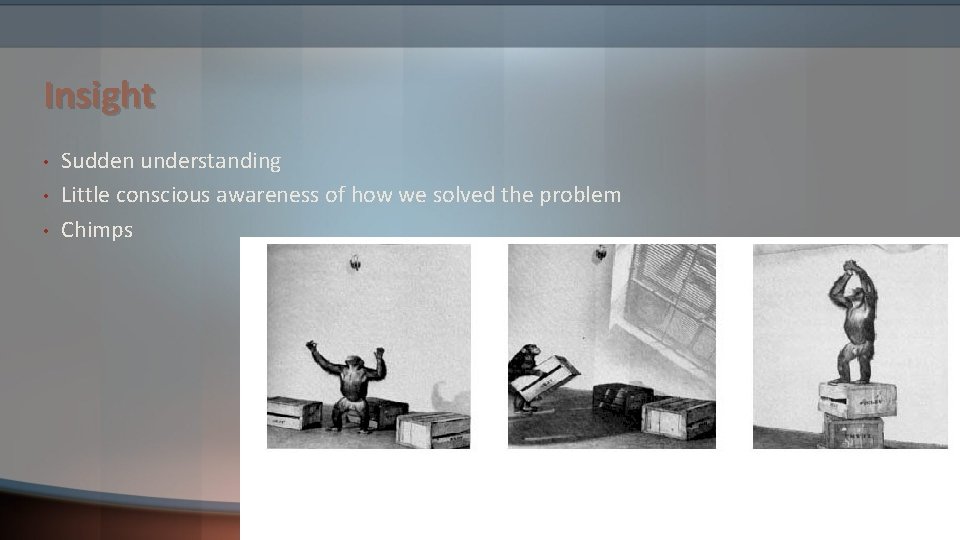
Insight • • • Sudden understanding Little conscious awareness of how we solved the problem Chimps
Incubation Effect • Standing back from the problem for a while and some unconscious process works on it.
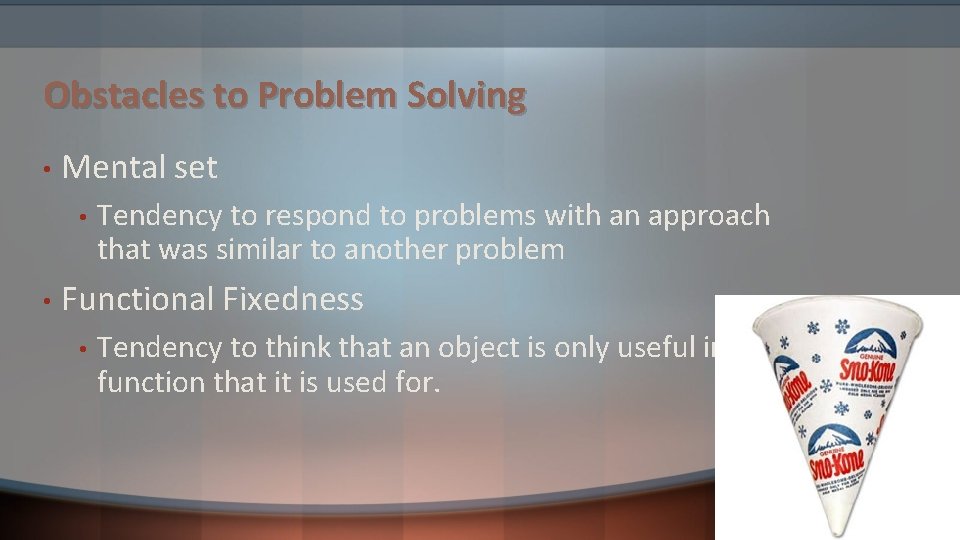
Obstacles to Problem Solving • Mental set • • Tendency to respond to problems with an approach that was similar to another problem Functional Fixedness • Tendency to think that an object is only useful in the function that it is used for.
Problem Solving and Creativity Convergent Thinking – thought is limited to available facts. • Divergent Thinking – associates to the various elements of the problem (following “leads” in various direction). • • Creative writing
Reasoning
Deductive Reasoning • • The conclusion is true if the premise is true. A premise is an idea that provides basic info that allows us to draw conclusions. • • • South Korea is in Asia The city of Seoul is in South Korea Seoul is in Asia
Inductive Reasoning • • Reason from individual cases or particular facts to read a general conclusion. Conclusion can be wrong when premise is correct. • • Countries near each other have similar languages. Confirmation bias- Try to prove theory correct, when it actually needs to be disproven. • Often impossible to tell if inductive reasoning is true
Decision Making and Judgment
Weighing the Plusses and Minuses • List the pros and cons • • Balance them Opportunity Cost
Shortcuts in Decision Making and Judgment • • • Weighing the benefits and costs is not practical Use heuristics The Representatives Heuristic • • Base things on representation (e. x. True False answers) The Availability Heuristic • Make decision base on the immediate availibility of information.
Shortcuts • The Anchoring Heuristic • Make decisions on certain ideas/standards they hold. • • These ideas are an anchor. Beliefs about religion, politics, and way of life are common anchors.
The Framing Effect • Wording • affects decision making. Light foods (Diet Coke)
Overconfidence • Confidence in wrong decisions. • • • People are unaware of the weakness of evidence Pay attention to examples that confirm and ignore examples that deny. People tend to believe things that they think are true.
Wrap up Find a partner. Spend the rest of class time trying to solve riddles. No phones, the winning duo will receive bathroom passes.