
Thinking and Language Forming Concepts Solving Problems Language
Thinking and Language Forming Concepts Solving Problems Language
Objective � Identify the units of thought and the kinds of thinking. � Analyze the effects of divergent and convergent thinking.
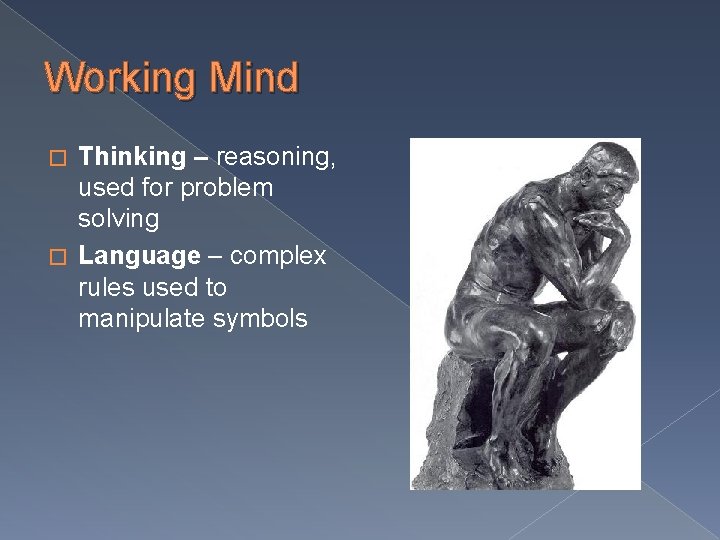
Working Mind Thinking – reasoning, used for problem solving � Language – complex rules used to manipulate symbols �
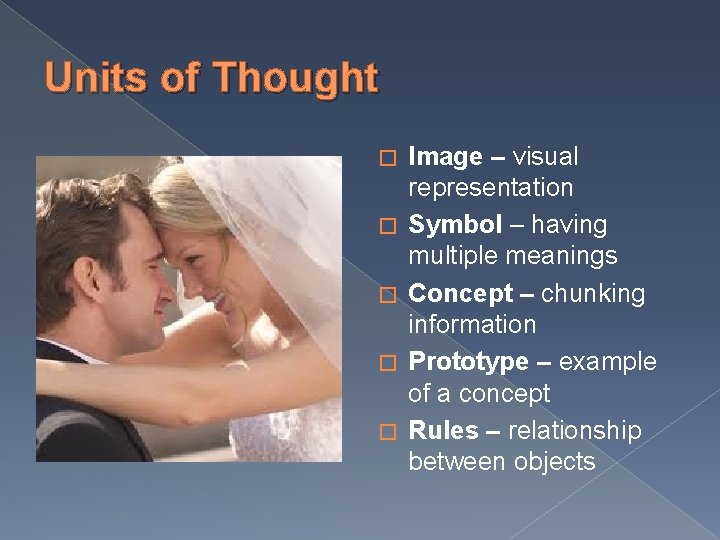
Units of Thought � � � Image – visual representation Symbol – having multiple meanings Concept – chunking information Prototype – example of a concept Rules – relationship between objects
Examples � Imagery › White Christmas by Bing Crosby › Kryptonite by Three Doors Down � Symbolism › › › Star Wars Animal Farm I Hope You Dance Mac. Beth Colors and their meaning
Forming Concepts � Definition theory › Making a mental list › Drawback: too many features � Prototype theory › Creating mental image › Advantage: allows for quick recognition
Ability to Form Concepts � Starts between 10 -16 months › Stimulating environment helps › Brain is already equipped to form concepts
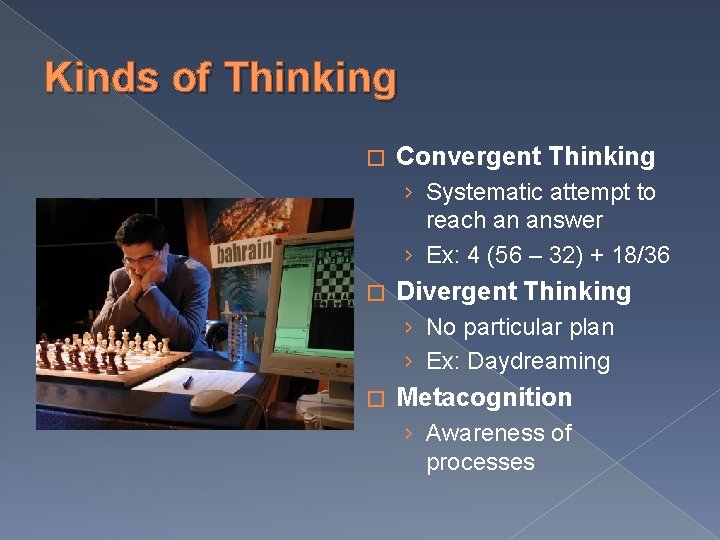
Kinds of Thinking � Convergent Thinking › Systematic attempt to reach an answer › Ex: 4 (56 – 32) + 18/36 � Divergent Thinking › No particular plan › Ex: Daydreaming � Metacognition › Awareness of processes
How do we solve problems? � Initial State › Think about unsolved problem � Operations State › Attempt strategy � Goal State › Solution
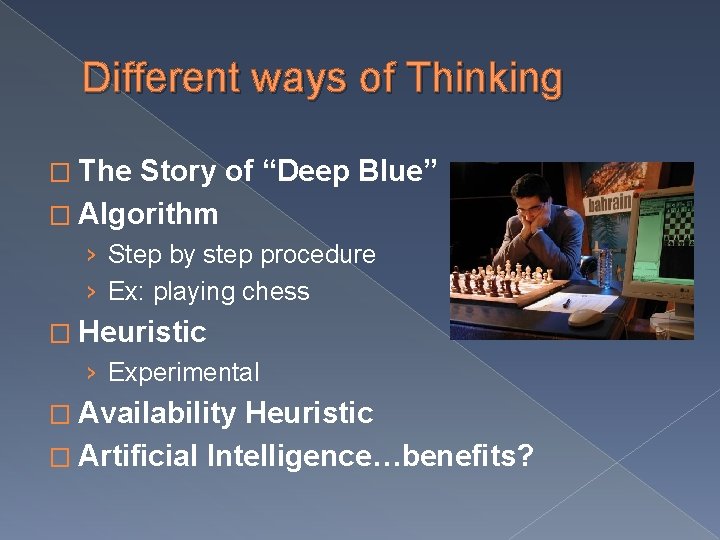
Different ways of Thinking � The Story of “Deep Blue” � Algorithm › Step by step procedure › Ex: playing chess � Heuristic › Experimental � Availability Heuristic � Artificial Intelligence…benefits?
Strategy to Solve Problems � Mental Set › Strategy becomes a habit, leads to rigidity � Functional Fixedness › Unable to see different functions � Analogy › Finding a similarity � Subgoals › Breaking down the problem
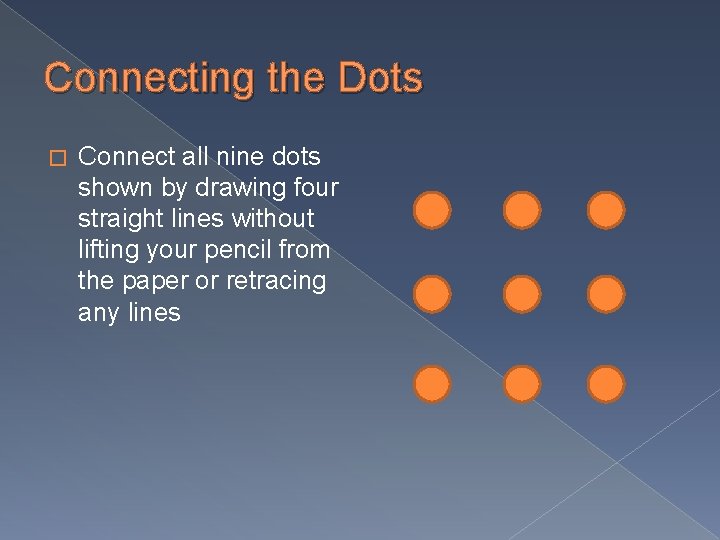
Connecting the Dots � Connect all nine dots shown by drawing four straight lines without lifting your pencil from the paper or retracing any lines
Defining Creativity � Thinking flexibly to come up with new ideas/solutions � Overcome rigidity through flexibility � Rearrange ideas through recombination � Insight – sudden realization of a solution › Characteristics �Focus �Cognition �Personality �Motivation
Rules of Language � Phonology – how we make meaningful sounds › Phoneme – basic sounds of consonants/vowels � Morphology – meaningful combo of phonemes › Morphemes – smallest unit of meaning (word, letter, prefix, suffix) �Ex: book, love, reason; loves, relearn, walked
Examples – Phonemes › › › › Chin Three Wish Habits Hopes Enough Thing Weigh Nation Thought Please Quickly Psychology Sun
Examples – Morphemes › › › People Redevelopment Swimming Orange Literally Erasable Reddish Waited Desirability Education Antidisestablishmentarianism
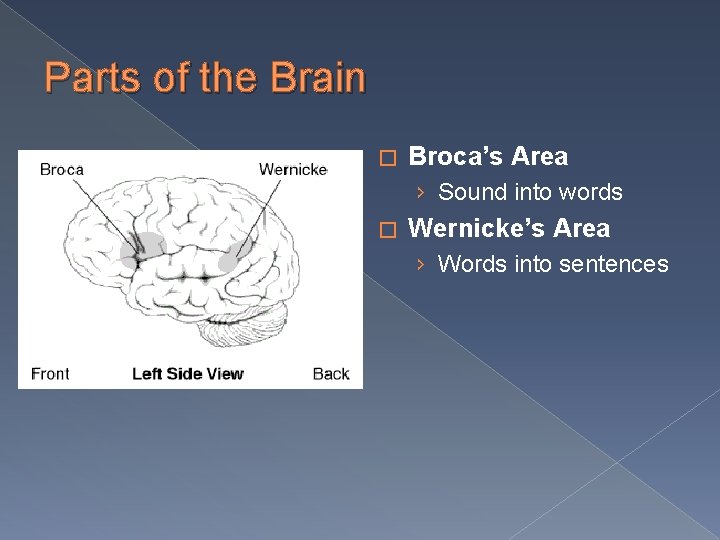
Parts of the Brain � Broca’s Area › Sound into words � Wernicke’s Area › Words into sentences
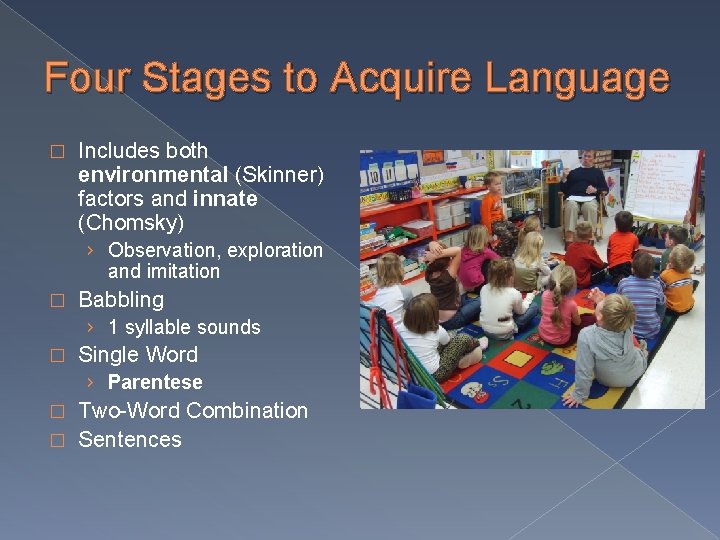
Four Stages to Acquire Language � Includes both environmental (Skinner) factors and innate (Chomsky) › Observation, exploration and imitation � Babbling › 1 syllable sounds � Single Word › Parentese Two-Word Combination � Sentences �
Kinds of Reasoning � Deductive Reasoning › Reasoning based on assumptions › Ex: Gambling � Inductive Reasoning › Past experiences › Ex: taking tests
Cultural Connections � How much does culture influence how we think?
Gender Differences � Women use language to… › Share concerns, create connections, develop feelings, sympathetic � Men use language to… › Express ideas, maintain independence and position in group, attack problems
- Slides: 21