
THINKING ABOUT THINKING Information shared by Jackie Winter
THINKING ABOUT THINKING
Information shared by Jackie Winter, Assistant Head and Outreach Coordinator Contact: jwinter@tadworthcourt. surrey. sch. uk outreach@tadworthcourt. surrey. sch. uk
The Surrey Teaching Centre provides education for children and young people with an acquired brain injury as part of a rehabilitation programme provided by The Children’s Trust in Tadworth. Children and young people are referred from across Great Britain and the school is a service that is unique to Surrey.
Multi-disciplinary Multi-Disciplinary. Working Children and young people typically access 3 -4 month rehabilitation programmes (usually residential) after acquiring a brain injury. Programmes can include the following therapies: – physiotherapy – occupational therapy – speech and language therapy – psychology including support for families & music therapy • Children and young people usually come directly hospital, although some may have been home before starting their rehabilitation. • Teachers follow up our pupils on discharge and there is an outreach service into local schools.
Aims of the Session • To explore some of the most common issues identified by teachers with pupils following an acquired brain injury. These do not always appear to be related to thinking skills until you think about thinking! • To look in a bit more depth at executive functioning skills. • To share some of the strategies teachers have found useful.

Thinking Skills Thinking skills are very often impaired following an acquired brain injury due to the vulnerability of the position of the frontal lobe. Having worked as a teacher in this field both at Surrey Teaching Centre and in schools, there are very common problems that have arisen time and time again. I have chosen the most common related to cognition and thinking and selected the strategies which are the most useful and manageable according to teachers we work with. The skills we will look at today will include attention, processing, memory and executive functioning skills.
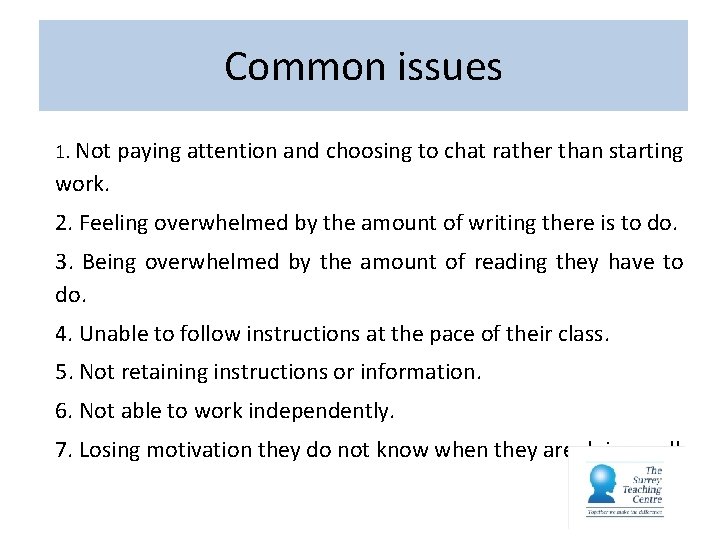
Common issues 1. Not paying attention and choosing to chat rather than starting work. 2. Feeling overwhelmed by the amount of writing there is to do. 3. Being overwhelmed by the amount of reading they have to do. 4. Unable to follow instructions at the pace of their class. 5. Not retaining instructions or information. 6. Not able to work independently. 7. Losing motivation they do not know when they are doing well.
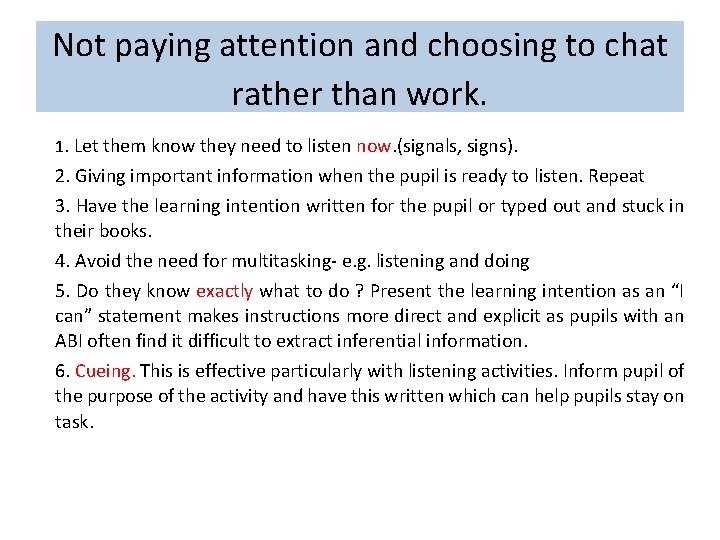
Not paying attention and choosing to chat rather than work. 1. Let them know they need to listen now. (signals, signs). 2. Giving important information when the pupil is ready to listen. Repeat 3. Have the learning intention written for the pupil or typed out and stuck in their books. 4. Avoid the need for multitasking- e. g. listening and doing 5. Do they know exactly what to do ? Present the learning intention as an “I can” statement makes instructions more direct and explicit as pupils with an ABI often find it difficult to extract inferential information. 6. Cueing. This is effective particularly with listening activities. Inform pupil of the purpose of the activity and have this written which can help pupils stay on task.

Feeling overwhelmed by the amount of writing they have to do. 1. 2. 3. 4. 5. 6. 7. 8. Examples of what is expected. (concrete) To help structure -Writing frames, story starters, questions as prompts. Scribes, recording devices so good ideas are not lost. Select an element of the work the pupil will do rather than the whole amount. (maintains self-esteem, and gives a sense of achievement). Help retrieving or thinking of ideas/words -Visual prompts e. g. pictures, clips; paired or group activities to generate vocabulary. Word banks available for topics (categorised ideally)so less effort spent on spelling, thinking of words. Think with the pupil about how they might record their work. Photos or a series of photos can be useful. (e. g. in science) Helps with sequencing. Mind maps to organise ideas and limit the amount of writing necessary at the planning stage. (doesn’t suit everyone) Using key words. Not a thinking skill but ……. Technology to reduce the amount of actual handwriting e. g. recordable devices, laptops, Adjust the accessibility options e. g. sticky keys; speed of double mouse click; speed of mouse, software such as Clicker 7. Apps such as Predictable. (www. therpy-box. co. uk)
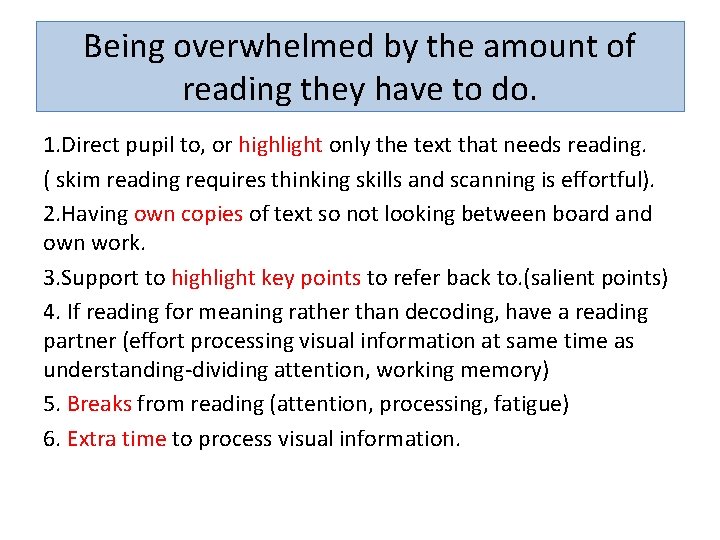
Being overwhelmed by the amount of reading they have to do. 1. Direct pupil to, or highlight only the text that needs reading. ( skim reading requires thinking skills and scanning is effortful). 2. Having own copies of text so not looking between board and own work. 3. Support to highlight key points to refer back to. (salient points) 4. If reading for meaning rather than decoding, have a reading partner (effort processing visual information at same time as understanding-dividing attention, working memory) 5. Breaks from reading (attention, processing, fatigue) 6. Extra time to process visual information.
Unable to follow instructions at the pace of their class 1. Extra time to process instructions or information and respond. 2. Encourage the pupil to pay full attention before giving information. 3. Take regular learning breaks to allow information to be processed. 4. Give the pupil one piece of new information at a time and repeat it regularly in different contexts/ways. 5. Short sentences, simple direct language. 6. Break down tasks and adjust expectations for the amount of work but not the level of difficulty. 7. Prioritise a single skill or learning point for the pupil to achieve in the lesson rather than having to process and work on everything.
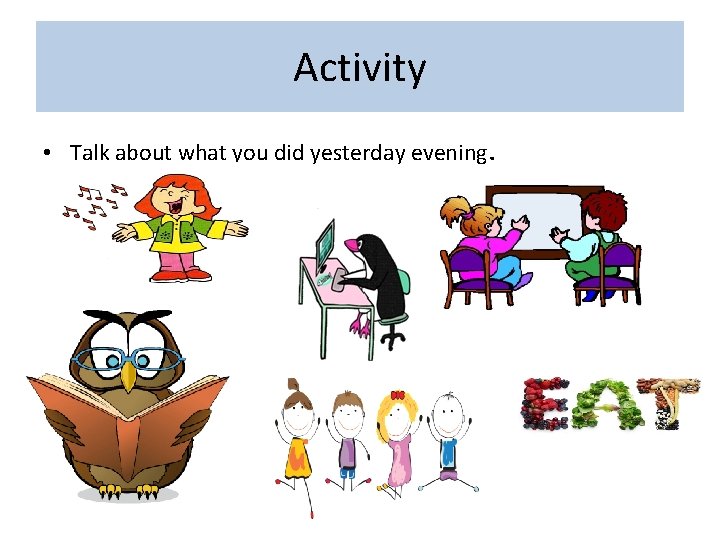
Activity • Talk about what you did yesterday evening.

Not retaining instructions or information. 1. Task boards, checklists with explicit step by step instructions. 2. Visual aids. Support verbal information with visual. 3. An errorless/error reduced learning approach as the pupil is likely to retain the wrong information when learning by trial and error. This method can also build self-esteem and aid memory recall. 4. Precision teaching. 5. Prompts –e. g. forced choice of two options. 6. Over learning and daily repetition. Unconsolidated skills are not likely to be generalised to other learning tasks. 7. Keep it short and direct.
Not able to work independently 1. Pupils will often need specific teaching to increase independent use of strategies but this should help overall independence and increase self-esteem. 2. Reminders to use strategies so there is increased awareness of what they are using and the success they are having. Pupils could be taught to use a subtle sign to request help (learn to learn). 3. Task boards. Realistic goals/targets 4. Visual timetable to provide the pupils with increased knowledge about what is happening and when. It may also help with attention and sequencing. 5. Now and next boards within activities. (symbols, pictures or text). 6. Instructions in the order of the activity – i. e. Not ‘go and get your PE kit, but first finish the question you are on and then put your book away’. Instructions delivered out of order are very difficult when pupils have sequencing issues.
Losing motivation as do not know when they are doing well Pupils with an ABI frequently find evaluation of their work a very difficult task • “I have noticed two skills you used well” then describe two short examples “Which skill are you most pleased with? ” This gives clear feedback and a scaffolded opportunity to evaluate. For Next Steps “There were two skills which were quite tricky” describe two “Which do you think is most important to work on? ” Or “ I noticed you were successful at xxxxx and yyyyy. You could increase the level of challenge by …… Which do you think would be the most important? ” These can form personalised targets. • Before the end of the lesson if appropriate, tell or jot down the question you are going to ask for the pupil so they have had opportunity to organise their thoughts in advance and put their hand up with confidence. • Pupil friendly version of any targets pupils are working on.
Executive functioning difficulties • Cognition is what a person does and Executive Functioning is how a person does it. • Children and young people can sometimes perform well in structured cognitive tasks, but be unable to plan and execute activities independently. Problems with EF can often be seen in multi-stepped activities. • Executive functions consist of several mental skills that help the brain organise and act on information.
Executive functioning difficulties Difficulties in this area can manifest in many ways: • Inability to identify personal strengths and weakness • Lack of foresight and anticipation • Difficulty planning and executing a sequence of behaviours • Confusion when confronted by lots of choice • Inability to generate ideas, problem solve and think flexibly • Initiating appropriate behaviour and inhibiting inappropriate behaviour • Preoccupation with irrelevant and trivial matters • Difficulty prioritising • Limited transfer of information to new situations • Difficulty modulating behaviour
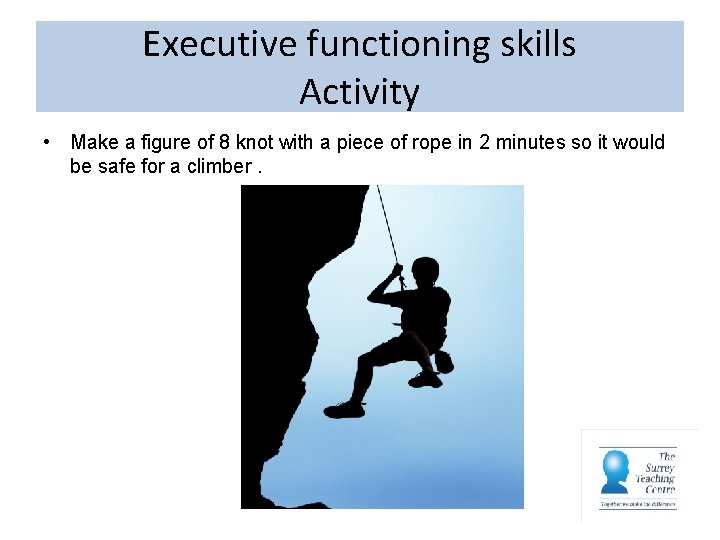
Executive functioning skills Activity • Make a figure of 8 knot with a piece of rope in 2 minutes so it would be safe for a climber.
Executive functioning skills Activity • Let’s make it easier. Here are some instructions:
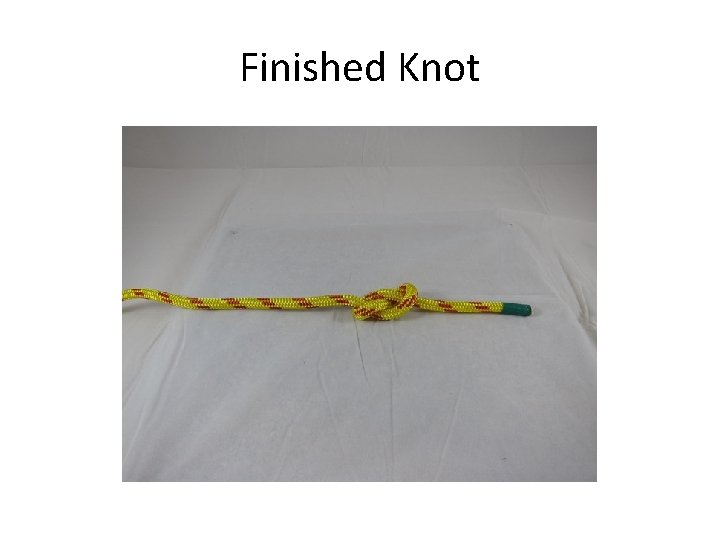
Finished Knot
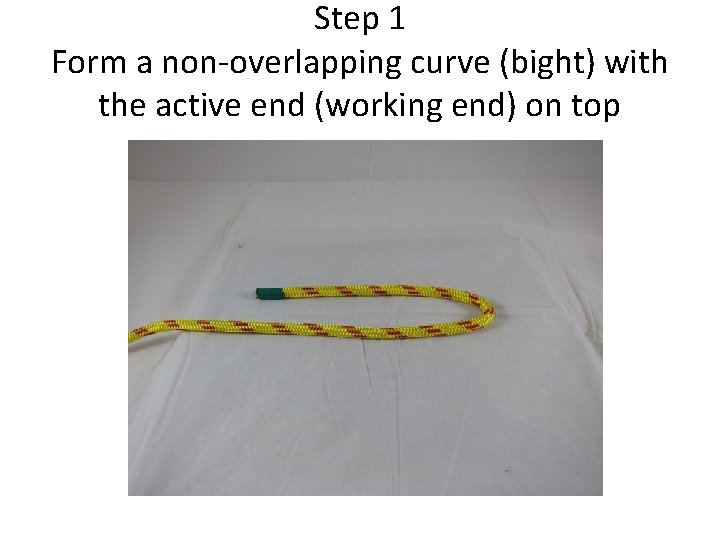
Step 1 Form a non-overlapping curve (bight) with the active end (working end) on top
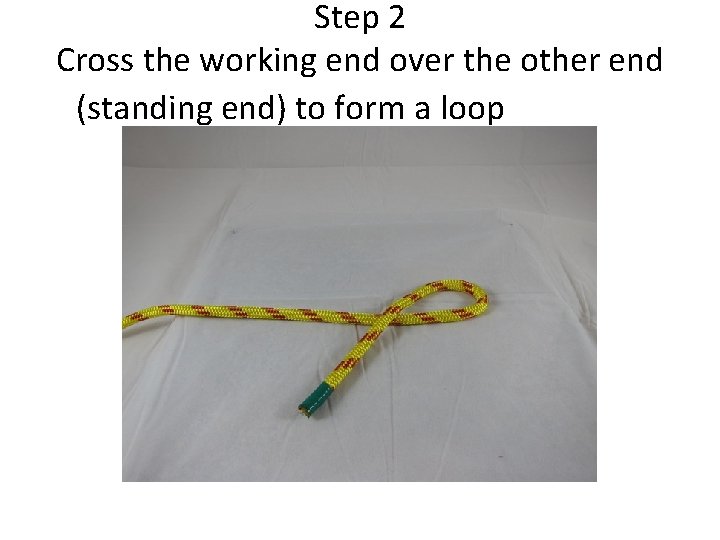
Step 2 Cross the working end over the other end (standing end) to form a loop ca loop
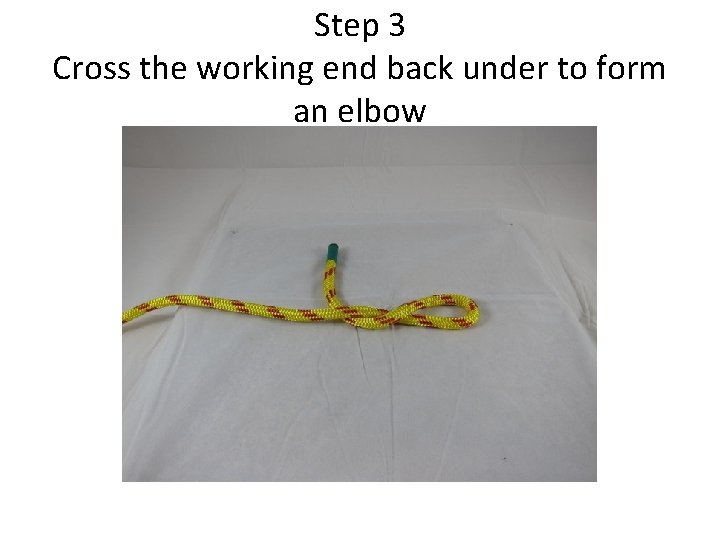
Step 3 Cross the working end back under to form an elbow
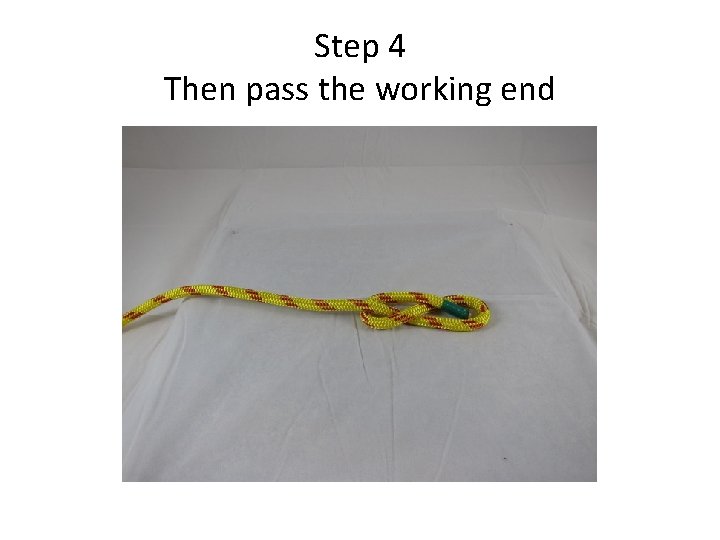
Step 4 Then pass the working end
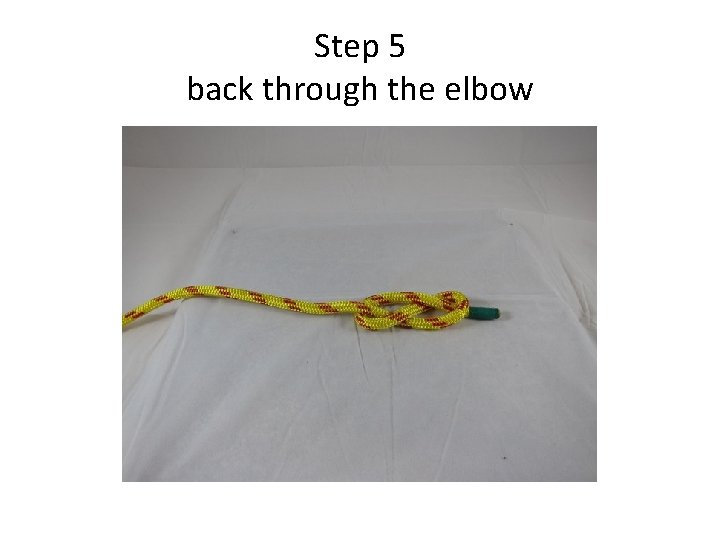
Step 5 back through the elbow
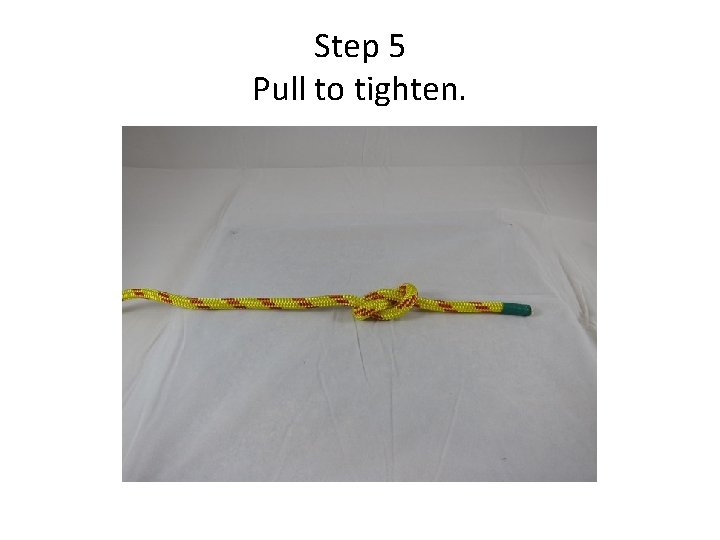
Step 5 Pull to tighten.
Executive functioning skills Activity • What skills did you use? • What personal qualities did you employ ? • How did you feel? • What made it easier?
Strategies to help with Executive Functioning difficulties • • The most important factor in retraining executive skills is in providing structure Make the goal /learning intention very clear and explicit Break down tasks. Step by step instructions Helping pupils to work towards goals which are meaningful to them. (so identify what is important for then to achieve). The goal is not always independence as some pupils may always need a degree of cognitive or executive support. Encourage the pupils to take responsibility for using strategies that will help them with time to practice using them. Opportunities for identifying problems and solving them. Model exactly what the pupil has to do using an example of what is expected as an outcome with clear of processes e. g. in Maths operations and sequences involved available for pupils to refer to. Help to start pupil off at the start of a task so they does not begin on the wrong track.

Any questions?
References • Brainline. org. uk • The Brain Injury Workbook © T Powell 2013 • https: //www. understood. org • Traumatic Brain Injuries: Effects of damage to different lobes of the brain • http: //www. knotguru. com/knots/3 • Braintree training • Useful website for Precision teaching: • http: //www. education. ie/en/Education. Staff/Information/NEPS-Literacy-Resource/NEPS-Resource
Useful Websites and information • • • http: //www. projectlearnet. org/ www. braininjuryhub. co. uk www. childbraininjurytrust. org. uk www. headway. org. uk 3 D Brain App http: //projectlearnet. org/tutorial videos/errorless_learning. wmv
- Slides: 31