
Thinking About Psychology The Science of Mind and
Thinking About Psychology: The Science of Mind and Behavior 2 e Charles T. Blair-Broeker Randal M. Ernst

Cognitive Domain

Memory Chapter
Module 23 Forgetting and Memory Construction
Information Processing Model • Encoding – process of getting information into the memory system • Storage - retention of encoded information over time • Retrieval – process of getting encoded information out of memory storage
Module 23: Forgetting and Memory Construction Forgetting as Encoding Failure
Encoding Failures • People fail to encode information because: – It is unimportant to them – It is not necessary to know the information – A decrease in the brain’s ability to encode
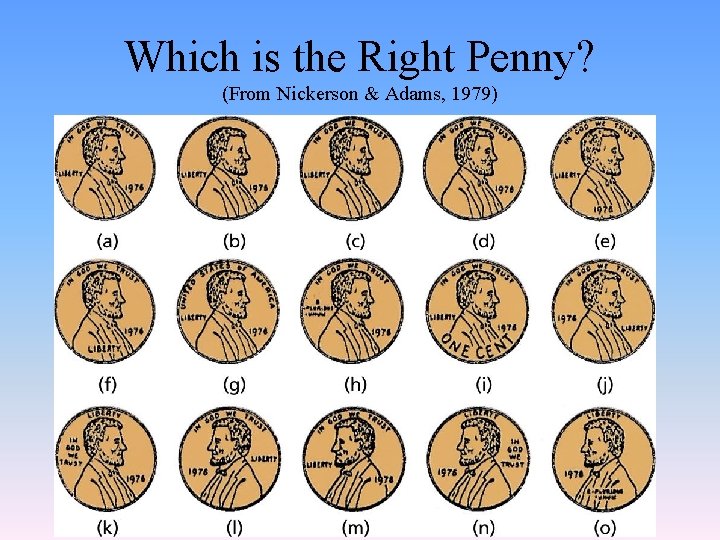
Which is the Right Penny? (From Nickerson & Adams, 1979)
Which is the Right Penny? (From Nickerson & Adams, 1979)
Module 23: Forgetting and Memory Construction Forgetting as Storage Failure
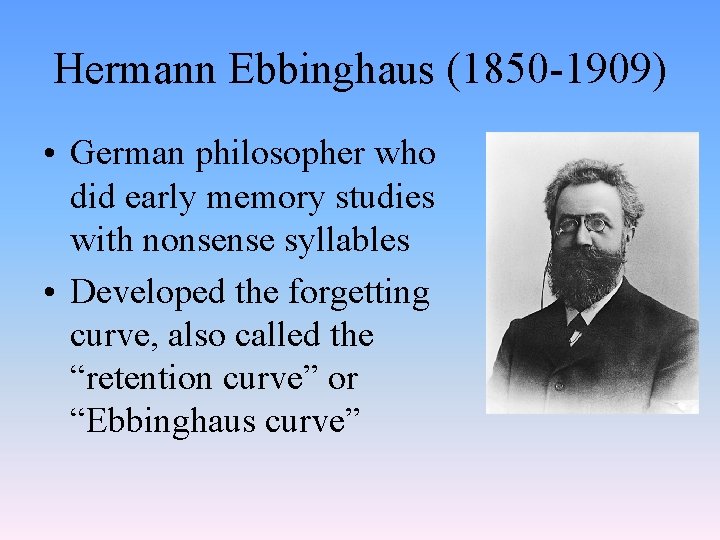
Hermann Ebbinghaus (1850 -1909) • German philosopher who did early memory studies with nonsense syllables • Developed the forgetting curve, also called the “retention curve” or “Ebbinghaus curve”
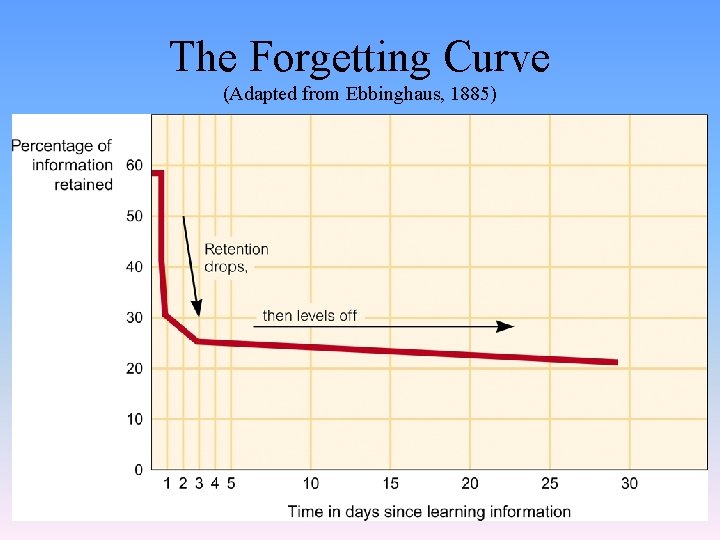
The Forgetting Curve (Adapted from Ebbinghaus, 1885)
Permastore Memory • Long-term memories that are especially resistant to forgetting and are likely to last a lifetime
Module 23: Forgetting and Memory Construction Forgetting as Retrieval Failure: Interference
Interference • A retrieval problem when one memory gets in the way of remembering another • Two types of interference: – Proactive interference – Retroactive interference
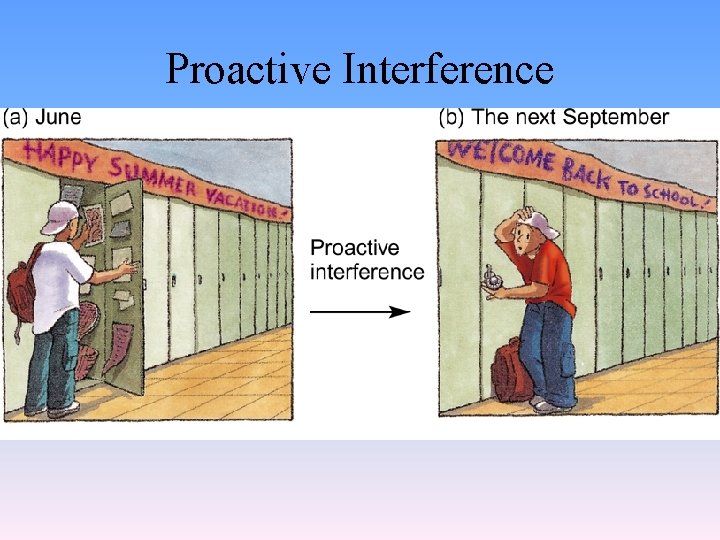
Proactive Interference • When an older memory disrupts the recall of a newer memory
Proactive Interference
Retroactive Interference • When a more recent memory disrupts the recall of an older memory
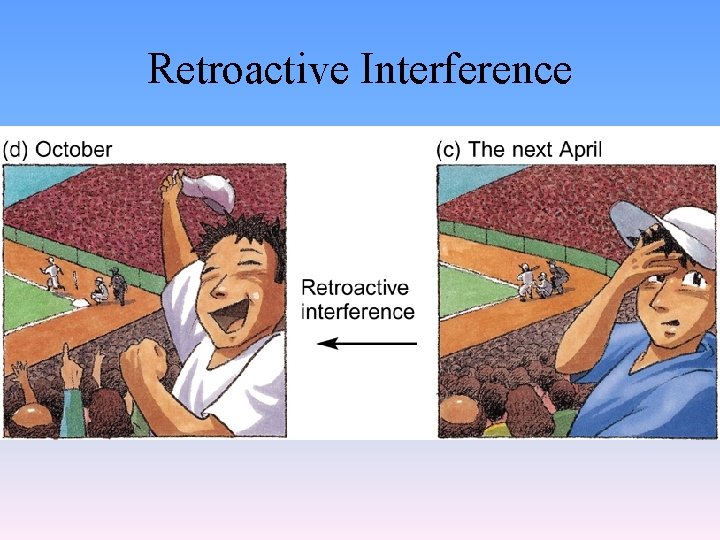
Retroactive Interference
Module 23: Forgetting and Memory Construction Forgetting as Retrieval Failure: Motivated Forgetting
Repression • Part of Freud’s psychoanalytic theory • Process of moving anxiety-producing memories to the unconscious • Supposed means of protecting oneself from painful memories • Not well-supported by research; stressful incidents are actually more likely to be encoded
Module 23: Forgetting and Memory Construction
Memory Jigsaw Analogy • Memories, rather than being like a video tape, are formed as bits and pieces. • People may retrieve only some of the pieces of the memory
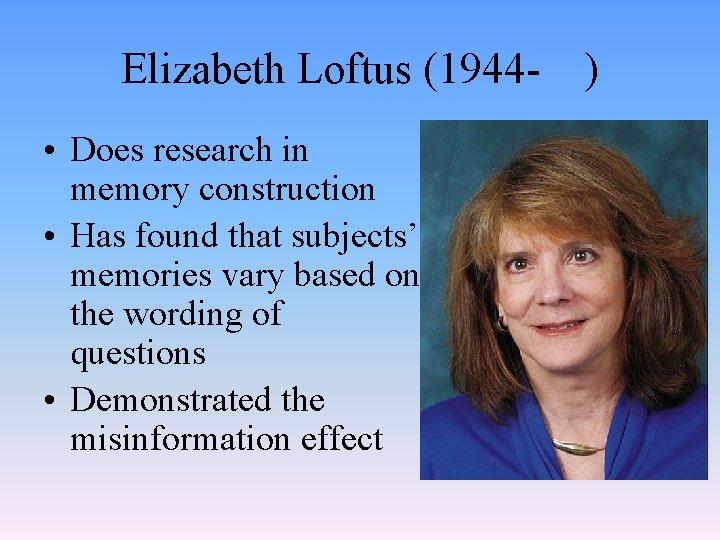
Elizabeth Loftus (1944 • Does research in memory construction • Has found that subjects’ memories vary based on the wording of questions • Demonstrated the misinformation effect )
Misinformation Effect • Incorporating misleading information into a memory of an event • Affects eyewitness testimony
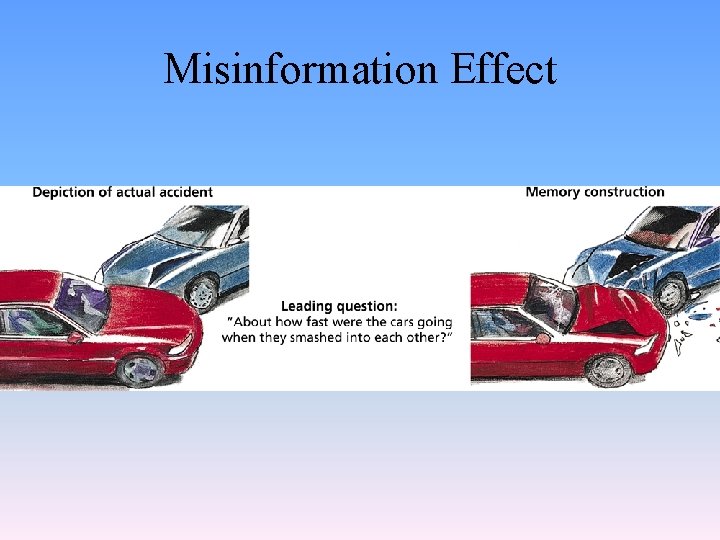
Misinformation Effect
Module 23: Forgetting and Memory Construction: Children’s Recall
Children’s Testimony on Abuse • Research has shown children’s testimony to be unreliable • Children are very open to suggestions • As children mature their memories improve
Accurate Interviewing Methods • To promote accuracy with children’s testimony the interviewer should: – Phrase questions in a way the child can understand – Have no prior contact with the child – Use neutral language and do not lead or suggest answers
Module 23: Forgetting and Memory Construction: Recovered Memories
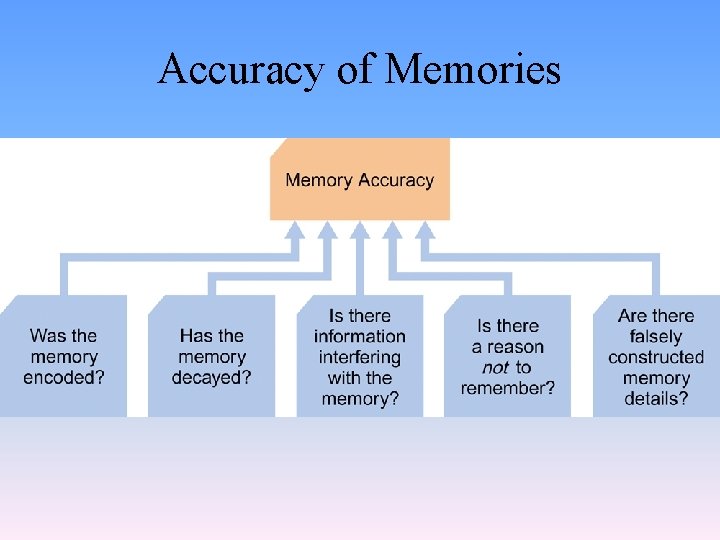
Accuracy of Memories

The End
- Slides: 32