
Thinkers Beliefs Radicalism and Classical Liberalism Identify principles
Thinkers, Beliefs, Radicalism, and Classical Liberalism. • Identify principles of liberalism that have remained constant over time. • Determine the degree to which contemporary political figures reflect a liberal ideology.
Principles of Liberalism ► individual rights and freedoms ► self-interest ► competition ► economic ► rule freedom of law ► private property.

Thinkers Beliefs How their ideas were radical at that time. How their ideas are related to Classical Liberalism Hobbes Humans are naturally selfish and could live in peace by giving up all of their political rights to a ruler (Leviathan) who would in turn protect them. ►If Hobbes emphasis on the best interests of individuals (even under a strong political authority) reflects the importance of rights and freedoms. Social contract implies a degree of accountability. the leader did not protect the citizens, they could overthrow him. ►Hobbes valued the worth and protection of individual subjects. ►Believed in a Social contract.

Thinkers Beliefs How their ideas were radical at that time. How their ideas are related to Classical Liberalism Locke Focused on reason and logic to determine actions. Believed humans had inalienable natural rights: Life, liberty, security, private property ►Government Advocated for rule of law and protection of civil liberties, rights, and freedoms under a constitution. accountability to the people. ►Ownership and protection of private property. ►Believed in a Social contract.
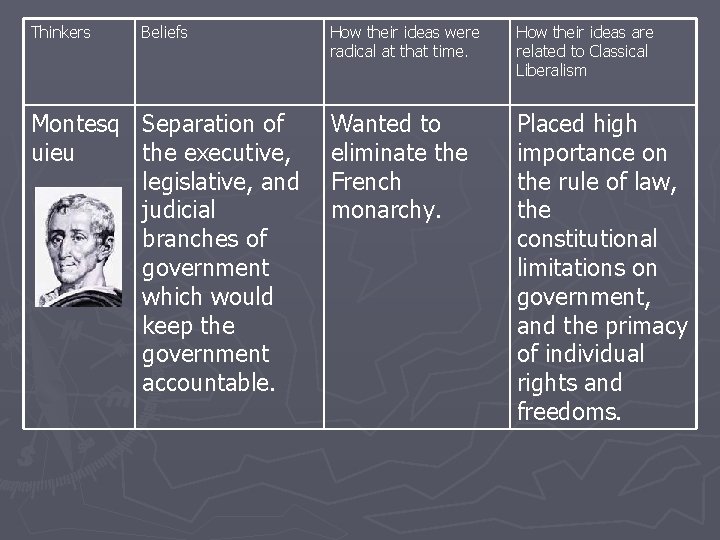
Thinkers Beliefs Montesq Separation of uieu the executive, legislative, and judicial branches of government which would keep the government accountable. How their ideas were radical at that time. How their ideas are related to Classical Liberalism Wanted to eliminate the French monarchy. Placed high importance on the rule of law, the constitutional limitations on government, and the primacy of individual rights and freedoms.

Thinkers Beliefs How their ideas were radical at that time. Smith Believed that if individuals were free to make their own decisions in a free market, their self-interest (invisible hand) would benefit society as a whole. ►Opposition to How their ideas are related to Classical Liberalism Economic ideas the current are directly economic system related to (mercantilism). economic freedom, self►Free market and limited govt. interest, competition, and role in the private property. economy were controversial Ideas can also be ideas. tied to rule of law (contracts) and individual rights and freedoms.

Thinkers Beliefs How their ideas were radical at that time. How their ideas are related to Classical Liberalism Mill Believed in individual rights and freedoms as well as free speech. Only limitation should be if one’s actions could harm another. ►Emphasis Individual rights and freedoms. on rights and freedoms in an era where these rights were restricted.
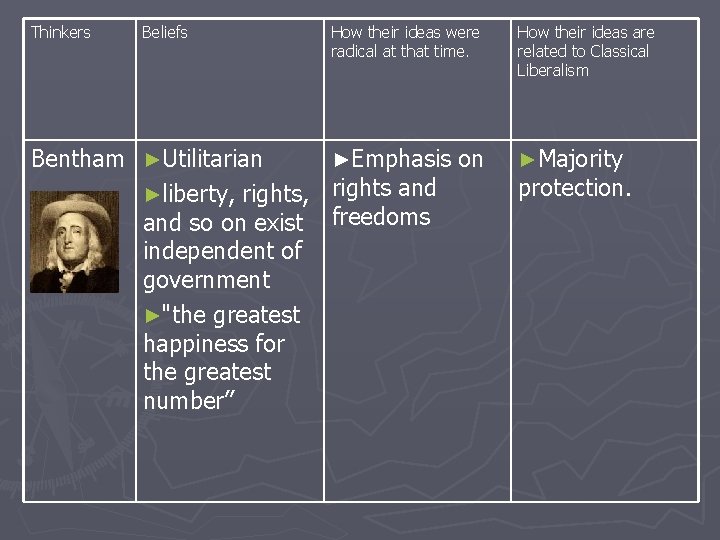
Thinkers Beliefs Bentham ►Utilitarian ►liberty, rights, and so on exist independent of government ►"the greatest happiness for the greatest number” How their ideas were radical at that time. How their ideas are related to Classical Liberalism ►Emphasis ►Majority rights and freedoms on protection.
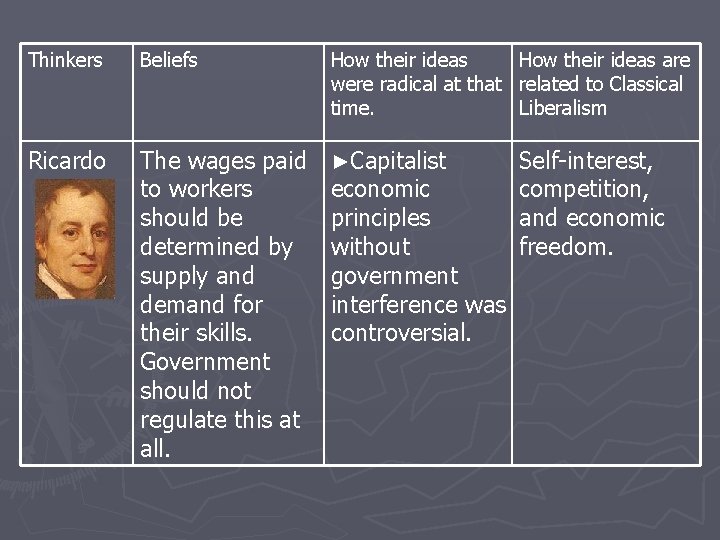
Thinkers Beliefs How their ideas are were radical at that related to Classical time. Liberalism Ricardo The wages paid to workers should be determined by supply and demand for their skills. Government should not regulate this at all. ►Capitalist economic principles without government interference was controversial. Self-interest, competition, and economic freedom.

Project - Identify principles of liberalism that have remained constant over time. Liberalism as an ideology has retained some core principles and values that reflect a particular view of human nature and the role of governments in society. ► The challenge will be to identify principles and values of liberalism that have remained constant over time by examining the ideas of two important liberal figures. ► Choose one from Group B (on the next slide), research and then create a chart or poster in Power. Point that compares them to two from Group A. ► DUE: Friday September 20 th for sharing and evaluation. ►
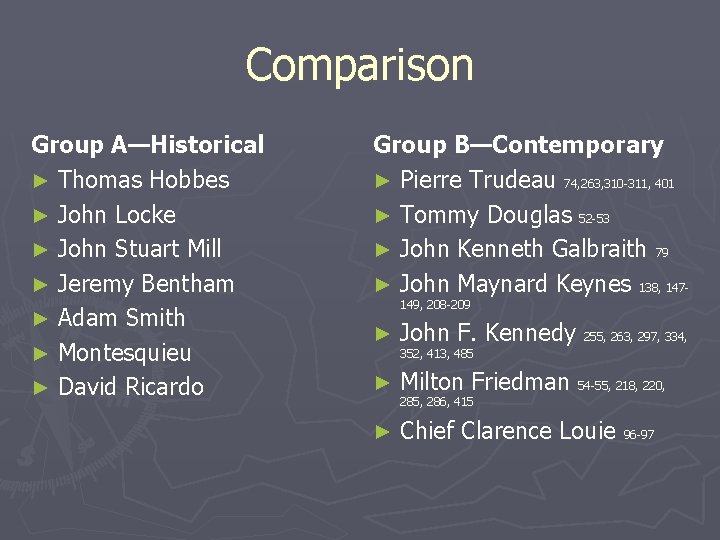
Comparison Group A—Historical ► Thomas Hobbes ► John Locke ► John Stuart Mill ► Jeremy Bentham ► Adam Smith ► Montesquieu ► David Ricardo Group B—Contemporary ► Pierre Trudeau 74, 263, 310 -311, 401 ► Tommy Douglas 52 -53 ► John Kenneth Galbraith 79 ► John Maynard Keynes 138, 147149, 208 -209 ► John F. Kennedy 255, 263, 297, 334, ► Milton Friedman 54 -55, 218, 220, ► Chief Clarence Louie 96 -97 352, 413, 485 285, 286, 415
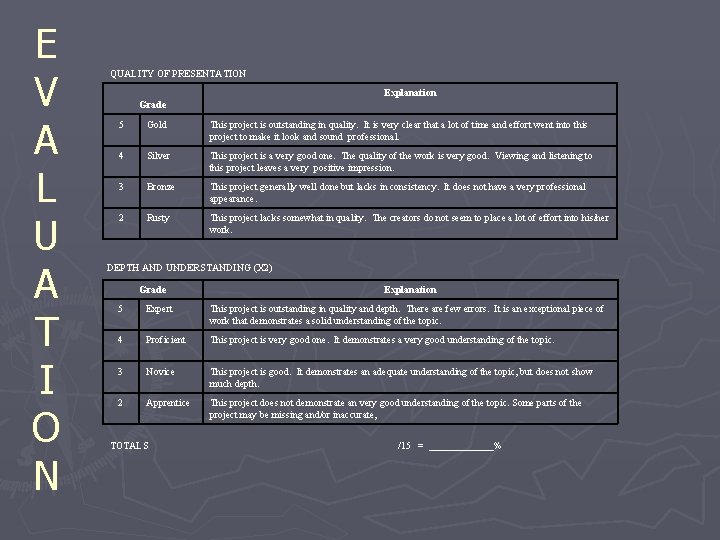
E V A L U A T I O N QUALITY OF PRESENTATION Explanation Grade 5 Gold This project is outstanding in quality. It is very clear that a lot of time and effort went into this project to make it look and sound professional. 4 Silver This project is a very good one. The quality of the work is very good. Viewing and listening to this project leaves a very positive impression. 3 Bronze This project generally well done but lacks in consistency. It does not have a very professional appearance. 2 Rusty This project lacks somewhat in quality. The creators do not seem to place a lot of effort into his/her work. DEPTH AND UNDERSTANDING (X 2) Grade Explanation 5 Expert This project is outstanding in quality and depth. There are few errors. It is an exceptional piece of work that demonstrates a solid understanding of the topic. 4 Proficient This project is very good one. It demonstrates a very good understanding of the topic. 3 Novice This project is good. It demonstrates an adequate understanding of the topic, but does not show much depth. 2 Apprentice This project does not demonstrate an very good understanding of the topic. Some parts of the project may be missing and/or inaccurate, TOTALS /15 = _______%
- Slides: 12