
Think and Write What is language What are
- Slides: 16
Think and Write What is language? What are the different functions of language? What are some ways in which language shapes your worldview?
We use language To communicate To influence • Think of a recent text message you’d sent. Was your intention to communicate or to influence? Both? Explain.
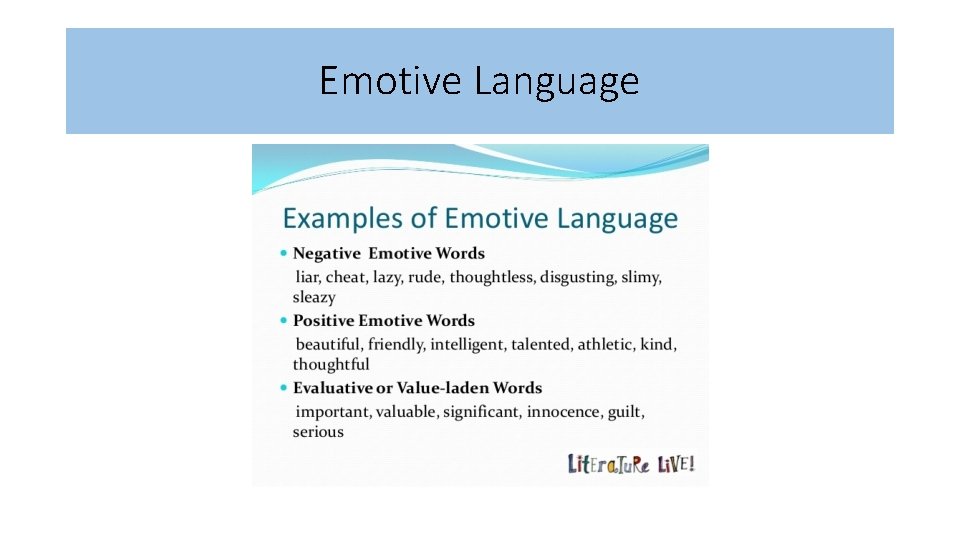
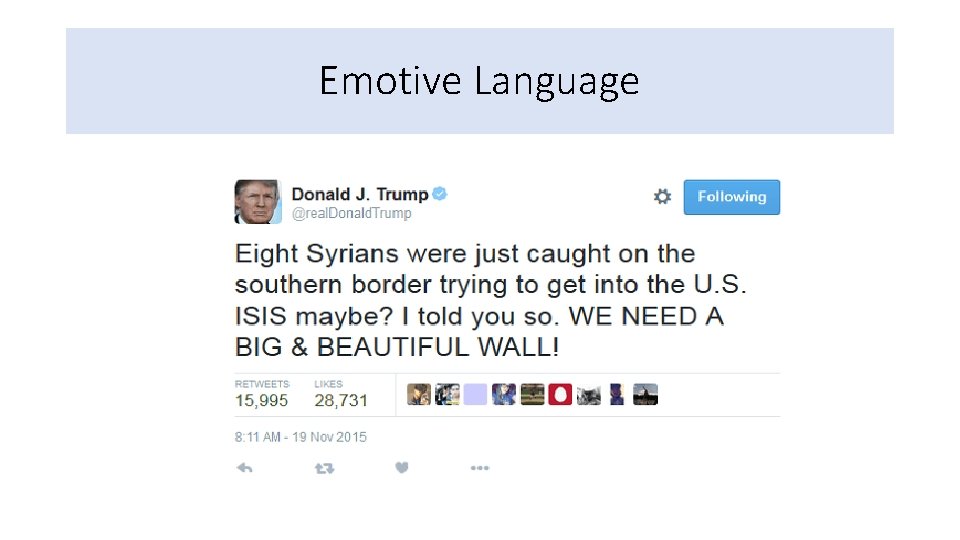
Emotive Language
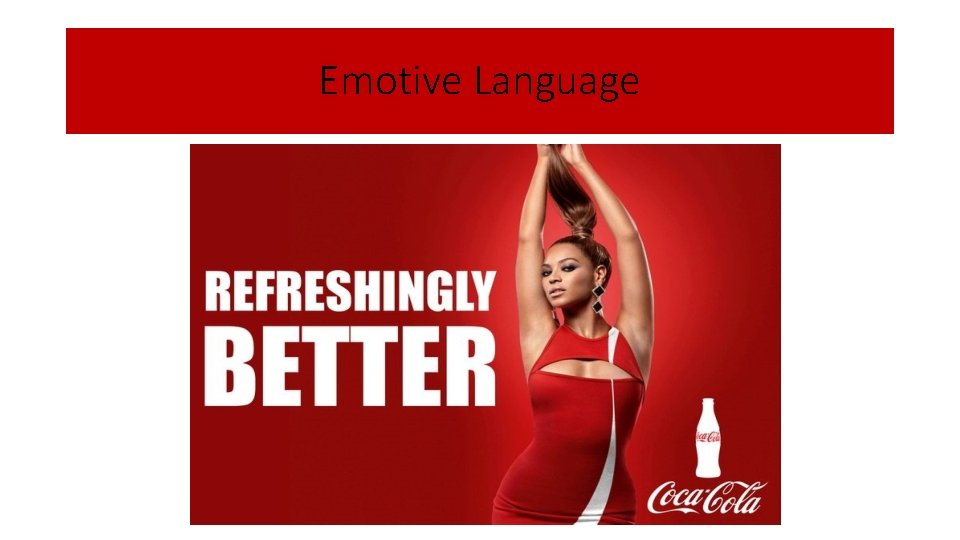
Emotive Language
Emotive Language
Rhetorical devices • Like emotive language, rhetorical devices use psychological persuasion, rather than reason, to persuade others to accept a particular position. • Common rhetorical devices include euphemisms, dysphemisms, sarcasm, and hyperbole.
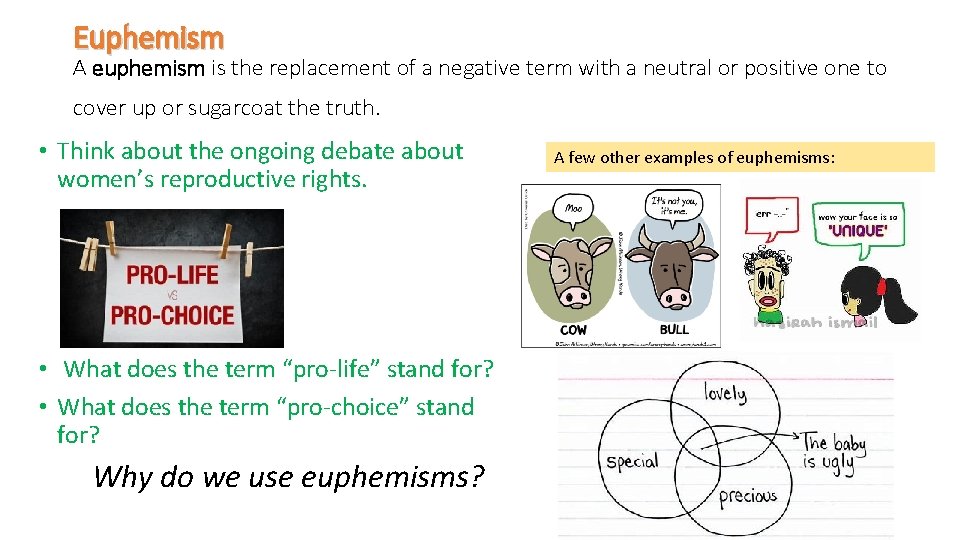
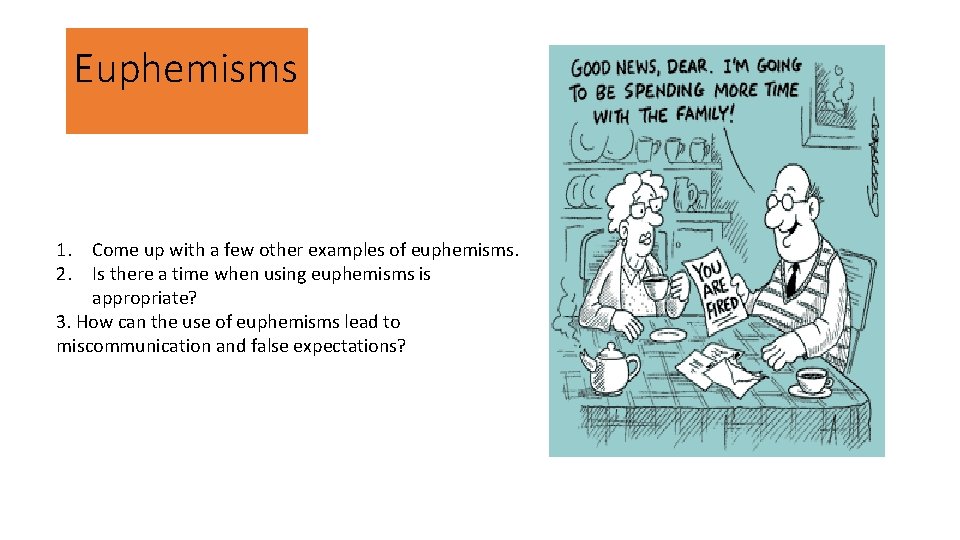
Euphemism A euphemism is the replacement of a negative term with a neutral or positive one to cover up or sugarcoat the truth. • Think about the ongoing debate about women’s reproductive rights. • What does the term “pro-life” stand for? • What does the term “pro-choice” stand for? Why do we use euphemisms? A few other examples of euphemisms:
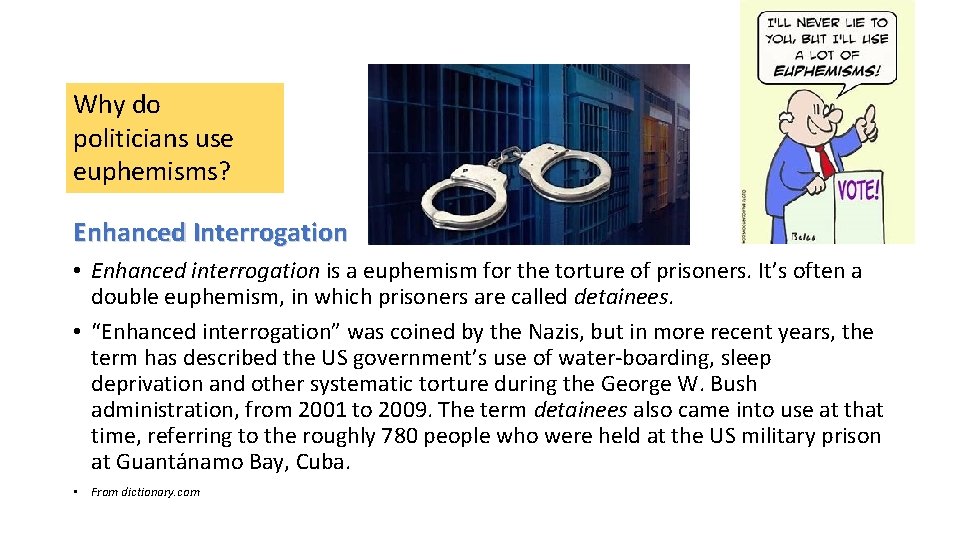
Why do politicians use euphemisms? Enhanced Interrogation • Enhanced interrogation is a euphemism for the torture of prisoners. It’s often a double euphemism, in which prisoners are called detainees. • “Enhanced interrogation” was coined by the Nazis, but in more recent years, the term has described the US government’s use of water-boarding, sleep deprivation and other systematic torture during the George W. Bush administration, from 2001 to 2009. The term detainees also came into use at that time, referring to the roughly 780 people who were held at the US military prison at Guantánamo Bay, Cuba. • From dictionary. com
Euphemisms 1. Come up with a few other examples of euphemisms. 2. Is there a time when using euphemisms is appropriate? 3. How can the use of euphemisms lead to miscommunication and false expectations?
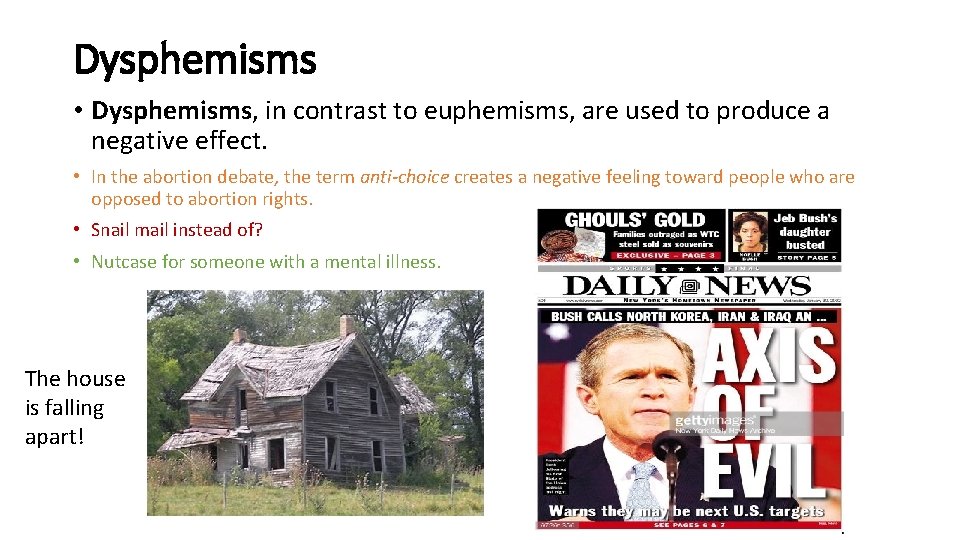
Dysphemisms • Dysphemisms, in contrast to euphemisms, are used to produce a negative effect. • In the abortion debate, the term anti-choice creates a negative feeling toward people who are opposed to abortion rights. • Snail mail instead of? • Nutcase for someone with a mental illness. The house is falling apart!
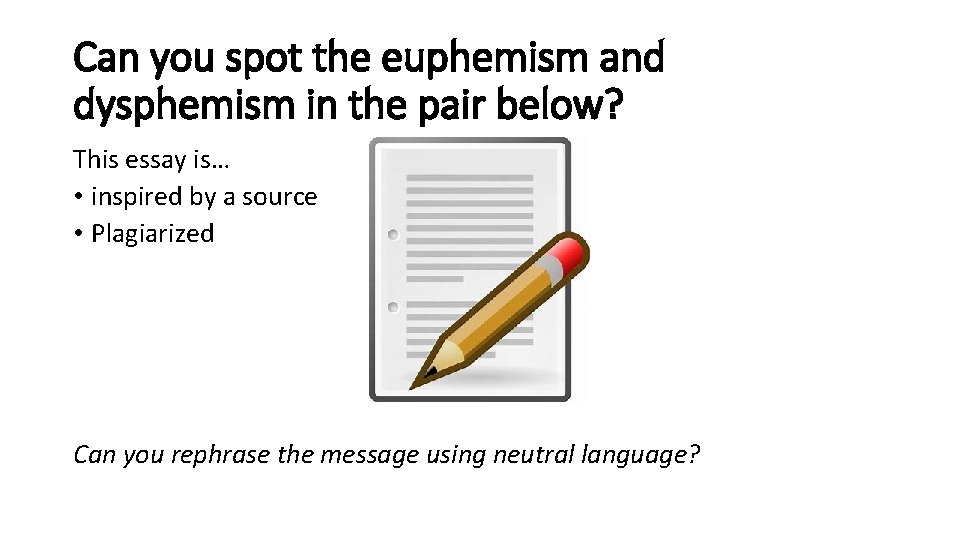
Can you spot the euphemism and dysphemism in the pair below? This essay is… • inspired by a source • Plagiarized Can you rephrase the message using neutral language?
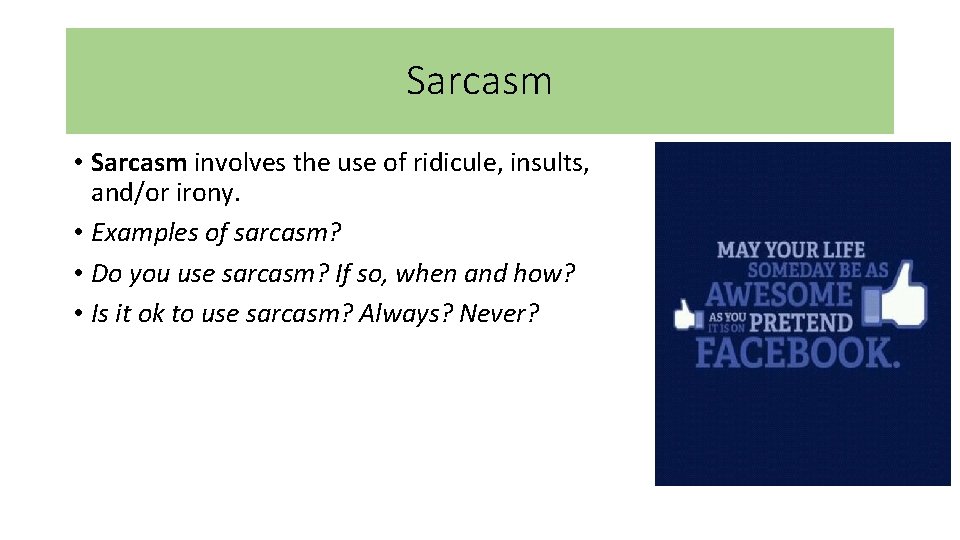
Sarcasm • Sarcasm involves the use of ridicule, insults, and/or irony. • Examples of sarcasm? • Do you use sarcasm? If so, when and how? • Is it ok to use sarcasm? Always? Never?
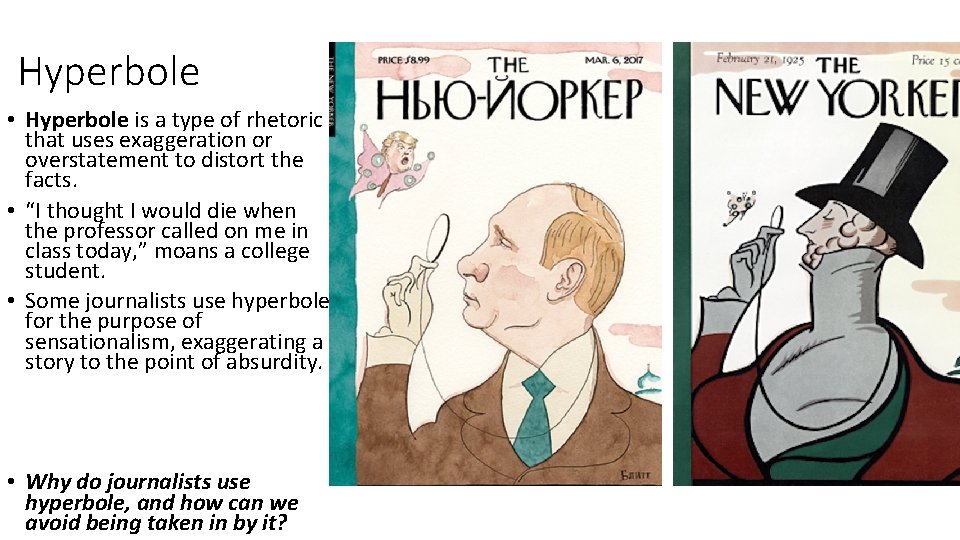
Hyperbole • Hyperbole is a type of rhetoric that uses exaggeration or overstatement to distort the facts. • “I thought I would die when the professor called on me in class today, ” moans a college student. • Some journalists use hyperbole for the purpose of sensationalism, exaggerating a story to the point of absurdity. • Why do journalists use hyperbole, and how can we avoid being taken in by it?
A Lie • • What is a lie? How is a lie different from a rhetorical device such as a euphemism? Is it ever morally acceptable to lie to spare someone's feelings or to promote what we regard as the “greater good”? How about a lie to save a life? Most ethicists agree that the great majority of lies are not justified. Lies can damage trust. In addition, making a political or life decision based on someone else's lies can have ruinous results. Wars may be waged based on misinformation. A murderer may go free if the investigating police officer or jury believes his or her lies! Most of us are easily taken in by the lies of others. A study found that people lie about a third of the time in their interactions with others; only about 18 percent of lies are ever discovered. The average person is able to tell the difference between a liar and a truthteller only about 55 percent of the time (not much better than chance). Even when lies are exposed, the public will sometimes get caught up in doublethink—knowing that what they once believed is a lie but continuing to act as though the lie were true. The good news is that we can train ourselves to be better at detecting other people's lies. Skilled lie-catchers, such as police, FBI investigators, and some psychiatrists, are able to distinguish between liars and truth-tellers with 80 percent to 95 percent accuracy.
Which rhetorical devices does President Trump use in his rally? https: //www. youtube. com/watch? v=do 2 YCAGPr 4 E Fast-forward to 47 minutes into the video and watch 5 minutes of Trump’s speech Which rhetorical devices does SNL use to portray President Trump? https: //www. nbc. com/saturday-night-live/video/deal-or-nodeal-cold-open/3867373 Watch the first 5 minutes of the video.
Think about it • How does the media manipulate you through the use of emotive language and sensationalism? • How can you recognize and avoid being taken in by manipulative language in advertisements?