
Think about the skill you picked for this
Think about the skill you picked for this semester. How does nonverbal communication influence this skill?
Expectancy Violations Theory
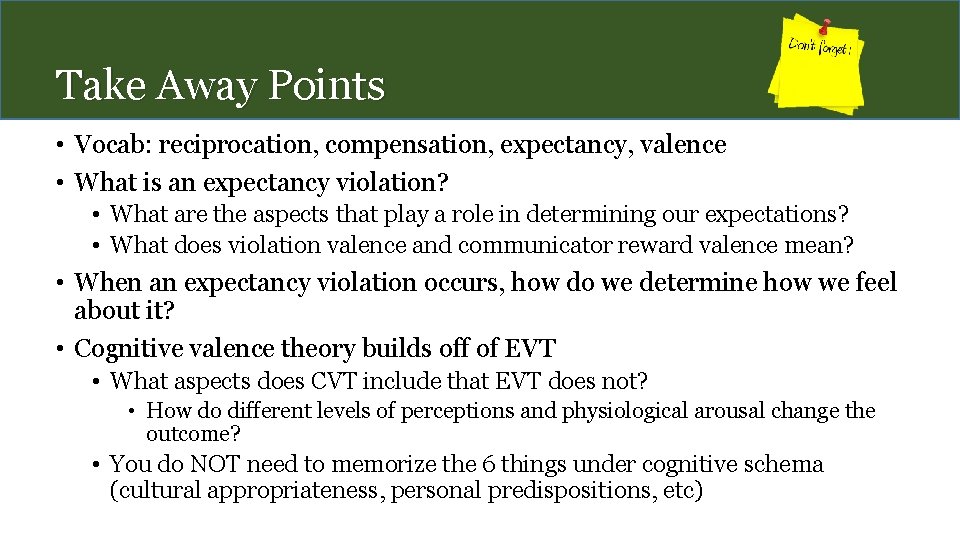
Take Away Points • Vocab: reciprocation, compensation, expectancy, valence • What is an expectancy violation? • What are the aspects that play a role in determining our expectations? • What does violation valence and communicator reward valence mean? • When an expectancy violation occurs, how do we determine how we feel about it? • Cognitive valence theory builds off of EVT • What aspects does CVT include that EVT does not? • How do different levels of perceptions and physiological arousal change the outcome? • You do NOT need to memorize the 6 things under cognitive schema (cultural appropriateness, personal predispositions, etc)
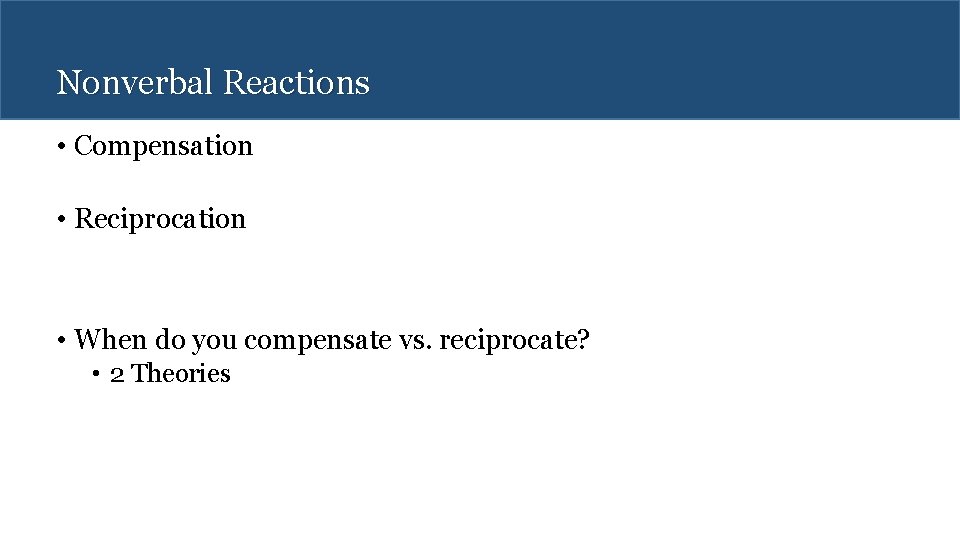
Nonverbal Reactions • Compensation • Reciprocation • When do you compensate vs. reciprocate? • 2 Theories
Expectancy Violations Theory • Purpose of theory: • Explains reactions to (and consequences of) violated expectations in communication with others
Expectancy • What we predict others will do during interaction with us
Expectancy • Based on • Context, e. g. , cultural norms, settings • Relationship, e. g. , similarity, familiarity, liking, status • Communicator characteristics, e. g. , demographics, appearance, style • Some deviation from expectancy permitted • But beyond that a “violation” occurs
Examples of Expectancy Violation • Think of a recent time when someone did something that you didn’t expect (while interacting with you)? • What did they do? • How did you react?
Violation Valence • When a violation of expectancy occurs • Interpretation – what does it mean? • Evaluation – determine valence • Positive – “I like it” • Negative – “I don’t like it” • BUT also depends on communicator reward valence
Communicator Reward Valence • Before you were interpreting the behavior, now you’re thinking about the person • When thinking about the person… • Their positive and negative attributes • E. g. , is the person attractive, powerful, famous? • “Rewarding” communicators
Putting EVT Together • If I evaluate a violation positively, or the violation is ambiguous but communicator reward valence is positive… • I will respond positively • If I evaluate a violation negatively, or the violation is ambiguous and the communicator reward valence is negative… • I will respond negatively
Critique • What if violation valence and communicator reward valence contradict – which counts more? • Theory says violation valence…do you agree?
Discussion Question • How can you use this theory to your advantage or in your day-today life?
Cognitive Valence Theory • Peter Anderson (theorist) thought that EVT wasn’t complex enough • So he came up with CVT
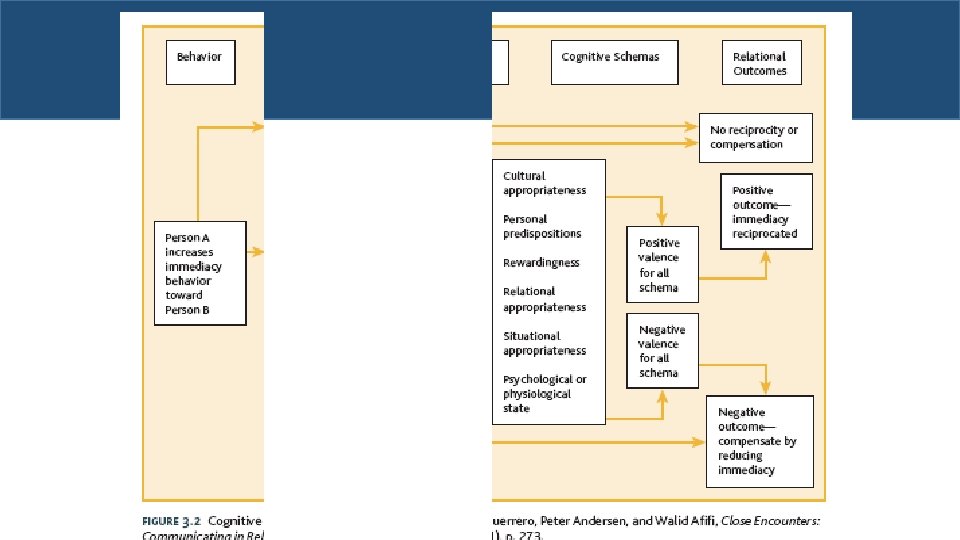

Different than EVT
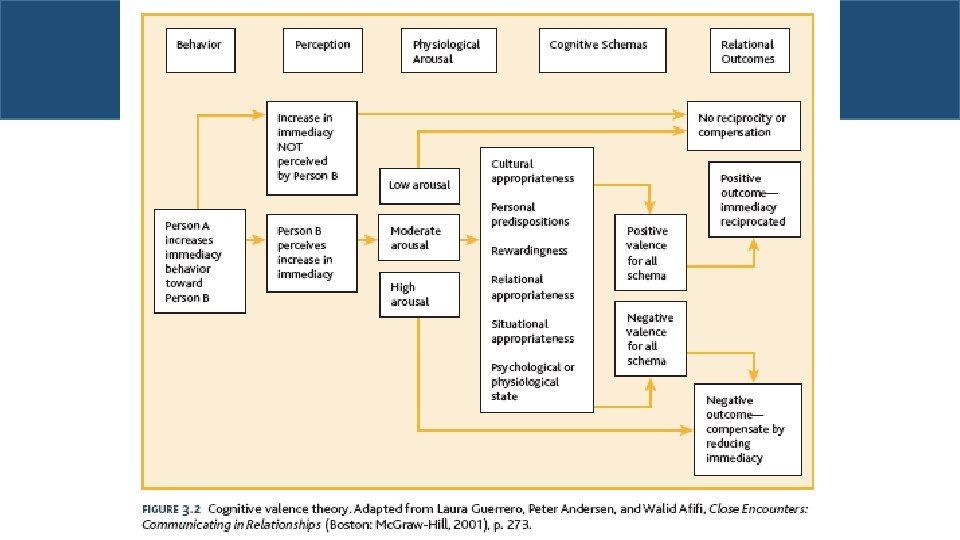
Take Away Points • Vocab: reciprocation, compensation, valence • What is an expectancy violation? • What are the aspects that play a role in determining our expectations? • What does violation valence and communicator reward valence mean? • When an expectancy violation occurs, how do we determine how we feel about it? • Cognitive valence theory builds off of EVT • What aspects does CVT include that EVT does not? • How do different levels of perceptions and physiological arousal change the outcome? • You do NOT need to memorize the 6 things under cognitive schema (cultural appropriateness, personal predispositions, etc)
- Slides: 18