
Things to Do Pick up notes Go over

- Slides: 11
Things to Do • Pick up notes • Go over test • Objective • Discuss passive transportation • Learn about diffusion
Passive Transport Notes 1
Root Words • Cyt- cell • Phag- to eat • Endo- within • Pino- to drink • Exo- Exit • Som- body • Hyper- above • Poly- Many • Hypo- below • Mono- One • Inter- between • Bi- Two • Iso- equal • -Ose: Sugar • Mit- thread • -Ase: Enzyme
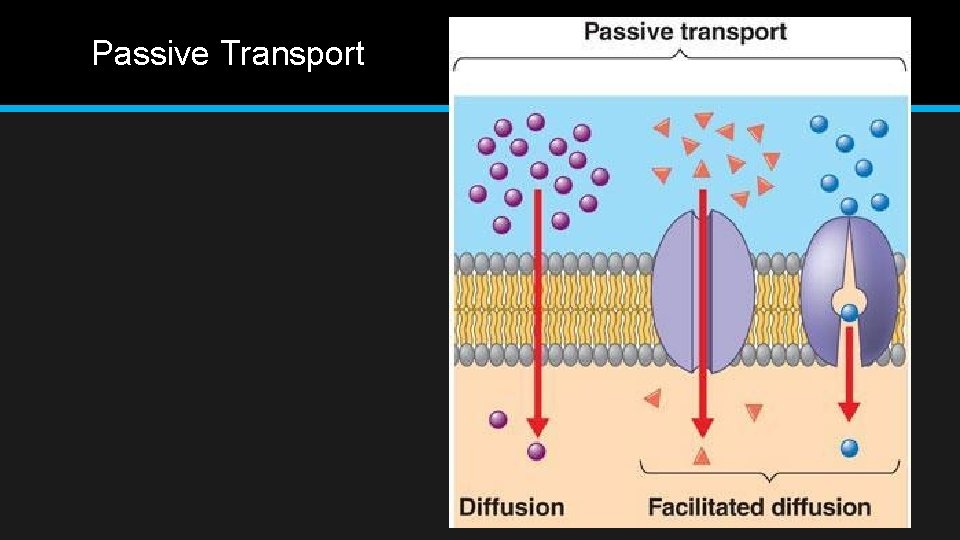
Movement in and out of a cell • Plasma membrane is selectively permeable • Also called semipermeable • Permeable - The ease to which molecules can pass through a biological membrane • Controls what leaves and enters the cell • Some molecules can come and go freely while some require energy • Passive Mechanisms - no energy required • Diffusion • Facilitated Diffusion • Osmosis • Active Mechanisms - uses energy • Active Transport • Endocytosis • Exocytosis
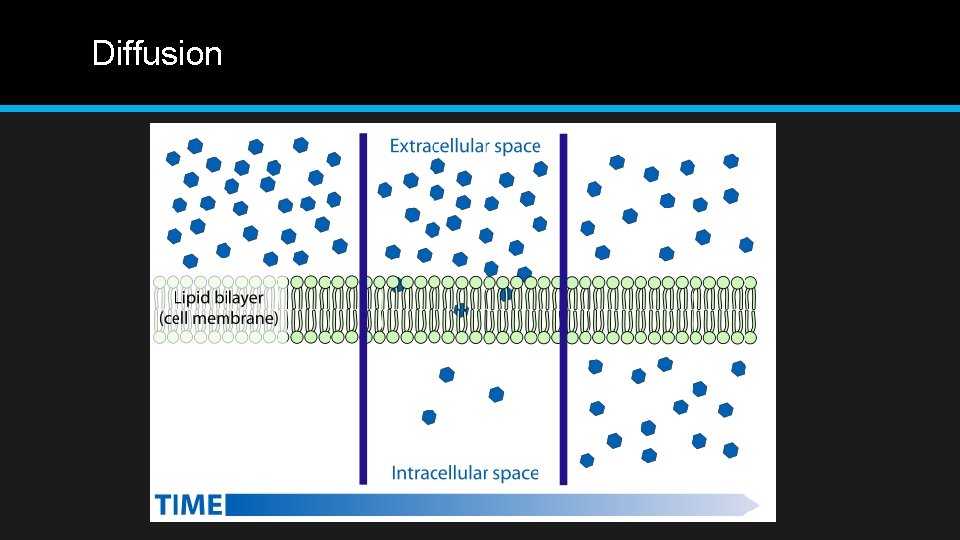
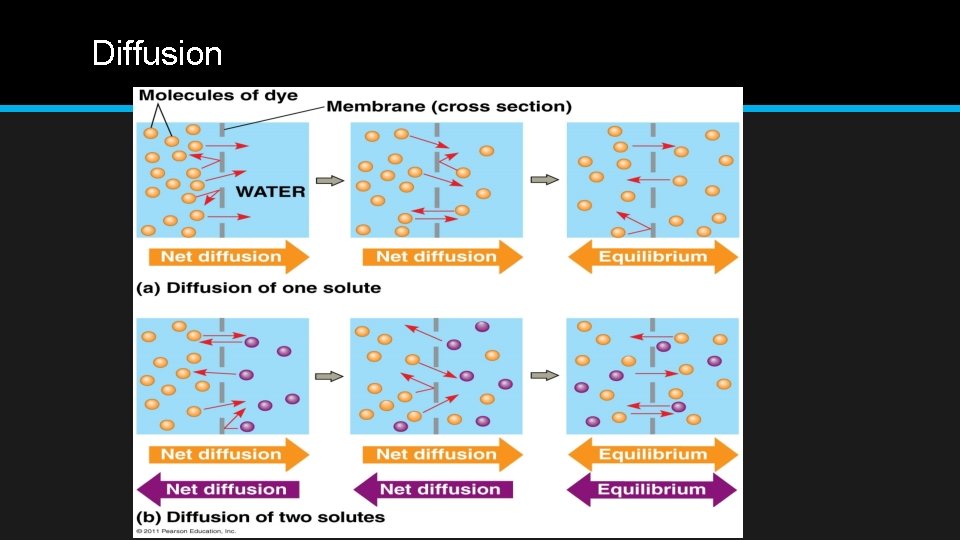
Diffusion • Molecules or Ions move from higher concentration to lower concentration • This difference in concentration is called a concentration gradient • Even distribution is called equilibrium • Can only occur if two criteria are met: • Membrane is permeable to that substance • A concentration gradient exists • Example: • Carbon Dioxide is always high in cells because it is produced as a waste product • CO 2 is low outside the cell because the body works to get rid of it • Diffusion of CO 2 occurs regularly
Diffusion
Diffusion
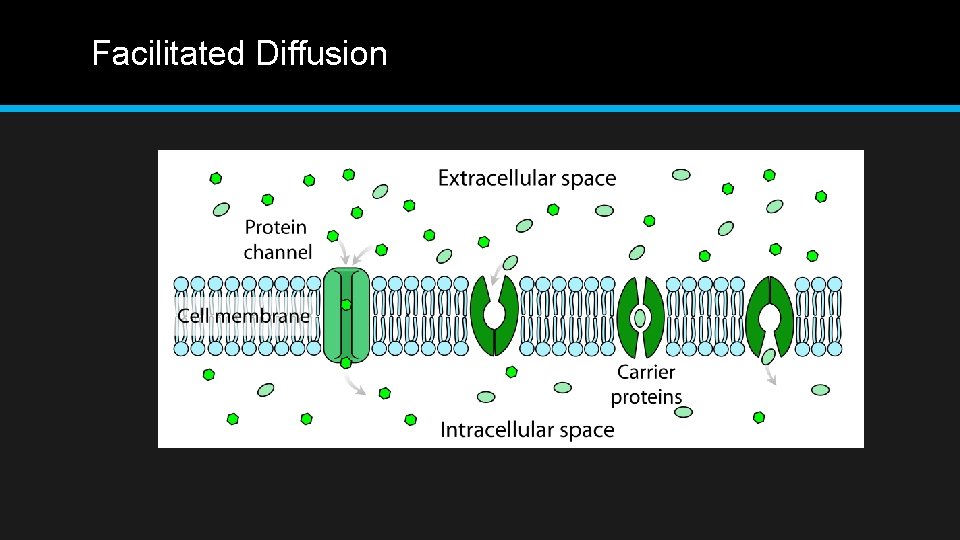
What Can Cross the Membrane • Non-charged molecules • Oxygen (O 2) • Carbon Dioxide (CO 2) • Water (H 2 O) • Nitrogen (N 2) • Larger or charged molecules can't pass through the membrane • This is called Facilitated Diffusion and does not require energy
Facilitated Diffusion • Used for molecules that can't pass through the membrane • Use protein channels and ion channels • Glucose and amino acids combine with special protein carrier molecules • Changes the shape of the carrier and allows them through • Glucose detaches on the inside • Protein carrier molecule returns to normal • Moves from high concentration to low concentration • Limited by the number of protein carrier molecules
Facilitated Diffusion
Passive Transport