
Things to Do Pick up notes and handouts
- Slides: 16
Things to Do • Pick up notes and handouts Objectives • Know the characteristics of different biomes
Biomes Notes 6
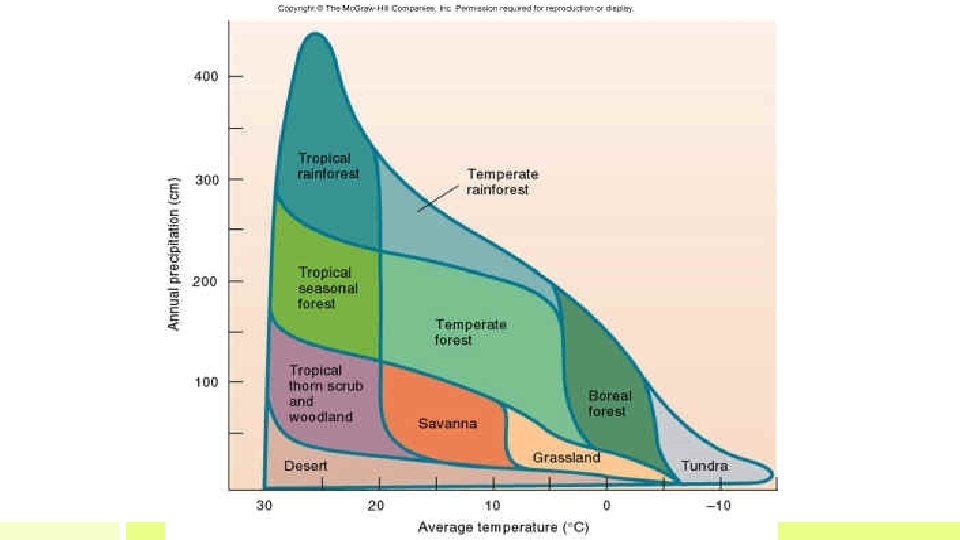
Biomes • Biomes are classified based on climates and species that inhabit the area • Large spread area • Some factors • • • Elevation Latitude Humidity/Precipitation Plant life Plant spacing • Biomes can be terrestrial or aquatic • https: //www. youtube. com/watch? v=h. Iy 0 Zly. PPDg
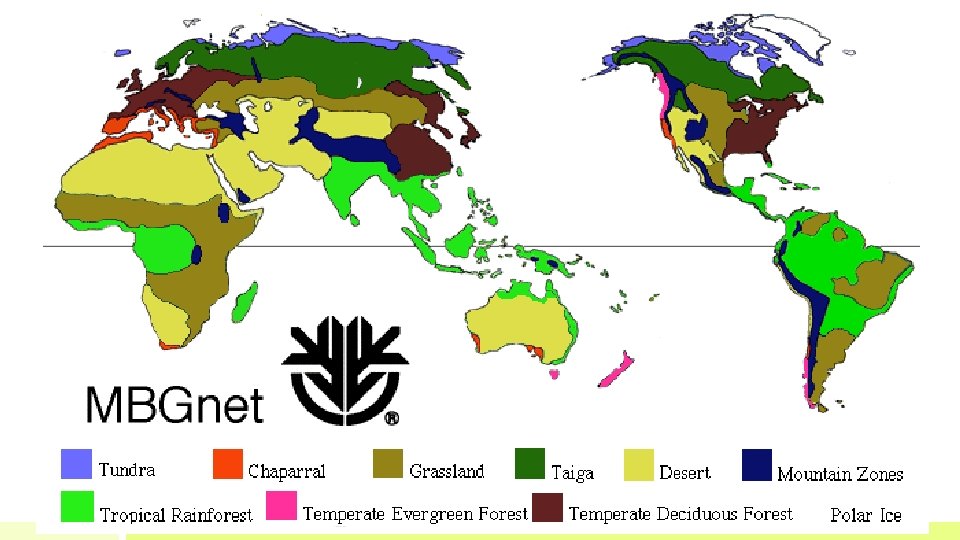
Terrestrial Biomes • There are many different terrestrial biomes • Can be subdivided more • The main biomes: • • • Tundra Rainforest Savanna Taiga Temperate forest Temperate grassland Alpine Chaparral Desert
Tundra • Coldest of the biomes • Also driest • Located in the Arctic Circle • Large land mass • Plants and animals have special adaptations to survive the cold
Rainforest • Important to weather since water evaporates from leaves and rains elsewhere • Extremely diverse plants and animals • There are two subdivisions of rainforest. • Tropical • • 30 N and 30 S Latitude Large amounts of rain Warm year round Humid • Temperate • • Along coast lines Largest is from Alaska to Oregon Not as rainy with milder temperatures Long wet winter and short dry summer
Savanna • Mainly grasses with scattered trees • Can be created with weather changes or human impact • Warm climate with good rain fall • 4 -6 month dry season • Animals mostly consist of herbivores like elephants, zebras, giraffes, and insects. • Some other animals like birds and lions • Droughts are common limiting the animals some
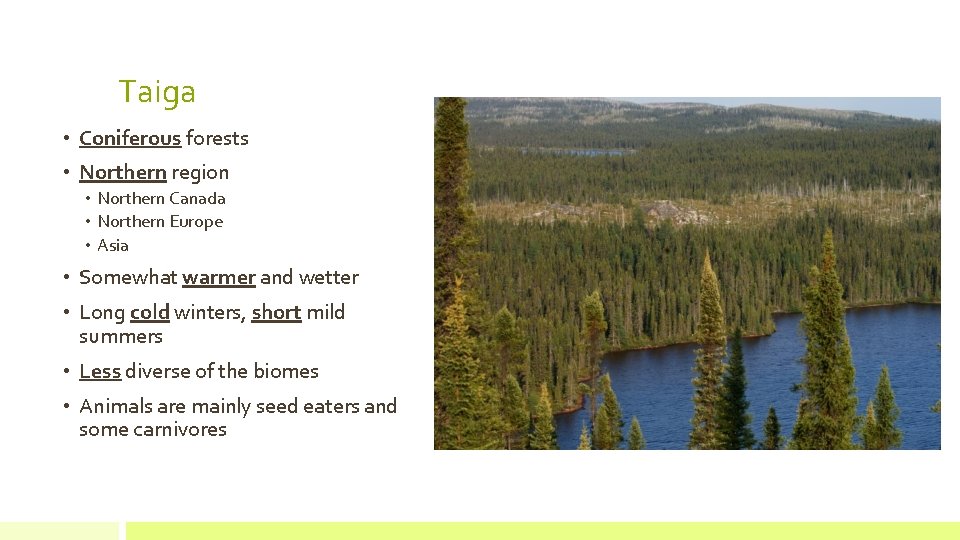
Taiga • Coniferous forests • Northern region • Northern Canada • Northern Europe • Asia • Somewhat warmer and wetter • Long cold winters, short mild summers • Less diverse of the biomes • Animals are mainly seed eaters and some carnivores
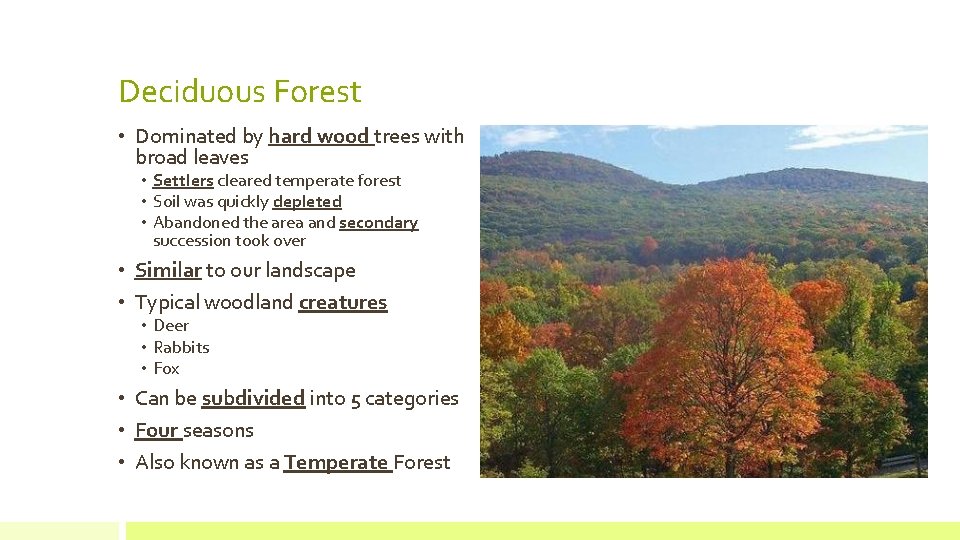
Deciduous Forest • Dominated by hard wood trees with broad leaves • Settlers cleared temperate forest • Soil was quickly depleted • Abandoned the area and secondary succession took over • Similar to our landscape • Typical woodland creatures • Deer • Rabbits • Fox • Can be subdivided into 5 categories • Four seasons • Also known as a Temperate Forest
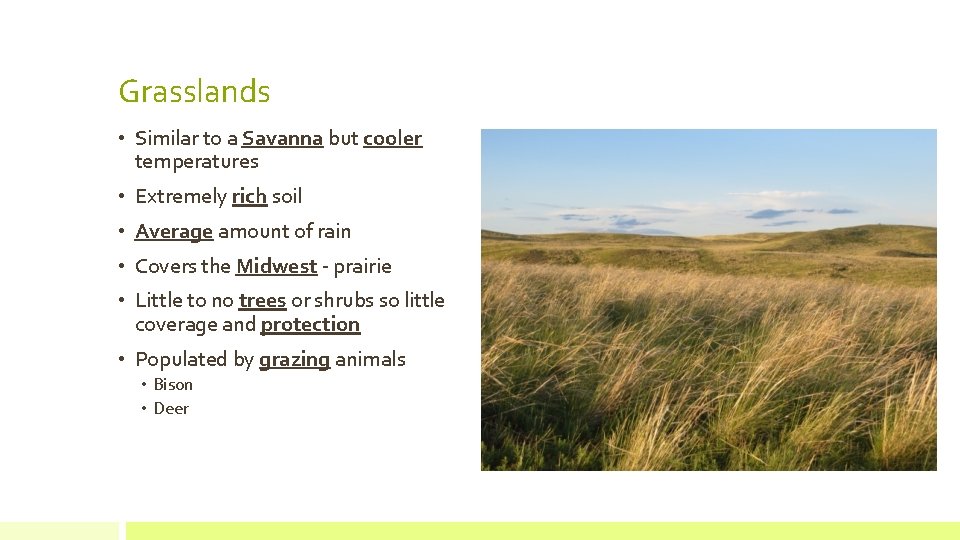
Grasslands • Similar to a Savanna but cooler temperatures • Extremely rich soil • Average amount of rain • Covers the Midwest - prairie • Little to no trees or shrubs so little coverage and protection • Populated by grazing animals • Bison • Deer
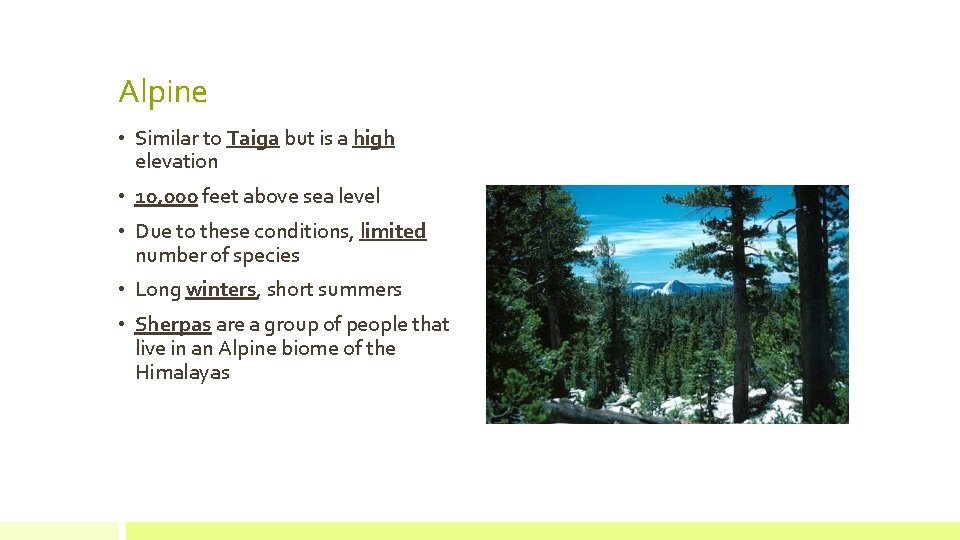
Alpine • Similar to Taiga but is a high elevation • 10, 000 feet above sea level • Due to these conditions, limited number of species • Long winters, short summers • Sherpas are a group of people that live in an Alpine biome of the Himalayas
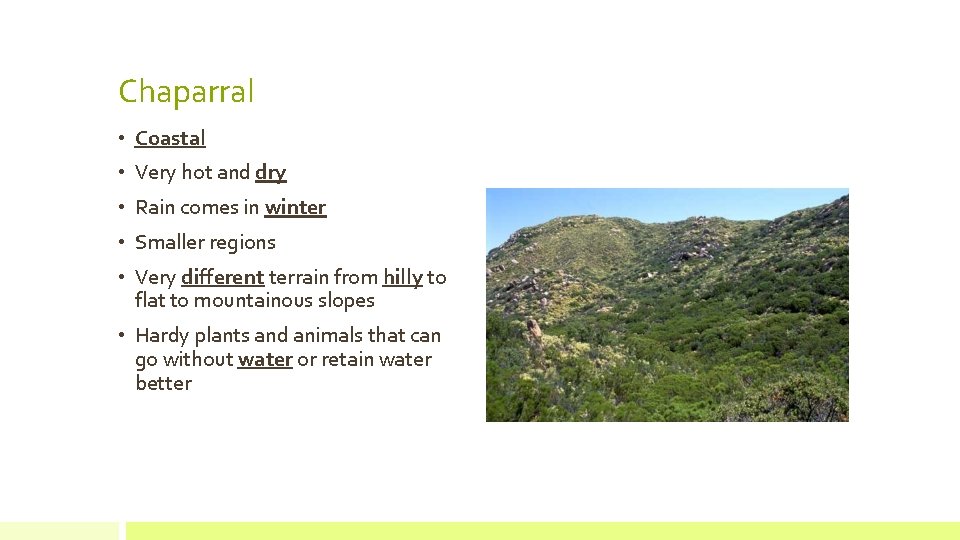
Chaparral • Coastal • Very hot and dry • Rain comes in winter • Smaller regions • Very different terrain from hilly to flat to mountainous slopes • Hardy plants and animals that can go without water or retain water better
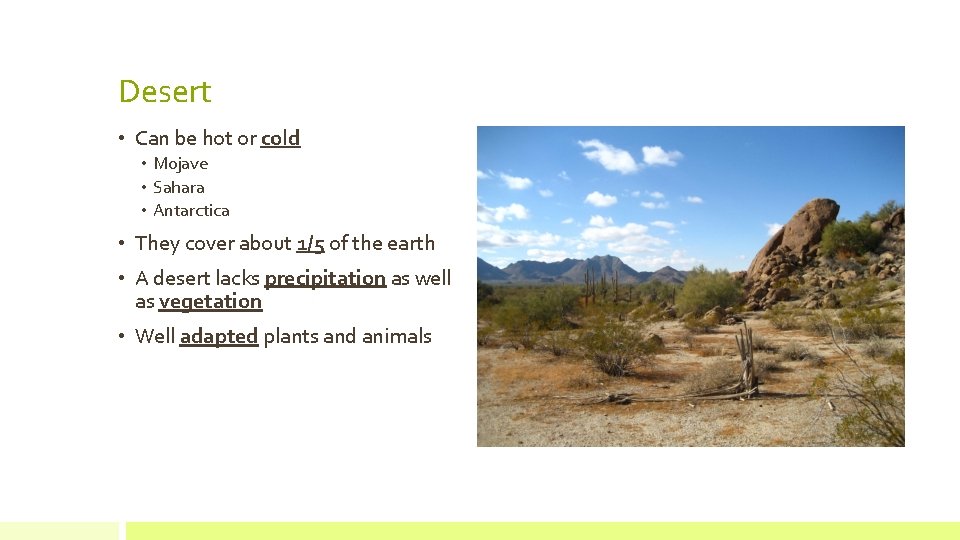
Desert • Can be hot or cold • Mojave • Sahara • Antarctica • They cover about 1/5 of the earth • A desert lacks precipitation as well as vegetation • Well adapted plants and animals
Aquatic Biomes • Freshwater • • Found all over the world Include pounds, lakes, and rivers Many plants are found from algae to moss They also contain all kinds of animals from microscopic to large • Marine • • • Oceans and seas Covers 70% of the earth Contains salt Also has plants Large affect on our weather • Estuaries • Where salt water and freshwater meet • Rivers end in oceans • Coastal areas where tides come in