
Thin Prep Pap Test Diagnostic Challenges and Differential

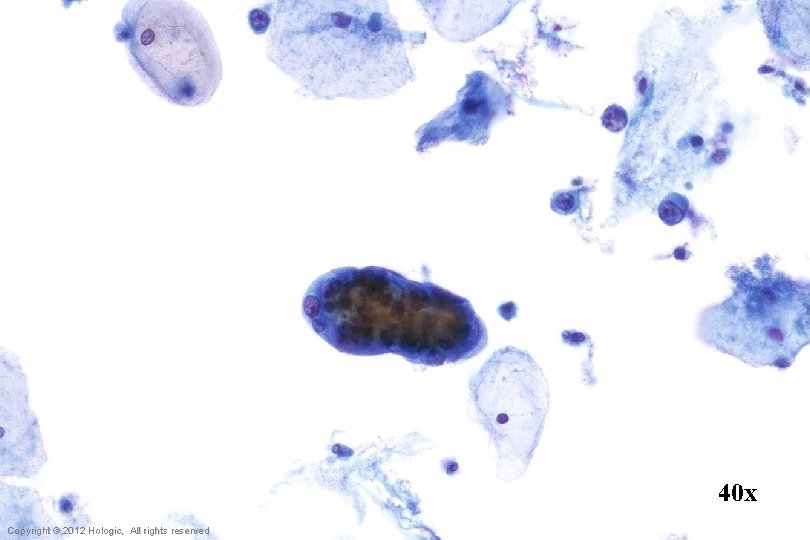
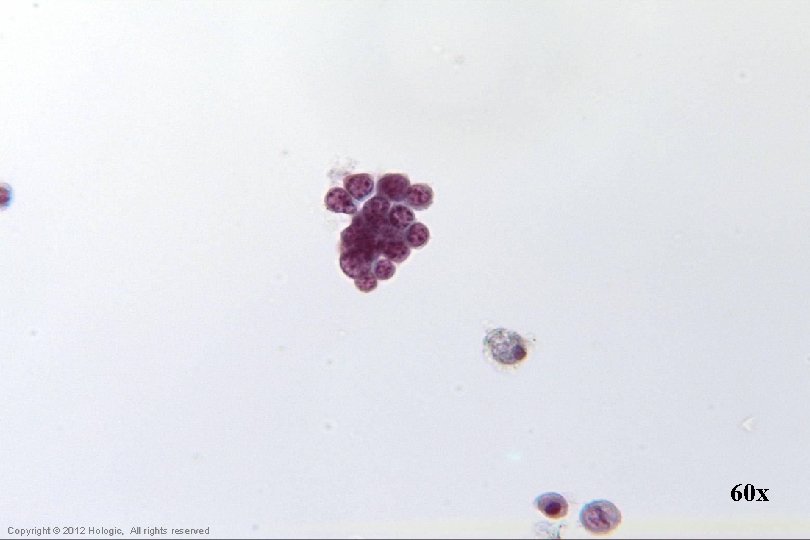
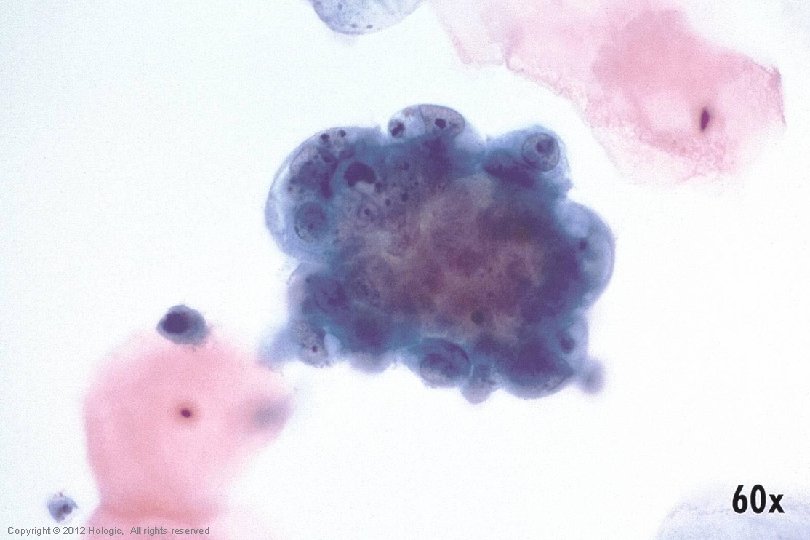
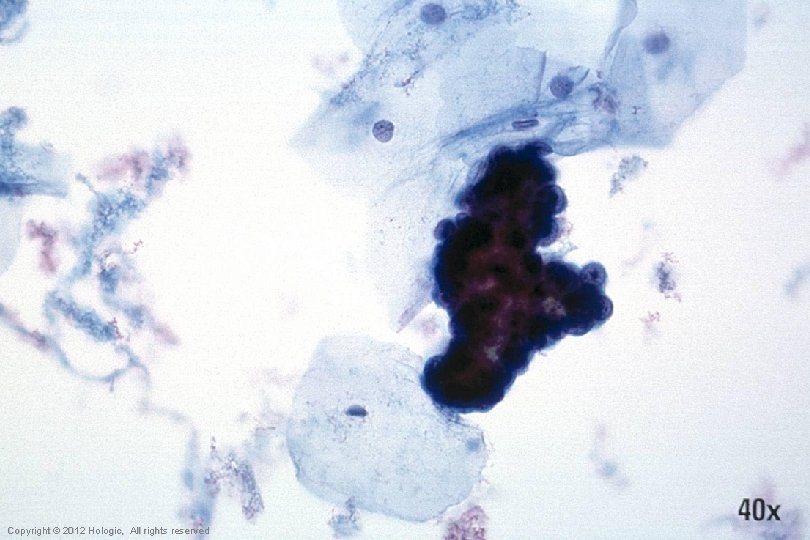
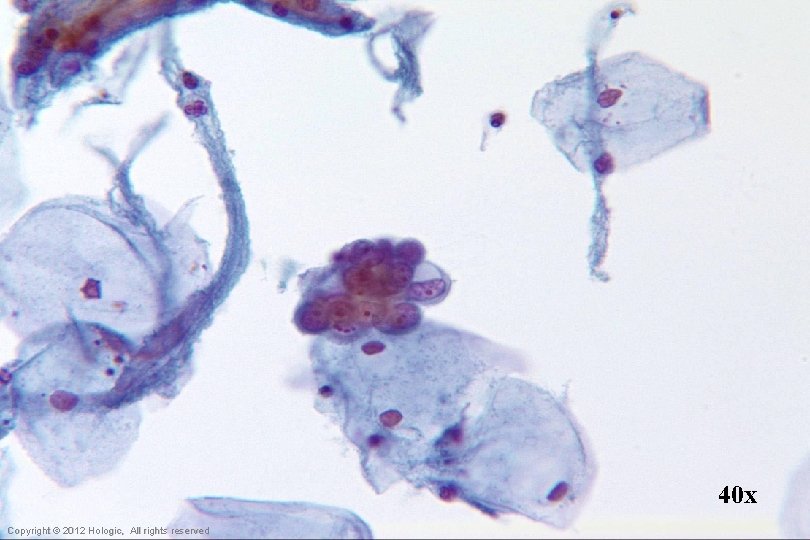
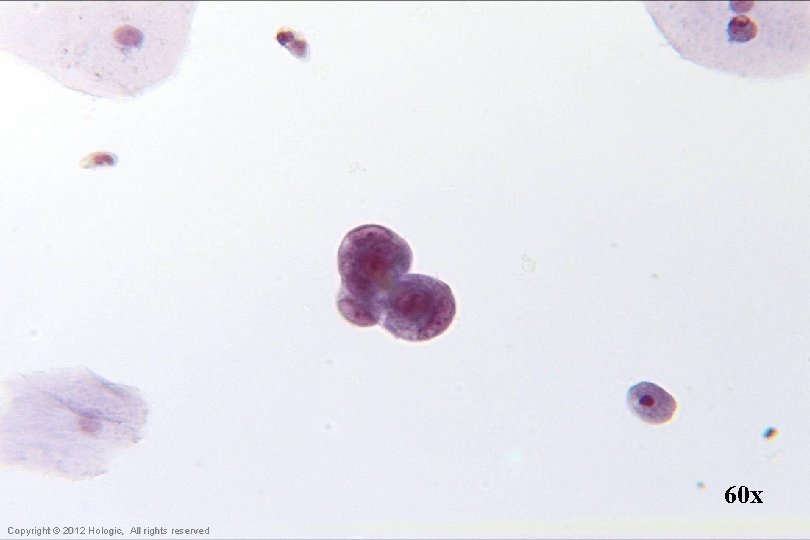
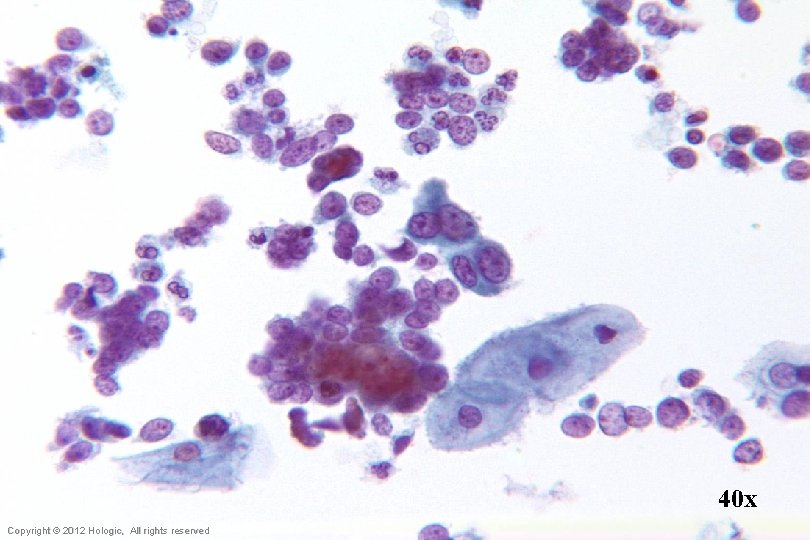
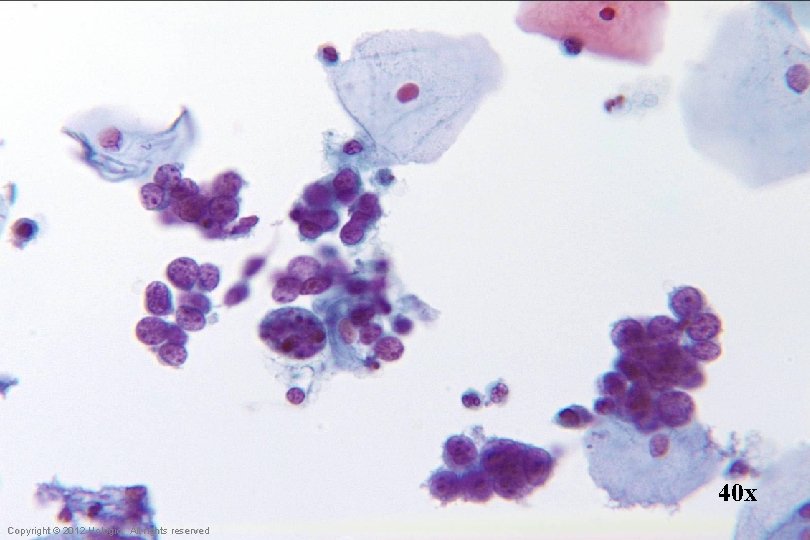
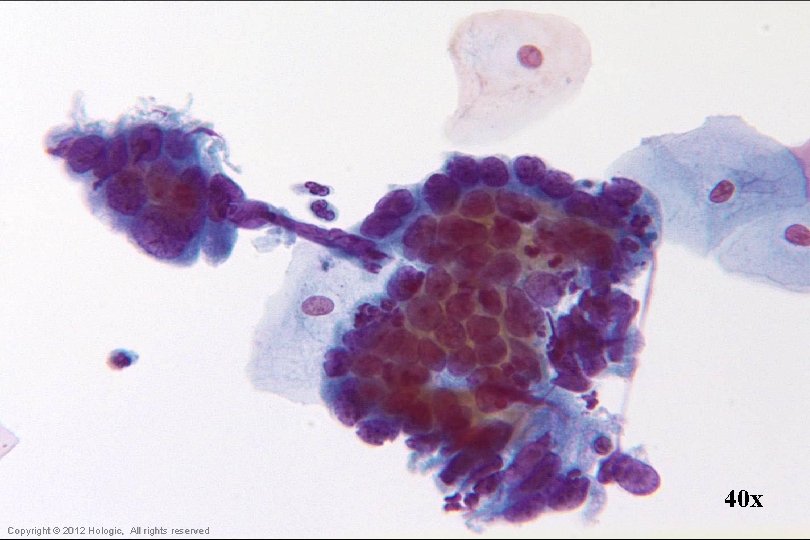
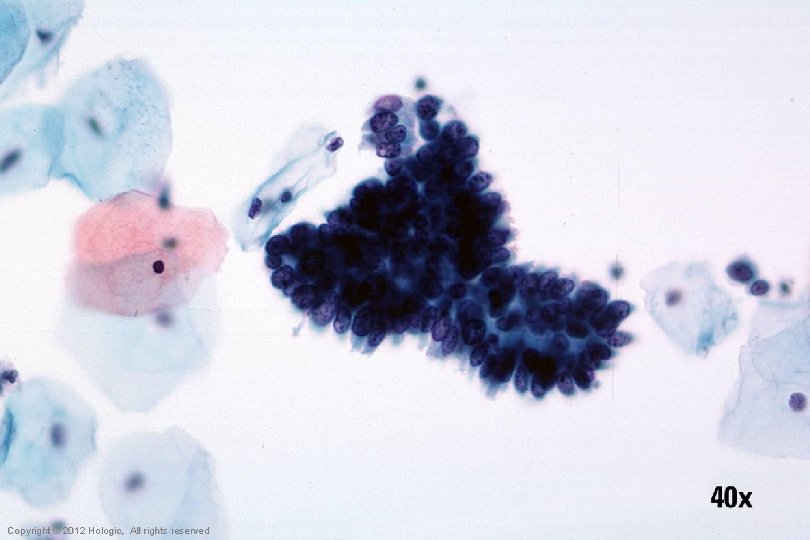
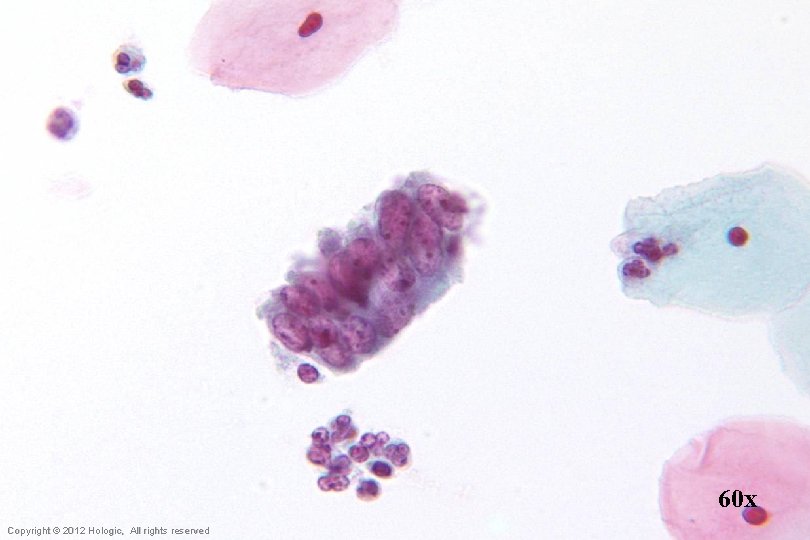
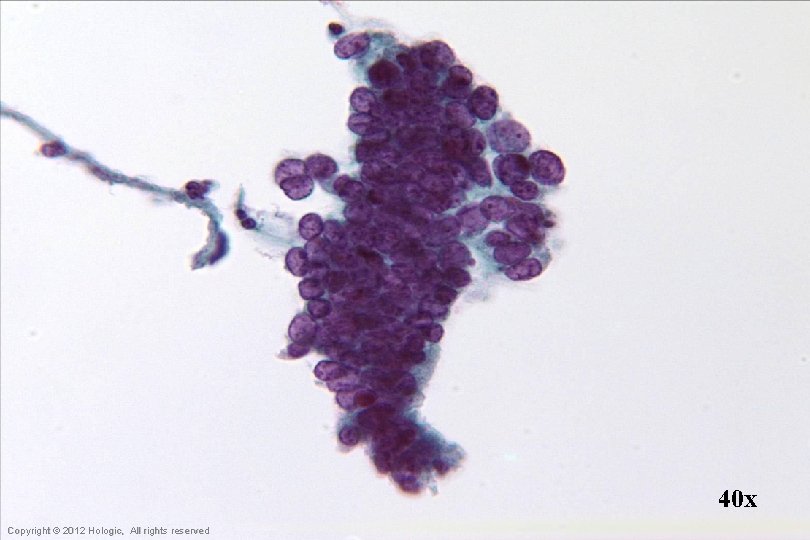
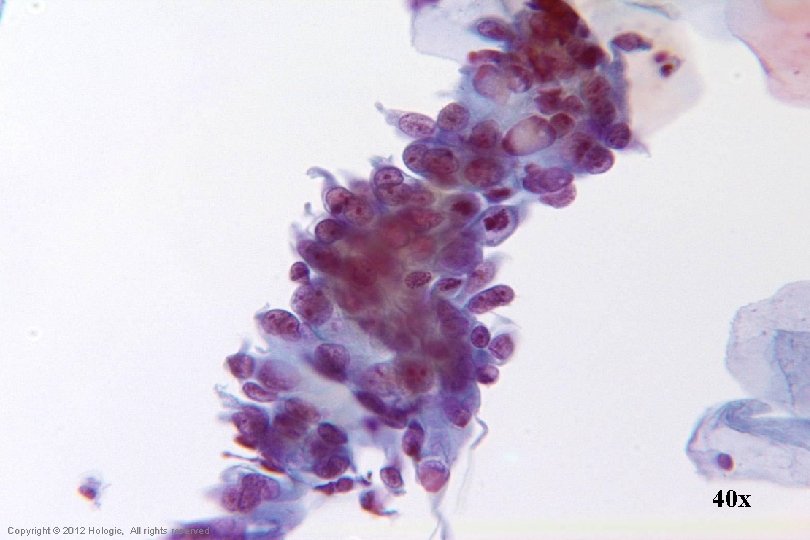
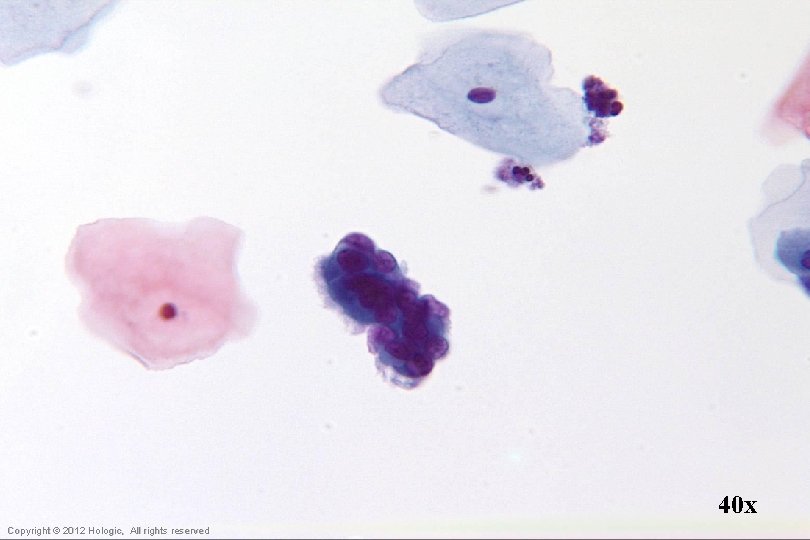
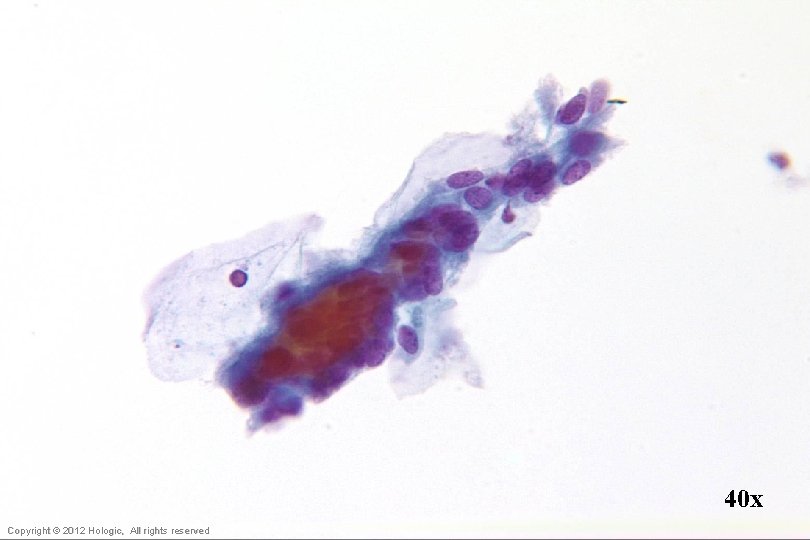
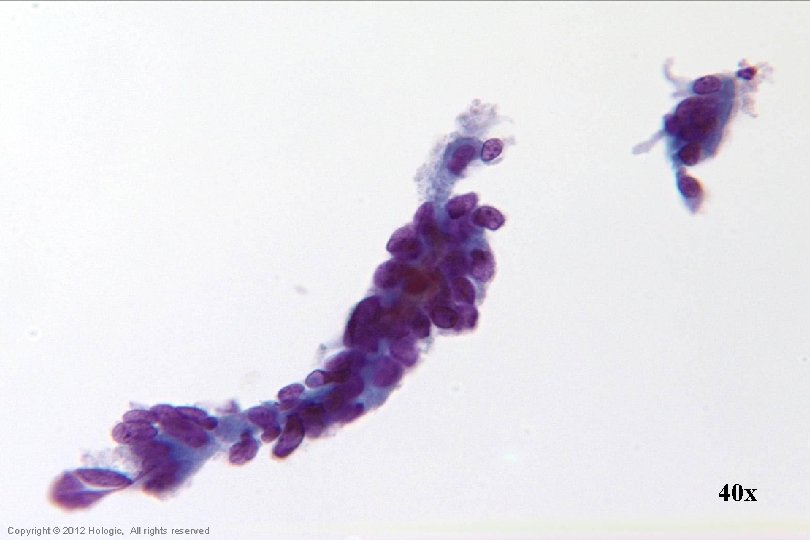
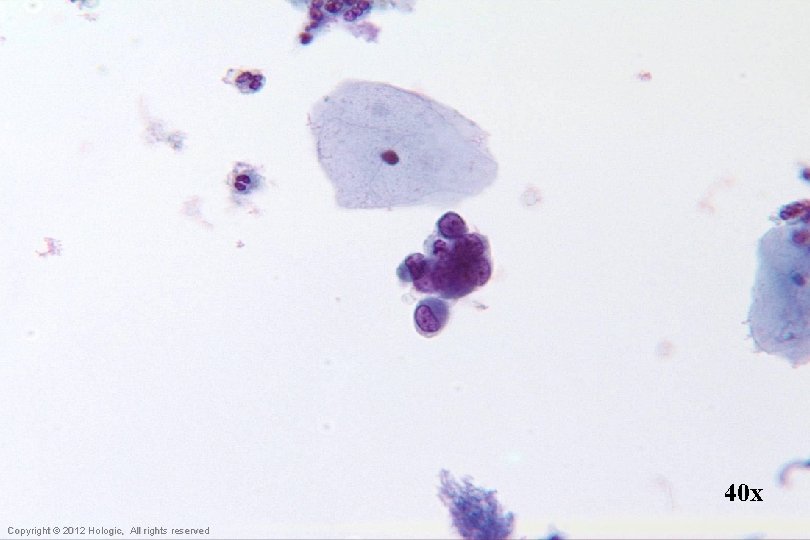
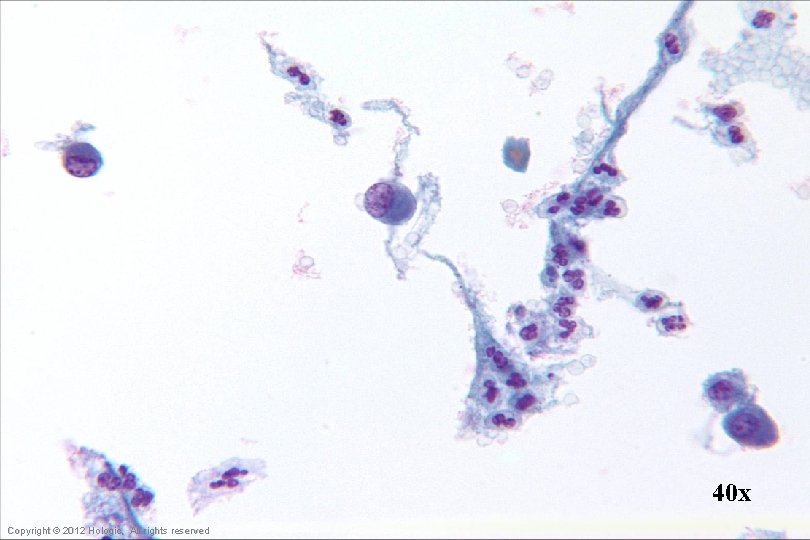
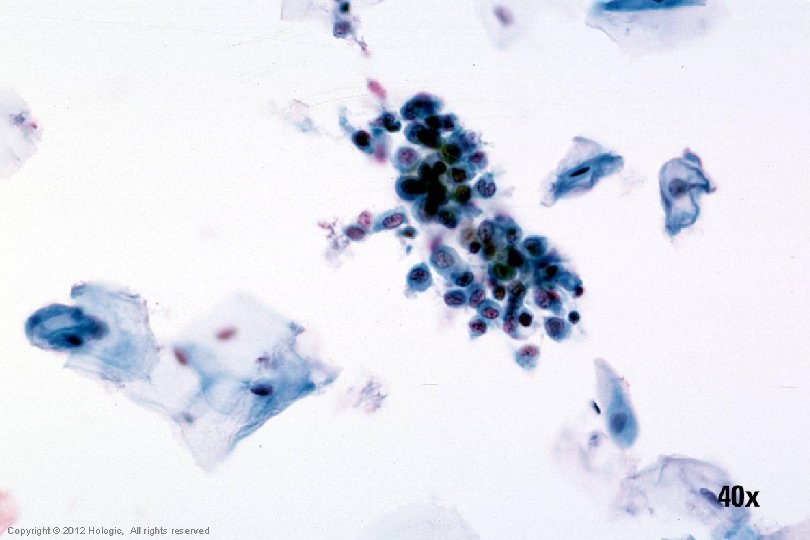
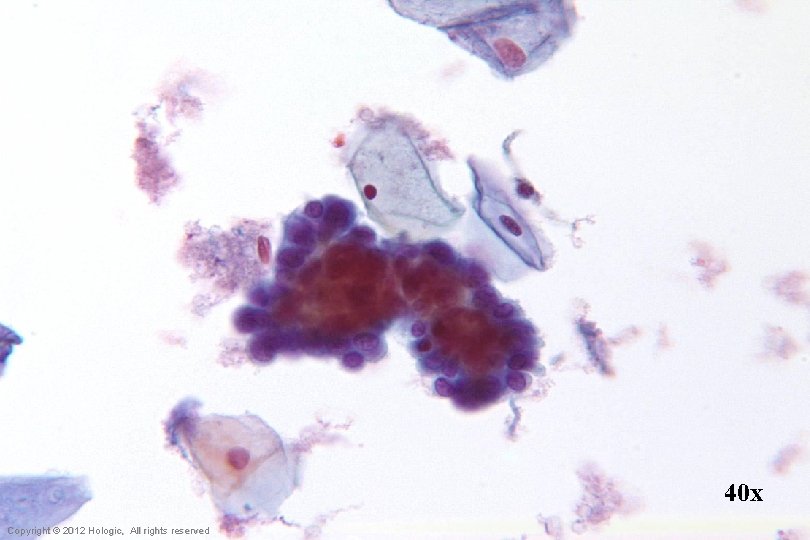

- Slides: 65
Thin. Prep® Pap Test Diagnostic Challenges and Differential Diagnoses Hologic Proprietary © 2012
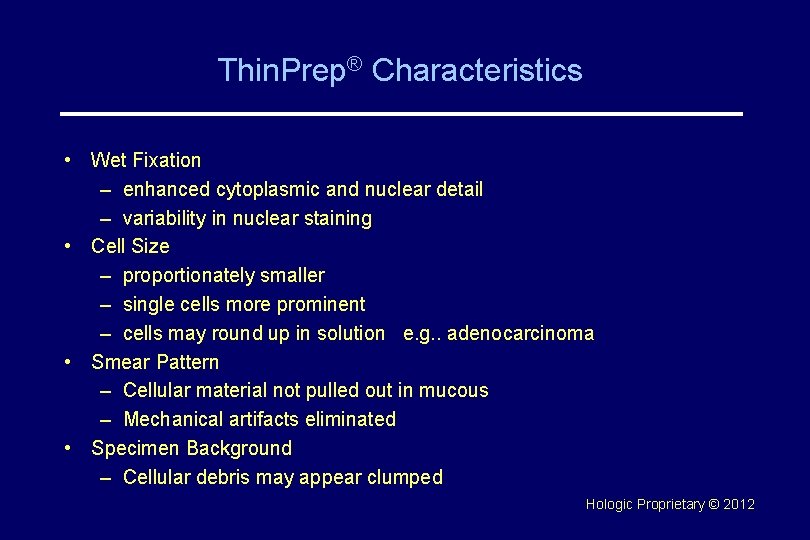
Thin. Prep® Characteristics • Wet Fixation – enhanced cytoplasmic and nuclear detail – variability in nuclear staining • Cell Size – proportionately smaller – single cells more prominent – cells may round up in solution e. g. . adenocarcinoma • Smear Pattern – Cellular material not pulled out in mucous – Mechanical artifacts eliminated • Specimen Background – Cellular debris may appear clumped Hologic Proprietary © 2012
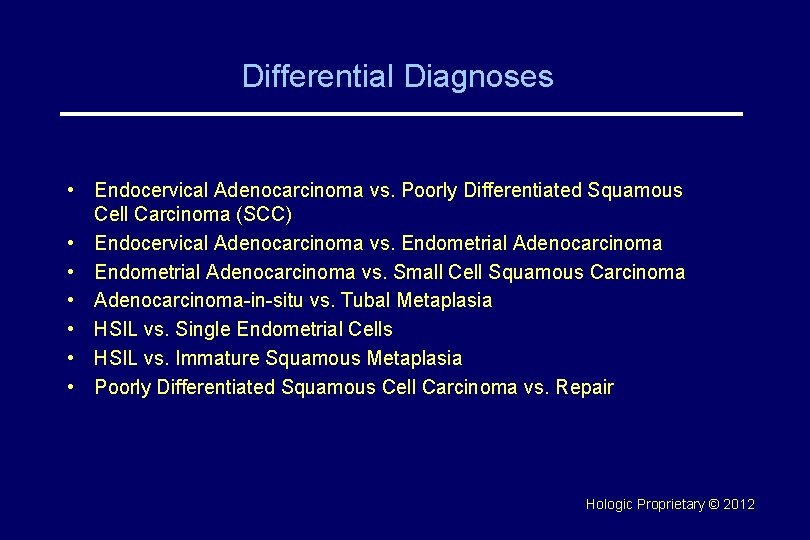
Differential Diagnoses • Endocervical Adenocarcinoma vs. Poorly Differentiated Squamous Cell Carcinoma (SCC) • Endocervical Adenocarcinoma vs. Endometrial Adenocarcinoma • Endometrial Adenocarcinoma vs. Small Cell Squamous Carcinoma • Adenocarcinoma-in-situ vs. Tubal Metaplasia • HSIL vs. Single Endometrial Cells • HSIL vs. Immature Squamous Metaplasia • Poorly Differentiated Squamous Cell Carcinoma vs. Repair Hologic Proprietary © 2012
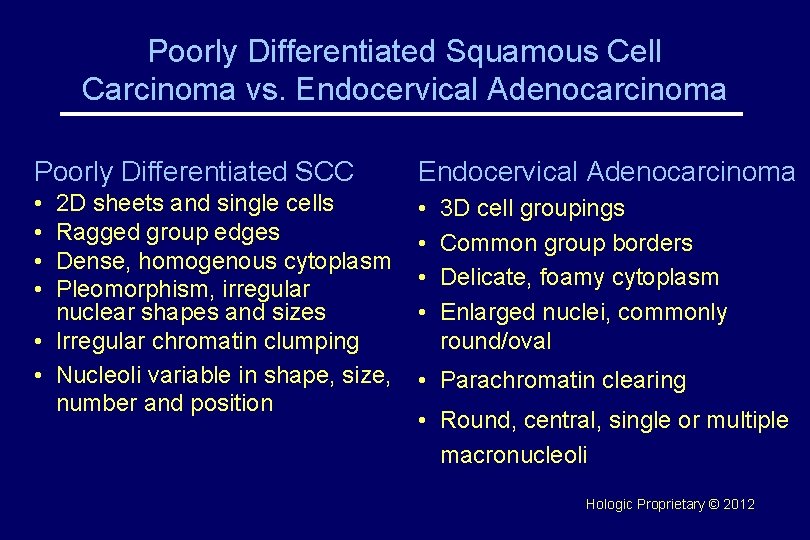
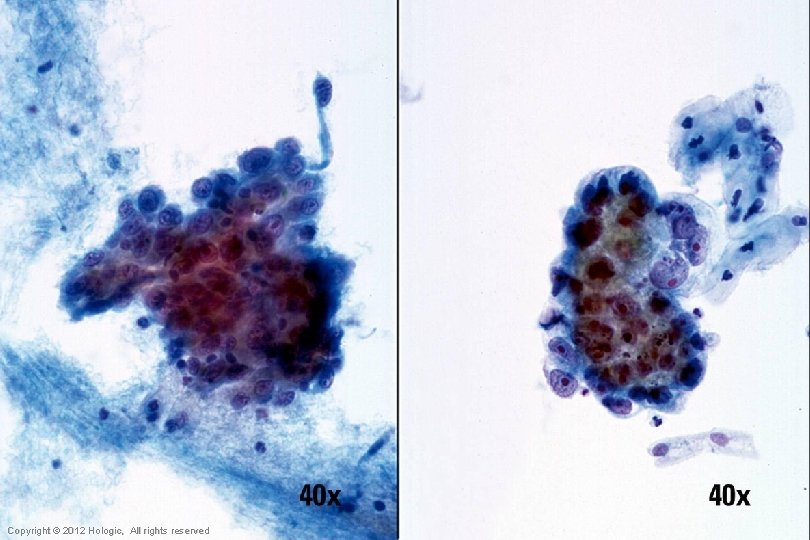
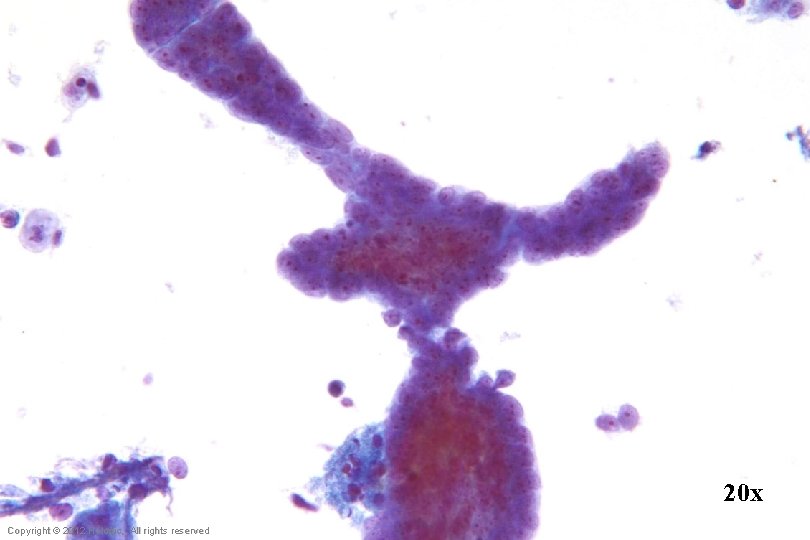
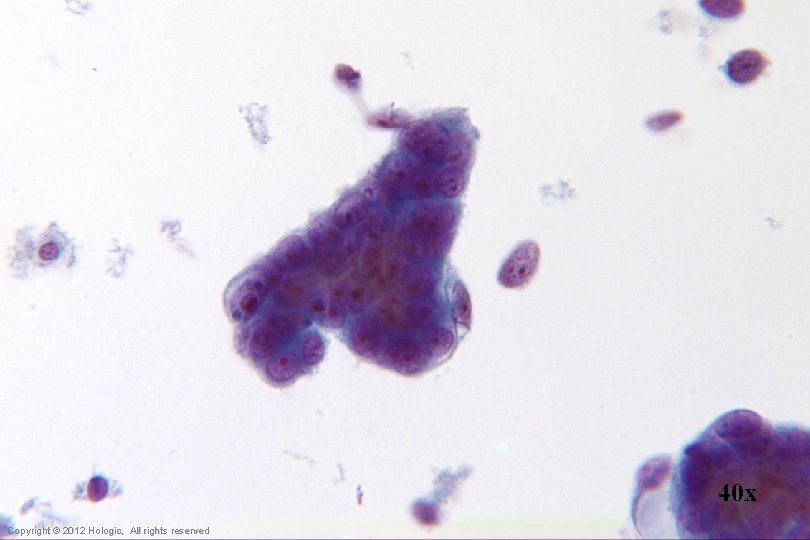
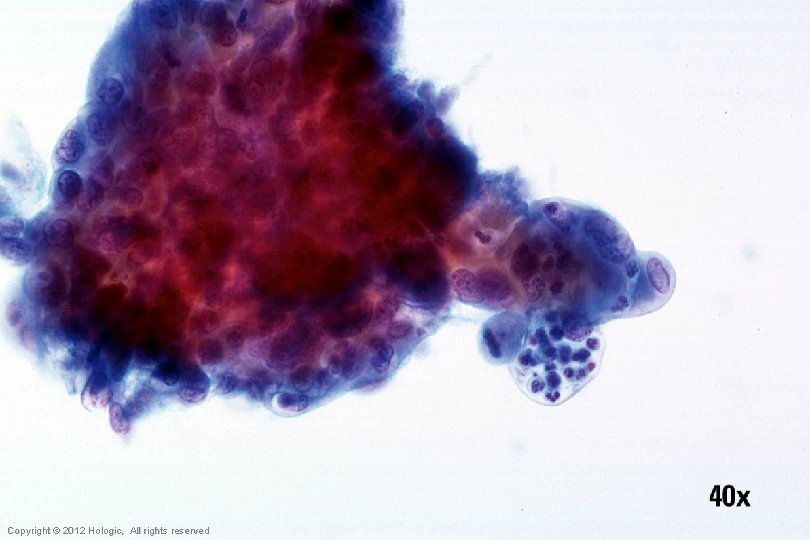
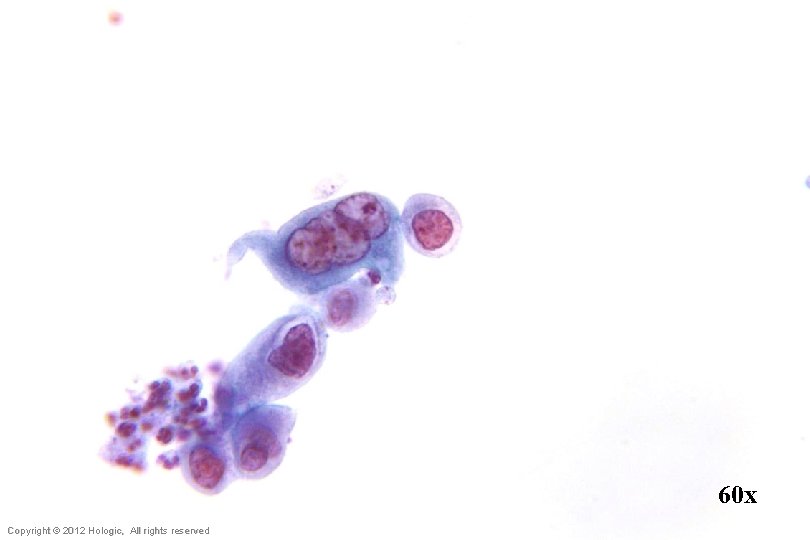
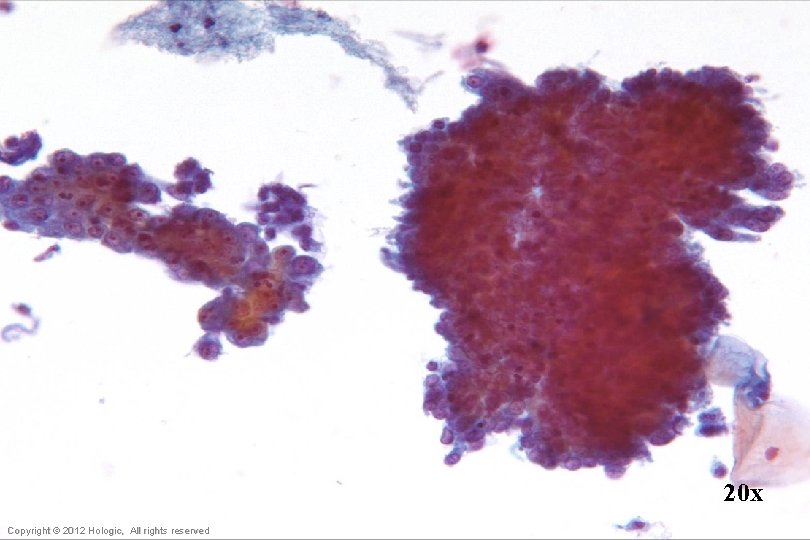
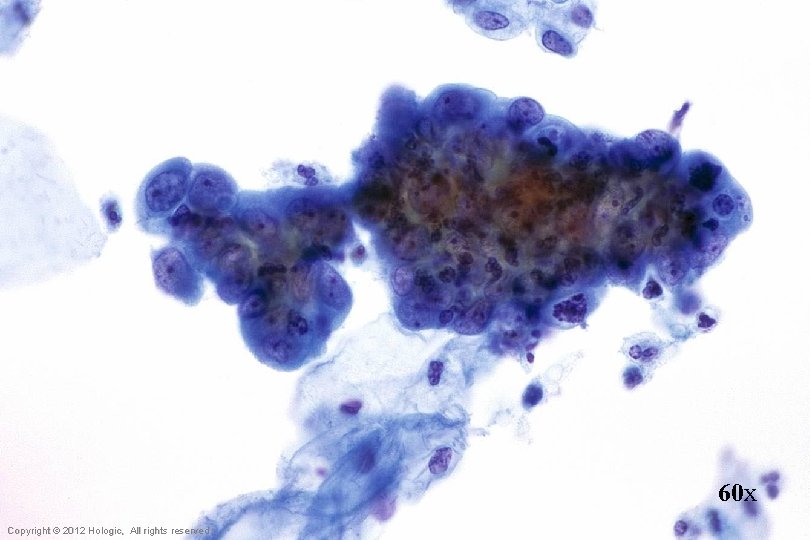
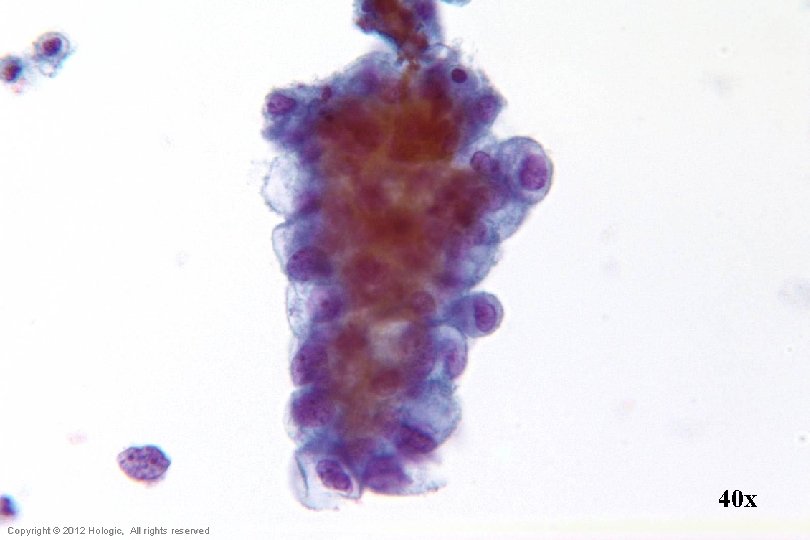
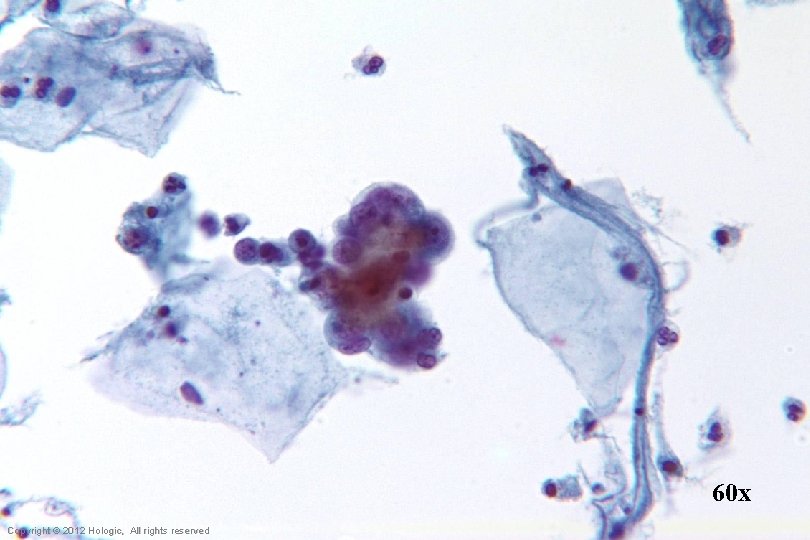
Poorly Differentiated Squamous Cell Carcinoma vs. Endocervical Adenocarcinoma Poorly Differentiated SCC Endocervical Adenocarcinoma • • 2 D sheets and single cells Ragged group edges Dense, homogenous cytoplasm Pleomorphism, irregular nuclear shapes and sizes • Irregular chromatin clumping • Nucleoli variable in shape, size, number and position 3 D cell groupings Common group borders Delicate, foamy cytoplasm Enlarged nuclei, commonly round/oval • Parachromatin clearing • Round, central, single or multiple macronucleoli Hologic Proprietary © 2012
Hologic Proprietary © 2012 Copyright © 2012 Hologic, All rights reserved
20 x Hologic Proprietary © 2012 Copyright © 2012 Hologic, All rights reserved
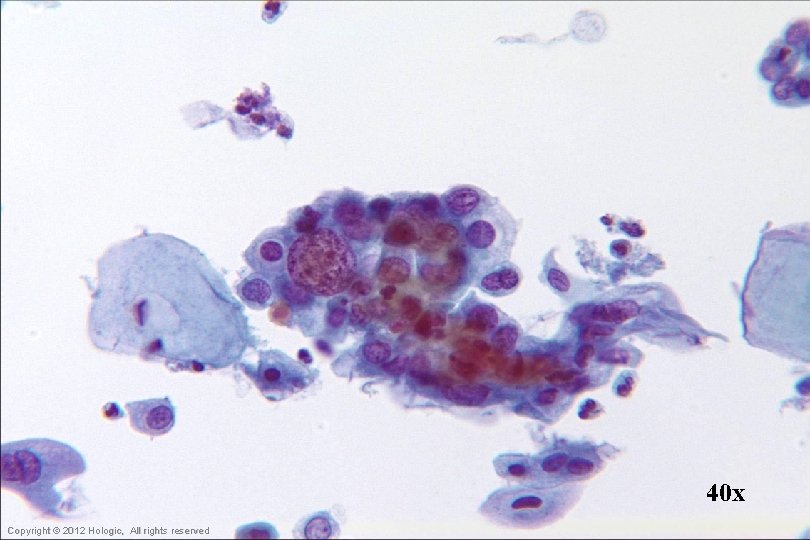
40 x Hologic Proprietary © 2012 Copyright © 2012 Hologic, All rights reserved
Hologic Proprietary © 2012 Copyright © 2012 Hologic, All rights reserved
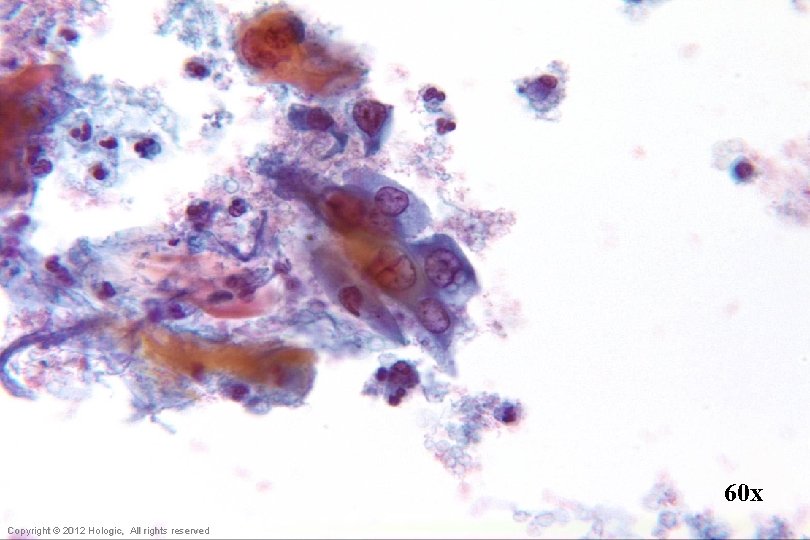
60 x Hologic Proprietary © 2012 Copyright © 2012 Hologic, All rights reserved
60 x Hologic Proprietary © 2012 Copyright © 2012 Hologic, All rights reserved
Hologic Proprietary © 2012 Copyright © 2012 Hologic, All rights reserved
60 x Hologic Proprietary © 2012 Copyright © 2012 Hologic, All rights reserved
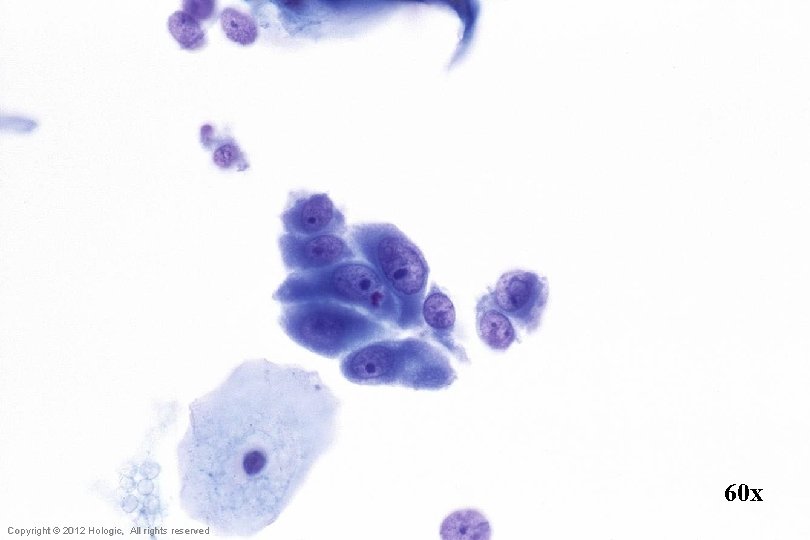
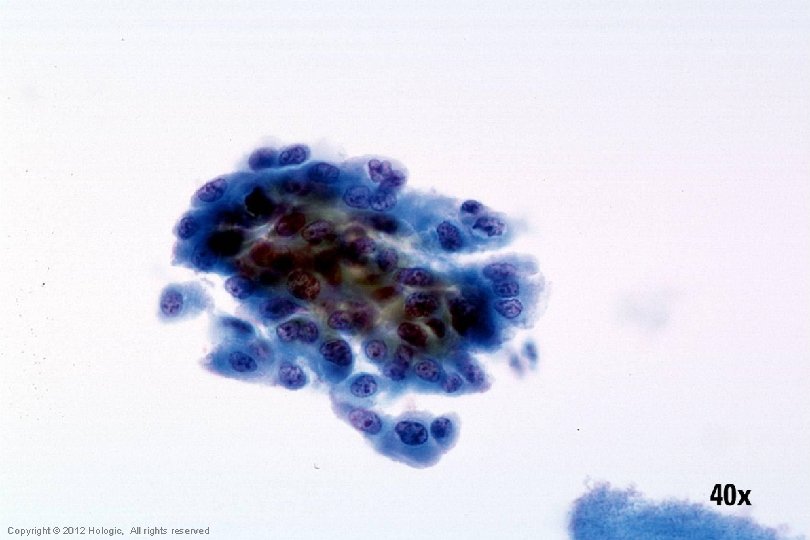
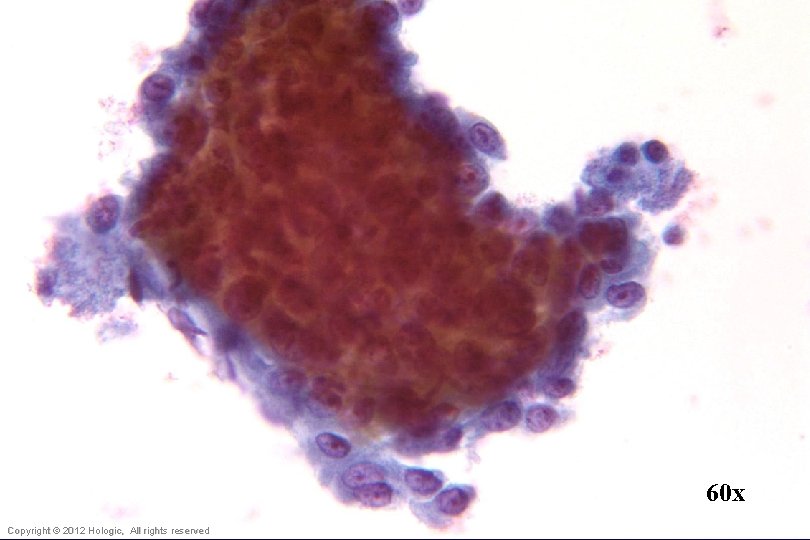
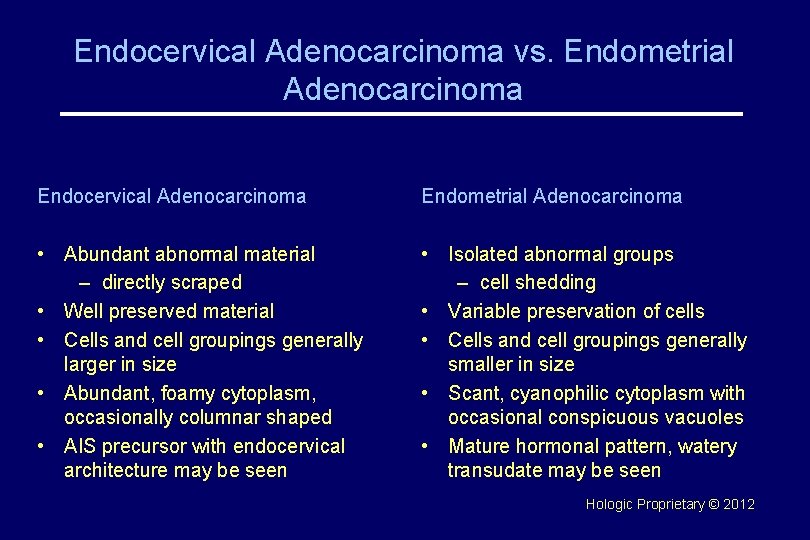
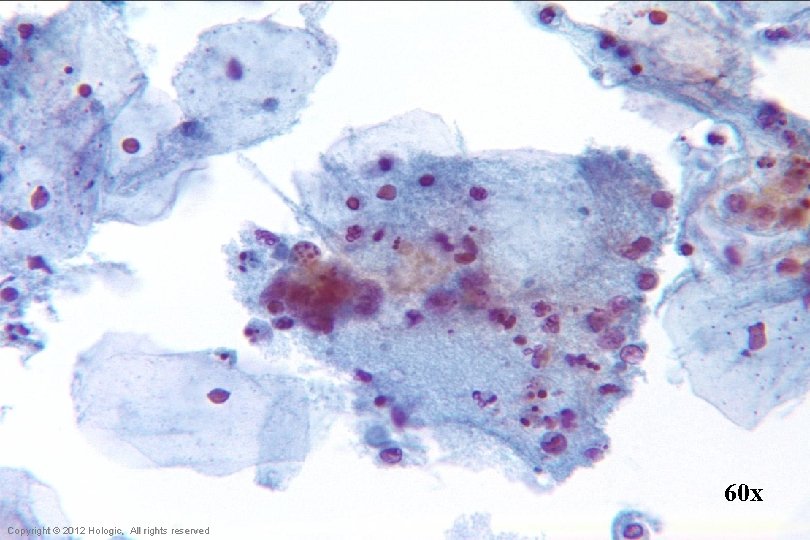
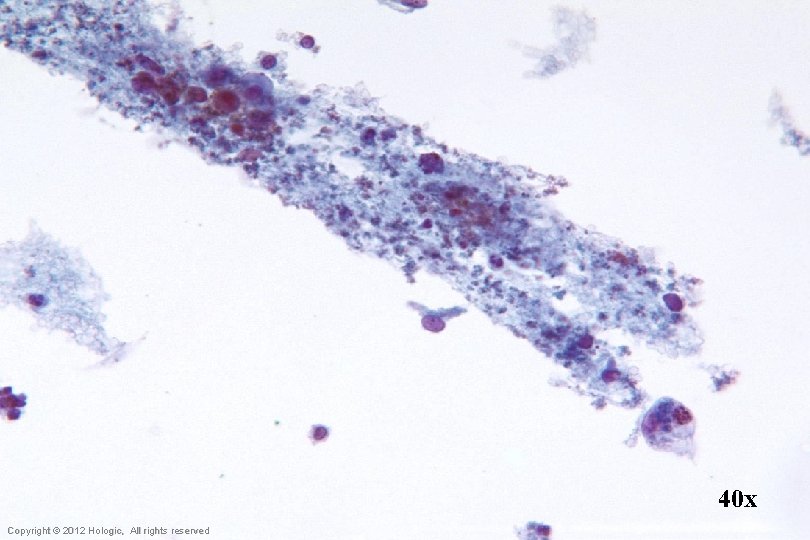
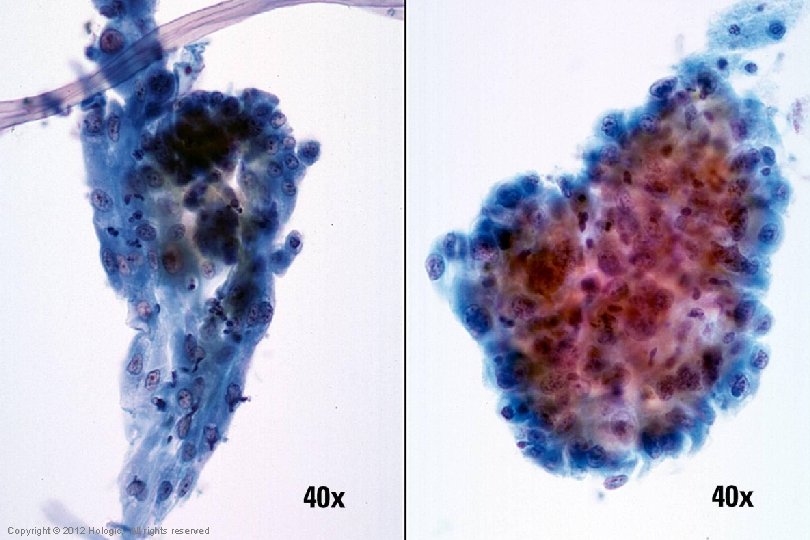
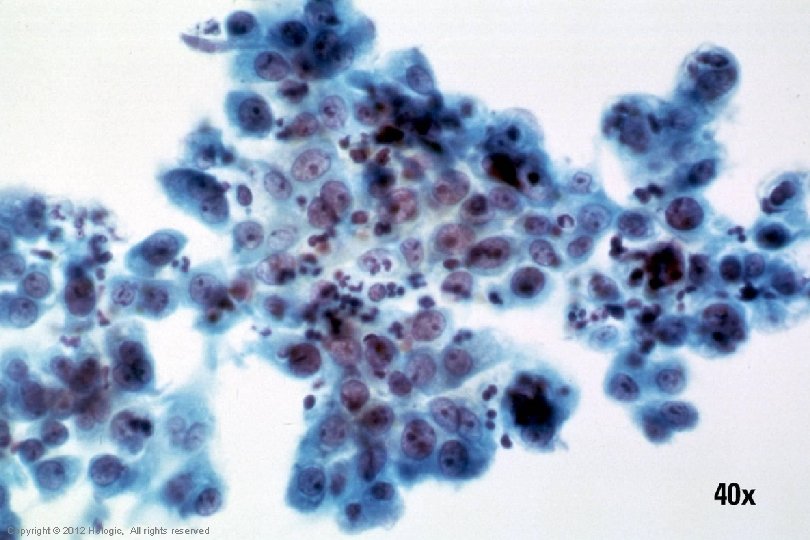
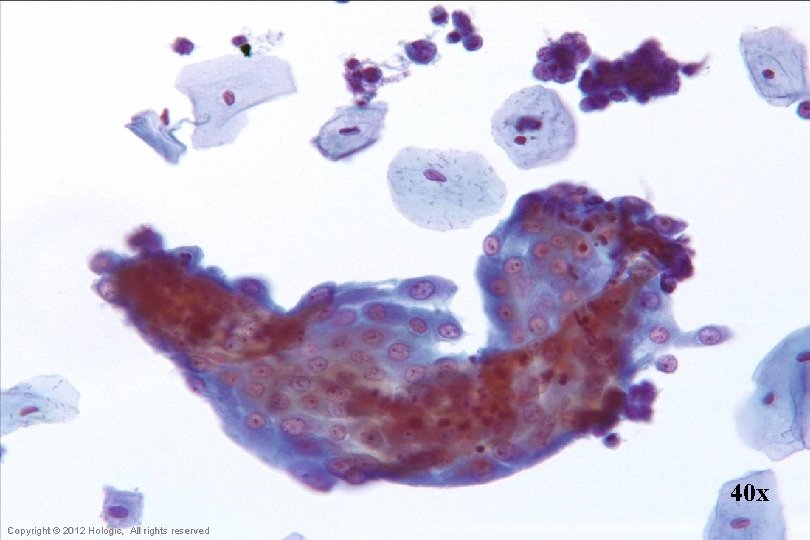
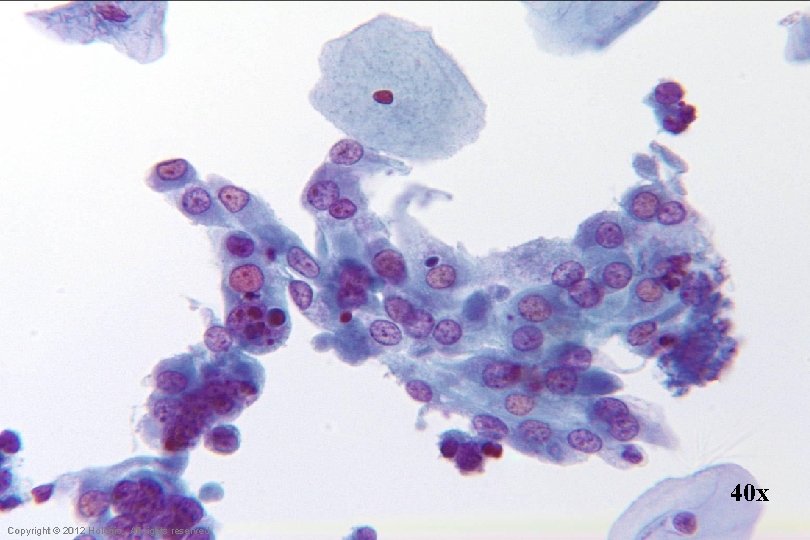
Endocervical Adenocarcinoma vs. Endometrial Adenocarcinoma Endocervical Adenocarcinoma Endometrial Adenocarcinoma • Abundant abnormal material – directly scraped • Well preserved material • Cells and cell groupings generally larger in size • Abundant, foamy cytoplasm, occasionally columnar shaped • AIS precursor with endocervical architecture may be seen • Isolated abnormal groups – cell shedding • Variable preservation of cells • Cells and cell groupings generally smaller in size • Scant, cyanophilic cytoplasm with occasional conspicuous vacuoles • Mature hormonal pattern, watery transudate may be seen Hologic Proprietary © 2012
20 x Hologic Proprietary © 2012 Copyright © 2012 Hologic, All rights reserved
60 x Hologic Proprietary © 2012 Copyright © 2012 Hologic, All rights reserved
40 x Hologic Proprietary © 2012 Copyright © 2012 Hologic, All rights reserved
60 x Hologic Proprietary © 2012 Copyright © 2012 Hologic, All rights reserved
40 x Hologic Proprietary © 2012 Copyright © 2012 Hologic, All rights reserved
60 x Hologic Proprietary © 2012 Copyright © 2012 Hologic, All rights reserved
Hologic Proprietary © 2012 Copyright © 2012 Hologic, All rights reserved
Hologic Proprietary © 2012 Copyright © 2012 Hologic, All rights reserved
60 x Hologic Proprietary © 2012 Copyright © 2012 Hologic, All rights reserved
40 x Hologic Proprietary © 2012 Copyright © 2012 Hologic, All rights reserved
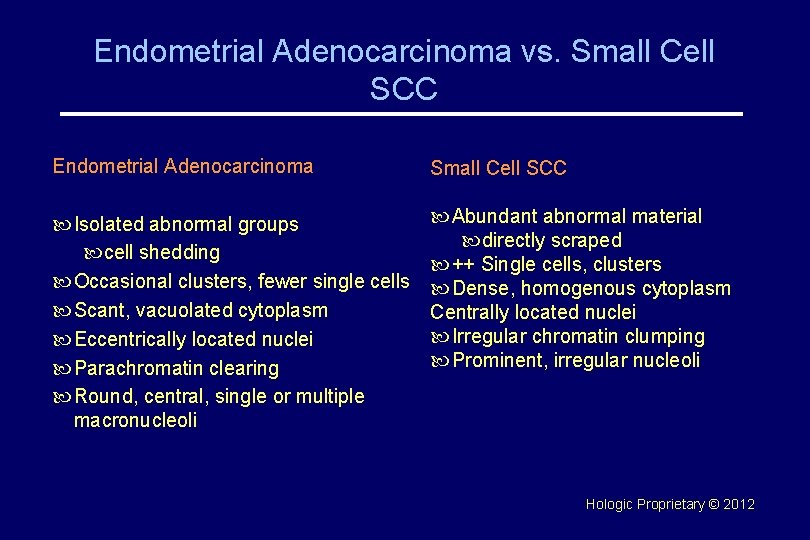
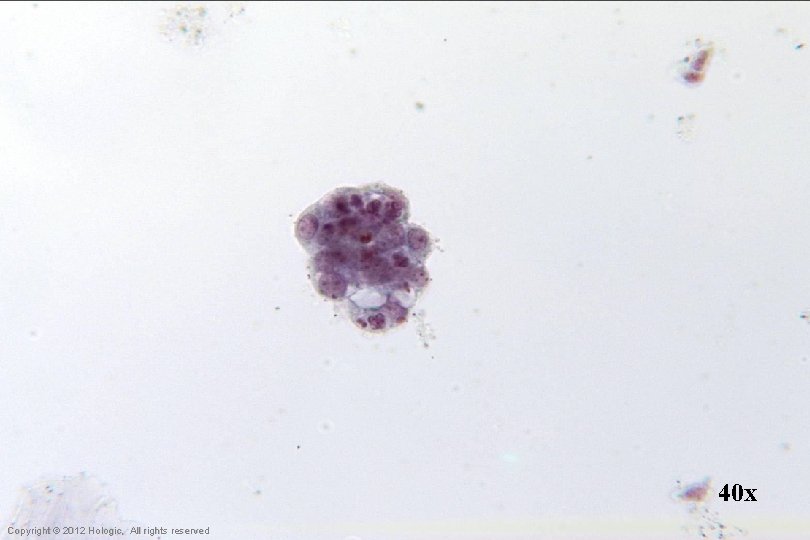
Endometrial Adenocarcinoma vs. Small Cell SCC Endometrial Adenocarcinoma Small Cell SCC Isolated abnormal groups cell shedding Occasional clusters, fewer single cells Scant, vacuolated cytoplasm Eccentrically located nuclei Parachromatin clearing Round, central, single or multiple macronucleoli Abundant abnormal material directly scraped ++ Single cells, clusters Dense, homogenous cytoplasm Centrally located nuclei Irregular chromatin clumping Prominent, irregular nucleoli Hologic Proprietary © 2012
40 x Hologic Proprietary © 2012 Copyright © 2012 Hologic, All rights reserved
40 x Hologic Proprietary © 2012 Copyright © 2012 Hologic, All rights reserved
60 x Hologic Proprietary © 2012 Copyright © 2012 Hologic, All rights reserved
40 x Hologic Proprietary © 2012 Copyright © 2012 Hologic, All rights reserved
40 x Hologic Proprietary © 2012 Copyright © 2012 Hologic, All rights reserved
20 x Hologic Proprietary © 2012 Copyright © 2012 Hologic, All rights reserved
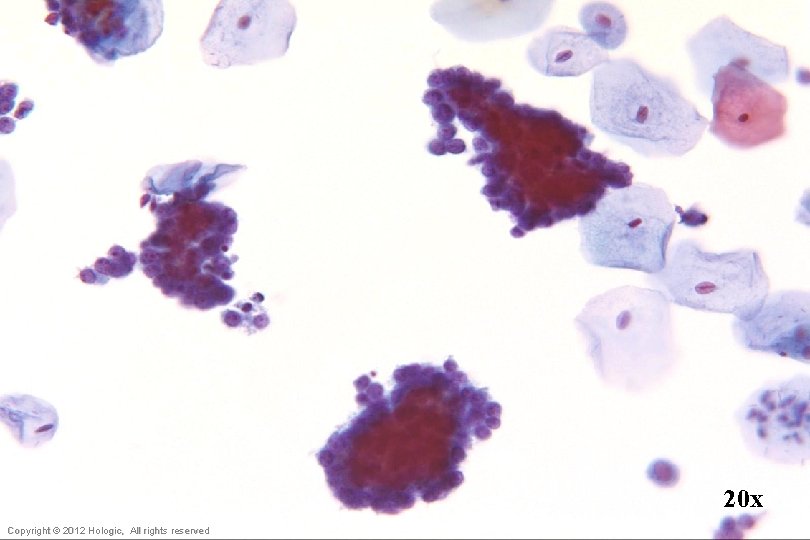
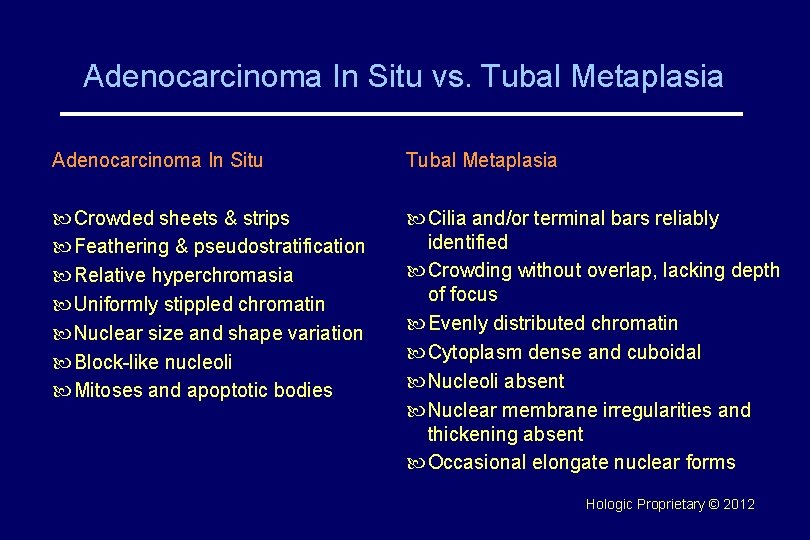
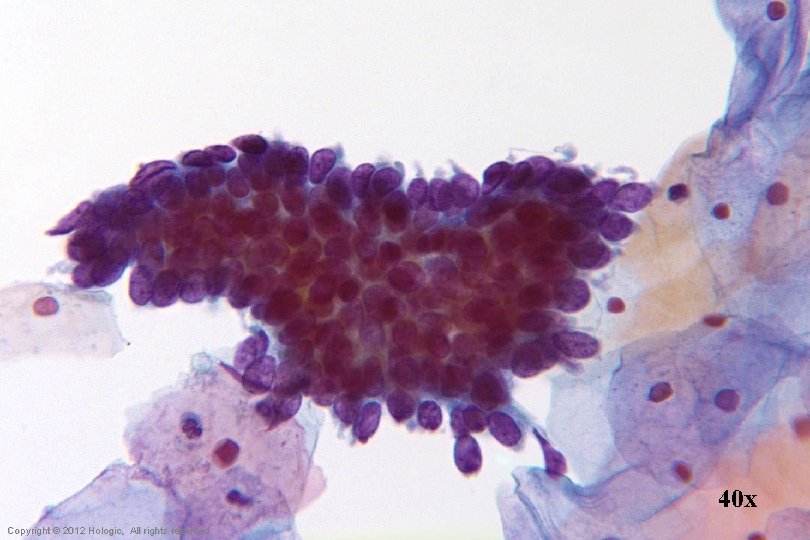
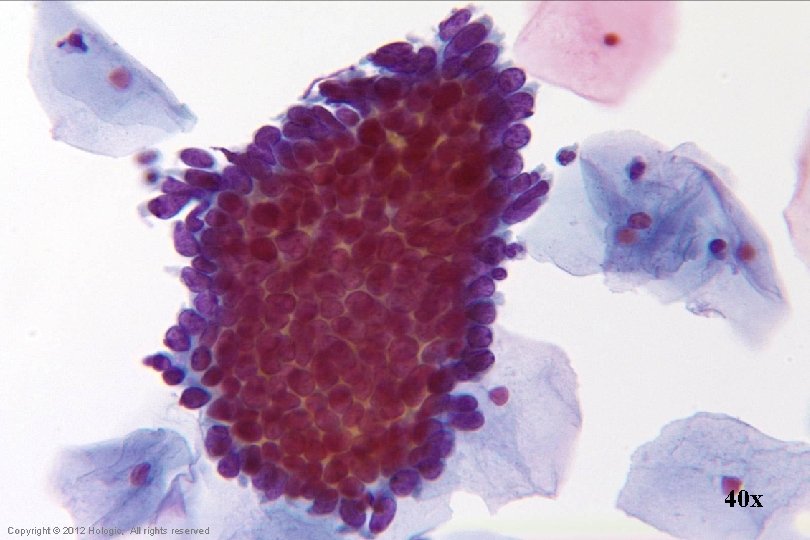
Adenocarcinoma In Situ vs. Tubal Metaplasia Adenocarcinoma In Situ Tubal Metaplasia Crowded sheets & strips Feathering & pseudostratification Relative hyperchromasia Uniformly stippled chromatin Nuclear size and shape variation Block-like nucleoli Mitoses and apoptotic bodies Cilia and/or terminal bars reliably identified Crowding without overlap, lacking depth of focus Evenly distributed chromatin Cytoplasm dense and cuboidal Nucleoli absent Nuclear membrane irregularities and thickening absent Occasional elongate nuclear forms Hologic Proprietary © 2012
40 x Hologic Proprietary © 2012 Copyright © 2012 Hologic, All rights reserved
40 x Hologic Proprietary © 2012 Copyright © 2012 Hologic, All rights reserved
40 x Hologic Proprietary © 2012 Copyright © 2012 Hologic, All rights reserved
Hologic Proprietary © 2012 Copyright © 2012 Hologic, All rights reserved
60 x Hologic Proprietary © 2012 Copyright © 2012 Hologic, All rights reserved
40 x Hologic Proprietary © 2012 Copyright © 2012 Hologic, All rights reserved
40 x Hologic Proprietary © 2012 Copyright © 2012 Hologic, All rights reserved
40 x Hologic Proprietary © 2012 Copyright © 2012 Hologic, All rights reserved
40 x Hologic Proprietary © 2012 Copyright © 2012 Hologic, All rights reserved
40 x Hologic Proprietary © 2012 Copyright © 2012 Hologic, All rights reserved
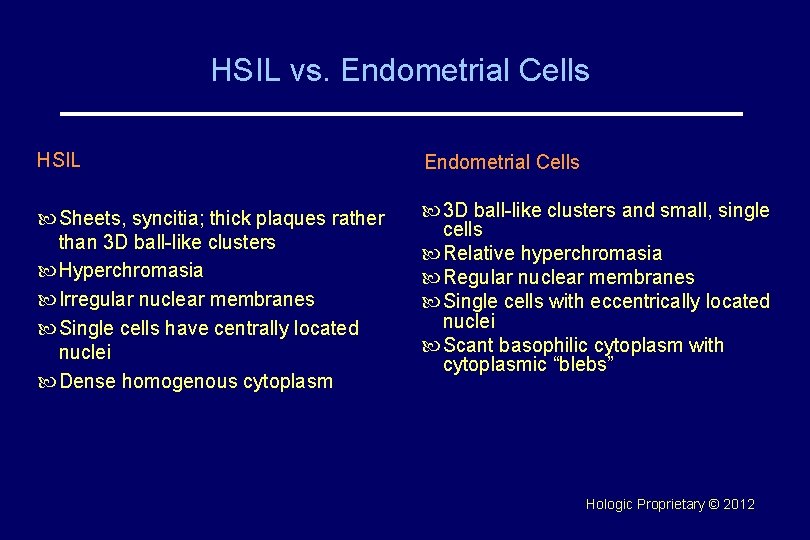
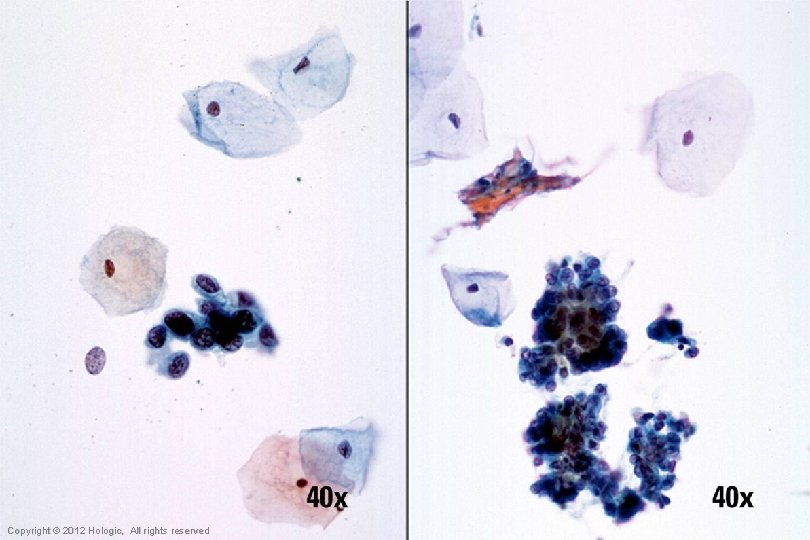
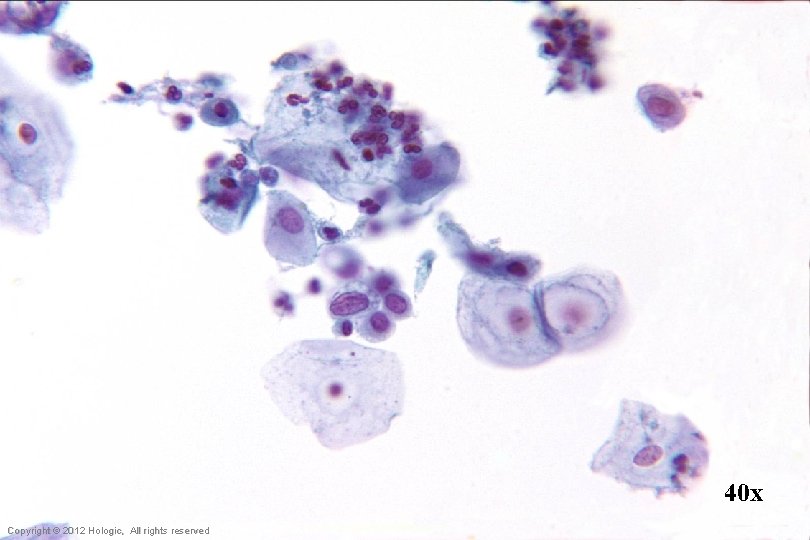
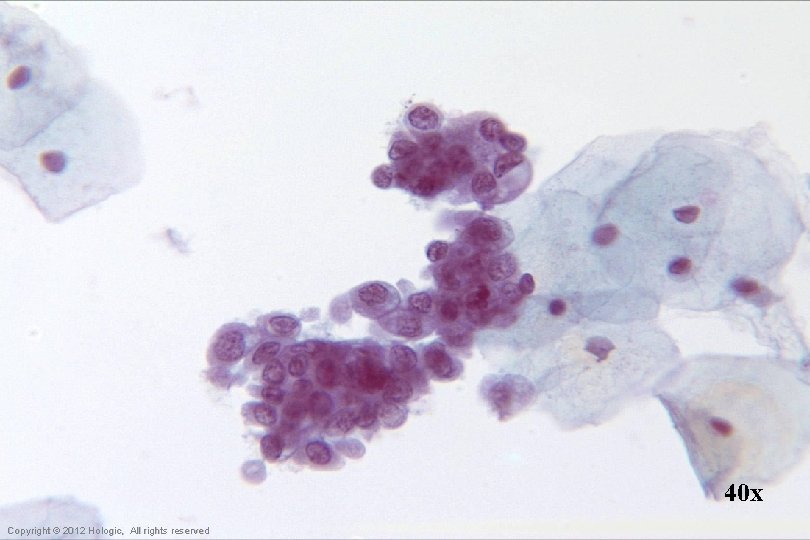
HSIL vs. Endometrial Cells HSIL Endometrial Cells Sheets, syncitia; thick plaques rather than 3 D ball-like clusters Hyperchromasia Irregular nuclear membranes Single cells have centrally located nuclei Dense homogenous cytoplasm 3 D ball-like clusters and small, single cells Relative hyperchromasia Regular nuclear membranes Single cells with eccentrically located nuclei Scant basophilic cytoplasm with cytoplasmic “blebs” Hologic Proprietary © 2012
Hologic Proprietary © 2012 Copyright © 2012 Hologic, All rights reserved
40 x Hologic Proprietary © 2012 Copyright © 2012 Hologic, All rights reserved
40 x Hologic Proprietary © 2012 Copyright © 2012 Hologic, All rights reserved
40 x Hologic Proprietary © 2012 Copyright © 2012 Hologic, All rights reserved
40 x Hologic Proprietary © 2012 Copyright © 2012 Hologic, All rights reserved
Hologic Proprietary © 2012 Copyright © 2012 Hologic, All rights reserved
40 x Hologic Proprietary © 2012 Copyright © 2012 Hologic, All rights reserved
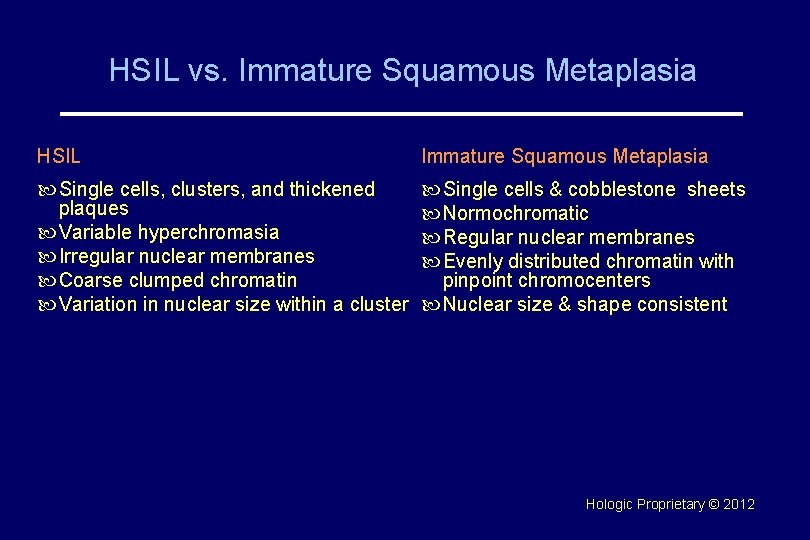
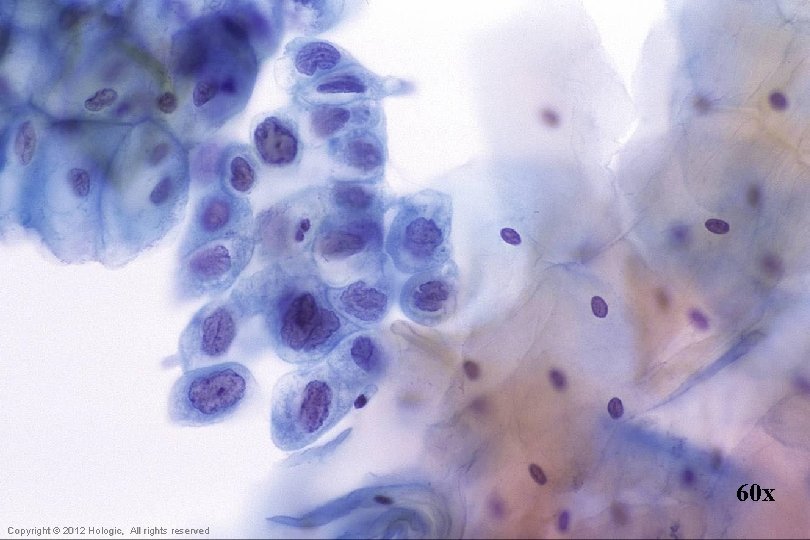
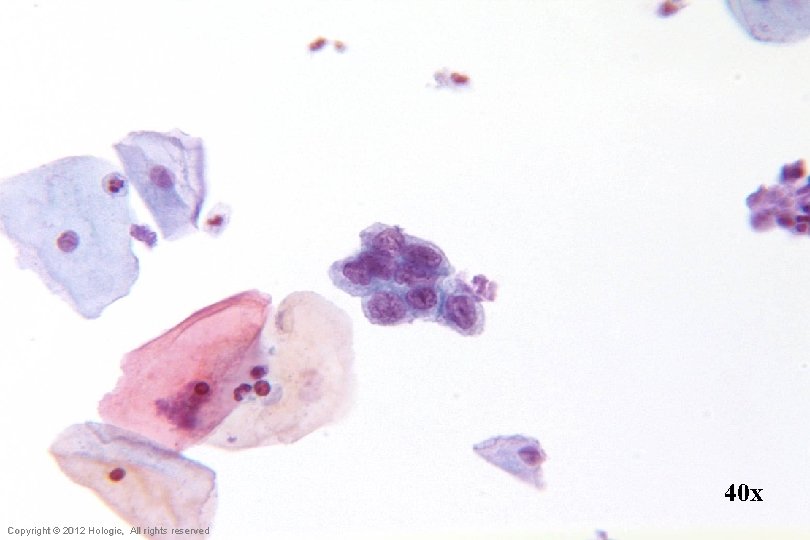
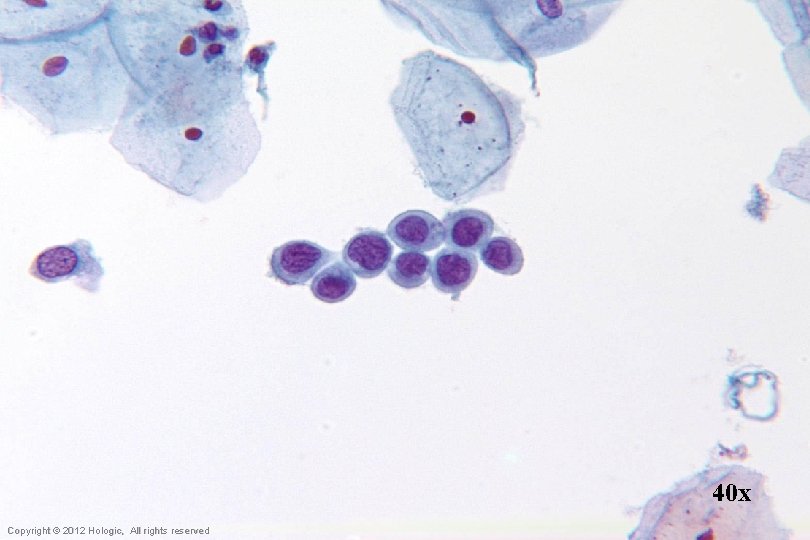
HSIL vs. Immature Squamous Metaplasia HSIL Immature Squamous Metaplasia Single cells, clusters, and thickened plaques Variable hyperchromasia Irregular nuclear membranes Coarse clumped chromatin Variation in nuclear size within a cluster Single cells & cobblestone sheets Normochromatic Regular nuclear membranes Evenly distributed chromatin with pinpoint chromocenters Nuclear size & shape consistent Hologic Proprietary © 2012
60 x Hologic Proprietary © 2012 Copyright © 2012 Hologic, All rights reserved
40 x Hologic Proprietary © 2012 Copyright © 2012 Hologic, All rights reserved
40 x Hologic Proprietary © 2012 Copyright © 2012 Hologic, All rights reserved
40 x Hologic Proprietary © 2012 Copyright © 2012 Hologic, All rights reserved
40 x Hologic Proprietary © 2012 Copyright © 2012 Hologic, All rights reserved
40 x Hologic Proprietary © 2012 Copyright © 2012 Hologic, All rights reserved
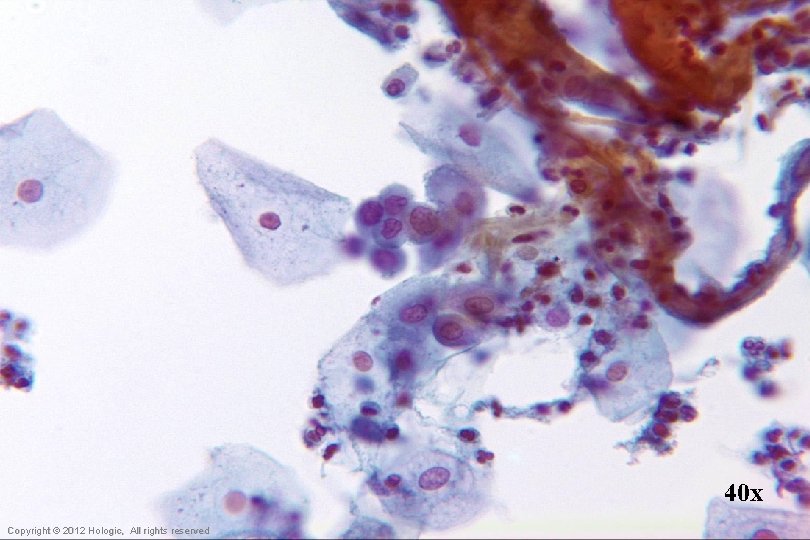
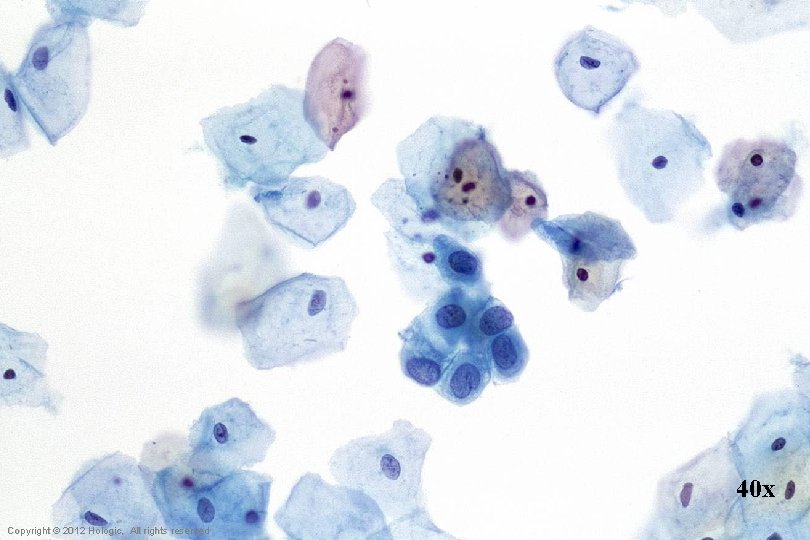
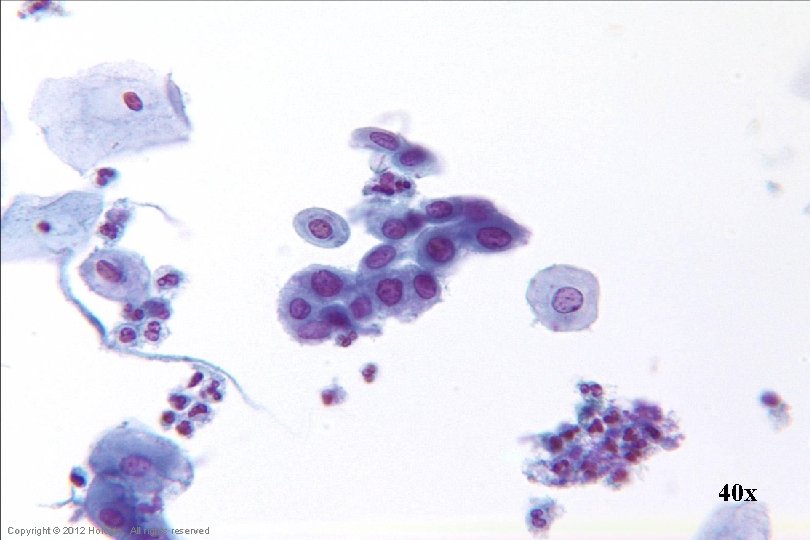
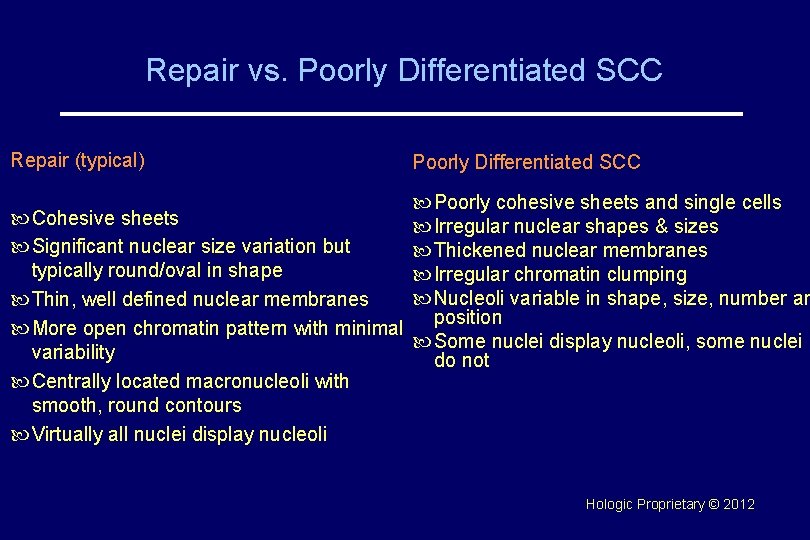
Repair vs. Poorly Differentiated SCC Repair (typical) Poorly Differentiated SCC Poorly cohesive sheets and single cells Cohesive sheets Irregular nuclear shapes & sizes Significant nuclear size variation but Thickened nuclear membranes typically round/oval in shape Irregular chromatin clumping Nucleoli variable in shape, size, number an Thin, well defined nuclear membranes position More open chromatin pattern with minimal Some nuclei display nucleoli, some nuclei variability do not Centrally located macronucleoli with smooth, round contours Virtually all nuclei display nucleoli Hologic Proprietary © 2012
Hologic Proprietary © 2012 Copyright © 2012 Hologic, All rights reserved
Hologic Proprietary © 2012 Copyright © 2012 Hologic, All rights reserved
40 x Hologic Proprietary © 2012 Copyright © 2012 Hologic, All rights reserved
40 x Hologic Proprietary © 2012 Copyright © 2012 Hologic, All rights reserved
40 x Hologic Proprietary © 2012 Copyright © 2012 Hologic, All rights reserved
60 x Hologic Proprietary © 2012 Copyright © 2012 Hologic, All rights reserved
Trademark Statement Cyto. Lyt, Hologic, Preserv. Cyt, Thin. Prep, and Uro. Cyte are registered trademarks of Hologic, Inc. and/or its subsidiaries in the United States. Cyto. Lyt, Hologic, Preserv. Cyt, Thin. Prep, Uro. Cyte and associated logos are trademarks of Hologic, Inc. and/or its subsidiaries in other countries. All other trademarks are the property of their respective owners. Hologic Proprietary © 2012
Any Questions? Part No. 86798 -001 Rev. 001 Hologic Proprietary © 2012