
Thin Film Interference Polarization Physics Mrs Coyle Thin
- Slides: 13
-Thin Film Interference -Polarization Physics Mrs. Coyle
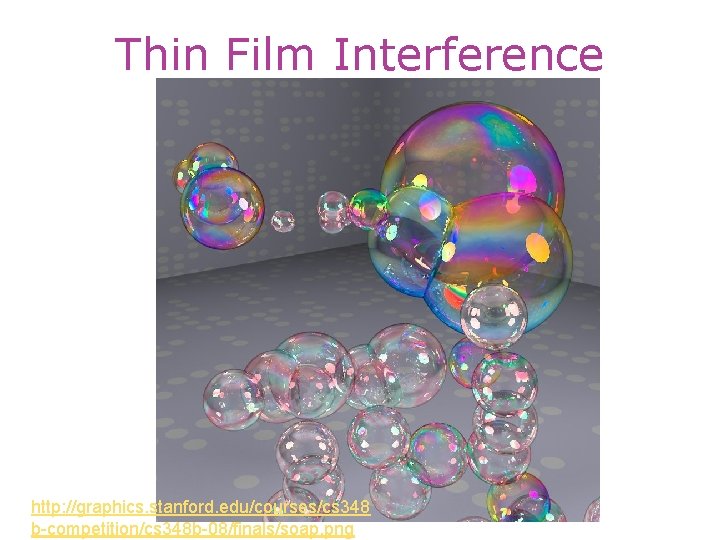
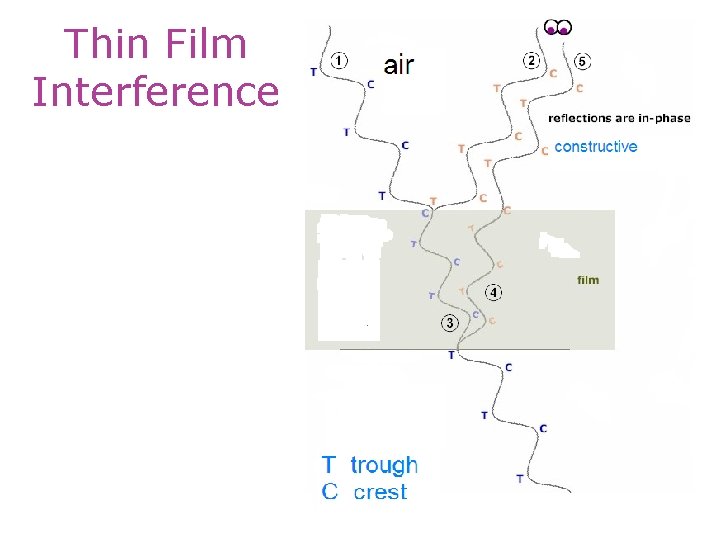
Thin Film Interference http: //graphics. stanford. edu/courses/cs 348 b-competition/cs 348 b-08/finals/soap. png
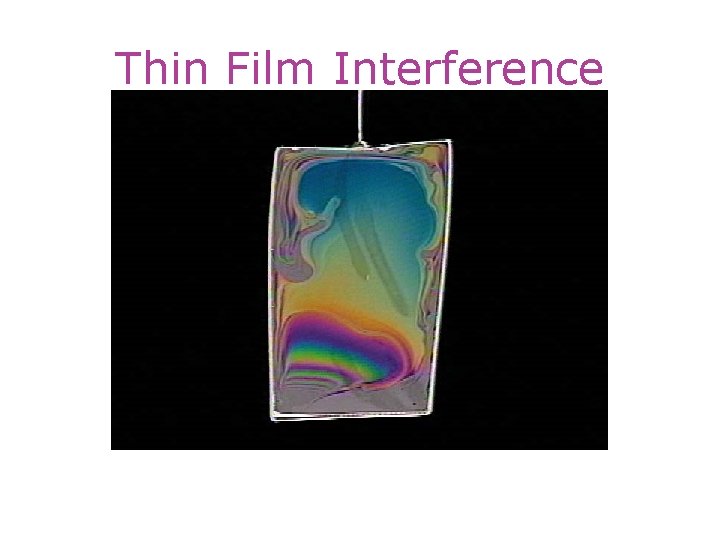
Thin Film Interference
Thin Film Interference http: //laser. physics. sunysb. edu/~hilary/grap hics/interference. gif
Thin Film Interference
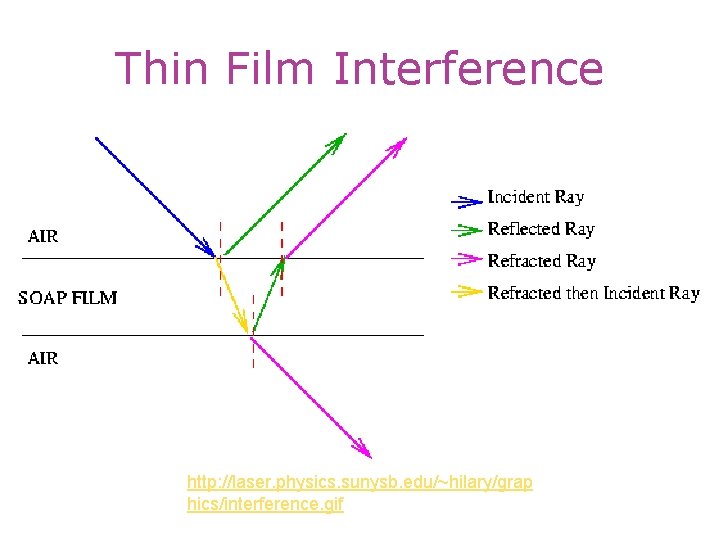
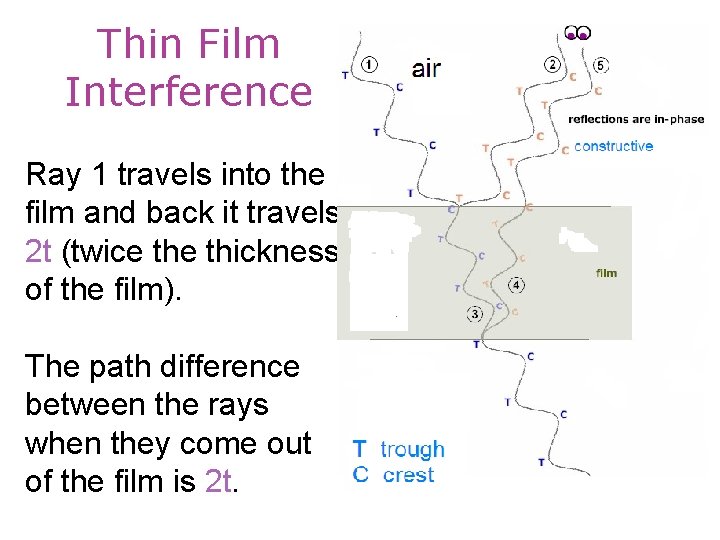
Thin Film Interference Ray 1 travels into the film and back it travels 2 t (twice thickness of the film). The path difference between the rays when they come out of the film is 2 t.
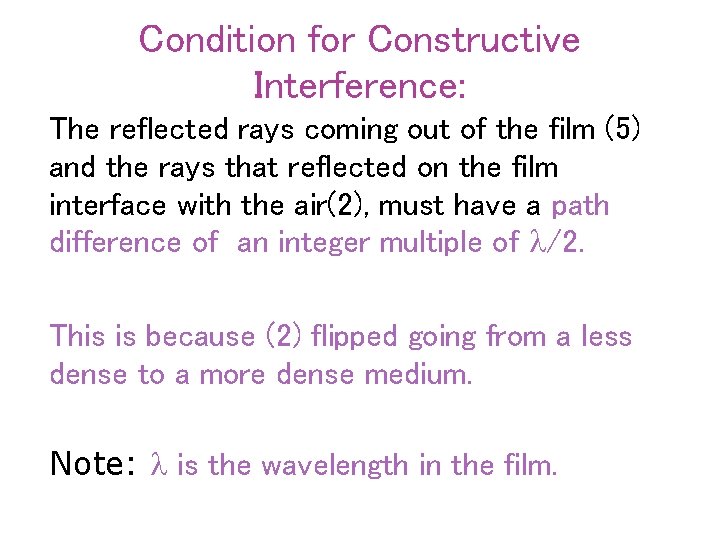
Condition for Constructive Interference: The reflected rays coming out of the film (5) and the rays that reflected on the film interface with the air(2), must have a path difference of an integer multiple of l/2. This is because (2) flipped going from a less dense to a more dense medium. Note: l is the wavelength in the film.
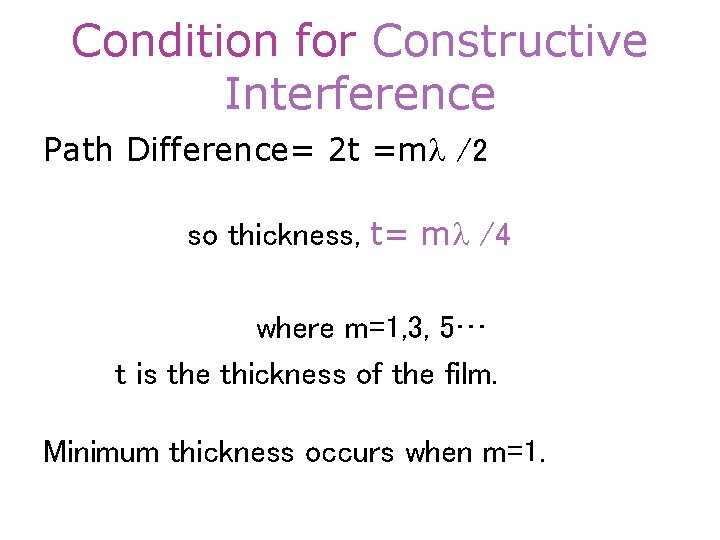
Condition for Constructive Interference Path Difference= 2 t =ml /2 so thickness, t= ml /4 where m=1, 3, 5… t is the thickness of the film. Minimum thickness occurs when m=1.
Problem Calculate the minimum thickness of a soap bubble that results in constructive interference when a light of wavelength 500 nm shines on it. Answer: 125 nm
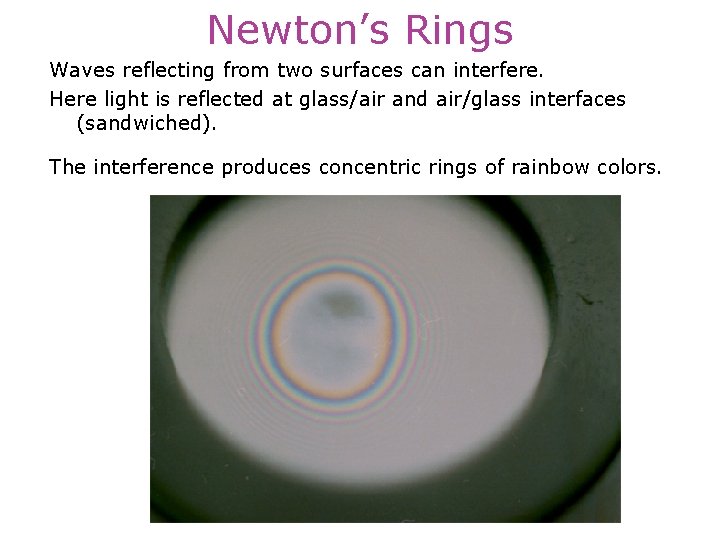
Newton’s Rings Waves reflecting from two surfaces can interfere. Here light is reflected at glass/air and air/glass interfaces (sandwiched). The interference produces concentric rings of rainbow colors.
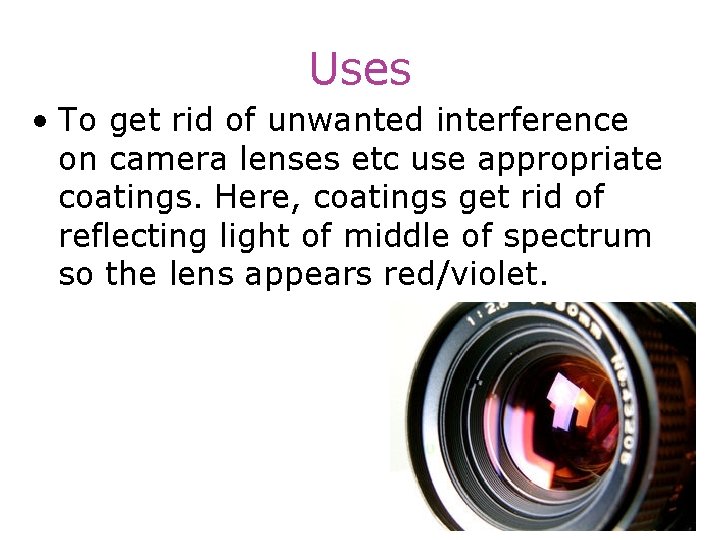
Uses • To get rid of unwanted interference on camera lenses etc use appropriate coatings. Here, coatings get rid of reflecting light of middle of spectrum so the lens appears red/violet.