
They Are Everywhere An introduction to bacteria Prokaryotes
They Are Everywhere An introduction to bacteria
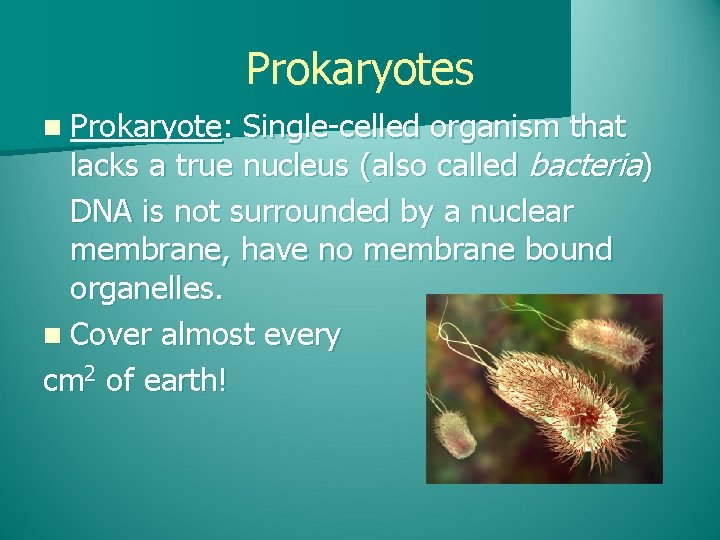
Prokaryotes n Prokaryote: Single-celled organism that lacks a true nucleus (also called bacteria) DNA is not surrounded by a nuclear membrane, have no membrane bound organelles. n Cover almost every cm 2 of earth!
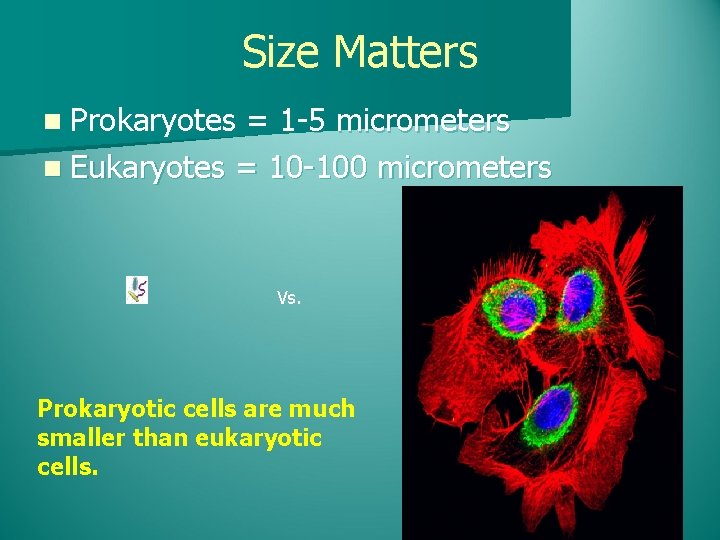
Size Matters n Prokaryotes = 1 -5 micrometers n Eukaryotes = 10 -100 micrometers Vs. Prokaryotic cells are much smaller than eukaryotic cells.
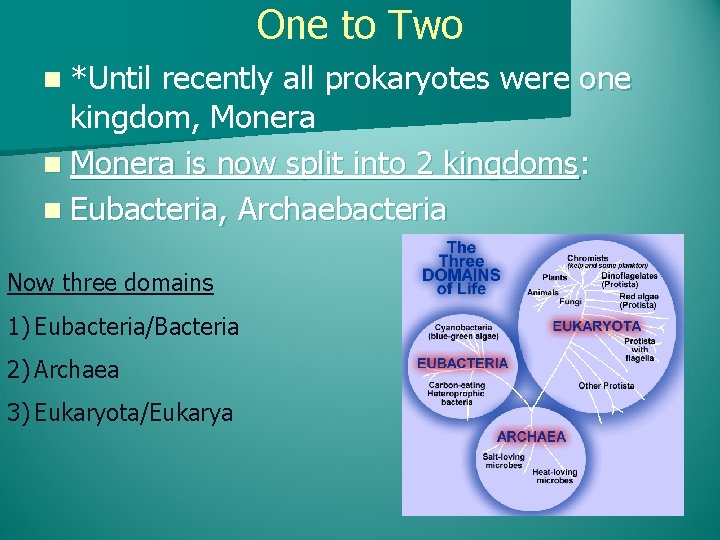
One to Two n *Until recently all prokaryotes were one kingdom, Monera n Monera is now split into 2 kingdoms: n Eubacteria, Archaebacteria Now three domains 1) Eubacteria/Bacteria 2) Archaea 3) Eukaryota/Eukarya
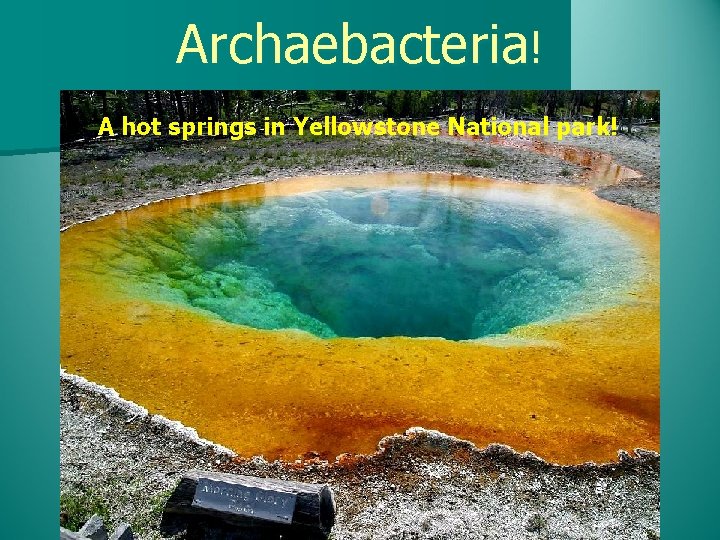
Archaebacteria! A hot springs in Yellowstone National park!
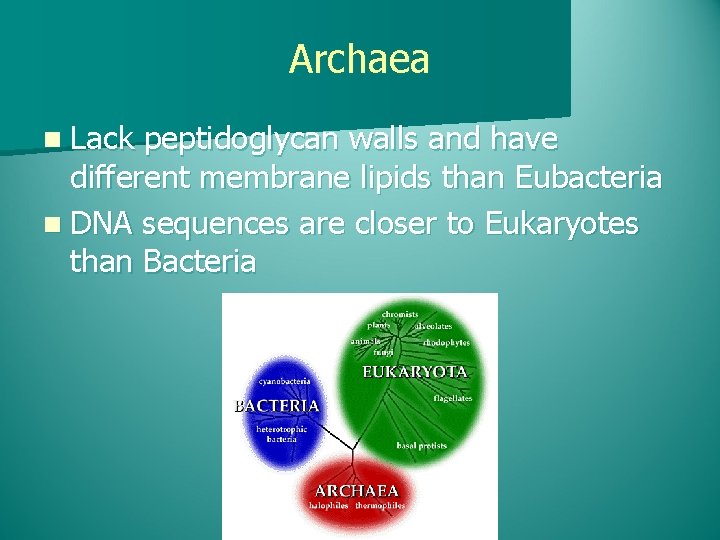
Archaea n Lack peptidoglycan walls and have different membrane lipids than Eubacteria n DNA sequences are closer to Eukaryotes than Bacteria
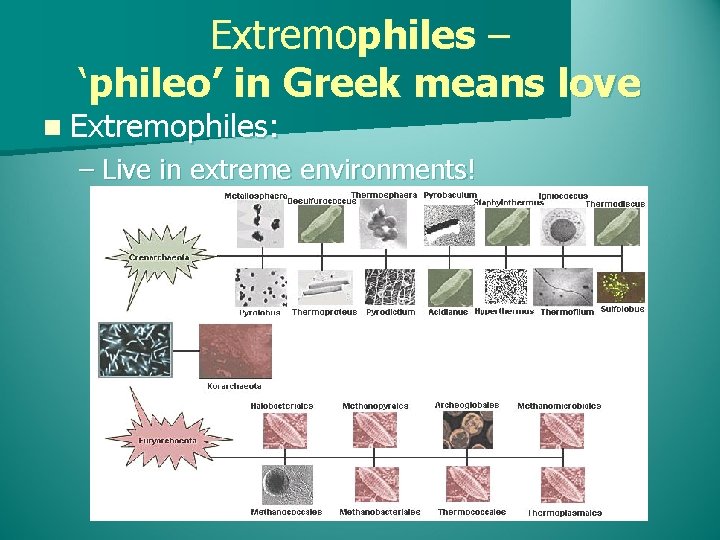
Extremophiles – ‘phileo’ in Greek means love n Extremophiles: – Live in extreme environments!
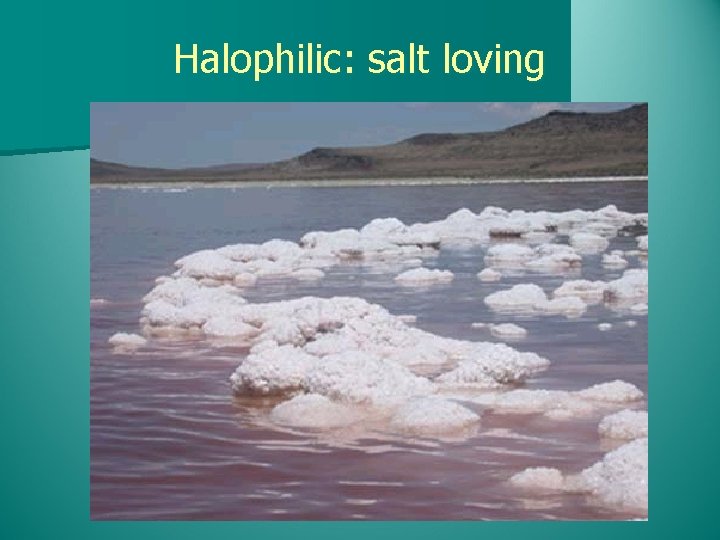
Halophilic: salt loving
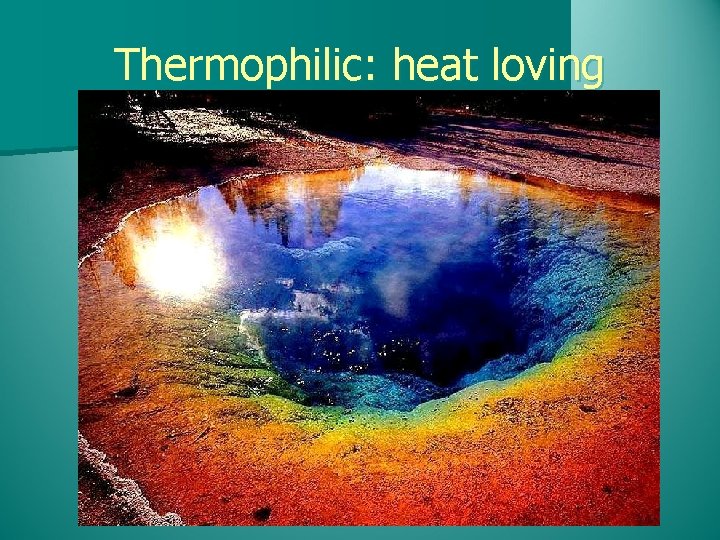
Thermophilic: heat loving
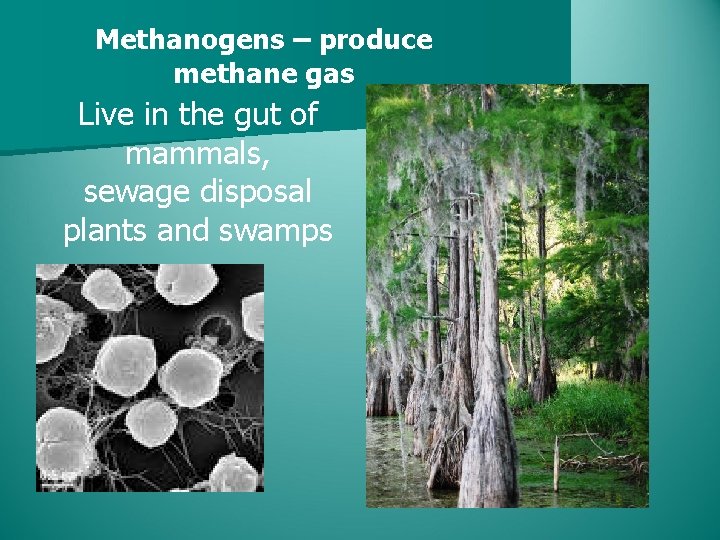
Methanogens – produce methane gas Live in the gut of mammals, sewage disposal plants and swamps
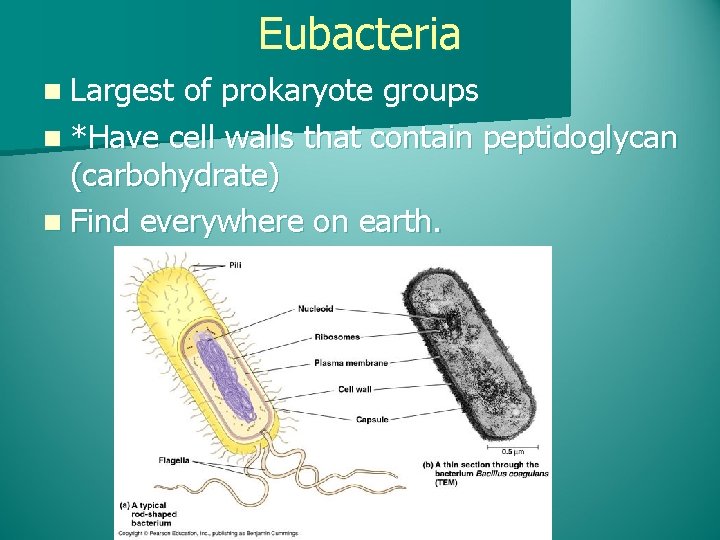
Eubacteria n Largest of prokaryote groups n *Have cell walls that contain peptidoglycan (carbohydrate) n Find everywhere on earth.
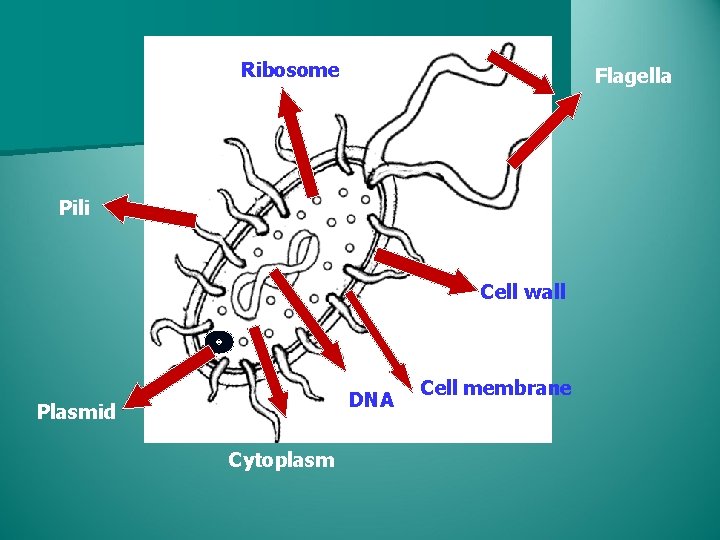
Ribosome Flagella Pili Cell wall DNA Plasmid Cytoplasm Cell membrane
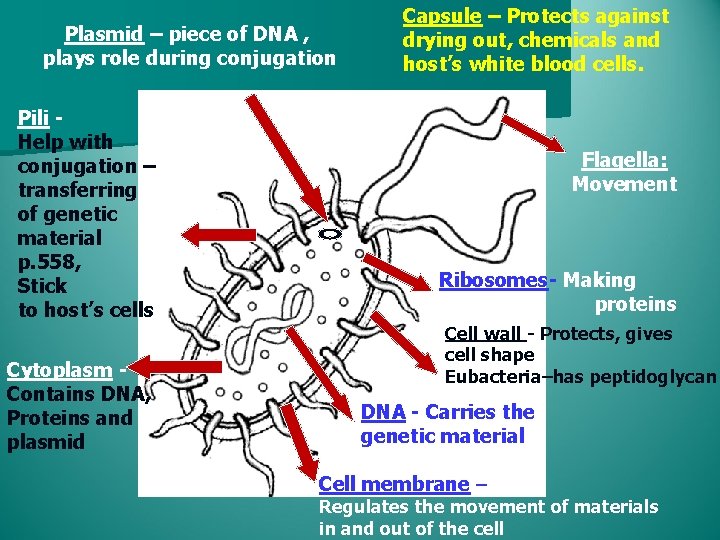
Plasmid – piece of DNA , plays role during conjugation Pili Help with conjugation – transferring of genetic material p. 558, Stick to host’s cells Cytoplasm Contains DNA, Proteins and plasmid Capsule – Protects against drying out, chemicals and host’s white blood cells. Flagella: Movement Ribosomes- Making proteins Cell wall - Protects, gives cell shape Eubacteria–has peptidoglycan DNA - Carries the genetic material Cell membrane – Regulates the movement of materials in and out of the cell
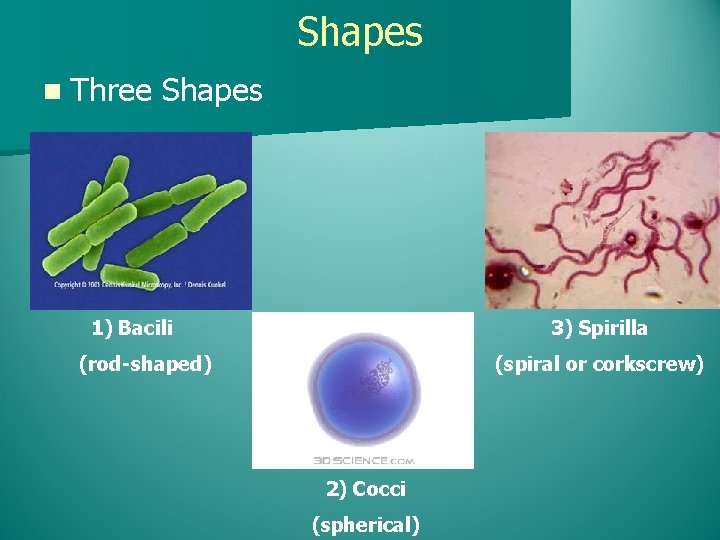
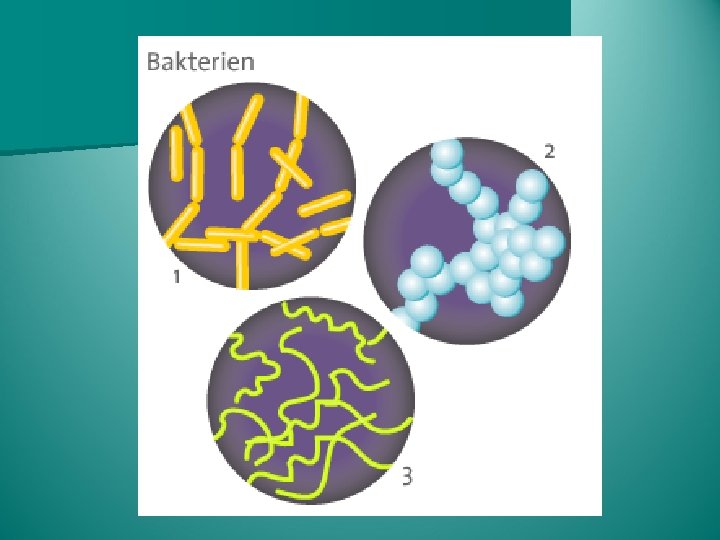
Shapes n Three Shapes 1) Bacili 3) Spirilla (rod-shaped) (spiral or corkscrew) 2) Cocci (spherical)
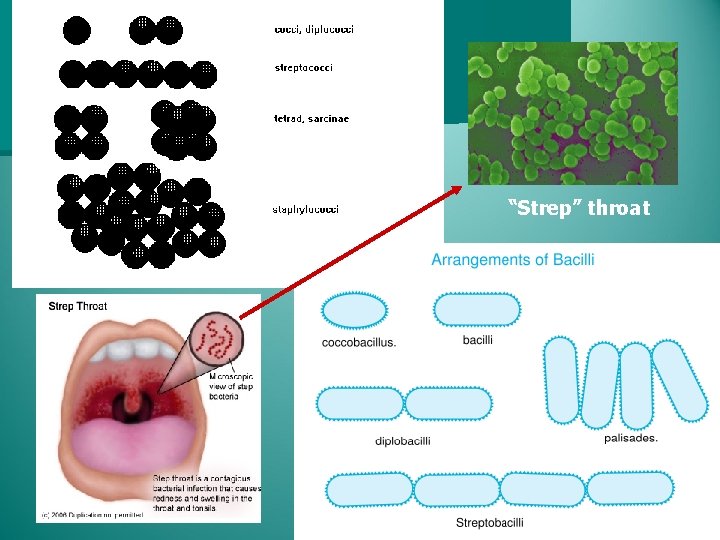
“Strep” throat
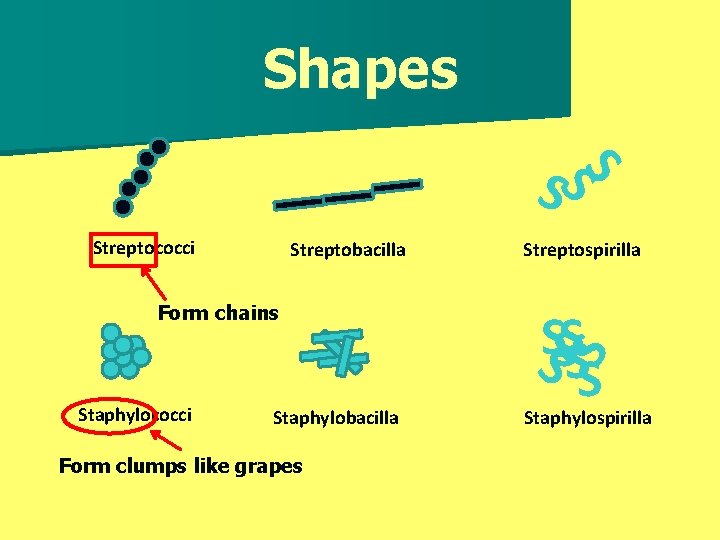
Shapes S Streptococci Streptobacilla S S SS S Form chains Streptospirilla Staphylococci Staphylobacilla Form clumps like grapes Staphylospirilla
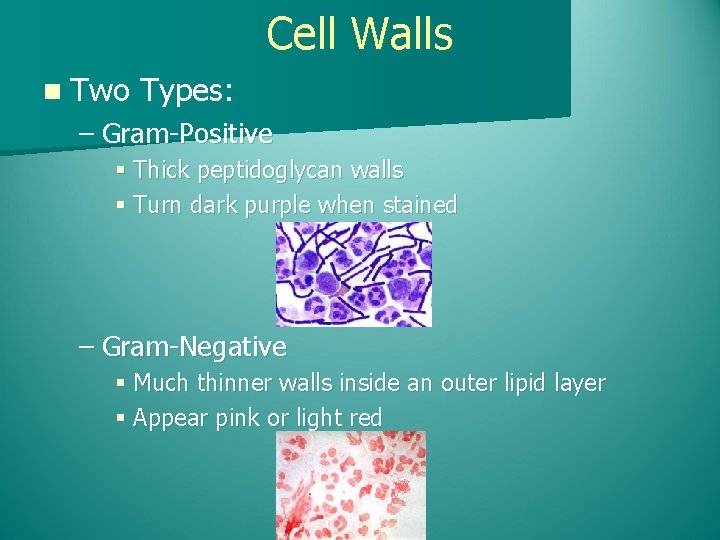
Cell Walls n Two Types: – Gram-Positive § Thick peptidoglycan walls § Turn dark purple when stained – Gram-Negative § Much thinner walls inside an outer lipid layer § Appear pink or light red
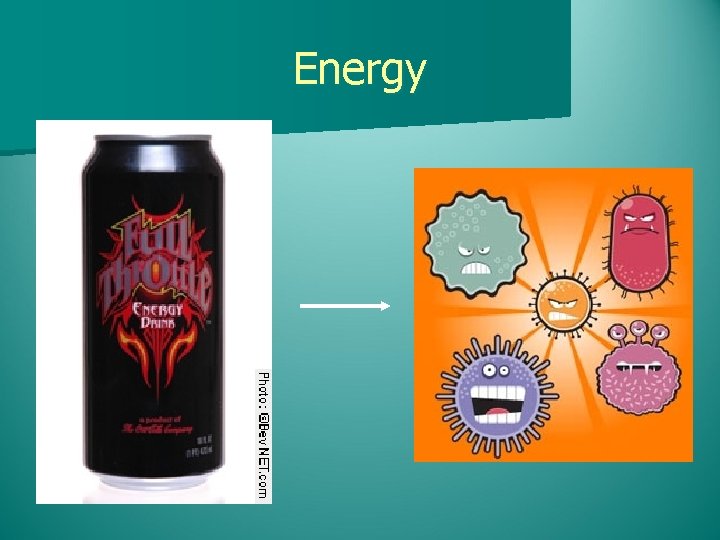
Energy n
Heterotrophs n Parasitic – Cause diseases (pathogens) n Saprophytic – Feed on dead tissues Decomposers
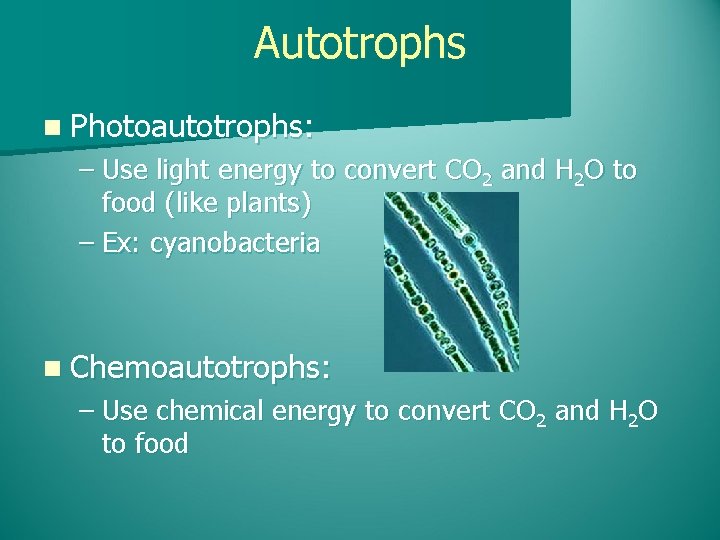
Autotrophs n Photoautotrophs: – Use light energy to convert CO 2 and H 2 O to food (like plants) – Ex: cyanobacteria n Chemoautotrophs: – Use chemical energy to convert CO 2 and H 2 O to food
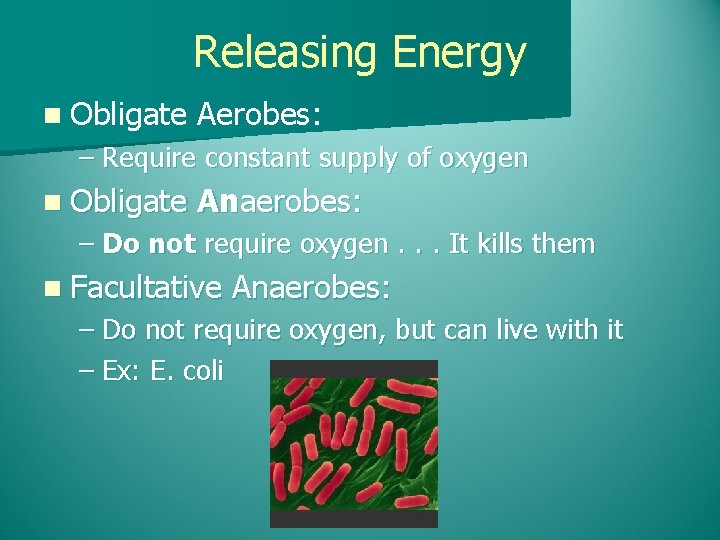
Releasing Energy n Obligate Aerobes: – Require constant supply of oxygen n Obligate Anaerobes: – Do not require oxygen. . . It kills them n Facultative Anaerobes: – Do not require oxygen, but can live with it – Ex: E. coli
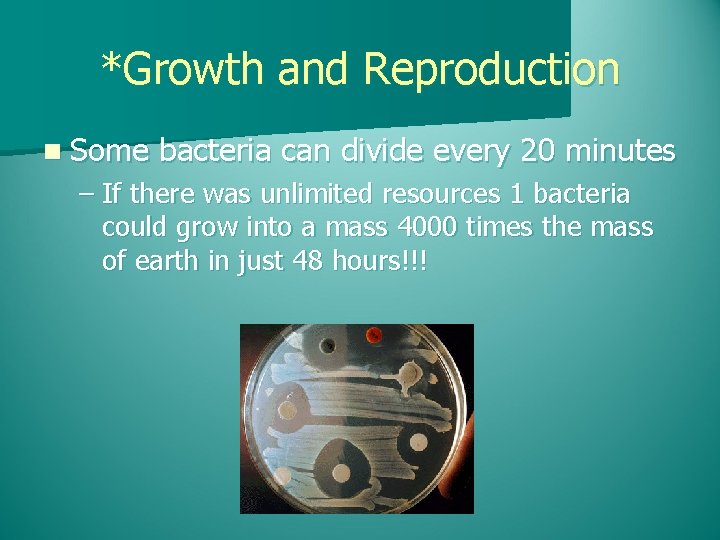
*Growth and Reproduction n Some bacteria can divide every 20 minutes – If there was unlimited resources 1 bacteria could grow into a mass 4000 times the mass of earth in just 48 hours!!!
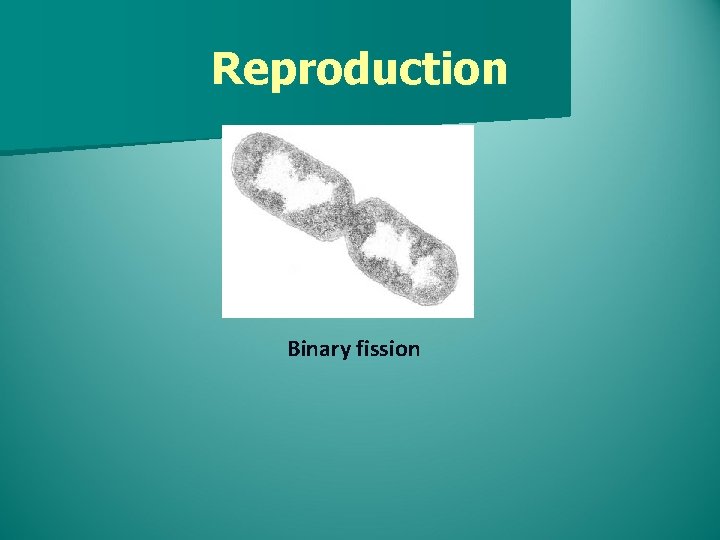
Reproduction Binary fission
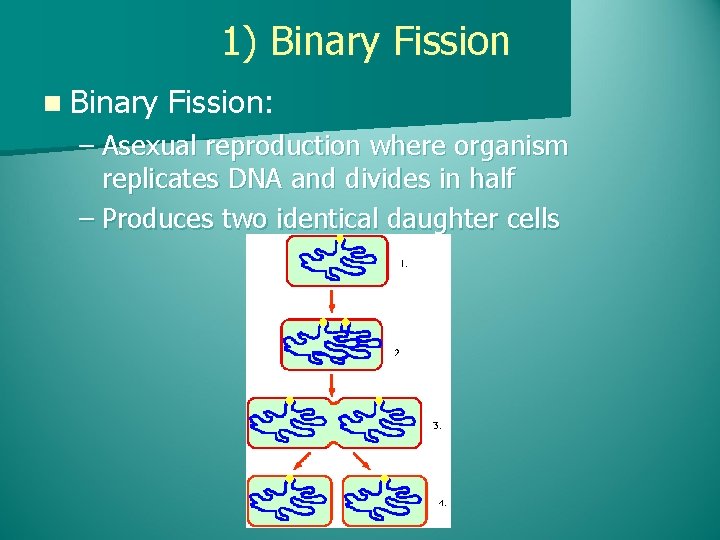
1) Binary Fission n Binary Fission: – Asexual reproduction where organism replicates DNA and divides in half – Produces two identical daughter cells
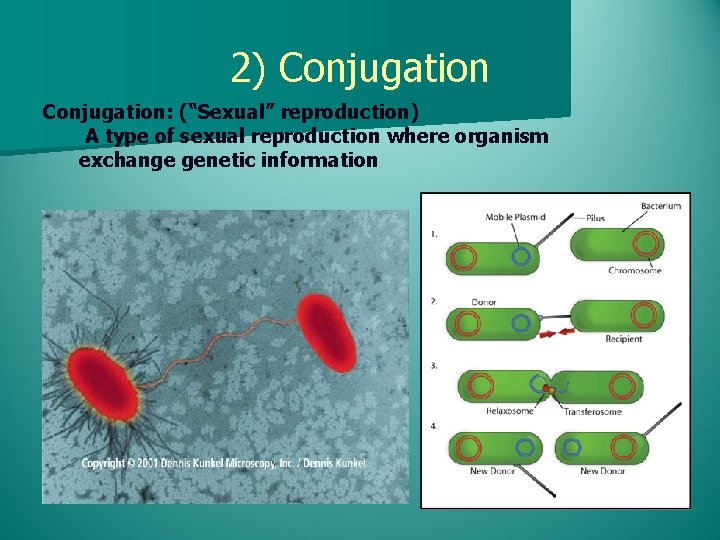
2) Conjugation: (“Sexual” reproduction) A type of sexual reproduction where organism exchange genetic information
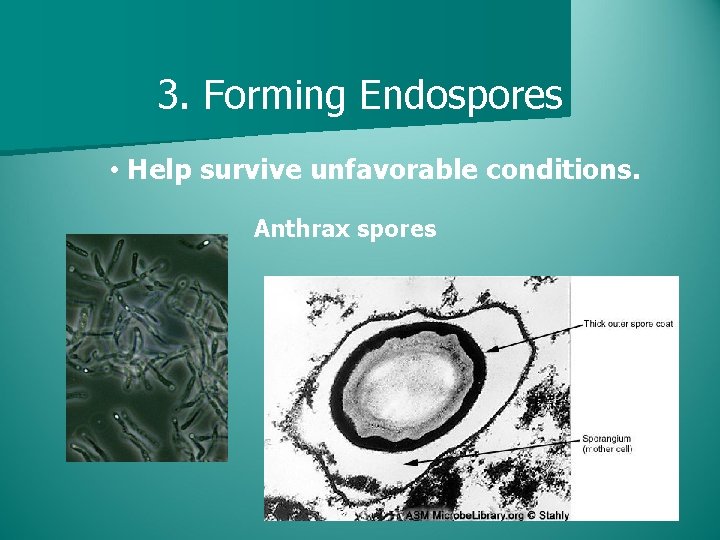
3. Forming Endospores • Help survive unfavorable conditions. Anthrax spores
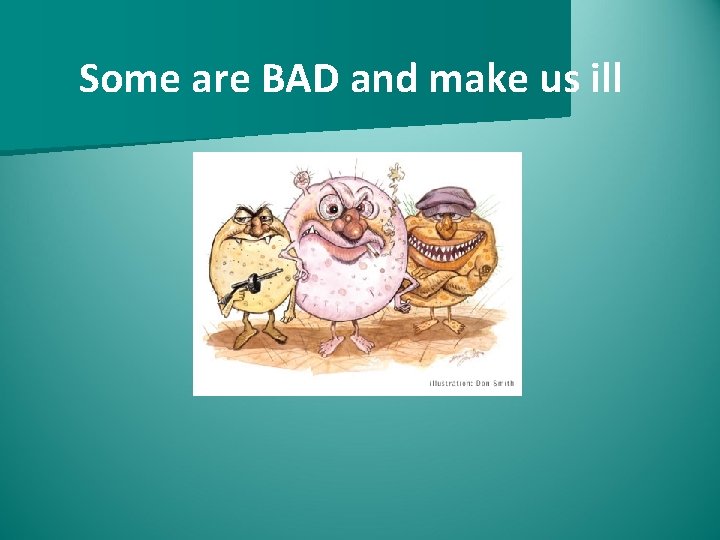
Some are BAD and make us ill
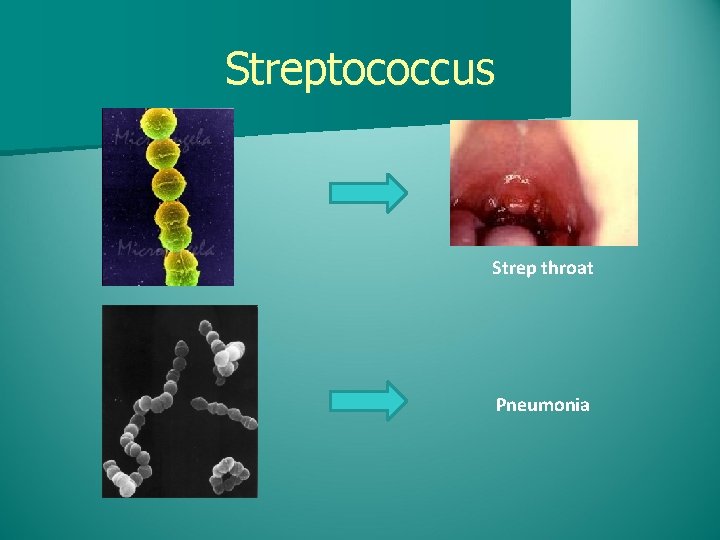
Streptococcus Strep throat Pneumonia
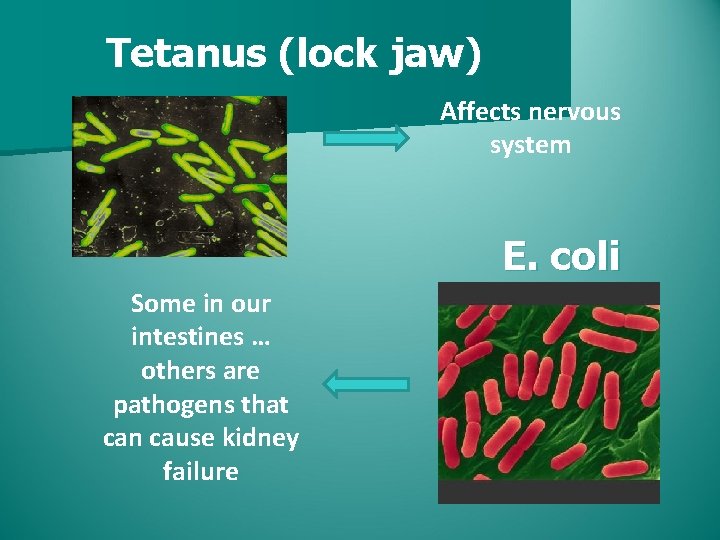
Tetanus (lock jaw) Affects nervous system E. coli Some in our intestines … others are pathogens that can cause kidney failure
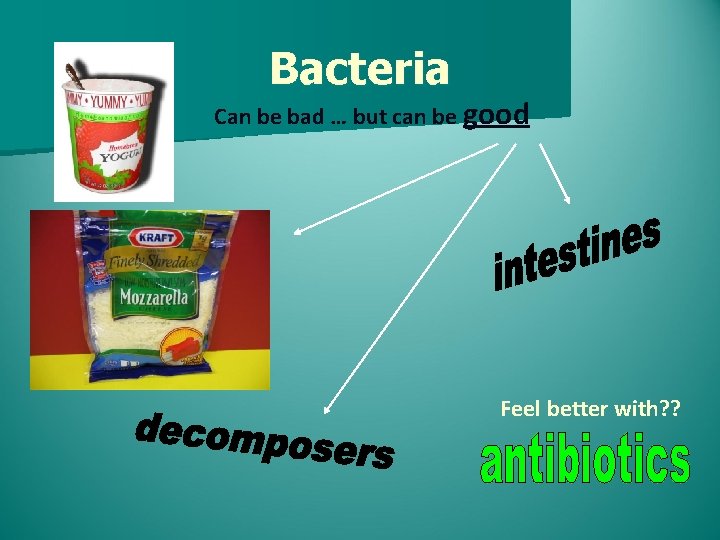
Bacteria Can be bad … but can be good Feel better with? ?
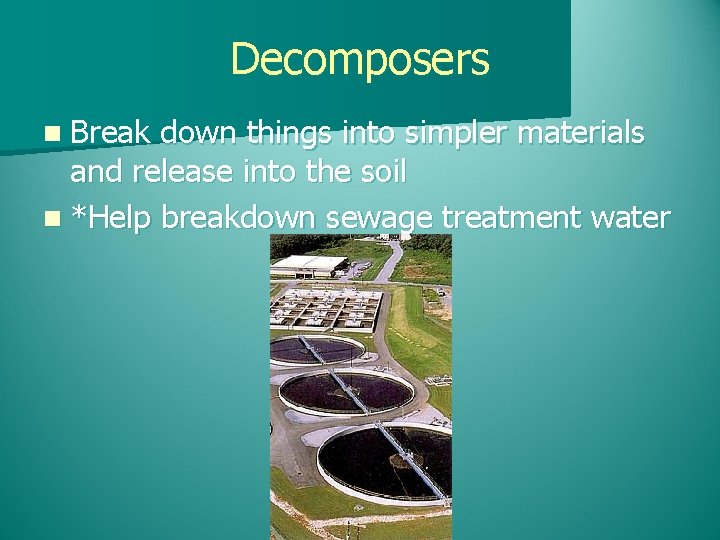
Decomposers n Break down things into simpler materials and release into the soil n *Help breakdown sewage treatment water
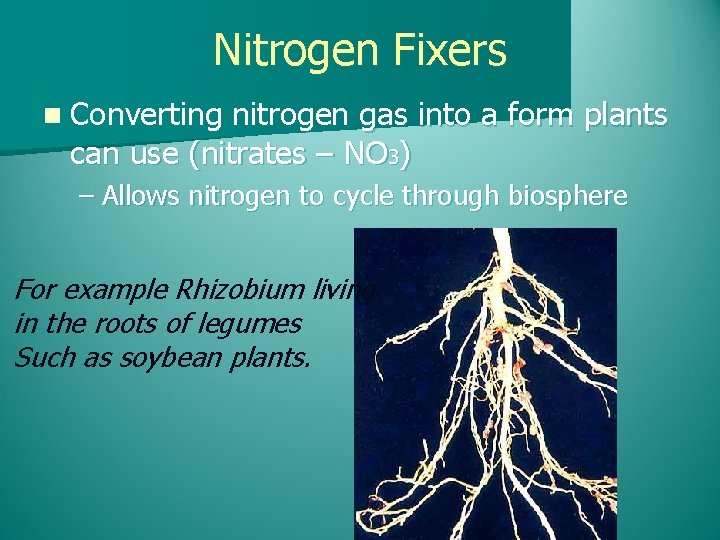
Nitrogen Fixers n Converting nitrogen gas into a form plants can use (nitrates – NO 3) – Allows nitrogen to cycle through biosphere For example Rhizobium living in the roots of legumes Such as soybean plants.
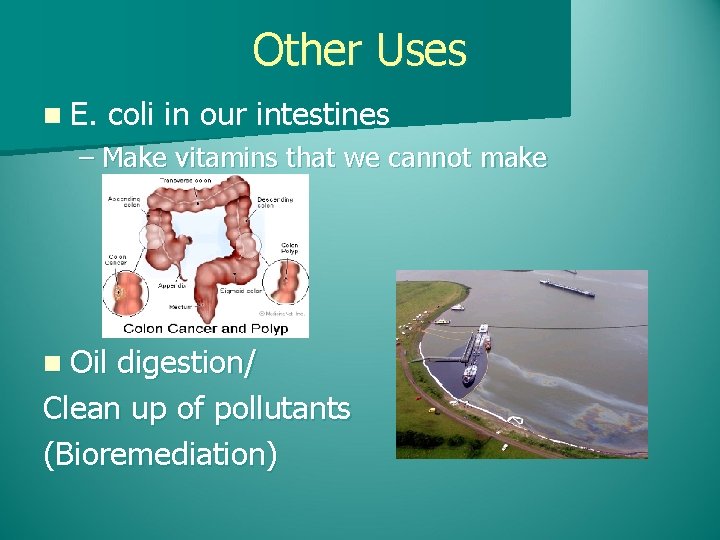
Other Uses n E. coli in our intestines – Make vitamins that we cannot make n Oil digestion/ Clean up of pollutants (Bioremediation)
Bacteria 1. 2. 3. 4. 5. 6. 7. Are living: Made up of cells Have DNA Grow and develop Use energy Homeostasis Reproduction Show organization – Flagella, pili, plasmid. 8. Adapt/Evolve – Antibiotic resistance 9. Respond to stimuli Endospores
- Slides: 35