
Thesis Structure and Interviews and Surveys Thesis Structure
- Slides: 27
Thesis Structure and Interviews and Surveys
Thesis Structure
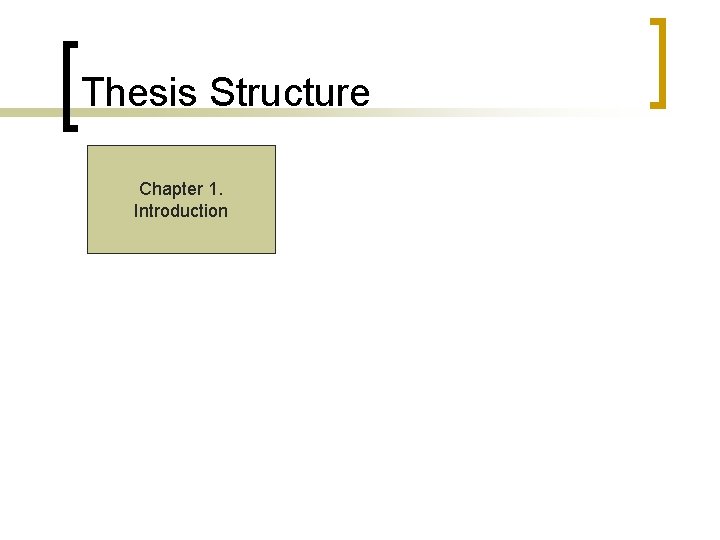
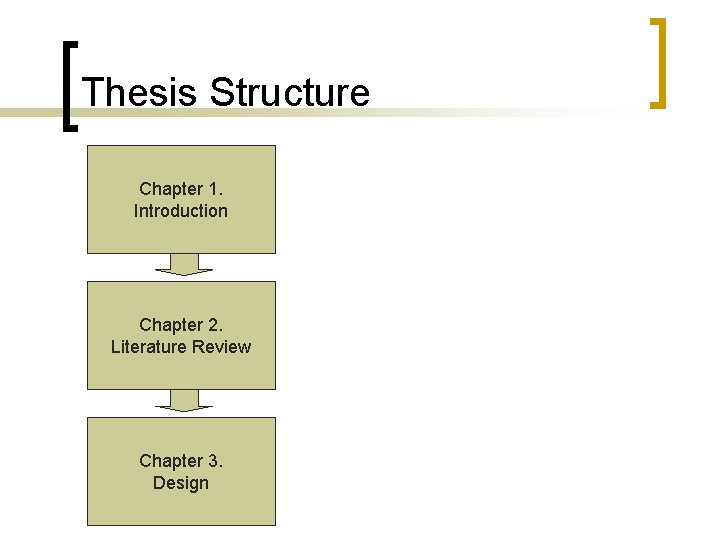
Thesis Structure Chapter 1. Introduction
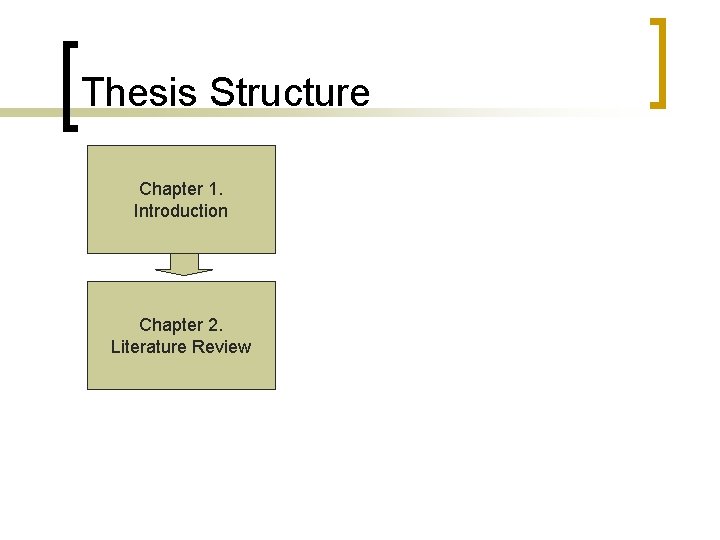
Thesis Structure Chapter 1. Introduction Chapter 2. Literature Review
Thesis Structure Chapter 1. Introduction Chapter 2. Literature Review Chapter 3. Design
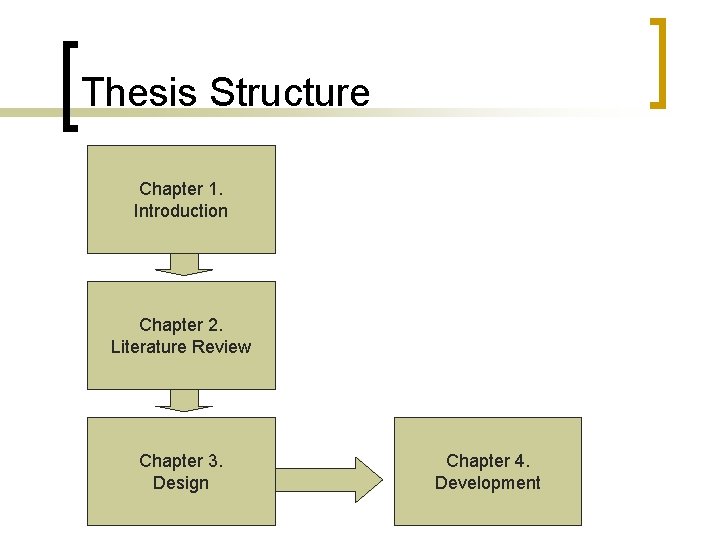
Thesis Structure Chapter 1. Introduction Chapter 2. Literature Review Chapter 3. Design Chapter 4. Development
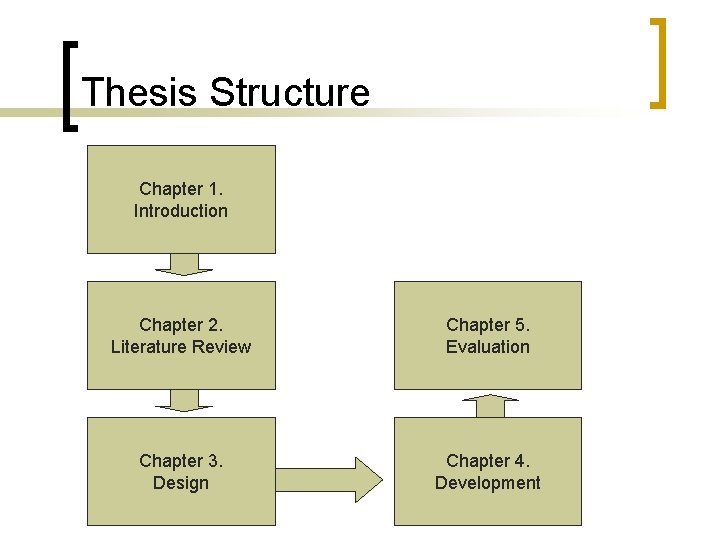
Thesis Structure Chapter 1. Introduction Chapter 2. Literature Review Chapter 5. Evaluation Chapter 3. Design Chapter 4. Development
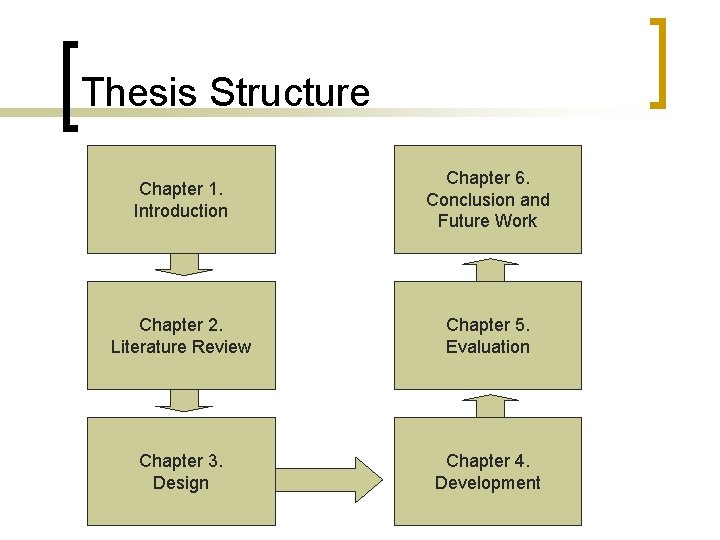
Thesis Structure Chapter 1. Introduction Chapter 6. Conclusion and Future Work Chapter 2. Literature Review Chapter 5. Evaluation Chapter 3. Design Chapter 4. Development
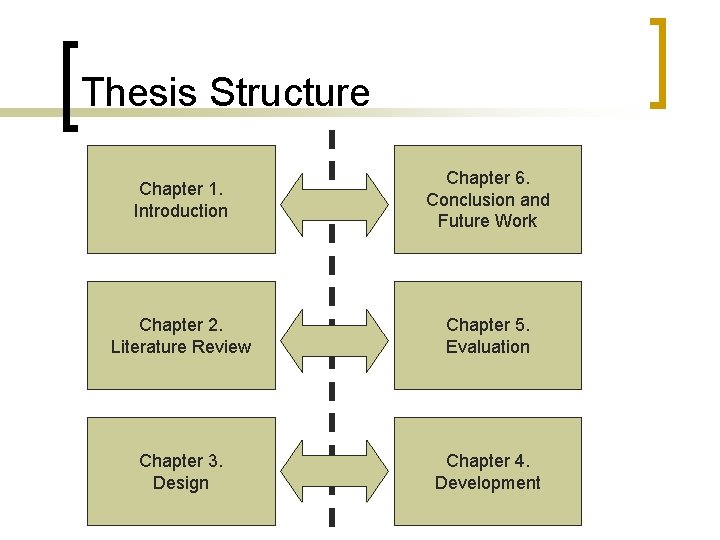
Thesis Structure Chapter 1. Introduction Chapter 6. Conclusion and Future Work Chapter 2. Literature Review Chapter 5. Evaluation Chapter 3. Design Chapter 4. Development
Interviews and Surveys
Interviews
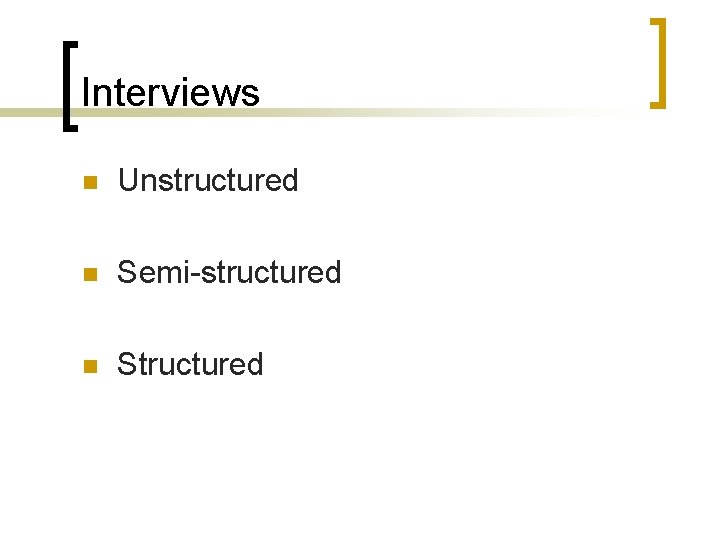
Interviews n Unstructured n Semi-structured n Structured
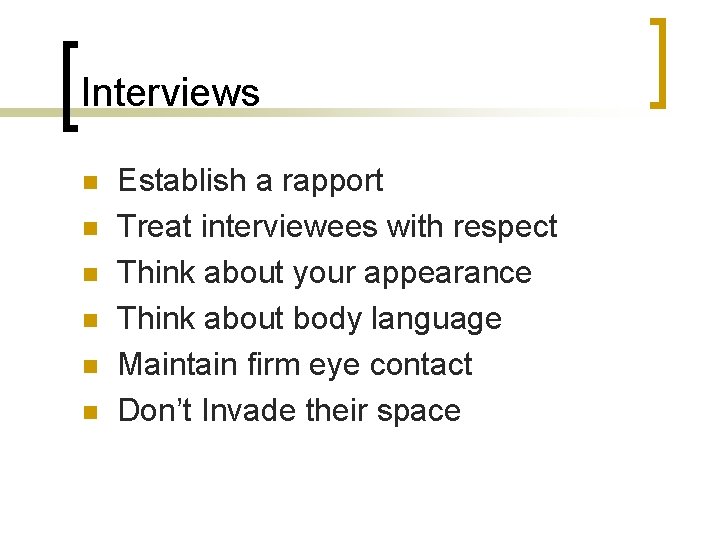
Interviews n n n Establish a rapport Treat interviewees with respect Think about your appearance Think about body language Maintain firm eye contact Don’t Invade their space
Interviews n How are you going to record ¡ ¡ ¡ Tape recorder Pen and paper - veratim Video recorder
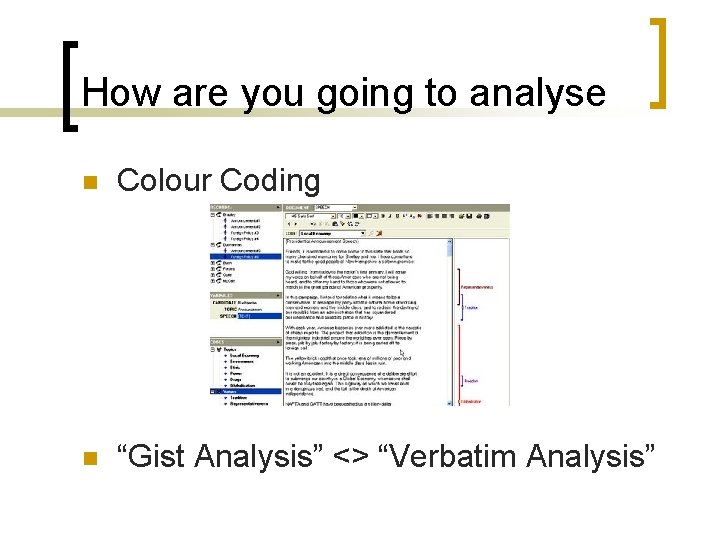
How are you going to analyse n Colour Coding n “Gist Analysis” <> “Verbatim Analysis”
Questionnaires
Questionnaire n n Identify which organisation you work for, or are studying at. Check your grammar, twice (Rule of Thumb – two proofreads get rids of 95% of errors).
Questionnaires n n n Open-ended Close-ended Combination of both
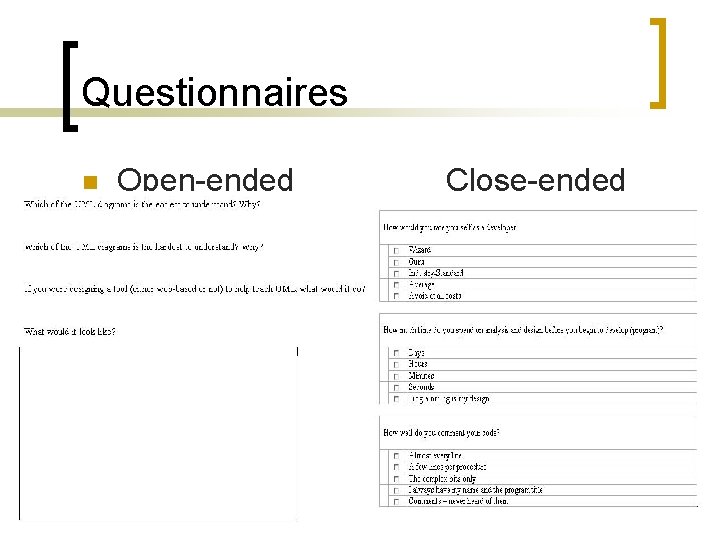
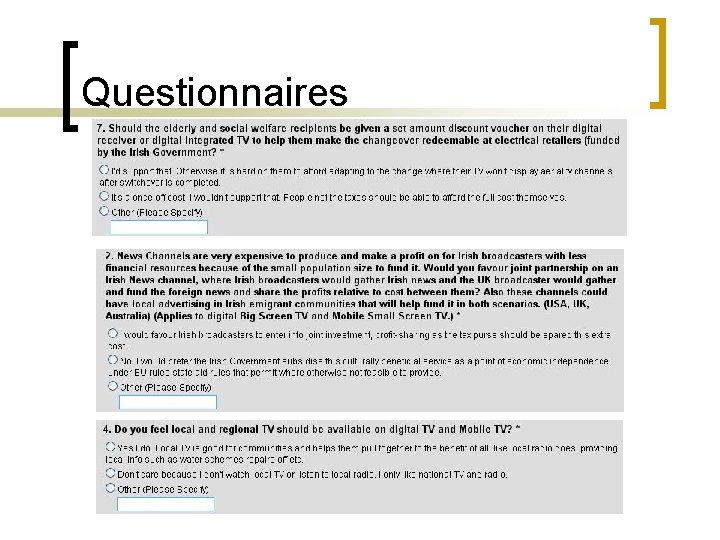
Questionnaires n Open-ended Close-ended
Questionnaires n Open-ended ¡ ¡ ¡ Slower to administer Harder to record responses Does not stifle response Answerer can raise new issues Answerer feels they can speak their mind What does a blank answer mean ? ?
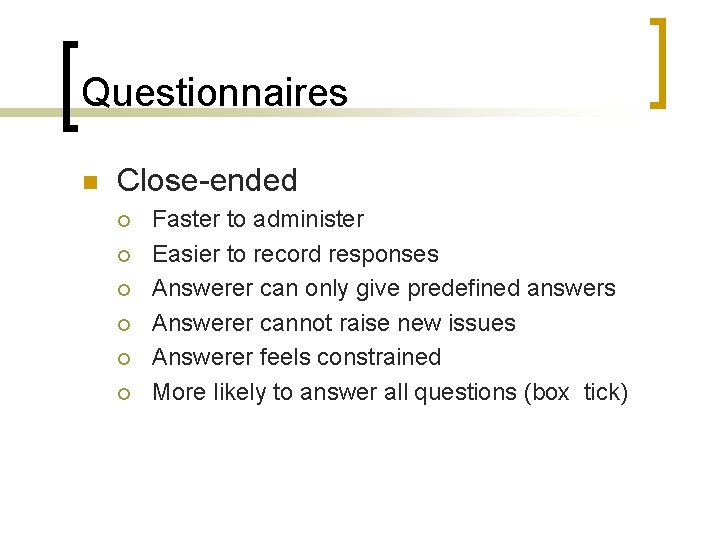
Questionnaires n Close-ended ¡ ¡ ¡ Faster to administer Easier to record responses Answerer can only give predefined answers Answerer cannot raise new issues Answerer feels constrained More likely to answer all questions (box tick)
Questionnaires n n Self-administered Interviewer administered
Questionnaires
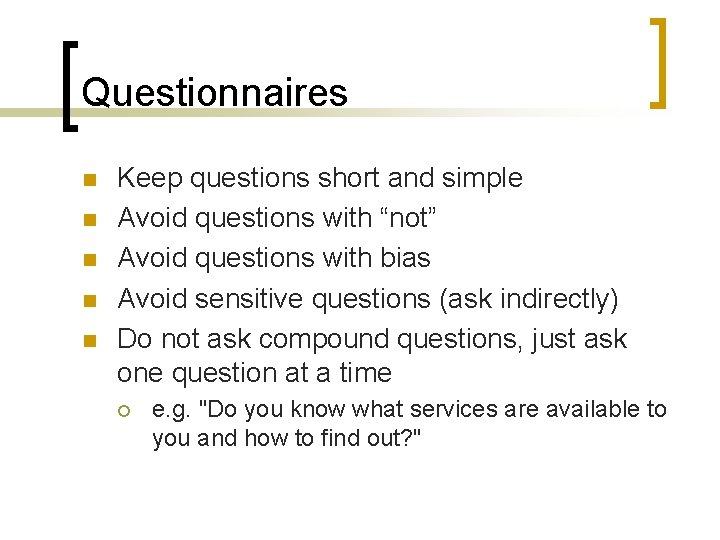
Questionnaires n n n Keep questions short and simple Avoid questions with “not” Avoid questions with bias Avoid sensitive questions (ask indirectly) Do not ask compound questions, just ask one question at a time ¡ e. g. "Do you know what services are available to you and how to find out? "
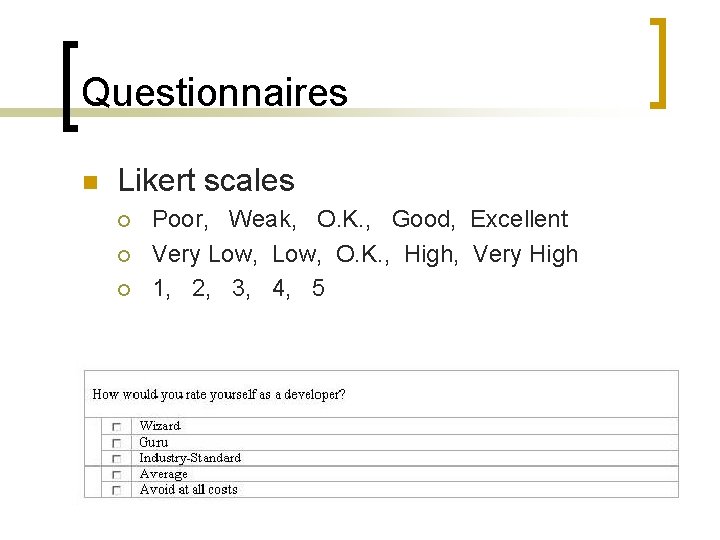
Questionnaires n Likert scales ¡ ¡ ¡ Poor, Weak, O. K. , Good, Excellent Very Low, O. K. , High, Very High 1, 2, 3, 4, 5
Thank them n "Thank you for taking the time to participate in this survey"
Incentives n Survey research suggests that there is a chance that offering an incentive may add bias to a survey n e. g. Singer, E. , Bossarte, R. , 2006, “Incentives for Survey Participation: When Are They “Coercive”? , American Journal of Preventive Medicine, Volume 31, Issue 5, Pages 411 -418