
Thesis Defense Electrical Engineering Drop Impact Reliability Testing
Thesis Defense – Electrical Engineering Drop Impact Reliability Testing Lead-Free Chip Scale Packages Andrew Farris May 23, 2008 California Polytechnic State University San Luis Obispo, CA 93407 May 23, 2008 Thesis Defense - Andrew Farris -1 -
Agenda l Introduction • Drop Impact Reliability • Prior Work • Thesis Research Goals l Failure Detection Systems • Data Acquisition System Design • Post-drop Resistance Measurement l Test Vehicle Design and Assembly May 23, 2008 Thesis Defense - Andrew Farris -2 -
Agenda l Drop Impact Testing l Analysis • Reliability Data • Failure Mechanisms • Acceleration on Test Vehicle l Conclusions l Acknowledgements May 23, 2008 Thesis Defense - Andrew Farris -3 -
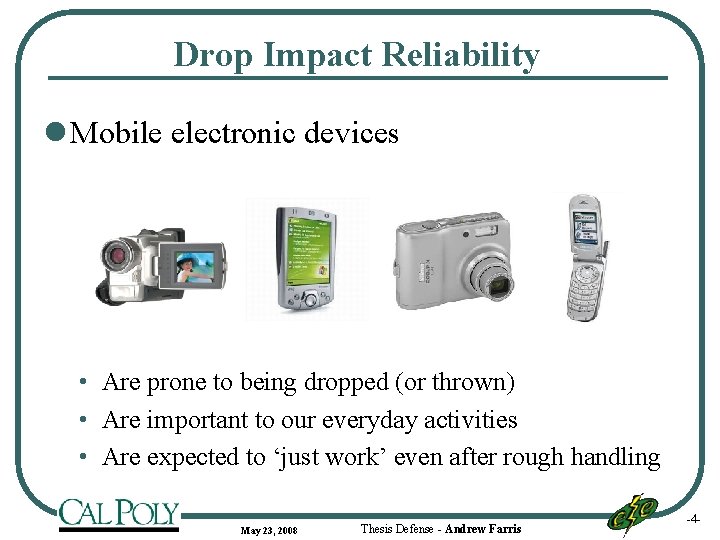
Drop Impact Reliability l Mobile electronic devices • Are prone to being dropped (or thrown) • Are important to our everyday activities • Are expected to ‘just work’ even after rough handling May 23, 2008 Thesis Defense - Andrew Farris -4 -
Drop Test Reliability (cont. ) l Mobile electronic devices also… • Are complicated and expensive • Are easily damaged by drop impacts • Are designed to be lightweight and portable l Drop test reliability is: • The study of how well a device or part survives repeated drop impacts • A process to determine where design improvements are needed for future high reliability designs May 23, 2008 Thesis Defense - Andrew Farris -5 -
Introduction to Drop Testing l What happens during a drop impact test • The electronics test vehicle is attached to a shock test table • The table is dropped vertically until it impacts a stationary base • The impact causes an acceleration pulse by rapidly stopping the table (and test vehicle) • Test vehicle deforms due to the impact energy, causing stress and strain in the solder joints May 23, 2008 Thesis Defense - Andrew Farris -6 -

Introduction to Drop Testing Typical Half-sine Acceleration Pulse Lansmont MTS II Shock Tester May 23, 2008 e. g. 1500 g - 0. 5 ms or 2900 g - 0. 3 ms Thesis Defense - Andrew Farris -7 -
Drop Impact Reliability l Drop impact reliability testing evaluates the reliability of electronics when subjected to mechanical shock • Shock causes vibration, PWB bending, and resulting mechanical stresses on solder joints l Generally focused on lead-free solder usage in consumer electronics (handheld products) • Due to governmental regulations pushing toward a world-wide lead-free market for these products May 23, 2008 Thesis Defense - Andrew Farris -8 -
Introduction to Drop Testing l The drop impact test • Is repeated until failure occurs • Determines how many drop impacts of a specific intensity (acceleration peak and duration) can be survived before the device fails l Drop impact reliability data is a tool that can guide designers in developing more robust electronic products May 23, 2008 Thesis Defense - Andrew Farris -9 -
Drop Impact Demo May 23, 2008 Thesis Defense - Andrew Farris -10 -

Why Study Lead-free Solder? l Environmental regulations and directives currently restrict the use of lead in consumer electronics products within global markets • European Union’s Restriction of Hazardous Substances (Ro. HS) • China’s Regulation for Pollution Control of Electronics Products (RPCEP) • And more… May 23, 2008 Thesis Defense - Andrew Farris -11 -
Why Study Lead-free Solder? l Lead-free solder is still very new to the electronics industry • Ro. HS regulations took effect in 2006 l Many lead-free solder alloys can be used to replace tin-lead solder, and more information is needed on their performance May 23, 2008 Thesis Defense - Andrew Farris -12 -
Prior Work l Researchers have studied • Lead-free Sn. Ag. Cu solder alloys and various microadditives in the alloys to improve reliability • Use of underfill and Corner Bonding to improve mechanical strength and reliability of components • Board and device level drop impact reliability, acceleration, stress, and strain on solder joints for many component and solder joint sizes May 23, 2008 Thesis Defense - Andrew Farris -13 -
Purpose of this Thesis l Develop a high-speed data acquisition (DAQ) system for drop impact reliability research l Determine the drop impact reliability of leadfree Chip Scale Package (CSP) solder joints May 23, 2008 Thesis Defense - Andrew Farris -14 -
Purpose of this Thesis l Determine the effects of edge bonding on CSP drop impact performance l Investigate the failure mechanisms of drop impact failures in lead-free CSPs May 23, 2008 Thesis Defense - Andrew Farris -15 -
Agenda l Introduction • Drop Impact Reliability • Prior Work • Thesis Research Goals l Failure Detection Systems • Data Acquisition System Design • Post-drop Resistance Measurement l Test Vehicle Design and Assembly May 23, 2008 Thesis Defense - Andrew Farris -16 -
Drop Impact Failure Detection l Goal: Develop a high-speed DAQ failure detection system for drop impact reliability research l System should: • Detect intermittent failures by testing resistance during the drop impact (in-situ testing) • Save all sampled data for later analysis • Require minimal operator interaction so that highly repetitious testing can be done without interruption May 23, 2008 Thesis Defense - Andrew Farris -17 -
Definition: Drop Impact Failure l Drop impact failure… • Occurs when the electrical connections in the device are damaged so that it no longer functions as designed • Is typically detected by change in resistance or loss of continuity in board level circuits • May be either a permanent or intermittent condition May 23, 2008 Thesis Defense - Andrew Farris -18 -
Drop Impact Failure Detection l Joint Electron Device Engineering Council (JEDEC) recommendations • Specified in the JESD 22 -B 111 standard for handheld electronics drop impact testing • Identify failure as 100 ohm change in resistance • Sample resistance at a minimum frequency of 50 k. Hz to observe intermittent failures • A rate much higher than the vibration frequencies of the test vehicle after impact so that accurate reproduction of the resistance change is observed (no aliasing) May 23, 2008 Thesis Defense - Andrew Farris -19 -
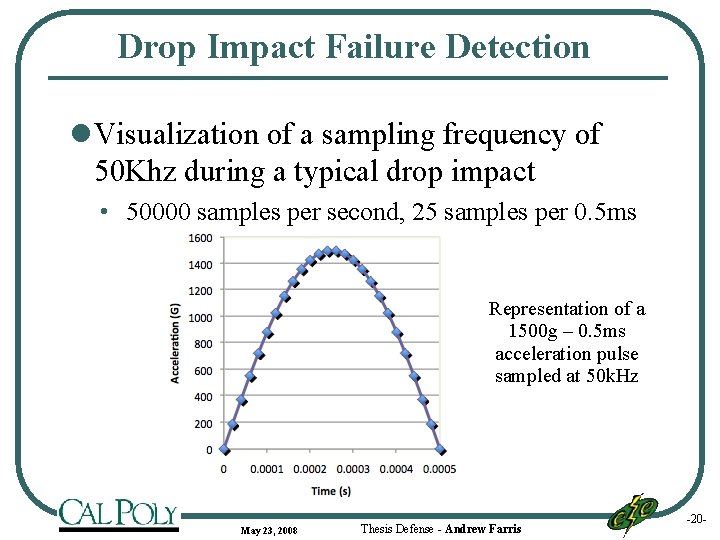
Drop Impact Failure Detection l Visualization of a sampling frequency of 50 Khz during a typical drop impact • 50000 samples per second, 25 samples per 0. 5 ms Representation of a 1500 g – 0. 5 ms acceleration pulse sampled at 50 k. Hz May 23, 2008 Thesis Defense - Andrew Farris -20 -
Data Acquisition System Design l System composed of: • Multichannel voltage divider resistance measurement circuit • National Instruments analog-to-digital converter (ADC) PCI card • Desktop computer • ADC control and data gathering software • Cable from test vehicle to connector boxes • External trigger May 23, 2008 Thesis Defense - Andrew Farris -21 -
Voltage Divider Circuit l Dynamic resistance measurement is achieved by using a series voltage divider circuit to relate voltage to resistance • The ADC measures voltage divided between the static resistor and component resistance May 23, 2008 Thesis Defense - Andrew Farris -22 -
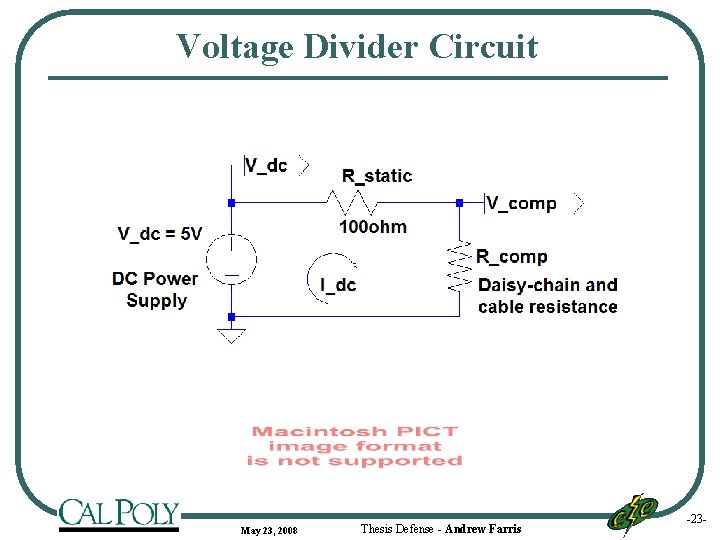
Voltage Divider Circuit May 23, 2008 Thesis Defense - Andrew Farris -23 -
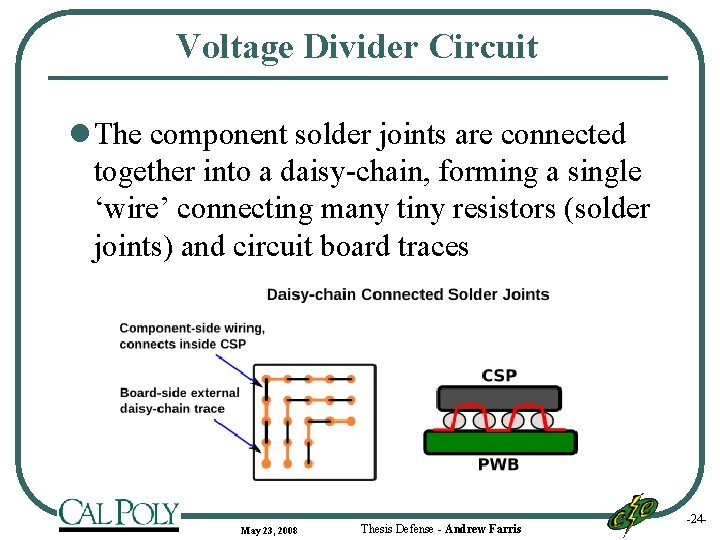
Voltage Divider Circuit l The component solder joints are connected together into a daisy-chain, forming a single ‘wire’ connecting many tiny resistors (solder joints) and circuit board traces May 23, 2008 Thesis Defense - Andrew Farris -24 -
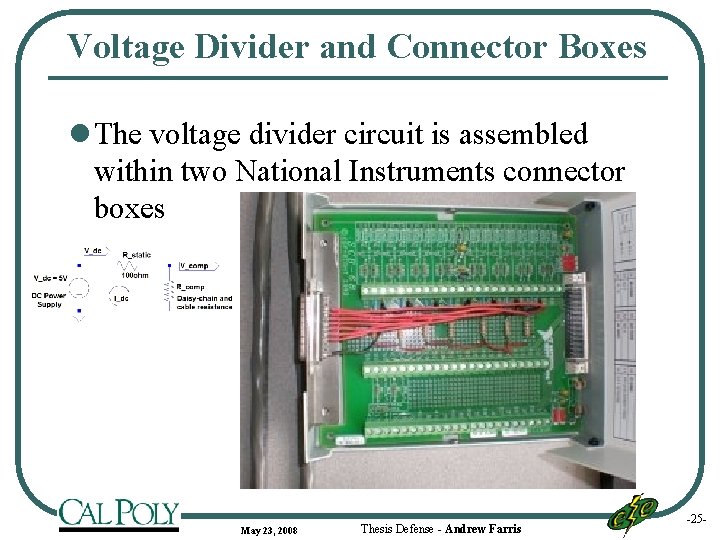
Voltage Divider and Connector Boxes l The voltage divider circuit is assembled within two National Instruments connector boxes May 23, 2008 Thesis Defense - Andrew Farris -25 -
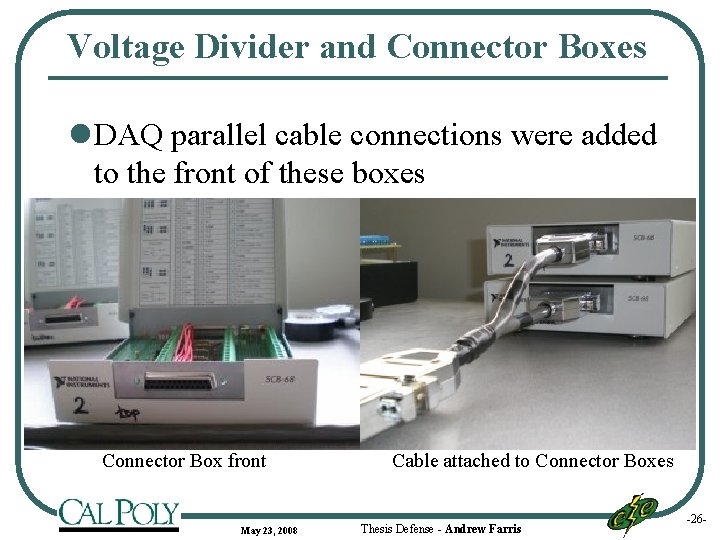
Voltage Divider and Connector Boxes l DAQ parallel cable connections were added to the front of these boxes Connector Box front May 23, 2008 Cable attached to Connector Boxes Thesis Defense - Andrew Farris -26 -
DAQ System – Software l Drop. Gather • Windows console-based program written in C++ • Interfaces to National Instruments DAQmx driver libraries for ADC device control • Released as open source software for others to use as an example in building similar systems May 23, 2008 Thesis Defense - Andrew Farris -27 -
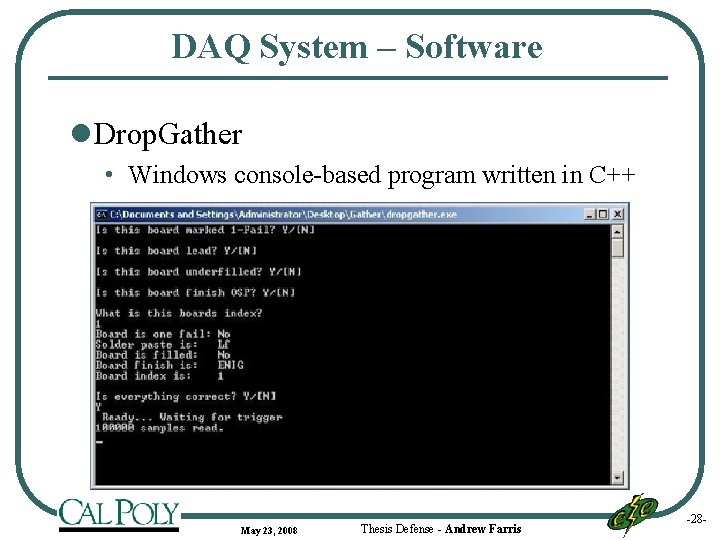
DAQ System – Software l Drop. Gather • Windows console-based program written in C++ May 23, 2008 Thesis Defense - Andrew Farris -28 -
Data Acquisition System Summary l. DAQ system capabilities • 17 channels (15 for components, power supply voltage, trigger) • Sampling frequency of 50 k. Hz per channel • 16 bit measurement accuracy (over 0 -5 V range) • Store entire data set for later analysis • Tab-separated-text (CSV) data value tables • PDF format graphs of each measured channel May 23, 2008 Thesis Defense - Andrew Farris -29 -
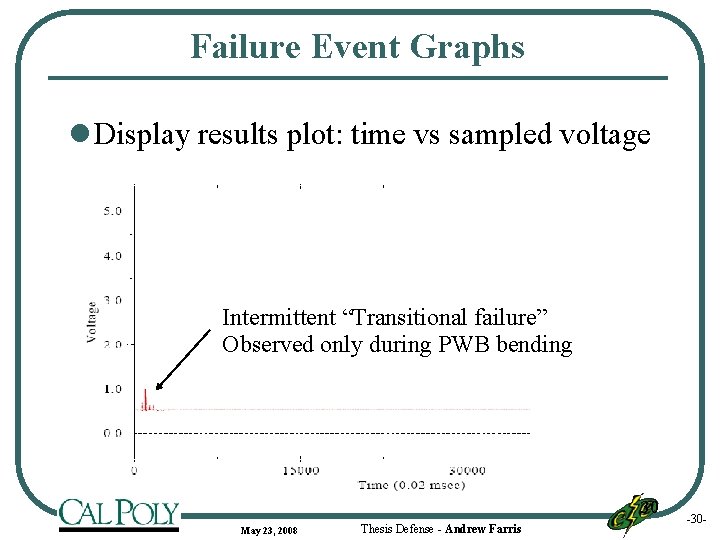
Failure Event Graphs l Display results plot: time vs sampled voltage Intermittent “Transitional failure” Observed only during PWB bending 30 May 23, 2008 Thesis Defense - Andrew Farris -30 -
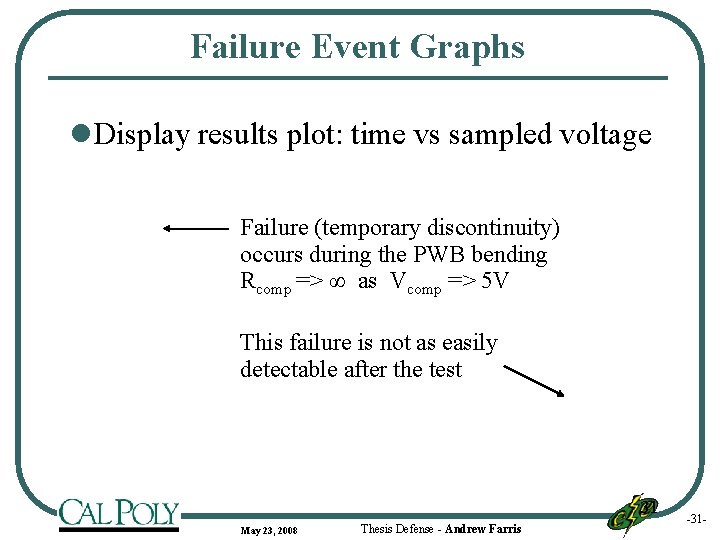
Failure Event Graphs l Display results plot: time vs sampled voltage Failure (temporary discontinuity) occurs during the PWB bending Rcomp => ∞ as Vcomp => 5 V This failure is not as easily detectable after the test 31 May 23, 2008 Thesis Defense - Andrew Farris -31 -
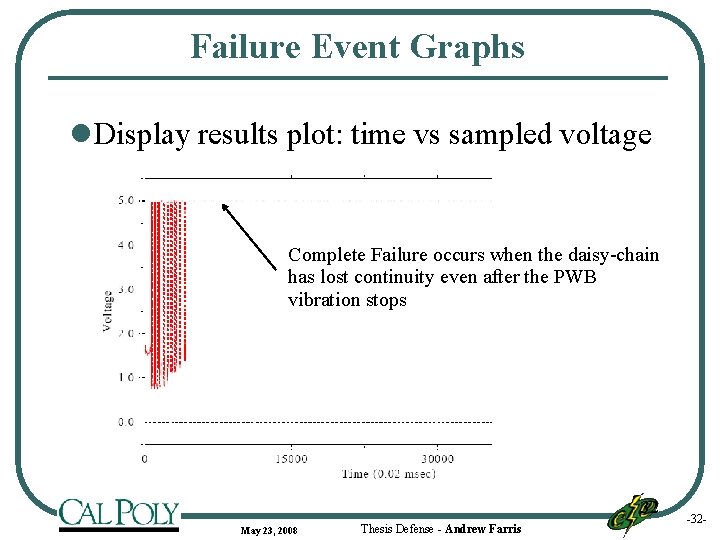
Failure Event Graphs l Display results plot: time vs sampled voltage Complete Failure occurs when the daisy-chain has lost continuity even after the PWB vibration stops 32 May 23, 2008 Thesis Defense - Andrew Farris -32 -
Failure Detection Systems l Compare two failure detection systems • High-speed DAQ dynamic resistance measurement • Post-drop static resistance measurement • Commonly used in industry May 23, 2008 Thesis Defense - Andrew Farris -33 -
Post-Drop Testing l Uses a single resistance measurement per drop taken after the board vibration ceases l Failure when a 10 ohm static rise is detected l Monitor resistance change over multiple drop period l Lab. View program which configures Keithley equipment to collect resistance values l Outputs tabular data for resistance of all 15 components once each drop 34 May 23, 2008 Thesis Defense - Andrew Farris -34 -
Post-Drop Testing l Advantage: • No wires soldered to the test board, fast setup • Low cost system l Disadvantages: • Cannot test in-situ (during board deflection and vibration conditions) • Requires operator interaction every drop cycle • Only one test per drop provides fairly poor resolution for when failure occurs May 23, 2008 Thesis Defense - Andrew Farris -35 -
Agenda l Introduction • Drop Impact Reliability • Prior Work • Thesis Research Goals l Failure Detection Systems • Data Acquisition System Design • Post-drop Resistance Measurement l Test Vehicle Design and Assembly May 23, 2008 Thesis Defense - Andrew Farris -36 -
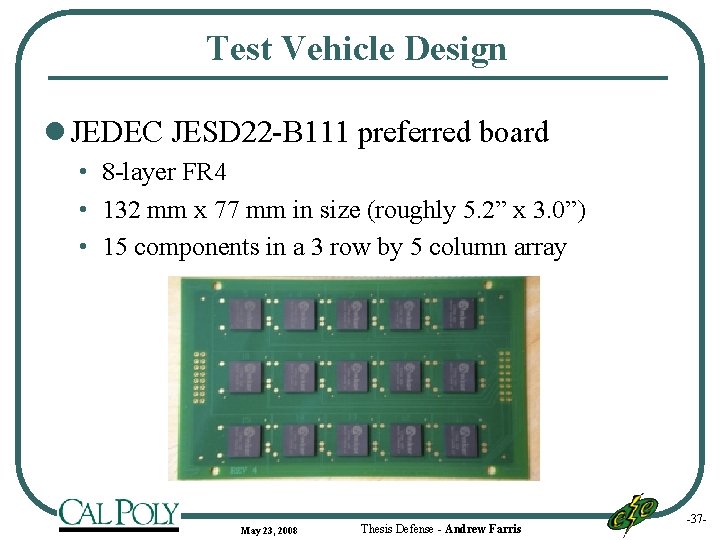
Test Vehicle Design l JEDEC JESD 22 -B 111 preferred board • 8 -layer FR 4 • 132 mm x 77 mm in size (roughly 5. 2” x 3. 0”) • 15 components in a 3 row by 5 column array May 23, 2008 Thesis Defense - Andrew Farris -37 -
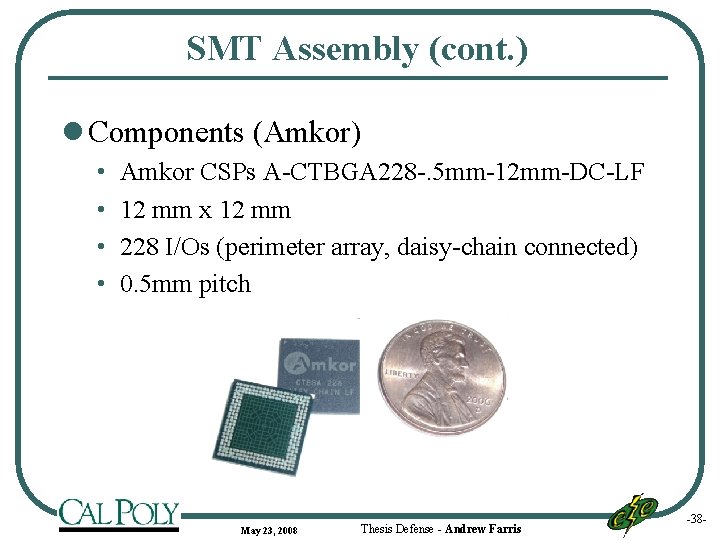
SMT Assembly (cont. ) l Components (Amkor) • • Amkor CSPs A-CTBGA 228 -. 5 mm-12 mm-DC-LF 12 mm x 12 mm 228 I/Os (perimeter array, daisy-chain connected) 0. 5 mm pitch May 23, 2008 Thesis Defense - Andrew Farris -38 -
SMT Assembly (cont. ) l Lead-free Solder Paste • Multicore 318 LF 97 SC • Sn. Ag 3. 0 Cu 0. 5 alloy composition (also called SAC 305) • Primarily tin with 3. 0% silver and 0. 5% copper by weight • Common replacement for tin-lead solder May 23, 2008 Thesis Defense - Andrew Farris -39 -
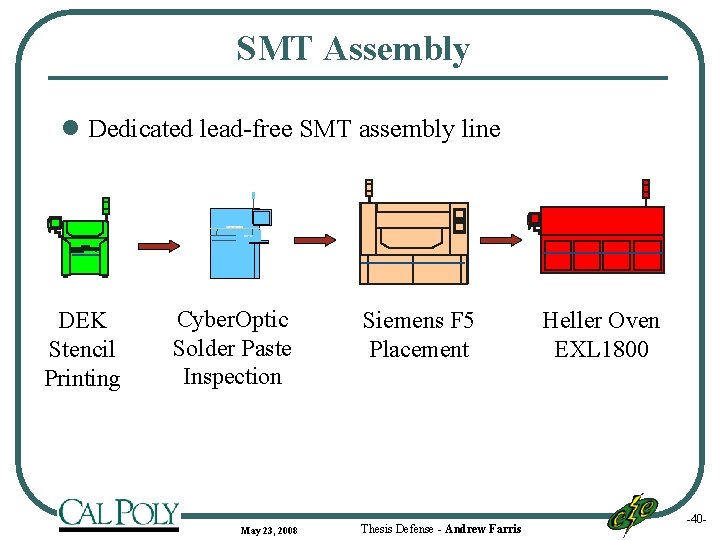
SMT Assembly l Dedicated lead-free SMT assembly line SE 300 DEK Stencil Printing Cyber. Optic Solder Paste Inspection May 23, 2008 Siemens F 5 Placement Thesis Defense - Andrew Farris Heller Oven EXL 1800 -40 -
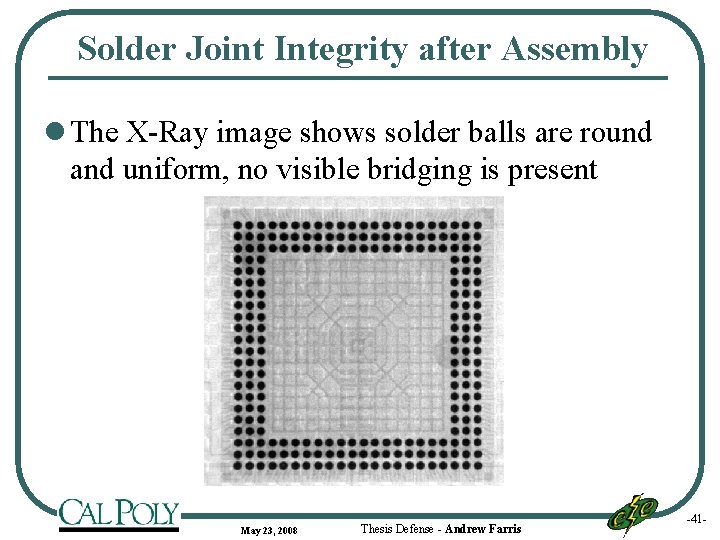
Solder Joint Integrity after Assembly l The X-Ray image shows solder balls are round and uniform, no visible bridging is present May 23, 2008 Thesis Defense - Andrew Farris -41 -
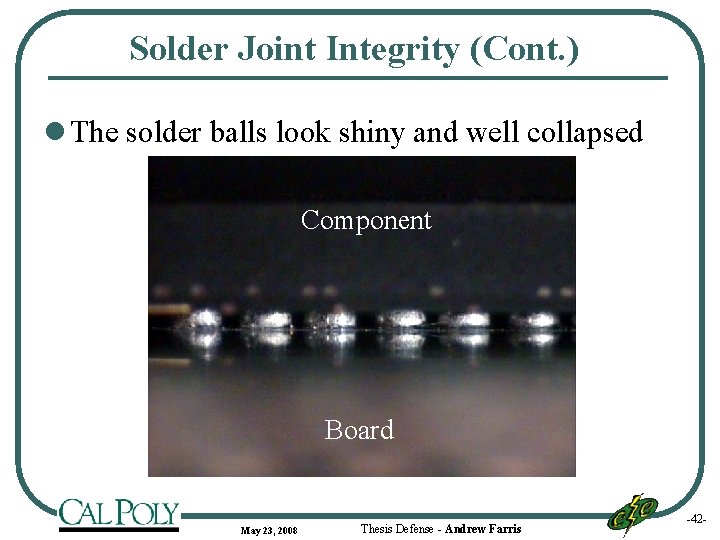
Solder Joint Integrity (Cont. ) l The solder balls look shiny and well collapsed Component Board May 23, 2008 Thesis Defense - Andrew Farris -42 -
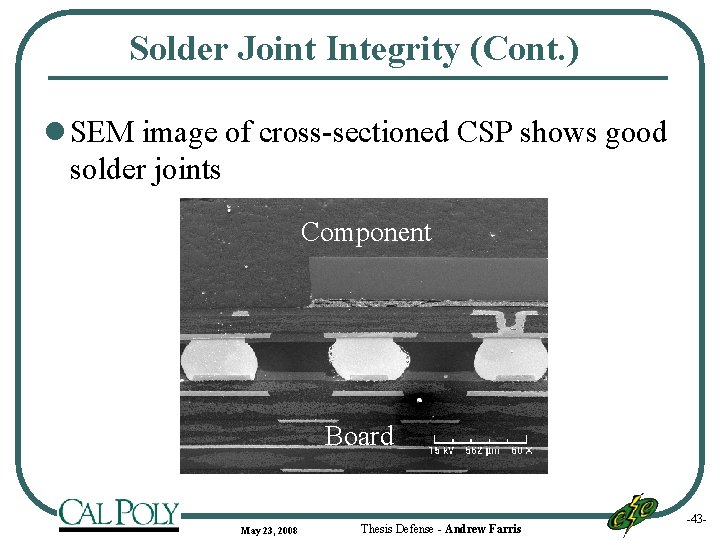
Solder Joint Integrity (Cont. ) l SEM image of cross-sectioned CSP shows good solder joints Component Board May 23, 2008 Thesis Defense - Andrew Farris -43 -
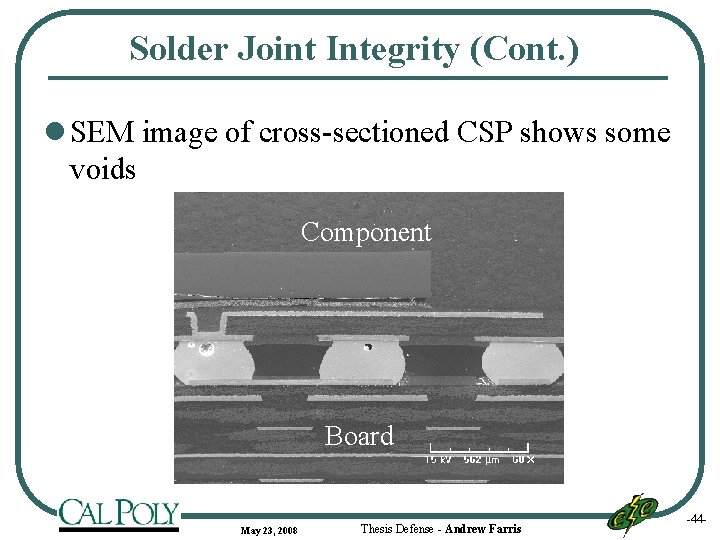
Solder Joint Integrity (Cont. ) l SEM image of cross-sectioned CSP shows some voids Component Board May 23, 2008 Thesis Defense - Andrew Farris -44 -
Edge Bonding for Strength l Edge Bonding is a process that applies a glue material to the corners of components • Intended to increase mechanical strength of the component to board connection • Relieves some stress on the solder joints • Similar glues are used for full capillary underfill and Corner Bonding May 23, 2008 Thesis Defense - Andrew Farris -45 -
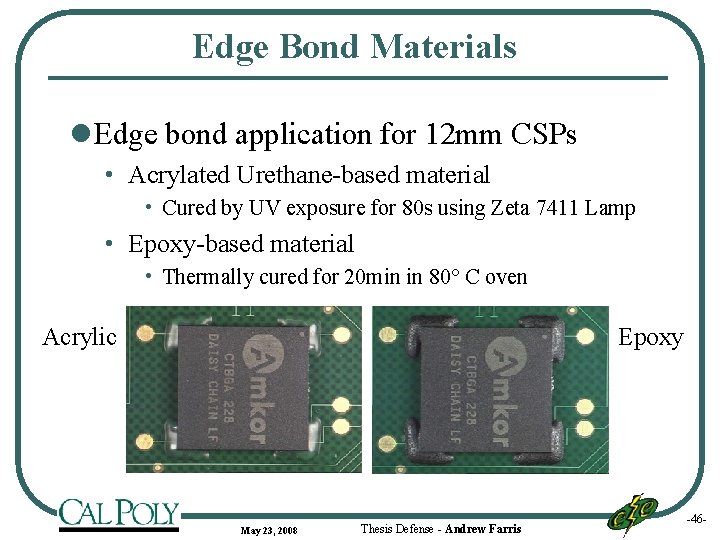
Edge Bond Materials l Edge bond application for 12 mm CSPs • Acrylated Urethane-based material • Cured by UV exposure for 80 s using Zeta 7411 Lamp • Epoxy-based material • Thermally cured for 20 min in 80° C oven Acrylic Epoxy May 23, 2008 Thesis Defense - Andrew Farris -46 -
Agenda l Drop Impact Testing l Analysis • Reliability Data • Failure Mechanisms • Acceleration on Test Vehicle l Conclusions l Acknowledgements May 23, 2008 Thesis Defense - Andrew Farris -47 -
Reliability Test Design l Drop tests were conducted at Henkel Electronics in Irvine, CA, during Summer ‘ 07 internship • This is a Henkel Corporation R&D facility focused on adhesives, packaging, and bonding agents May 23, 2008 Thesis Defense - Andrew Farris -48 -
Drop Testing Workbench May 23, 2008 Thesis Defense - Andrew Farris -49 -
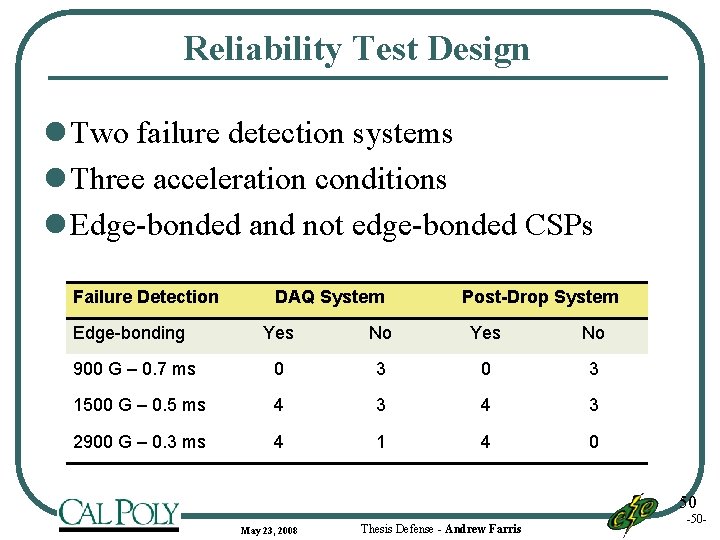
Reliability Test Design l Two failure detection systems l Three acceleration conditions l Edge-bonded and not edge-bonded CSPs Failure Detection Edge-bonding DAQ System Post-Drop System Yes No 900 G – 0. 7 ms 0 3 1500 G – 0. 5 ms 4 3 2900 G – 0. 3 ms 4 1 4 0 50 May 23, 2008 Thesis Defense - Andrew Farris -50 -
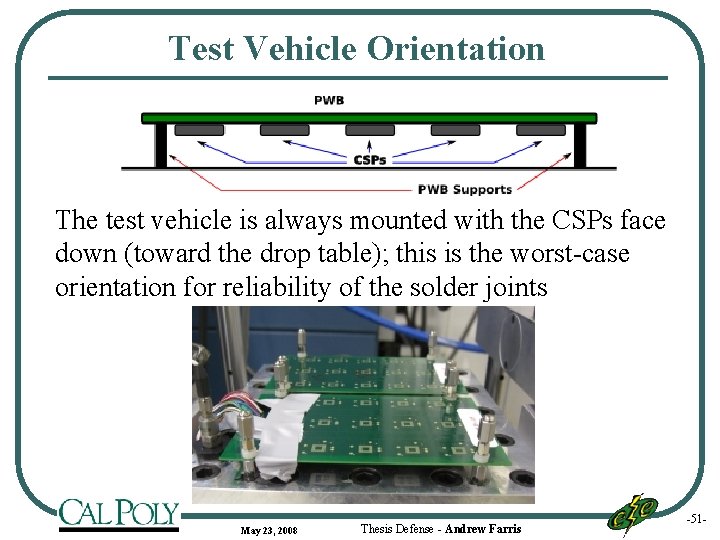
Test Vehicle Orientation The test vehicle is always mounted with the CSPs face down (toward the drop table); this is the worst-case orientation for reliability of the solder joints May 23, 2008 Thesis Defense - Andrew Farris -51 -
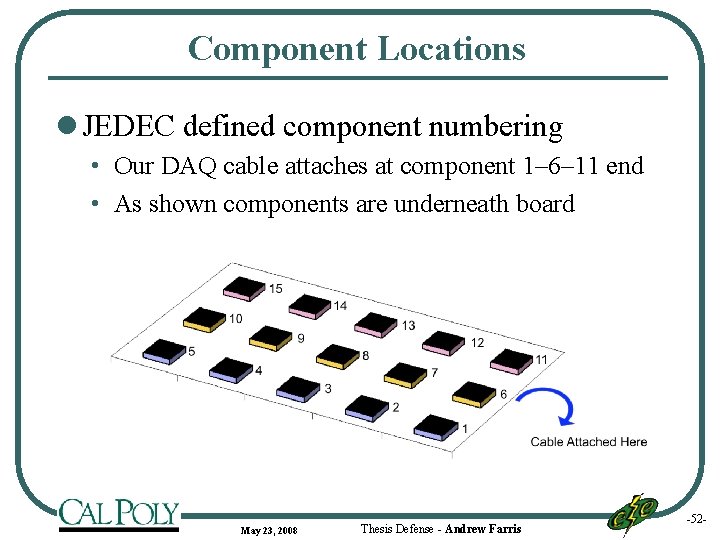
Component Locations l JEDEC defined component numbering • Our DAQ cable attaches at component 1– 6– 11 end • As shown components are underneath board May 23, 2008 Thesis Defense - Andrew Farris -52 -
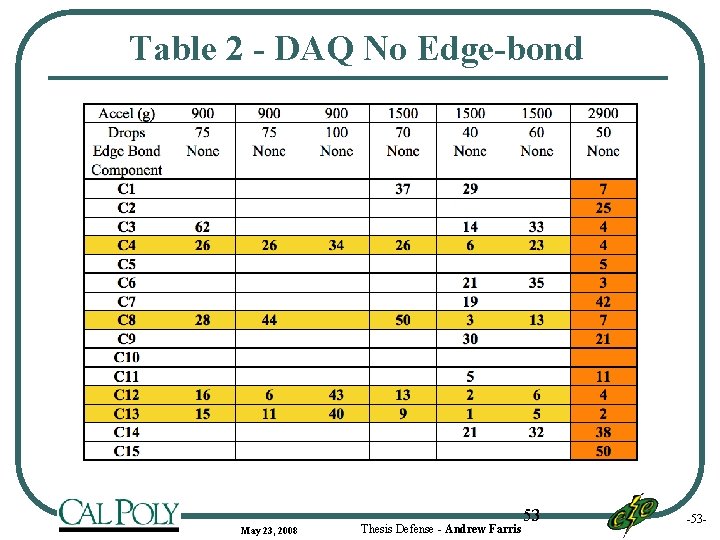
Table 2 - DAQ No Edge-bond May 23, 2008 Thesis Defense - Andrew Farris 53 -53 -
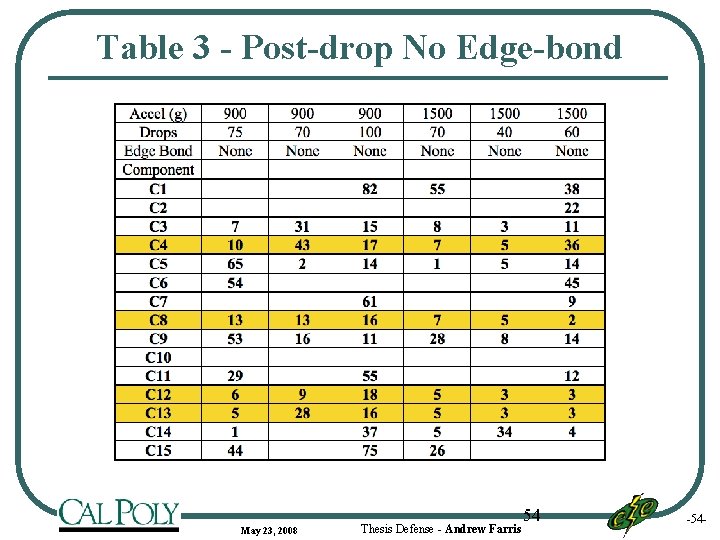
Table 3 - Post-drop No Edge-bond May 23, 2008 Thesis Defense - Andrew Farris 54 -54 -
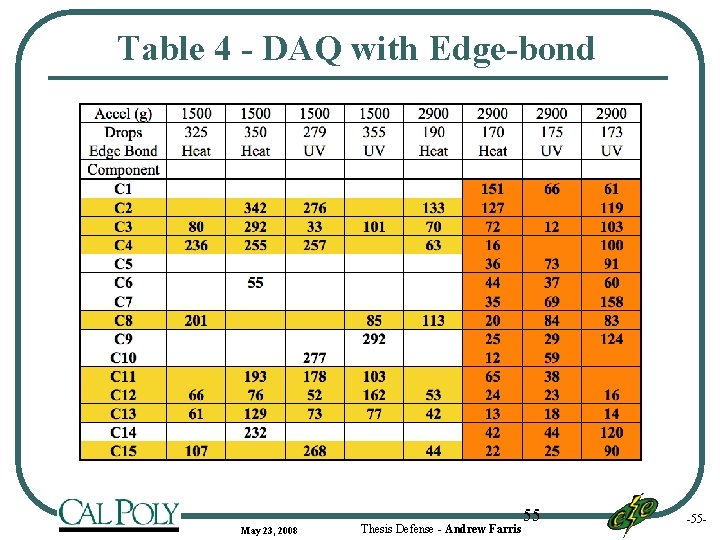
Table 4 - DAQ with Edge-bond May 23, 2008 Thesis Defense - Andrew Farris 55 -55 -
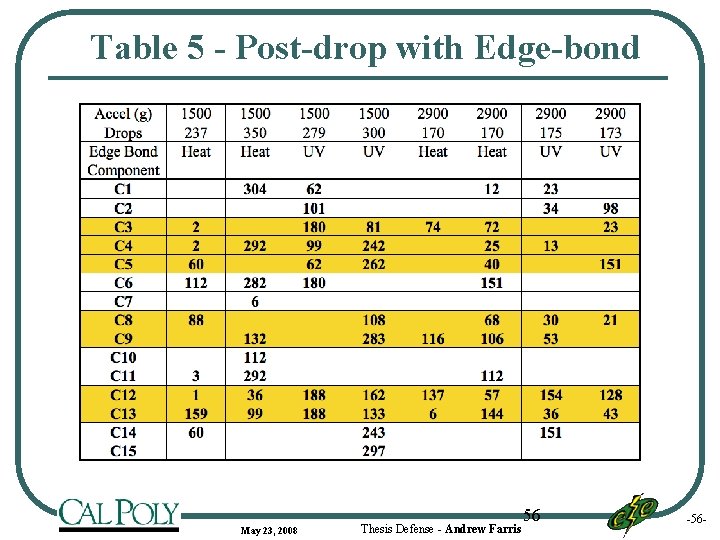
Table 5 - Post-drop with Edge-bond May 23, 2008 Thesis Defense - Andrew Farris 56 -56 -
Agenda l Drop Impact Testing l Analysis • Reliability Data • Failure Mechanisms • Acceleration on Test Vehicle l Conclusions l Acknowledgements May 23, 2008 Thesis Defense - Andrew Farris -57 -
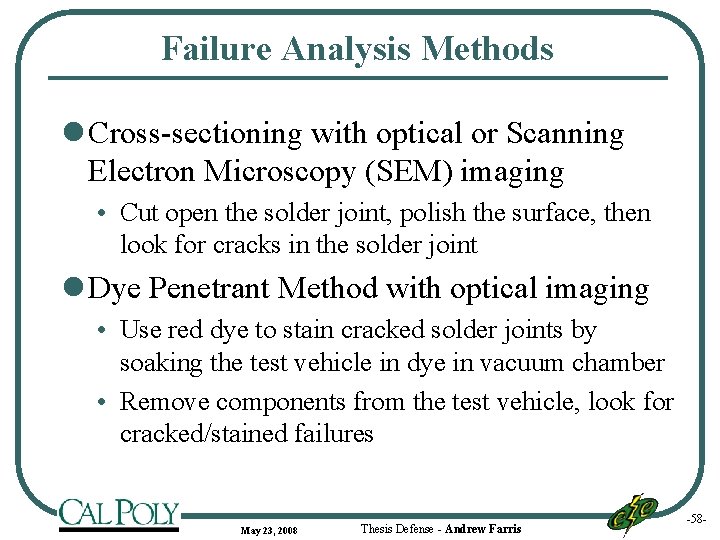
Failure Analysis Methods l Cross-sectioning with optical or Scanning Electron Microscopy (SEM) imaging • Cut open the solder joint, polish the surface, then look for cracks in the solder joint l Dye Penetrant Method with optical imaging • Use red dye to stain cracked solder joints by soaking the test vehicle in dye in vacuum chamber • Remove components from the test vehicle, look for cracked/stained failures May 23, 2008 Thesis Defense - Andrew Farris -58 -
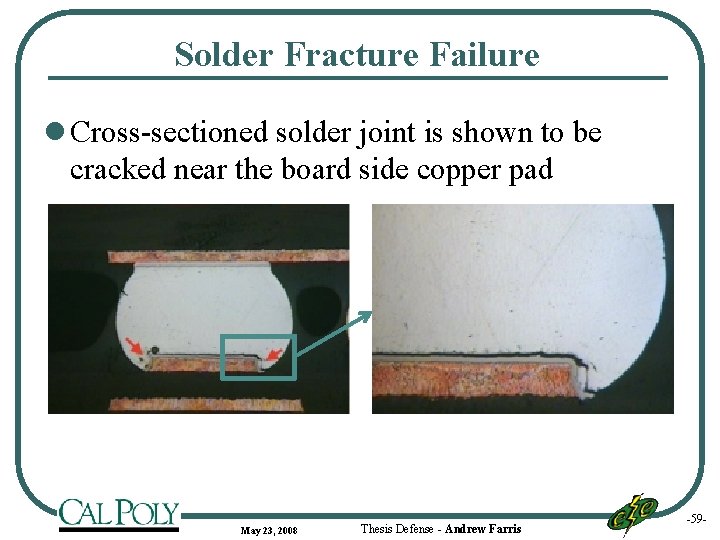
Solder Fracture Failure l Cross-sectioned solder joint is shown to be cracked near the board side copper pad May 23, 2008 Thesis Defense - Andrew Farris -59 -
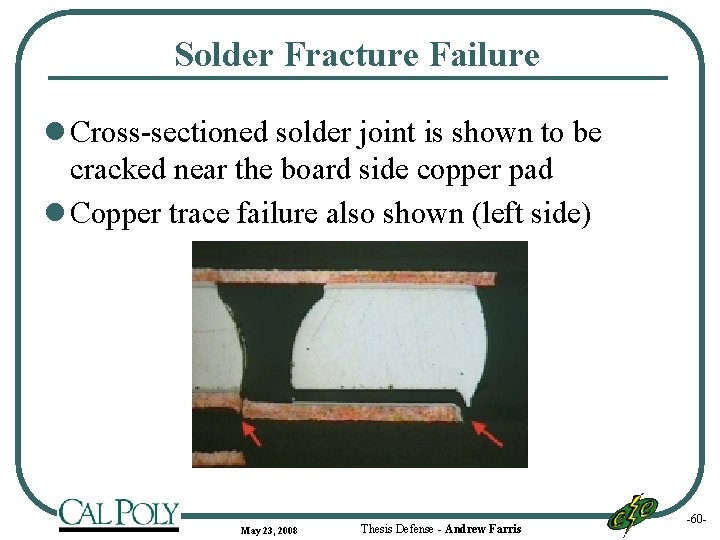
Solder Fracture Failure l Cross-sectioned solder joint is shown to be cracked near the board side copper pad l Copper trace failure also shown (left side) May 23, 2008 Thesis Defense - Andrew Farris -60 -
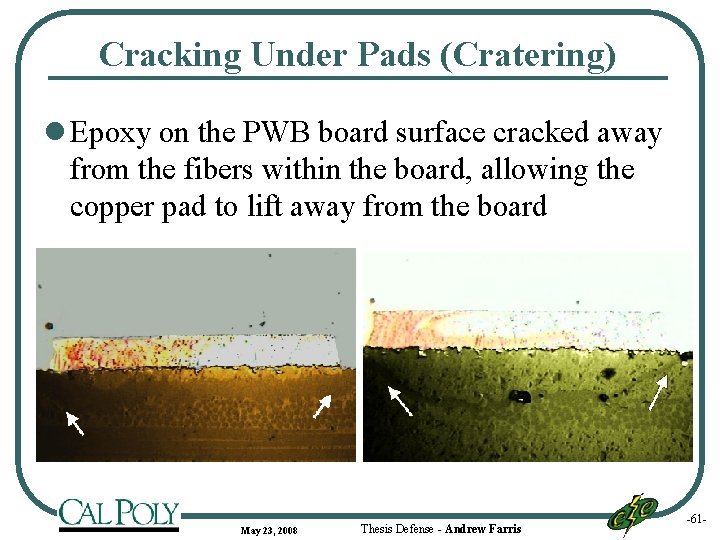
Cracking Under Pads (Cratering) l Epoxy on the PWB board surface cracked away from the fibers within the board, allowing the copper pad to lift away from the board May 23, 2008 Thesis Defense - Andrew Farris -61 -
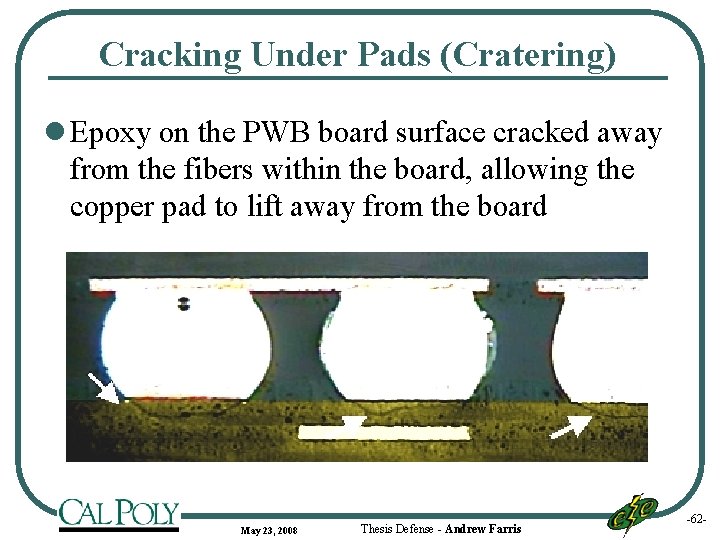
Cracking Under Pads (Cratering) l Epoxy on the PWB board surface cracked away from the fibers within the board, allowing the copper pad to lift away from the board May 23, 2008 Thesis Defense - Andrew Farris -62 -
Cracking Under Pads (Cratering) l Dye penetrant testing was used to determine the extent of pad cratering problems l Six boards were soaked in dye, then all 15 components were pulled off the boards l Dye stained solder cracks and pad craters were present before the components were pulled off May 23, 2008 Thesis Defense - Andrew Farris -63 -
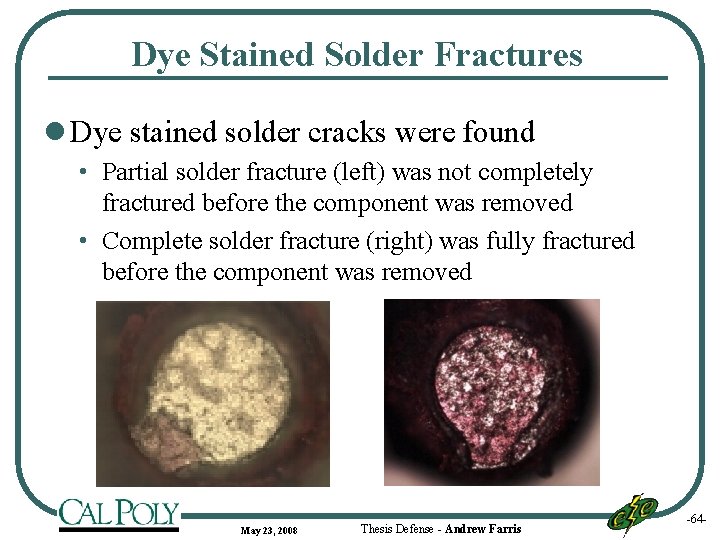
Dye Stained Solder Fractures l Dye stained solder cracks were found • Partial solder fracture (left) was not completely fractured before the component was removed • Complete solder fracture (right) was fully fractured before the component was removed May 23, 2008 Thesis Defense - Andrew Farris -64 -
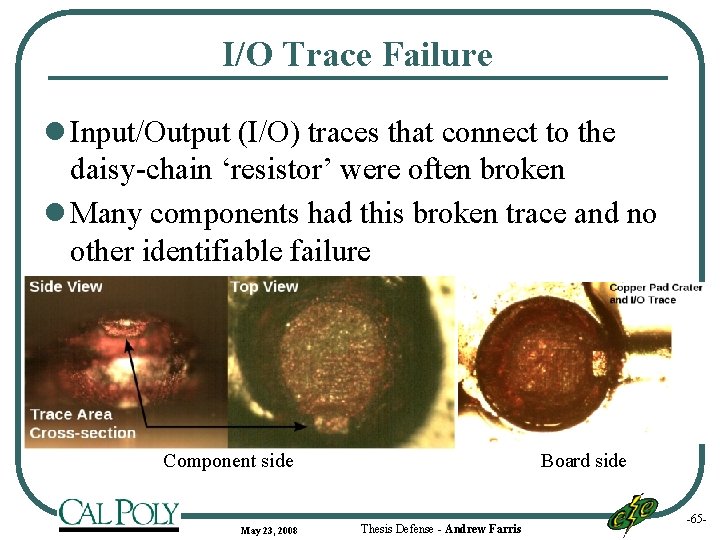
I/O Trace Failure l Input/Output (I/O) traces that connect to the daisy-chain ‘resistor’ were often broken l Many components had this broken trace and no other identifiable failure Component side May 23, 2008 Board side Thesis Defense - Andrew Farris -65 -
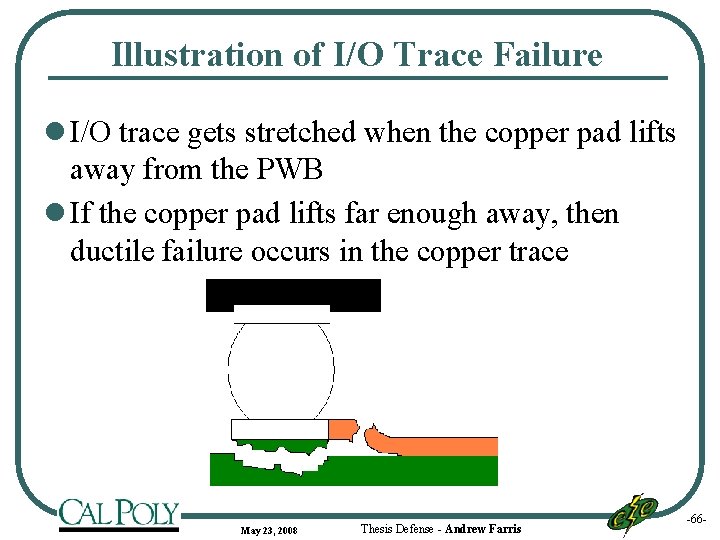
Illustration of I/O Trace Failure l I/O trace gets stretched when the copper pad lifts away from the PWB l If the copper pad lifts far enough away, then ductile failure occurs in the copper trace May 23, 2008 Thesis Defense - Andrew Farris -66 -
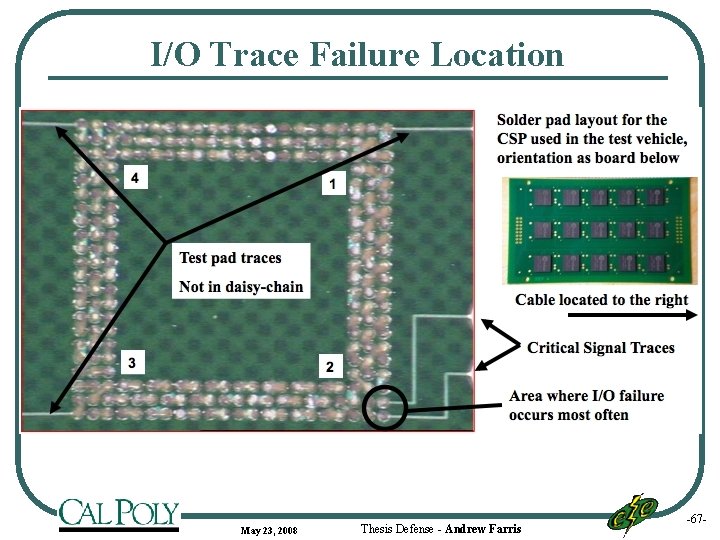
I/O Trace Failure Location May 23, 2008 Thesis Defense - Andrew Farris -67 -
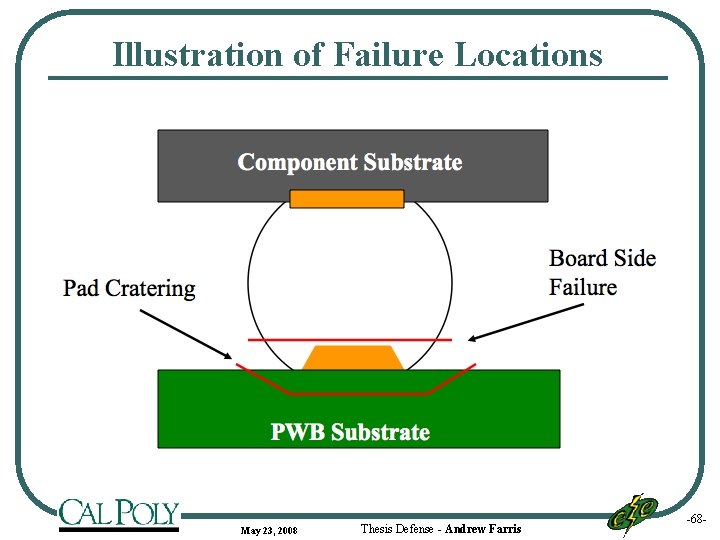
Illustration of Failure Locations May 23, 2008 Thesis Defense - Andrew Farris -68 -
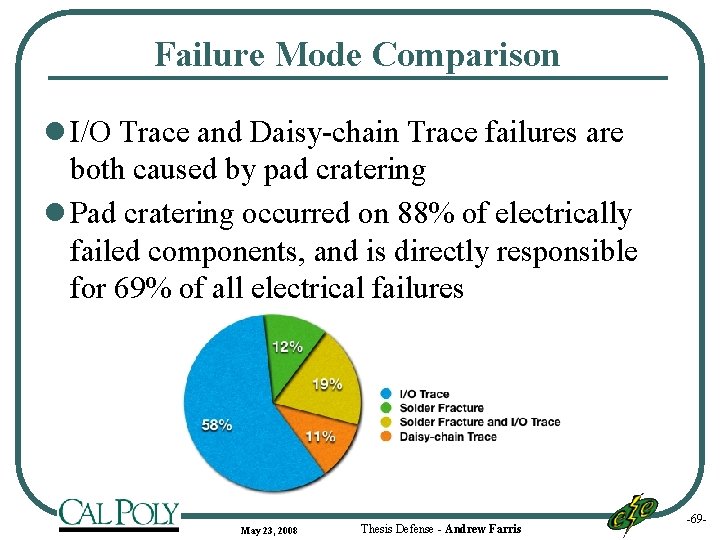
Failure Mode Comparison l I/O Trace and Daisy-chain Trace failures are both caused by pad cratering l Pad cratering occurred on 88% of electrically failed components, and is directly responsible for 69% of all electrical failures May 23, 2008 Thesis Defense - Andrew Farris -69 -
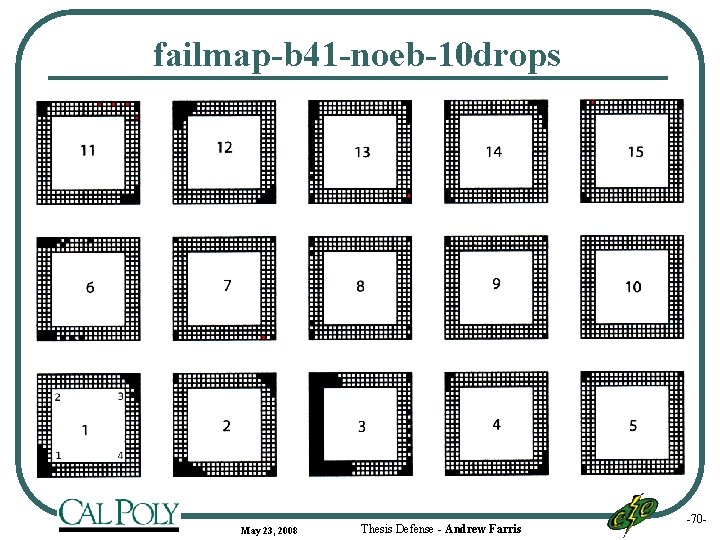
failmap-b 41 -noeb-10 drops May 23, 2008 Thesis Defense - Andrew Farris -70 -
Agenda l Drop Impact Testing l Analysis • Reliability Data • Failure Mechanisms • Acceleration on Test Vehicle l Conclusions l Acknowledgements May 23, 2008 Thesis Defense - Andrew Farris -71 -
Cable Influence on PWB Loading l Results from the comparison of failure detection methods • The DAQ system cable attached to the PWB appears to effects loading conditions • Fewer components fell off the DAQ tested boards than off the post-drop tested boards • The earliest component failure locations vary between DAQ and post-drop tested boards 72 May 23, 2008 Thesis Defense - Andrew Farris -72 -
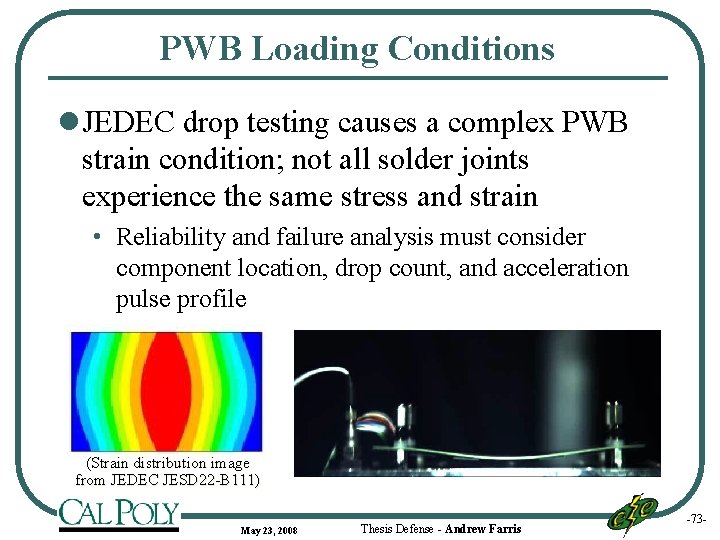
PWB Loading Conditions l JEDEC drop testing causes a complex PWB strain condition; not all solder joints experience the same stress and strain • Reliability and failure analysis must consider component location, drop count, and acceleration pulse profile (Strain distribution image from JEDEC JESD 22 -B 111) May 23, 2008 Thesis Defense - Andrew Farris -73 -
Local Acceleration Conditions l Using two accelerometers, the acceleration profile of the board at each component location was tested l Eight board variations • Blank PWB, Populated, with edge bond, and without edge bond • With and without DAQ cable soldered into the board 74 May 23, 2008 Thesis Defense - Andrew Farris -74 -
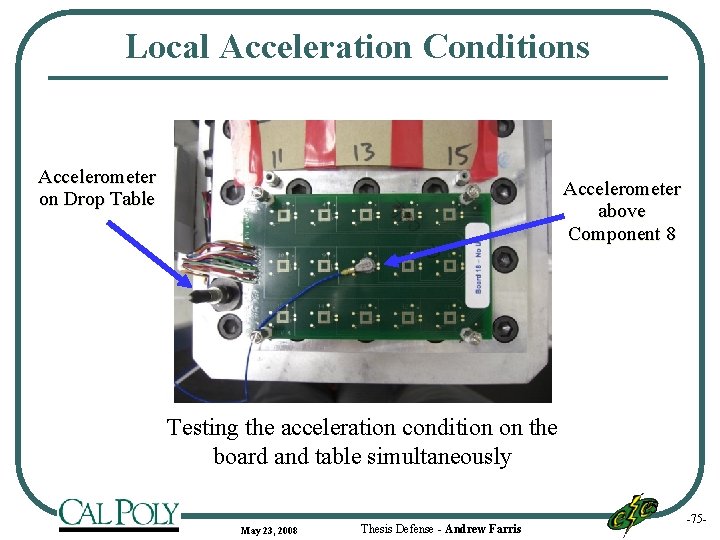
Local Acceleration Conditions Accelerometer on Drop Table Accelerometer above Component 8 Testing the acceleration condition on the board and table simultaneously 75 May 23, 2008 Thesis Defense - Andrew Farris -75 -
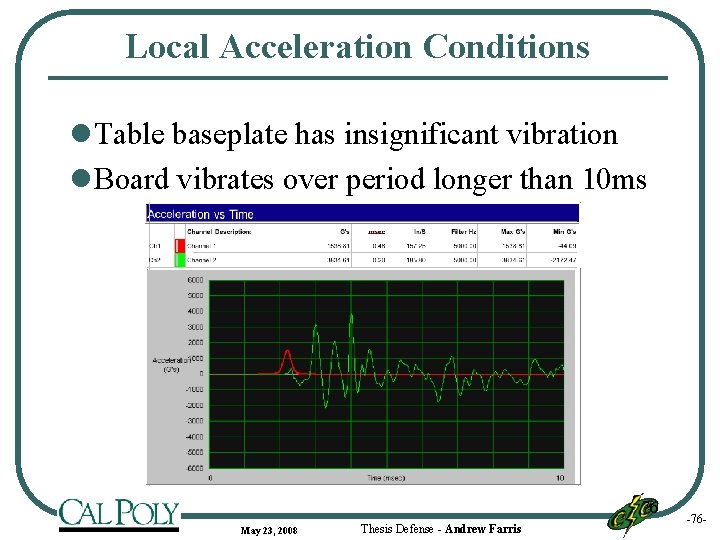
Local Acceleration Conditions l Table baseplate has insignificant vibration l Board vibrates over period longer than 10 ms 76 May 23, 2008 Thesis Defense - Andrew Farris -76 -
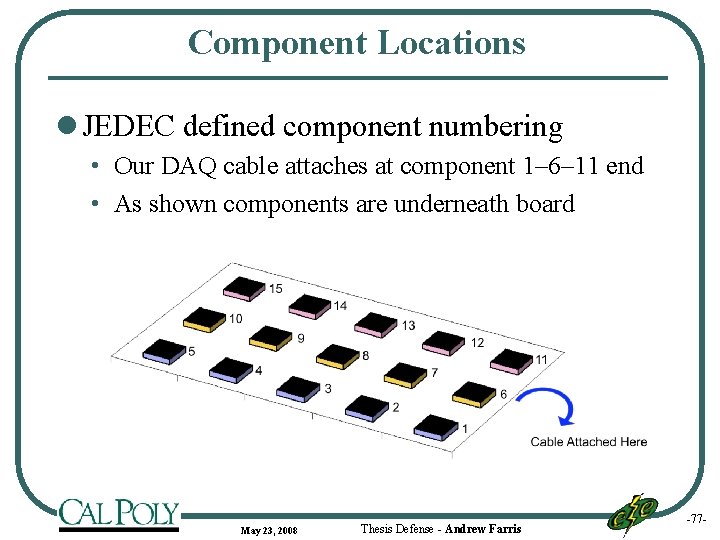
Component Locations l JEDEC defined component numbering • Our DAQ cable attaches at component 1– 6– 11 end • As shown components are underneath board May 23, 2008 Thesis Defense - Andrew Farris -77 -
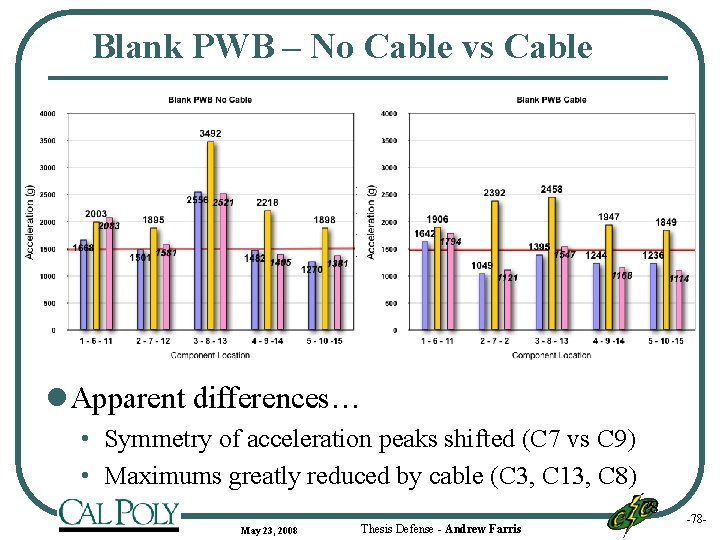
Blank PWB – No Cable vs Cable l Apparent differences… • Symmetry of acceleration peaks shifted (C 7 vs C 9) • Maximums greatly reduced by cable (C 3, C 13, C 8) 78 May 23, 2008 Thesis Defense - Andrew Farris -78 -
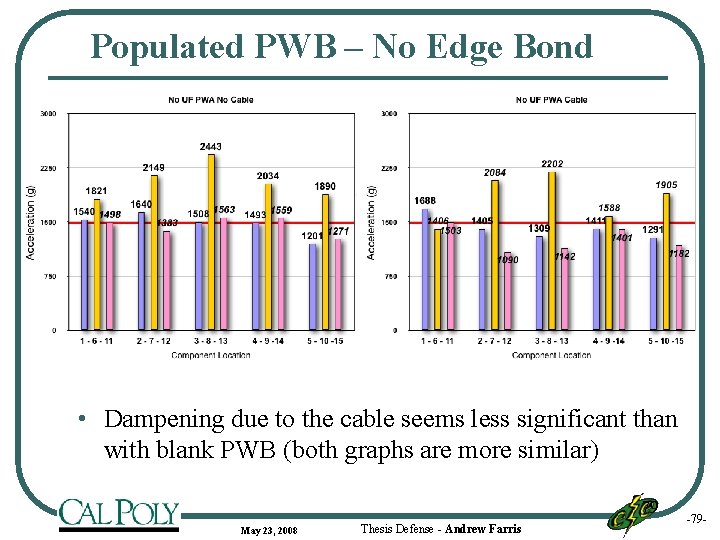
Populated PWB – No Edge Bond • Dampening due to the cable seems less significant than with blank PWB (both graphs are more similar) 79 May 23, 2008 Thesis Defense - Andrew Farris -79 -
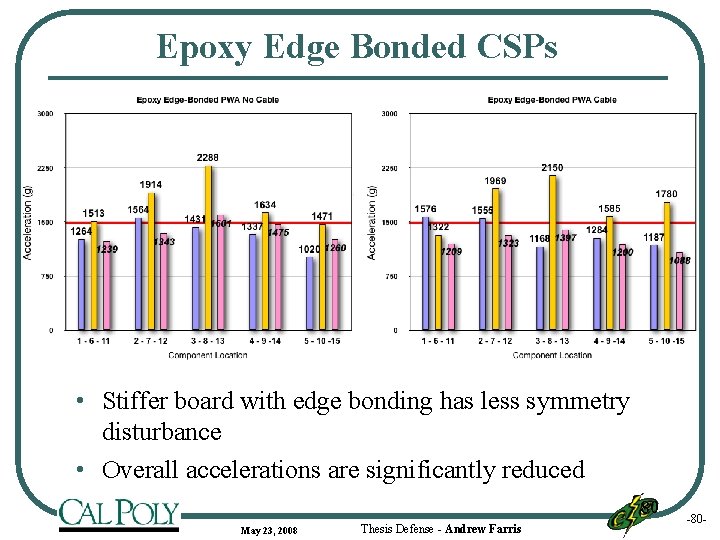
Epoxy Edge Bonded CSPs • Stiffer board with edge bonding has less symmetry disturbance • Overall accelerations are significantly reduced 80 May 23, 2008 Thesis Defense - Andrew Farris -80 -
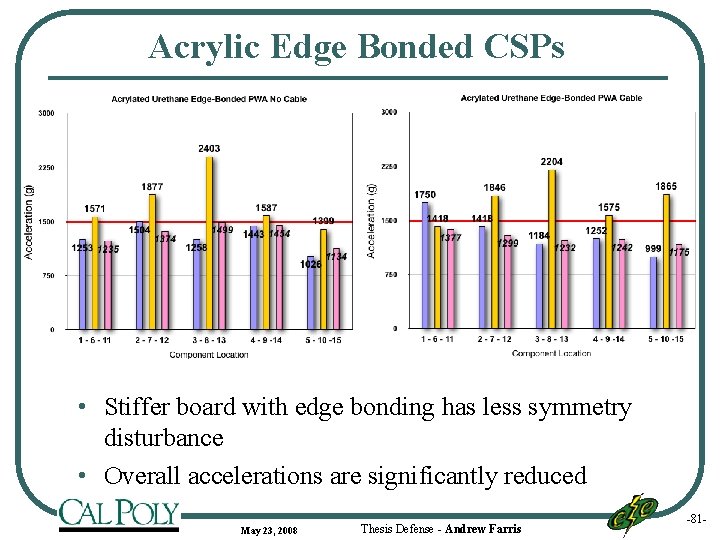
Acrylic Edge Bonded CSPs • Stiffer board with edge bonding has less symmetry disturbance • Overall accelerations are significantly reduced May 23, 2008 Thesis Defense - Andrew Farris -81 -
Cable Influence on Acceleration l Symmetry of acceleration/deflection/strain is effected: • A cable soldered to the PWB will effect the test conditions for any test vehicle assembly • Components cannot be grouped as liberally for reliability statistics if test conditions at their locations are not similar l Lightest possible wire gauge should be used • But must provide reliable through-hole solder joints 82 May 23, 2008 Thesis Defense - Andrew Farris -82 -
Cable Influence on Acceleration l. Attaching a cable to both board ends could restore symmetry, but will also… • Add mass to the test vehicle • Increase vibration dampening • Decrease the effects of harmonic vibration frequencies • Decrease total deflection (cantilever effect of the wire mass) 83 May 23, 2008 Thesis Defense - Andrew Farris -83 -
Agenda l Drop Impact Testing l Analysis • Reliability Data • Failure Mechanisms • Acceleration on Test Vehicle l Conclusions l Acknowledgements May 23, 2008 Thesis Defense - Andrew Farris -84 -
Conclusions l The component location on the test vehicle has a significant role in reliability • Components near the board center tend to fail first l Higher acceleration conditions decrease the drops to failure, resulting in lower reliability l Edge bonding significantly increases the reliability of lead-free CSPs in drop impact conditions May 23, 2008 Thesis Defense - Andrew Farris -85 -
Conclusions l Cohesive failure between the resin and the board fiberglass leads to pad cratering l Pad cratering causes trace breakage and is the most common electrical failure mode l Board laminate materials for this lead-free test vehicle are the weakest link in the assembly, rather than the solder joints May 23, 2008 Thesis Defense - Andrew Farris -86 -
Acknowledgements l Dr. John Pan (IME), Dr. Albert Liddicoat (EE), Advisors l Dr. James Harris (EE), Thesis committee member l Project Sponsors: l Office of Naval Research (ONR) Through California Central Coast Research Park (C 3 RP) l Society of Manufacturing Engineers Education Foundation l Surface Mount Technology Association (SMTA) 87 May 23, 2008 Thesis Defense - Andrew Farris -87 -
Acknowledgements l Multidisciplinary team of students: • Nicholas Vickers (MATE), Kyle Rauen (MATE), and Ronald Sloat (GE) assisted with failure analysis • Michael Krist (IE) and Micah Denecour (IE) assisted with reliability data analysis • Edward Clements (MFGE) and Chi-Yeh Hsu (ME) built and tested the first data acquisition system prototype • Keith Rothman (AERO) wrote the first version of the DAQ system control software 88 May 23, 2008 Thesis Defense - Andrew Farris -88 -
Questions How do you find an electrical engineer? Look for the ‘Desk’. http: //comicstripjoint. blogspot. com May 23, 2008 Thesis Defense - Andrew Farris -89 -
Supplemental Slides May 23, 2008 Thesis Defense - Andrew Farris -90 -
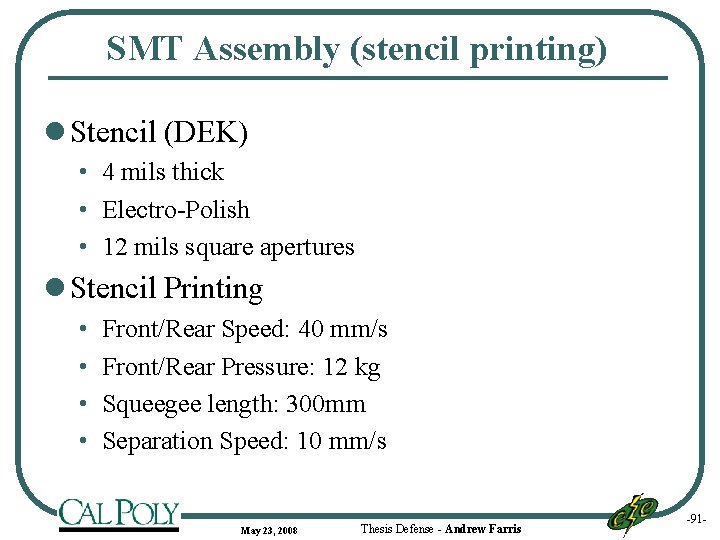
SMT Assembly (stencil printing) l Stencil (DEK) • 4 mils thick • Electro-Polish • 12 mils square apertures l Stencil Printing • • Front/Rear Speed: 40 mm/s Front/Rear Pressure: 12 kg Squeegee length: 300 mm Separation Speed: 10 mm/s May 23, 2008 Thesis Defense - Andrew Farris -91 -
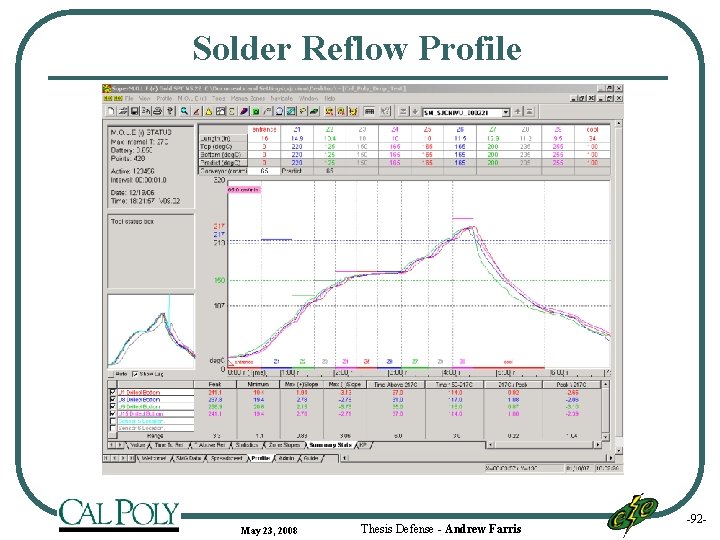
Solder Reflow Profile May 23, 2008 Thesis Defense - Andrew Farris -92 -
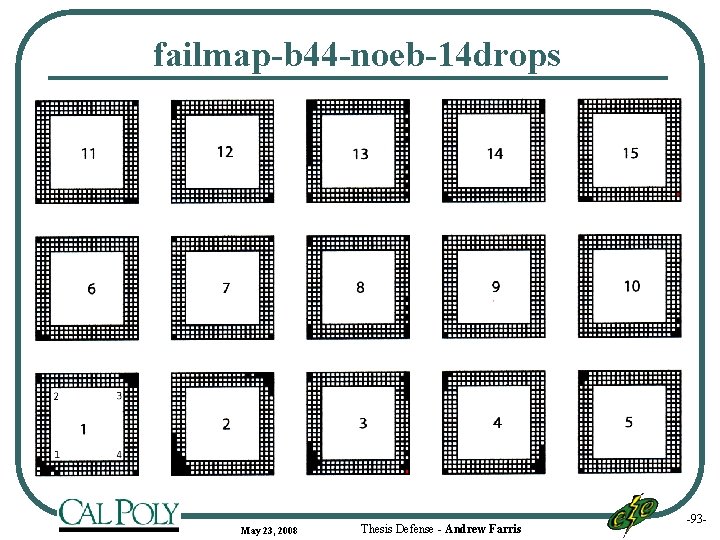
failmap-b 44 -noeb-14 drops May 23, 2008 Thesis Defense - Andrew Farris -93 -
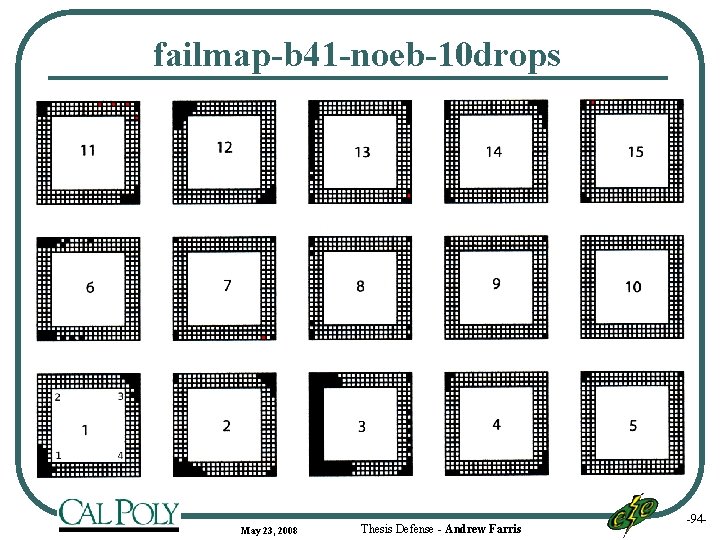
failmap-b 41 -noeb-10 drops May 23, 2008 Thesis Defense - Andrew Farris -94 -
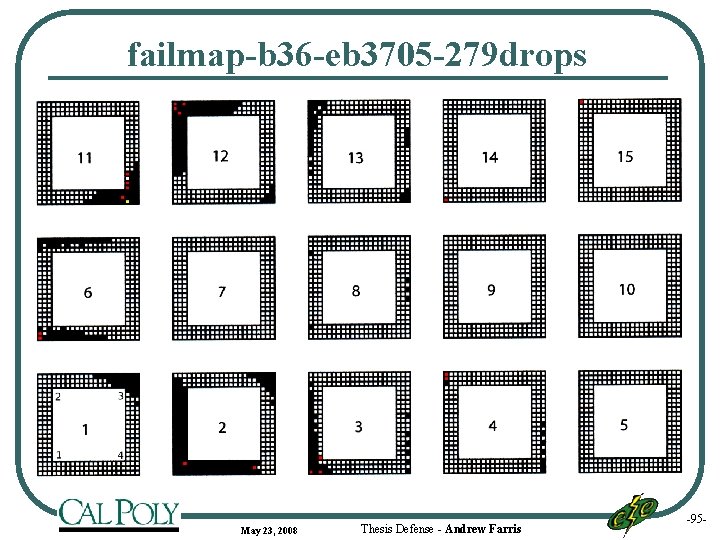
failmap-b 36 -eb 3705 -279 drops May 23, 2008 Thesis Defense - Andrew Farris -95 -
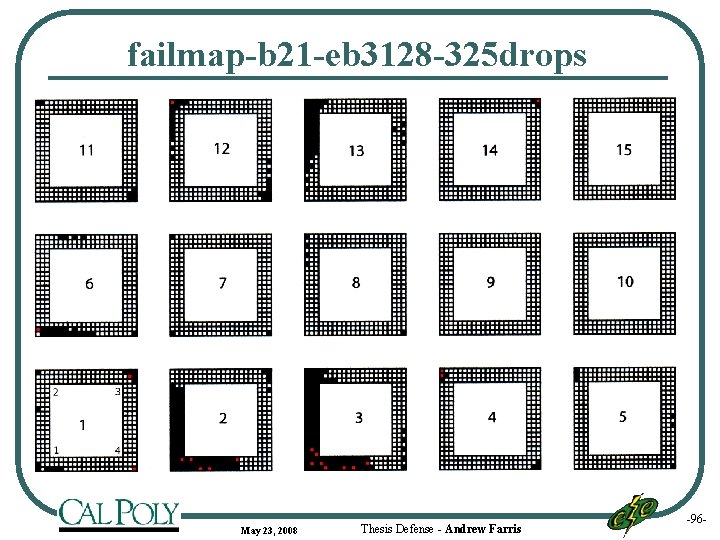
failmap-b 21 -eb 3128 -325 drops May 23, 2008 Thesis Defense - Andrew Farris -96 -
- Slides: 96