
Thermoregulation Thermoregulation Maintaining a stable body temperature for
Thermoregulation

Thermoregulation Maintaining a stable body temperature for survival. It involves balancing heat loss and heat gain
Heat Transfer
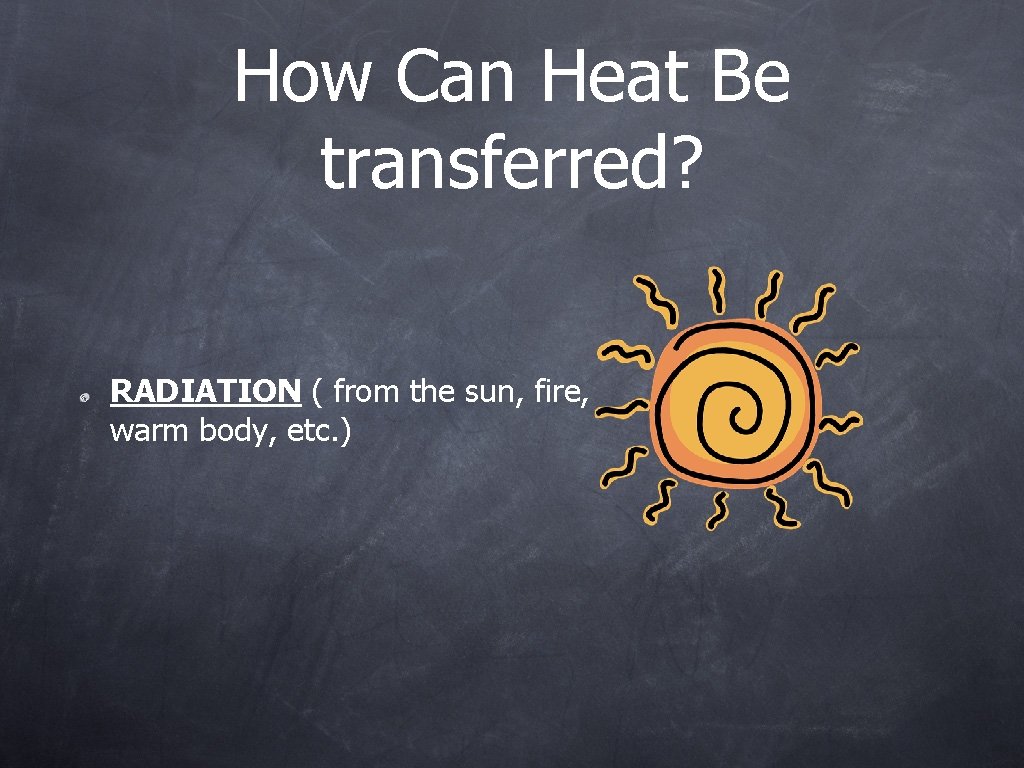
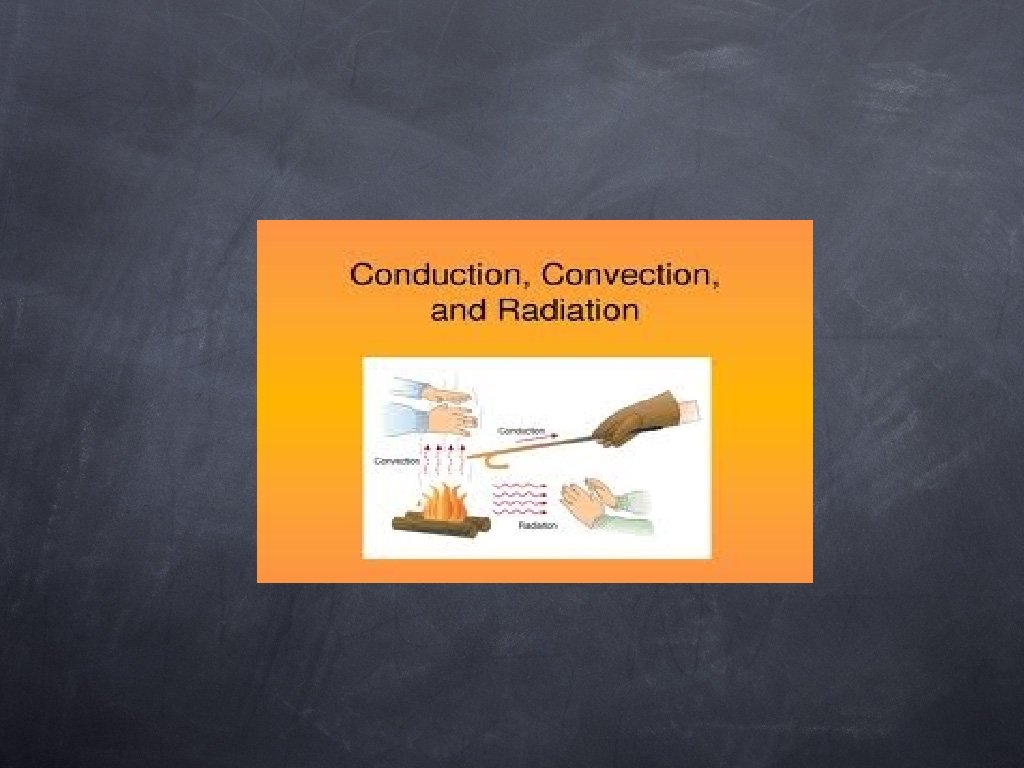
How Can Heat Be transferred? RADIATION ( from the sun, fire, warm body, etc. )
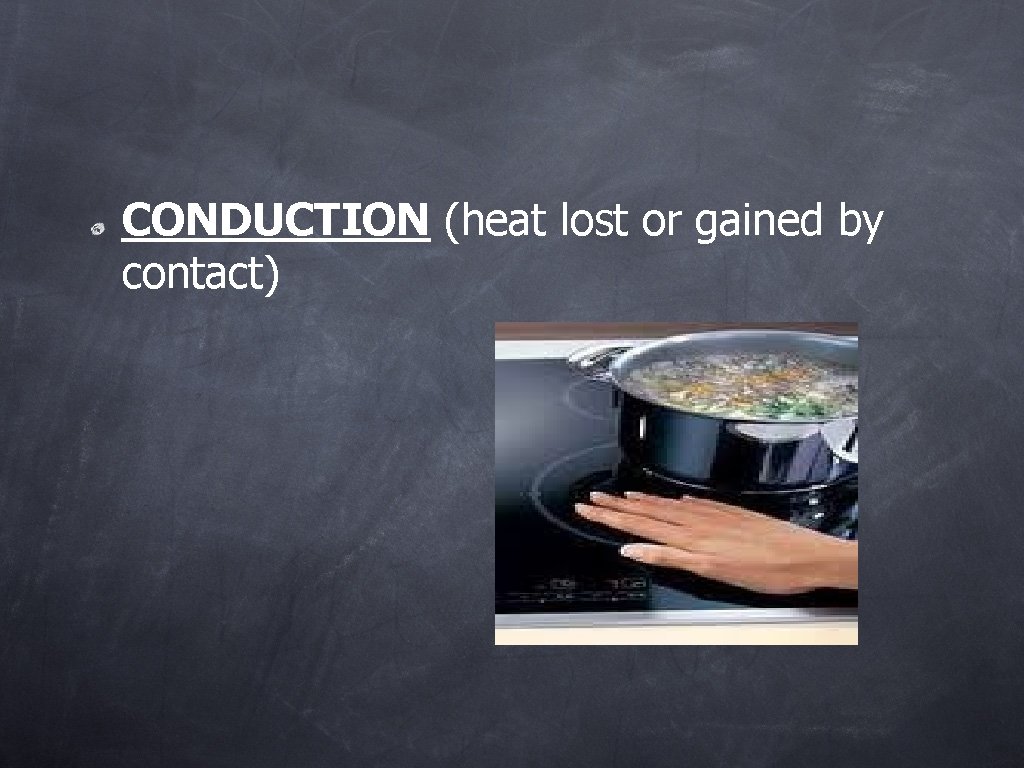
CONDUCTION (heat lost or gained by contact)
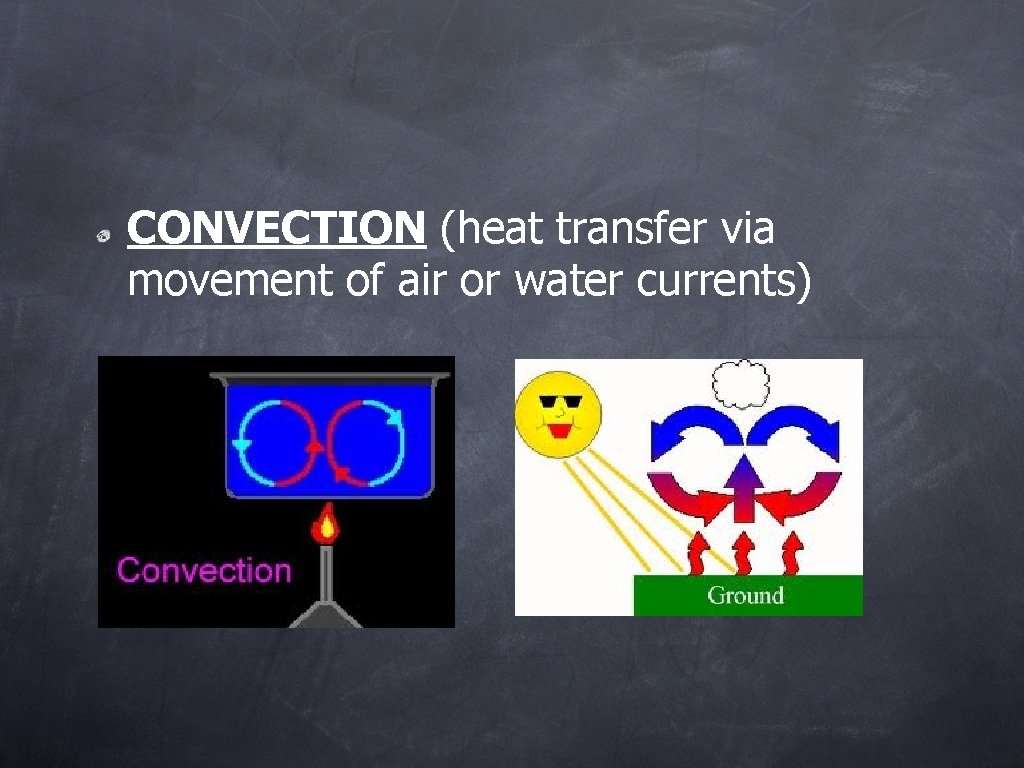
CONVECTION (heat transfer via movement of air or water currents)
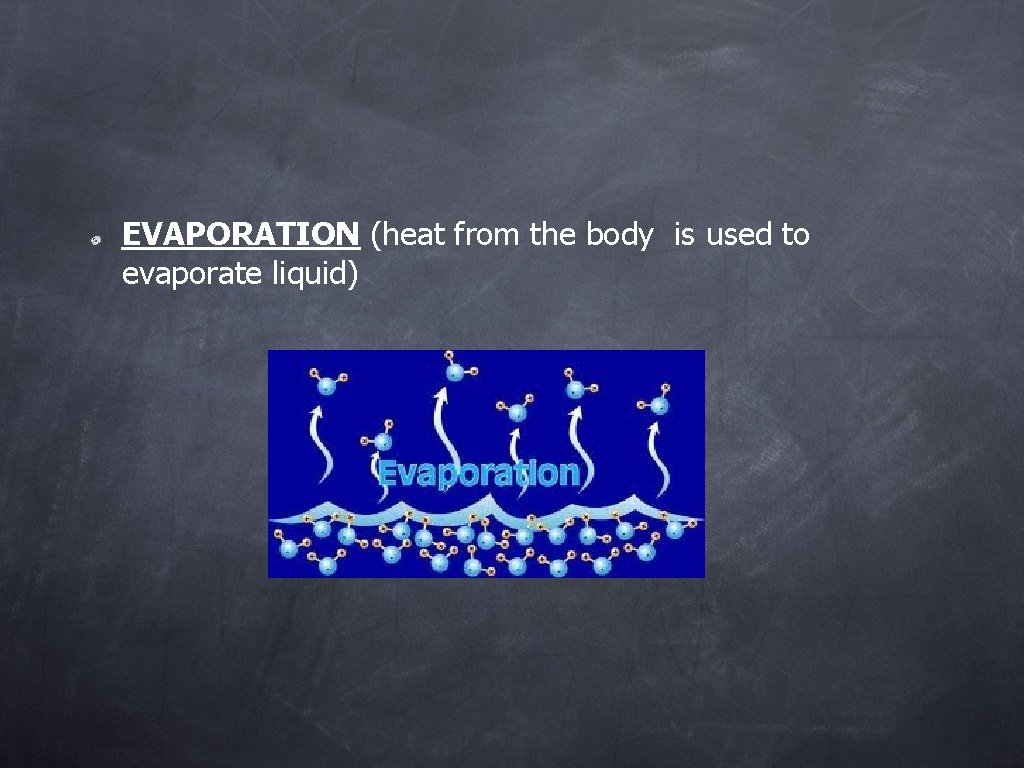
EVAPORATION (heat from the body is used to evaporate liquid)
Keeping Warm
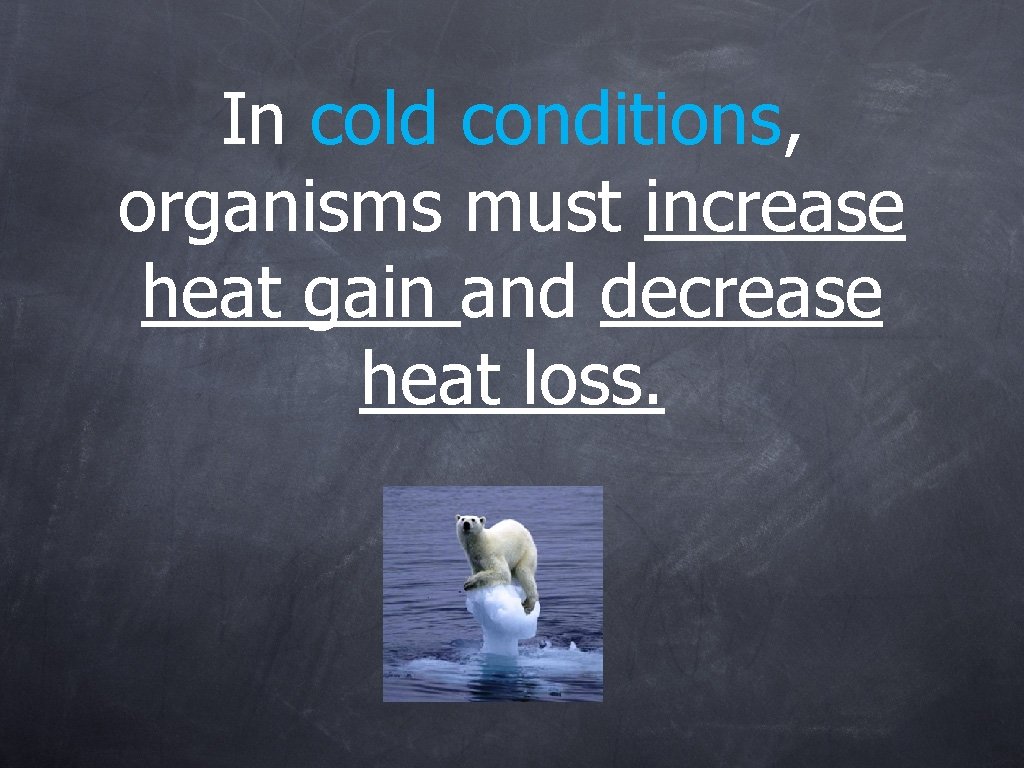
In cold conditions, organisms must increase heat gain and decrease heat loss.
Ways Of Gaining Heat
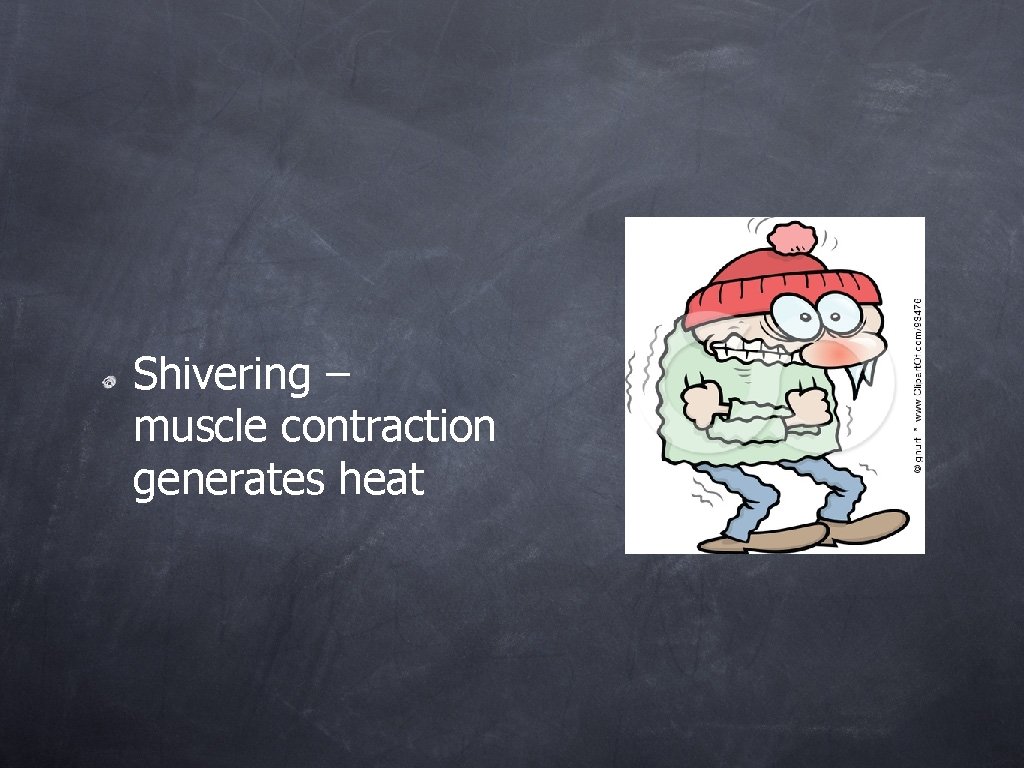
Shivering – muscle contraction generates heat
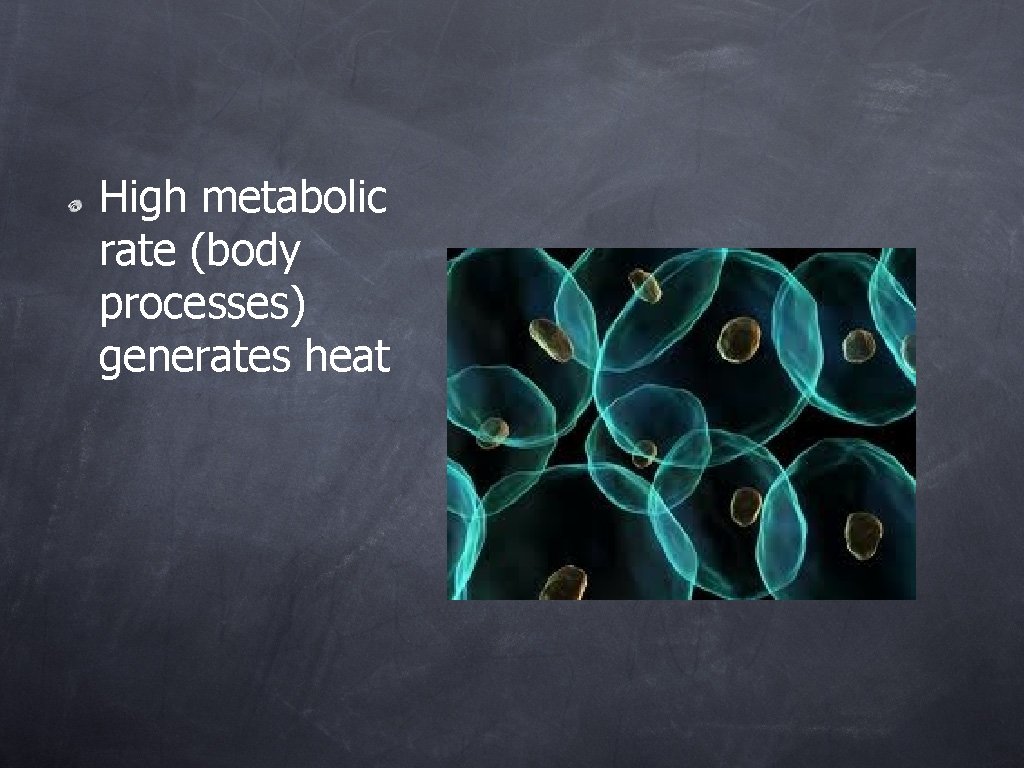
High metabolic rate (body processes) generates heat
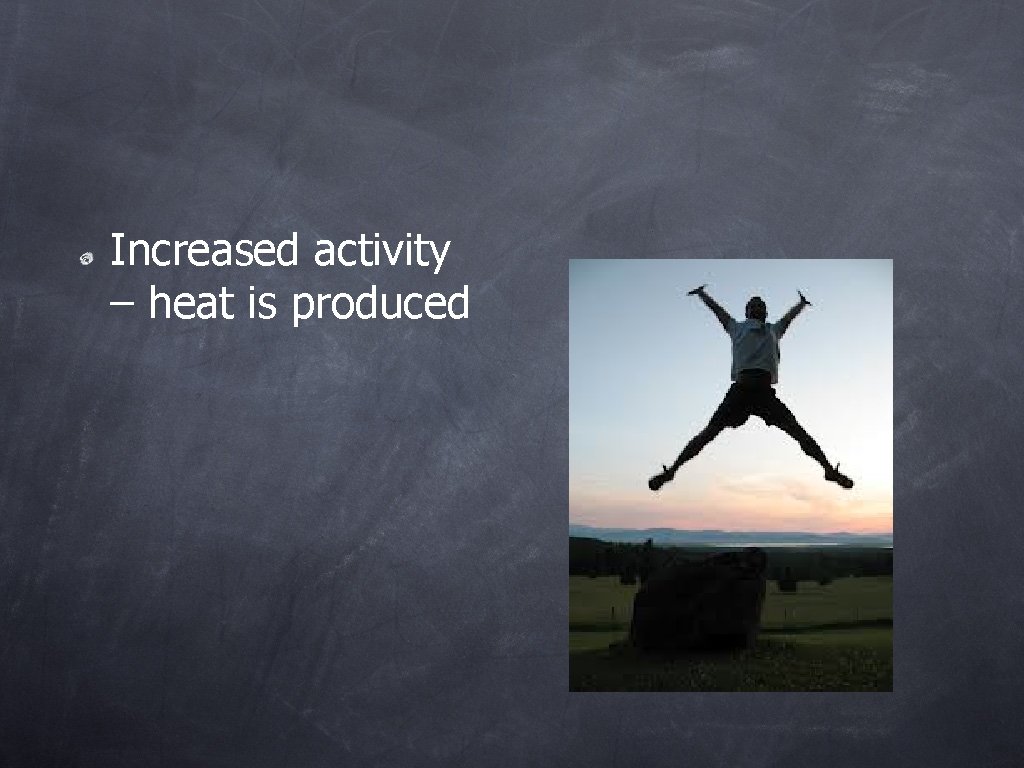
Increased activity – heat is produced
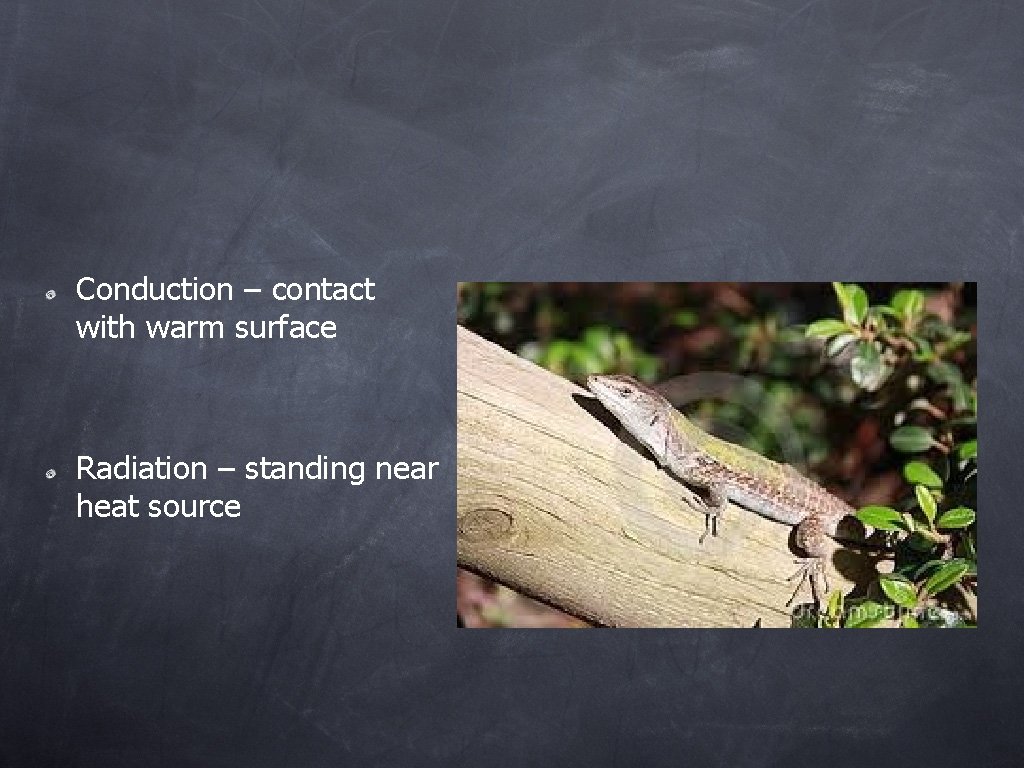
Conduction – contact with warm surface Radiation – standing near heat source
Ways of Minimising Heat Loss
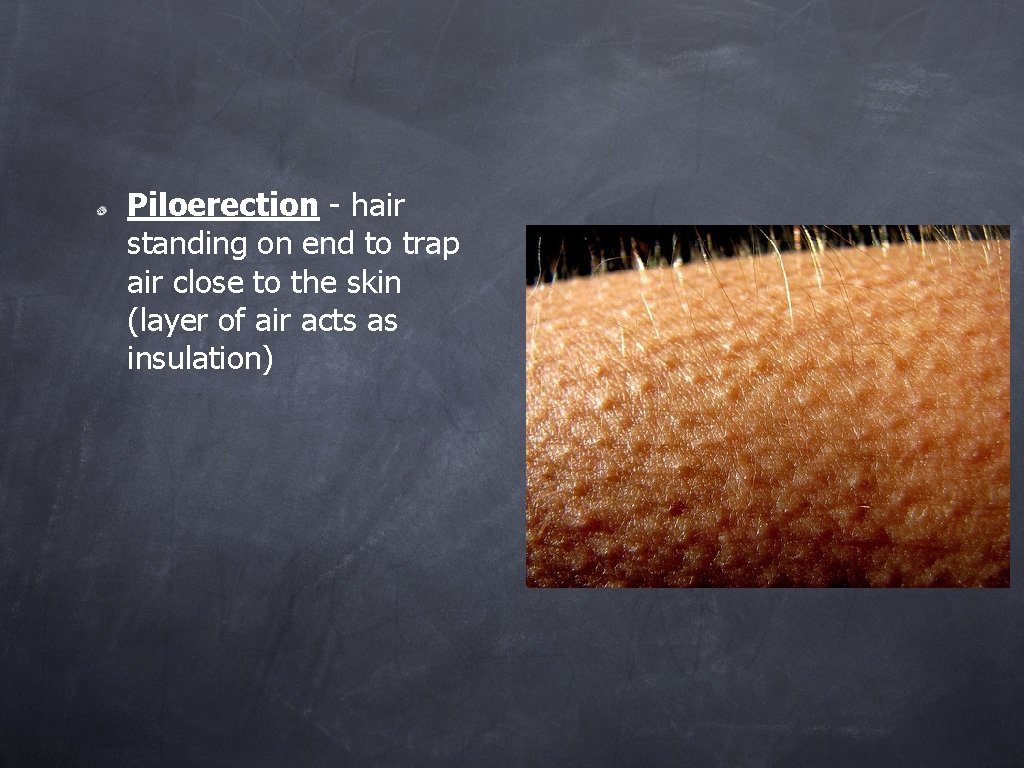
Piloerection - hair standing on end to trap air close to the skin (layer of air acts as insulation)
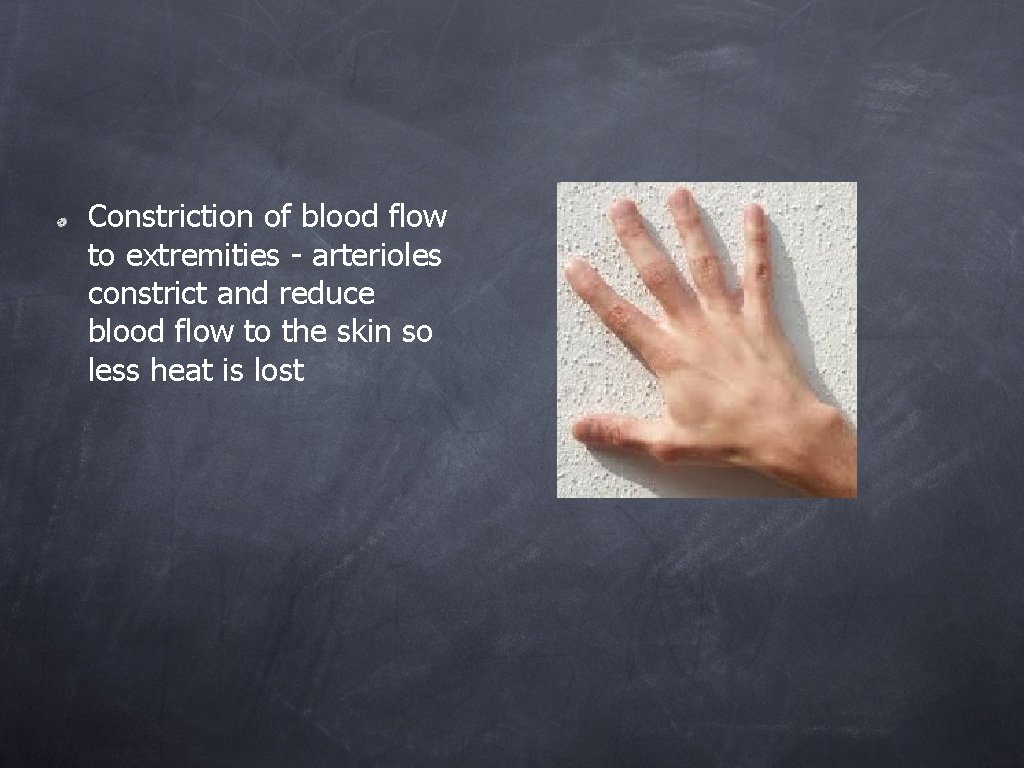
Constriction of blood flow to extremities - arterioles constrict and reduce blood flow to the skin so less heat is lost
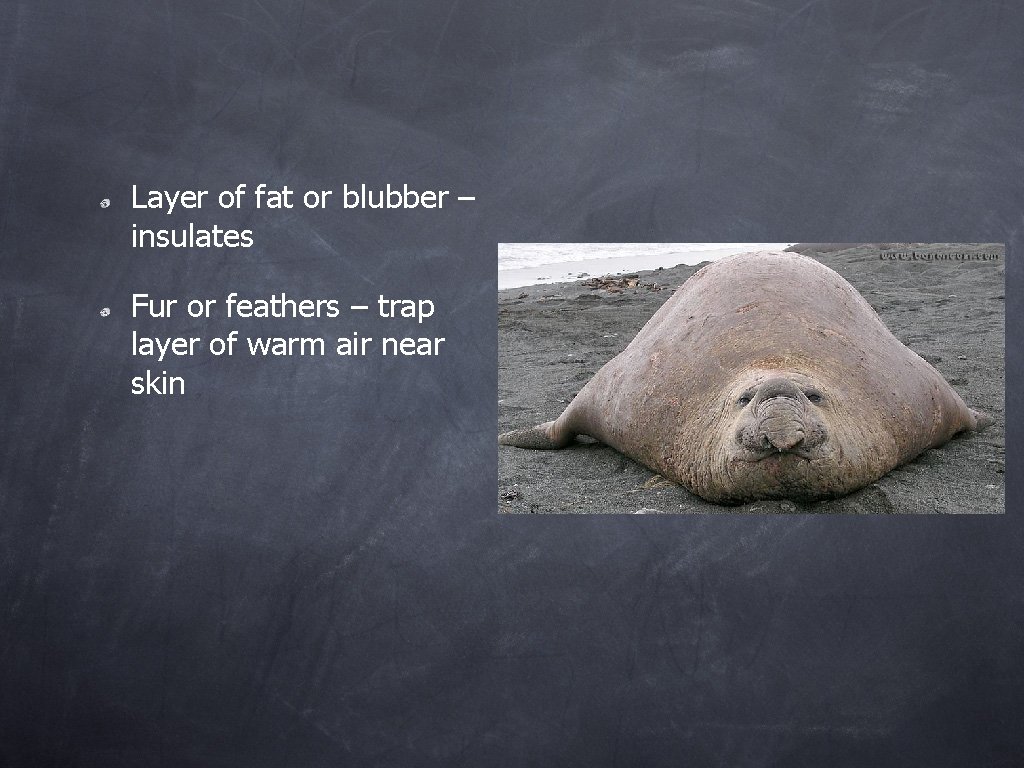
Layer of fat or blubber – insulates Fur or feathers – trap layer of warm air near skin
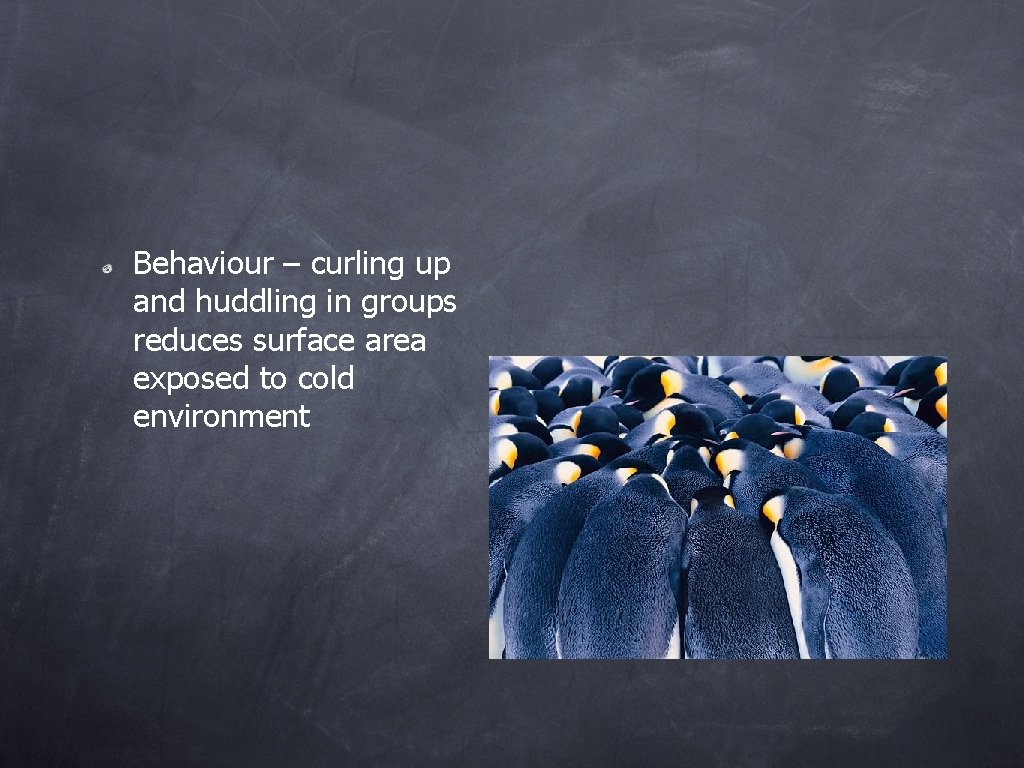
Behaviour – curling up and huddling in groups reduces surface area exposed to cold environment
Keeping Cool
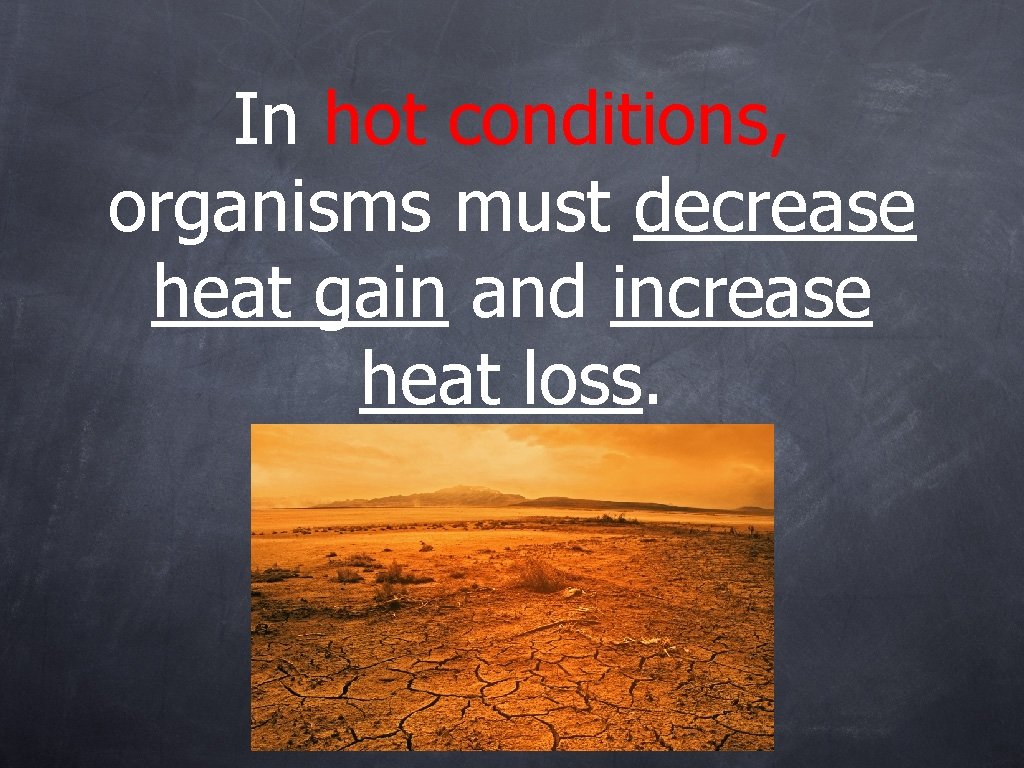
In hot conditions, organisms must decrease heat gain and increase heat loss.
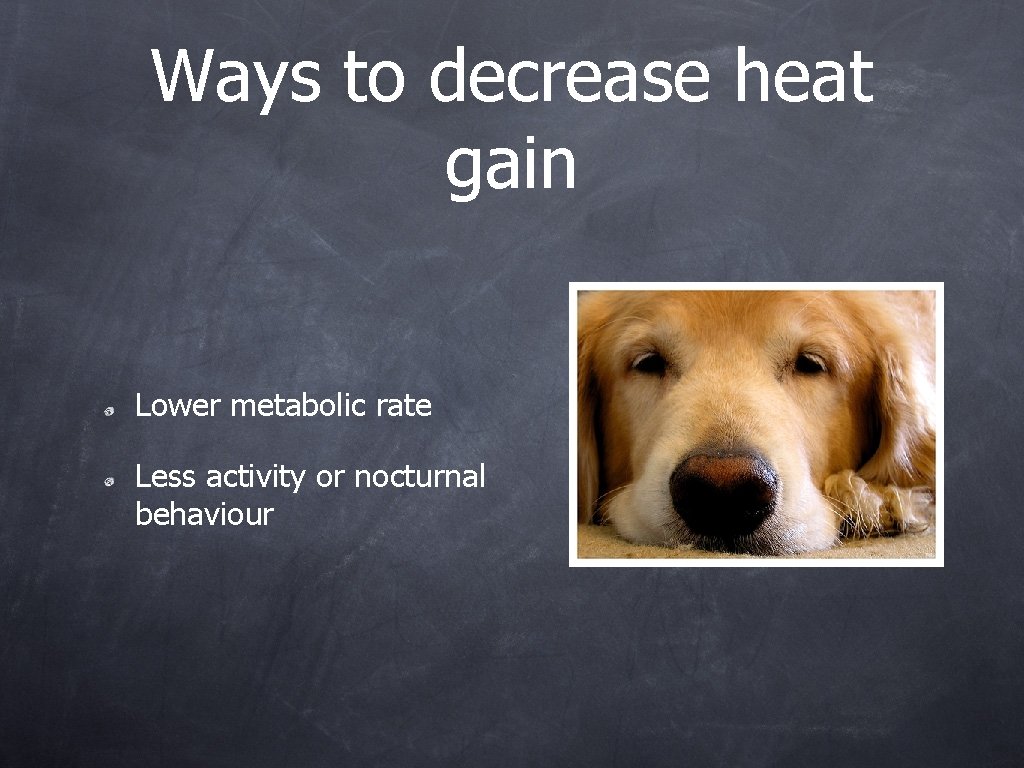
Ways to decrease heat gain Lower metabolic rate Less activity or nocturnal behaviour
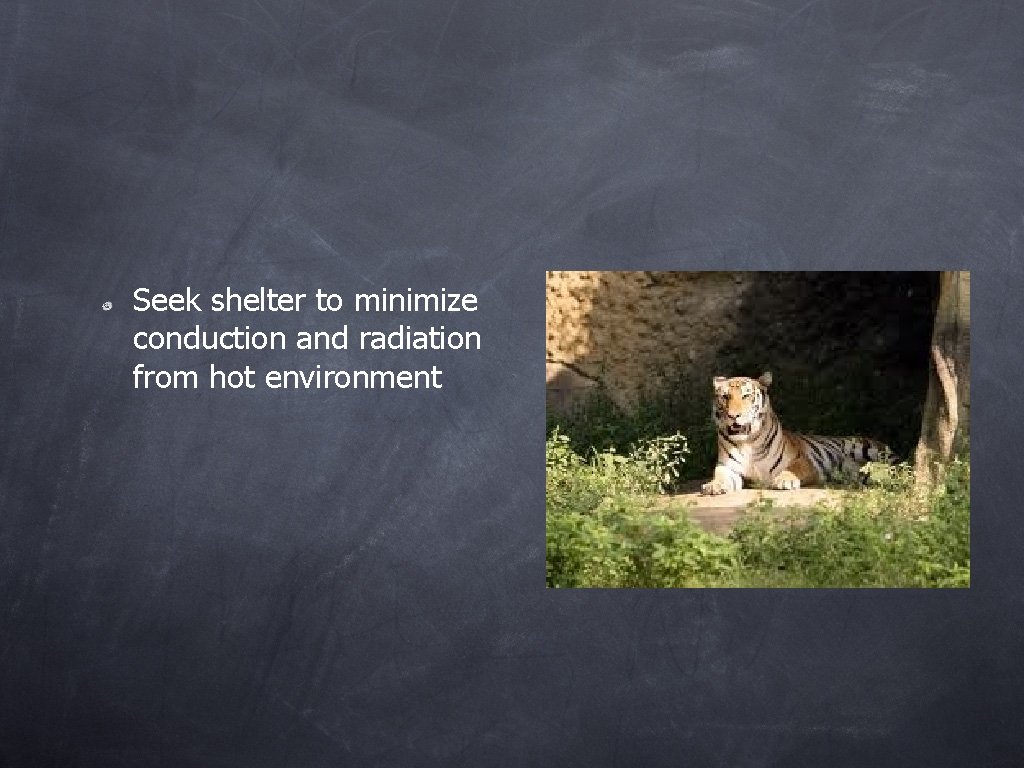
Seek shelter to minimize conduction and radiation from hot environment
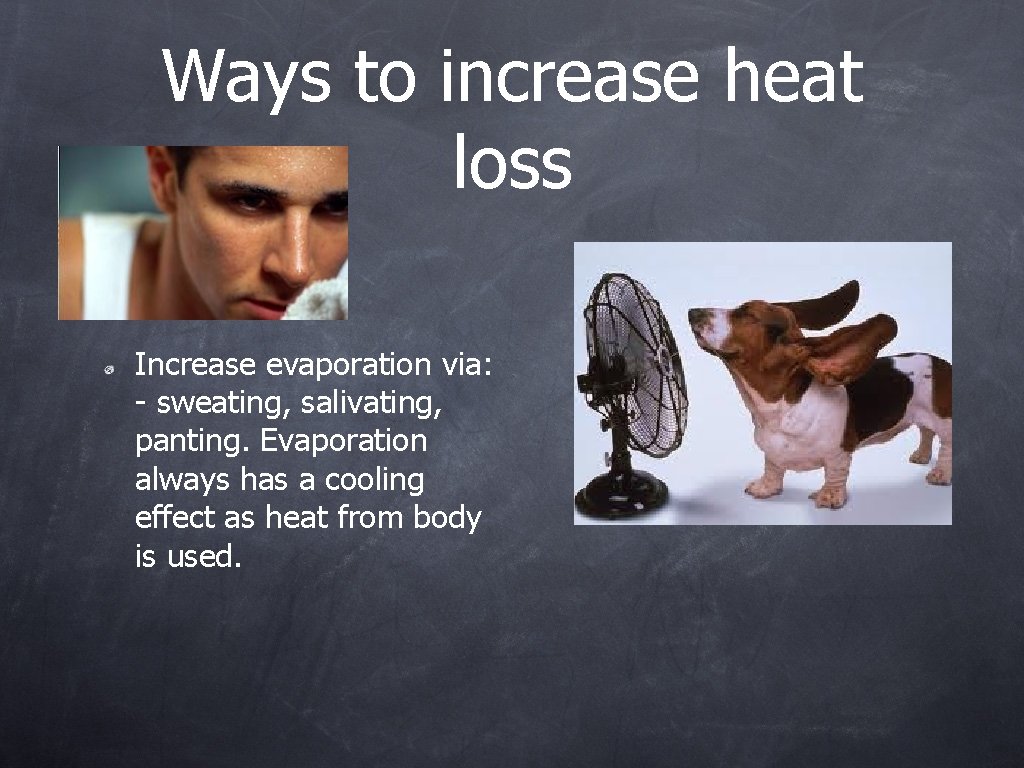
Ways to increase heat loss Increase evaporation via: - sweating, salivating, panting. Evaporation always has a cooling effect as heat from body is used.
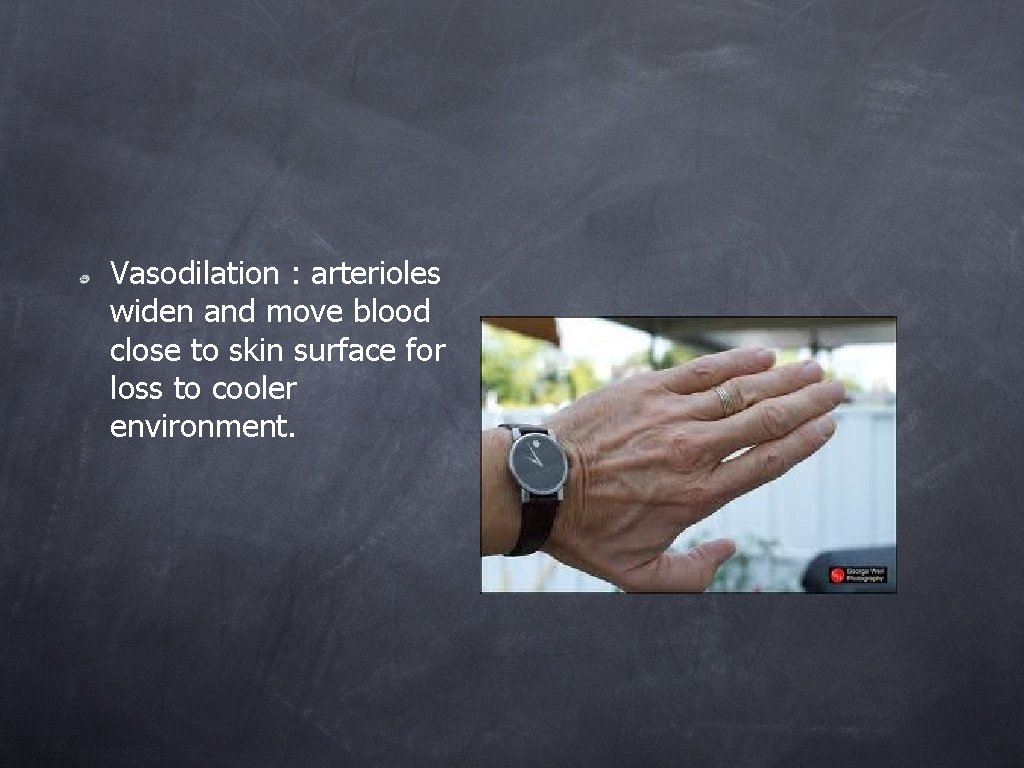
Vasodilation : arterioles widen and move blood close to skin surface for loss to cooler environment.
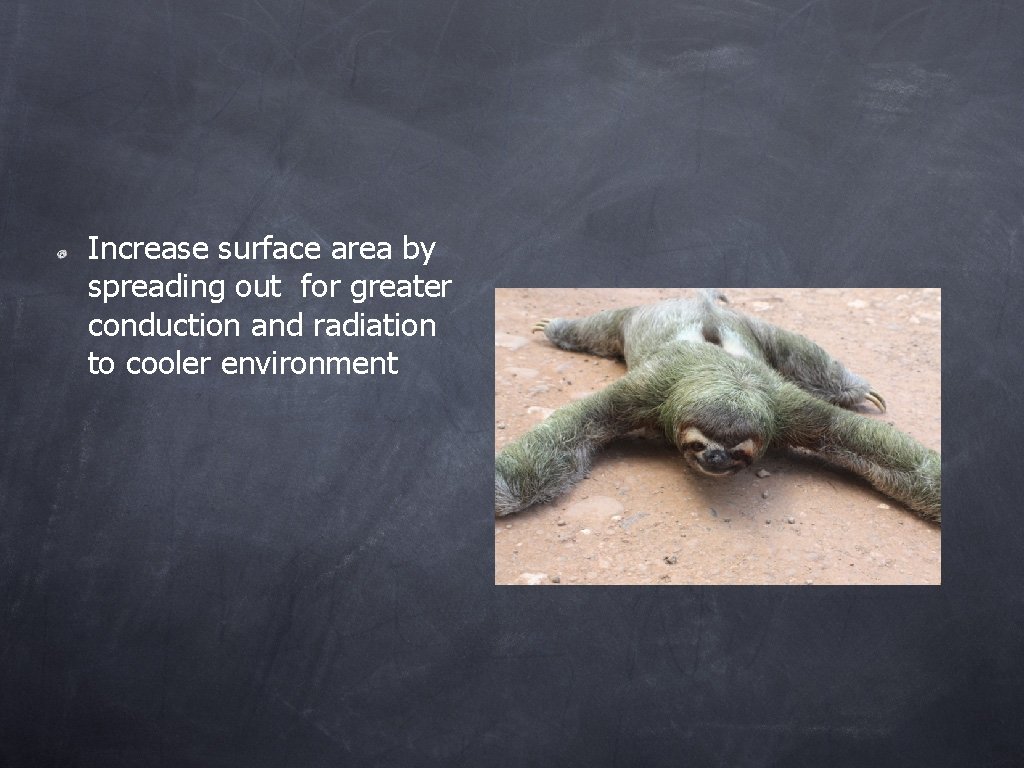
Increase surface area by spreading out for greater conduction and radiation to cooler environment
- Slides: 27