
THERMOREGULATION Control of body temperature Thermoregulation Regulation of
THERMOREGULATION Control of body temperature
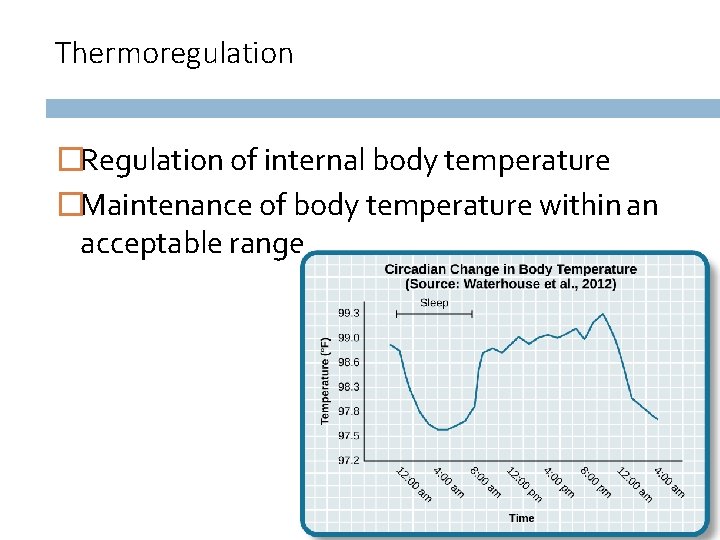
Thermoregulation �Regulation of internal body temperature �Maintenance of body temperature within an acceptable range
Core temperature • The core temperature of the human body is 37°C • The core of the human body includes the organs of the thorax, abdomen and the head • This is where the vital organs are located • Their enzyme systems must operate in optimum conditions • The periphery of the body can withstand some deviation from the core temperature
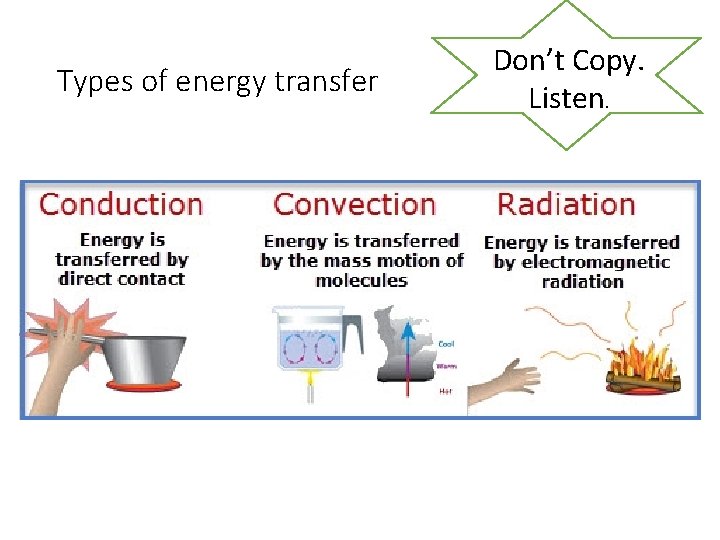
Types of energy transfer Don’t Copy. Listen.
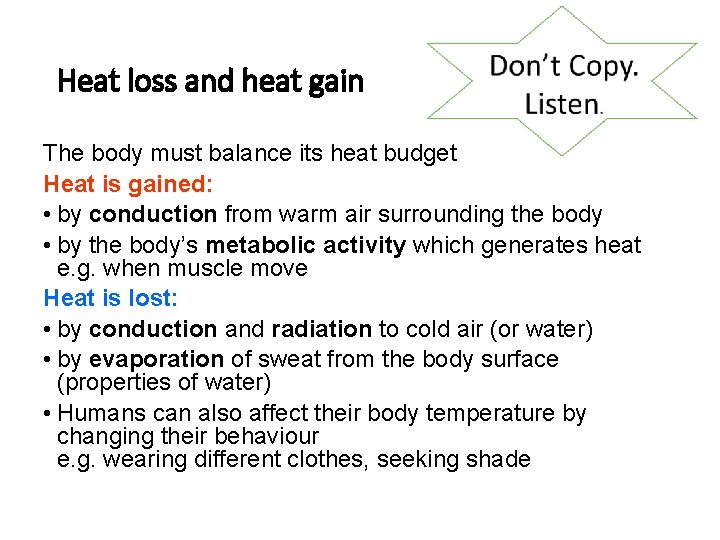
Heat loss and heat gain The body must balance its heat budget Heat is gained: • by conduction from warm air surrounding the body • by the body’s metabolic activity which generates heat e. g. when muscle move Heat is lost: • by conduction and radiation to cold air (or water) • by evaporation of sweat from the body surface (properties of water) • Humans can also affect their body temperature by changing their behaviour e. g. wearing different clothes, seeking shade
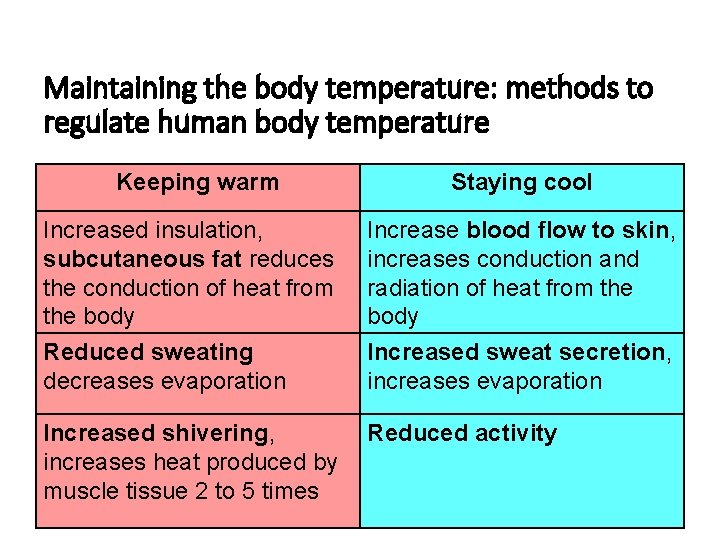
Maintaining the body temperature: methods to regulate human body temperature Keeping warm Staying cool Increased insulation, subcutaneous fat reduces the conduction of heat from the body Increase blood flow to skin, increases conduction and radiation of heat from the body Reduced sweating decreases evaporation Increased sweat secretion, increases evaporation Increased shivering, increases heat produced by muscle tissue 2 to 5 times Reduced activity

Negative FEEDBACK! NEGATIVE FEEDBACK Thermoreceptors Core body temperature >37°C Thermoreceptors Blood temperature Muscles of skin arteriole walls relax nerves Hypothalamus Sweat glands increase secretion Muscles reduce activity Body loses heat Return to 37°C
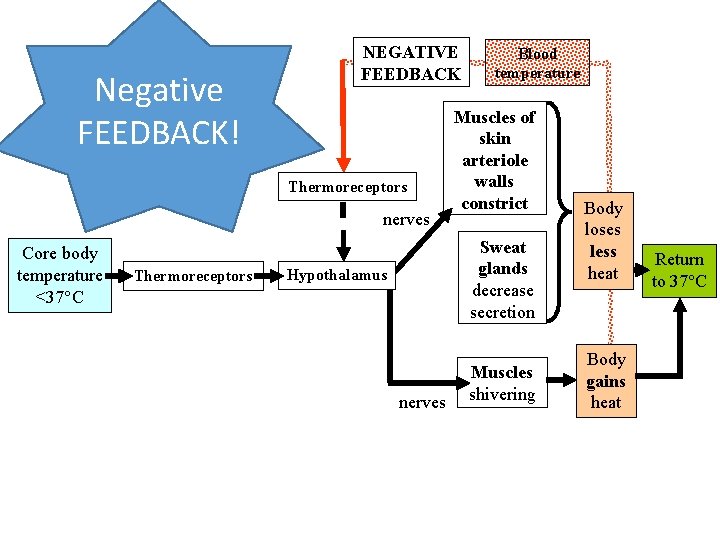
Negative FEEDBACK! NEGATIVE FEEDBACK Thermoreceptors nerves Core body temperature <37°C Thermoreceptors Blood temperature Muscles of skin arteriole walls constrict Sweat glands decrease secretion Hypothalamus nerves Muscles shivering Body loses less heat Body gains heat Return to 37°C
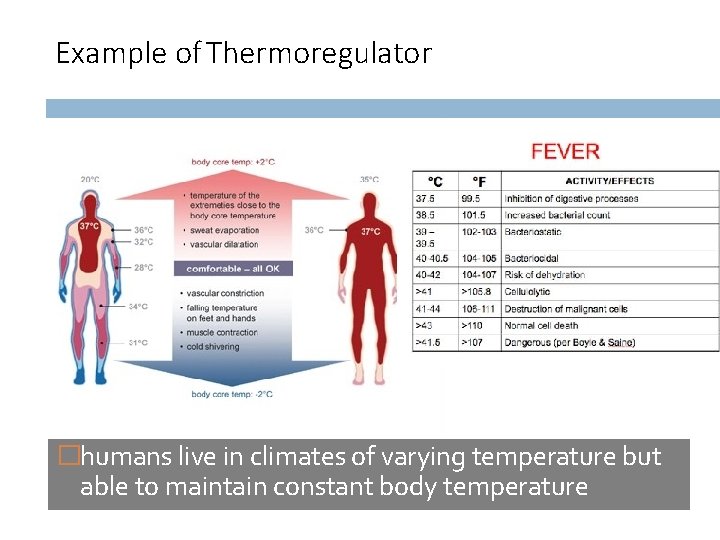
Example of Thermoregulator �humans live in climates of varying temperature but able to maintain constant body temperature

Hypothermia Warnings
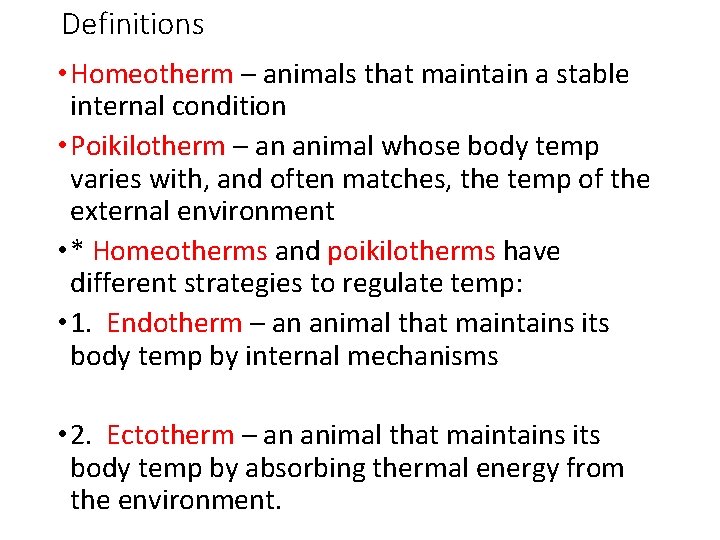
Definitions • Homeotherm – animals that maintain a stable internal condition • Poikilotherm – an animal whose body temp varies with, and often matches, the temp of the external environment • * Homeotherms and poikilotherms have different strategies to regulate temp: • 1. Endotherm – an animal that maintains its body temp by internal mechanisms • 2. Ectotherm – an animal that maintains its body temp by absorbing thermal energy from the environment.
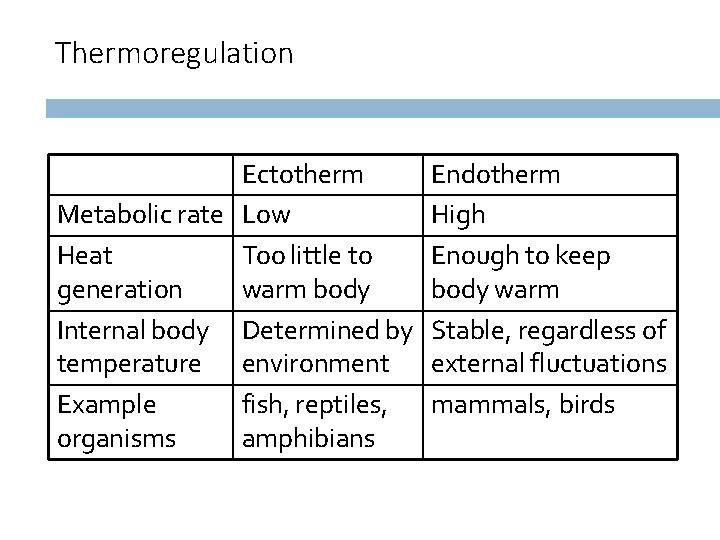
Thermoregulation Ectotherm Metabolic rate Low Heat Too little to generation warm body Internal body Determined by temperature environment Example fish, reptiles, organisms amphibians Endotherm High Enough to keep body warm Stable, regardless of external fluctuations mammals, birds
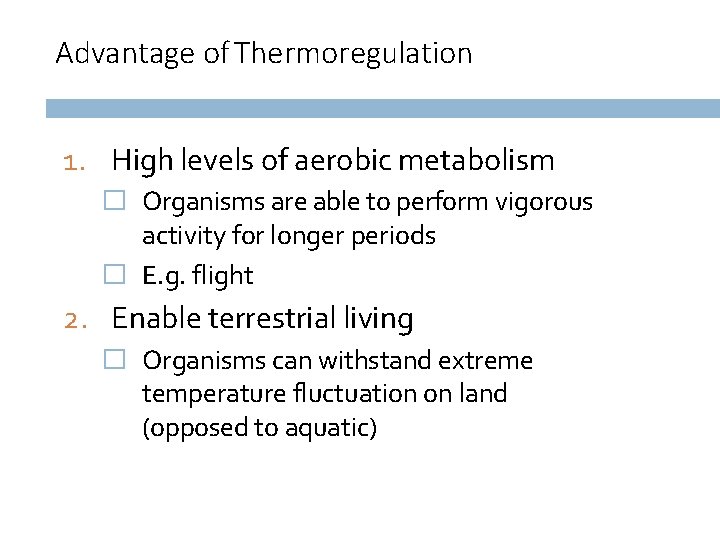
Advantage of Thermoregulation 1. High levels of aerobic metabolism � Organisms are able to perform vigorous activity for longer periods � E. g. flight 2. Enable terrestrial living � Organisms can withstand extreme temperature fluctuation on land (opposed to aquatic)
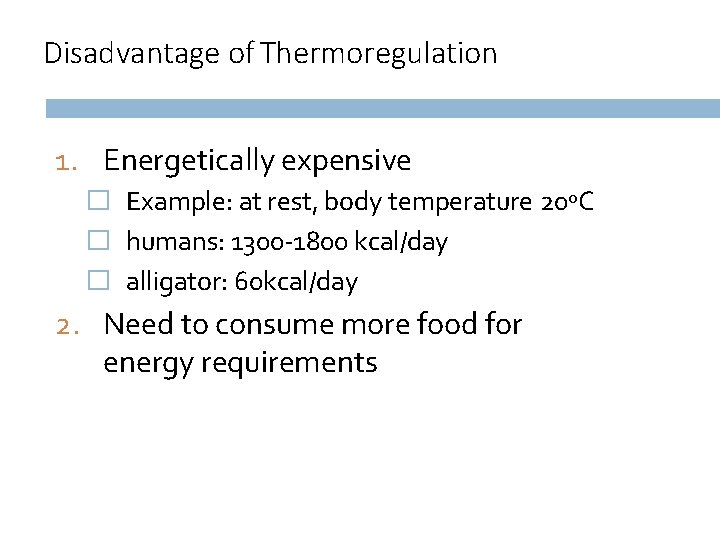
Disadvantage of Thermoregulation 1. Energetically expensive � Example: at rest, body temperature 20 o. C � humans: 1300 -1800 kcal/day � alligator: 60 kcal/day 2. Need to consume more food for energy requirements
Methods of Thermoregulation �Adaptations: �Physical adaptations �Behavioral adapations �Circulatory adaptation �Physiological changes: �Rate of heat exchange �Evaporative heat loss (cooling) �Rate of heat production �Rate of metabolic heat production
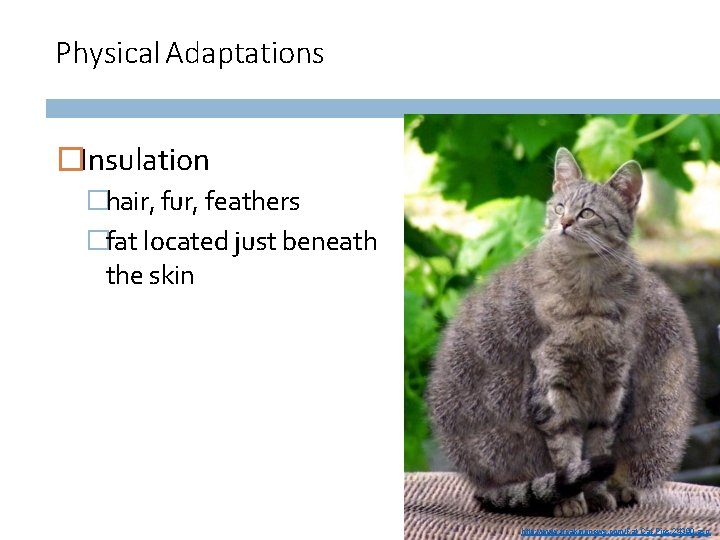
Physical Adaptations �Insulation �hair, fur, feathers �fat located just beneath the skin http: //www. freakingnews. com/Fat-Cat-Pics-24390. asp
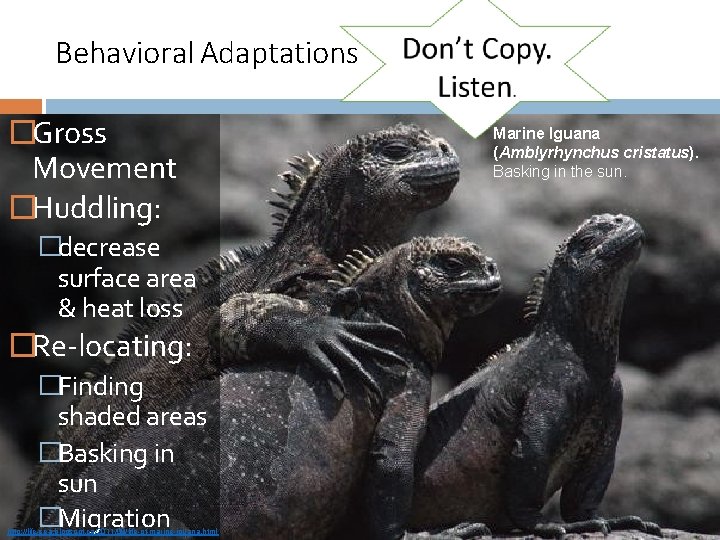
Behavioral Adaptations �Gross Movement �Huddling: �decrease surface area & heat loss �Re-locating: �Finding shaded areas �Basking in sun �Migration http: //life-sea. blogspot. ca/2011/08/life-of-marine-iguana. html Marine Iguana (Amblyrhynchus cristatus). Basking in the sun.
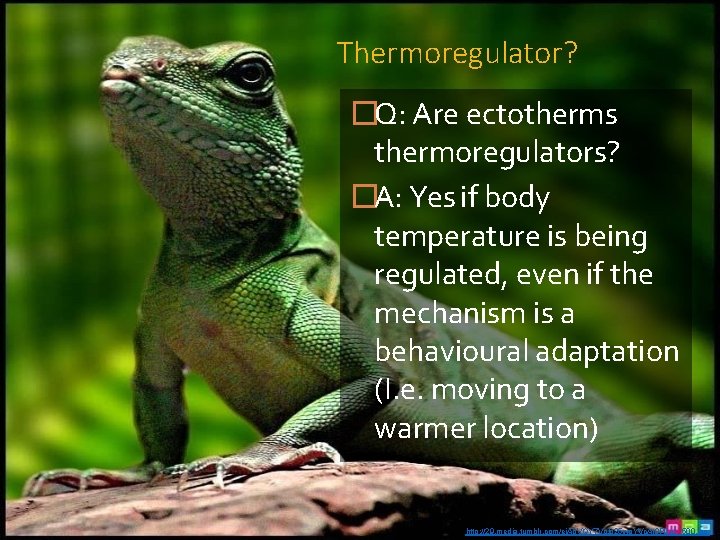
Thermoregulator? �Q: Are ectotherms thermoregulators? �A: Yes if body temperature is being regulated, even if the mechanism is a behavioural adaptation (I. e. moving to a warmer location) http: //29. media. tumblr. com/ei. Ab. VQY 7 Vplg 25 wg. YVc. At 9 P 0 o 1_500. jpg
Behavioural Adaptations �Torpor: state of low metabolic activity � Applied during environmental extremes � Conserves energy (ex. Bats) �Hibernation: long-term torpor � Survive long periods of cold temperatures on limited supplies of energy � Body temperature declines (ex. Bears) �Estivation: summer torpor � Survive long periods of high temperatures or when water is scarce � Example: Lung Fish (https: //www. youtube. com/watch? v=gua. KB 19 V-ls)
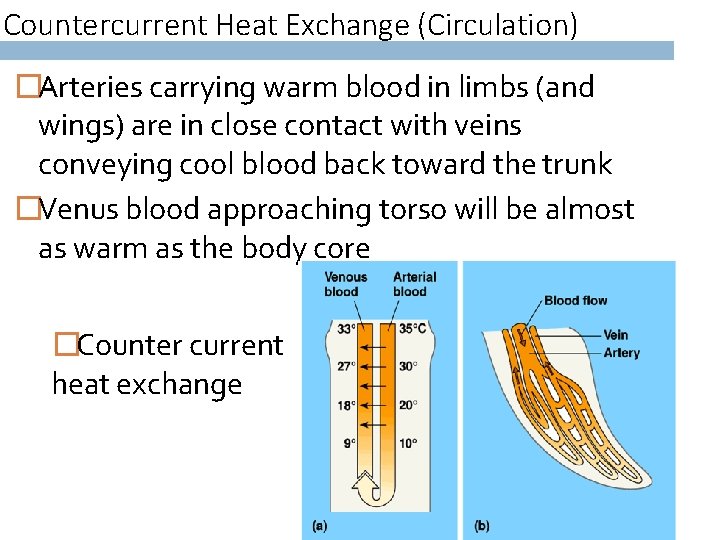
Countercurrent Heat Exchange (Circulation) �Arteries carrying warm blood in limbs (and wings) are in close contact with veins conveying cool blood back toward the trunk �Venus blood approaching torso will be almost as warm as the body core �Counter current heat exchange
Methods of Thermoregulation �Adaptations: �Physical adaptations �Behavioral adaptations �Circulatory adaptations �Physiological changes: �Rate of heat exchange �Evaporative heat loss (cooling) �Rate of heat production �Rate of metabolic heat production
Rate of Heat Exchange �Regulated by blood vessel size �Vasoconstriction �Vasodilation
Rate of Heat Exchange �Vasoconstriction �Decrease superficial blood vessel diameter �Decrease blood flow to surface, cooling skin �Reduce heat loss from body �Blood redirected to torso (organs) �Vasodilation �Increase in diameter of blood vessels near body surface �Increase blood flow to surface, warming skin �Transfers body heat to environment
Extreme Cold �Why does your body allow you to get frost bite? �What happens to body temperature with hypothermia? Why is hypothermia such a concern but frost bites aren’t?
Cryopreservation �Suspending life due to freezing �frozen cytosol can expand to break the cell membrane �Need to dehydrate cells before freezing �Only certain cell types can be cryopreserved �Semen �Blood (special cells for transfusion, or stem cells) �Tissue samples like tumors �Human eggs
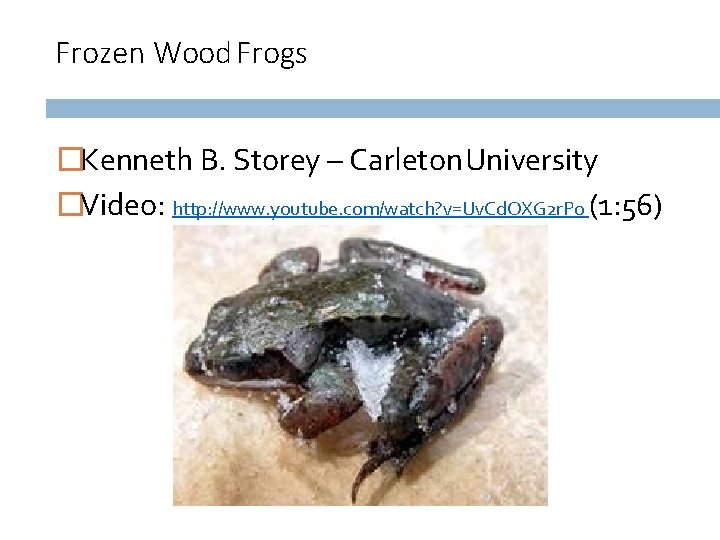
Frozen Wood Frogs �Kenneth B. Storey – Carleton University �Video: http: //www. youtube. com/watch? v=Uv. Cd. OXG 2 r. Po (1: 56)
Evaporative Heat Loss (cooling) �Water absorbs heat when it evaporate �Sweating evaporates water across skin thus removing heat from body

Rate of Heat Production �Skeletal muscle contraction results in shivering which generates more heat �Physical evidence: goose bumps
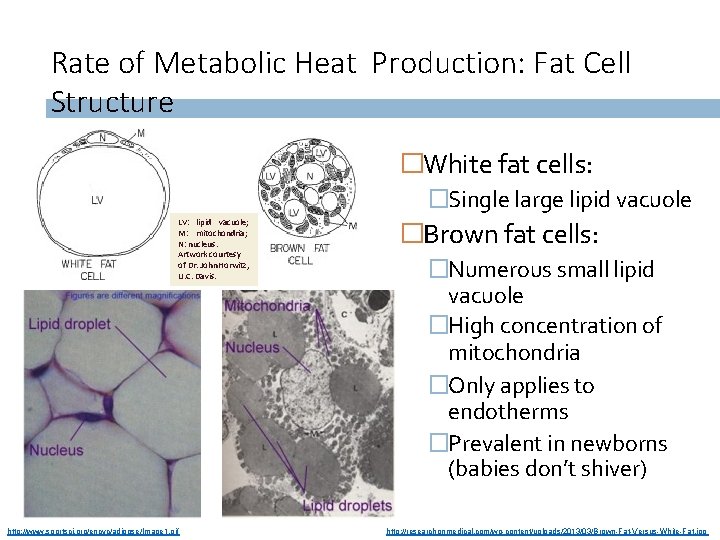
Rate of Metabolic Heat Production: Fat Cell Structure �White fat cells: �Single large lipid vacuole LV: lipid vacuole; M: mitochondria; N: nucleus. Artwork courtesy of Dr. John Horwitz, U. C. Davis. http: //www. sportsci. org/encyc/adipose/Image 1. gif �Brown fat cells: �Numerous small lipid vacuole �High concentration of mitochondria �Only applies to endotherms �Prevalent in newborns (babies don’t shiver) http: //researchonmedical. com/wp-content/uploads/2013/03/Brown-Fat-Versus-White-Fat. jpg
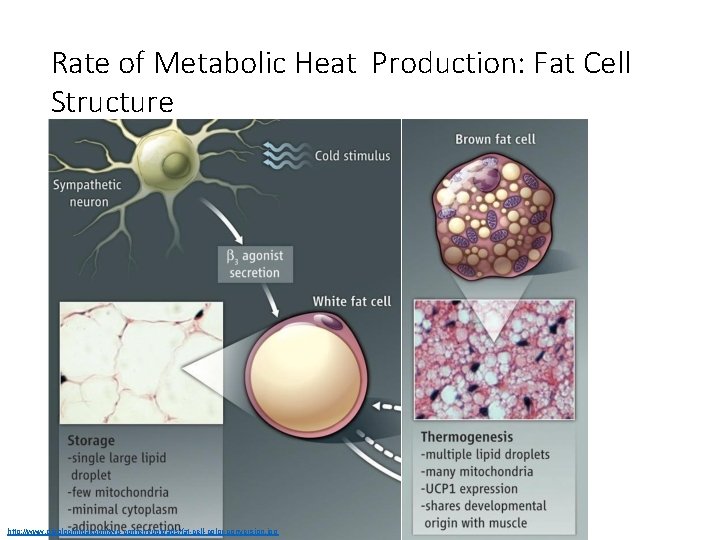
Rate of Metabolic Heat Production: Fat Cell Structure http: //www. diabloclinical. com/wp-content/uploads/fat-cell-color-conversion. jpg
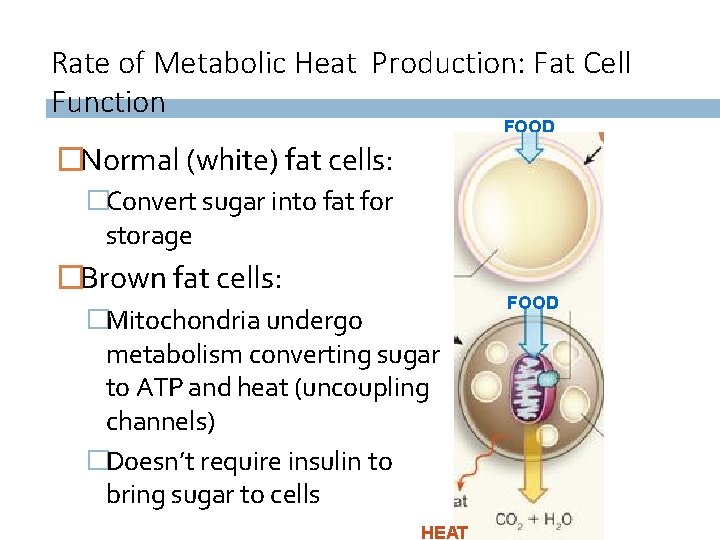
Rate of Metabolic Heat Production: Fat Cell Function FOOD �Normal (white) fat cells: �Convert sugar into fat for storage STORAGE �Brown fat cells: �Mitochondria undergo metabolism converting sugar to ATP and heat (uncoupling channels) �Doesn’t require insulin to bring sugar to cells HEAT FOOD
- Slides: 31