
Thermodynamics Temperature the measurement of the average kinetic


- Slides: 26
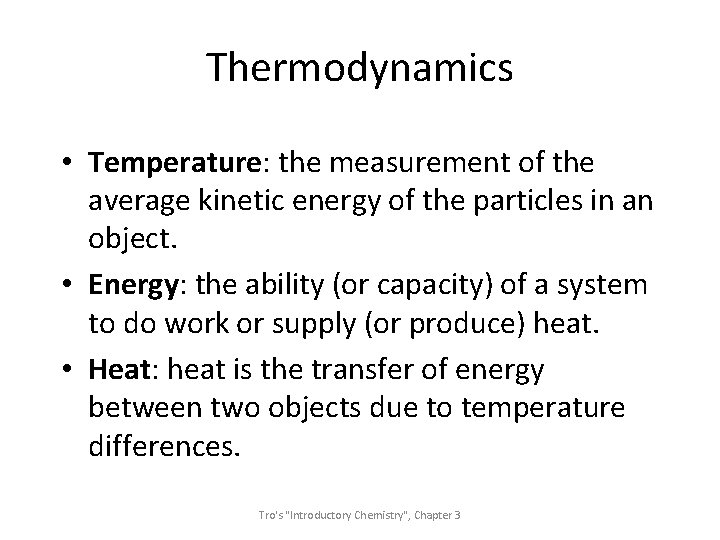
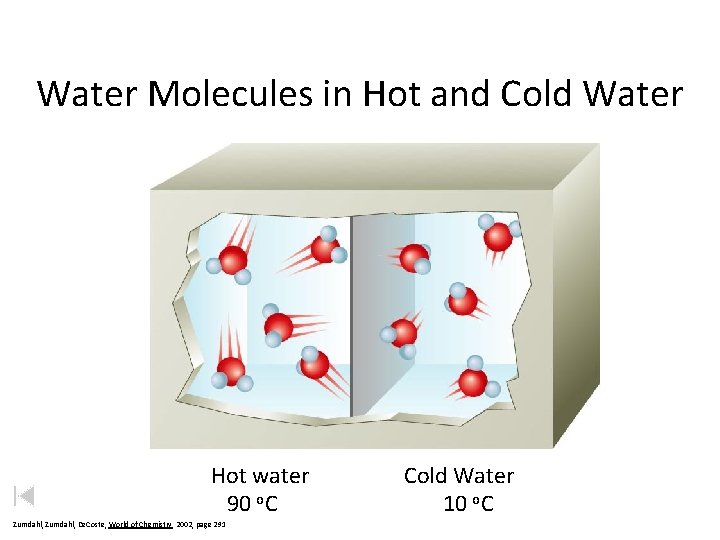
Thermodynamics • Temperature: the measurement of the average kinetic energy of the particles in an object. • Energy: the ability (or capacity) of a system to do work or supply (or produce) heat. • Heat: heat is the transfer of energy between two objects due to temperature differences. Tro's "Introductory Chemistry", Chapter 3
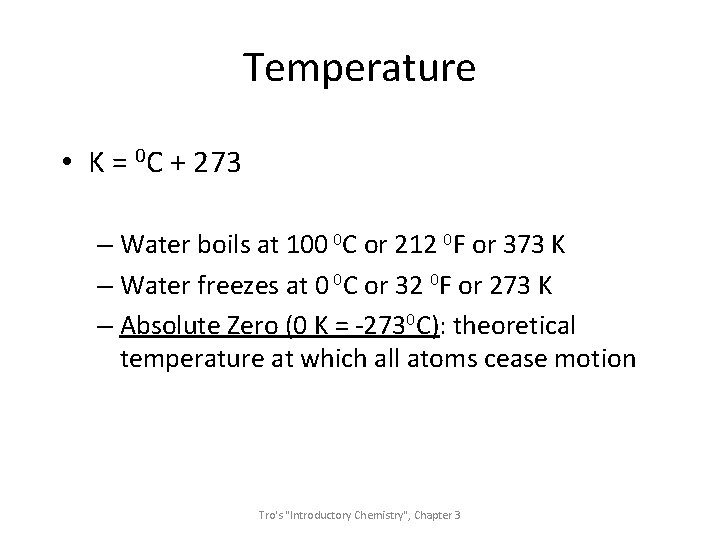
Temperature • K = 0 C + 273 – Water boils at 100 0 C or 212 0 F or 373 K – Water freezes at 0 0 C or 32 0 F or 273 K – Absolute Zero (0 K = -2730 C): theoretical temperature at which all atoms cease motion Tro's "Introductory Chemistry", Chapter 3
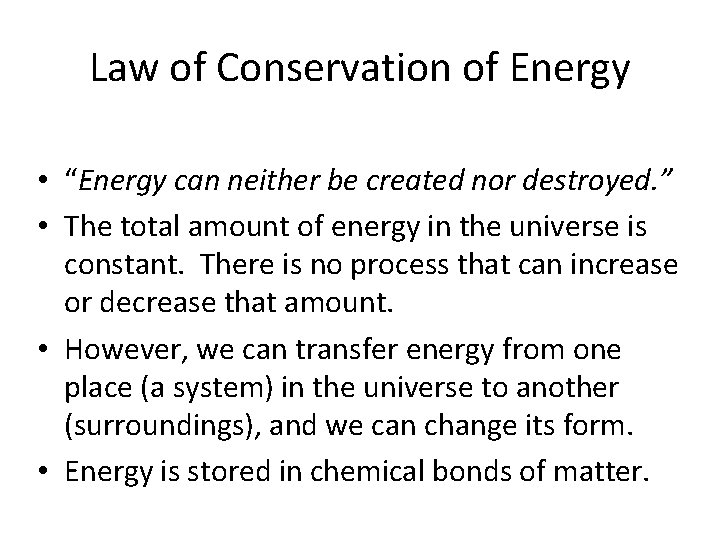
Law of Conservation of Energy • “Energy can neither be created nor destroyed. ” • The total amount of energy in the universe is constant. There is no process that can increase or decrease that amount. • However, we can transfer energy from one place (a system) in the universe to another (surroundings), and we can change its form. • Energy is stored in chemical bonds of matter.
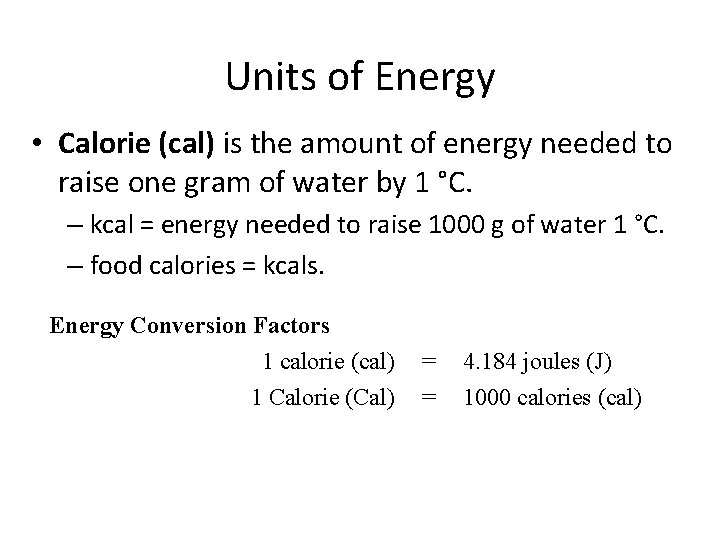
Units of Energy • Calorie (cal) is the amount of energy needed to raise one gram of water by 1 °C. – kcal = energy needed to raise 1000 g of water 1 °C. – food calories = kcals. Energy Conversion Factors 1 calorie (cal) 1 Calorie (Cal) = = 4. 184 joules (J) 1000 calories (cal)
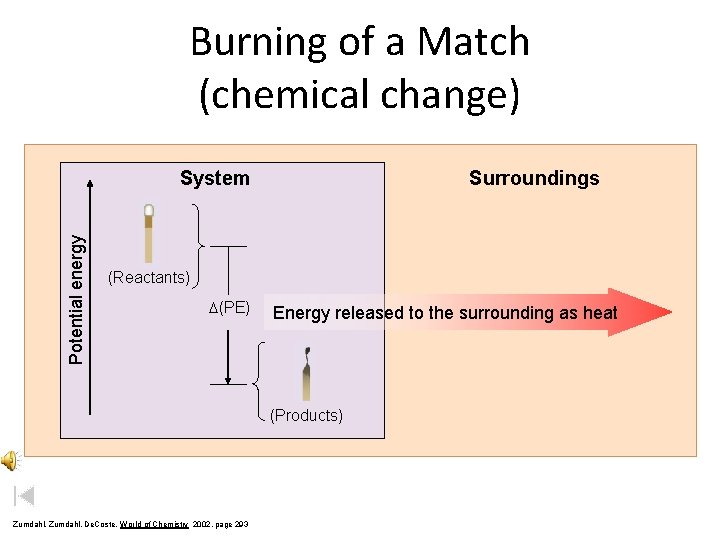
Burning of a Match (chemical change) Potential energy System Surroundings (Reactants) D(PE) Energy released to the surrounding as heat (Products) Zumdahl, De. Coste, World of Chemistry 2002, page 293
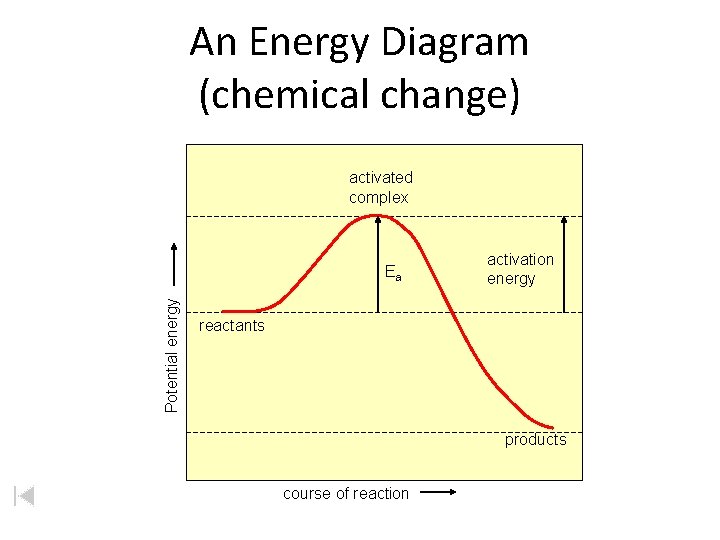
An Energy Diagram (chemical change) activated complex Potential energy Ea activation energy reactants products course of reaction
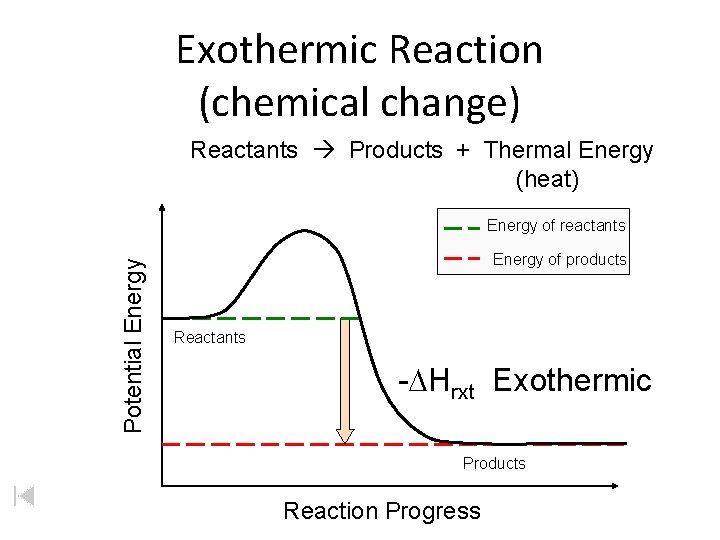
Exothermic Reaction (chemical change) Reactants Products + Thermal Energy (heat) Potential Energy of reactants Energy of products Reactants -DHrxt Exothermic Products Reaction Progress
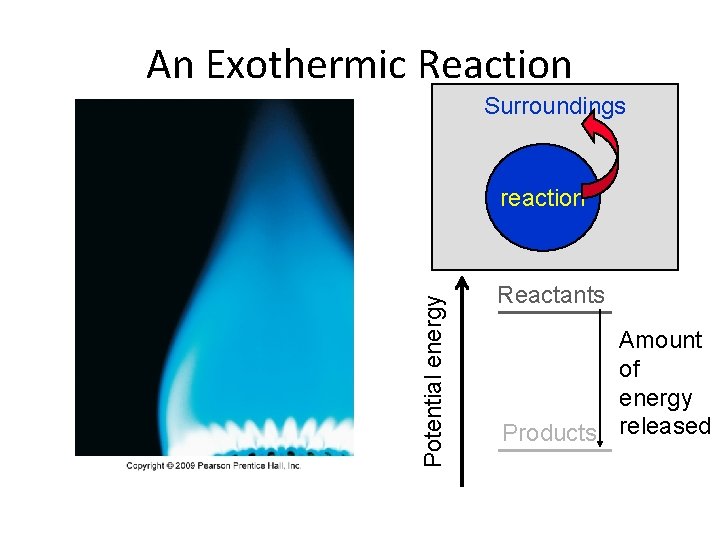
An Exothermic Reaction Surroundings Potential energy reaction Reactants Amount of energy Products released
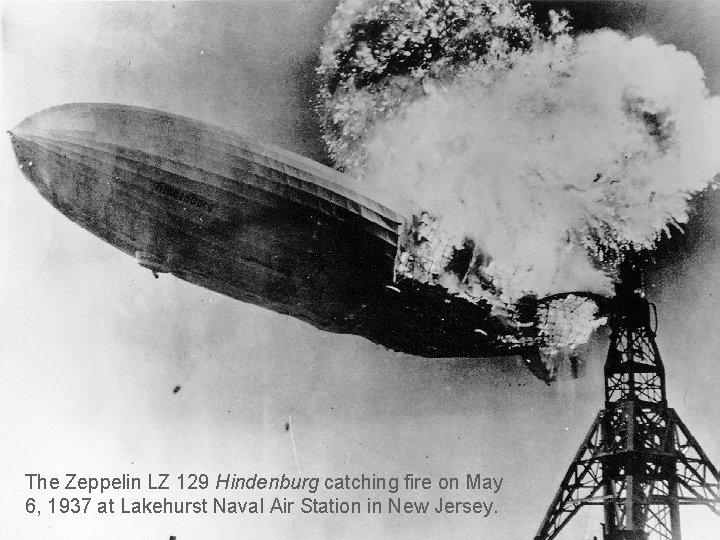
The Zeppelin LZ 129 Hindenburg catching fire on May 6, 1937 at Lakehurst Naval Air Station in New Jersey.
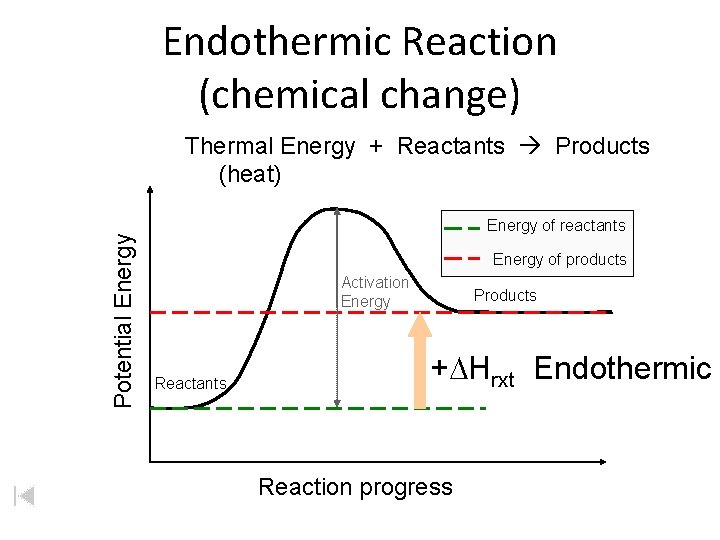
Endothermic Reaction (chemical change) Potential Energy Thermal Energy + Reactants Products (heat) Energy of reactants Energy of products Activation Energy Reactants Products +DHrxt Endothermic Reaction progress
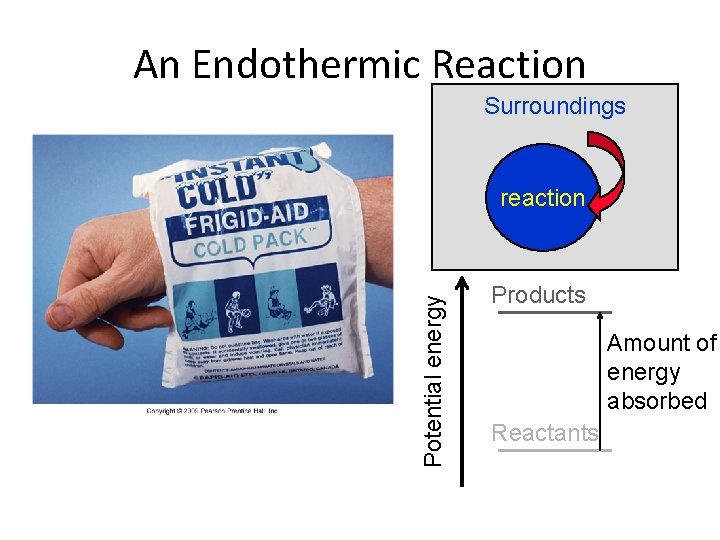
An Endothermic Reaction Surroundings Potential energy reaction Products Amount of energy absorbed Reactants
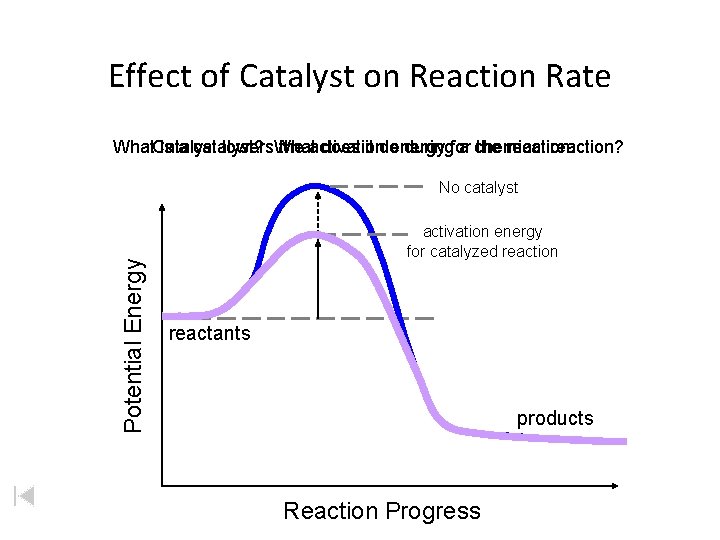
Effect of Catalyst on Reaction Rate What. Catalyst is a catalyst? does it do duringfor a chemical reaction? lowers. What the activation energy the reaction. Potential Energy No catalyst activation energy for catalyzed reaction reactants products Reaction Progress
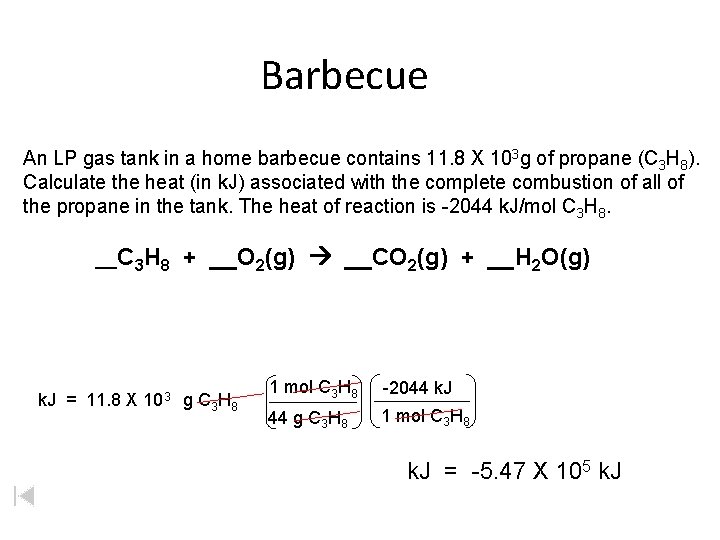
Barbecue An LP gas tank in a home barbecue contains 11. 8 X 10³ g of propane (C 3 H 8). Calculate the heat (in k. J) associated with the complete combustion of all of the propane in the tank. The heat of reaction is -2044 k. J/mol C 3 H 8. __C 3 H 8 + __O 2(g) __CO 2(g) + __H 2 O(g) k. J = 11. 8 X 10³ g C 3 H 8 1 mol C 3 H 8 -2044 k. J 44 g C 3 H 8 1 mol C 3 H 8 k. J = -5. 47 X 105 k. J
Water Molecules in Hot and Cold Water Hot water 90 o. C Zumdahl, De. Coste, World of Chemistry 2002, page 291 Cold Water 10 o. C
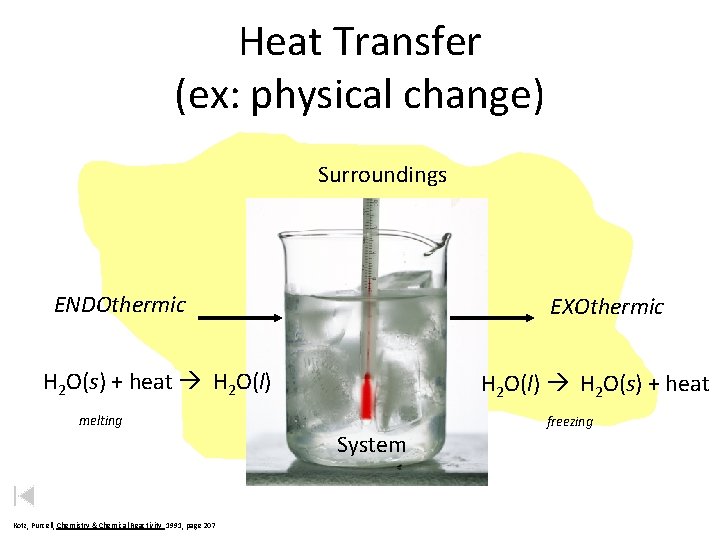
Heat Transfer (ex: physical change) Surroundings ENDOthermic System H 2 O(s) + heat H 2 O(l) H 2 O(s) + heat melting System Kotz, Purcell, Chemistry & Chemical Reactivity 1991, page 207 EXOthermic freezing
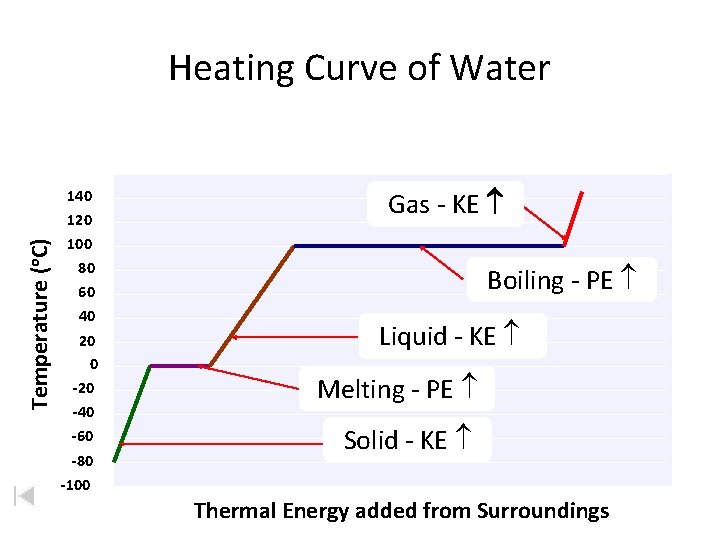
Temperature (o. C) Heating Curve of Water 140 120 100 80 60 40 20 0 -20 -40 -60 -80 -100 Gas - KE Boiling - PE Liquid - KE Melting - PE Solid - KE Thermal Energy added from Surroundings
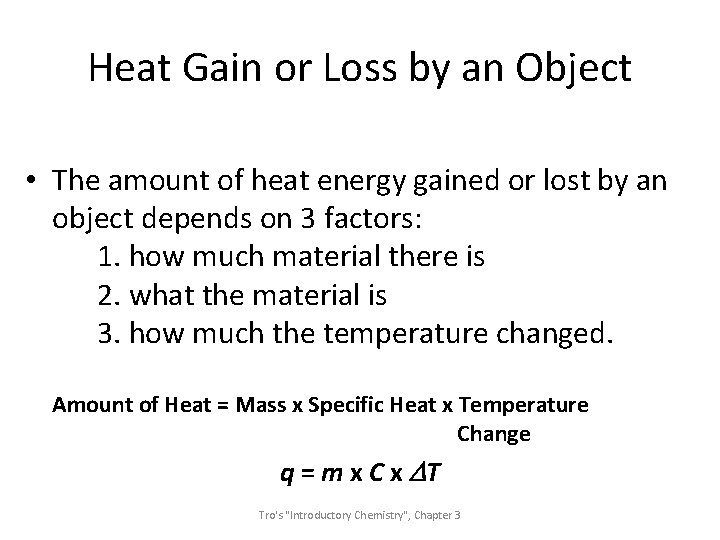
Heat Gain or Loss by an Object • The amount of heat energy gained or lost by an object depends on 3 factors: 1. how much material there is 2. what the material is 3. how much the temperature changed. Amount of Heat = Mass x Specific Heat x Temperature Change q = m x C x DT Tro's "Introductory Chemistry", Chapter 3
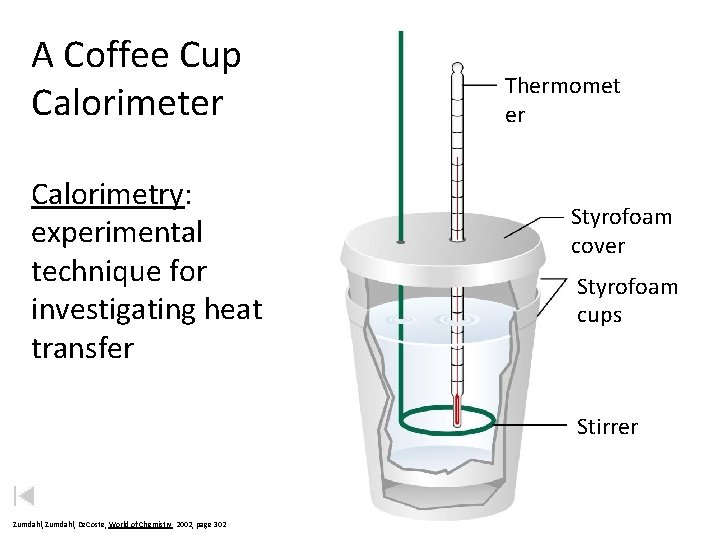
A Coffee Cup Calorimeter Calorimetry: experimental technique for investigating heat transfer Thermomet er Styrofoam cover Styrofoam cups Stirrer Zumdahl, De. Coste, World of Chemistry 2002, page 302
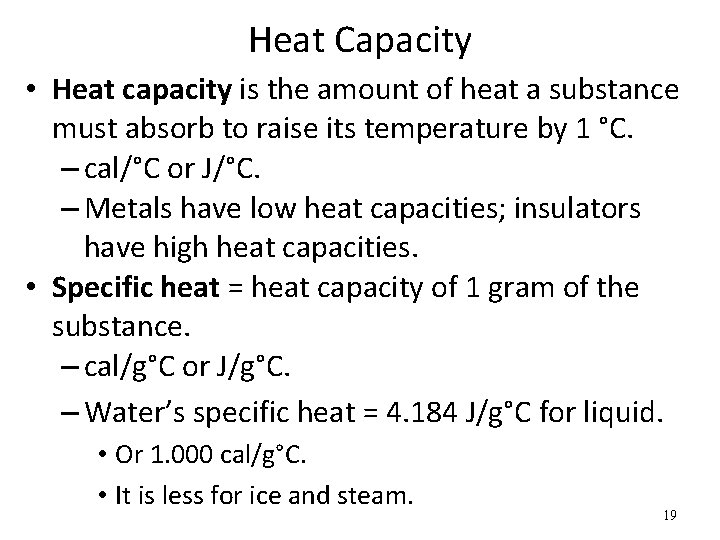
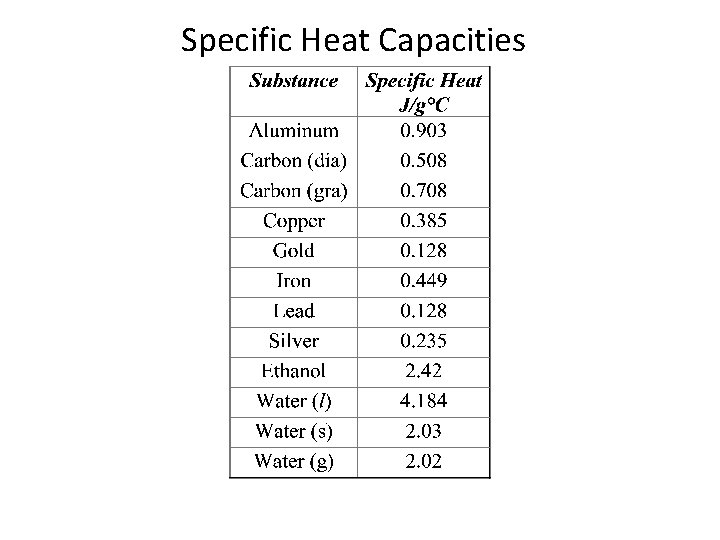
Heat Capacity • Heat capacity is the amount of heat a substance must absorb to raise its temperature by 1 °C. – cal/°C or J/°C. – Metals have low heat capacities; insulators have high heat capacities. • Specific heat = heat capacity of 1 gram of the substance. – cal/g°C or J/g°C. – Water’s specific heat = 4. 184 J/g°C for liquid. • Or 1. 000 cal/g°C. • It is less for ice and steam. 19
Specific Heat Capacities
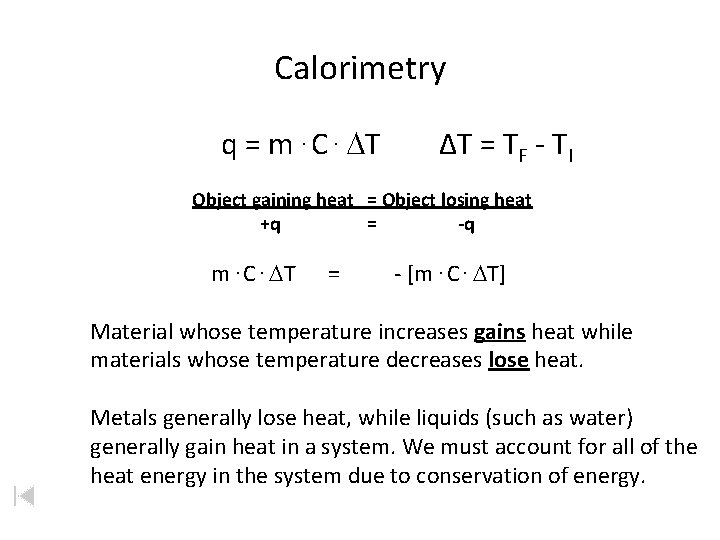
Calorimetry q = m. C. DT ΔT = TF - TI Object gaining heat = Object losing heat +q = -q m. C. DT = - [m. C. DT] Material whose temperature increases gains heat while materials whose temperature decreases lose heat. Metals generally lose heat, while liquids (such as water) generally gain heat in a system. We must account for all of the heat energy in the system due to conservation of energy.
Enthalpy Changes H 2(g) + ½ O 2(g) Energy DH = +242 k. J Endothermic -242 k. J Exothermic +286 k. J Endothermic DH = -286 k. J Exothermic H 2 O(g) +44 k. J Endothermic -44 k. J Exothermic H 2 O(l) H 2(g) + 1/2 O 2(g) H 2 O(g) + 242 k. J Kotz, Purcell, Chemistry & Chemical Reactivity 1991, page 211 DH = -242 k. J
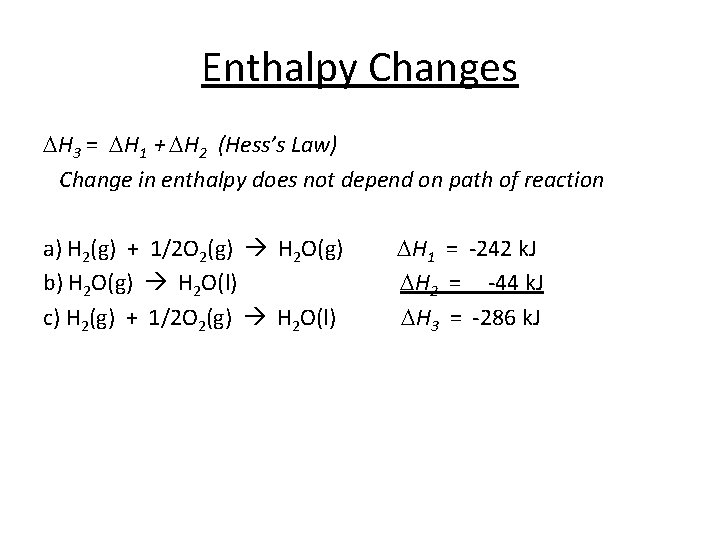
Enthalpy Changes DH 3 = DH 1 + DH 2 (Hess’s Law) Change in enthalpy does not depend on path of reaction a) H 2(g) + 1/2 O 2(g) H 2 O(g) b) H 2 O(g) H 2 O(l) c) H 2(g) + 1/2 O 2(g) H 2 O(l) DH 1 = -242 k. J DH 2 = -44 k. J DH 3 = -286 k. J
Hess’s Law a) N 2(g) + O 2(g) 2 NO(g) b) 2 NO(g) + O 2(g) 2 NO 2(g) c) N 2(g) + 2 O 2(g) 2 NO 2(g) DH 1 = +180 k. J DH 2 = -112 k. J DH 3 = +68 k. J
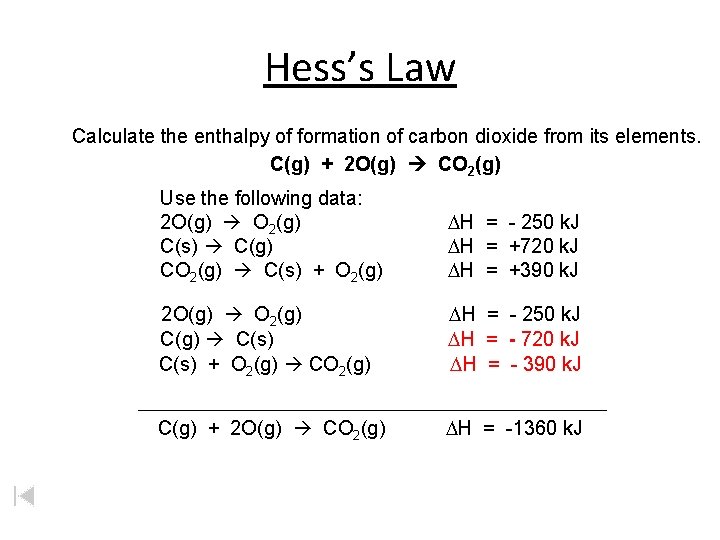
Hess’s Law Calculate the enthalpy of formation of carbon dioxide from its elements. C(g) + 2 O(g) CO 2(g) Use the following data: 2 O(g) O 2(g) C(s) C(g) CO 2(g) C(s) + O 2(g) DH = - 250 k. J DH = +720 k. J DH = +390 k. J 2 O(g) O 2(g) C(g) C(s) + O 2(g) CO 2(g) DH = - 250 k. J DH = - 720 k. J DH = - 390 k. J C(g) + 2 O(g) CO 2(g) DH = -1360 k. J
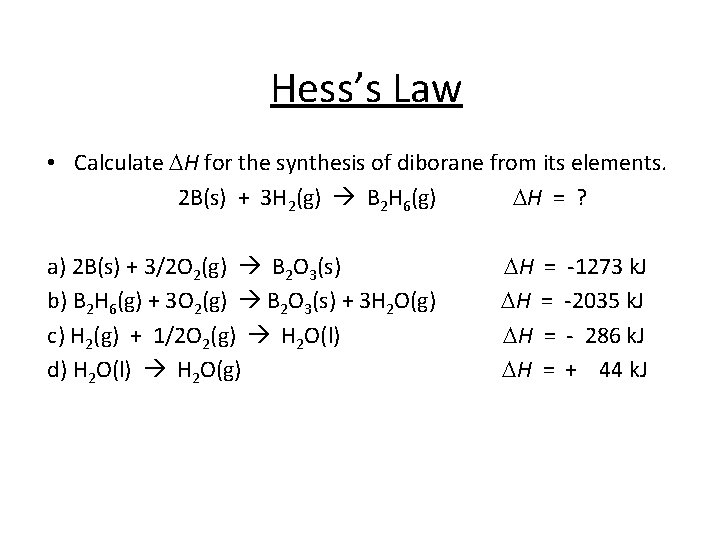
Hess’s Law • Calculate DH for the synthesis of diborane from its elements. 2 B(s) + 3 H 2(g) B 2 H 6(g) DH = ? a) 2 B(s) + 3/2 O 2(g) B 2 O 3(s) b) B 2 H 6(g) + 3 O 2(g) B 2 O 3(s) + 3 H 2 O(g) c) H 2(g) + 1/2 O 2(g) H 2 O(l) d) H 2 O(l) H 2 O(g) DH DH = = -1273 k. J -2035 k. J - 286 k. J + 44 k. J