
Thermodynamics Entropy Free Energy and Equilibrium Chapter 16
Thermodynamics: Entropy, Free Energy, and Equilibrium Chapter 16
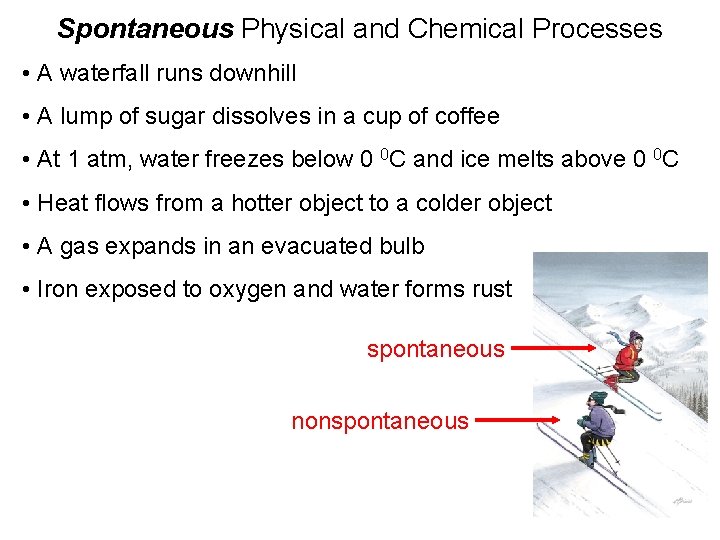
Spontaneous Physical and Chemical Processes • A waterfall runs downhill • A lump of sugar dissolves in a cup of coffee • At 1 atm, water freezes below 0 0 C and ice melts above 0 0 C • Heat flows from a hotter object to a colder object • A gas expands in an evacuated bulb • Iron exposed to oxygen and water forms rust spontaneous nonspontaneous
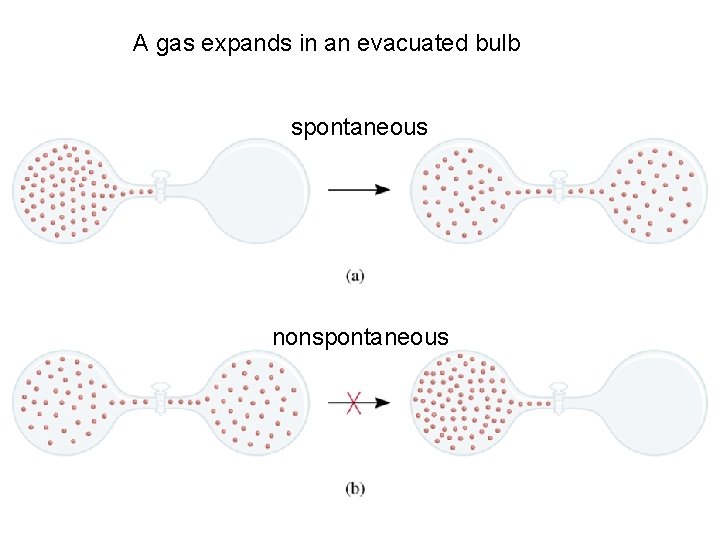
A gas expands in an evacuated bulb spontaneous nonspontaneous
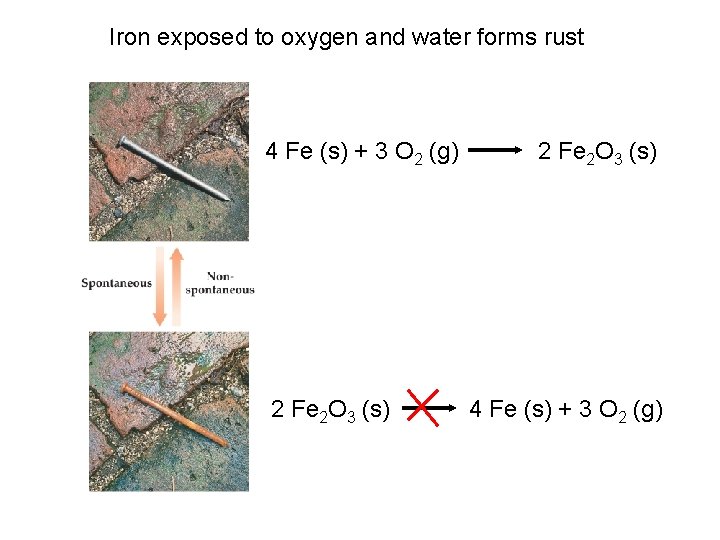
Iron exposed to oxygen and water forms rust 4 Fe (s) + 3 O 2 (g) 2 Fe 2 O 3 (s) 4 Fe (s) + 3 O 2 (g)
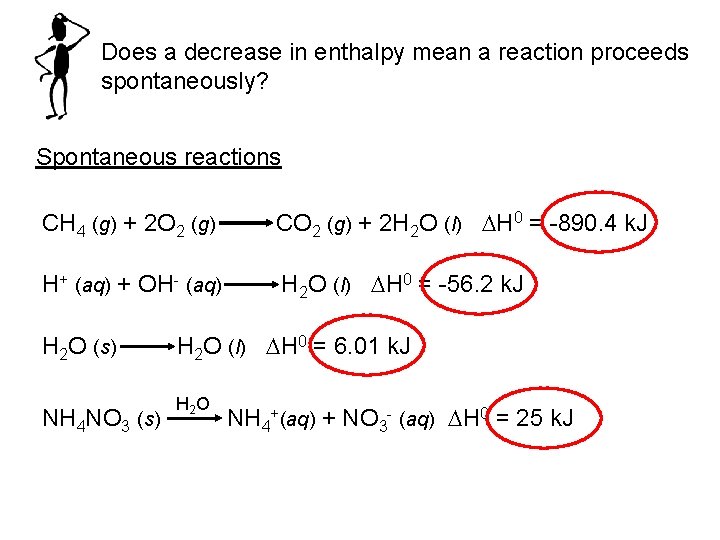
Does a decrease in enthalpy mean a reaction proceeds spontaneously? Spontaneous reactions CH 4 (g) + 2 O 2 (g) CO 2 (g) + 2 H 2 O (l) DH 0 = -890. 4 k. J H+ (aq) + OH- (aq) H 2 O (l) DH 0 = -56. 2 k. J H 2 O (s) NH 4 NO 3 (s) H 2 O (l) DH 0 = 6. 01 k. J H 2 O NH 4+(aq) + NO 3 - (aq) DH 0 = 25 k. J
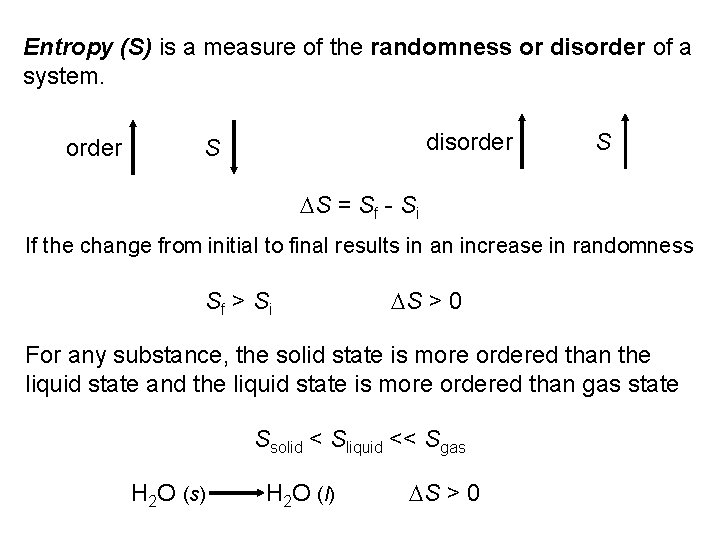
Entropy (S) is a measure of the randomness or disorder of a system. order disorder S S DS = Sf - Si If the change from initial to final results in an increase in randomness Sf > Si DS > 0 For any substance, the solid state is more ordered than the liquid state and the liquid state is more ordered than gas state Ssolid < Sliquid << Sgas H 2 O (s) H 2 O (l) DS > 0
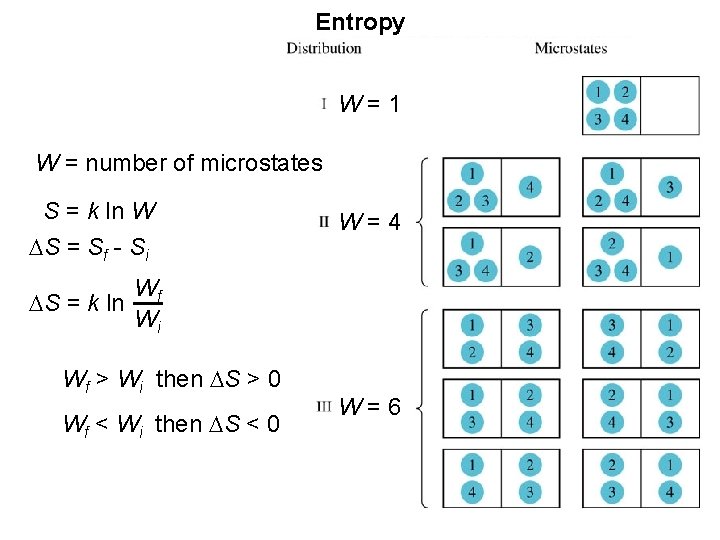
Entropy W=1 W = number of microstates S = k ln W DS = Sf - Si DS = k ln W=4 Wf Wi Wf > Wi then DS > 0 Wf < Wi then DS < 0 W=6
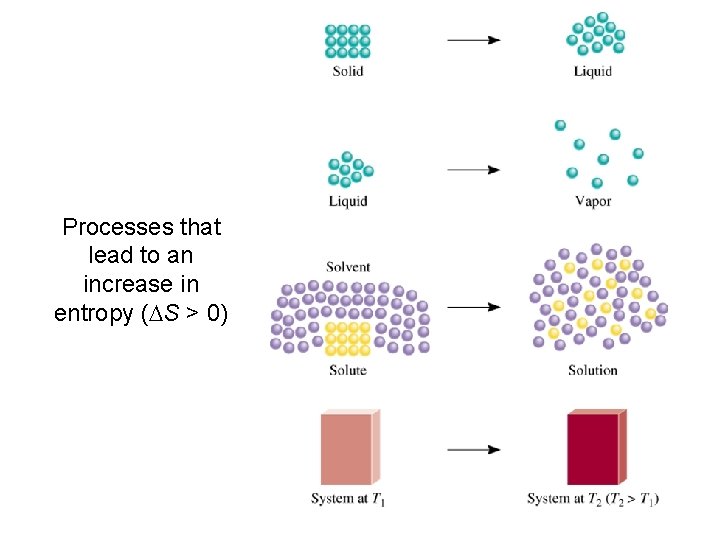
Processes that lead to an increase in entropy (DS > 0)
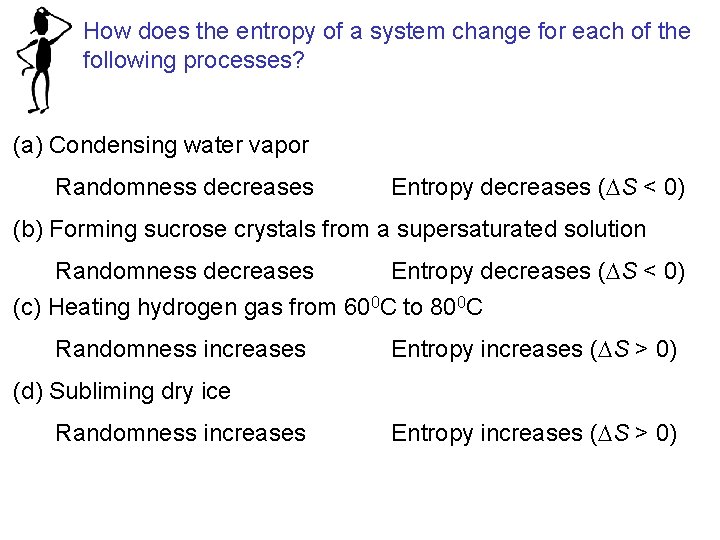
How does the entropy of a system change for each of the following processes? (a) Condensing water vapor Randomness decreases Entropy decreases (DS < 0) (b) Forming sucrose crystals from a supersaturated solution Randomness decreases Entropy decreases (DS < 0) (c) Heating hydrogen gas from 600 C to 800 C Randomness increases Entropy increases (DS > 0) (d) Subliming dry ice Randomness increases Entropy increases (DS > 0)
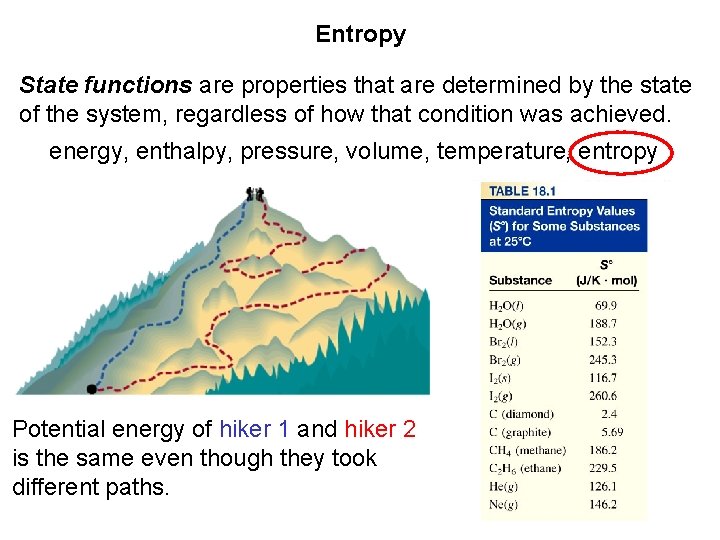
Entropy State functions are properties that are determined by the state of the system, regardless of how that condition was achieved. energy, enthalpy, pressure, volume, temperature, entropy Potential energy of hiker 1 and hiker 2 is the same even though they took different paths.
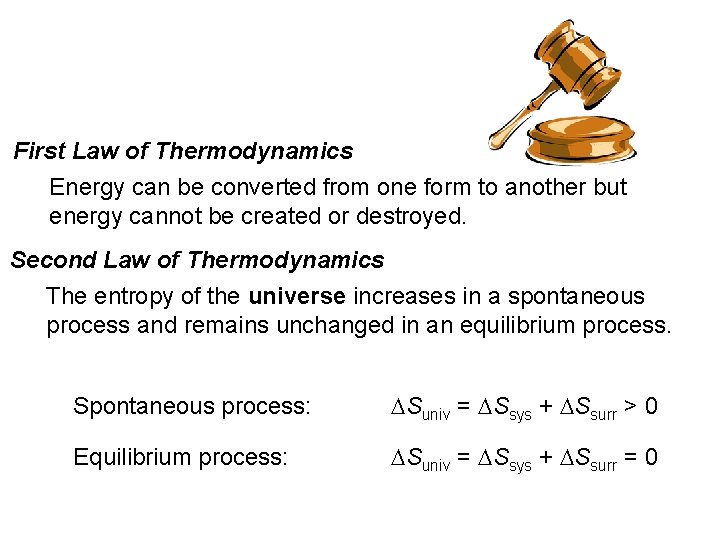
First Law of Thermodynamics Energy can be converted from one form to another but energy cannot be created or destroyed. Second Law of Thermodynamics The entropy of the universe increases in a spontaneous process and remains unchanged in an equilibrium process. Spontaneous process: DSuniv = DSsys + DSsurr > 0 Equilibrium process: DSuniv = DSsys + DSsurr = 0
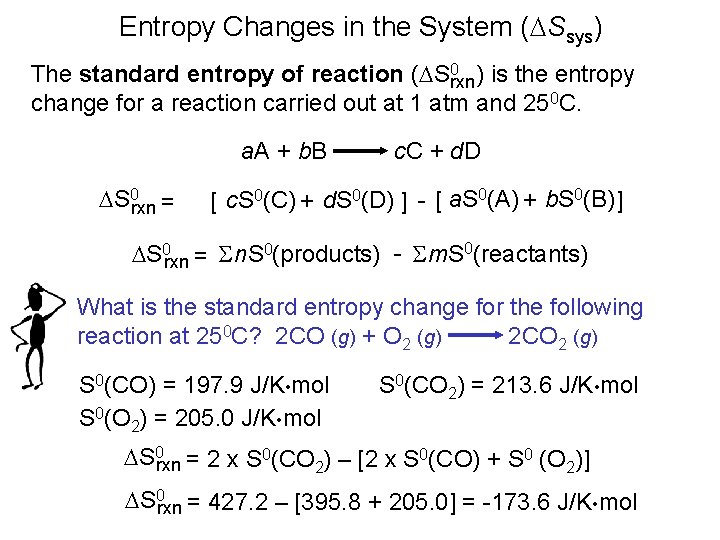
Entropy Changes in the System (DSsys) The standard entropy of reaction (DS 0 rxn) is the entropy change for a reaction carried out at 1 atm and 250 C. a. A + b. B DS 0 rxn = c. C + d. D [ c. S 0(C) + d. S 0(D) ] - [ a. S 0(A) + b. S 0(B) ] DS 0 rxn = S n. S 0(products) - S m. S 0(reactants) What is the standard entropy change for the following reaction at 250 C? 2 CO (g) + O 2 (g) 2 CO 2 (g) S 0(CO) = 197. 9 J/K • mol S 0(O 2) = 205. 0 J/K • mol S 0(CO 2) = 213. 6 J/K • mol DS 0 rxn = 2 x S 0(CO 2) – [2 x S 0(CO) + S 0 (O 2)] DS 0 rxn = 427. 2 – [395. 8 + 205. 0] = -173. 6 J/K • mol
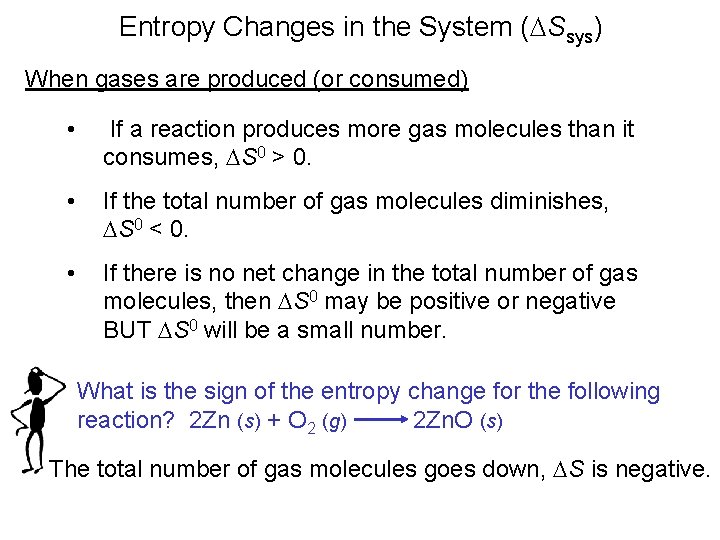
Entropy Changes in the System (DSsys) When gases are produced (or consumed) • If a reaction produces more gas molecules than it consumes, DS 0 > 0. • If the total number of gas molecules diminishes, DS 0 < 0. • If there is no net change in the total number of gas molecules, then DS 0 may be positive or negative BUT DS 0 will be a small number. What is the sign of the entropy change for the following reaction? 2 Zn (s) + O 2 (g) 2 Zn. O (s) The total number of gas molecules goes down, DS is negative.
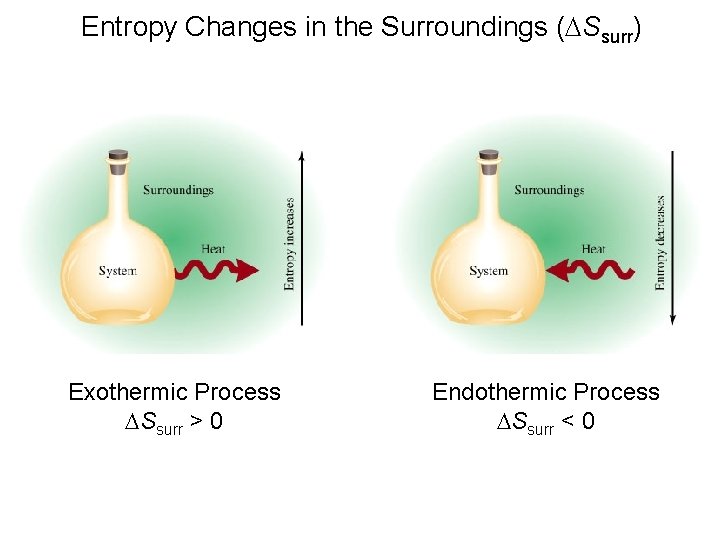
Entropy Changes in the Surroundings (DSsurr) Exothermic Process DSsurr > 0 Endothermic Process DSsurr < 0
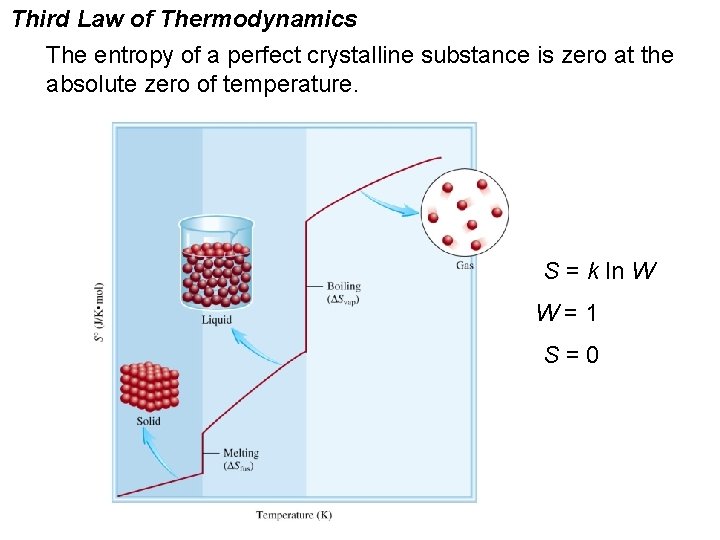
Third Law of Thermodynamics The entropy of a perfect crystalline substance is zero at the absolute zero of temperature. S = k ln W W=1 S=0
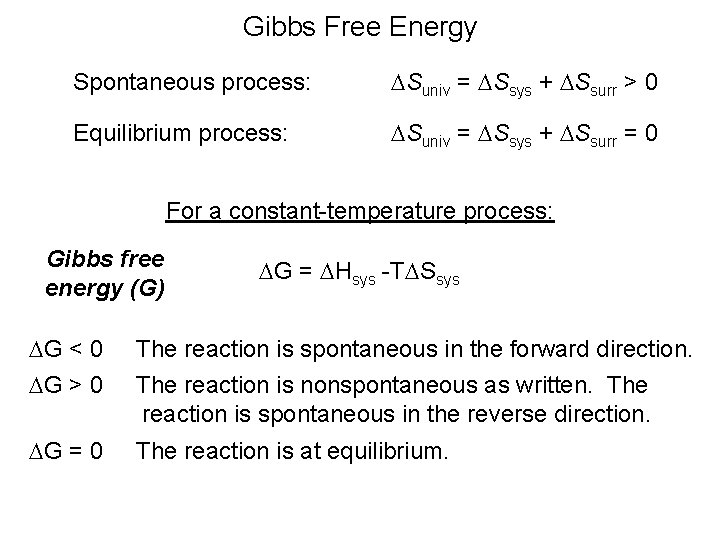
Gibbs Free Energy Spontaneous process: DSuniv = DSsys + DSsurr > 0 Equilibrium process: DSuniv = DSsys + DSsurr = 0 For a constant-temperature process: Gibbs free energy (G) DG = DHsys -TDSsys DG < 0 The reaction is spontaneous in the forward direction. DG > 0 The reaction is nonspontaneous as written. The reaction is spontaneous in the reverse direction. DG = 0 The reaction is at equilibrium.
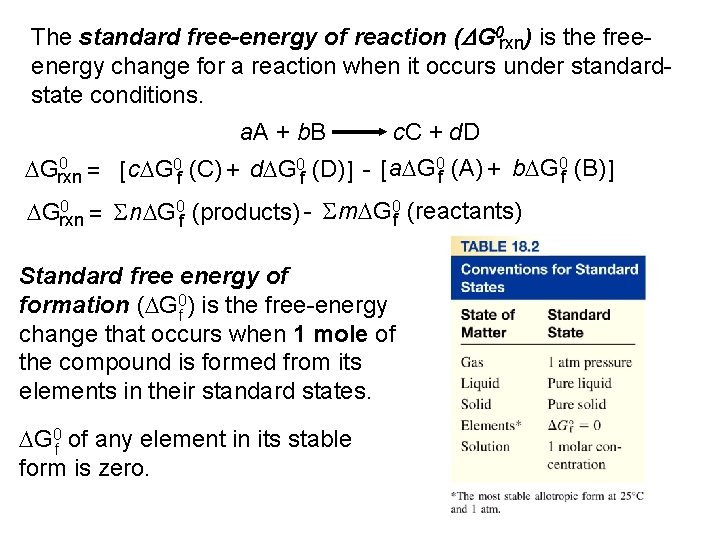
The standard free-energy of reaction (DG 0 rxn) is the freeenergy change for a reaction when it occurs under standardstate conditions. a. A + b. B c. C + d. D 0 DGrxn = [ c. DG 0 f (C) + d. DG 0 f (D) ] - [ a. DG 0 f (A) + b. DG 0 f (B) ] 0 DGrxn = S n. DG 0 f (products) - S m. DG 0 f (reactants) Standard free energy of formation (DG 0 f ) is the free-energy change that occurs when 1 mole of the compound is formed from its elements in their standard states. DG 0 f of any element in its stable form is zero.
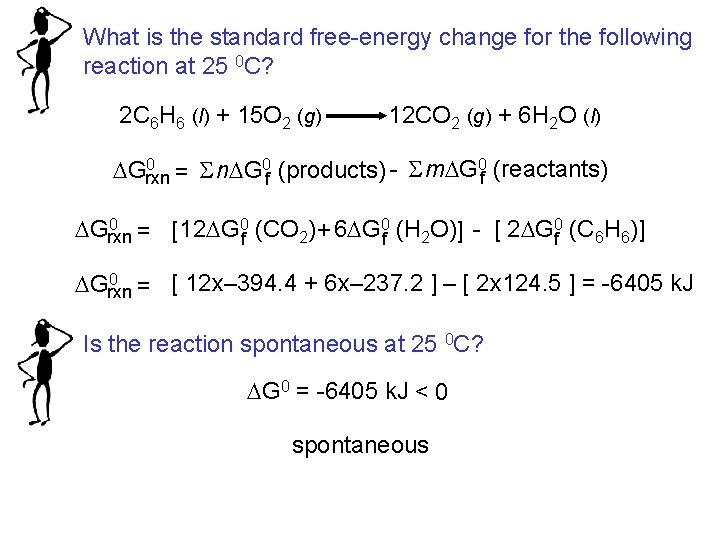
What is the standard free-energy change for the following reaction at 25 0 C? 2 C 6 H 6 (l) + 15 O 2 (g) 12 CO 2 (g) + 6 H 2 O (l) 0 DGrxn = S n. DG 0 f (products) - S m. DG 0 f (reactants) 0 DGrxn = [12 DG 0 f (CO 2) + 6 DG 0 f (H 2 O)] - [ 2 DG 0 f (C 6 H 6)] 0 DGrxn = [ 12 x– 394. 4 + 6 x– 237. 2 ] – [ 2 x 124. 5 ] = -6405 k. J Is the reaction spontaneous at 25 0 C? DG 0 = -6405 k. J < 0 spontaneous
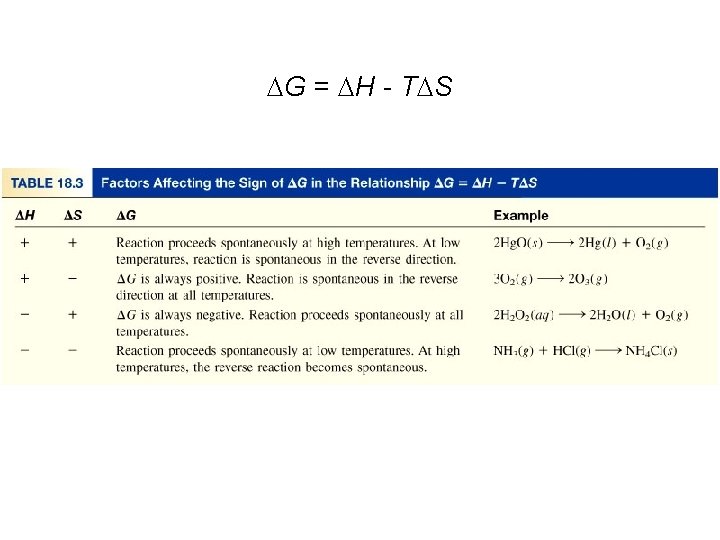
DG = DH - TDS
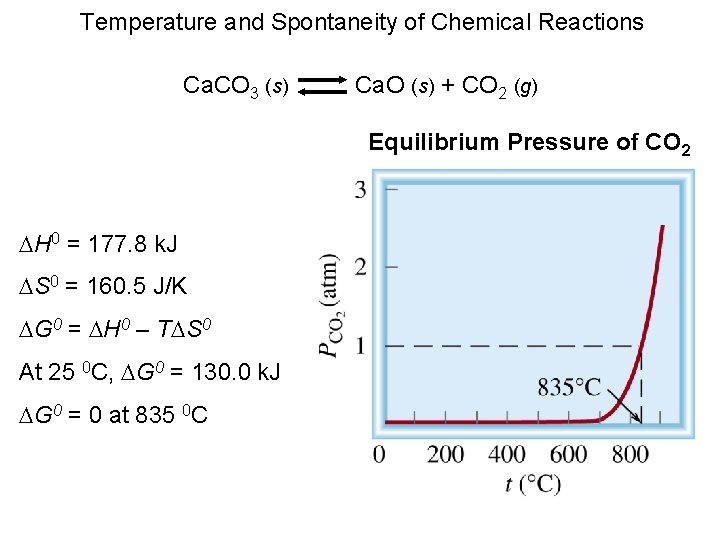
Temperature and Spontaneity of Chemical Reactions Ca. CO 3 (s) Ca. O (s) + CO 2 (g) Equilibrium Pressure of CO 2 DH 0 = 177. 8 k. J DS 0 = 160. 5 J/K DG 0 = DH 0 – TDS 0 At 25 0 C, DG 0 = 130. 0 k. J DG 0 = 0 at 835 0 C
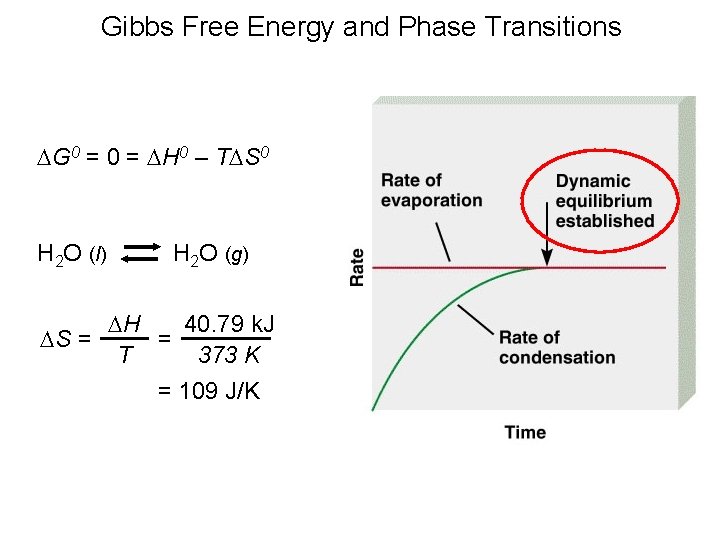
Gibbs Free Energy and Phase Transitions DG 0 = DH 0 – TDS 0 H 2 O (l) H 2 O (g) DH 40. 79 k. J DS = = 373 K T = 109 J/K
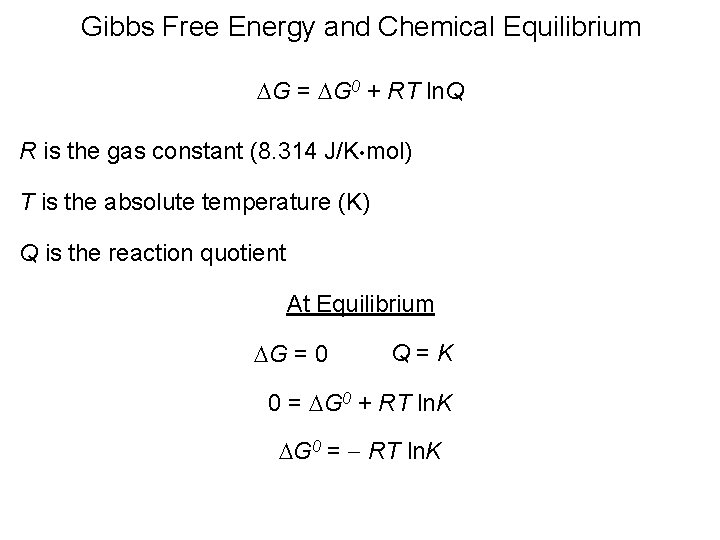
Gibbs Free Energy and Chemical Equilibrium DG = DG 0 + RT ln. Q R is the gas constant (8. 314 J/K • mol) T is the absolute temperature (K) Q is the reaction quotient At Equilibrium DG = 0 Q=K 0 = DG 0 + RT ln. K DG 0 = - RT ln. K
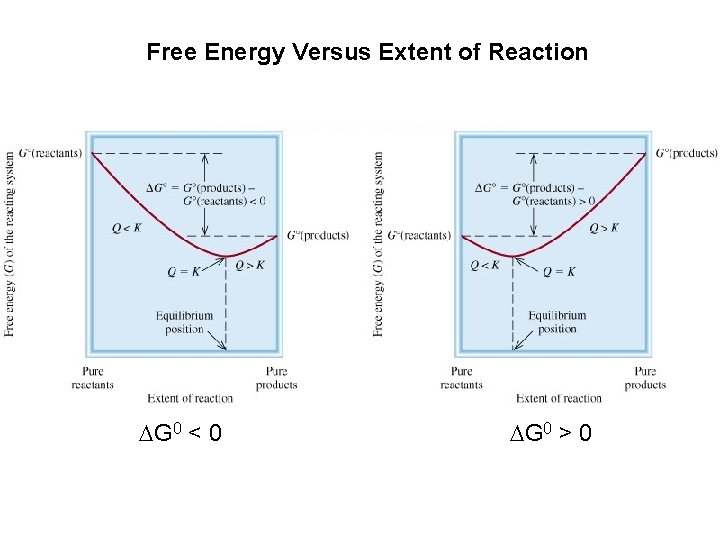
Free Energy Versus Extent of Reaction DG 0 < 0 DG 0 > 0
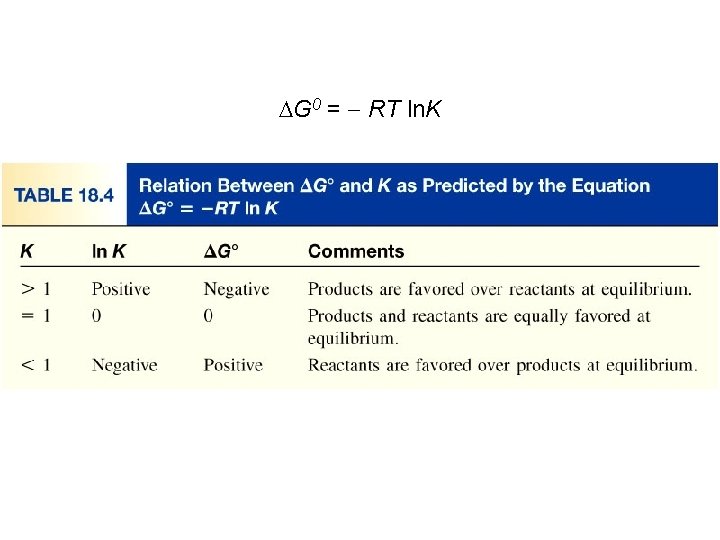
DG 0 = - RT ln. K
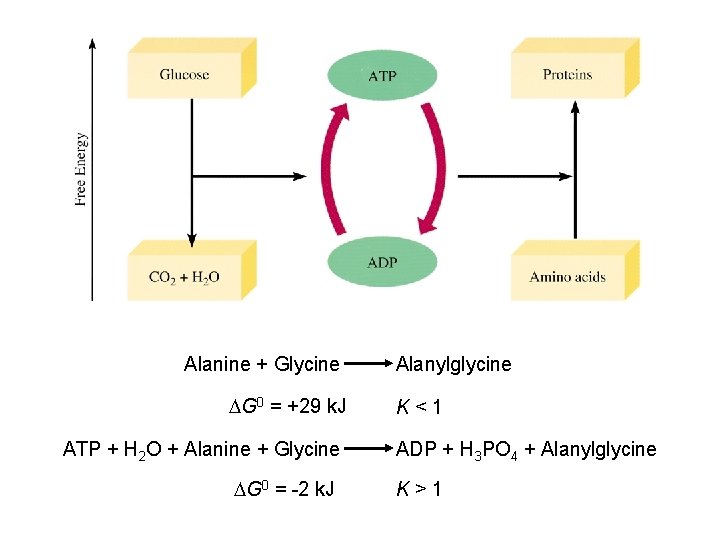
Alanine + Glycine DG 0 = +29 k. J ATP + H 2 O + Alanine + Glycine DG 0 = -2 k. J Alanylglycine K<1 ADP + H 3 PO 4 + Alanylglycine K>1
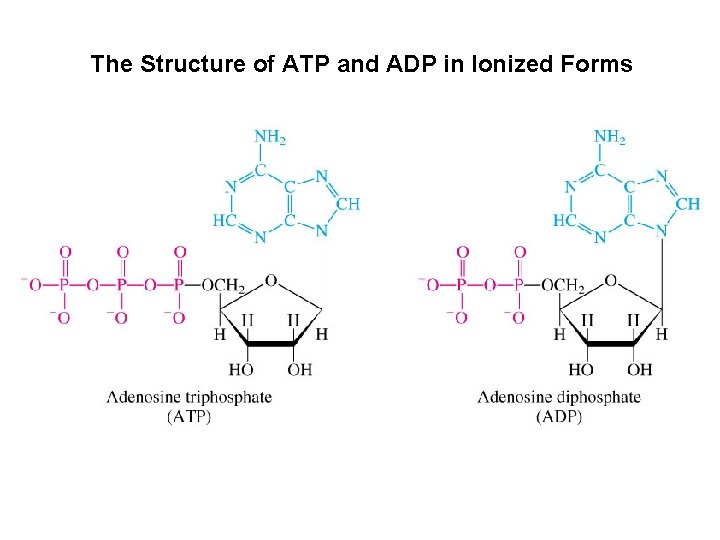
The Structure of ATP and ADP in Ionized Forms
- Slides: 26