
Thermodynamic Analysis of Turbo Jet Engines P M
Thermodynamic Analysis of Turbo Jet Engines P M V Subbarao Professor Mechanical Engineering Department Infusion of More Life into Jet….
Turbojets: Flexible High Vigor Jets
World's first operational turbojet engine • • • Dimensions: 1. 48 m long, 0. 93 m diameter Weight: 360 kg Thrust: 450 kgf (4. 4 k. N) @ 13, 000 rpm and 800 km/h Compression ratio: 2. 8: 1 Specific fuel consumption: 2. 16 gal/(lb·h) [18. 0 L/(kgf·h)]
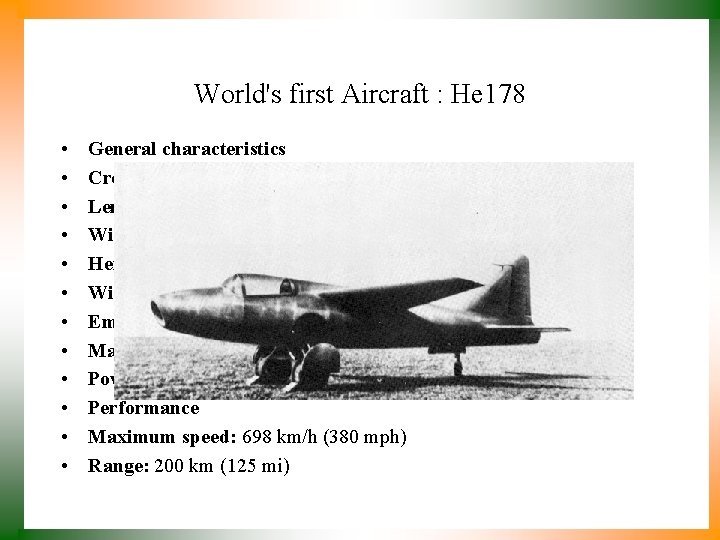
World's first Aircraft : He 178 • • • General characteristics Crew: One Length: 7. 48 m (24 ft 6 in) Wingspan: 7. 20 m (23 ft 3 in) Height: 2. 10 m (6 ft 10 in) Wing area: 9. 1 m² (98 ft²) Empty weight: 1, 620 kg (3, 572 lb) Max takeoff weight: 1, 998 kg (4, 405 lb) Powerplant: 1× He. S 3 turbojet, 4. 4 k. N (992 lbf) Performance Maximum speed: 698 km/h (380 mph) Range: 200 km (125 mi)
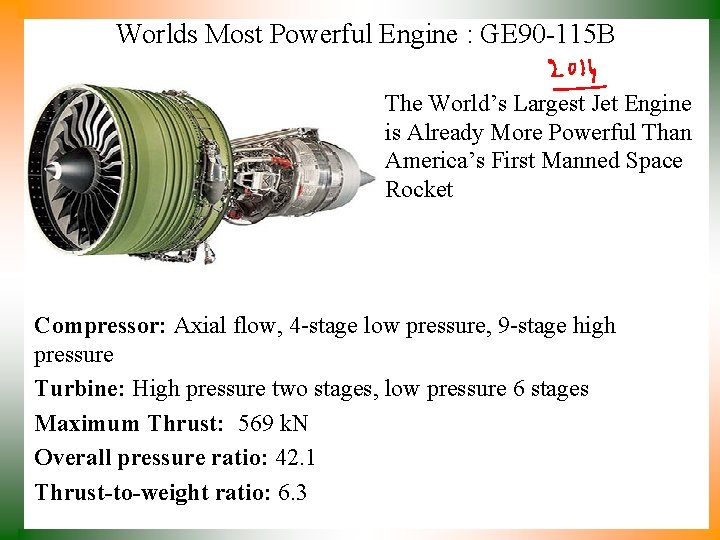
Worlds Most Powerful Engine : GE 90 -115 B The World’s Largest Jet Engine is Already More Powerful Than America’s First Manned Space Rocket • Compressor: Axial flow, 4 -stage low pressure, 9 -stage high pressure • Turbine: High pressure two stages, low pressure 6 stages • Maximum Thrust: 569 k. N • Overall pressure ratio: 42. 1 • Thrust-to-weight ratio: 6. 3
Smallest Nanotube jet engine : 9 October 2016 • he smallest jet engine is 220 nm (0. 0000086614 in), achieved by Xing Ma (China) and Samuel Sánchez (Spain), demonstrated in Max-Planck Institute for Intelligent Systems Institution, Stuttgart, Baden-Württemberg, Germany, on 9 October 2016 • The 'engine' is actually a nanotube, powered by an enzymetriggered biocatalytic reaction using urea as fuel. The reaction creates an internal flow that extends out into the fluid, causing an open cavity to form. • This results in thrust, propelling the nanotube along.
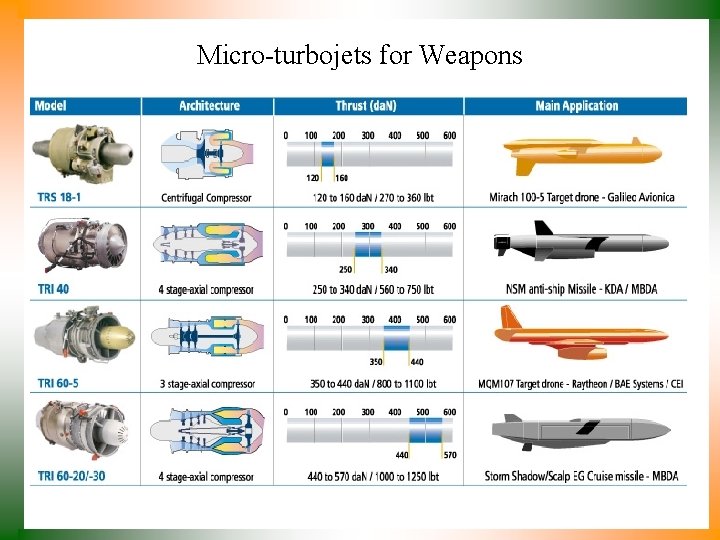
Micro-turbojets for Weapons
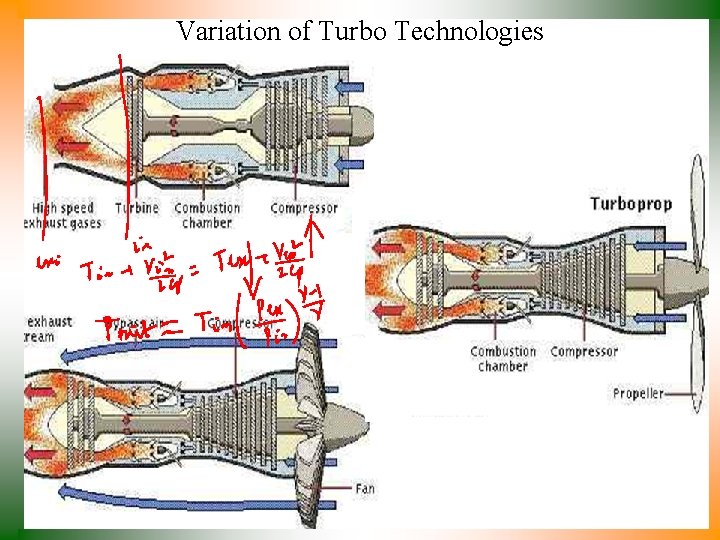
Variation of Turbo Technologies
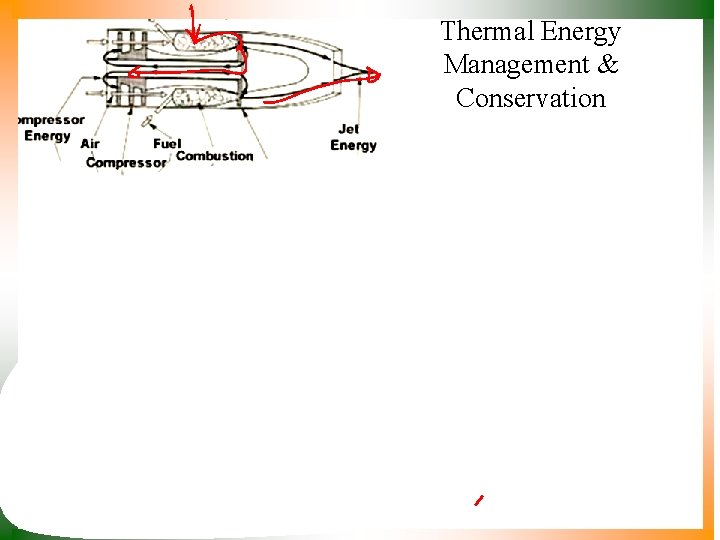
Thermal Energy Management & Conservation

Anatomy of A Jet Engine Vac Vjet 1 2 3 4 5 6
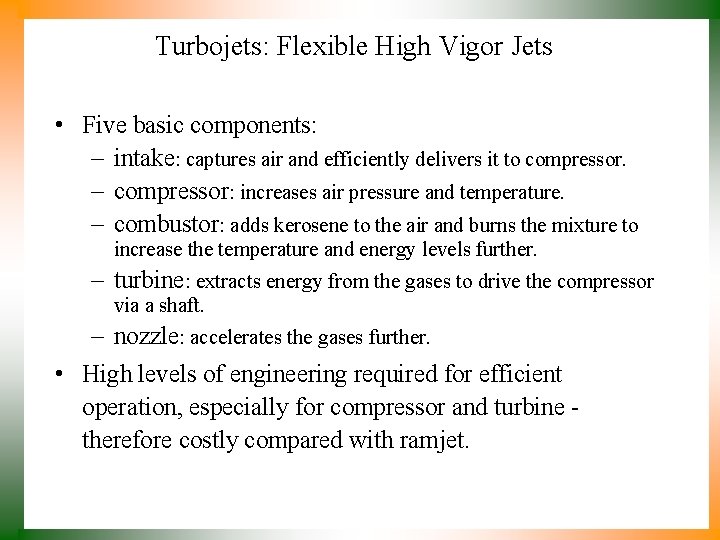
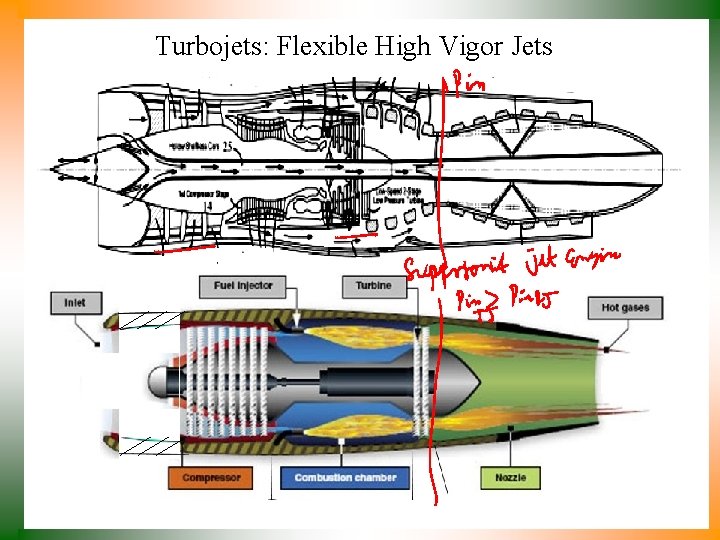
Turbojets: Flexible High Vigor Jets • Five basic components: – intake: captures air and efficiently delivers it to compressor. – compressor: increases air pressure and temperature. – combustor: adds kerosene to the air and burns the mixture to increase the temperature and energy levels further. – turbine: extracts energy from the gases to drive the compressor via a shaft. – nozzle: accelerates the gases further. • High levels of engineering required for efficient operation, especially for compressor and turbine therefore costly compared with ramjet.
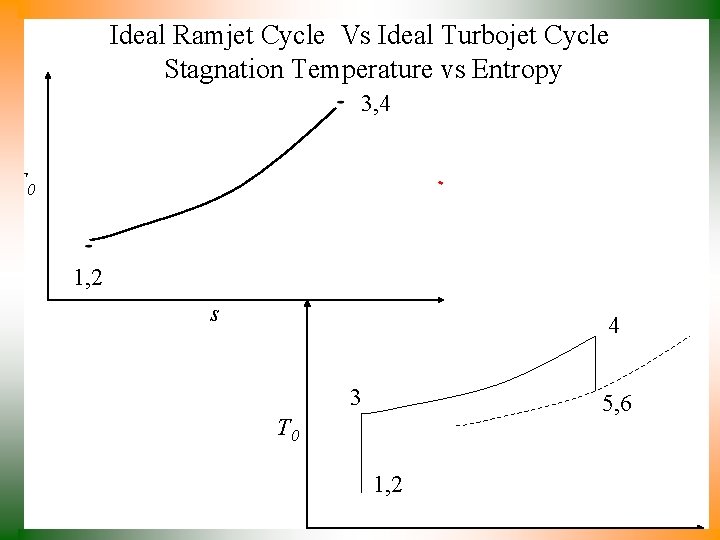
Ideal Ramjet Cycle Vs Ideal Turbojet Cycle Stagnation Temperature vs Entropy 3, 4 T 0 1, 2 s 4 3 5, 6 T 0 1, 2
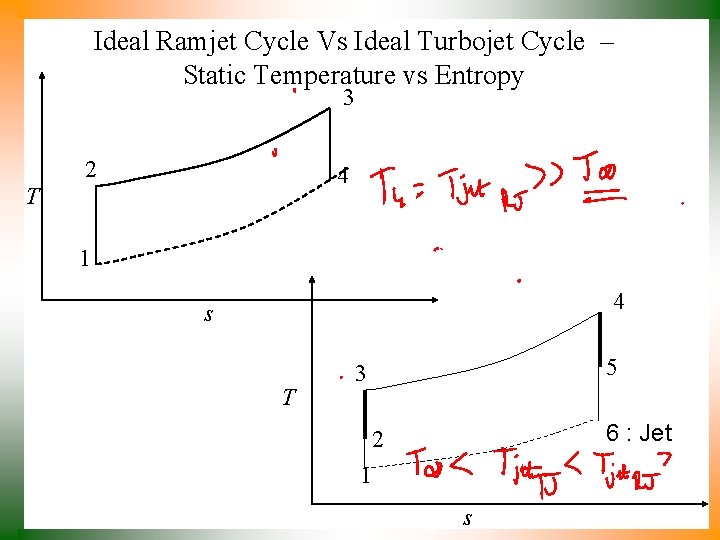
Ideal Ramjet Cycle Vs Ideal Turbojet Cycle – Static Temperature vs Entropy 3 2 4 T 1 4 s T 5 3 6 : Jet 2 1 s
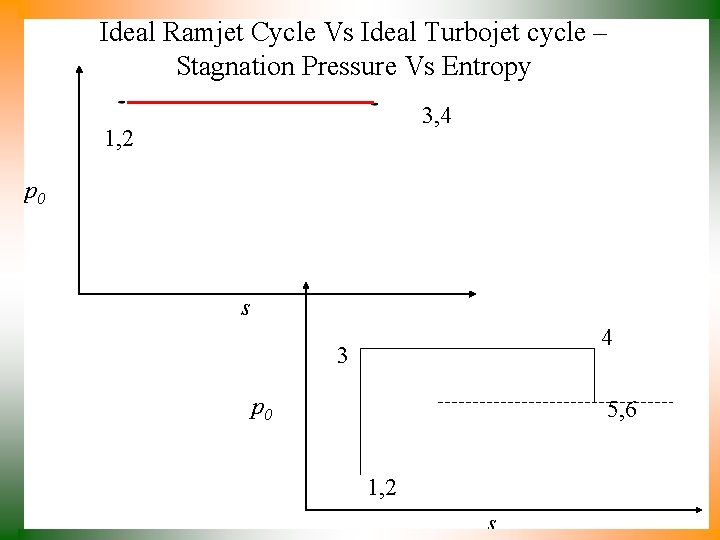
Ideal Ramjet Cycle Vs Ideal Turbojet cycle – Stagnation Pressure Vs Entropy 3, 4 1, 2 p 0 s 4 3 p 0 5, 6 1, 2 s
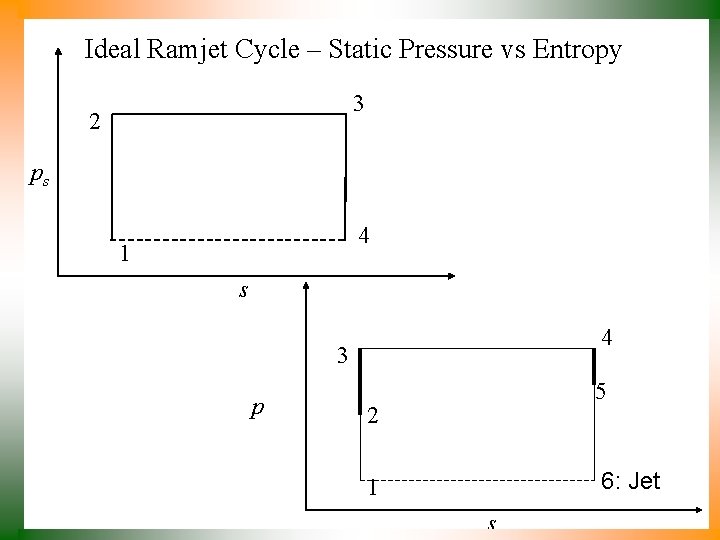
Ideal Ramjet Cycle – Static Pressure vs Entropy 3 2 ps 4 1 s 4 3 p 5 2 6: Jet 1 s
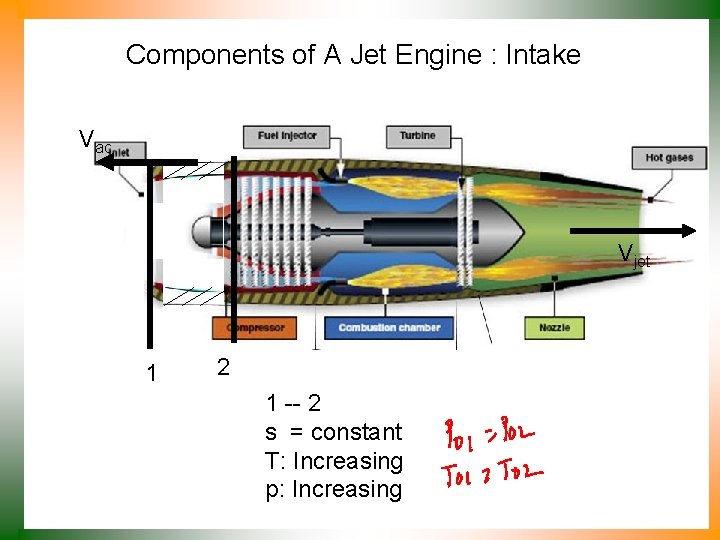
Components of A Jet Engine : Intake Vac Vjet 1 2 1 -- 2 s = constant T: Increasing p: Increasing
Passive Isentropic Control Volumes Can never Afford to Generate High Compression Total Pressure and Total Temperature are just reference measures…. .
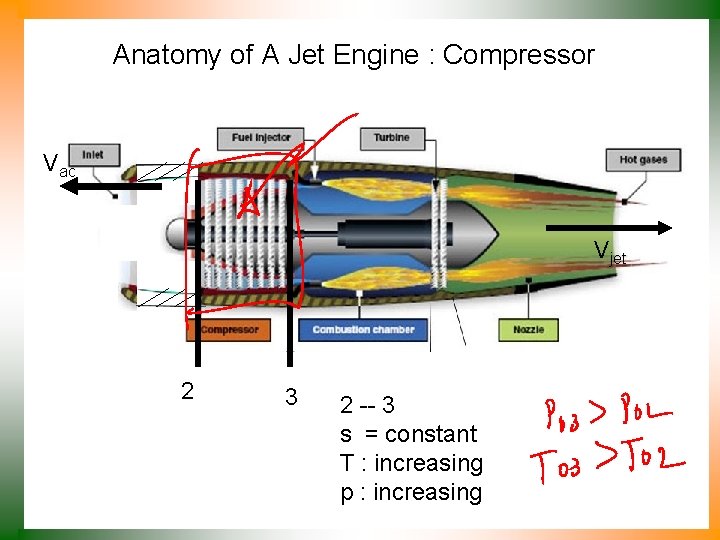
Anatomy of A Jet Engine : Compressor Vac Vjet 2 3 2 -- 3 s = constant T : increasing p : increasing
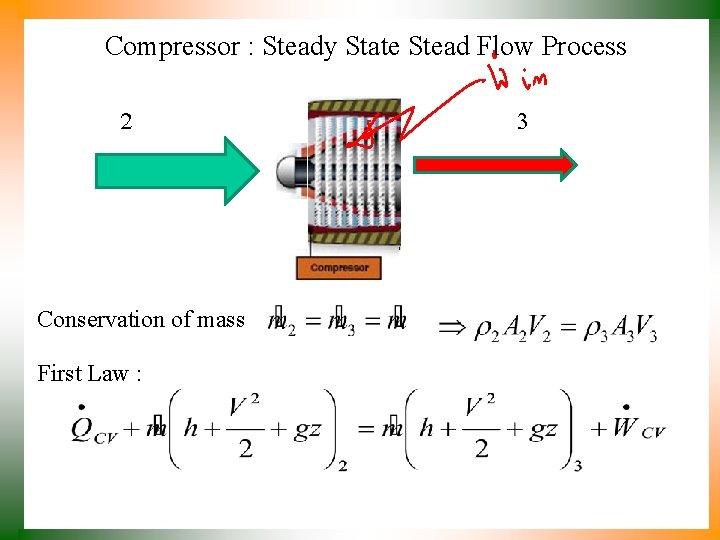
Compressor : Steady State Stead Flow Process 2 Conservation of mass First Law : 3
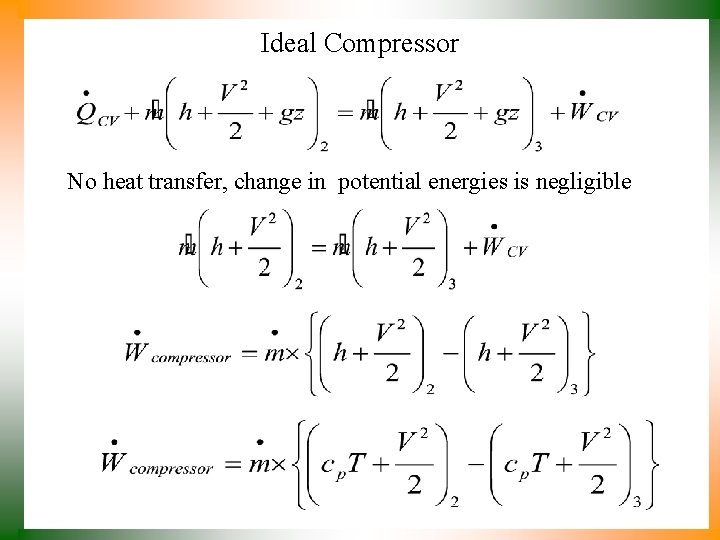
Ideal Compressor No heat transfer, change in potential energies is negligible
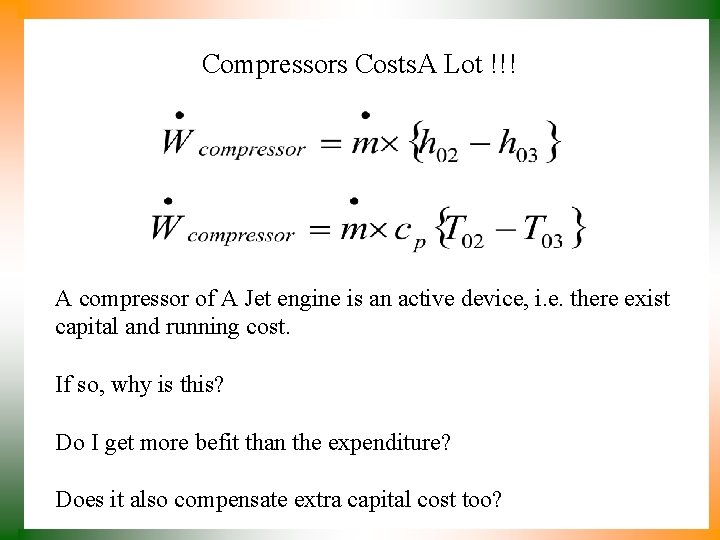
Compressors Costs. A Lot !!! A compressor of A Jet engine is an active device, i. e. there exist capital and running cost. If so, why is this? Do I get more befit than the expenditure? Does it also compensate extra capital cost too?
- Slides: 21