
Thermochemistry of Engine Combustion P M V Subbarao

Thermo-chemistry of Engine Combustion P M V Subbarao Professor Mechanical Engineering Department A n Important Clue to Control Rate of Heat Release ….
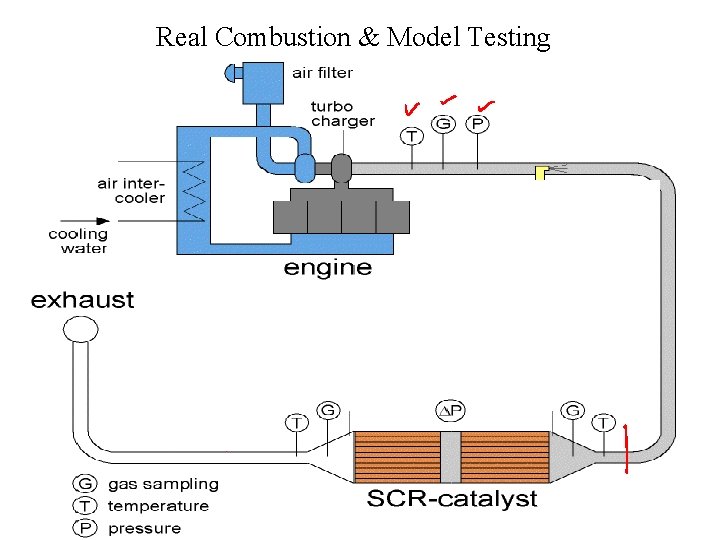
Real Combustion & Model Testing
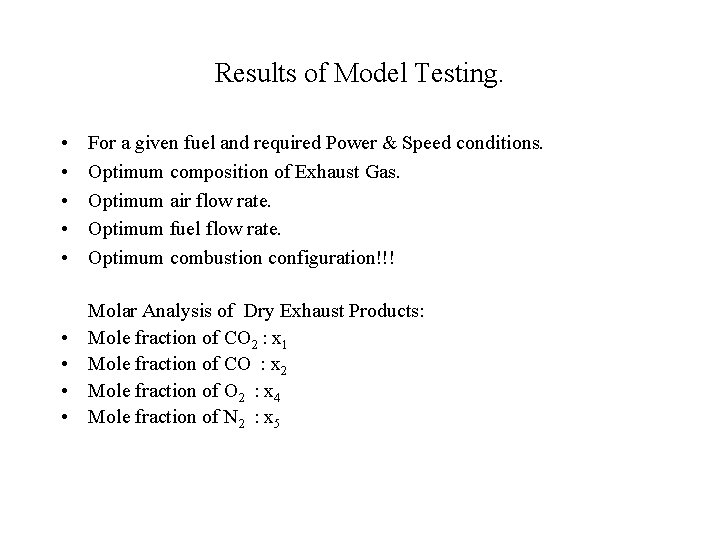
Results of Model Testing. • • • For a given fuel and required Power & Speed conditions. Optimum composition of Exhaust Gas. Optimum air flow rate. Optimum fuel flow rate. Optimum combustion configuration!!! • • Molar Analysis of Dry Exhaust Products: Mole fraction of CO 2 : x 1 Mole fraction of CO : x 2 Mole fraction of O 2 : x 4 Mole fraction of N 2 : x 5
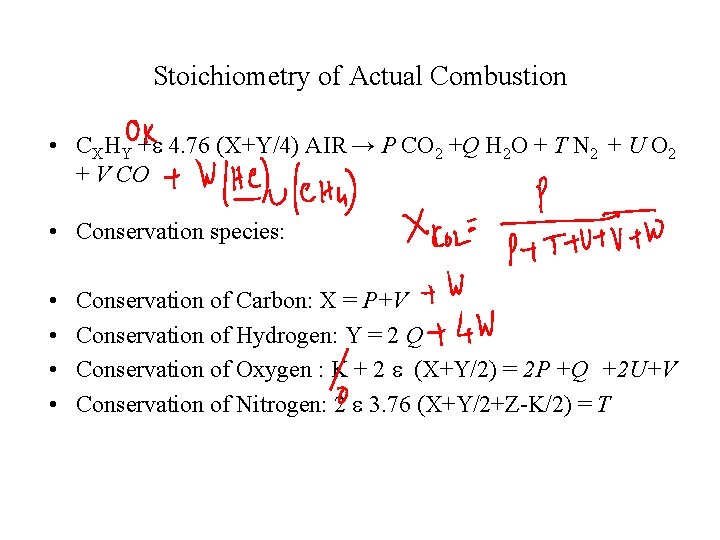
Stoichiometry of Actual Combustion • CXHY +e 4. 76 (X+Y/4) AIR → P CO 2 +Q H 2 O + T N 2 + U O 2 + V CO • Conservation species: • • Conservation of Carbon: X = P+V Conservation of Hydrogen: Y = 2 Q Conservation of Oxygen : K + 2 e (X+Y/2) = 2 P +Q +2 U+V Conservation of Nitrogen: 2 e 3. 76 (X+Y/2+Z-K/2) = T
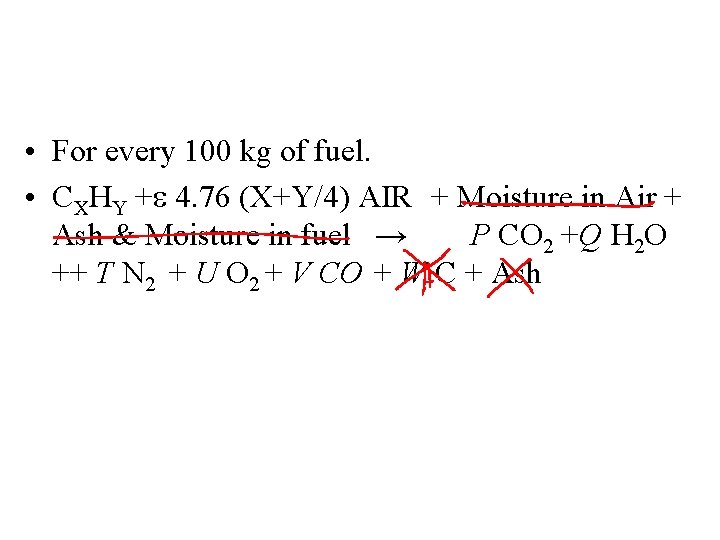
• For every 100 kg of fuel. • CXHY +e 4. 76 (X+Y/4) AIR + Moisture in Air + Ash & Moisture in fuel → P CO 2 +Q H 2 O ++ T N 2 + U O 2 + V CO + W C + Ash
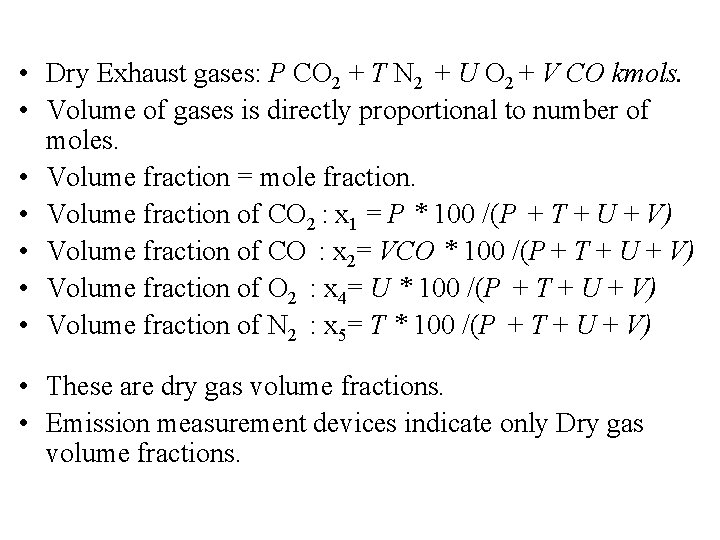
• Dry Exhaust gases: P CO 2 + T N 2 + U O 2 + V CO kmols. • Volume of gases is directly proportional to number of moles. • Volume fraction = mole fraction. • Volume fraction of CO 2 : x 1 = P * 100 /(P + T + U + V) • Volume fraction of CO : x 2= VCO * 100 /(P + T + U + V) • Volume fraction of O 2 : x 4= U * 100 /(P + T + U + V) • Volume fraction of N 2 : x 5= T * 100 /(P + T + U + V) • These are dry gas volume fractions. • Emission measurement devices indicate only Dry gas volume fractions.
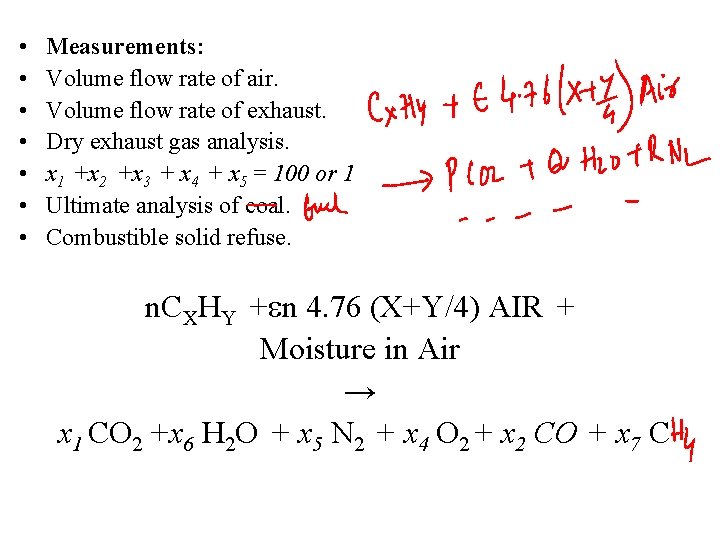
• • Measurements: Volume flow rate of air. Volume flow rate of exhaust. Dry exhaust gas analysis. x 1 +x 2 +x 3 + x 4 + x 5 = 100 or 1 Ultimate analysis of coal. Combustible solid refuse. n. CXHY +en 4. 76 (X+Y/4) AIR + Moisture in Air → x 1 CO 2 +x 6 H 2 O + x 5 N 2 + x 4 O 2 + x 2 CO + x 7 C
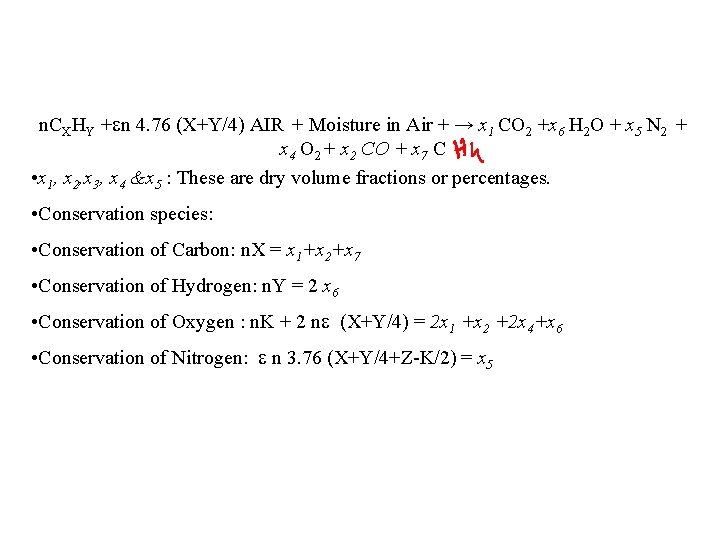
n. CXHY +en 4. 76 (X+Y/4) AIR + Moisture in Air + → x 1 CO 2 +x 6 H 2 O + x 5 N 2 + x 4 O 2 + x 2 CO + x 7 C • x 1, x 2, x 3, x 4 &x 5 : These are dry volume fractions or percentages. • Conservation species: • Conservation of Carbon: n. X = x 1+x 2+x 7 • Conservation of Hydrogen: n. Y = 2 x 6 • Conservation of Oxygen : n. K + 2 ne (X+Y/4) = 2 x 1 +x 2 +2 x 4+x 6 • Conservation of Nitrogen: e n 3. 76 (X+Y/4+Z-K/2) = x 5

n. CXHY +en 4. 76 (X+Y/4) AIR + Moisture in Air → x 1 CO 2 +x 6 H 2 O + x 5 N 2 + x 4 O 2 + x 2 CO + x 7 C + Ash • Re arranging the terms (Divide throughout by n): CXHY +e 4. 76 (X+Y/4) AIR + Moisture in Air → (x 1 /n)CO 2 +(x 6/n) H 2 O + (x 5/n) N 2 + (x 4/n) O 2 + (x 2/n) CO + (x 7/n) C CXHY +e 4. 76 (X+Y/4) AIR + Moisture in Air → P CO 2 +Q H 2 O + T N 2 + U O 2 + V CO + W C
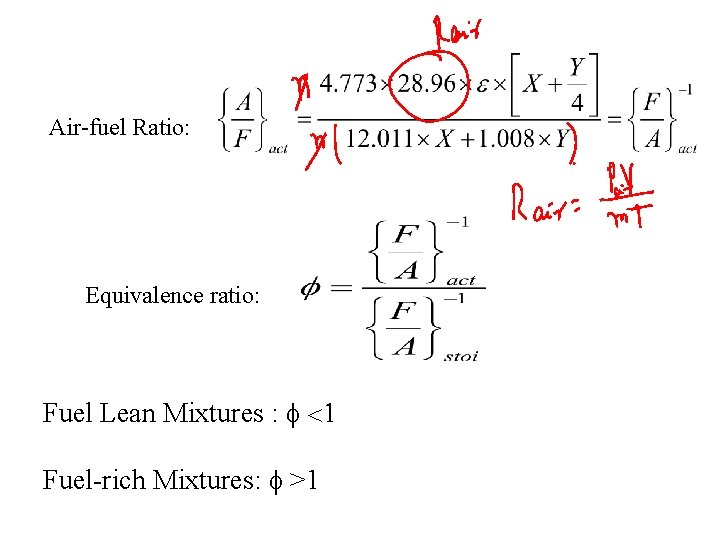
Air-fuel Ratio: Equivalence ratio: Fuel Lean Mixtures : f <1 Fuel-rich Mixtures: f >1
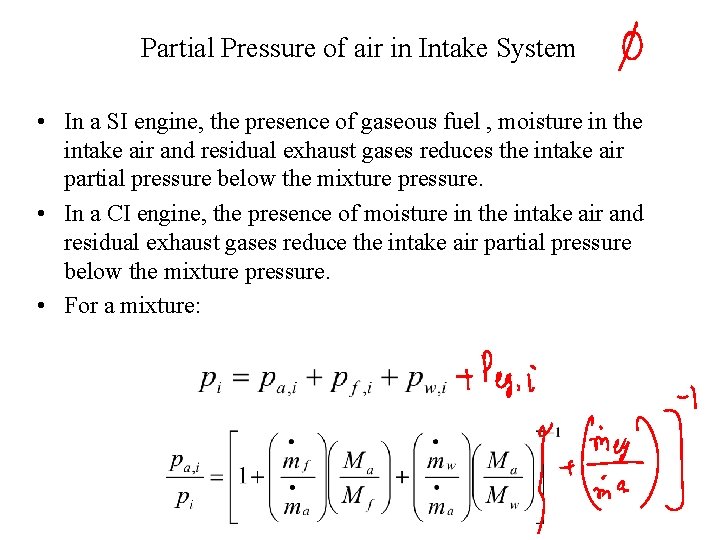
Partial Pressure of air in Intake System • In a SI engine, the presence of gaseous fuel , moisture in the intake air and residual exhaust gases reduces the intake air partial pressure below the mixture pressure. • In a CI engine, the presence of moisture in the intake air and residual exhaust gases reduce the intake air partial pressure below the mixture pressure. • For a mixture:
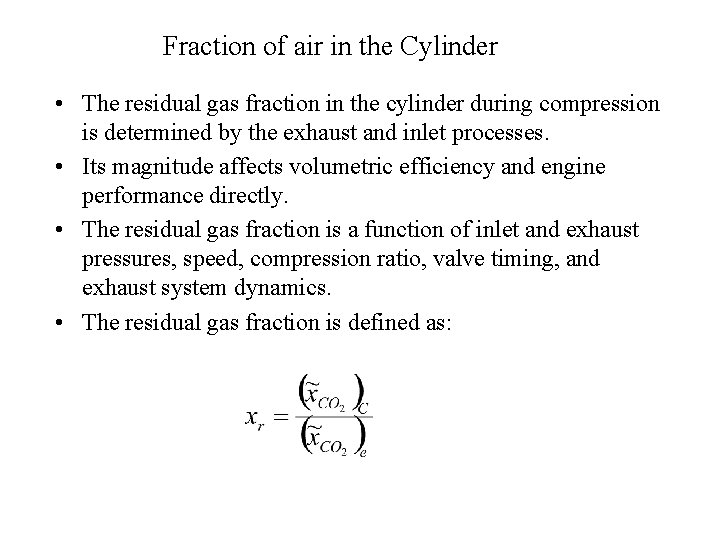
Fraction of air in the Cylinder • The residual gas fraction in the cylinder during compression is determined by the exhaust and inlet processes. • Its magnitude affects volumetric efficiency and engine performance directly. • The residual gas fraction is a function of inlet and exhaust pressures, speed, compression ratio, valve timing, and exhaust system dynamics. • The residual gas fraction is defined as:
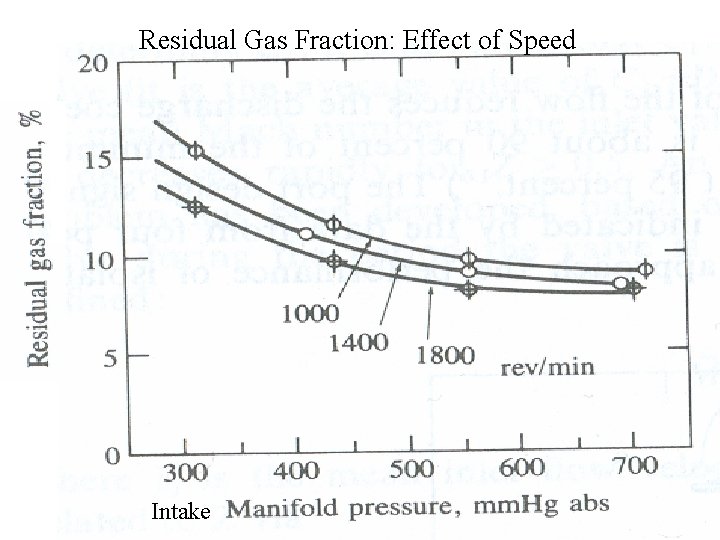
Residual Gas Fraction: Effect of Speed Intake
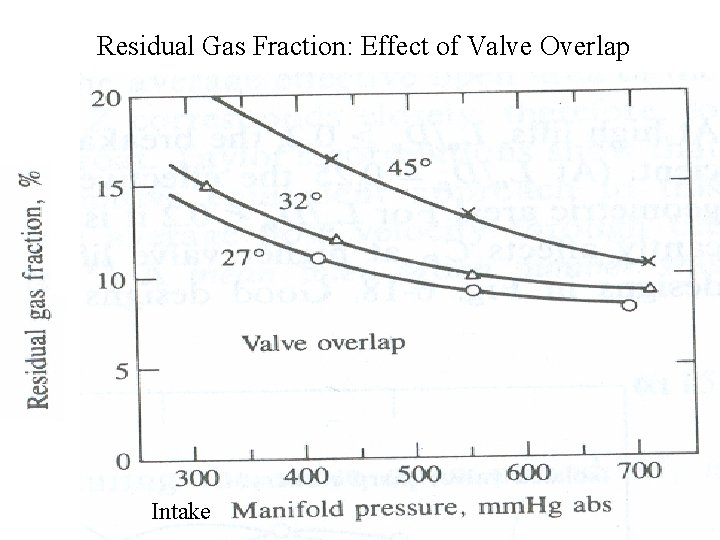
Residual Gas Fraction: Effect of Valve Overlap Intake
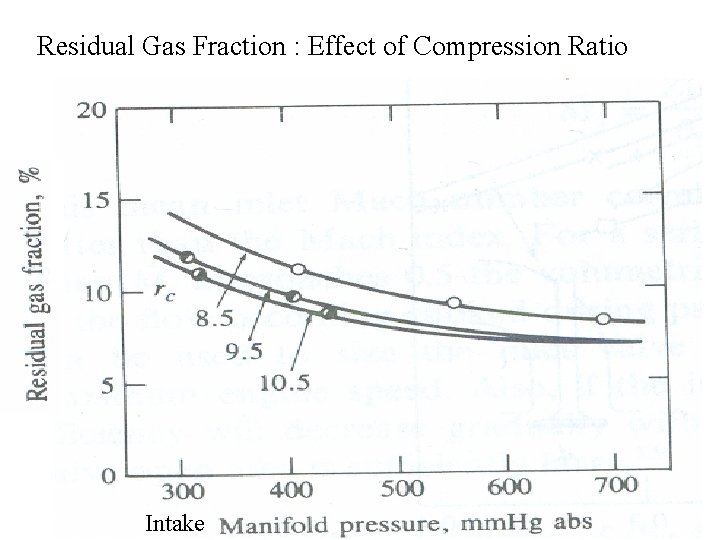
Residual Gas Fraction : Effect of Compression Ratio Intake
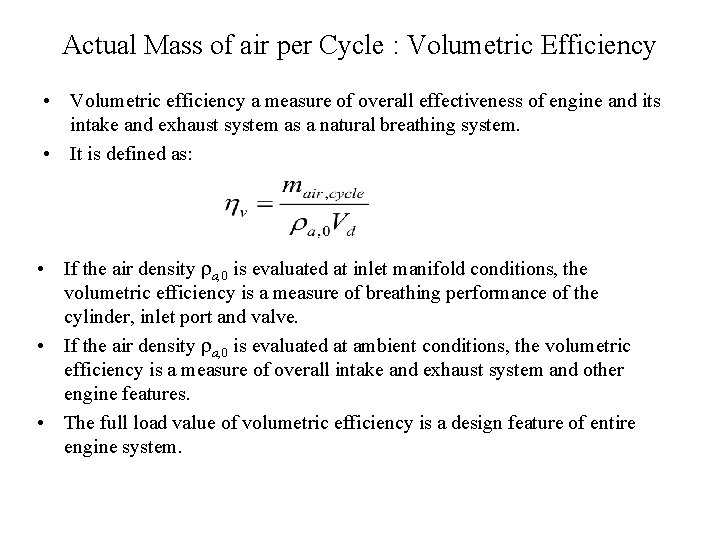
Actual Mass of air per Cycle : Volumetric Efficiency • Volumetric efficiency a measure of overall effectiveness of engine and its intake and exhaust system as a natural breathing system. • It is defined as: • If the air density ra, 0 is evaluated at inlet manifold conditions, the volumetric efficiency is a measure of breathing performance of the cylinder, inlet port and valve. • If the air density ra, 0 is evaluated at ambient conditions, the volumetric efficiency is a measure of overall intake and exhaust system and other engine features. • The full load value of volumetric efficiency is a design feature of entire engine system.
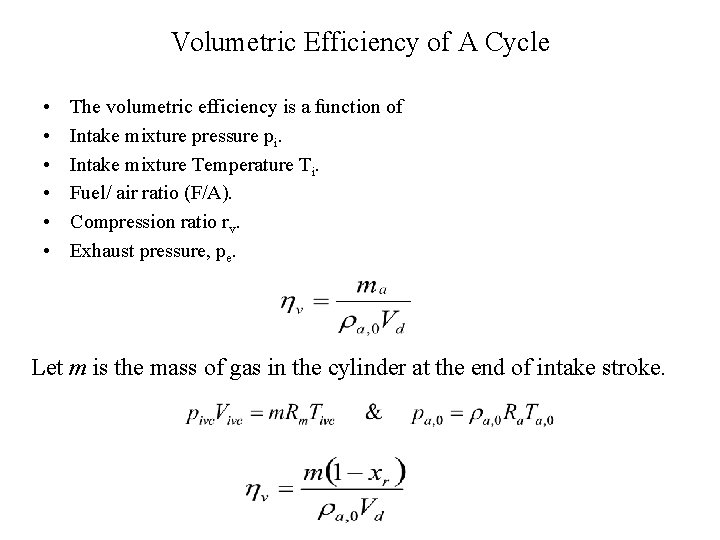
Volumetric Efficiency of A Cycle • • • The volumetric efficiency is a function of Intake mixture pressure pi. Intake mixture Temperature Ti. Fuel/ air ratio (F/A). Compression ratio rv. Exhaust pressure, pe. Let m is the mass of gas in the cylinder at the end of intake stroke.
Full Load Overall Volumetric Efficiency • Overall volumetric efficiency is affected by following variables. • Intake and exhaust manifold and port design. • Intake and exhaust valve geometry, size, lift and timings. • Fuel type, fuel/air ratio, fraction of fuel vaporized in the intake system, and fuel heat vaporization. • Mixture temperature as influenced by heat transfer. • Ratio of exhaust to inlet manifold pressures. • Compression ratio. • Engine speed. • The effects of many of above variables are quasi-steady in nature. • Their impact is either independent of speed or adequately function of speed.
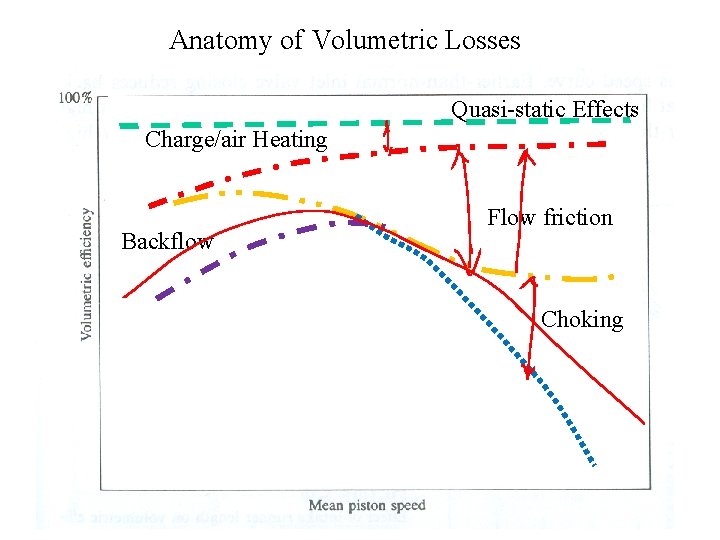
Anatomy of Volumetric Losses Quasi-static Effects Charge/air Heating Backflow Flow friction Choking
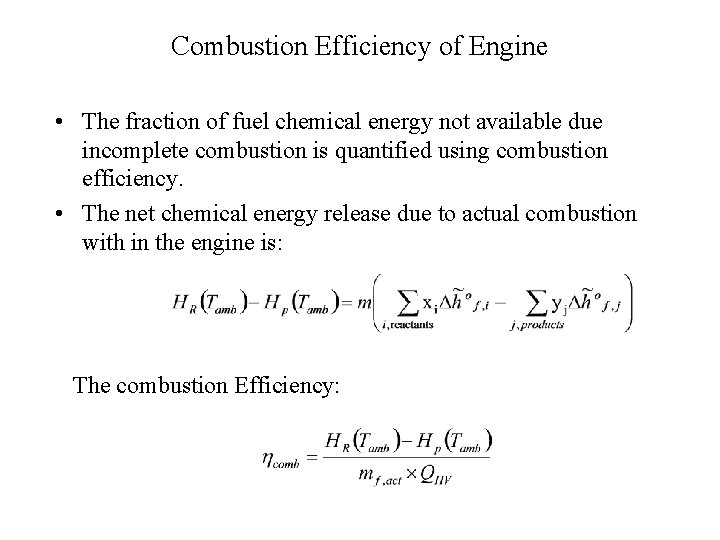
Combustion Efficiency of Engine • The fraction of fuel chemical energy not available due incomplete combustion is quantified using combustion efficiency. • The net chemical energy release due to actual combustion with in the engine is: The combustion Efficiency:
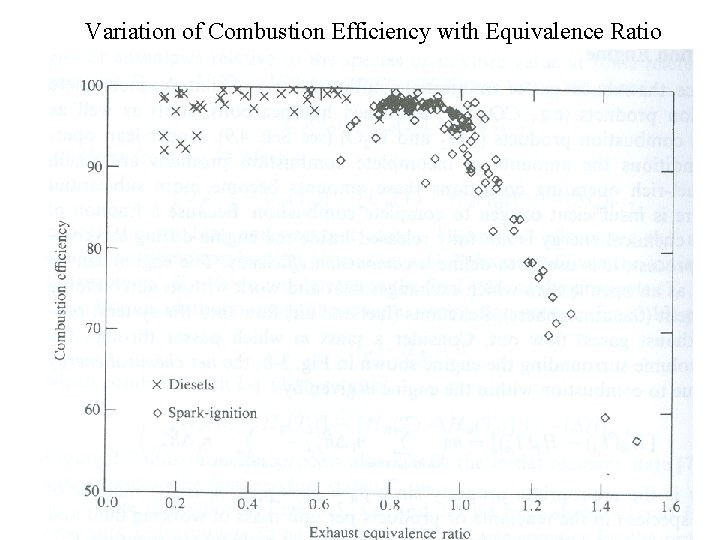
Variation of Combustion Efficiency with Equivalence Ratio
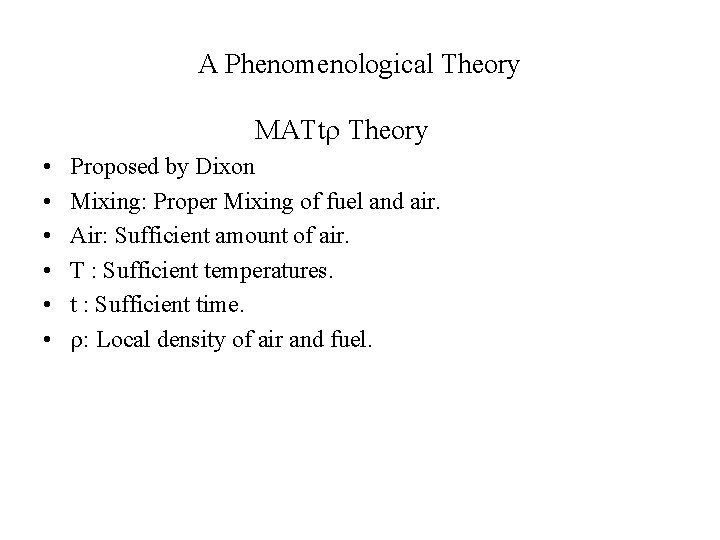
A Phenomenological Theory MATtr Theory • • • Proposed by Dixon Mixing: Proper Mixing of fuel and air. Air: Sufficient amount of air. T : Sufficient temperatures. t : Sufficient time. r: Local density of air and fuel.
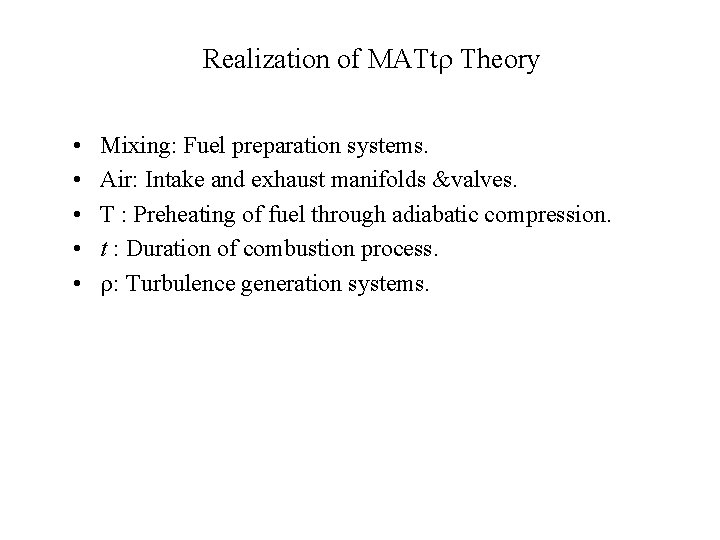
Realization of MATtr Theory • • • Mixing: Fuel preparation systems. Air: Intake and exhaust manifolds &valves. T : Preheating of fuel through adiabatic compression. t : Duration of combustion process. r: Turbulence generation systems.
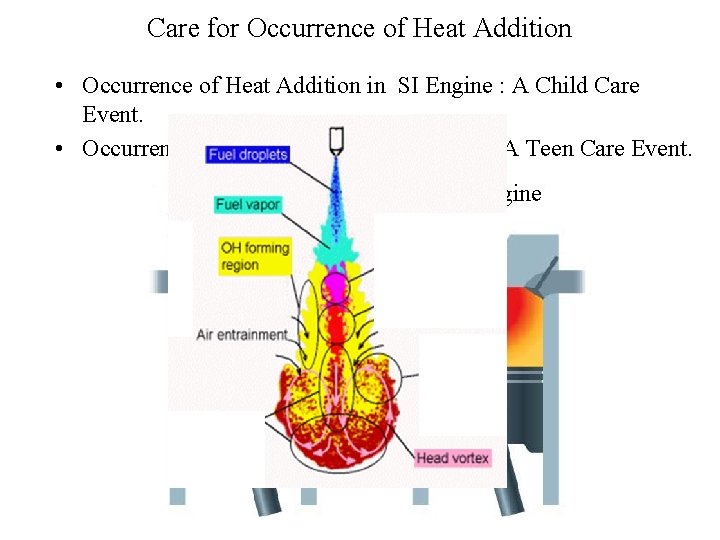
Care for Occurrence of Heat Addition • Occurrence of Heat Addition in SI Engine : A Child Care Event. • Occurrence of Heat Addition in CI Engine: A Teen Care Event. CI Engine SI Engine
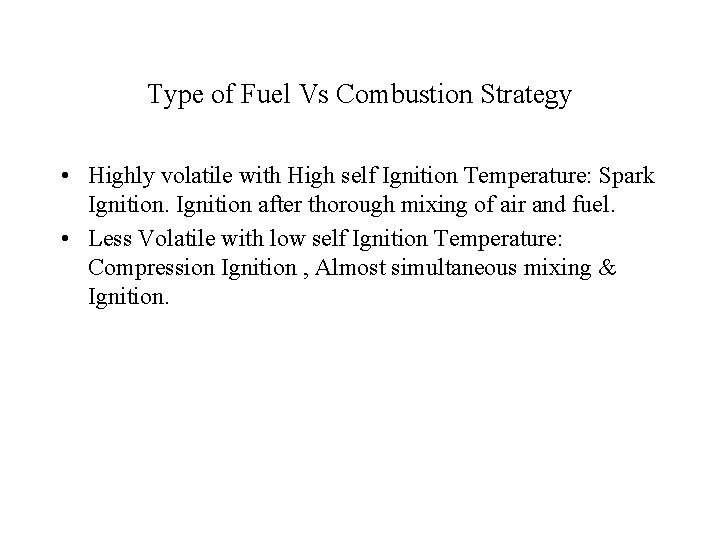
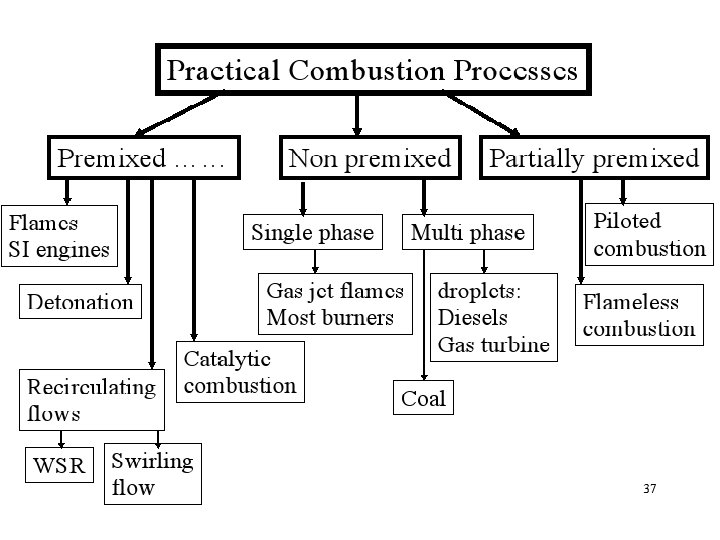
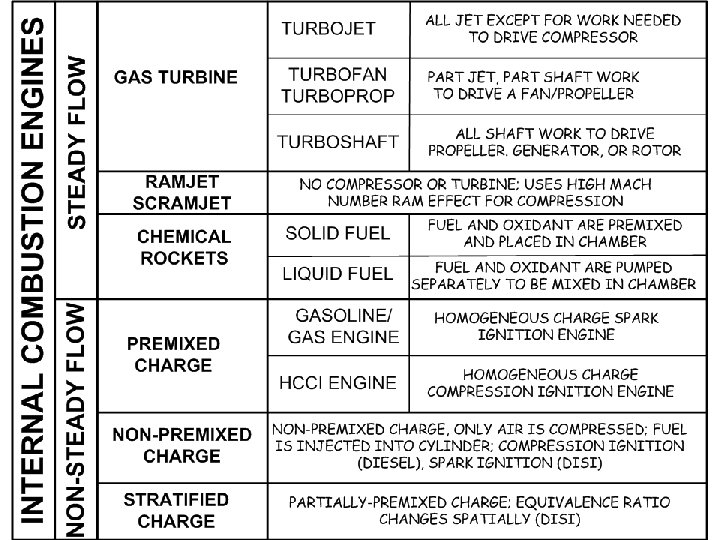
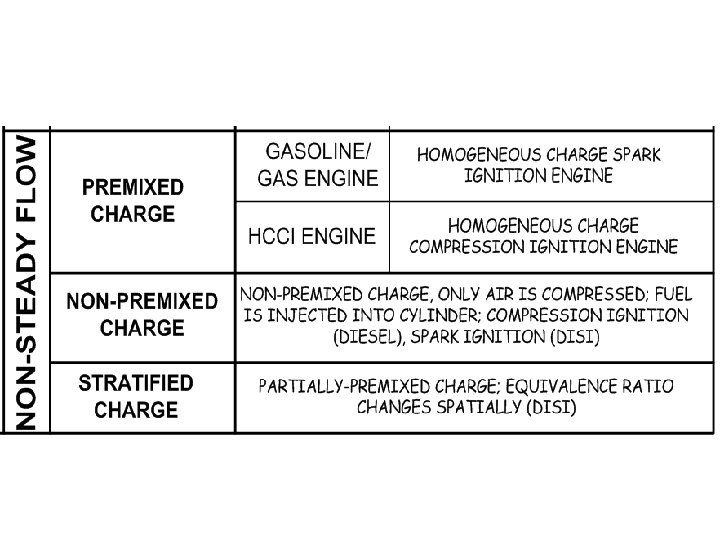
Type of Fuel Vs Combustion Strategy • Highly volatile with High self Ignition Temperature: Spark Ignition after thorough mixing of air and fuel. • Less Volatile with low self Ignition Temperature: Compression Ignition , Almost simultaneous mixing & Ignition.
- Slides: 28