
Thermochemical Conversion Technologies Combustion Types Incineration energy recovery
Thermochemical Conversion Technologies
Combustion Types Ø Incineration (energy recovery through complete oxidation) – Mass Burn – Refuse Derived Fuel Ø Pyrolysis Ø Gasification Ø Plasma arc (advanced thermal conversion)

Gasification Ø Partial oxidation process using air, pure oxygen, oxygen enriched air, hydrogen, or steam Ø Produces electricity, fules (methane, hydrogen, ethanol, synthetic diesel), and chemical products Ø Temperature > 1300 o. F Ø More flexible than incineration, more technologically complex than incineration or pyrolysis, more public acceptance

Flexibility of Gasification
Pyrolysis Thermal degradation of carbonaceous materials Lower temperature than gasification (750 – 1500 o. F) Absence or limited oxygen Products are pyrolitic oils and gas, solid char Distribution of products depends on temperature Pyrolysis oil used for (after appropriate posttreatment): liquid fuels, chemicals, adhesives, and other products. Ø A number of processes directly combust pyrolysis gases, oils, and char Ø Ø Ø
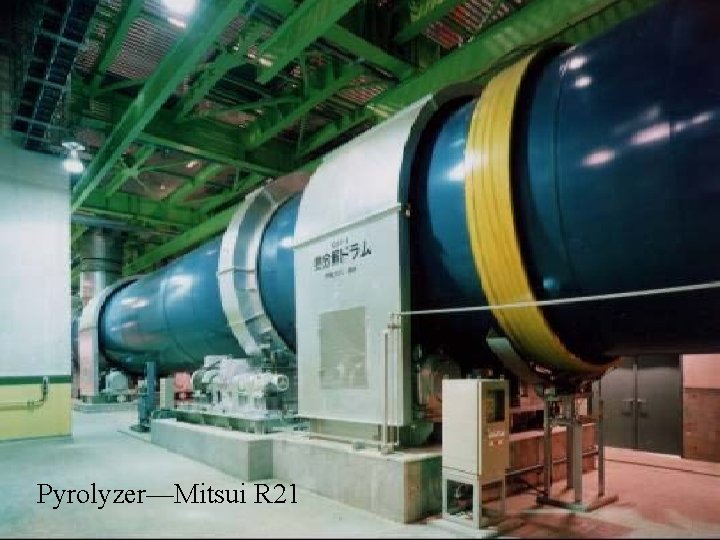
Pyrolyzer—Mitsui R 21
Thermoselect (Gasification and Pyrolysis) Ø Recovers a synthesis gas, utilizable glass-like minerals, metals rich in iron and sulfur from municipal solid waste, commercial waste, industrial waste and hazardous waste Ø High temperature gasification of the organic waste constituents and direct fusion of the inorganic components. Ø Water, salt and zinc concentrate are produced as usable raw materials during the process water treatment. Ø No ashes, slag or filter dusts Ø 100, 000 tpd plant in Japan operating since 1999

Thermoselect (http: //www. thermoselect. com/index. cfm)
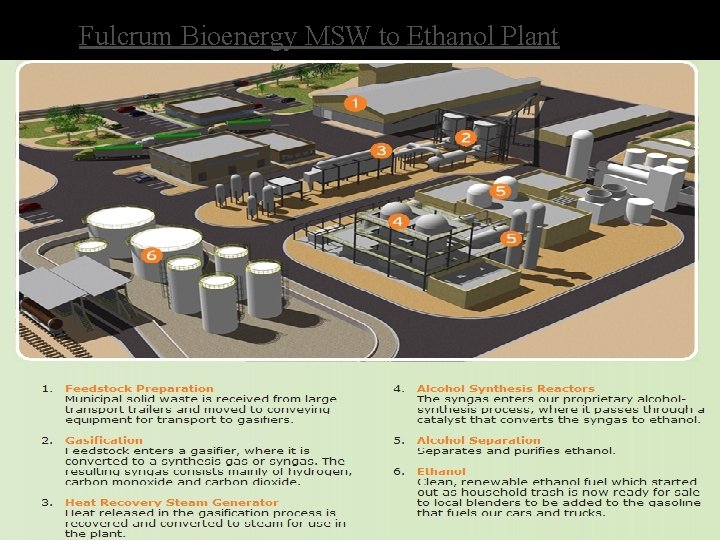
Fulcrum Bioenergy MSW to Ethanol Plant
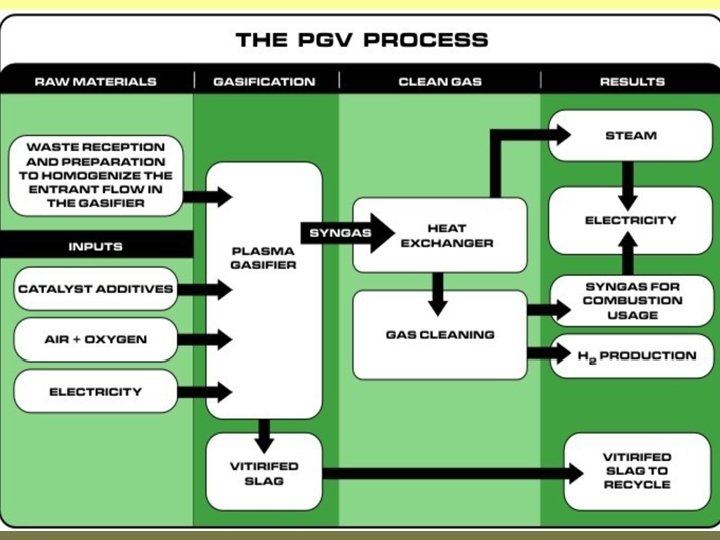
Plasma Arc Ø Heating Technique using electrical arc Ø Used for combustion, pyrolysis, gasification, metals processing Ø Originally developed by SKF Steel in Sweden for reducing gas foriron manufacturing Ø Plasma direct melting reactor developed by Westinghouse Plasma Corp. Ø Further developed for treating hazardous feedstocks (Contaminated soils, Low-level radioactive waste, Medical waste) Ø Temperatures (> 1400 o. C) sufficient to slag ash Ø Plasma power consumption 200 -400 k. Wh/ton Ø Commercial scale facilities for treating MSW in Japan
Plasma Arc Technology in Florida Ø Green Power Systems is proposing to build and operate a plasma arc facility to process 1, 000 tons per day of municipal solid waste (garbage) in Tallahassee, Florida. Ø Geoplasma is proposing to build a similar facility for up to 3, 000 tons of solid waste per day in St. Lucie County, claims 120 MW will be produced Ø Health risks, economics, and technical issues still remain
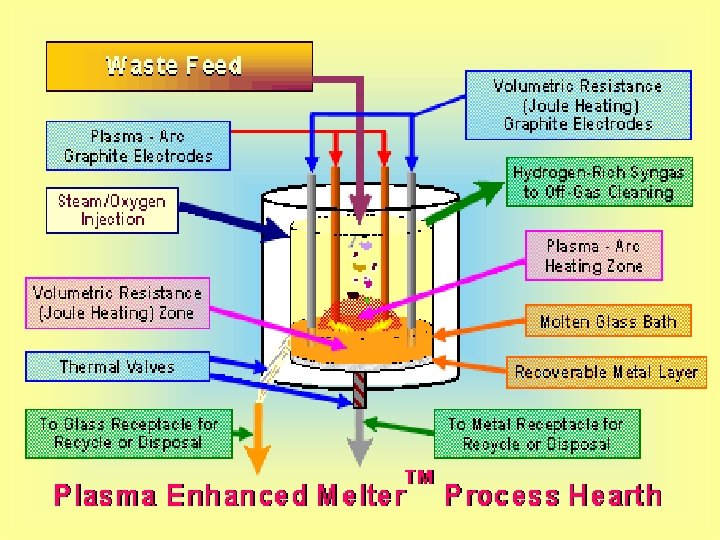
Process Ø Heated using – direct current arc plasma for high T organic waste destruction and gasification and – Alternating current powered, resistance hearing to maintain more even T distribution in molten bath
Waste Incineration - Advantages • Volume and weight reduced (approx. 90% vol. and 75% wt reduction) • Waste reduction is immediate, no long term residency required • Destruction in seconds where LF requires 100 s of years • Incineration can be done at generation site • Air discharges can be controlled • Ash residue is usually non-putrescible, sterile, inert • Small disposal area required • Cost can be offset by heat recovery/ sale of energy
Waste Incineration - Disadvantages ØHigh capital cost ØSkilled operators are required (particularly for boiler operations) ØSome materials are noncombustible ØSome material require supplemental fuel
Waste Incineration - Disadvantages Ø Air contaminant potential (MACT standards have substantially reduced dioxin, WTE 19% of Hg emissions in 1995 – 90% reduction since then) Ø Volume of gas from incineration is 10 x as great as othermochemical conversion processes, greater cost for gas cleanup/pollution control Ø Public disapproval Ø Risk imposed rather than voluntary Ø Incineration will decrease property value (perceived not necessarily true) Ø Distrust of government/industry ability to regulate
Carbon and Energy Considerations Ø Tonne of waste creates 3. 5 MW of energy during incineration (eq. to 300 kg of fuel oil) powers 70 homes Ø Biogenic portion of waste is considered CO 2 neutral (tree uses more CO 2 during its lifecycle than released during combustion) Ø Unlike biochemical conversion processes, nonbiogenic CO 2 is generated Ø Should not displace recycling
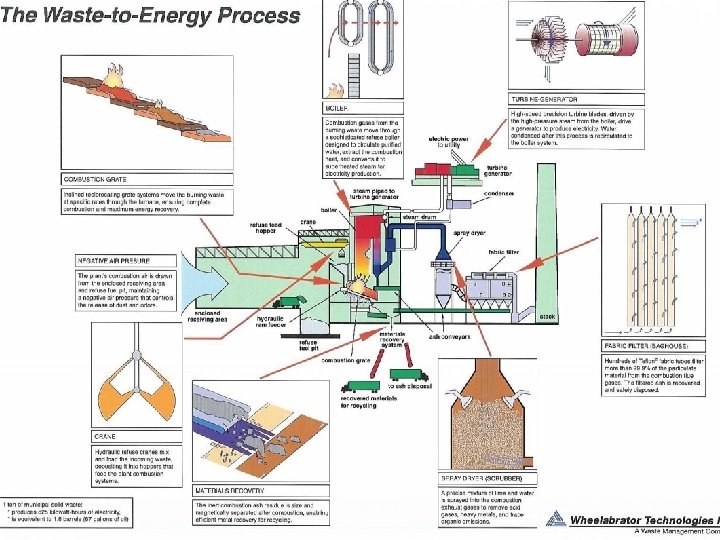
WTE Process
Three Ts Ø Time Ø Temperature Ø Turbulence
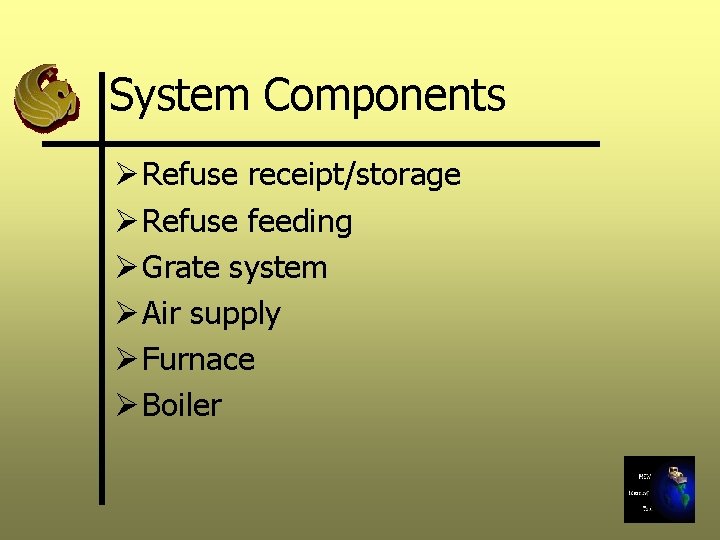
System Components Ø Refuse receipt/storage Ø Refuse feeding Ø Grate system Ø Air supply Ø Furnace Ø Boiler
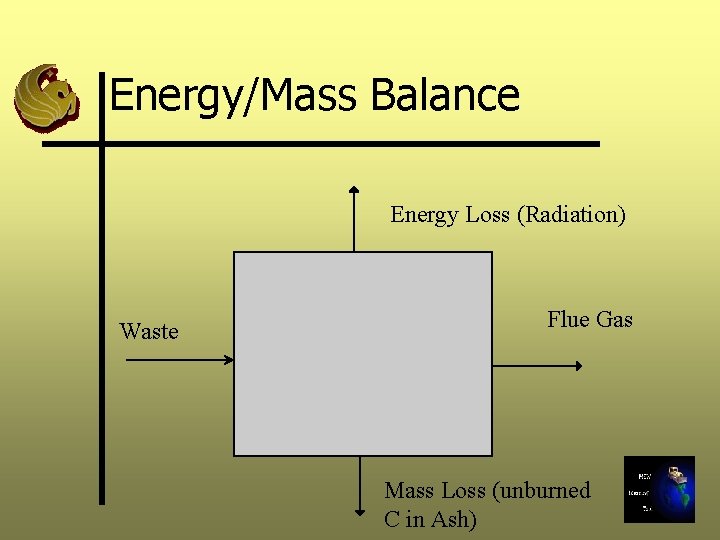
Energy/Mass Balance Energy Loss (Radiation) Waste Flue Gas Mass Loss (unburned C in Ash)
Flue Gas Pollutants Ø Particulates Ø Acid Gases Ø NOx Ø CO Ø Organic Hazardous Air Pollutants Ø Metal Hazardous Air Pollutants
Particulates Ø Solid Ø Condensable Ø Causes – – Too low of a comb T (incomplete comb) Insufficient oxygen or overabundant EA (too high T) Insufficient mixing or residence time Too much turbulence, entrainment of particulates Ø Control – Cyclones - not effective for removal of small particulates – Electrostatic precipitator – Fabric Filters (baghouses)
Metals Ø Removed with particulates Ø Mercury remains volatilized Ø Tough to remove from flue gas Ø Remove source or use activated carbon (along with dioxins)
Acid Gases Ø From Cl, S, N, Fl in refuse (in plastics, textiles, rubber, yd waste, paper) Ø Uncontrolled incineration - 18 -20% HCl with p. H 2 Ø Acid gas scrubber (SO 2, HCl, HFl) usually ahead of ESP or baghouse – Wet scrubber – Spray dryer – Dry scrubber injectors
Nitrogen removal Ø Source removal to avoid fuel NOx production Ø T < 1500 F to avoid thermal NOx Ø Denox sytems - selective catalytic reaction via injection of ammonia
Air Pollution Control Ø Remove certain waste components Ø Good Combustion Practices Ø Emission Control Devices
Devices Ø Electrostatic Precipitator Ø Baghouses Ø Acid Gas Scrubbers – Wet scrubber – Dry scrubber – Chemicals added in slurry to neutralize acids Ø Activated Carbon Ø Selective Non-catalytic Reduction
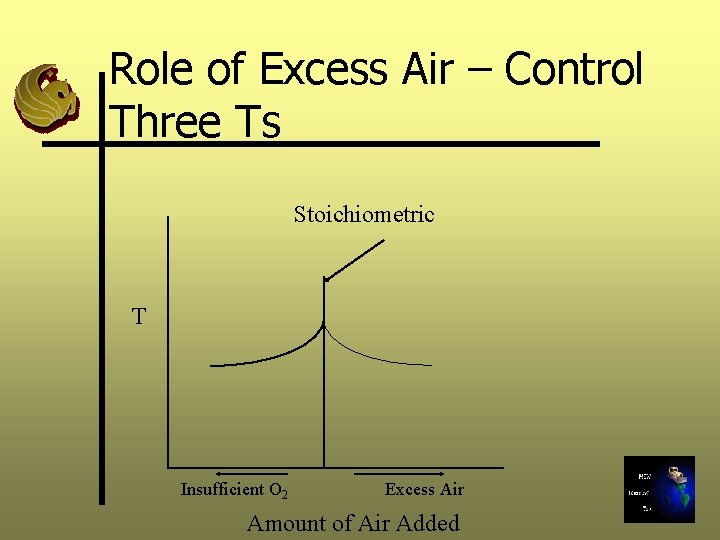
Role of Excess Air – Control Three Ts Stoichiometric T Insufficient O 2 Excess Air Amount of Air Added
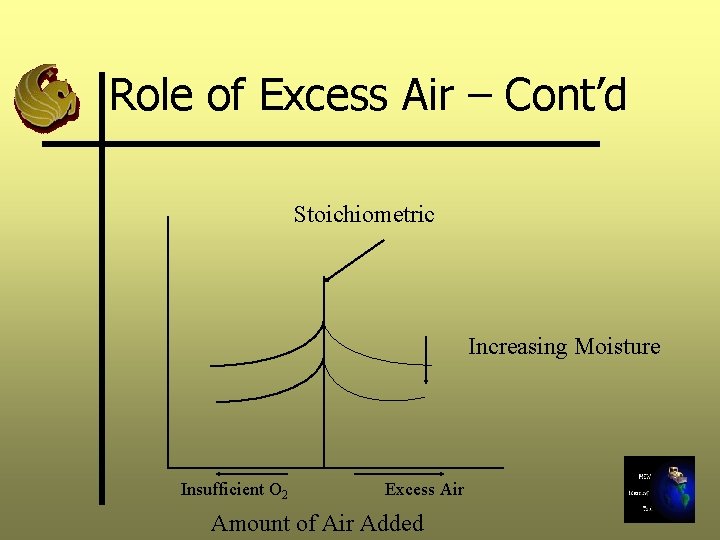
Role of Excess Air – Cont’d Stoichiometric Increasing Moisture Insufficient O 2 Excess Air Amount of Air Added
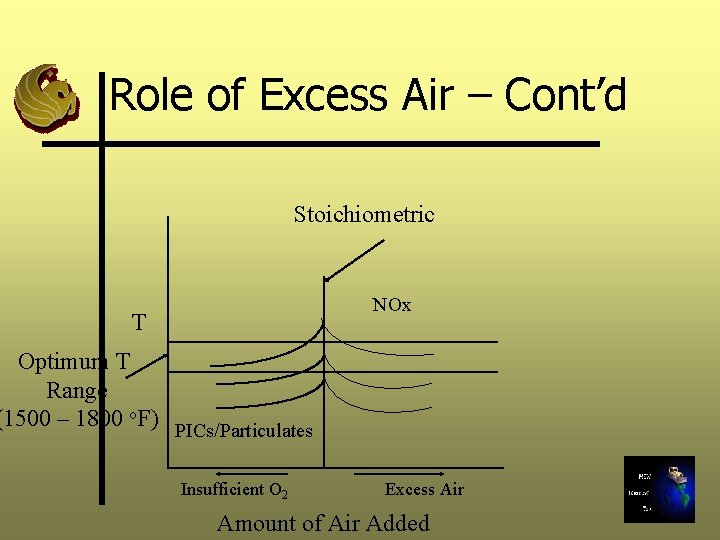
Role of Excess Air – Cont’d Stoichiometric NOx T Optimum T Range (1500 – 1800 o. F) PICs/Particulates Insufficient O 2 Excess Air Amount of Air Added
Ash Ø Bottom Ash – recovered from combustion chamber Ø Heat Recovery Ash – collected in the heat recovery system (boiler, economizer, superheater) Ø Fly Ash – Particulate matter removed prior to sorbents Ø Air Pollution Control Residues – usually combined with fly ash Ø Combined Ash – most US facilities combine all ashes
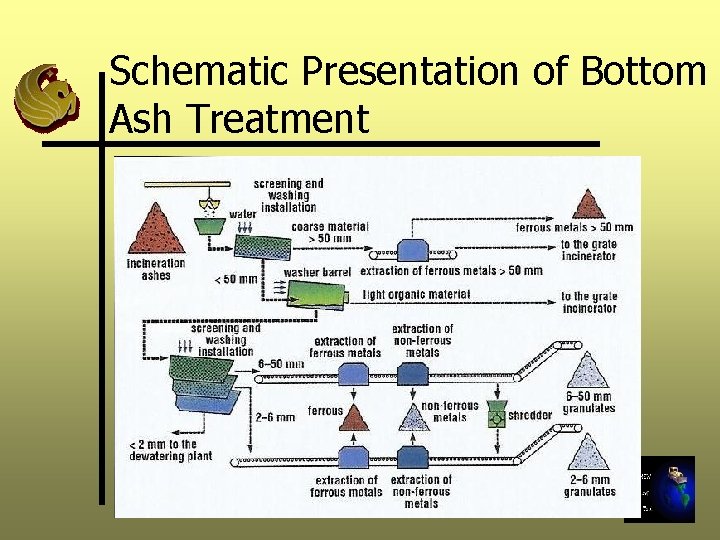
Schematic Presentation of Bottom Ash Treatment
Ash Reuse Options Ø Construction fill Ø Road construction Ø Landfill daily cover Ø Cement block production Ø Treatment of acid mine drainage
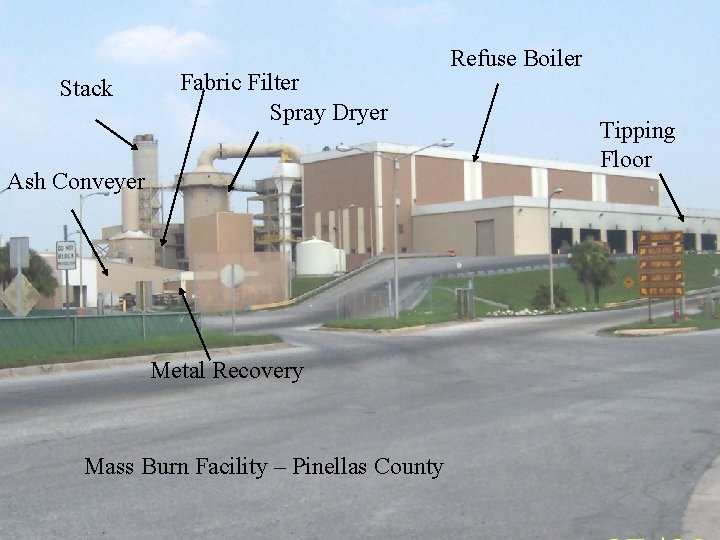
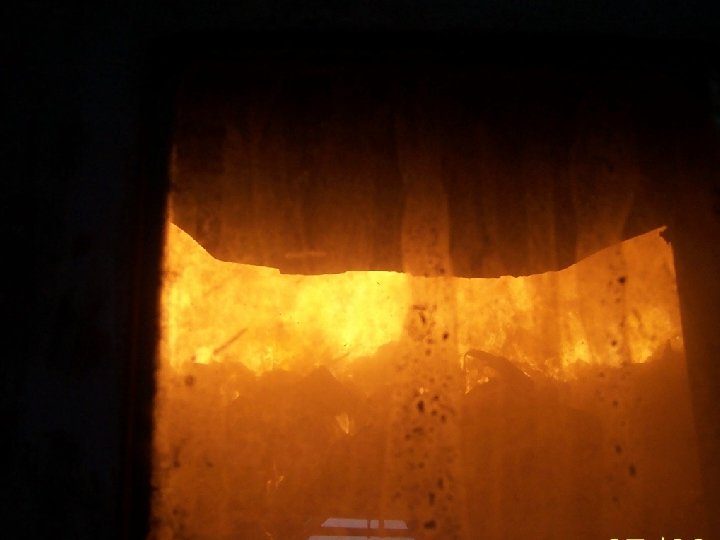
Stack Fabric Filter Spray Dryer Ash Conveyer Metal Recovery Mass Burn Facility – Pinellas County Refuse Boiler Tipping Floor
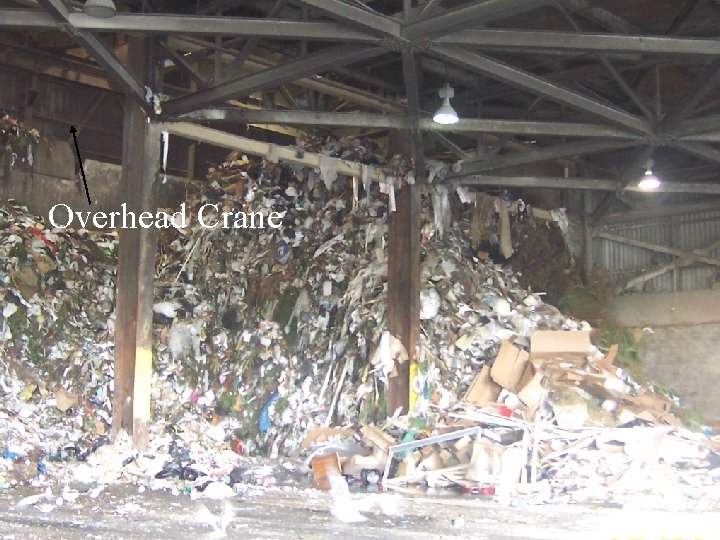
Overhead Crane
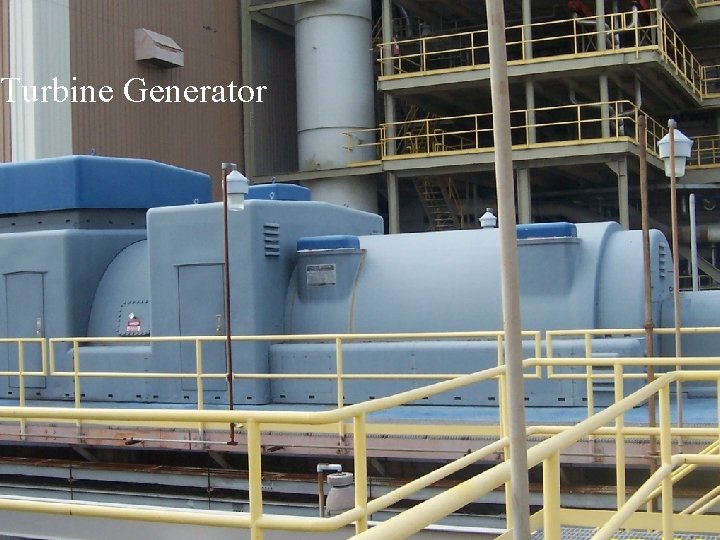
Turbine Generator
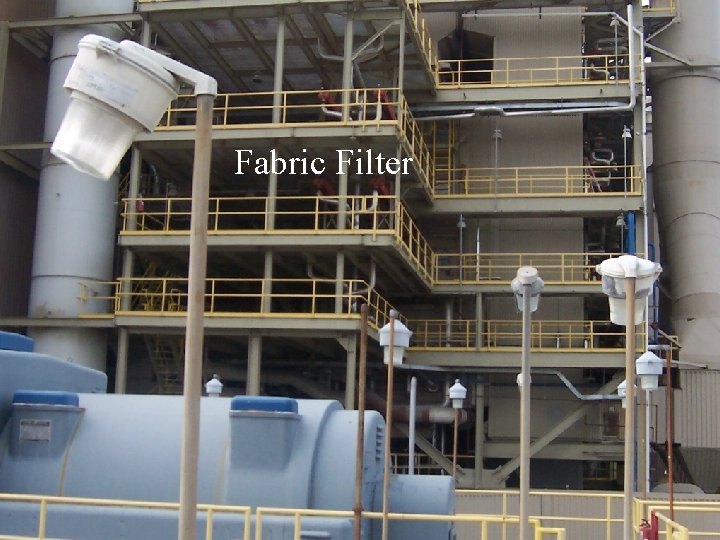
Fabric Filter
Conclusions Ø Combustion remains predominant thermal technology for MSW conversion with realized improvements in emissions Ø Gasification and pyrolysis systems now in commercial scale operation but industry still emerging Ø Improved environmental data needed on operating systems Ø Comprehensive environmental or life cycle assessments should be completed

Return to Home page Updated August 2008
- Slides: 45