
Thermo Gravimetric Analysis Instrumentation SAIKRISHNA UGGU Lecturer in



- Slides: 30
Thermo Gravimetric Analysis - Instrumentation SAIKRISHNA UGGU Lecturer in Chemistry P. R. Govt. College (A) KAKINADA
Contents… Ø TGA - Instrumentation Ø Components of a TGA instrument Ø TGA Analyzer functions Ø TGA – Experimental procedure Ø Factors affecting TGA curve Ø TGA - Calibration
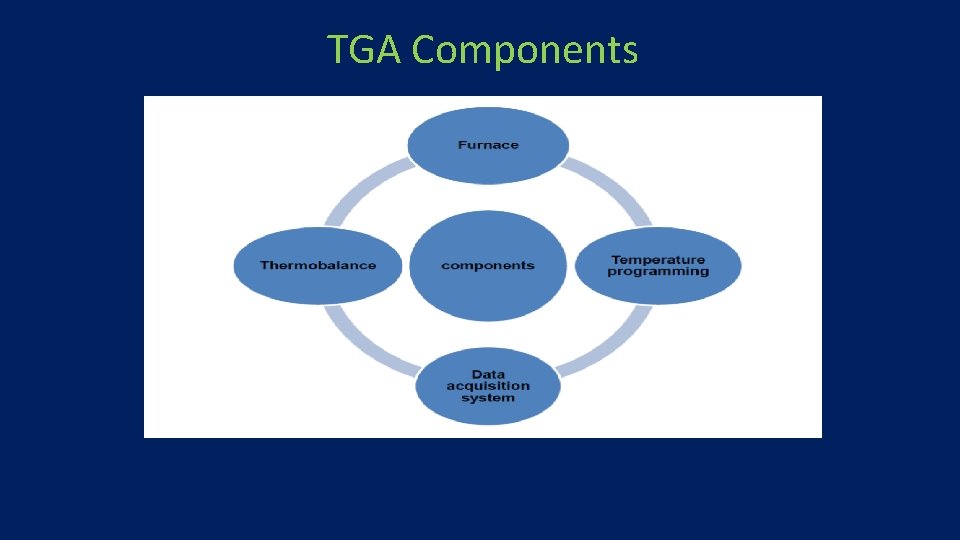
TGA Components
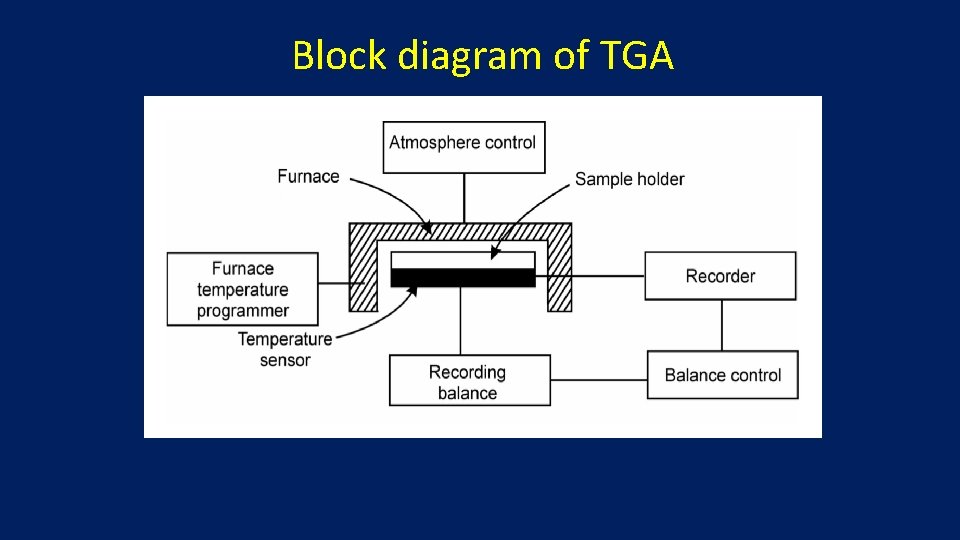
Components of TGA… A TGA instrument consists of, 1. A Thermo balance 2. A Sample container 3. A Furnace 4. Temperature programmer 5. Data Acquisition system
Block diagram of TGA
TGA Analyzer - Functions A TGA analyzer must accurately, Ø Control heating rate Ø Measure the change in temperature Ø Measure the change in mass of a sample
Thermobalace… A Termobalance consists of , Ø an electronic micro balance Ø a furnace Ø a temperature programmer and Ø a recorder
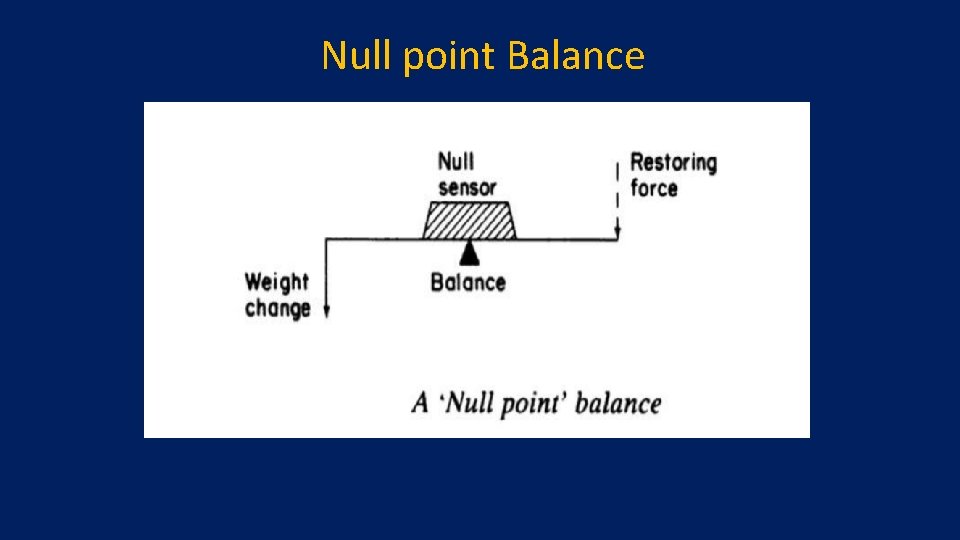
TGA : How the Balance works ? The balance operates on a null-balance principle. In the null point balance system, when there is a change in weight, the balance beam will deviate from its usual position.
Null point Balance
Balance Principle A sensor detects this deviation and initiates a force that will restore the balance to the null position. This restoring force is proportional to the change in weight.
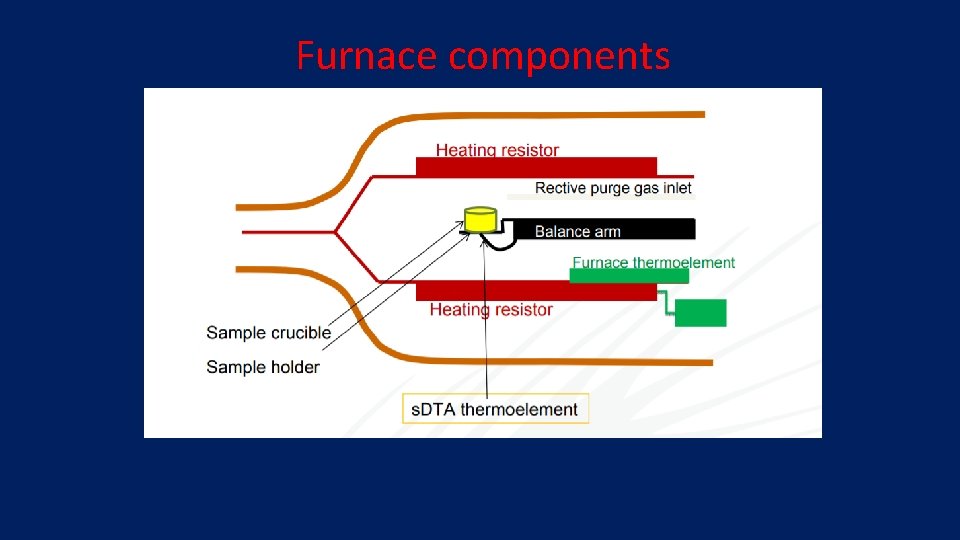
Furnace components
TGA : Experimental Procedure… ØThe samples are placed in a shallow platinum crucible ØThe sample container is connected to an automatic recording microbalance. ØA null point type balance system is employed in TGA for measuring the weight change. ØWhich connected directly to the y- axis of the recorder
TGA : Experimental Procedure… ØThe sample container is placed in a Quartz housing located within the furnace. ØA thermocouple, located immediately below the sample container, is used to monitor the furnace temperature. ØThe resulting signal is connected directly to the x – axis of the recorder.
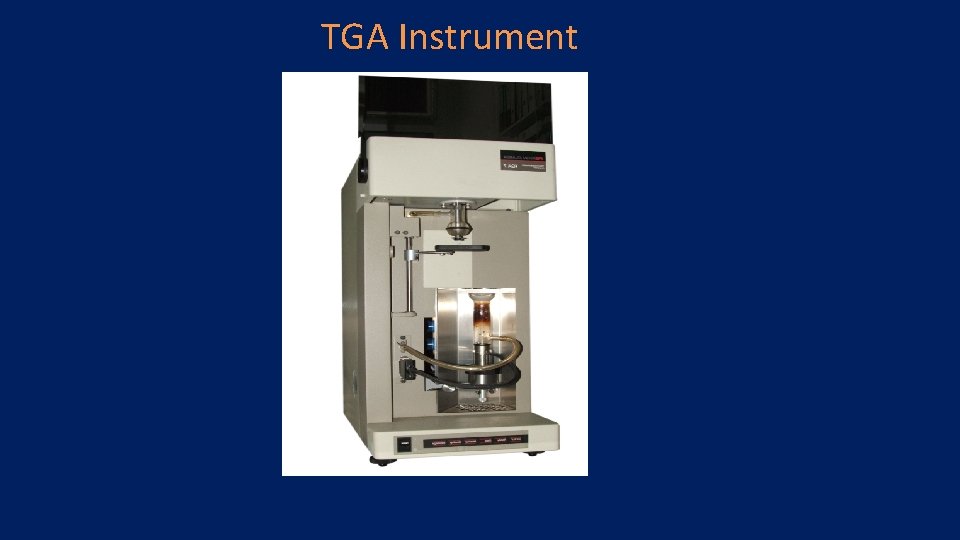
TGA Instrument
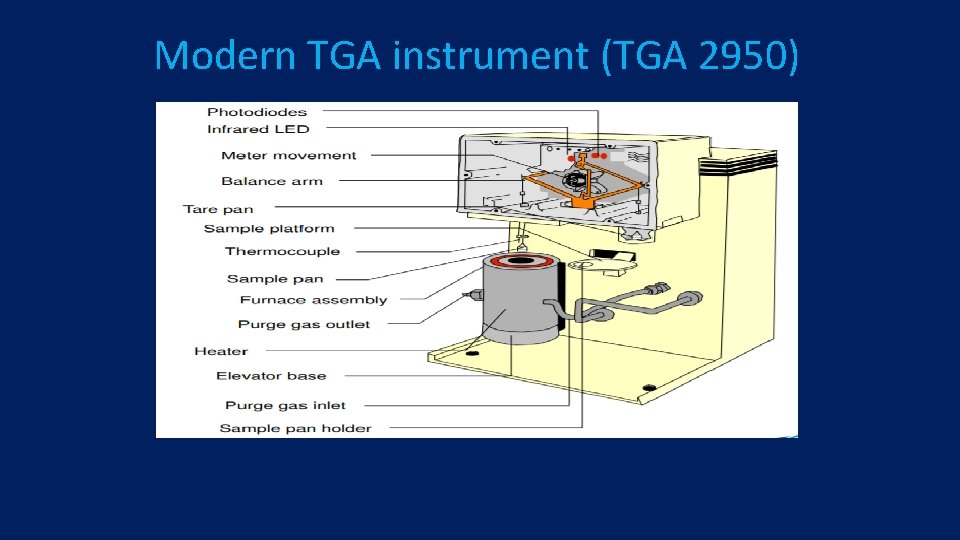
Modern TGA instrument (TGA 2950)
Factors Affecting TGA Curve 1. Instrumental Factors 2. Sample Characteristics 3. Geometry of the sample container
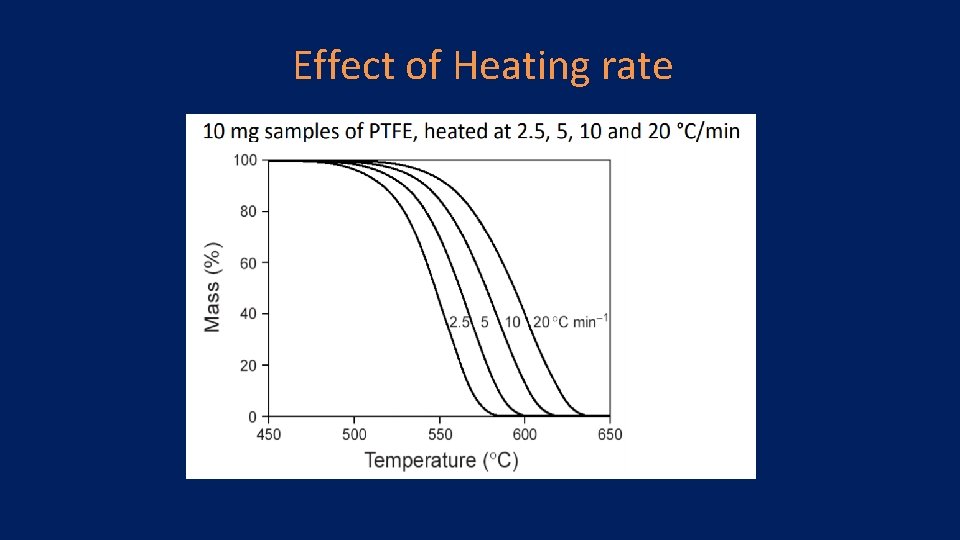
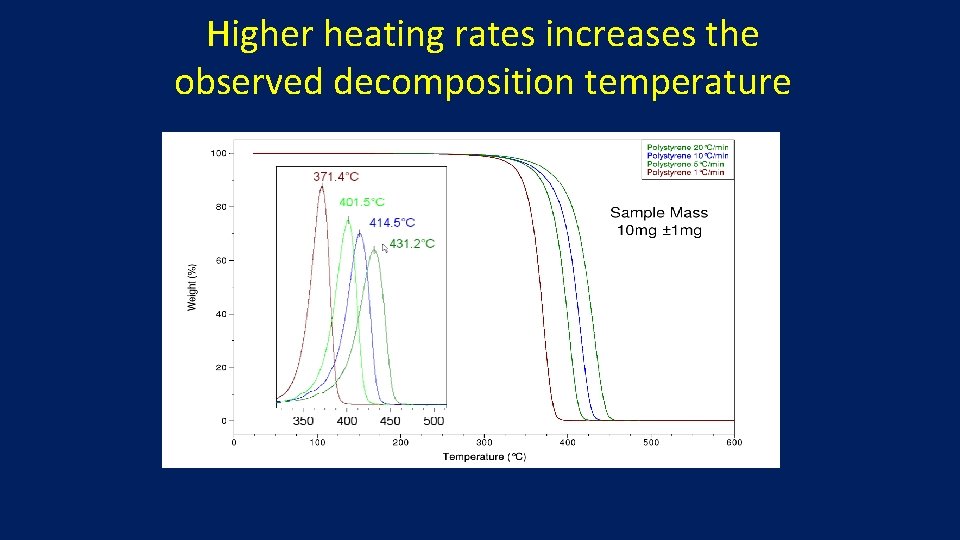
Instrumental factors Furnace Heating rate: The temperature at which the sample compound decompose is depends upon the heating rate of furnace employed in the analysis.
Effect of Heating rate
Higher heating rates increases the observed decomposition temperature
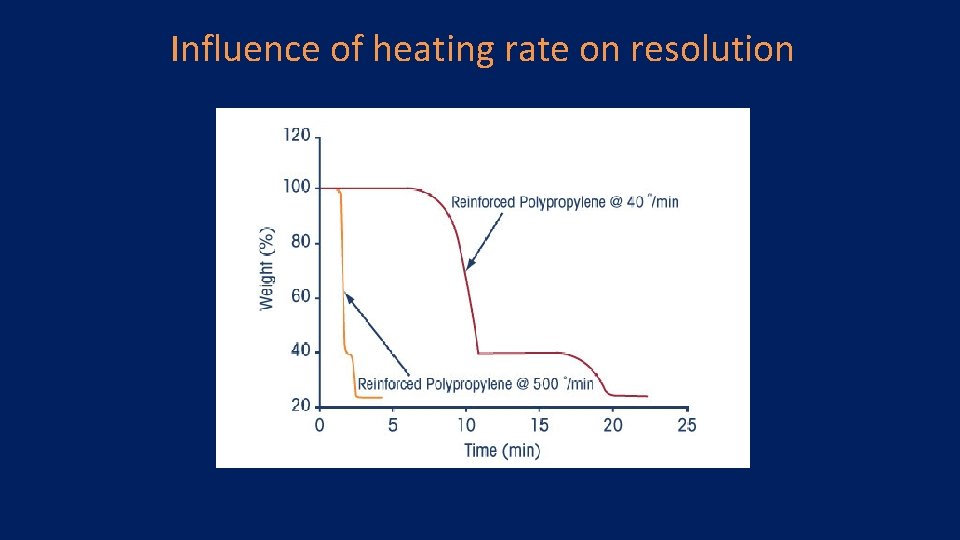
Influence of heating rate on resolution
Effect of Furnace atmosphere The nature of the surrounding atmosphere inside the furnace has a significant affect upon the decomposition temperature.
Sample Characteristics Mode of preparation of a sample Weight of the sample Particle size of the sample
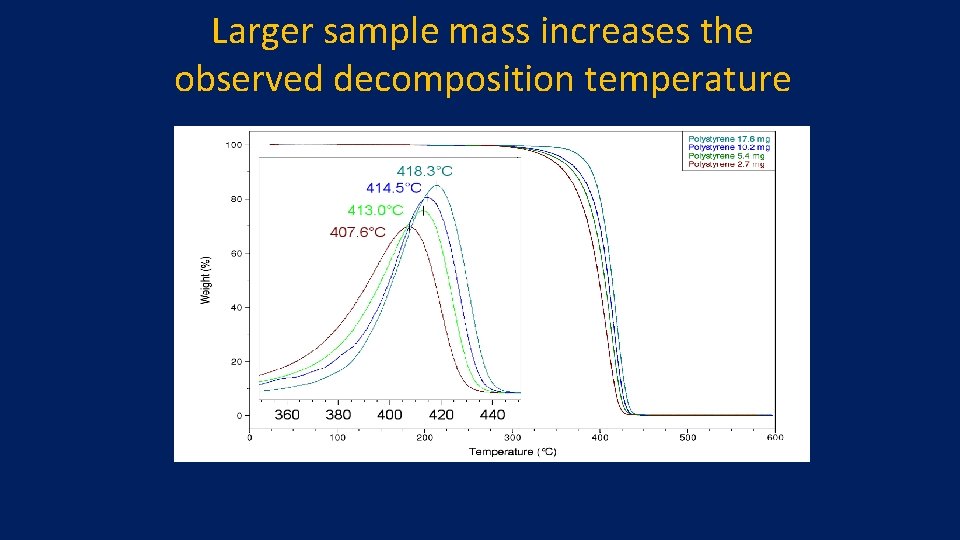
Larger sample mass increases the observed decomposition temperature
Sample preparation Sample mass having, Ø 10 -20 mg is used for most applications Ø 50 -100 mg is used for measuring volatile compounds
TGA : Sample preparation
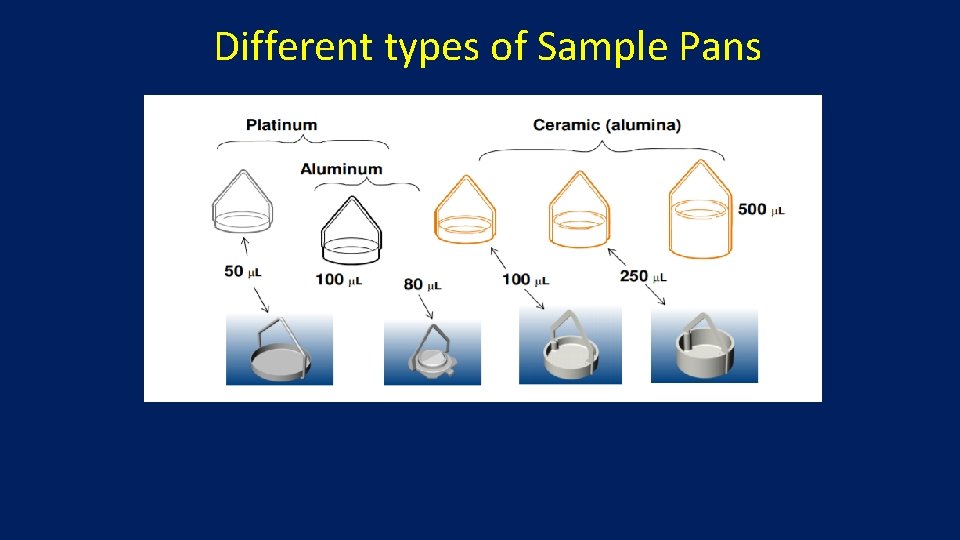
Geometry of the sample container A flat, plate shaped crucibles are generally preferred for better results. Alumina Pans: Inert till 1700 o. C Platinum Pans: Having Good conductivity. thermal
Different types of Sample Pans
TGA : Calibration… A TG analyzer should be calibrated for, Ø mass using standard substances Ø temperature using high pure reference materials and Ø gas flow rate control
Improving resolution in TGA experiments Ø Slower heating rate Ø Reduced sample size Ø Self-generating atmosphere
Thank You……