
Thermal Transfer Measurements Made With the Transient Line
- Slides: 28
Thermal Transfer Measurements Made With the Transient Line Heat Source Method With Information on Phase Change Materials Geoffrey Brown, Product Manager METER Group Inc. USA
Support from: Dr. Gaylon Campbell and Dr. Doug Cobos
Decagon Devices, Inc. (Pullman, WA, USA) + UMS Ag (Munich, Germany) = METER Group
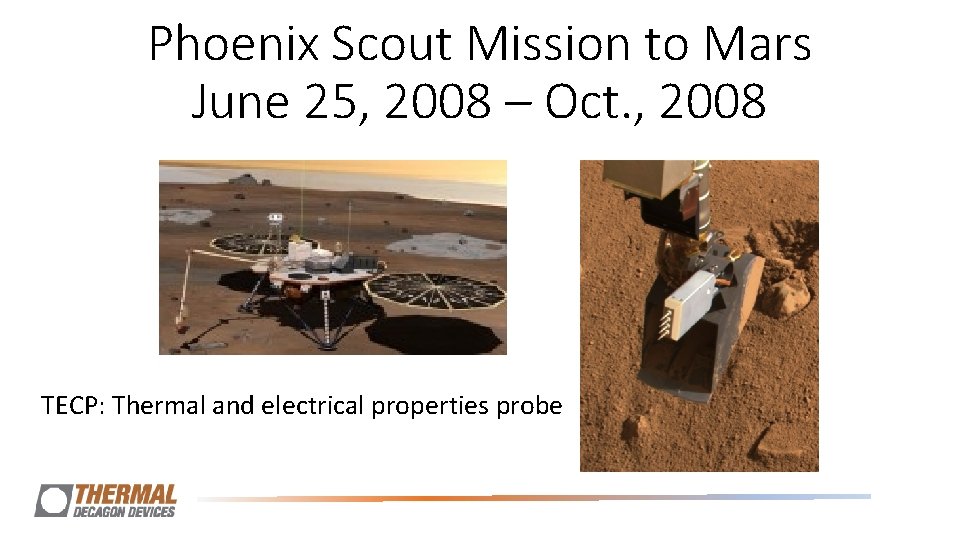
Phoenix Scout Mission to Mars June 25, 2008 – Oct. , 2008 TECP: Thermal and electrical properties probe
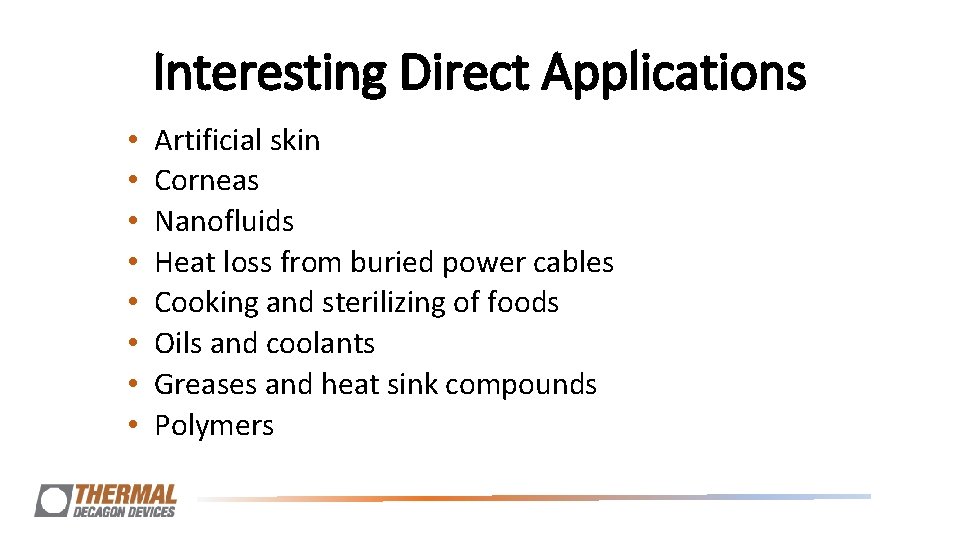
Interesting Direct Applications • • Artificial skin Corneas Nanofluids Heat loss from buried power cables Cooking and sterilizing of foods Oils and coolants Greases and heat sink compounds Polymers
Outline • • Steady state conductivity measurement Line heat source conductivity measurement Improvements to the line heat source method Phase change materials testing • Gels and liquids
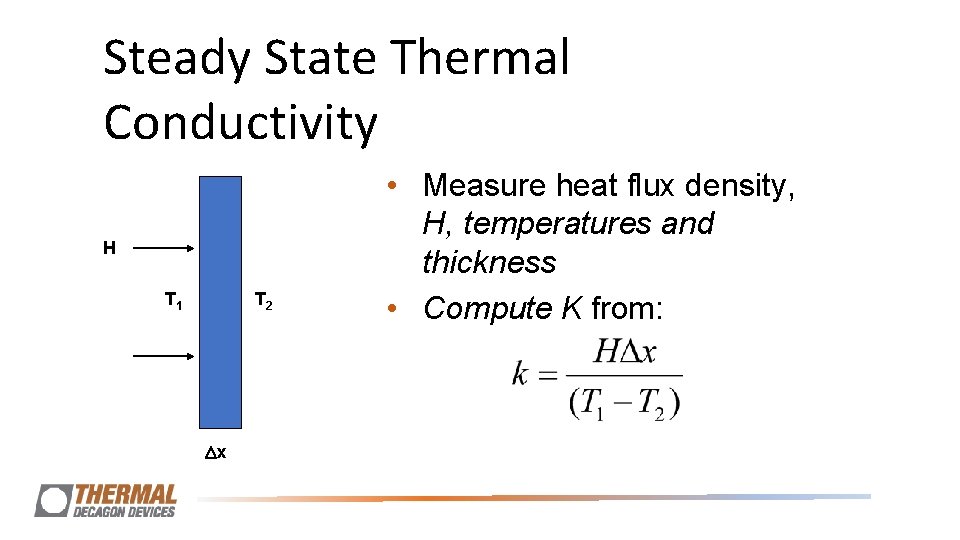
Steady State Thermal Conductivity H T 1 T 2 Dx • Measure heat flux density, H, temperatures and thickness • Compute K from:
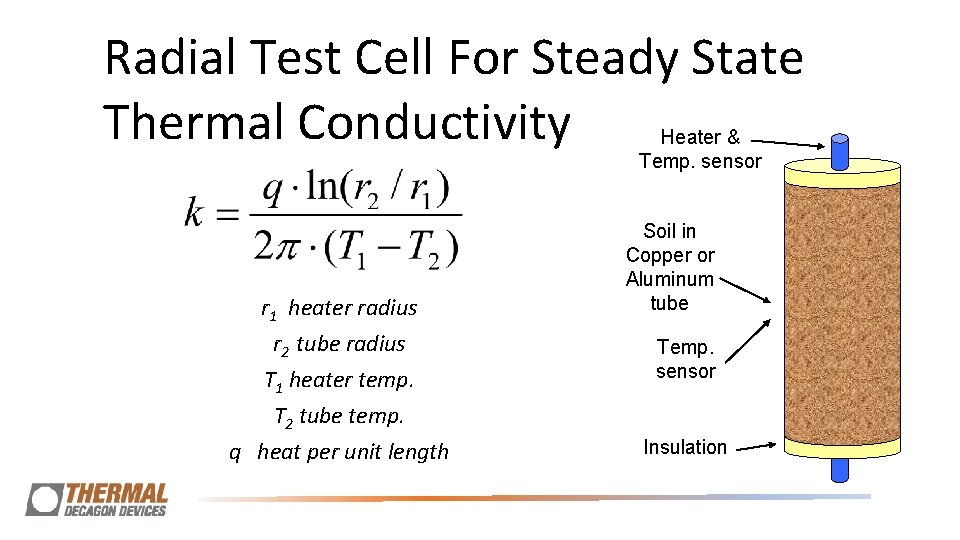
Radial Test Cell For Steady State Thermal Conductivity Heater & Temp. sensor r 1 heater radius r 2 tube radius T 1 heater temp. T 2 tube temp. q heat per unit length Soil in Copper or Aluminum tube Temp. sensor Insulation
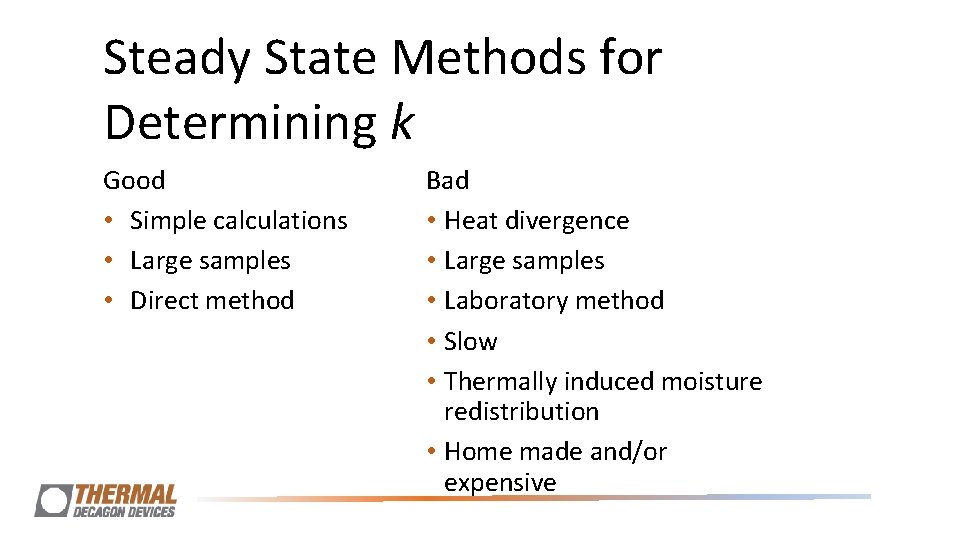
Steady State Methods for Determining k Good • Simple calculations • Large samples • Direct method Bad • Heat divergence • Large samples • Laboratory method • Slow • Thermally induced moisture redistribution • Home made and/or expensive
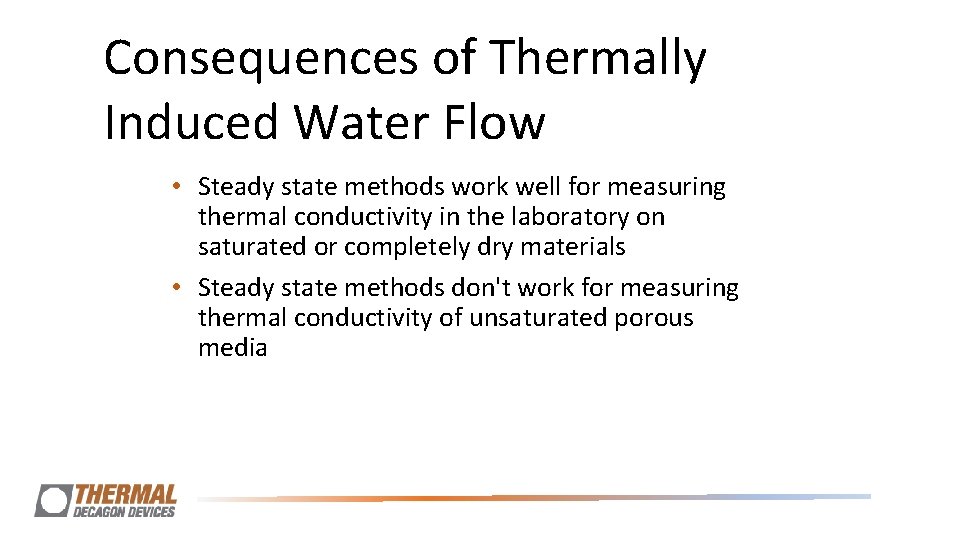
Consequences of Thermally Induced Water Flow • Steady state methods work well for measuring thermal conductivity in the laboratory on saturated or completely dry materials • Steady state methods don't work for measuring thermal conductivity of unsaturated porous media
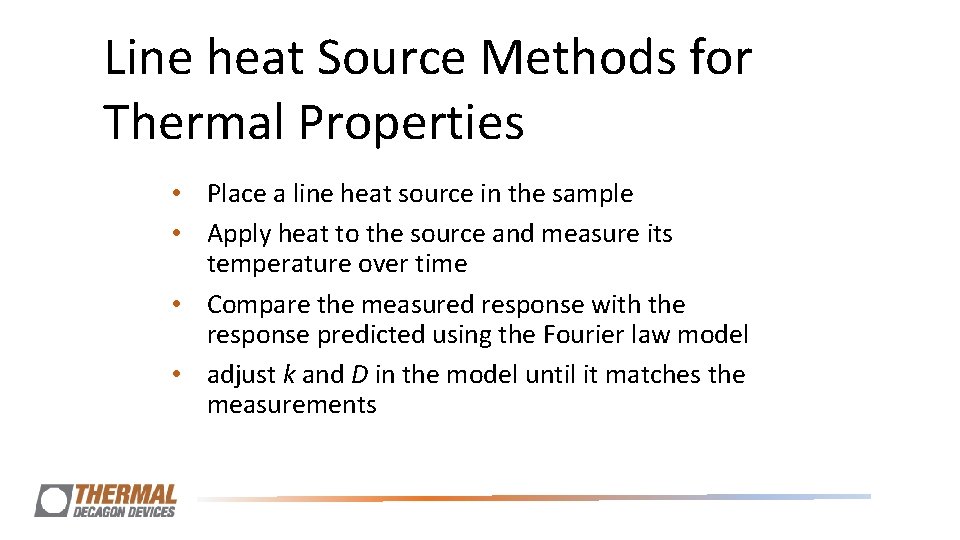
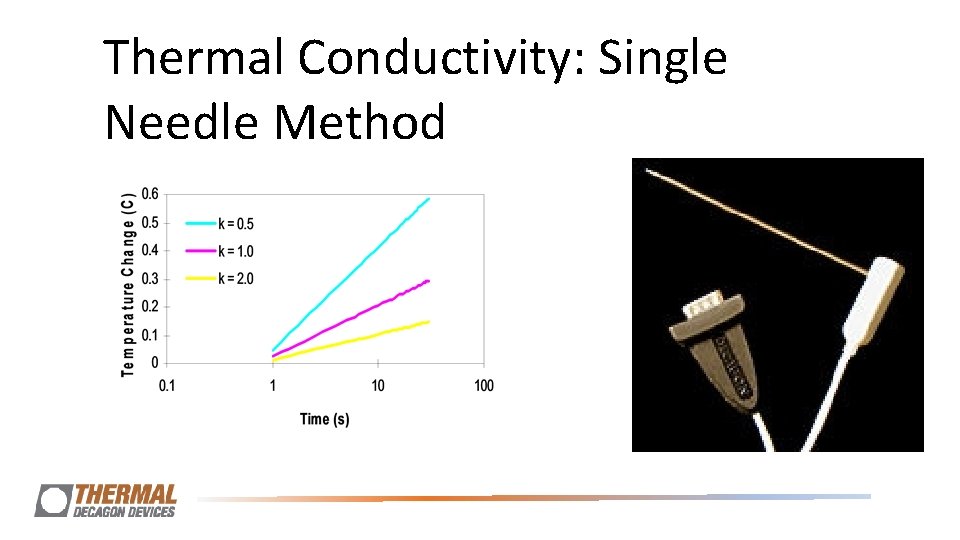
Line heat Source Methods for Thermal Properties • Place a line heat source in the sample • Apply heat to the source and measure its temperature over time • Compare the measured response with the response predicted using the Fourier law model • adjust k and D in the model until it matches the measurements
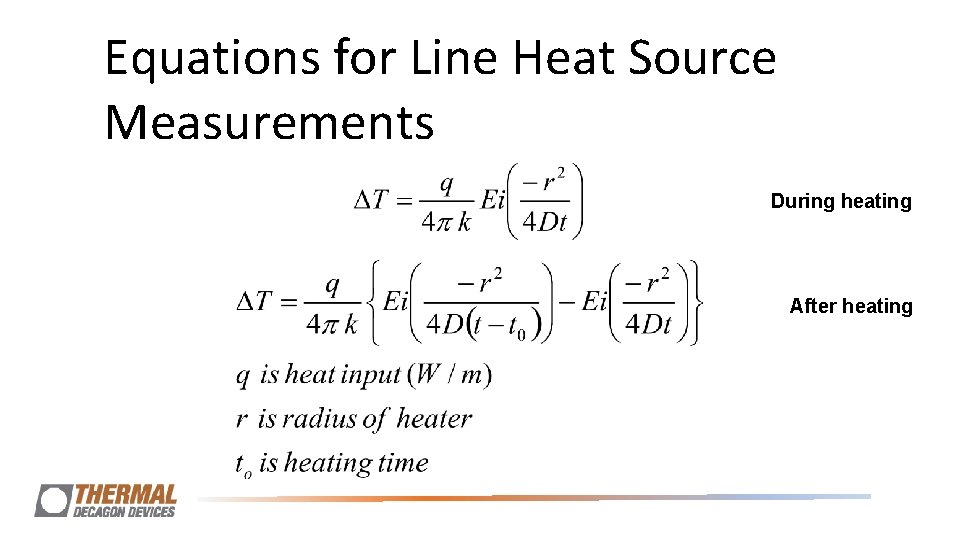
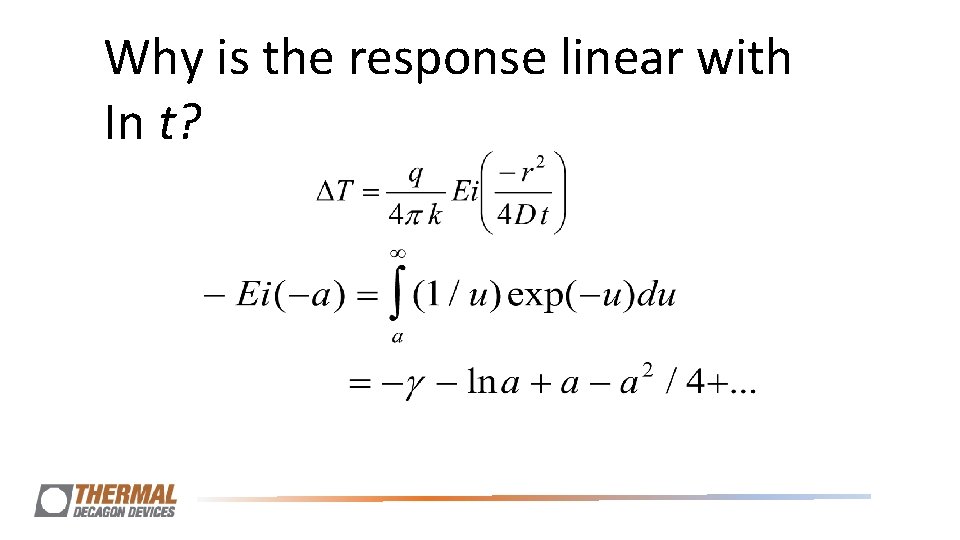
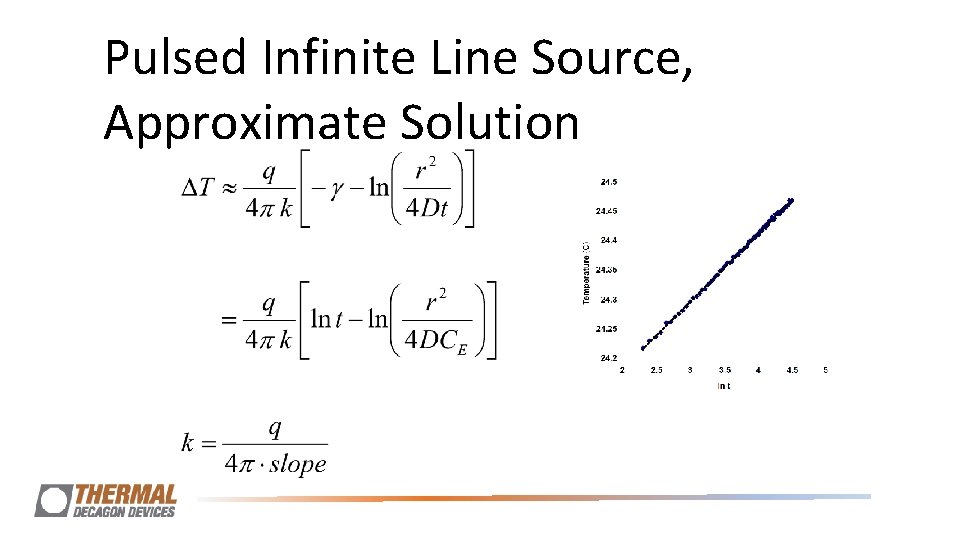
Equations for Line Heat Source Measurements During heating After heating
Thermal Conductivity: Single Needle Method
Why is the response linear with In t?
Pulsed Infinite Line Source, Approximate Solution
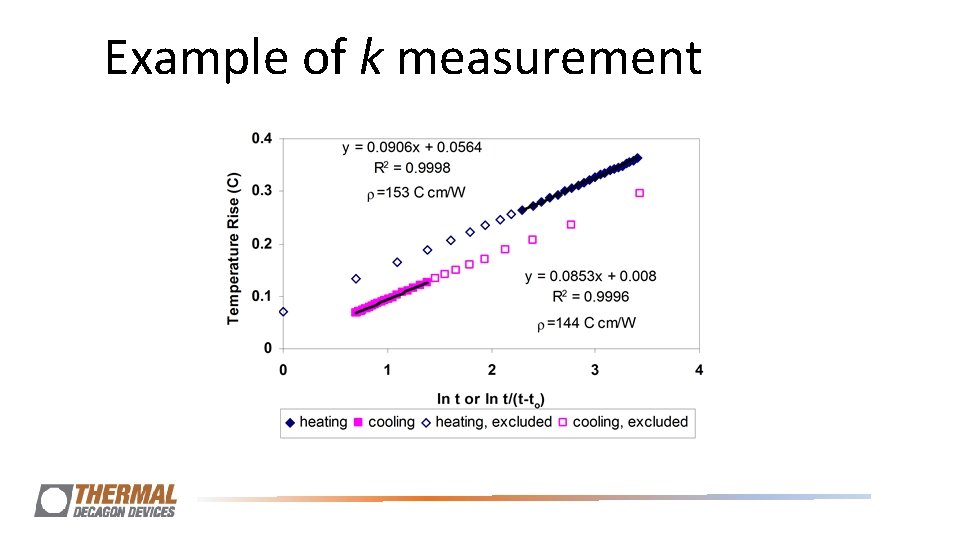
Example of k measurement
Heated Needle as Transient Line Heat Source Ideally • Source is infinitely long and infinitesimally small • Medium is uniform • Temperature is uniform and constant • Source is in intimate contact with medium
Heated Needle as Transient Line Heat Source Reality: • Source is 10 cm long and 2. 4 mm in diameter • Temperature may vary in space and time • Contact resistance between source and medium can occur • Medium may not be uniform (no control)
Transient Methods for Determining k Good • Small or large samples • Fast • Portable • No thermally induced water flow • In situ measurements Bad • Destructive
Improvements on the Transient Method Blackwell solution to the differential equation • Takes into account the finite probe size • Takes into account contact resistance Other improvements • Monitors temperature drift and correct the data
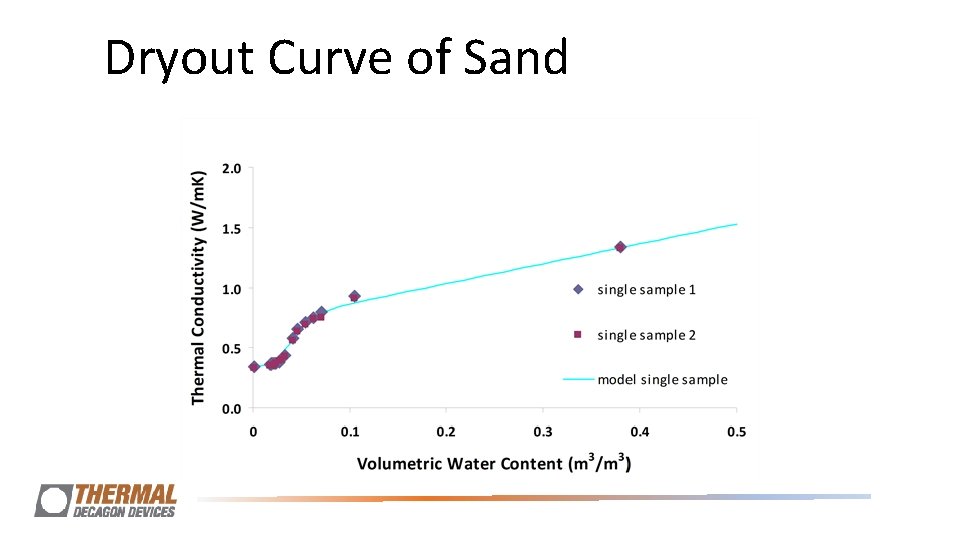
Thermal Dryout Curves • The relationship between thermal conductivity and water content for a soil or other porous material • Water content is an important variable, but density, mineralogy and temperature also important. These need to be held constant
Dryout Curve of Sand
General PCM Info • Transient line method can be used in liquids, solids, and gels. • Sensors can be used in an environmental chamber • Lab tech saves time with continuous read mode
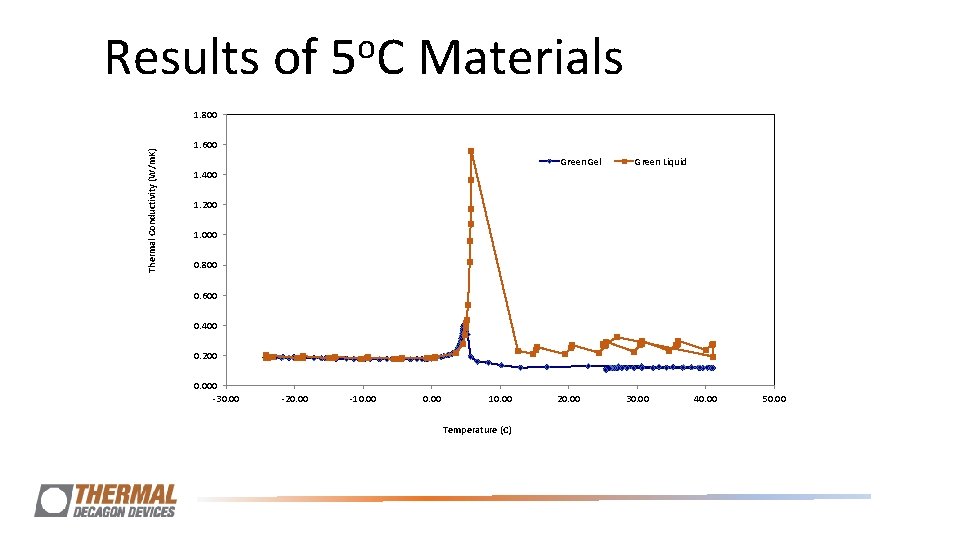
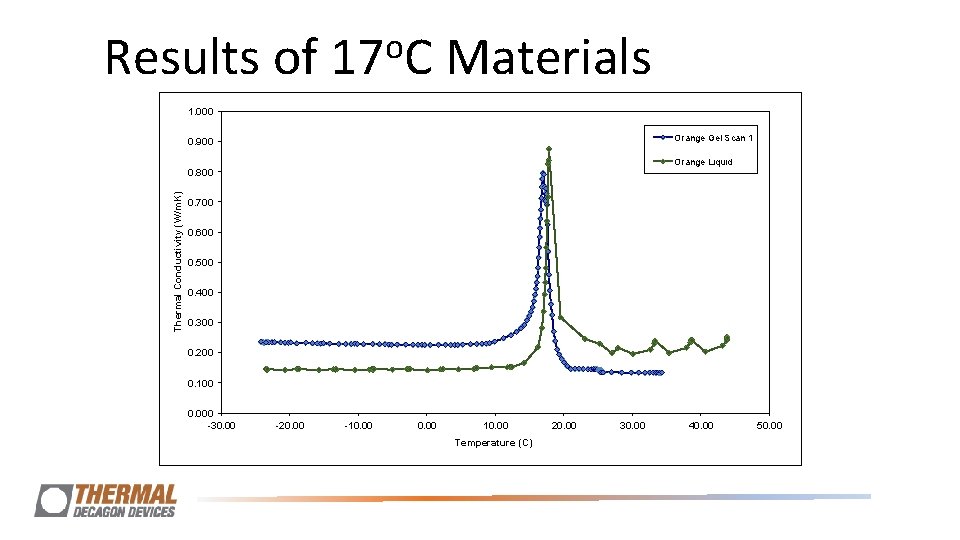
Experiment in PCMs • Tested liquids and gels • Green product phase change occurs at 5 o. C • Orange product phase change occurs at 15 o. C • Gel samples retain shape at warmer temperatures
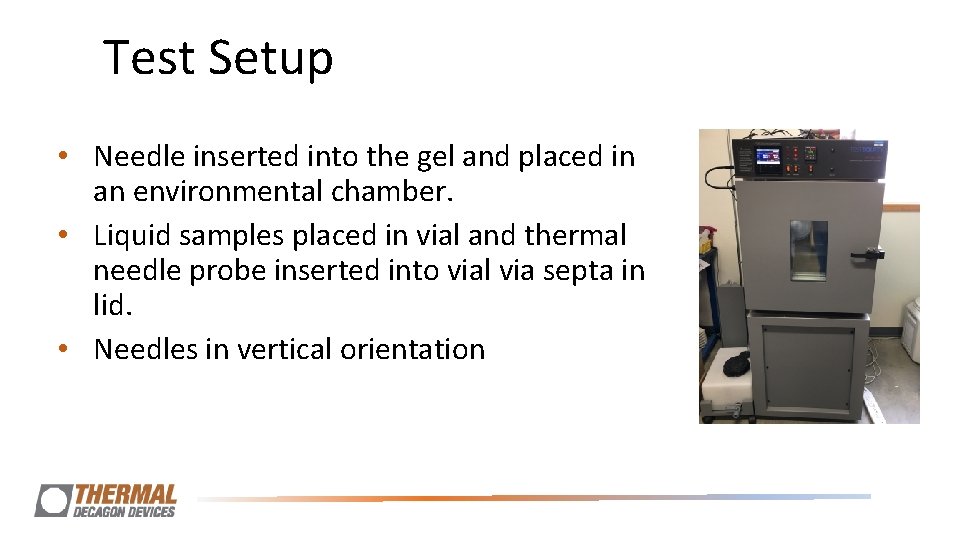
Test Setup • Needle inserted into the gel and placed in an environmental chamber. • Liquid samples placed in vial and thermal needle probe inserted into vial via septa in lid. • Needles in vertical orientation
Results of o 5 C Materials Thermal Conductivity (W/m. K) 1. 800 1. 600 Green Gel Green Liquid 1. 400 1. 200 1. 000 0. 800 0. 600 0. 400 0. 200 0. 000 -30. 00 -20. 00 -10. 00 Temperature (C) 20. 00 30. 00 40. 00 50. 00
Results of o 17 C Materials 1. 000 Orange Gel Scan 1 0. 900 Orange Liquid Thermal Conductivity (W/m. K) 0. 800 0. 700 0. 600 0. 500 0. 400 0. 300 0. 200 0. 100 0. 000 -30. 00 -20. 00 -10. 00 Temperature (C) 20. 00 30. 00 40. 00 50. 00
Conclusion • Steady state method is simple, but has flaws that can result in bad data • Transient line source solves for some of those faults • We are making improvements to make it even better • Transient line method works well in PCMs