
THERMAL TERMITE ERADICATION Bryan E Houtchens Team Too
® THERMAL TERMITE ERADICATION Bryan E. Houtchens Team Too 1
Introduction Why Heat Blast® is better l Heat Blast Inspector Training l Preparation for Company l Preparation For Customer l Communicating expectations with customer and crews l ® 2
Agenda l l l Myths vs. Facts Heat Blast technical information Sales Information Heat Blast System vs. Fumigation Complete WDO / Pest inspection Importance of thoroughness during inspection Writing inspection report for crew & customer understanding Preparation requirements Additional requirements for Heat Blast system Communicating to the customer and crew what to expect before, during, and after treatment Heat Blast system setup ® 3
® Technical THERMAL TERMITE ERADICATION l l l l l Termites die when you achieve 116° F and sustain that temperature for 24 minutes The crews take the temperature to 130° F and sustain the temperature for 1 hour Average air temperatures are maintained around 140° F on interiors, and between 160° F and 185° F on exteriors. Non target interiors do not raise above 115° F Average job time is 6 -8 hours All temperatures are monitored by digital probes, thermocouples, and infrared thermometers Heat was first used in 1913 The Heat Blast technology is the oldest form of termite control Other pest such as roaches die at 120° F for 6 -20 minutes ® 4
Selling l l l l ® THERMAL TERMITE ERADICATION Ease of service Little or no preparation No moving out No bagging food or medicine 100% effective A safe, clean, true alternative to fumigation Full house or localized treatment option Cost is equal to cost of fumigation without additional move out, food, and storage costs ® 5
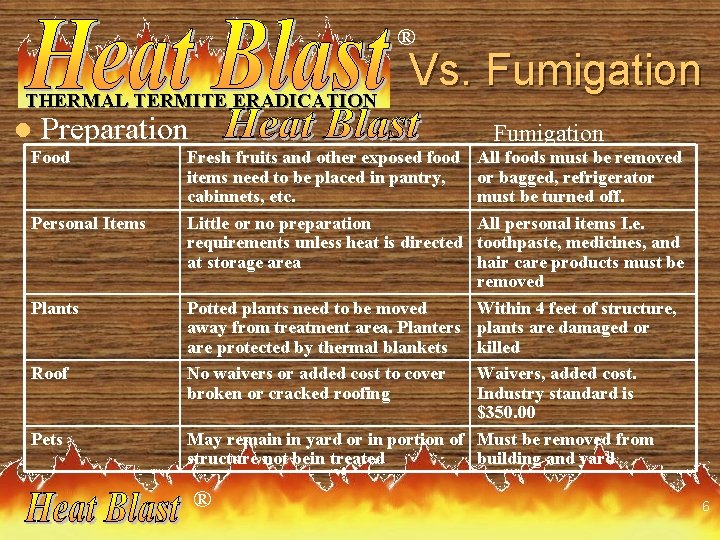
® THERMAL TERMITE ERADICATION l Vs. Fumigation Preparation Food Personal Items Plants Roof Pets Fumigation Fresh fruits and other exposed food items need to be placed in pantry, cabinnets, etc. Little or no preparation requirements unless heat is directed at storage area All foods must be removed or bagged, refrigerator must be turned off. All personal items I. e. toothpaste, medicines, and hair care products must be removed Potted plants need to be moved Within 4 feet of structure, away from treatment area. Planters plants are damaged or are protected by thermal blankets killed No waivers or added cost to cover Waivers, added cost. broken or cracked roofing Industry standard is $350. 00 May remain in yard or in portion of Must be removed from structure not bein treated building and yard ® 6
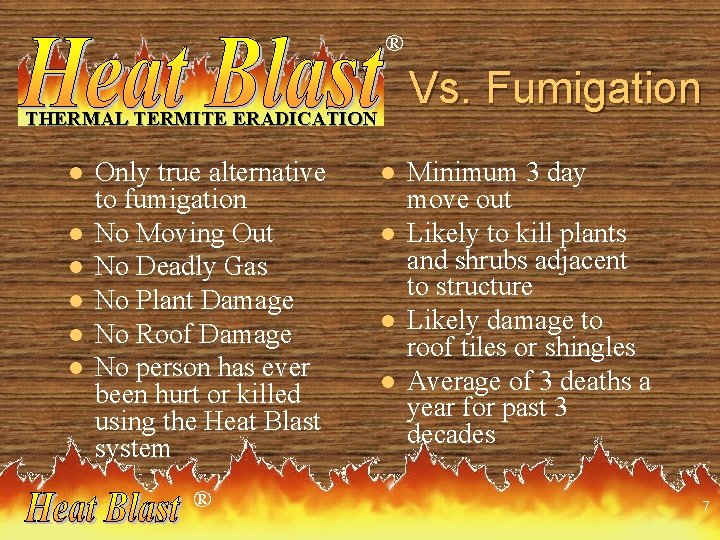
® Vs. Fumigation THERMAL TERMITE ERADICATION l l l Only true alternative to fumigation No Moving Out No Deadly Gas No Plant Damage No Roof Damage No person has ever been hurt or killed using the Heat Blast system ® l l Minimum 3 day move out Likely to kill plants and shrubs adjacent to structure Likely damage to roof tiles or shingles Average of 3 deaths a year for past 3 decades 7

Complete WDO /Pest Inspection Identify all infestations l Mark all infestations l 8
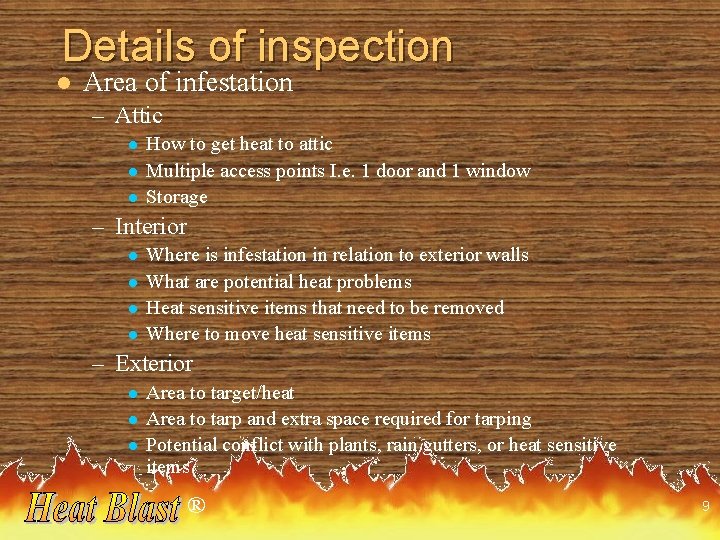
Details of inspection l Area of infestation – Attic l l l How to get heat to attic Multiple access points I. e. 1 door and 1 window Storage – Interior l l Where is infestation in relation to exterior walls What are potential heat problems Heat sensitive items that need to be removed Where to move heat sensitive items – Exterior l l l Area to target/heat Area to tarp and extra space required for tarping Potential conflict with plants, rain gutters, or heat sensitive items ® 9
Details of inspection Cont. l Alternate entry routes for crew, equipment, and heat – Identify all entry routes for interior – Identify entry routes to yard and possible placement of equipment in relation to target area l Clearly identify all possible problems or conflicts – Potential plant problems I. e. plants attached to building or less than 2 feet of clearance – Identify type of windows and doors for crew if they are not wood or metal – Identify any vinyl items in or around home ® 10
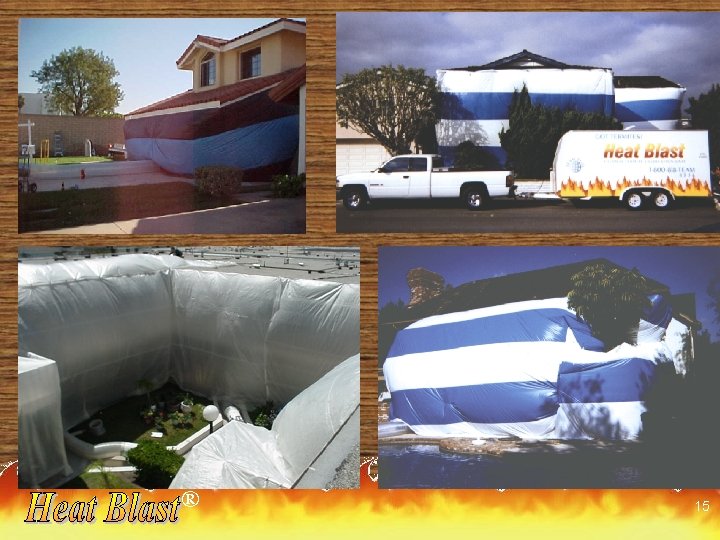
Details of Inspection Cont. l Be aware of type of construction – Clips for tarps can not be extended more than 2 ½ inches – If a tarp is required what will be it be clipped to? – Is there a fascia board? – Can a ladder reach the area to be tarped – What kind of roof is there? – How many stories is the house? ® 11
Beware of the Following PVC Pipe (Grey or White) l Central vacuum systems (they use pvc) l Vinyl windows, doors, garage doors (sectionals), screen doors, curtains, mini blinds, vertical blinds l Candles l Fire Sprinklers l Homes that are FULL of storage l ® 12
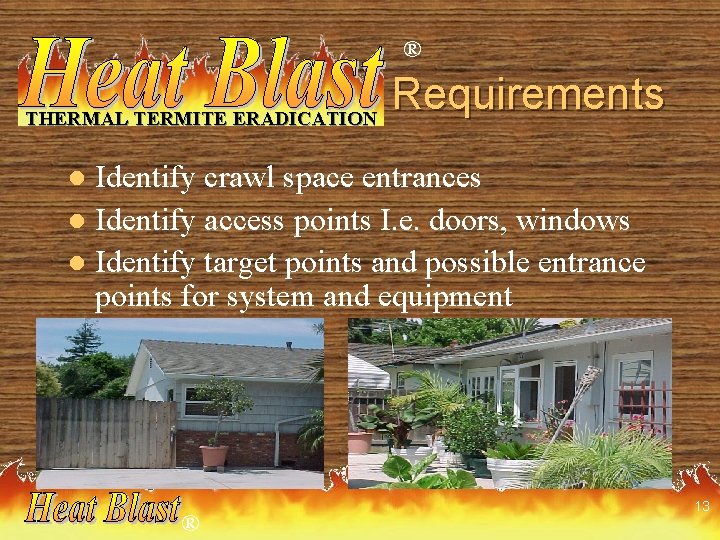
® THERMAL TERMITE ERADICATION Requirements Identify crawl space entrances l Identify access points I. e. doors, windows l Identify target points and possible entrance points for system and equipment l ® 13
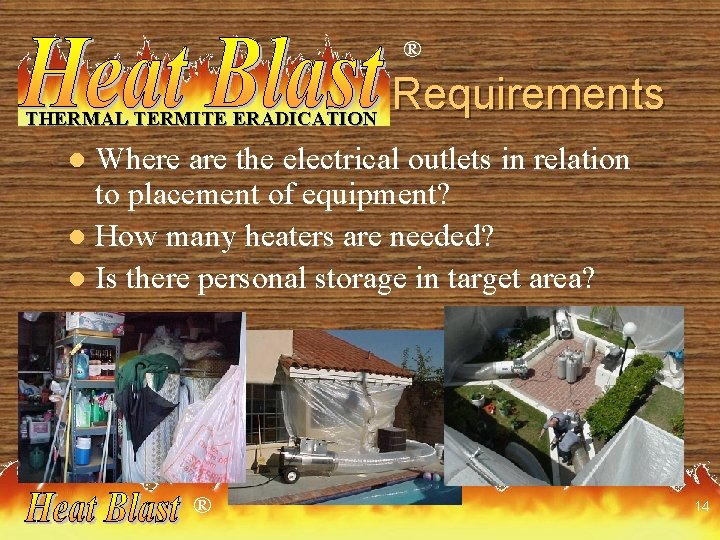
® THERMAL TERMITE ERADICATION Requirements Where are the electrical outlets in relation to placement of equipment? l How many heaters are needed? l Is there personal storage in target area? l ® 14
® 15
16
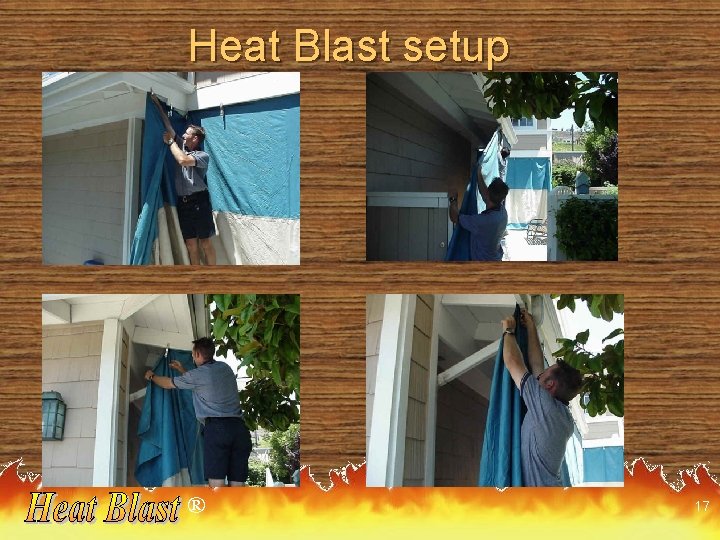
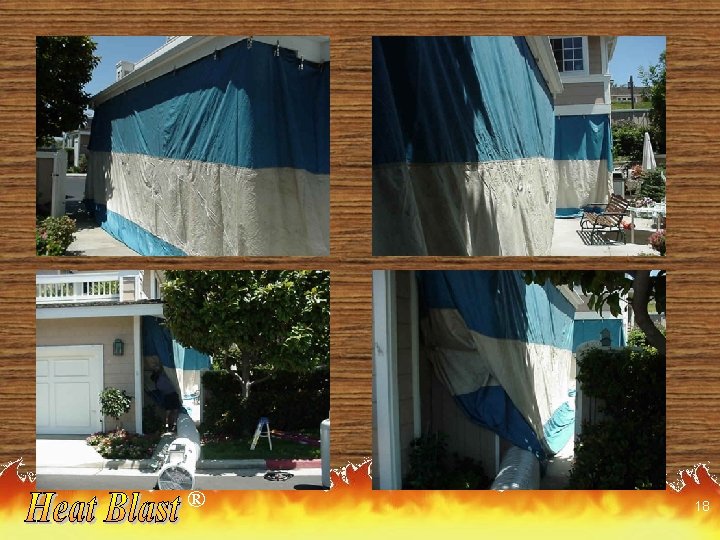
Heat Blast setup ® 17
® 18
Communication l l l Be sure to explain to the customer the complete service Always allow crew to make final decision on placement of equipment and tarps Thoroughly explain expectations of service Allow customer to help design service Clearly communicate service expectations to crew Communicate all concerns to the crew, office, and customer ® 19
Summary Heat Blast offers a choice for the customer. l Heat Blast allows multiple treatment options for controlling a whole structure problem or a limited problem l Heat Blast is the safest option for insect control. l ® 20

• More Sales • More Commission • Greater Profit • Less Hassle • Peace of Mind ® 21

Where to Get More Information Seminars l Industry Experts l Existing Heat Companies l WWW. HEATBLAST. COM l Technical Training on Heat Applications l Sales Training l – 800 -792 -4692 Ext. 107 ® 22
- Slides: 22