
Thermal Loading for Automotive Engines Lecture 1 Presented
- Slides: 10
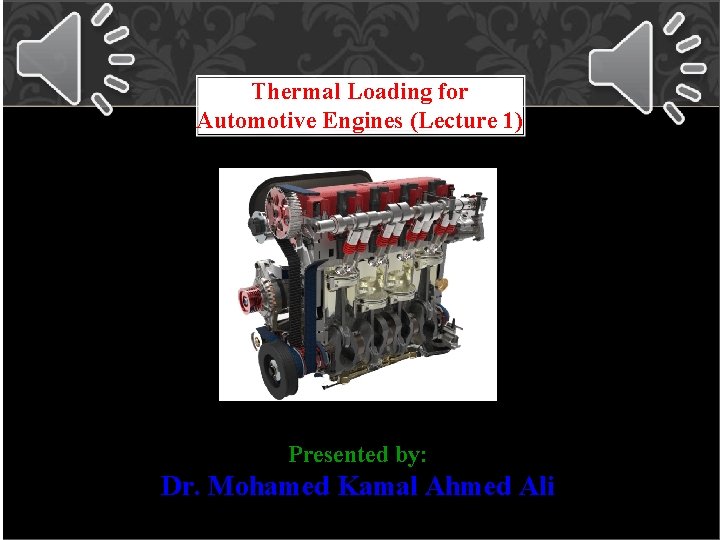
Thermal Loading for Automotive Engines (Lecture 1) Presented by: Dr. Mohamed Kamal Ahmed Ali
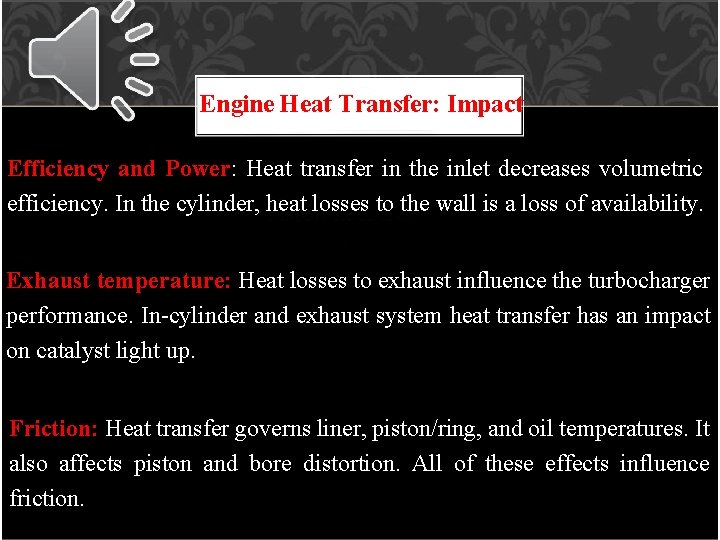
Engine Heat Transfer: Impact Efficiency and Power: Heat transfer in the inlet decreases volumetric efficiency. In the cylinder, heat losses to the wall is a loss of availability. Exhaust temperature: Heat losses to exhaust influence the turbocharger performance. In-cylinder and exhaust system heat transfer has an impact on catalyst light up. Friction: Heat transfer governs liner, piston/ring, and oil temperatures. It also affects piston and bore distortion. All of these effects influence friction.
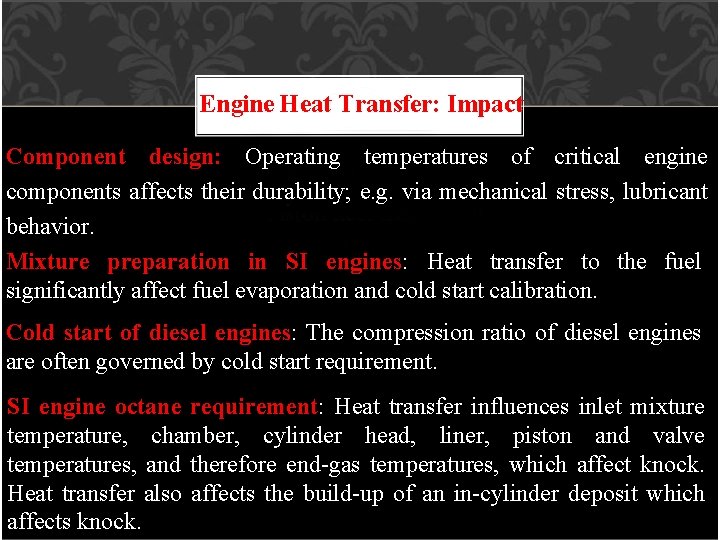
Engine Heat Transfer: Impact Component design: Operating temperatures of critical engine components affects their durability; e. g. via mechanical stress, lubricant behavior. Mixture preparation in SI engines: Heat transfer to the fuel significantly affect fuel evaporation and cold start calibration. Cold start of diesel engines: The compression ratio of diesel engines are often governed by cold start requirement. SI engine octane requirement: Heat transfer influences inlet mixture temperature, chamber, cylinder head, liner, piston and valve temperatures, and therefore end-gas temperatures, which affect knock. Heat transfer also affects the build-up of an in-cylinder deposit which affects knock.
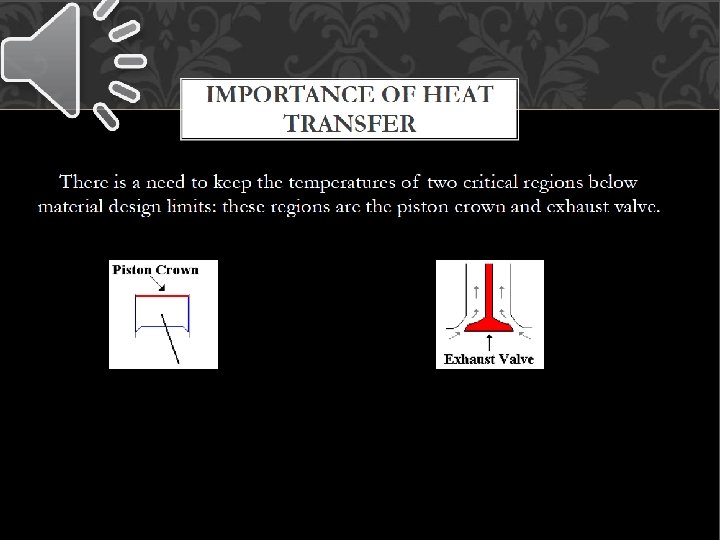
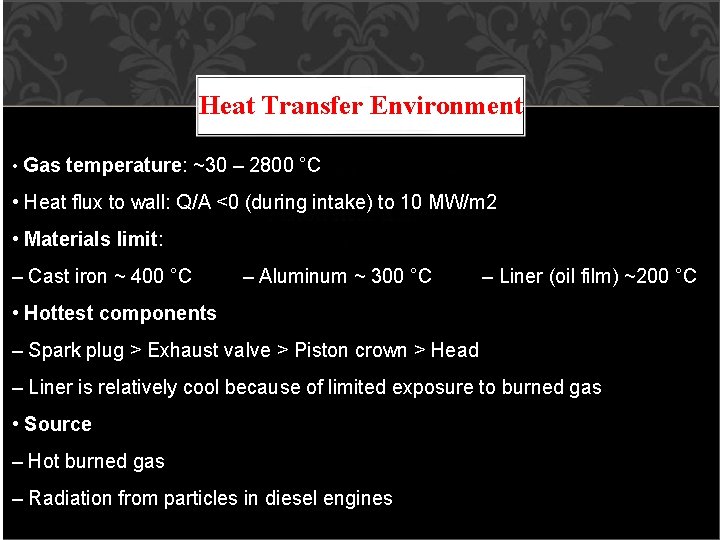
Heat Transfer Environment • Gas temperature: ~30 – 2800 °C • Heat flux to wall: Q/A <0 (during intake) to 10 MW/m 2 • Materials limit: – Cast iron ~ 400 °C – Aluminum ~ 300 °C – Liner (oil film) ~200 °C • Hottest components – Spark plug > Exhaust valve > Piston crown > Head – Liner is relatively cool because of limited exposure to burned gas • Source – Hot burned gas – Radiation from particles in diesel engines
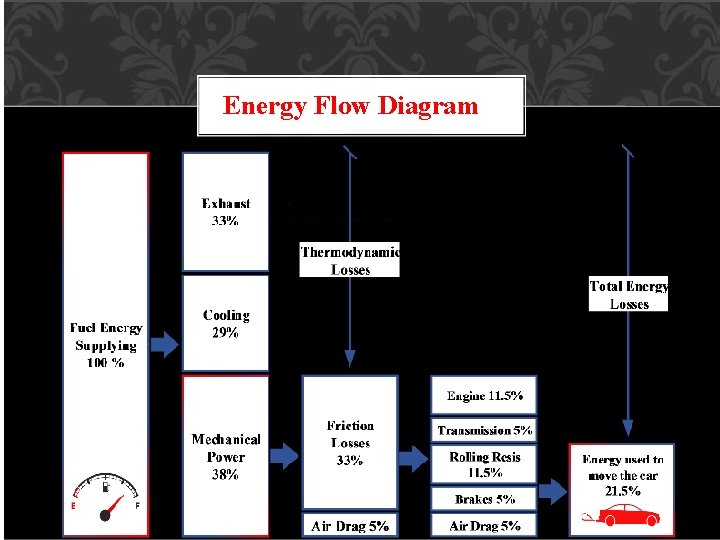
Energy Flow Diagram