
Thermal Energy Heat Chapter 16 Work Heat Heat

- Slides: 16
Thermal Energy & Heat Chapter 16
Work & Heat • Heat flows spontaneously from hot objects to cold objects. • Heat is a transfer of energy from one object to another object
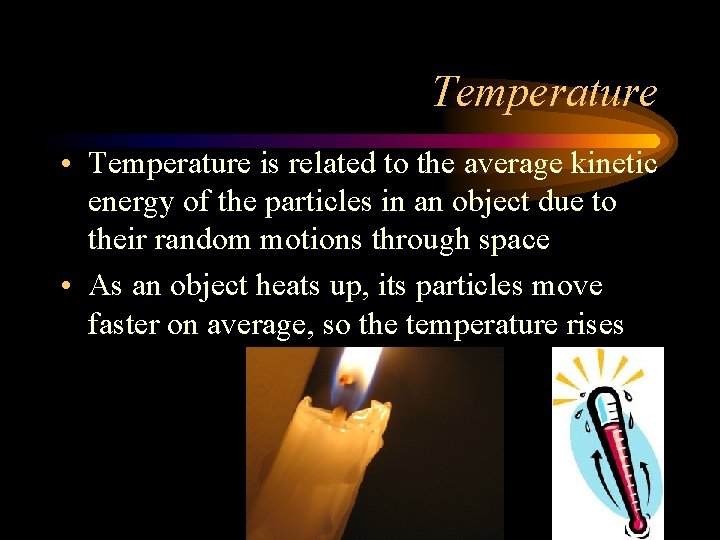
Temperature • Temperature is related to the average kinetic energy of the particles in an object due to their random motions through space • As an object heats up, its particles move faster on average, so the temperature rises
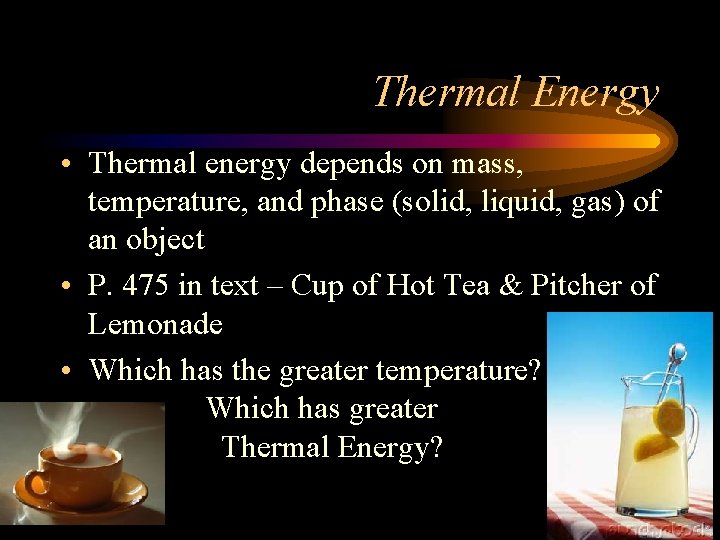
Thermal Energy • Thermal energy depends on mass, temperature, and phase (solid, liquid, gas) of an object • P. 475 in text – Cup of Hot Tea & Pitcher of Lemonade • Which has the greater temperature? Which has greater Thermal Energy?
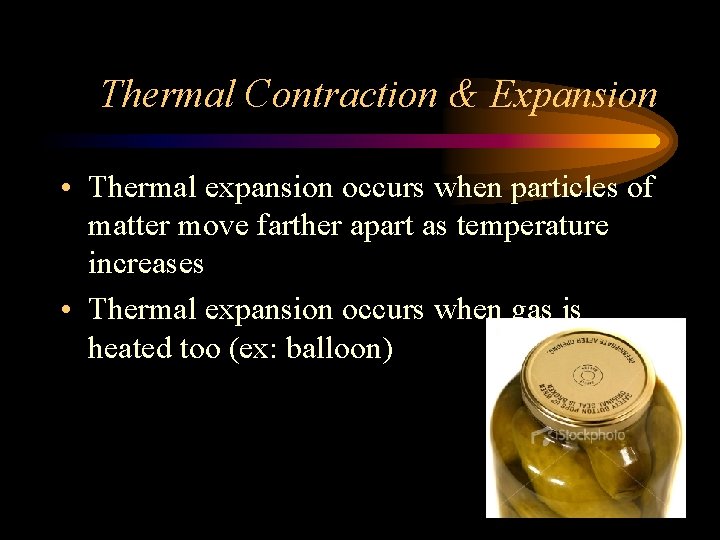
Thermal Contraction & Expansion • Thermal expansion occurs when particles of matter move farther apart as temperature increases • Thermal expansion occurs when gas is heated too (ex: balloon)
Specific Heat • The amount of heat it takes to raise the temperature of 1 gram of a material by 1°C
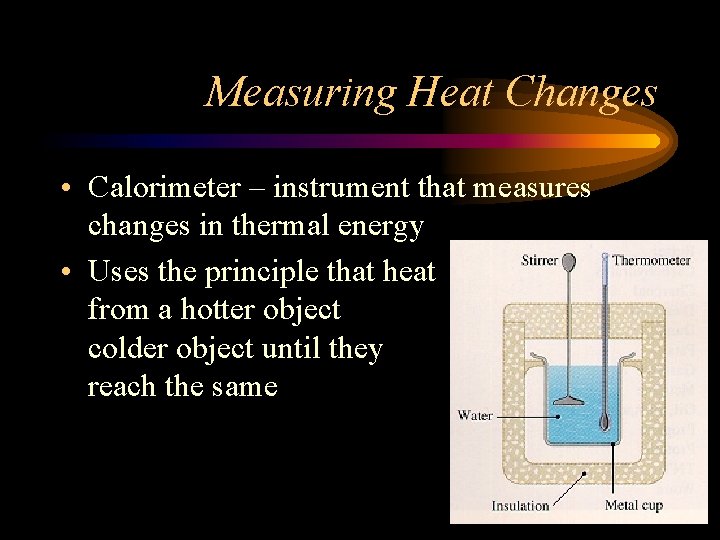
Measuring Heat Changes • Calorimeter – instrument that measures changes in thermal energy • Uses the principle that heat flows from a hotter object to a colder object until they both reach the same temperature
Heat & Thermodynamics • Conduction • Convection • Radiation
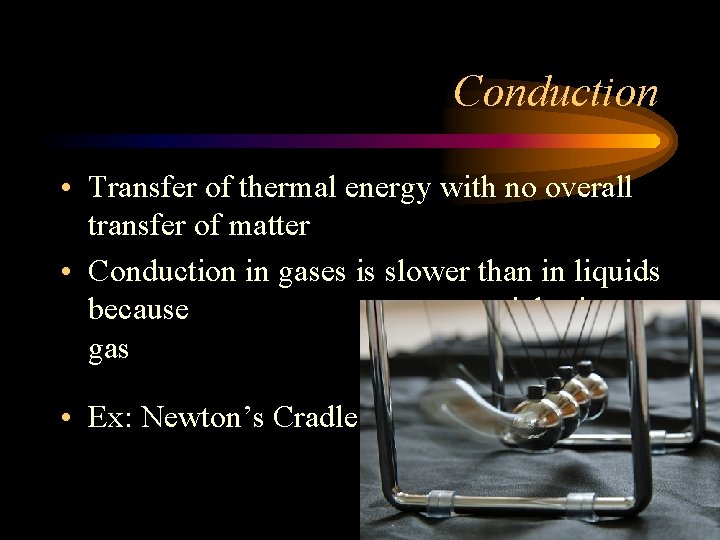
Conduction • Transfer of thermal energy with no overall transfer of matter • Conduction in gases is slower than in liquids because particles in a gas collide less often • Ex: Newton’s Cradle
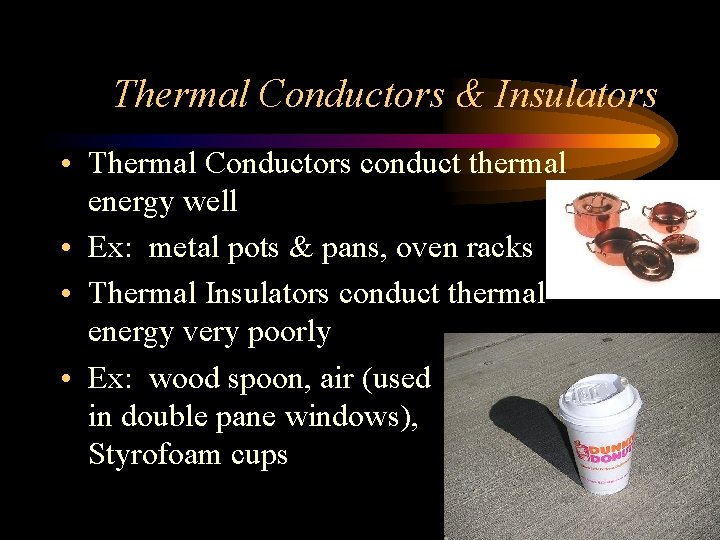
Thermal Conductors & Insulators • Thermal Conductors conduct thermal energy well • Ex: metal pots & pans, oven racks • Thermal Insulators conduct thermal energy very poorly • Ex: wood spoon, air (used in double pane windows), Styrofoam cups
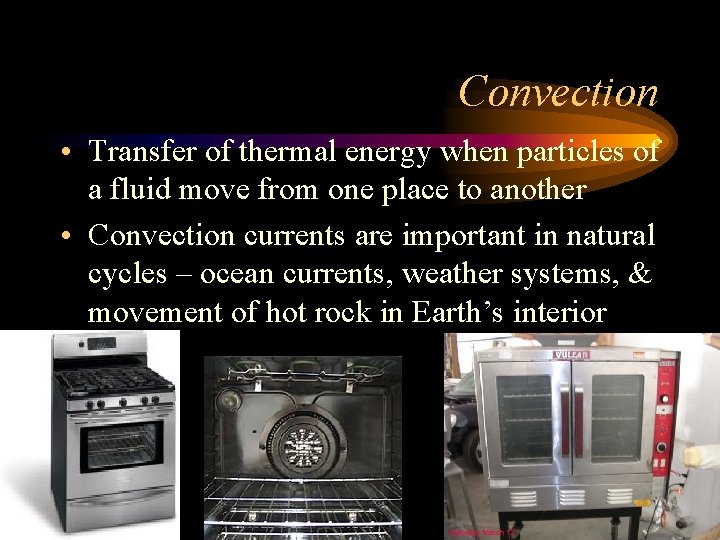
Convection • Transfer of thermal energy when particles of a fluid move from one place to another • Convection currents are important in natural cycles – ocean currents, weather systems, & movement of hot rock in Earth’s interior
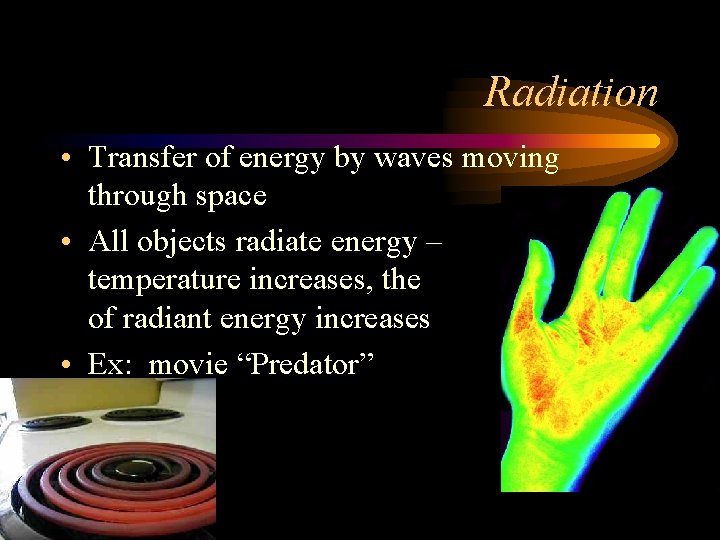
Radiation • Transfer of energy by waves moving through space • All objects radiate energy – as temperature increases, the rate of radiant energy increases • Ex: movie “Predator”
1 st Law of Thermodynamics • Energy is conserved • Energy is never created or destroyed • Energy is conserved
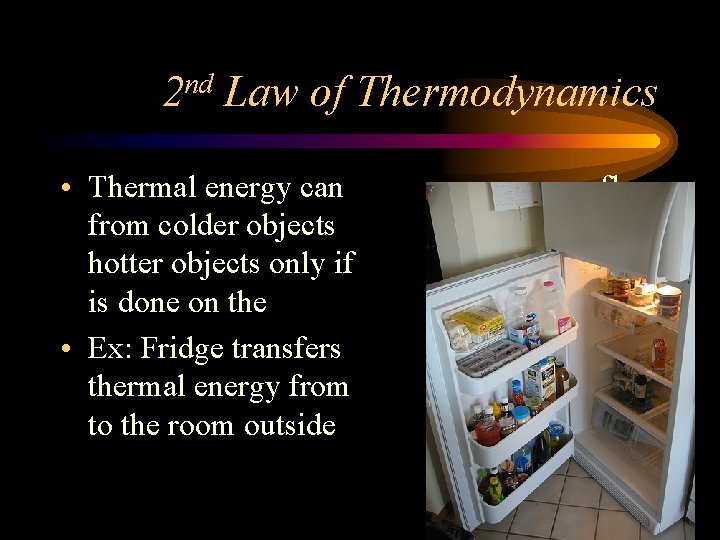
2 nd Law of Thermodynamics • Thermal energy can from colder objects hotter objects only if is done on the • Ex: Fridge transfers thermal energy from to the room outside flow to work system inside
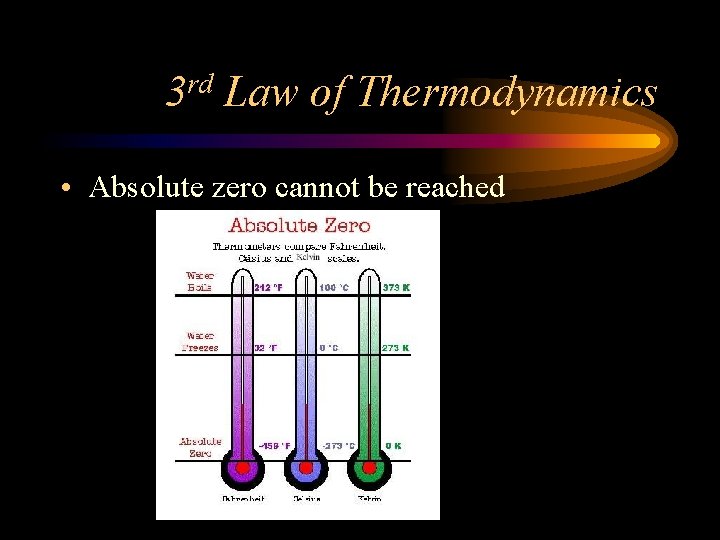
3 rd Law of Thermodynamics • Absolute zero cannot be reached