
There is structural variation in antibody heavy chain
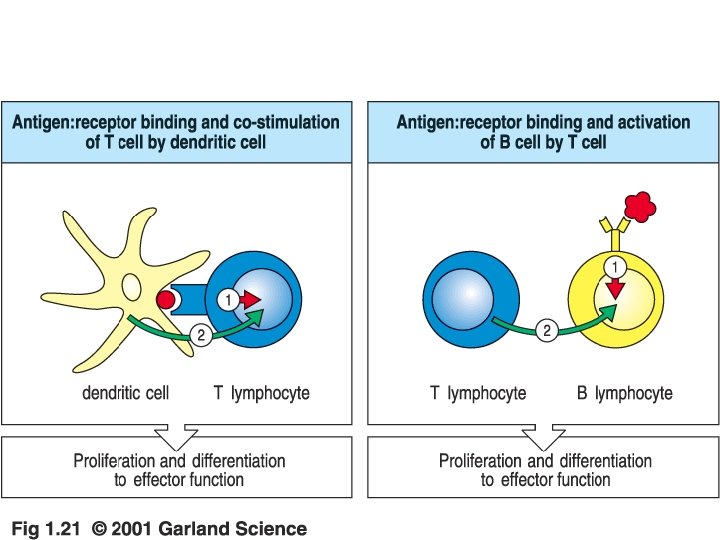
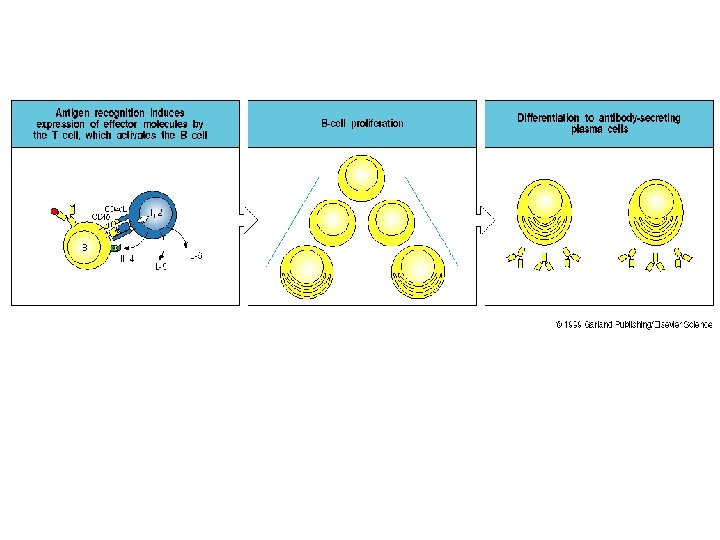
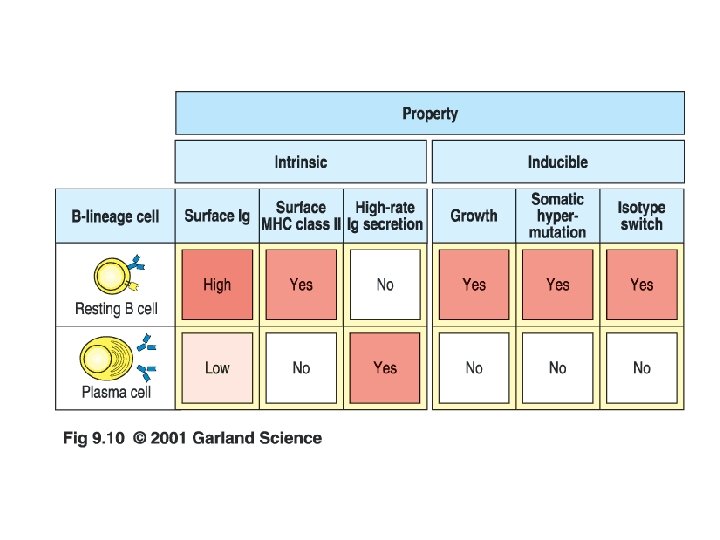
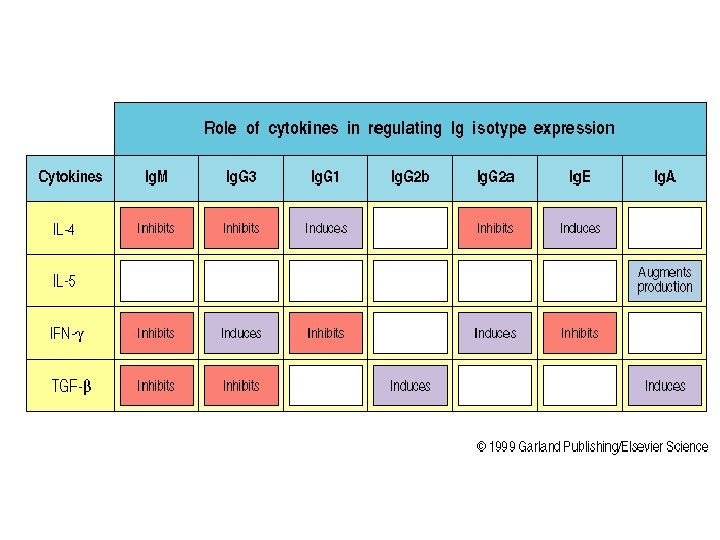
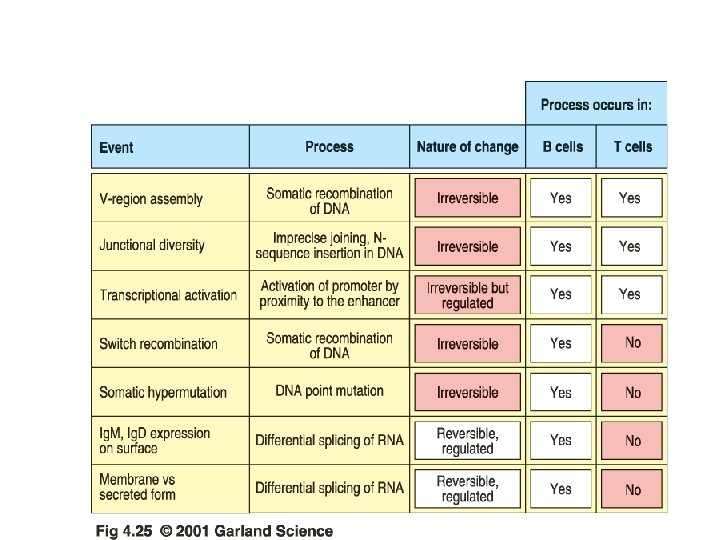
There is structural variation in antibody heavy chain constant regions. These variations are critical for effector functions and are achieved in two different ways, RNA splicing and DNA switch recombination. The signals regulating these changes come from antigen binding to the B cell receptor and antigen specific T cells. During the immune response B cells mutate their immunoglobulin variable regions under the control of T cells and other signals.
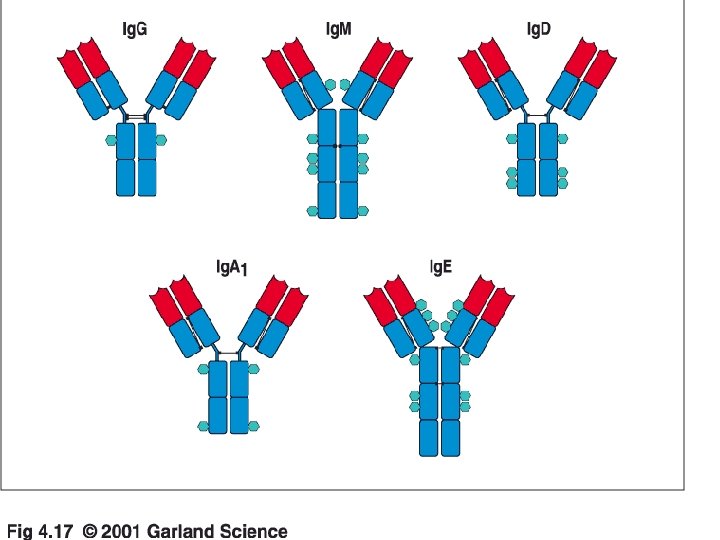
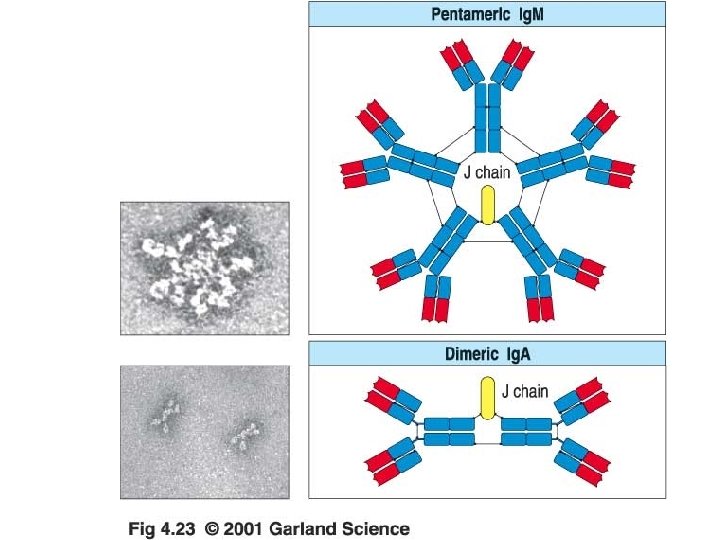
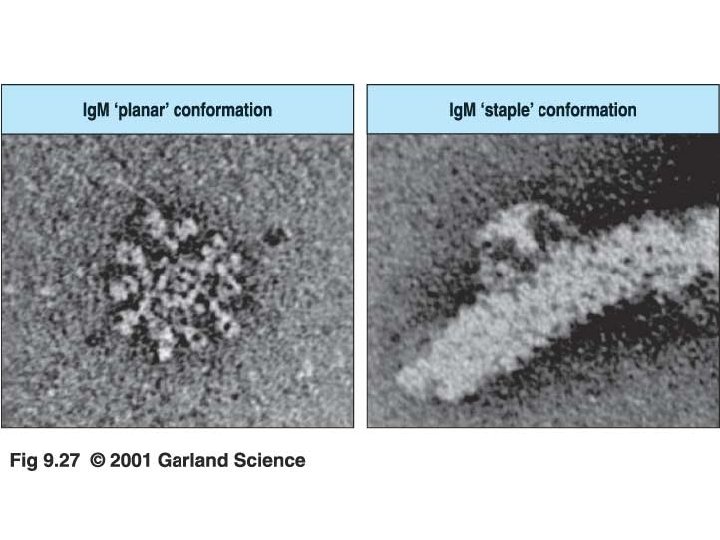
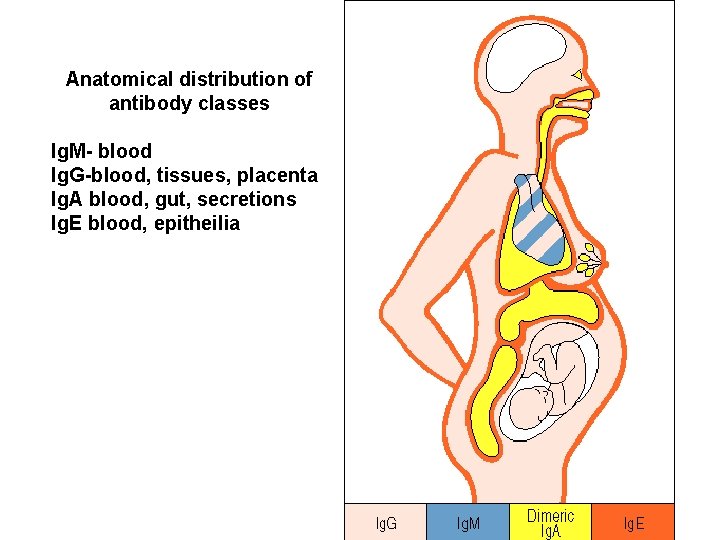
Anatomical distribution of antibody classes Ig. M- blood Ig. G-blood, tissues, placenta Ig. A blood, gut, secretions Ig. E blood, epitheilia
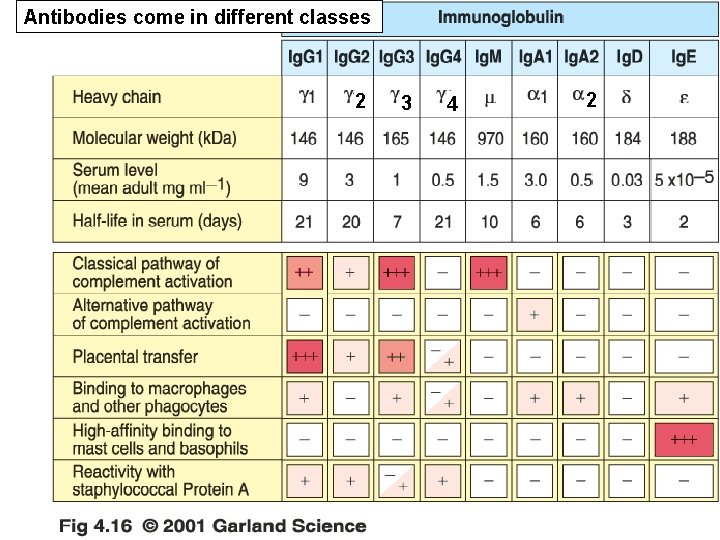
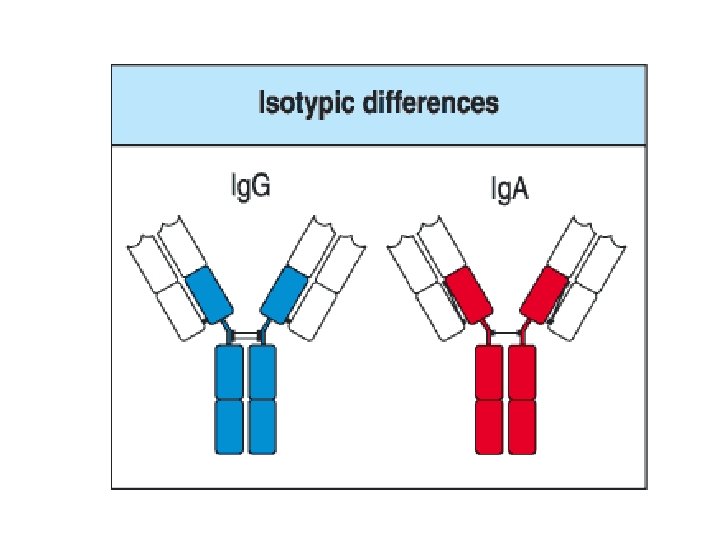
Antibodies come in different classes 2 3 4 2

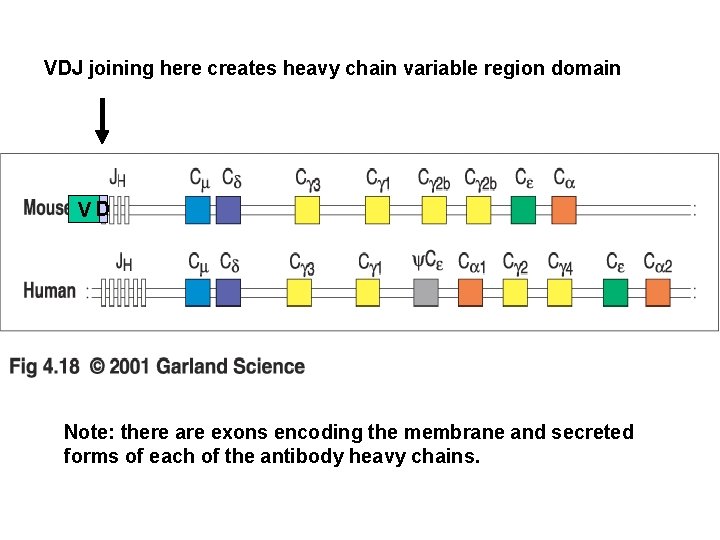
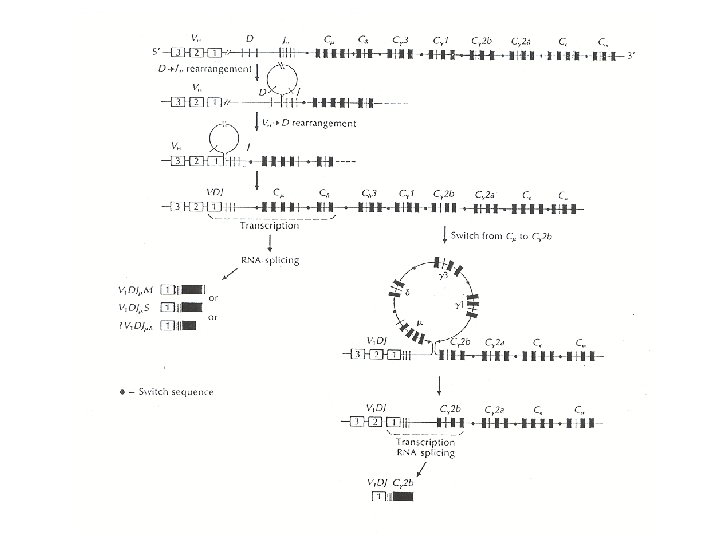
VDJ joining here creates heavy chain variable region domain VD Note: there are exons encoding the membrane and secreted forms of each of the antibody heavy chains.
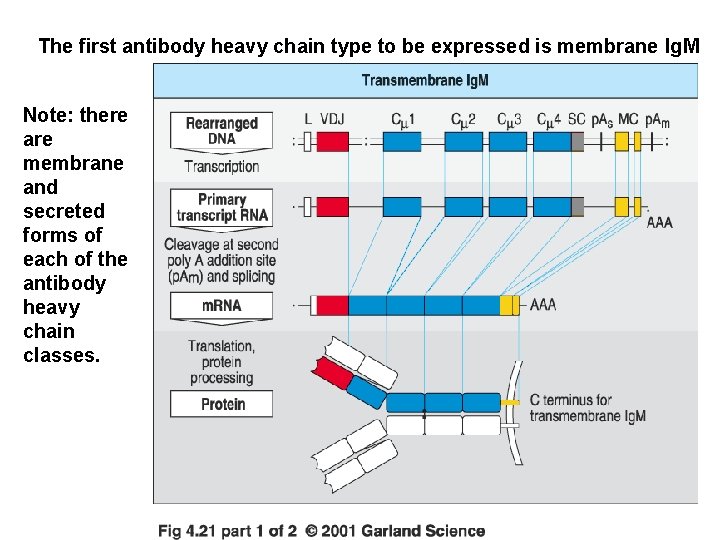
The first antibody heavy chain type to be expressed is membrane Ig. M Note: there are membrane and secreted forms of each of the antibody heavy chain classes.
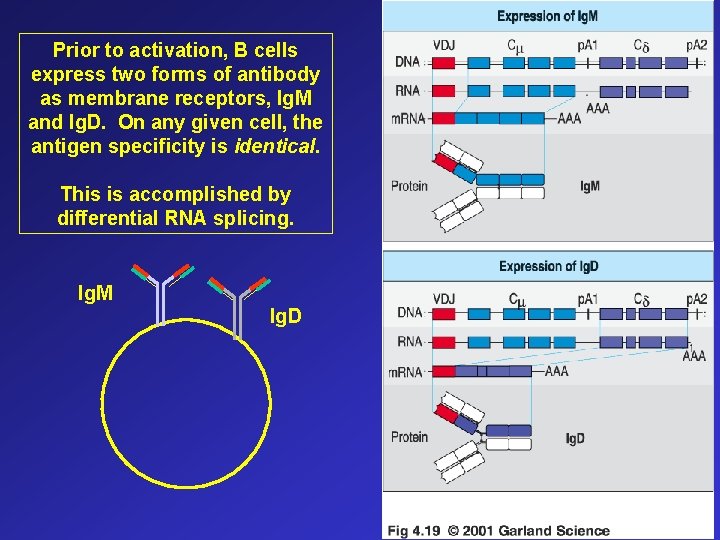
Prior to activation, B cells express two forms of antibody as membrane receptors, Ig. M and Ig. D. On any given cell, the antigen specificity is identical. This is accomplished by differential RNA splicing. Ig. M Ig. D
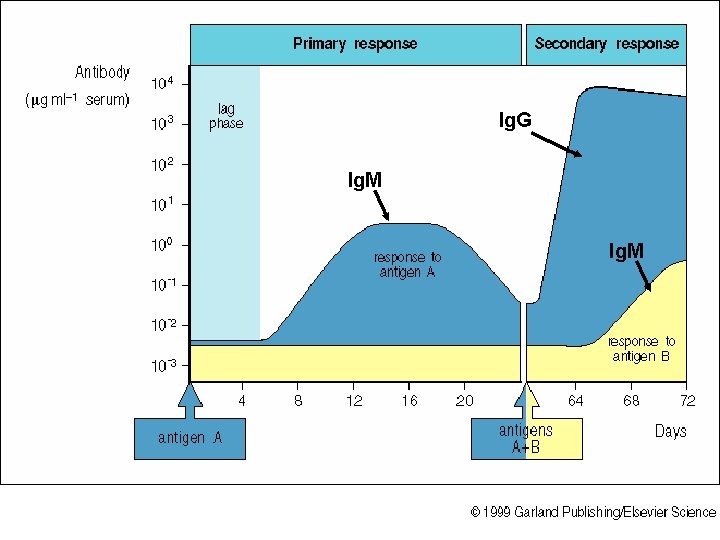
Ig. G Ig. M
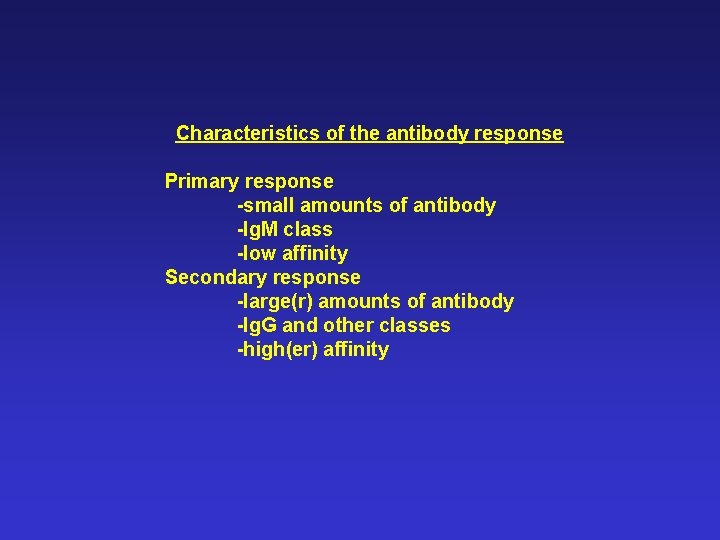
Characteristics of the antibody response Primary response -small amounts of antibody -Ig. M class -low affinity Secondary response -large(r) amounts of antibody -Ig. G and other classes -high(er) affinity
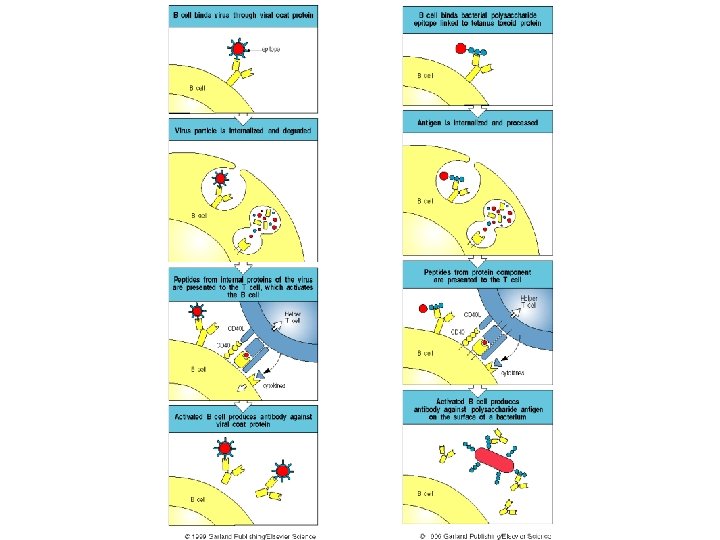
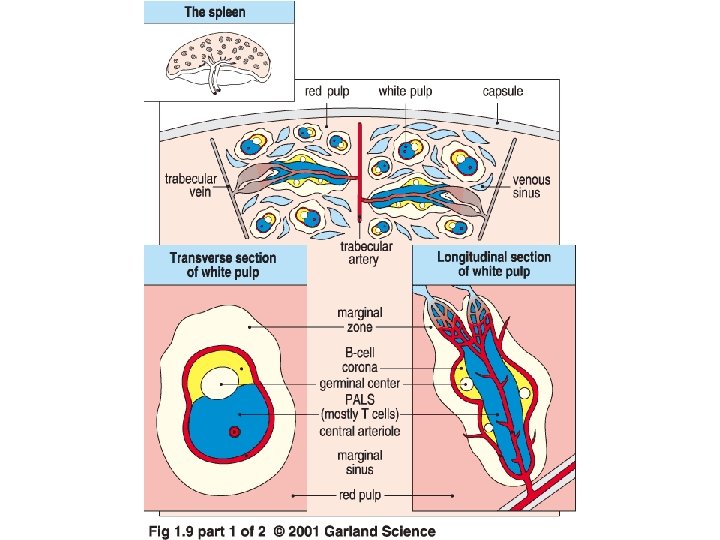
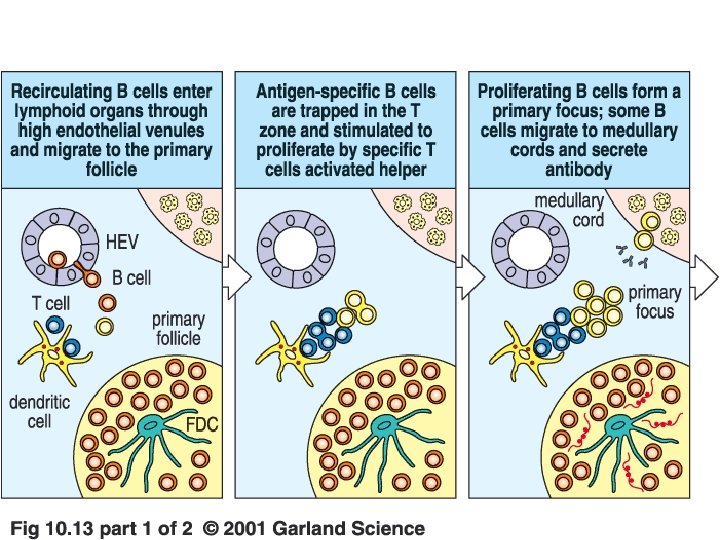
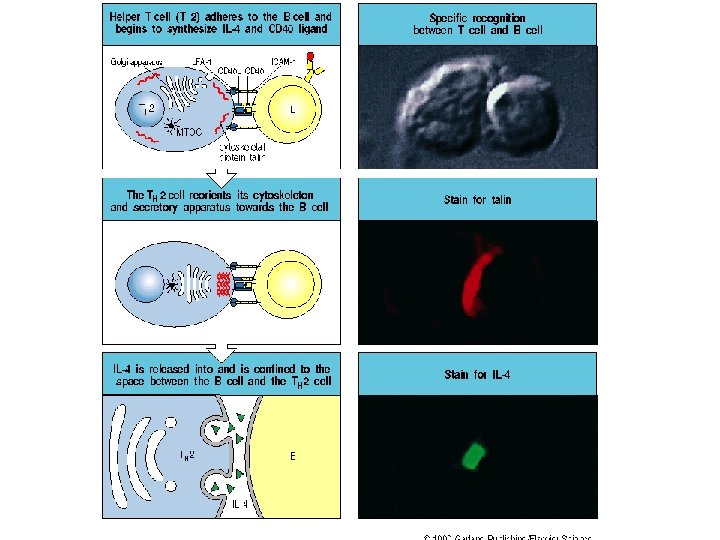
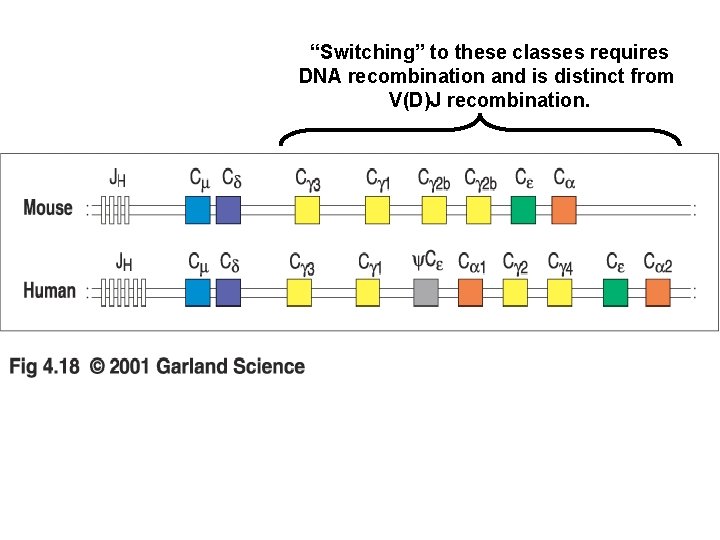
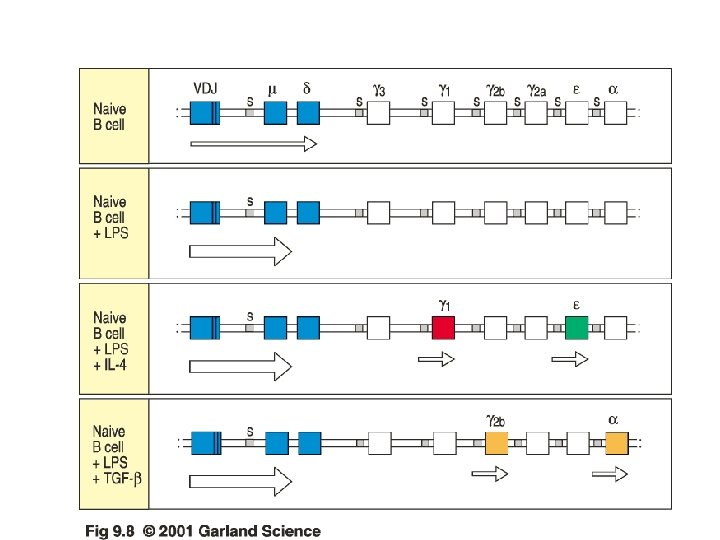
“Switching” to these classes requires DNA recombination and is distinct from V(D)J recombination.
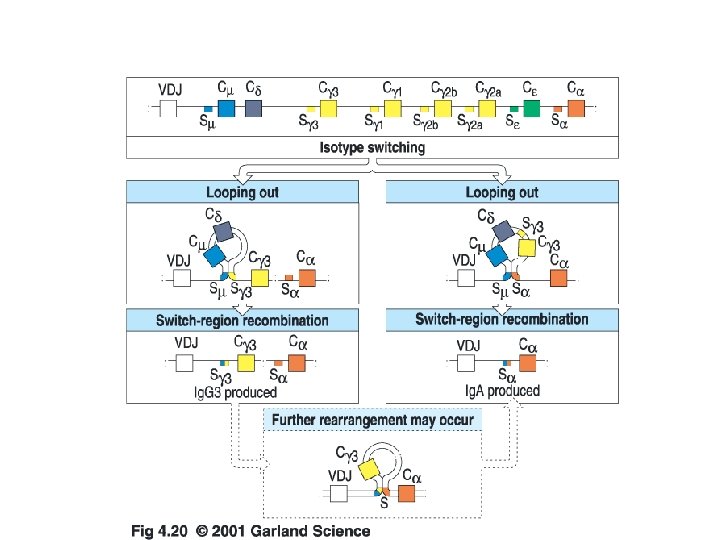
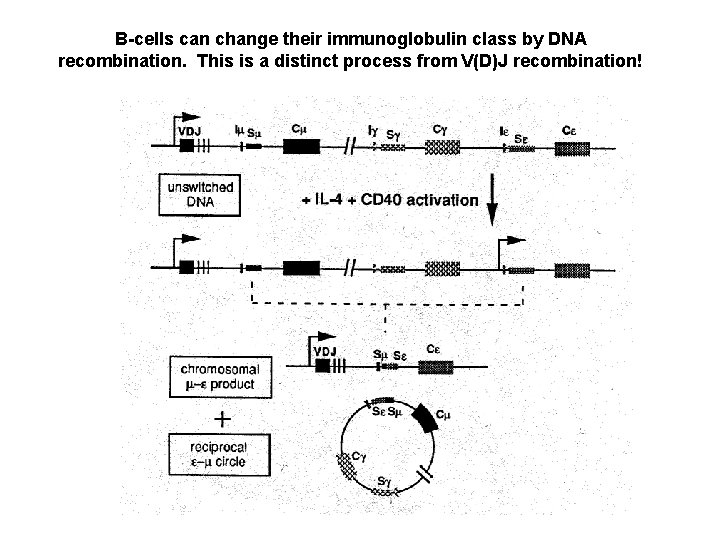
B-cells can change their immunoglobulin class by DNA recombination. This is a distinct process from V(D)J recombination!
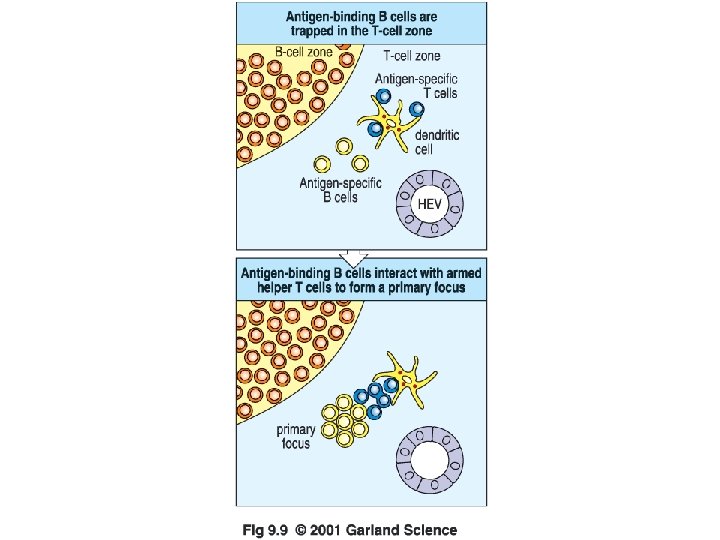
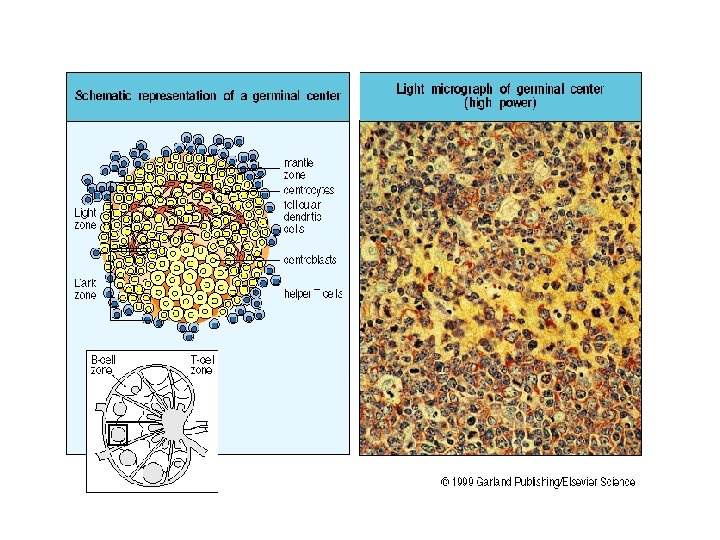
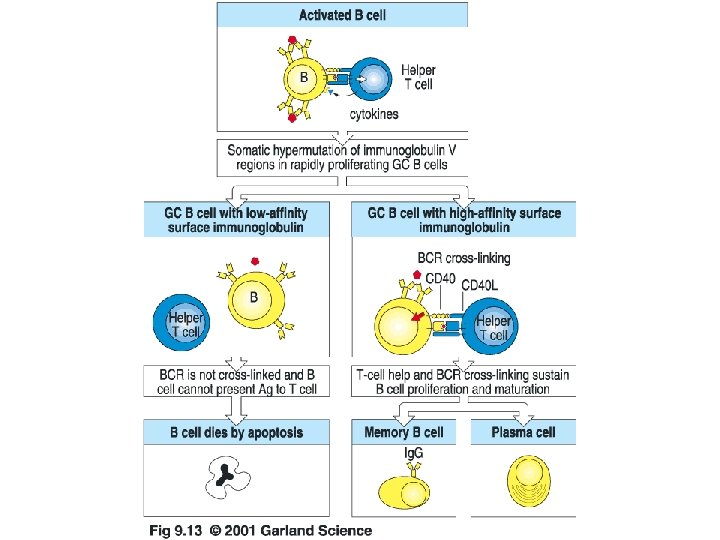
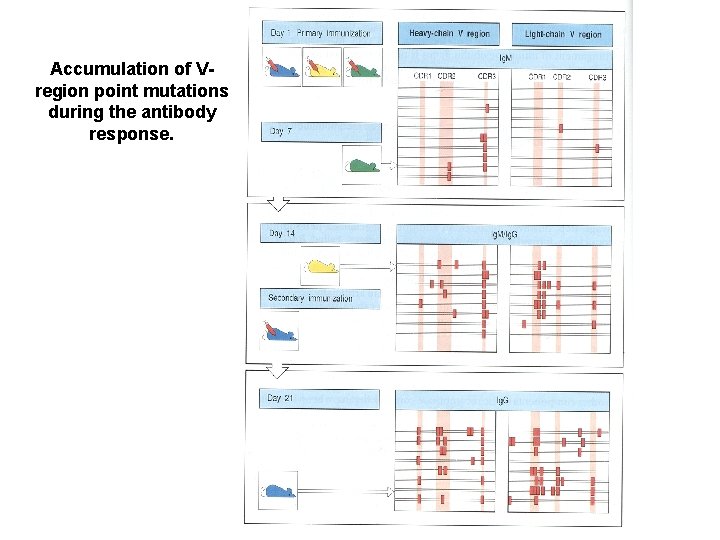
Accumulation of Vregion point mutations during the antibody response.
- Slides: 43