
There are two general approaches to the SDLC
- Slides: 26
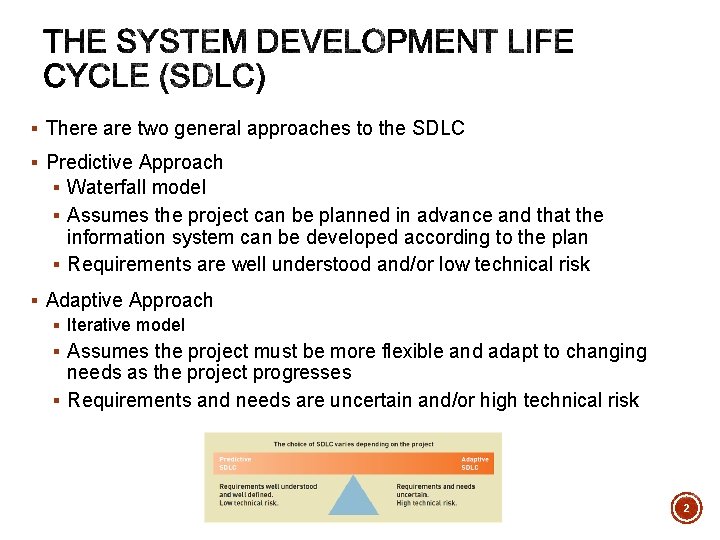
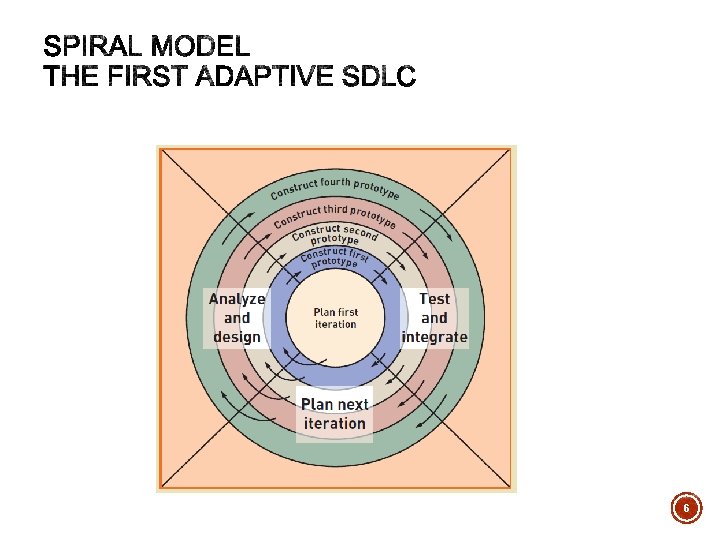
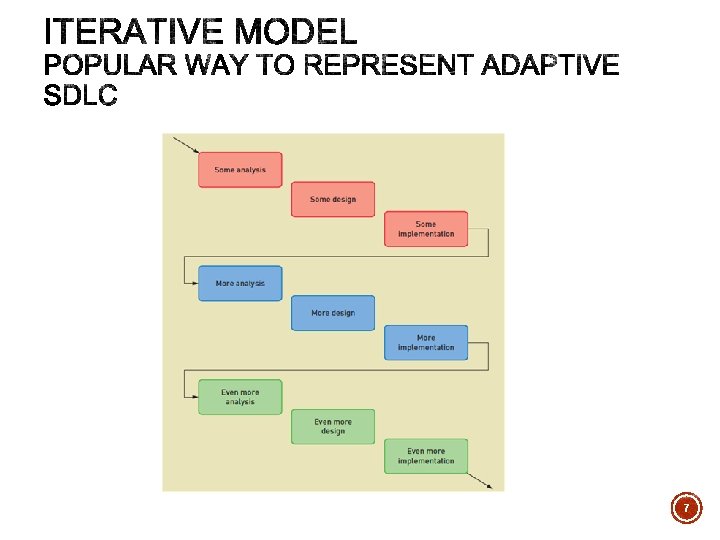
§ There are two general approaches to the SDLC § Predictive Approach § Waterfall model § Assumes the project can be planned in advance and that the information system can be developed according to the plan § Requirements are well understood and/or low technical risk § Adaptive Approach § Iterative model § Assumes the project must be more flexible and adapt to changing needs as the project progresses § Requirements and needs are uncertain and/or high technical risk 2
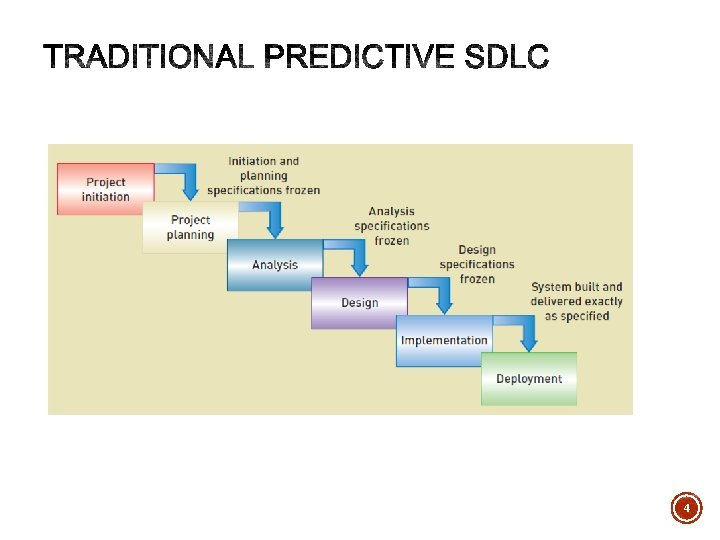
l l l Earlier approach based on engineering Typically have sequential Phases are related groups of development activities, such as planning, analysis, design, implementation, and deployment Waterfall model l SDLC that assumes phases can be completed sequentially with no overlap or iteration l Once one phase is completed, you fall over the waterfall to the next phase, no going back 3
4
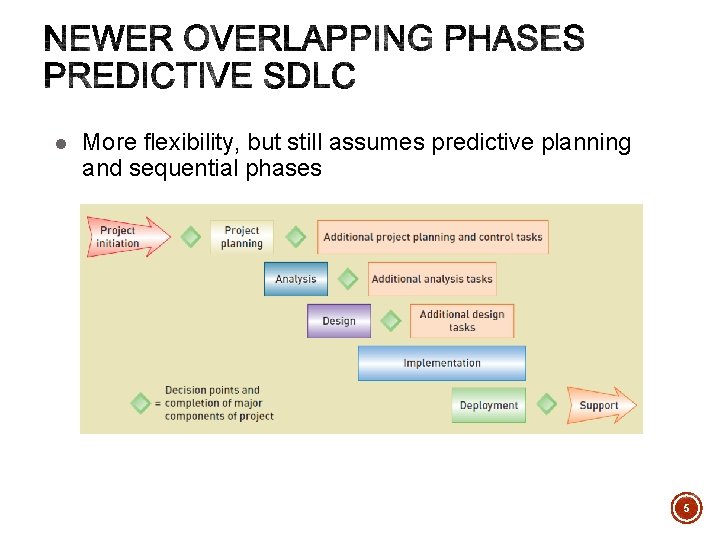
l More flexibility, but still assumes predictive planning and sequential phases 5
6
7
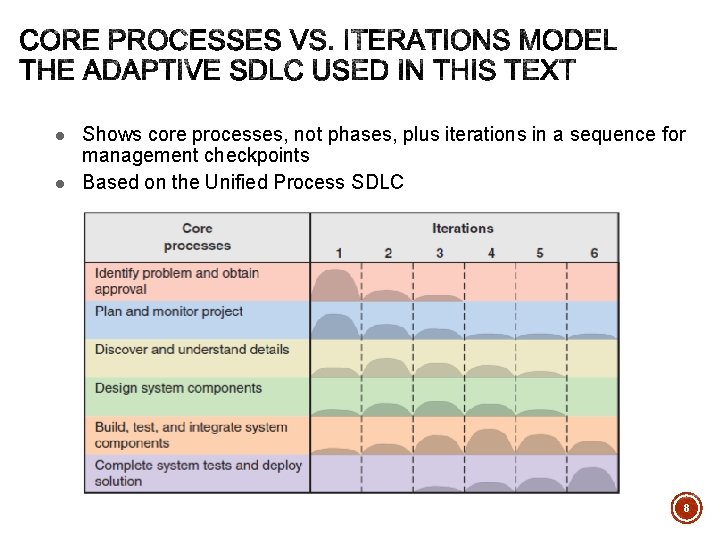
l l Shows core processes, not phases, plus iterations in a sequence for management checkpoints Based on the Unified Process SDLC 8
§ There are many specific system development methodologies used in practice, and this chapter covers three influential ones § The Unified Process (UP) § Extreme Programming (XP) § Scrum § These methodologies all use an iterative SDLC § The Unified Process uses UML § Extreme Programming and Scrum are based on agile principles, but the Unified Process can also be used in an agile fashion § Many organizations mix and match features of each of these when creating their own methodology 9
§ Originally developed by Booch, Rumbaugh, and Jacobson, who previously developed UML at Rational Software (now part of IBM) § The UP is now widely recognized as a highly influential innovation in software development methodologies for object -oriented development using an adaptive approach § The original version of UP defined an elaborate set of activities and deliverables for every step of the development process § More recent versions are streamlined, with fewer activities and deliverables, simplifying the methodology § Much of the book’s methodology is loosely based on the Unified Process (in an agile form) 10
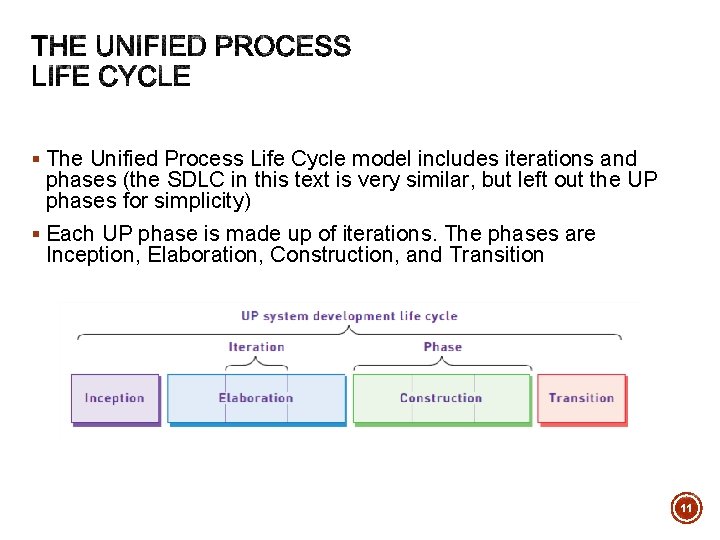
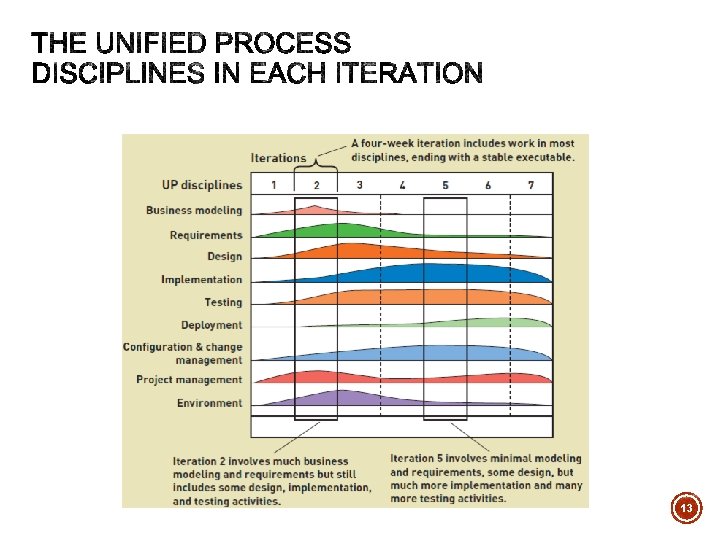
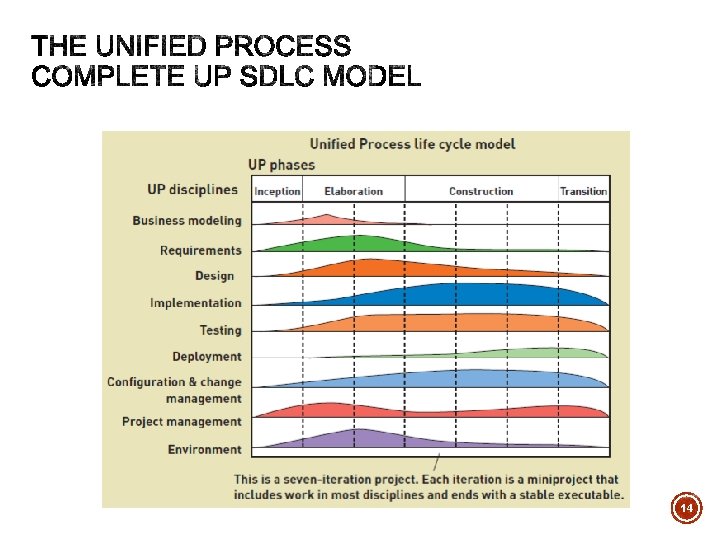
§ The Unified Process Life Cycle model includes iterations and phases (the SDLC in this text is very similar, but left out the UP phases for simplicity) § Each UP phase is made up of iterations. The phases are Inception, Elaboration, Construction, and Transition 11
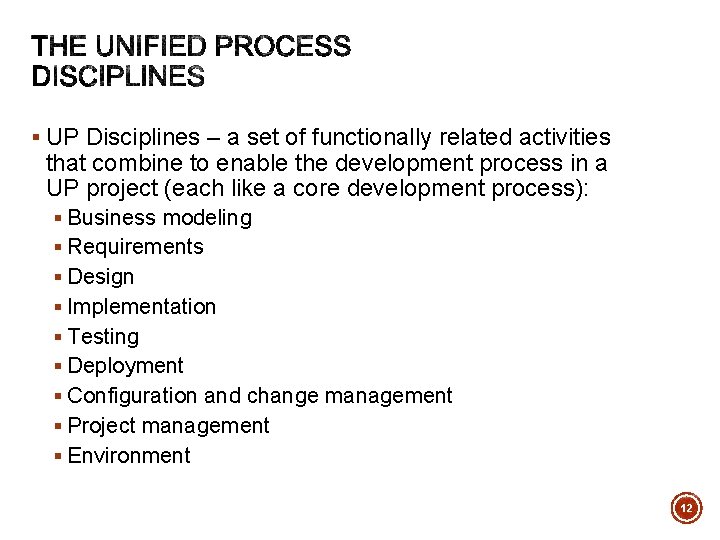
§ UP Disciplines – a set of functionally related activities that combine to enable the development process in a UP project (each like a core development process): § Business modeling § Requirements § Design § Implementation § Testing § Deployment § Configuration and change management § Project management § Environment 12
13
14
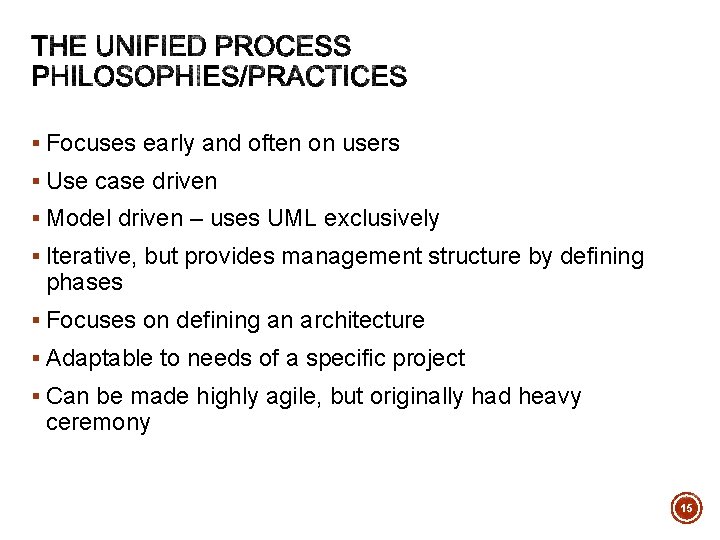
§ Focuses early and often on users § Use case driven § Model driven – uses UML exclusively § Iterative, but provides management structure by defining phases § Focuses on defining an architecture § Adaptable to needs of a specific project § Can be made highly agile, but originally had heavy ceremony 15
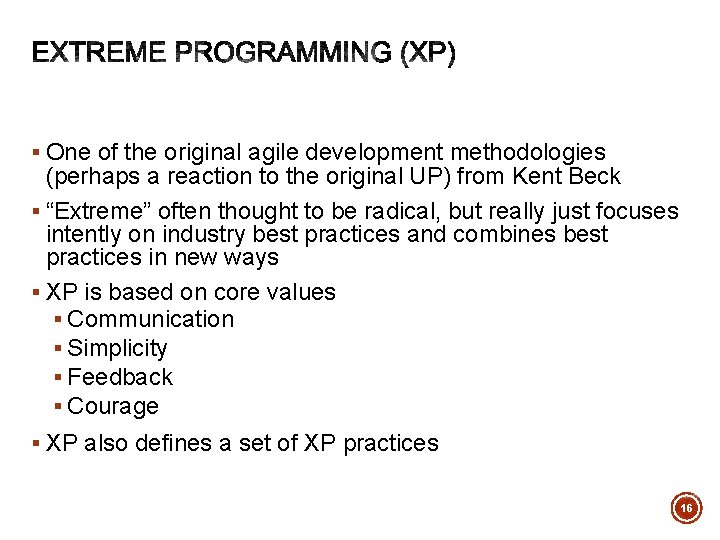
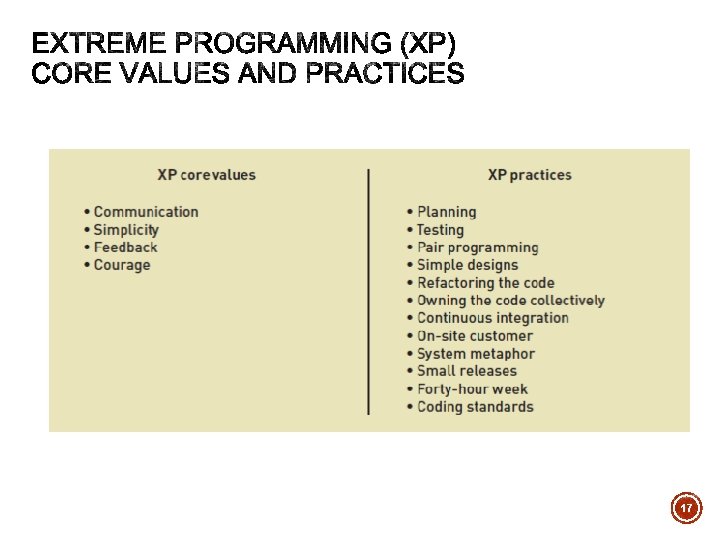
§ One of the original agile development methodologies (perhaps a reaction to the original UP) from Kent Beck § “Extreme” often thought to be radical, but really just focuses intently on industry best practices and combines best practices in new ways § XP is based on core values § Communication § Simplicity § Feedback § Courage § XP also defines a set of XP practices 16
17
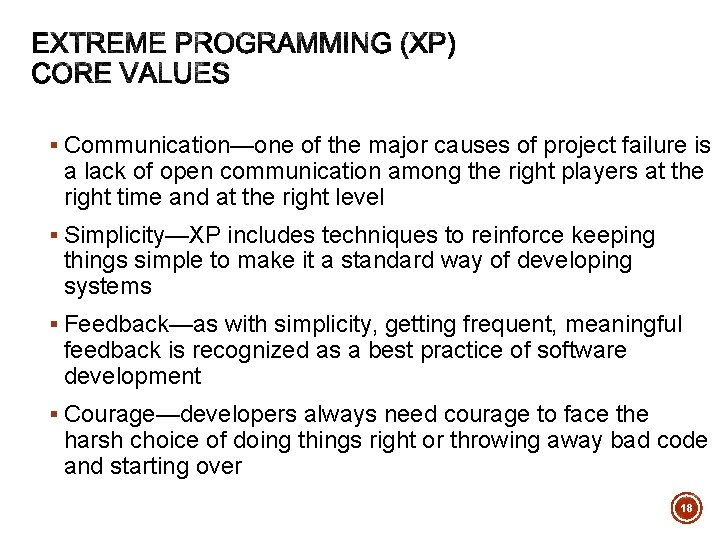
§ Communication—one of the major causes of project failure is a lack of open communication among the right players at the right time and at the right level § Simplicity—XP includes techniques to reinforce keeping things simple to make it a standard way of developing systems § Feedback—as with simplicity, getting frequent, meaningful feedback is recognized as a best practice of software development § Courage—developers always need courage to face the harsh choice of doing things right or throwing away bad code and starting over 18
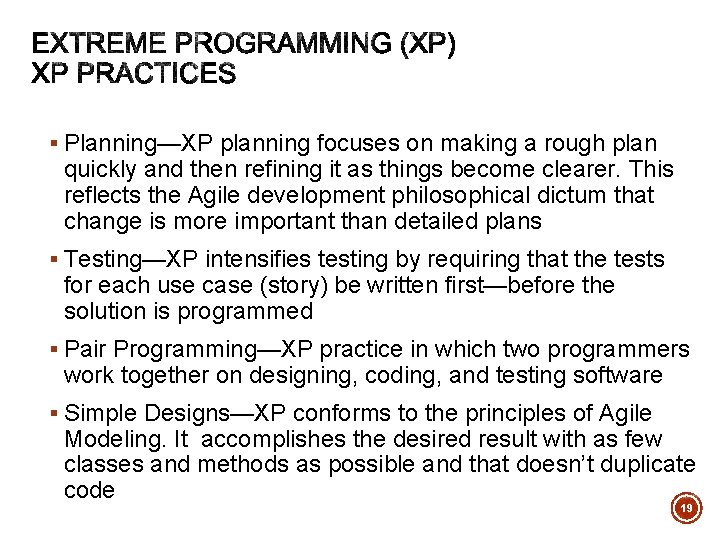
§ Planning—XP planning focuses on making a rough plan quickly and then refining it as things become clearer. This reflects the Agile development philosophical dictum that change is more important than detailed plans § Testing—XP intensifies testing by requiring that the tests for each use case (story) be written first—before the solution is programmed § Pair Programming—XP practice in which two programmers work together on designing, coding, and testing software § Simple Designs—XP conforms to the principles of Agile Modeling. It accomplishes the desired result with as few classes and methods as possible and that doesn’t duplicate code 19
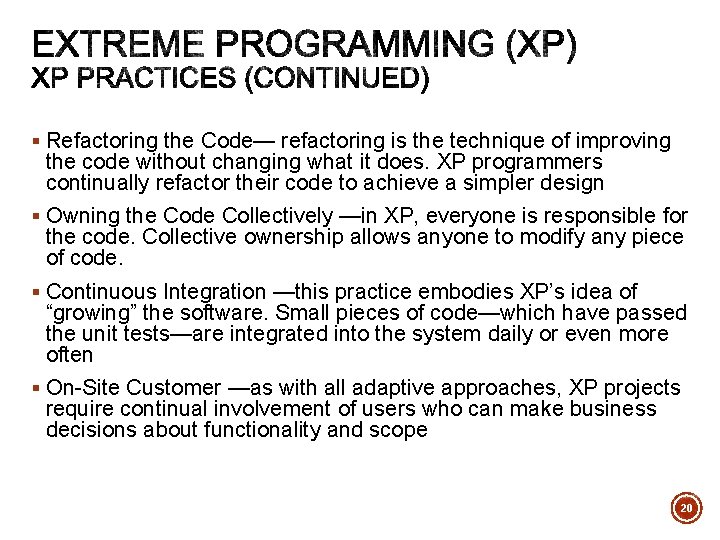
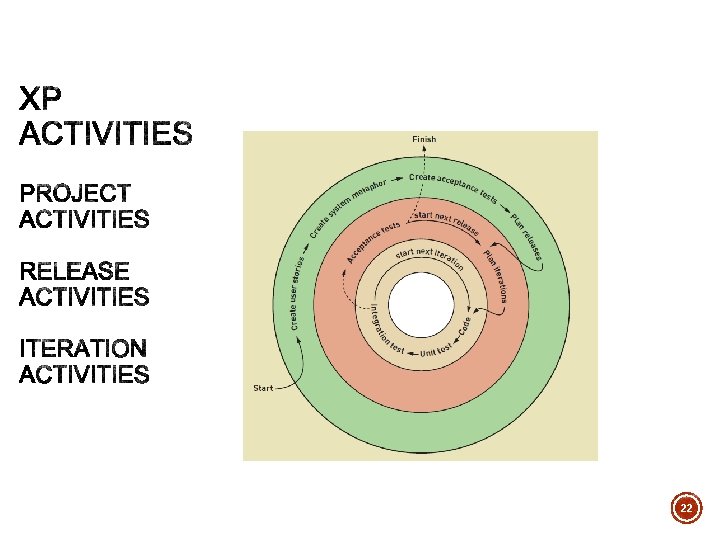
§ Refactoring the Code— refactoring is the technique of improving the code without changing what it does. XP programmers continually refactor their code to achieve a simpler design § Owning the Code Collectively —in XP, everyone is responsible for the code. Collective ownership allows anyone to modify any piece of code. § Continuous Integration —this practice embodies XP’s idea of “growing” the software. Small pieces of code—which have passed the unit tests—are integrated into the system daily or even more often § On-Site Customer —as with all adaptive approaches, XP projects require continual involvement of users who can make business decisions about functionality and scope 20
§ System Metaphor —a system metaphor should be easily understood and well known to the members of the development team. It can guide members toward a vision and help them understand the system § Small Releases —consistent with the entire philosophy of growing the software, small and frequent releases provide upgraded solutions to the users and keep them involved in the project § Forty-Hour Week — the exact number of hours a developer works isn’t the issue. The issue is that the project shouldn’t be a death march that burns out every member of the team § Coding Standards —developers should follow standards for coding and documentation 21
22
§ Another influential agile, iterative development methodology based on ideas from Rugby § A Scrum is used to get a ball back into play after a penalty--it begins quickly, is a very intense effort, involves the entire team, and usually only lasts for a short duration § Scrum philosophy is the complete control a team exerts over its own organization and its work processes. Software is developed incrementally, and controls are imposed empirically—by focusing on things that can be accomplished. 23
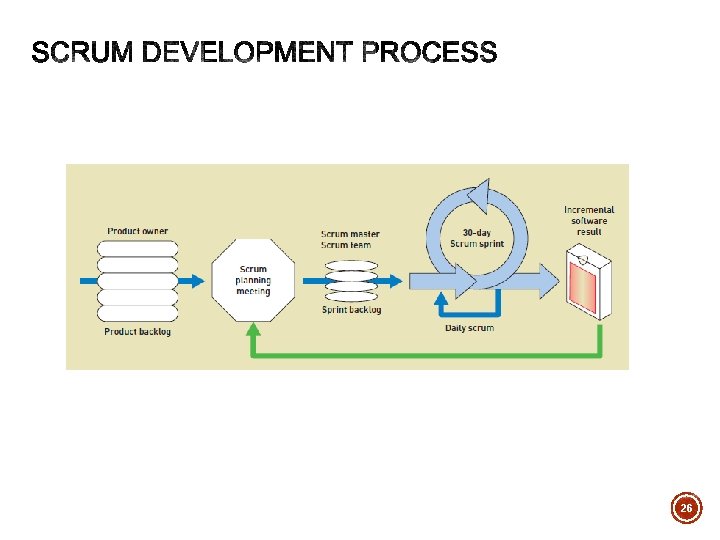
§ Product backlog – a prioritized list of user requirements used to choose work to be done in a Scrum project § Only a few of the high-priority items are worked on at a time § Product owner – the client stakeholder for whom the system is being built § Responsible for project backlog and priorities § Scrum master – the person in charge of a Scrum project—similar to a project manager § Scrum team is usually 5 to 9 people § Scrum team sets own goals, organizes self, makes decisions 24
§ Sprint – a time-controlled mini-project that implements a specific portion of a system § Firm 30 day time box with specific goal or deliverable § The scope of that sprint is then frozen, and no one can change it— neither the product owner nor any other users § Sprint backlog defines the scope § Daily Scrum – a daily meeting of all members of the team to report progress (15 minutes max) § Sprint final half-day review meeting – scheduled to review and identify changes needed for the following sprints 25
26