
There are 2 primary forces that shape our

- Slides: 28
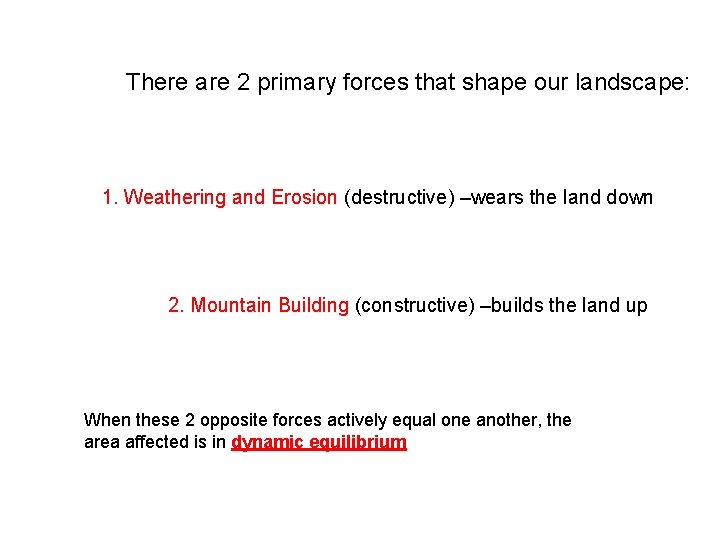
There are 2 primary forces that shape our landscape: 1. Weathering and Erosion (destructive) –wears the land down 2. Mountain Building (constructive) –builds the land up When these 2 opposite forces actively equal one another, the area affected is in dynamic equilibrium
weathering Weathering is the breakdown of rock (the earth’s crust) by either physical or chemical means
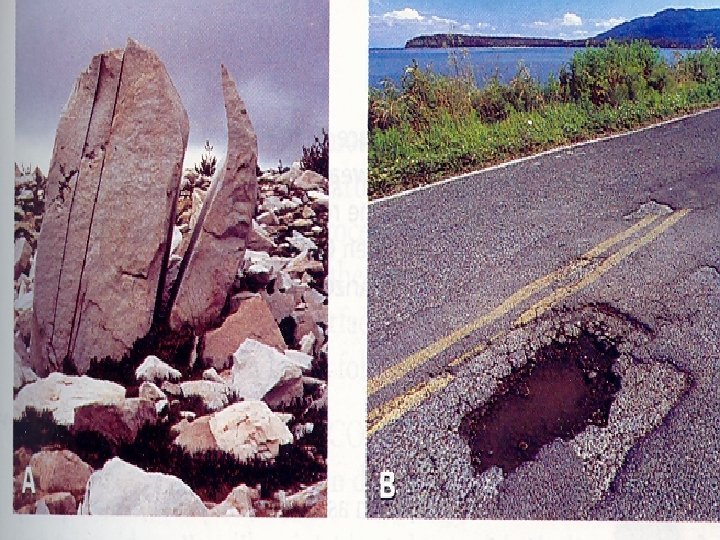
Physical Weathering 1) Freeze-Thaw or Frost Wedging 2) Exfoliation 3) Biological or Root Action
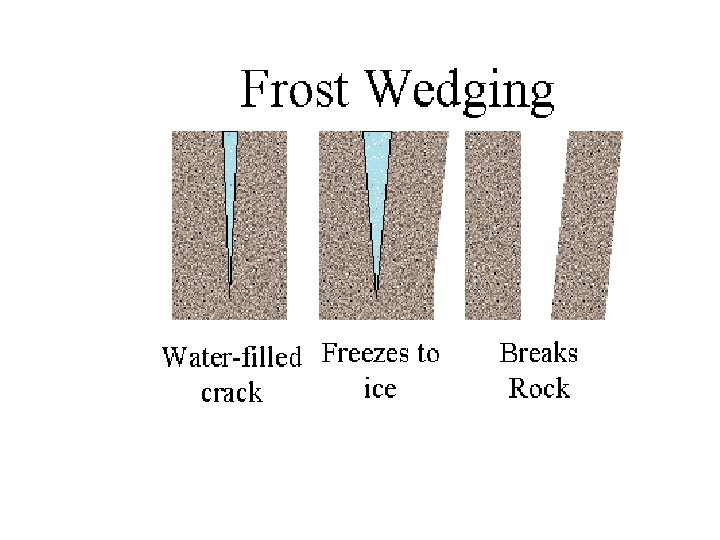
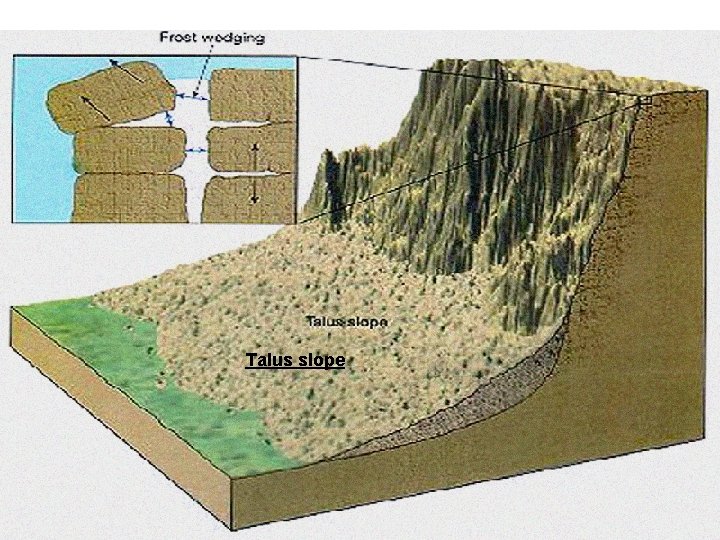
Freeze-thaw
Talus slope
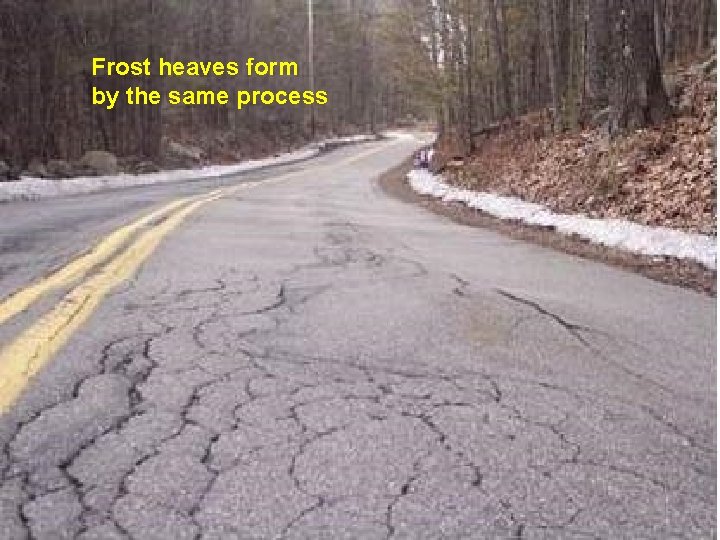
Frost heaves form by the same process
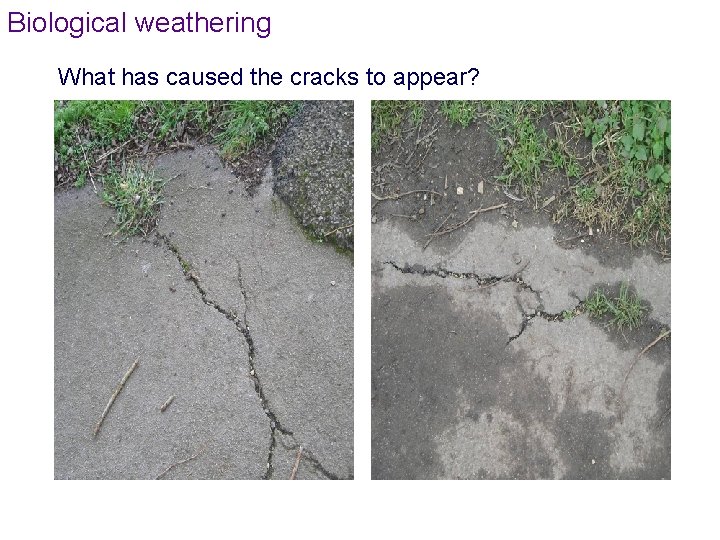
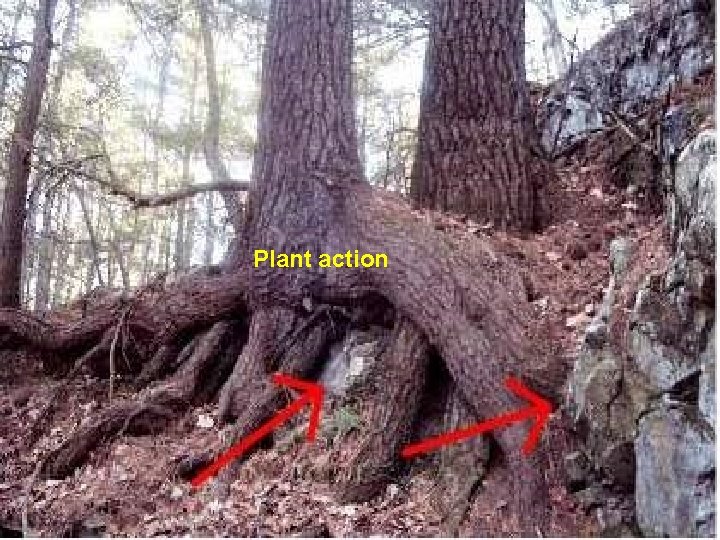
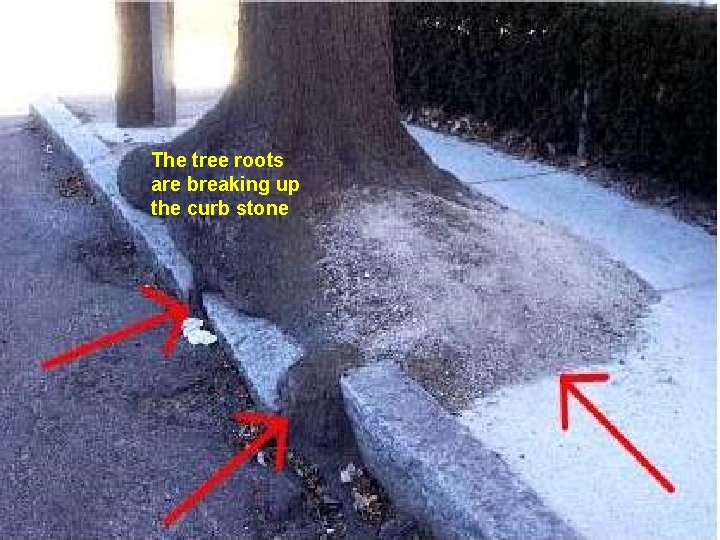
Biological weathering What has caused the cracks to appear?
Plant action
The tree roots are breaking up the curb stone
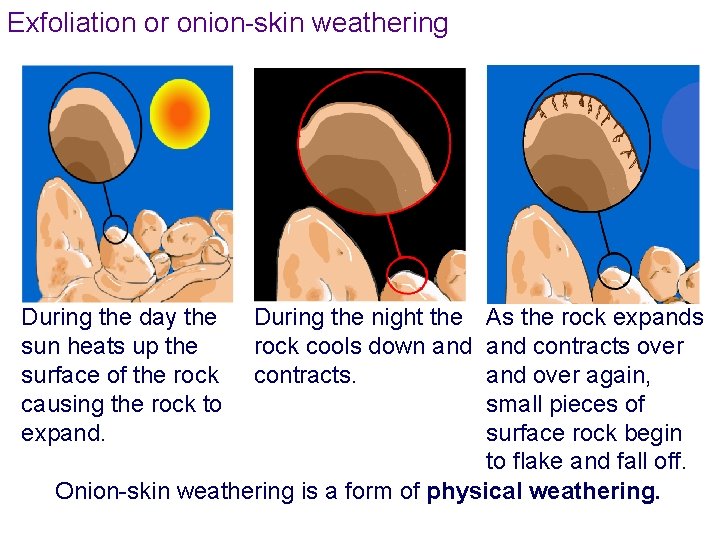
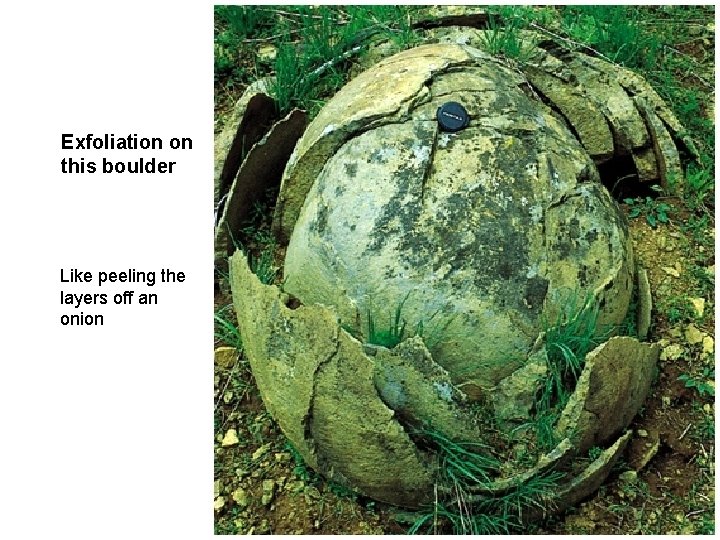
Exfoliation or onion-skin weathering During the day the sun heats up the surface of the rock causing the rock to expand. During the night the As the rock expands rock cools down and contracts over contracts. and over again, small pieces of surface rock begin to flake and fall off. Onion-skin weathering is a form of physical weathering.
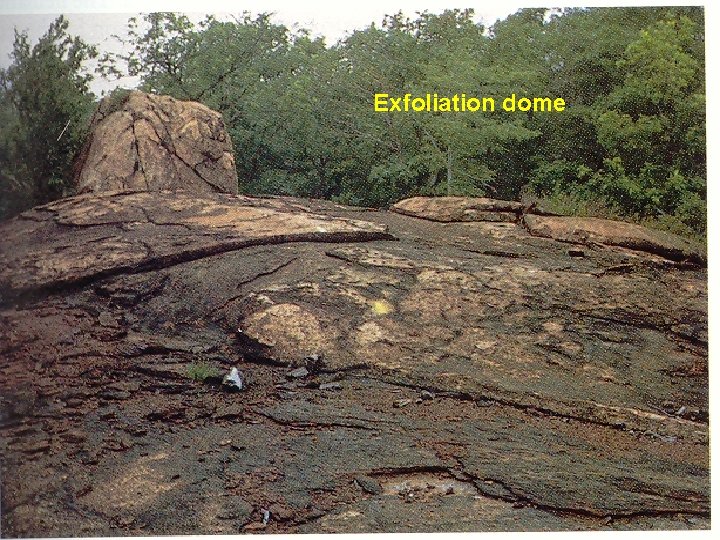
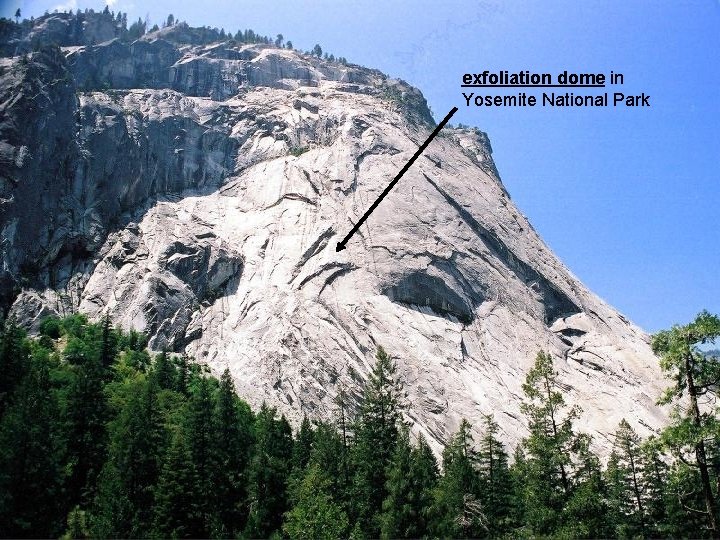
Exfoliation dome
Exfoliation on this boulder Like peeling the layers off an onion
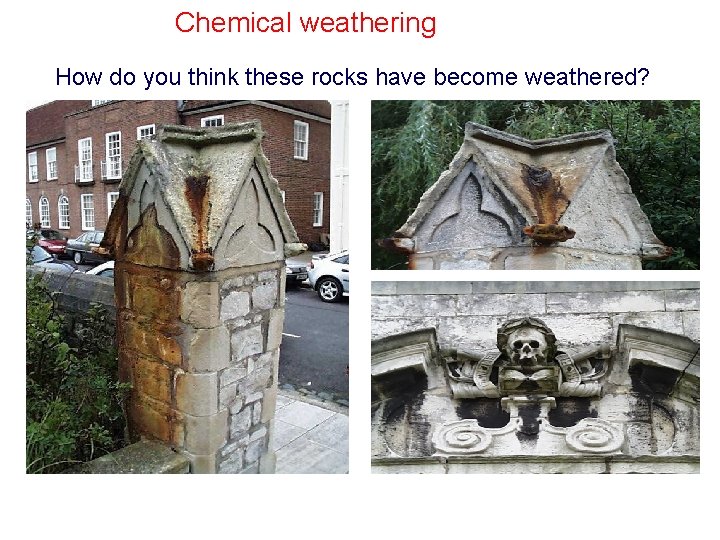
Chemical weathering How do you think these rocks have become weathered?
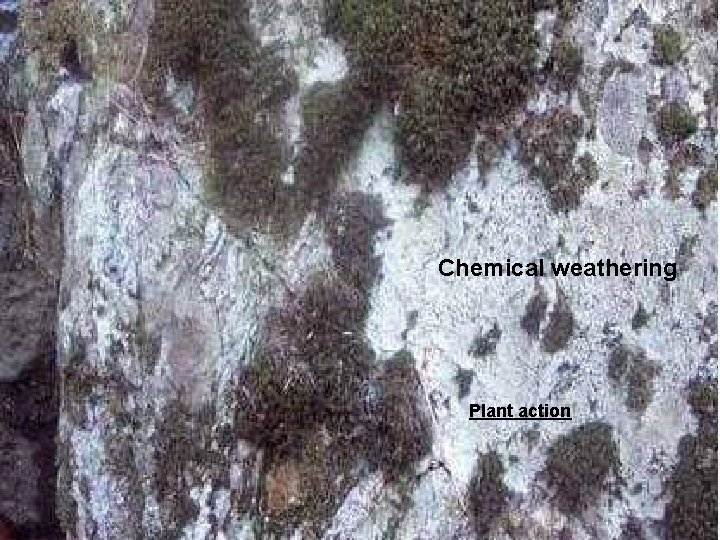
Chemical weathering Plant action
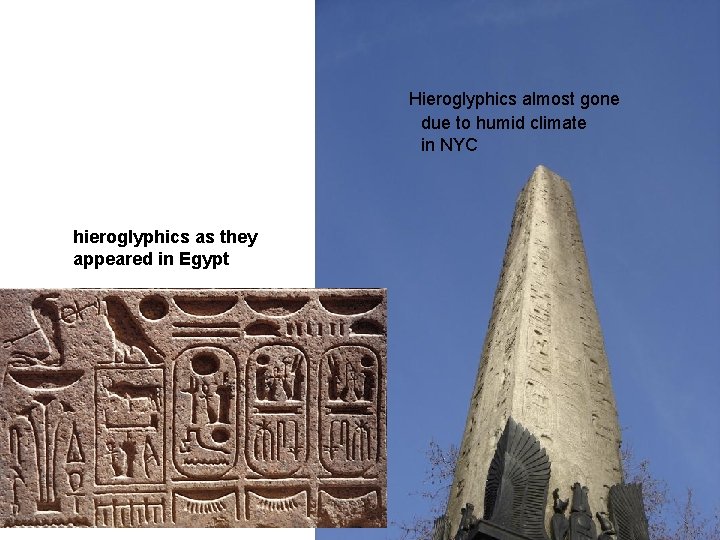
Hieroglyphics almost gone due to humid climate in NYC hieroglyphics as they appeared in Egypt
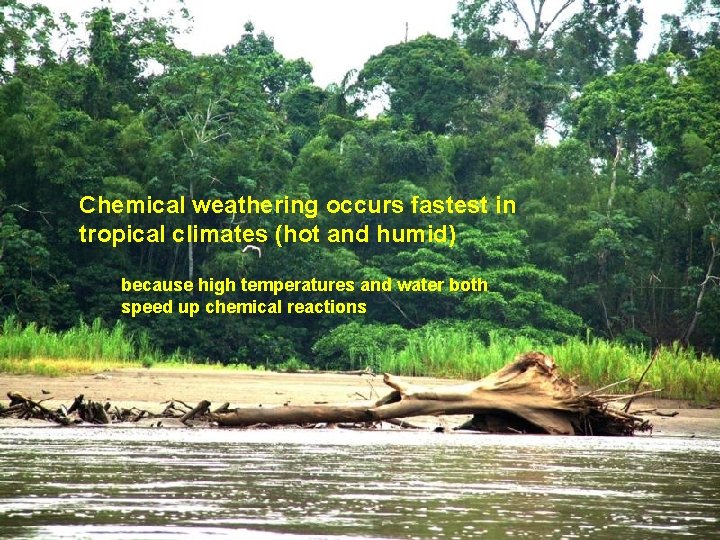
Chemical weathering occurs fastest in tropical climates (hot and humid) because high temperatures and water both speed up chemical reactions
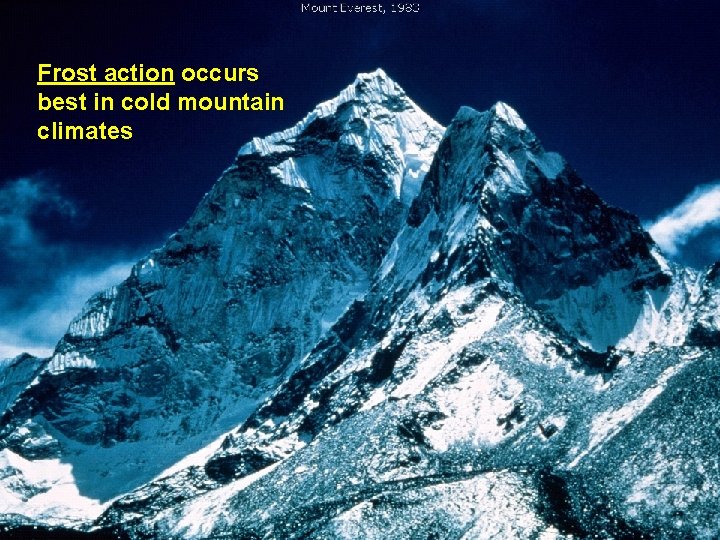
Frost action occurs best in cold mountain climates
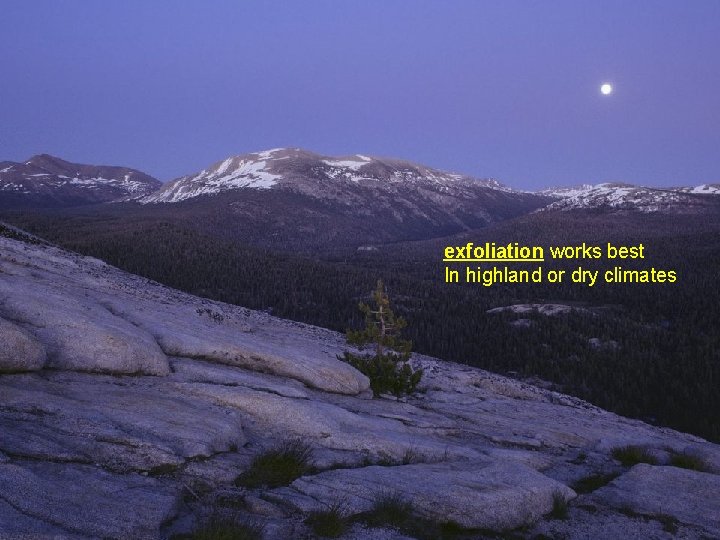
exfoliation works best In highland or dry climates
exfoliation dome in Yosemite National Park
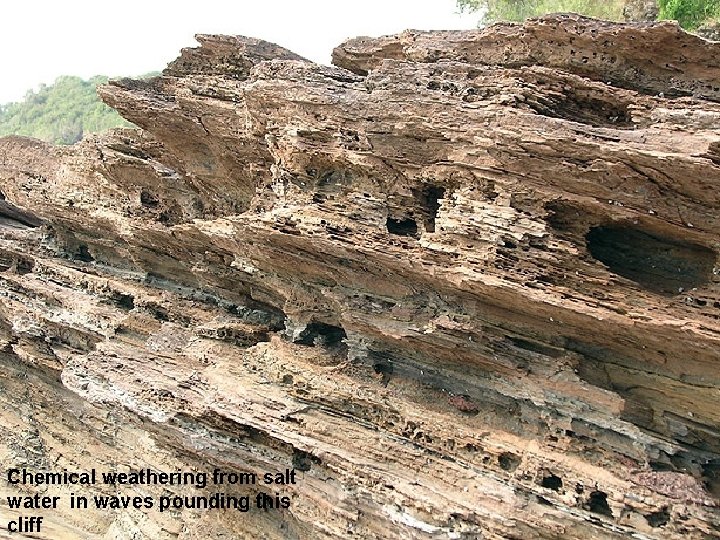
Chemical weathering from salt water in waves pounding this cliff
The final product of weathered rock is sand or soil, depending on available organic material
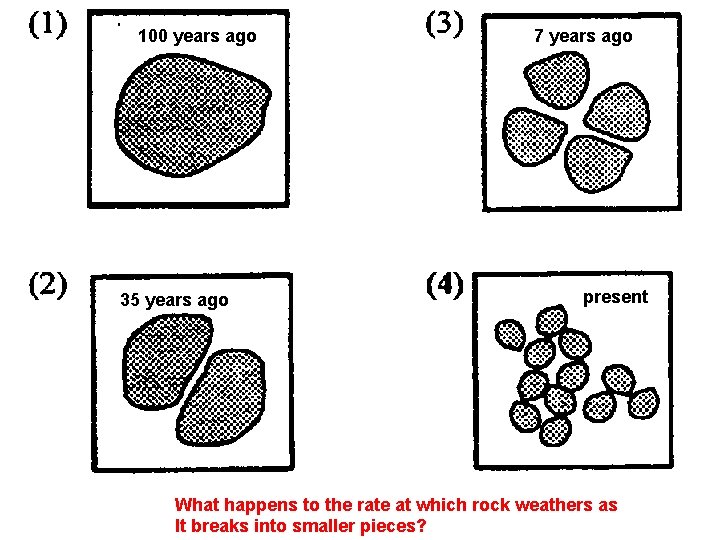
100 years ago 35 years ago 7 years ago present What happens to the rate at which rock weathers as It breaks into smaller pieces?
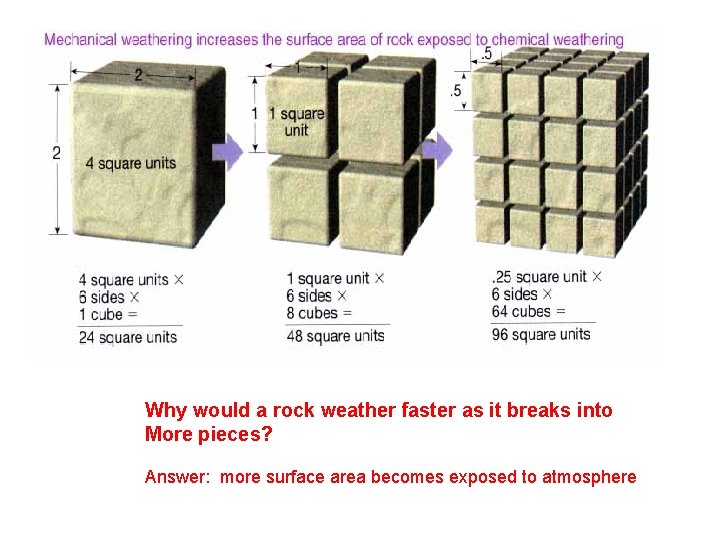
Why would a rock weather faster as it breaks into More pieces? Answer: more surface area becomes exposed to atmosphere
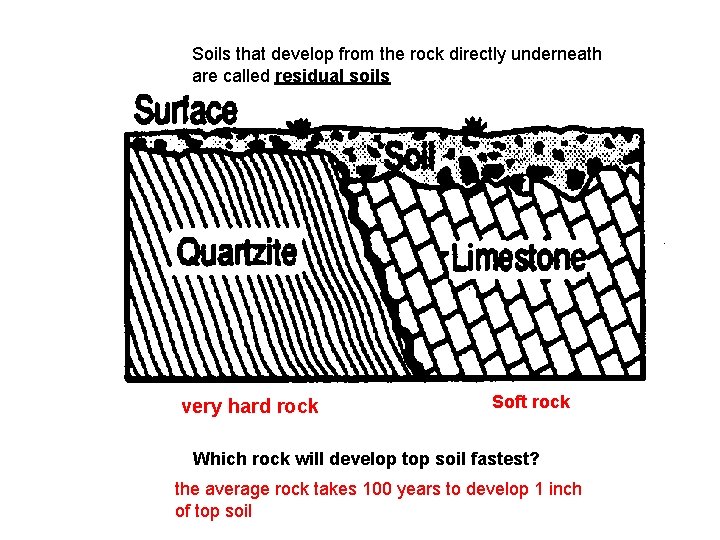
Soils that develop from the rock directly underneath are called residual soils very hard rock Soft rock Which rock will develop top soil fastest? the average rock takes 100 years to develop 1 inch of top soil
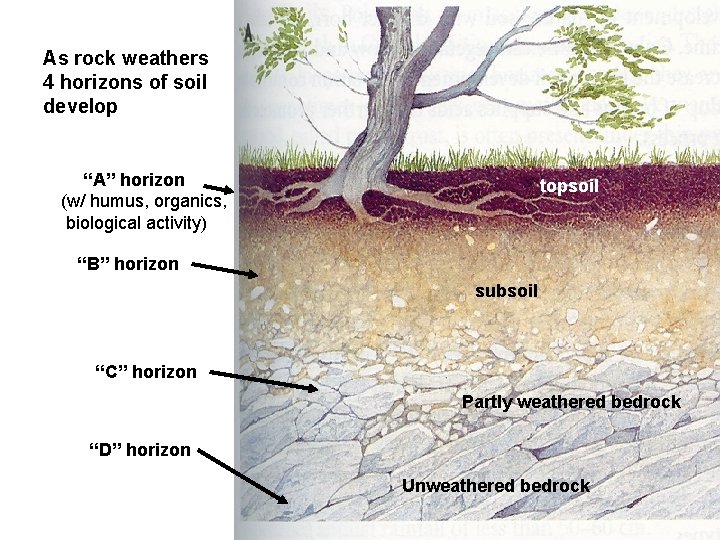
As rock weathers 4 horizons of soil develop “A” horizon (w/ humus, organics, biological activity) topsoil “B” horizon subsoil “C” horizon Partly weathered bedrock “D” horizon Unweathered bedrock
Types of soil • Residual soils form in place by weathering • Transported soils are brought from other areas, usually by glaciers Most soils in NY are TRANSPORTED