
Therapy z It used to be that if
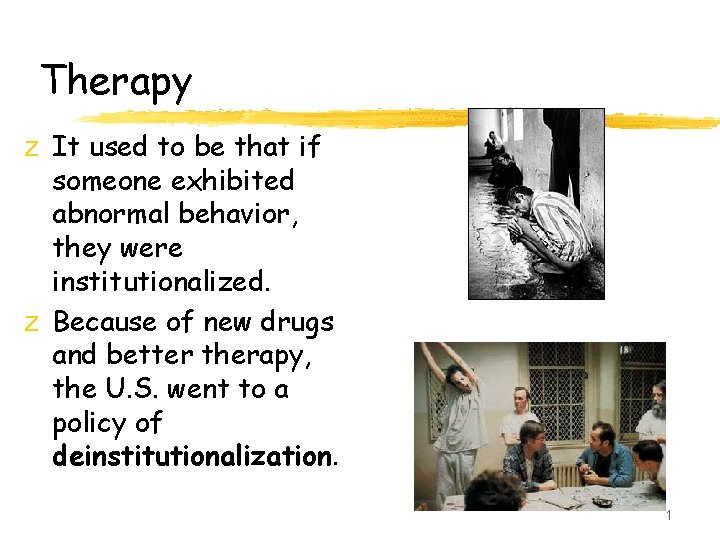
Therapy z It used to be that if someone exhibited abnormal behavior, they were institutionalized. z Because of new drugs and better therapy, the U. S. went to a policy of deinstitutionalization. 1

Behavioral Therapies Counterconditioning: a behavior therapy procedure that uses classical conditioning to evoke new responses to stimuli that are triggering unwanted behaviors; includes exposure therapies and aversive conditioning 2
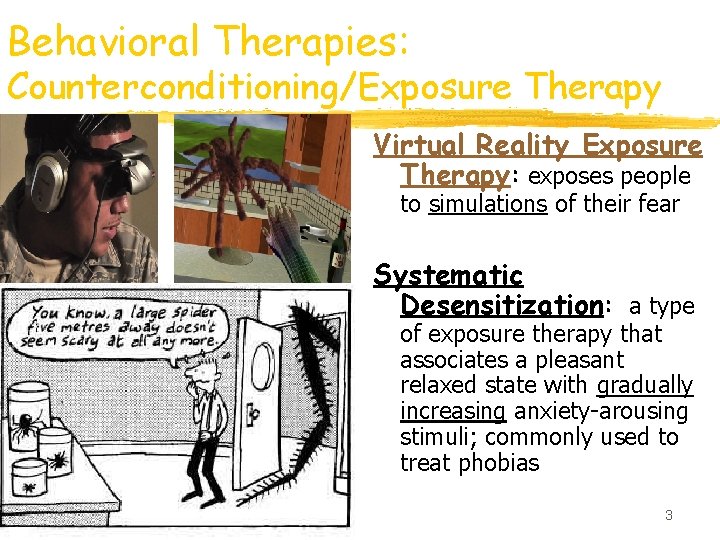
Behavioral Therapies: Counterconditioning/Exposure Therapy Virtual Reality Exposure Therapy: exposes people to simulations of their fear Systematic Desensitization: a type of exposure therapy that associates a pleasant relaxed state with gradually increasing anxiety-arousing stimuli; commonly used to treat phobias 3
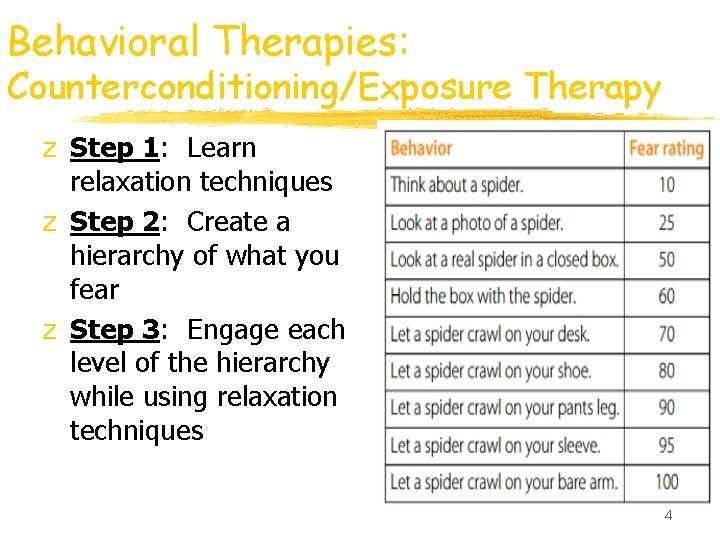
Behavioral Therapies: Counterconditioning/Exposure Therapy z Step 1: Learn relaxation techniques z Step 2: Create a hierarchy of what you fear z Step 3: Engage each level of the hierarchy while using relaxation techniques 4
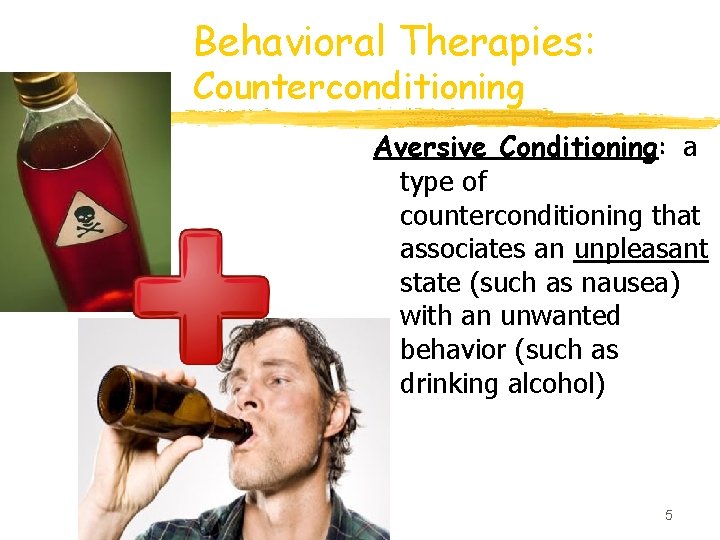
Behavioral Therapies: Counterconditioning Aversive Conditioning: a type of counterconditioning that associates an unpleasant state (such as nausea) with an unwanted behavior (such as drinking alcohol) 5
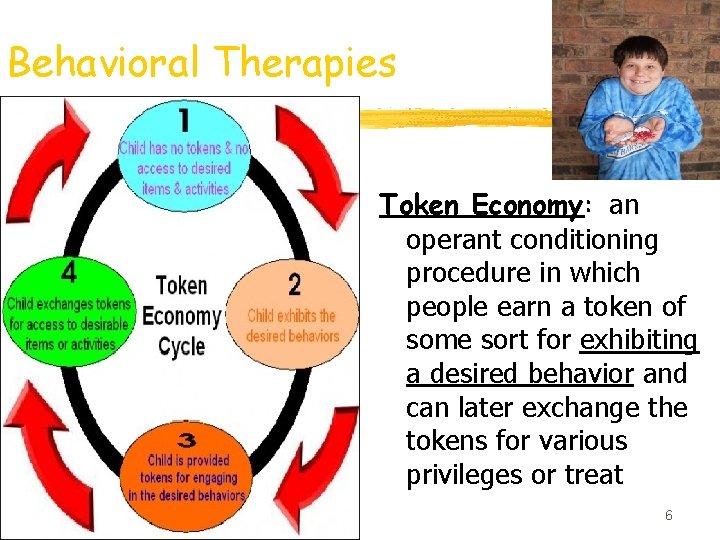
Behavioral Therapies Token Economy: an operant conditioning procedure in which people earn a token of some sort for exhibiting a desired behavior and can later exchange the tokens for various privileges or treat 6
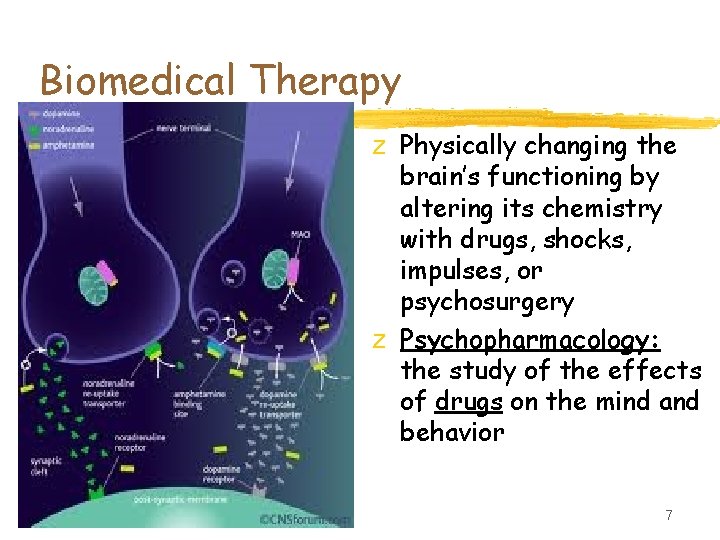
Biomedical Therapy z Physically changing the brain’s functioning by altering its chemistry with drugs, shocks, impulses, or psychosurgery z Psychopharmacology: the study of the effects of drugs on the mind and behavior 7
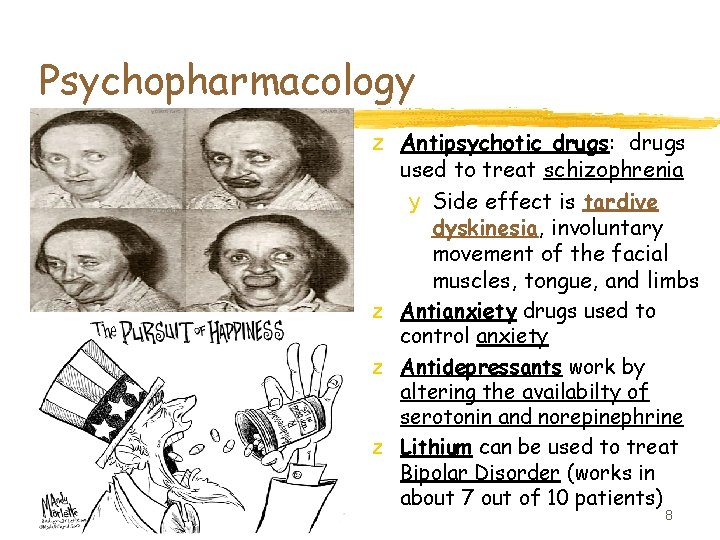
Psychopharmacology z Antipsychotic drugs: drugs used to treat schizophrenia y Side effect is tardive dyskinesia, involuntary movement of the facial muscles, tongue, and limbs z Antianxiety drugs used to control anxiety z Antidepressants work by altering the availabilty of serotonin and norepinephrine z Lithium can be used to treat Bipolar Disorder (works in about 7 out of 10 patients) 8
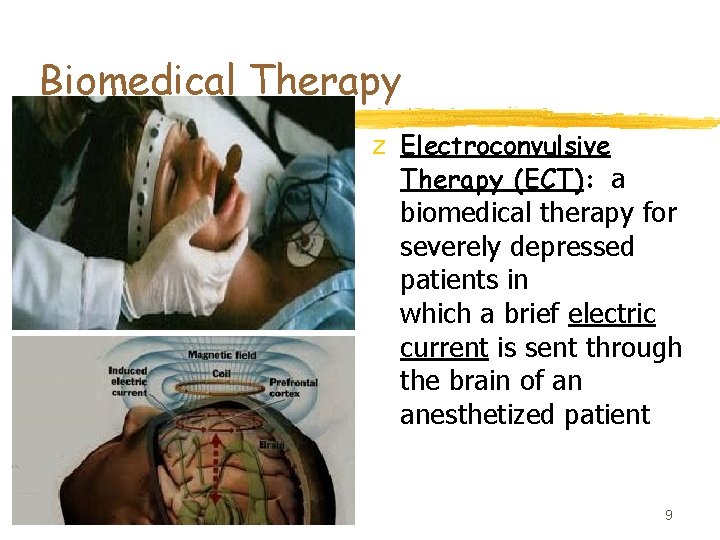
Biomedical Therapy z Electroconvulsive Therapy (ECT): a biomedical therapy for severely depressed patients in which a brief electric current is sent through the brain of an anesthetized patient 9
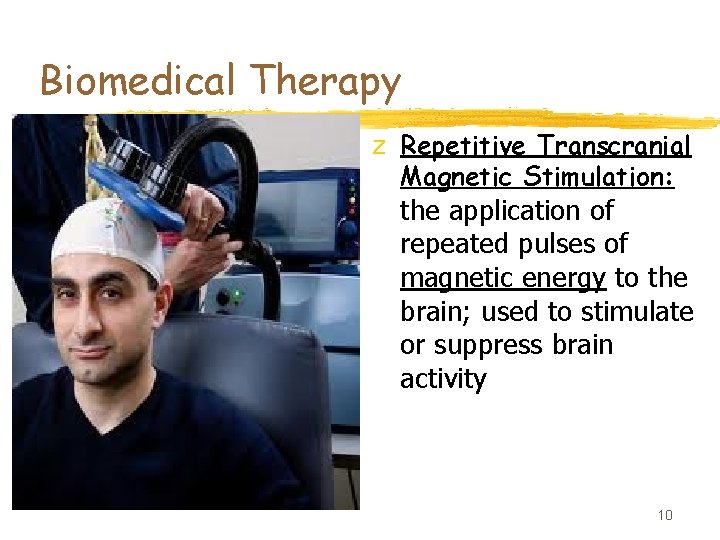
Biomedical Therapy z Repetitive Transcranial Magnetic Stimulation: the application of repeated pulses of magnetic energy to the brain; used to stimulate or suppress brain activity 10
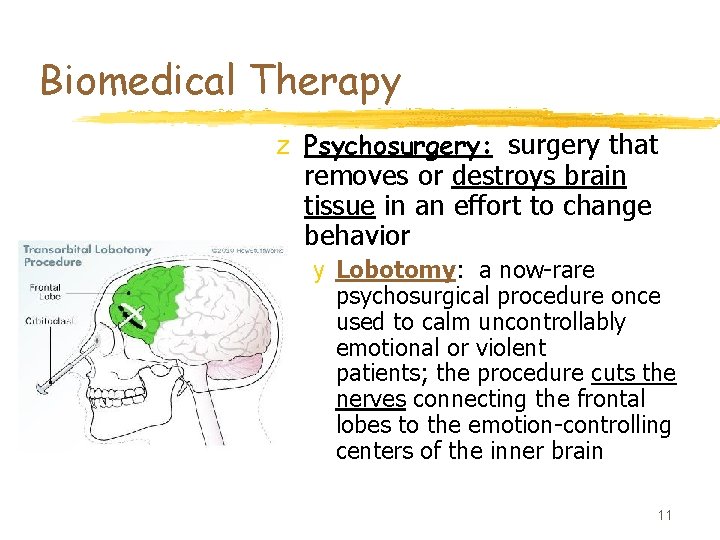
Biomedical Therapy z Psychosurgery: surgery that removes or destroys brain tissue in an effort to change behavior y Lobotomy: a now-rare psychosurgical procedure once used to calm uncontrollably emotional or violent patients; the procedure cuts the nerves connecting the frontal lobes to the emotion-controlling centers of the inner brain 11
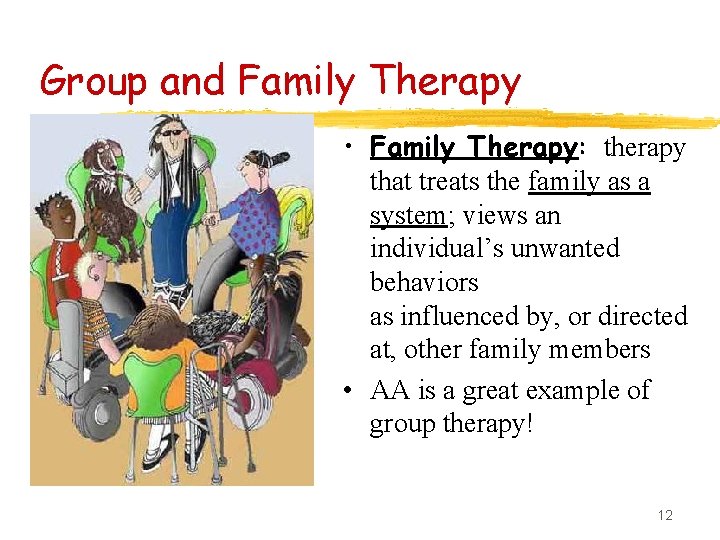
Group and Family Therapy • Family Therapy: therapy that treats the family as a system; views an individual’s unwanted behaviors as influenced by, or directed at, other family members • AA is a great example of group therapy! 12
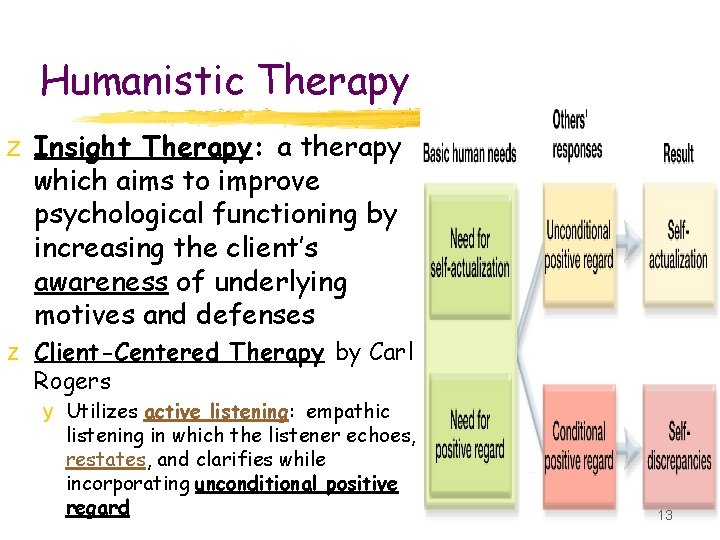
Humanistic Therapy z Insight Therapy: a therapy which aims to improve psychological functioning by increasing the client’s awareness of underlying motives and defenses z Client-Centered Therapy by Carl Rogers y Utilizes active listening: empathic listening in which the listener echoes, restates, and clarifies while incorporating unconditional positive regard 13
Therapy. Psychoanalysis § Eclectic Approach § an approach to psychotherapy that, depending on the client’s problems, uses techniques from various forms of therapy § Transference § the patient’s transfer to the analyst of emotions linked with other relationships § e. g. love or hatred for a parent 14
Neuroleptics z A term that refers to the effects of antipsychotic drugs on a patient, especially on his or her cognition and behavior z Can cause tardive dyskinesia side effects meaning “delayed abnormal movements. ” y Twitching, etc. 15
Lithium Carbonate z Used to treat bipolar disorder 16
SSRI’s (Prozac) (Anti-Depressants) z Selective Serotonin Reuptake Inhibitors y Works to inhibiting the reuptake of serotonin (so used to treat depression) y (Prozac – fluoxetine, Paxil, Zoloft) 17
Anti-Anxiety Drugs z Depress central nervous system activity (Valium, Xanax, Ativan) 18
Biofeedback z Being able to control physiological responses (heartbeat, blood pressure, breathing, etc. ) 19
Diathesis Stress Approach z Disorders are a result of predisposed biological factors triggered by the environment (stress or traumatic event) 20
- Slides: 20