
Therapeutics in Diabetes Kate Spittle Prescribing Advisor Cwm
Therapeutics in Diabetes Kate Spittle Prescribing Advisor Cwm Taf LHB
Summary Issues around diabetes n Drugs used for control of hyperglycaemia n Monitoring of glucose control n NICE guidance n Hypertension in diabetes n Lipids n Aspirin n n Questions
Diabetes Around 7% in Wales are being treated for diabetes n 16% of these are > 65 yrs n Incidence is increasing -predicted to rise to 10. 3% in 2020, 11. 5& in 2030 n Poor diet, lack of physical activity and a sedentary lifestyle are major contributors n ½ adult population and around a 1/3 of children in Wales are classified as overweight or obese n
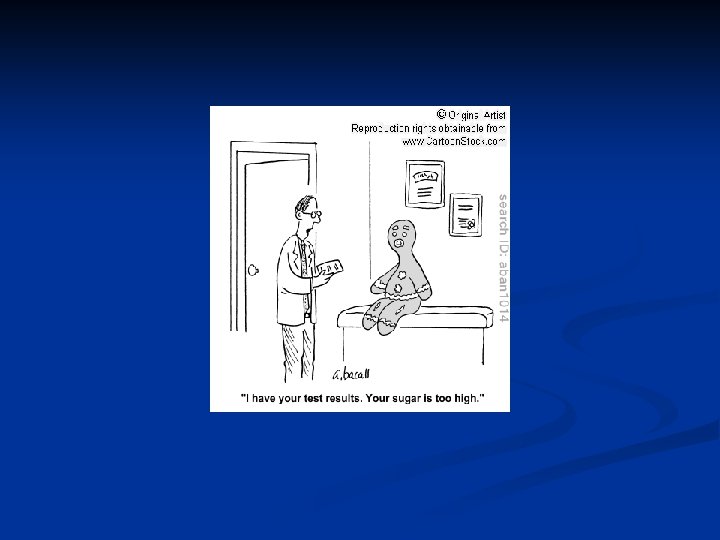
Diabetes Lifestyle interventions promoting moderate weight loss together with an increase in physical activity have been shown to result in a more than 50% reduction in the risk of type 2 diabetes amongst at risk individuals ( Knowler et al 2002 ) n


Realistic Plans?
Aims of Management n Prevent diabetes n Lifestyle choices, minimise risk Early detection n Fast, effective treatment n n n Live longer and healthier lives Support living with diabetes n Patients are supported and informed to manage their diabetes
Type 2 Diabetes 90% of cases of diabetes n Often associated with obesity n Characterised by; n Insulin resistance ( a greater than normal amount of insulin is required to produce a biological response ) n Relative insulin deficiency n n Symptoms
Financial Costs In Cwm Taf we spend per year; n £ 4. 78 million on drugs for diabetes n £ 2 million on insulins n £ 1 million on blood glucose testing reagents n £ 0. 5 million on metformin n £ 0. 5 million on exenatide and liraglutide n
Treatment Aims n Optimal glycaemic control n ‘target’ Hb. A 1 c of <6. 5 – 7. 5% ( 48 -59 mmol ) Cardiovascular risk reduction n Minimise the risk of long term complications n
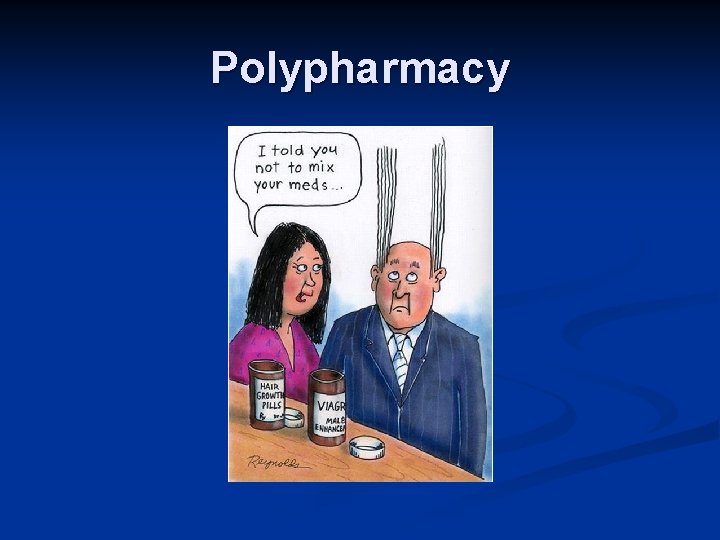
Polypharmacy
Therapeutic Options Lifestyle ( diet, exercise, weight loss, smoking ) n Structured education ( not covered ) n Treatment n Biguanides n Sulfonylureas n Thiazolidinedions n Repaglinide / Nateglinide n Incretins – DPP 4 inhibitors and GLP-1 analogues n Acarbose n
Biguanides - Metformin Decreases hepatic gluconeogenesis n Increases peripheral utilisation of glucose n Only acts in the presence of endogenous insulin, so only effective if there are some functioning pancreatic islet cells n No risk of hypoglycaemia n
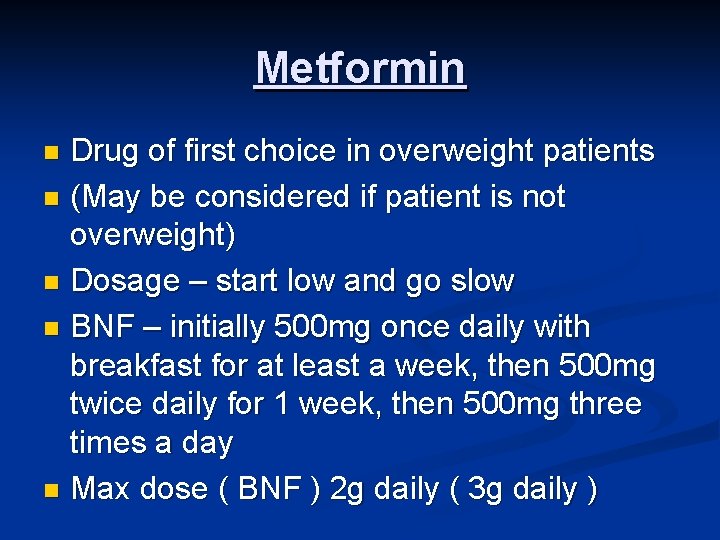
Metformin Drug of first choice in overweight patients n (May be considered if patient is not overweight) n Dosage – start low and go slow n BNF – initially 500 mg once daily with breakfast for at least a week, then 500 mg twice daily for 1 week, then 500 mg three times a day n Max dose ( BNF ) 2 g daily ( 3 g daily ) n
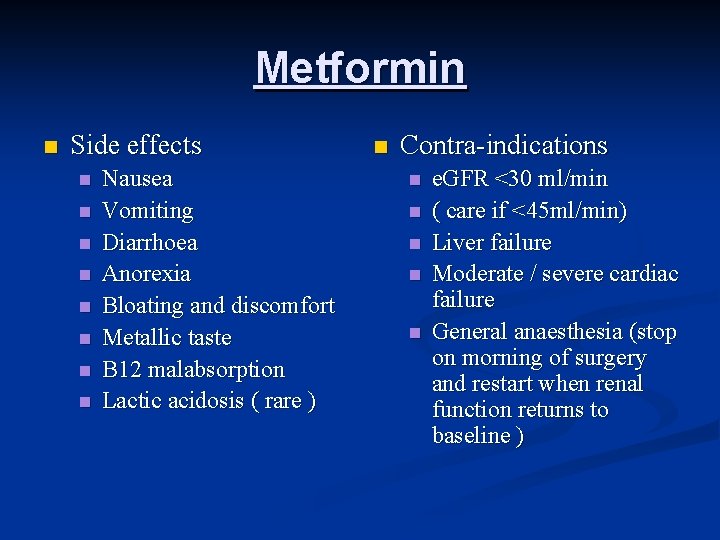
Metformin n Side effects n n n n Nausea Vomiting Diarrhoea Anorexia Bloating and discomfort Metallic taste B 12 malabsorption Lactic acidosis ( rare ) n Contra-indications n n n e. GFR <30 ml/min ( care if <45 ml/min) Liver failure Moderate / severe cardiac failure General anaesthesia (stop on morning of surgery and restart when renal function returns to baseline )

Metformin If GI problems occur, slow down titration n 50% will tolerate the MR preparation if they experience GI side effects n If swallowing difficulties, use sachets or check with LHB prescribing team n

How much do you think we spend on Metformin in Cwm Taf? .
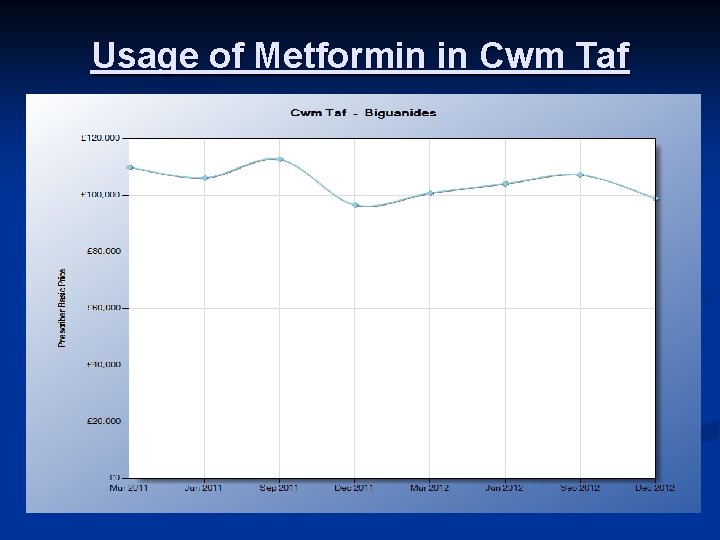
Usage of Metformin in Cwm Taf
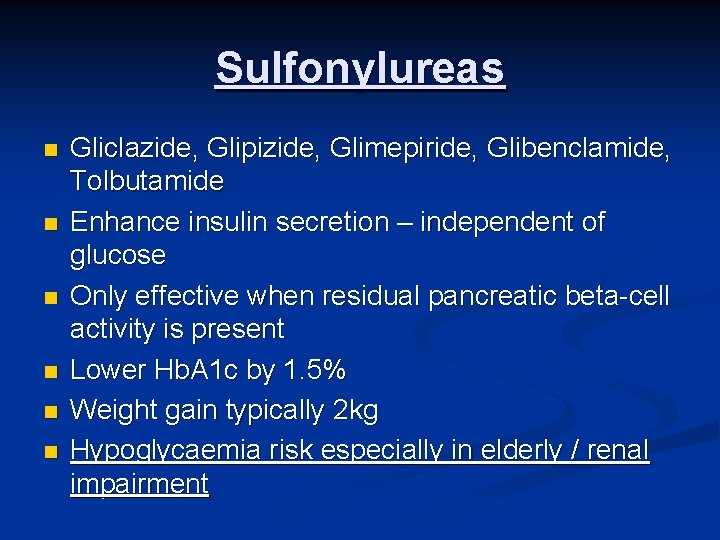
Sulfonylureas n n n Gliclazide, Glipizide, Glimepiride, Glibenclamide, Tolbutamide Enhance insulin secretion – independent of glucose Only effective when residual pancreatic beta-cell activity is present Lower Hb. A 1 c by 1. 5% Weight gain typically 2 kg Hypoglycaemia risk especially in elderly / renal impairment

Sulfonylureas n Side effects n n n n Hypoglycaemia Weight gain GI disturbance Headache Fever Jaundice Blood dyscrasias n Contra-indications n n n Pregnancy breast feeding Renal impairment Hepatic impairment Disadvantage n Accelerates decline in beta cell function

Sulfonylureas Choice of preparation is determined by side effects and the duration of action n Gliclazide – short acting n Glibenclamide – long acting so should be avoided in the elderly n
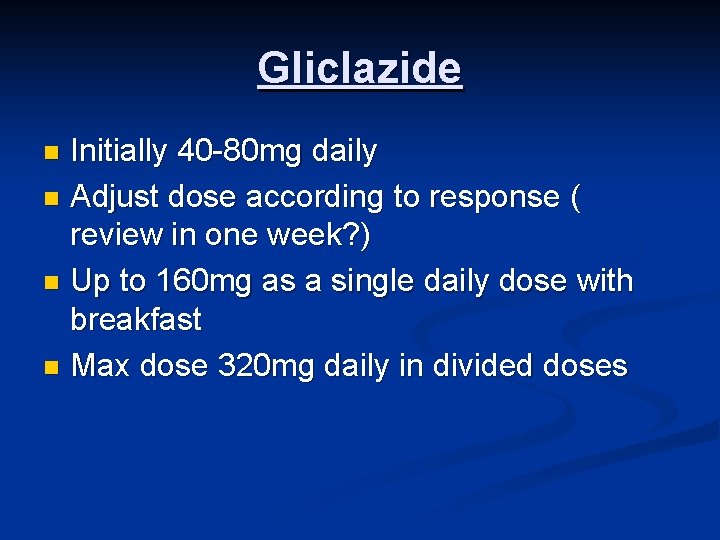
Gliclazide Initially 40 -80 mg daily n Adjust dose according to response ( review in one week? ) n Up to 160 mg as a single daily dose with breakfast n Max dose 320 mg daily in divided doses n
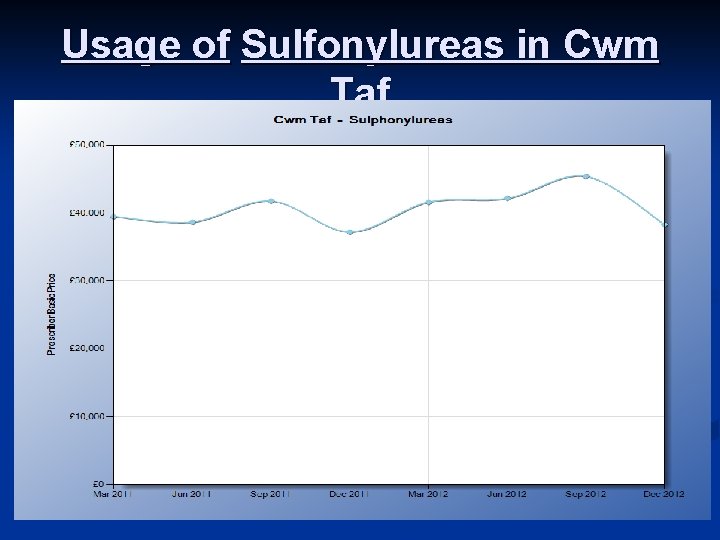
Usage of Sulfonylureas in Cwm Taf
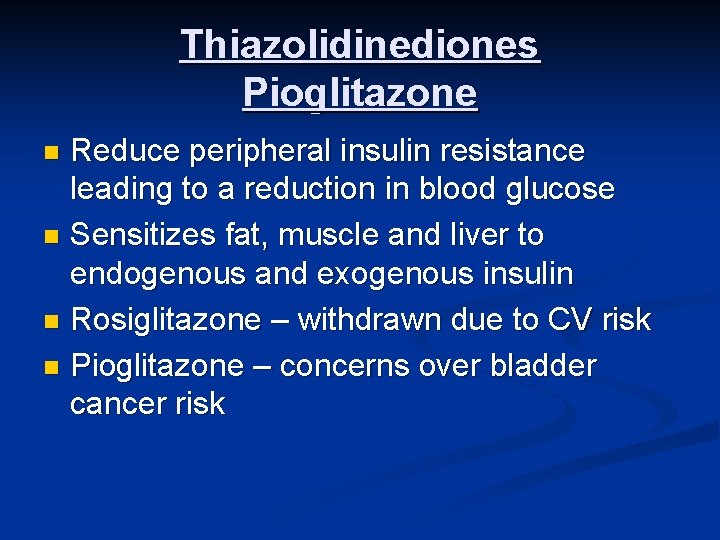
Thiazolidinediones Pioglitazone Reduce peripheral insulin resistance leading to a reduction in blood glucose n Sensitizes fat, muscle and liver to endogenous and exogenous insulin n Rosiglitazone – withdrawn due to CV risk n Pioglitazone – concerns over bladder cancer risk n
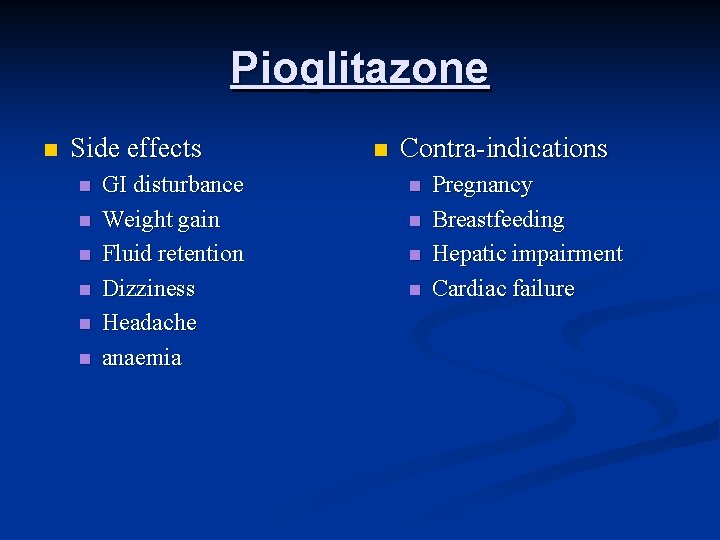
Pioglitazone n Side effects n n n GI disturbance Weight gain Fluid retention Dizziness Headache anaemia n Contra-indications n n Pregnancy Breastfeeding Hepatic impairment Cardiac failure
Pioglitazone n Dosage Adult, initially 15 -30 mg daily , increased to 45 mg daily according to response n Elderly, initiate with lowest possible dose and increase gradually n Review treatment after 3 -6 months n Dose of sulfonylurea or insulin may need to be reduced if used concomitantly n
Pioglitazone n Cardiovascular safety (Dec 07, Jan 11) n n Incidence of heart failure is increased if pioglitazone is combined with insulin especially in patient with predisposing factors. Patients should be closely monitored for signs of heart failure Bladder cancer ( July 11 ) n Small increased risk. Should not be used in patients with active bladder cancer or past history of bladder cancer or in those with uninvestigated macroscopic haematuria. Pioglitazone should be used with caution in the elderly as the risk of bladder cancer increases with age
Pioglitazone Review at 3 -6 months n Stop if inadequate response to treatment n NICE – continue only if Hb. A 1 c is reduced by 0. 5% within 6 months of starting treatment n
Metiglinides Prandial Glucose Regulators n n n n Nateglinide / repaglinide Stimluate release of insulin Early phase of insulin release in response to food lost in type 2 diabetes Rapid onset of action Short duration of action – so do not stimulate beta cells constantly Take just before each main meal. Gives flexibility with meal times Hb. A 1 c reduction ~1%
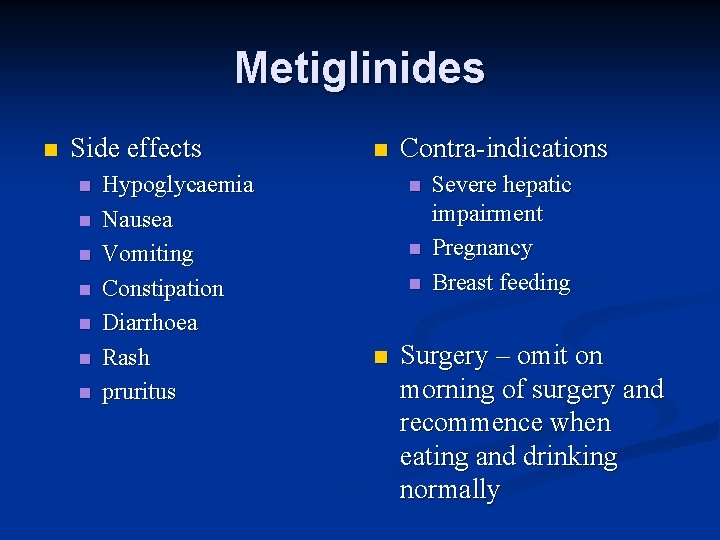
Metiglinides n Side effects n n n n Hypoglycaemia Nausea Vomiting Constipation Diarrhoea Rash pruritus n Contra-indications n n Severe hepatic impairment Pregnancy Breast feeding Surgery – omit on morning of surgery and recommence when eating and drinking normally
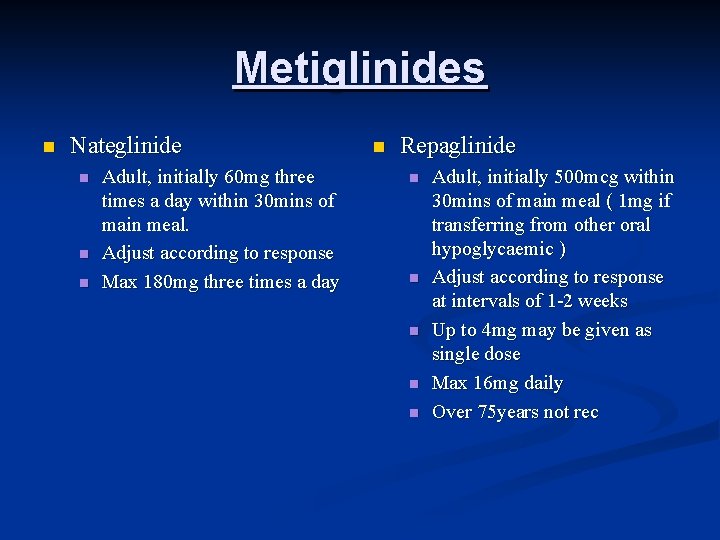
Metiglinides n Nateglinide n n n Adult, initially 60 mg three times a day within 30 mins of main meal. Adjust according to response Max 180 mg three times a day n Repaglinide n n n Adult, initially 500 mcg within 30 mins of main meal ( 1 mg if transferring from other oral hypoglycaemic ) Adjust according to response at intervals of 1 -2 weeks Up to 4 mg may be given as single dose Max 16 mg daily Over 75 years not rec
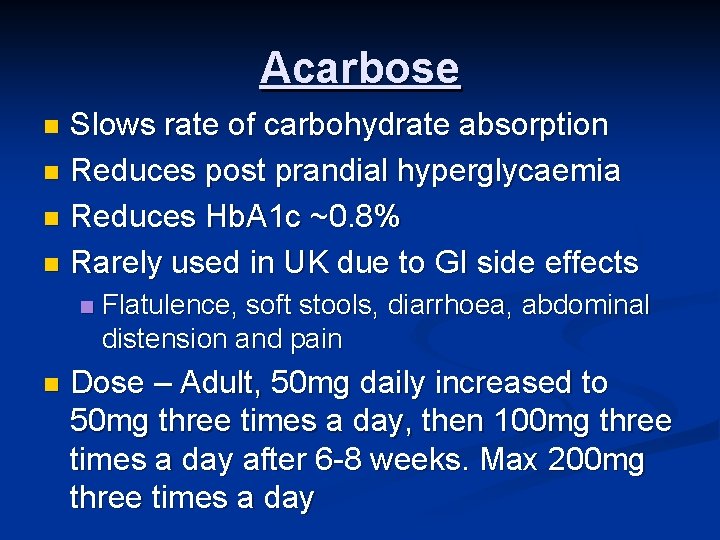
Acarbose Slows rate of carbohydrate absorption n Reduces post prandial hyperglycaemia n Reduces Hb. A 1 c ~0. 8% n Rarely used in UK due to GI side effects n n n Flatulence, soft stools, diarrhoea, abdominal distension and pain Dose – Adult, 50 mg daily increased to 50 mg three times a day, then 100 mg three times a day after 6 -8 weeks. Max 200 mg three times a day
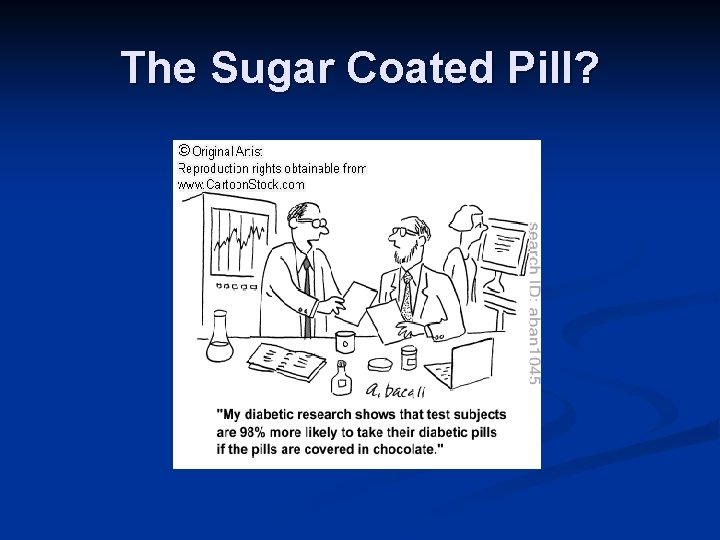
The Sugar Coated Pill?
Progressive Defects in Type 2 Diabetes Progressive decline in beta cell function n Inadequate insulin secretion n Unsuppressed post prandial glucagon secretion n
GLP – 1 Enzyme GLP -1 secretion is impaired in type 2 diabetes n Activation of the GLP-1 receptor n increases insulin secretion n Suppresses glucagon secretion n Slow gastric emptying n Exenatide and Liraglutide both bind to and activate the GLP-1 receptor n The gliptins block DPP-4, the enzyme that degrades GLP-1 n
Exenatide Treatment is associated with the prevention of weight gain and possible weight loss n Subcutaneous injection n NICE – treatment continued only if Hb. A 1 c is reduced by at least 1% and a weight loss of at least 3% within 6 months n How often are patients reviewed and treatment stopped? n
Exenatide Dose – s/c injection n Initially 5 mcg twice daily, 1 hour before 2 main meals n Increased if necessary after at least 1 month to 10 mcg twice daily n If dose is missed, do not administer after a meal, continue with next scheduled dose n Dose of sulfonylurea may need to be reduced if used together n
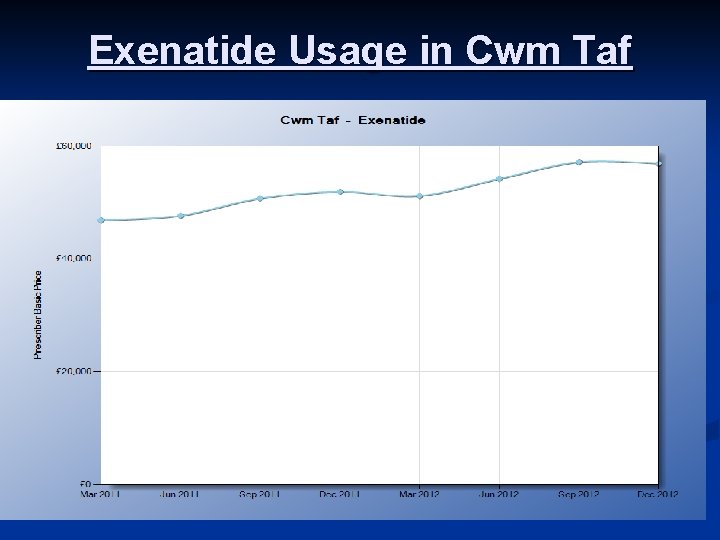
Exenatide Usage in Cwm Taf
Liraglutide Dose – by s/c injection n Adult 0. 6 mg once daily n Increased after at least 1 week to 1. 2 mg daily n Further increased if nec. after at least 1 week to max 1. 8 mg daily n Dose of sulfonylurea may need to be reduced n
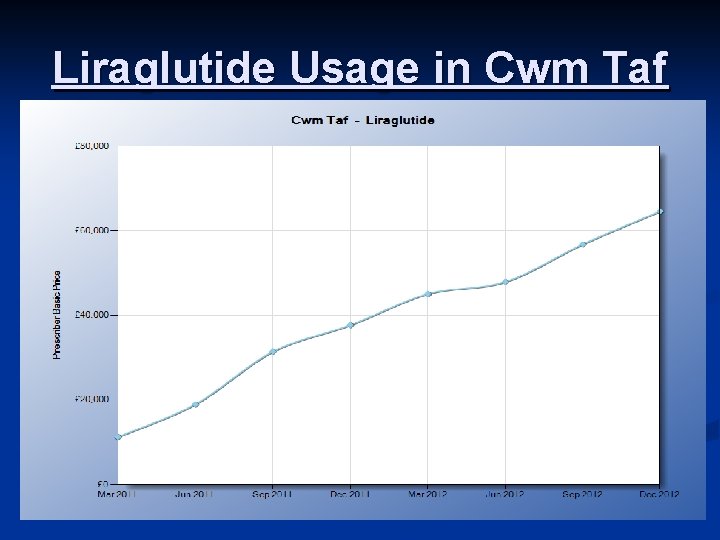
Liraglutide Usage in Cwm Taf
Exenatide / Liraglutide n Side effects n n n GI effects Decreased appetite Weight loss Headache dizziness n Contra – indications n n Severe GI disease Pregnancy Pancreatitis Severe renal impairment
Issues Long term safety data n Injection n Cost - expensive n
DPP-4 Inhibitors ( Gliptins ) Sitagliptin, Vildagliptin, Saxagliptin, Linagliptin n Increase insulin sectrion n Lower glucagon secretion n Have theoretical advantages of SU’s but no long term safety data n Expensive n
DPP-4 Inhibitors n Side effects n n n GI disturbance Oedema URTI’s Anorexia Headache hypoglycaemia n Contra-indications n n n Renal impairment ( check gliptin used ) Pregnancy Breast feeding
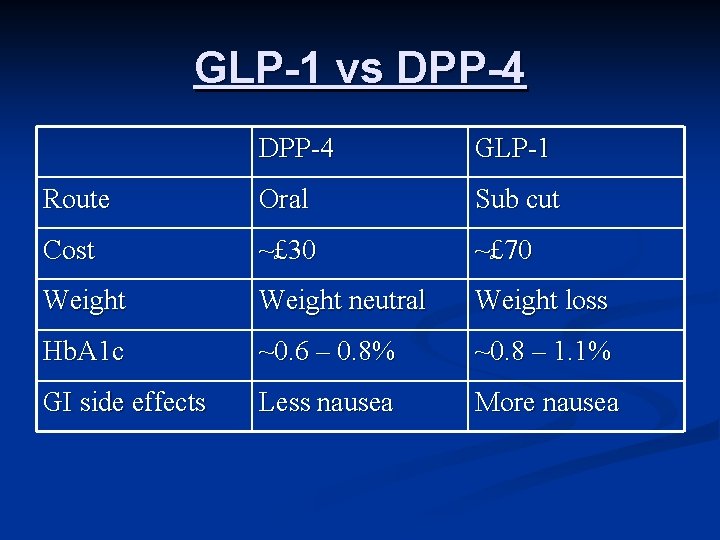
GLP-1 vs DPP-4 GLP-1 Route Oral Sub cut Cost ~£ 30 ~£ 70 Weight neutral Weight loss Hb. A 1 c ~0. 6 – 0. 8% ~0. 8 – 1. 1% GI side effects Less nausea More nausea
Therapeutic Options Lots of choices n NICE guidance – see flow chart n Metformin n Dual therapy n Triple therapy n Check licensing for combinations n Cost n Monitoring n
Monitoring Response Minimum – annual review n Hb. A 1 c n n n BP n n <130/80 Lipid profile n n <6. 5 -7. 5% Chol <4, LDL <2 Lifestyle interventions
Self Monitoring n n Self care – vitally important in diabetes Should be available ( NICE ) n n n n to those on insulin To those on oral glucose lowering medications to provide info on hypglycaemia To assess changes resulting from medication or lifestyle changes To ensure safety during activities including driving To monitor changes during illness Must be clear purpose of testing and information obtained Frequency of monitoring?
Self Monitoring Diet alone – testing? n Diet + metformin – once / twice a week? ( 1 -2 pot per year ) n Diet + tablets stimulating insulin secretion ( SU’s, metaglinides, gliptins )– twice a week and at one other time pre meals ( 3 pots of strips per year ) n Diet + injectable stimulators of insulin secretion ( exenatide / liraglutide ) – twice a week and at one other time before meals ( 3 pots of strips per year ) n


Blood Glucose Testing in Cwm Taf
NICE Guidance Clinical guideline 87 n Management of hypertension n Management of lipids n Aspirin n
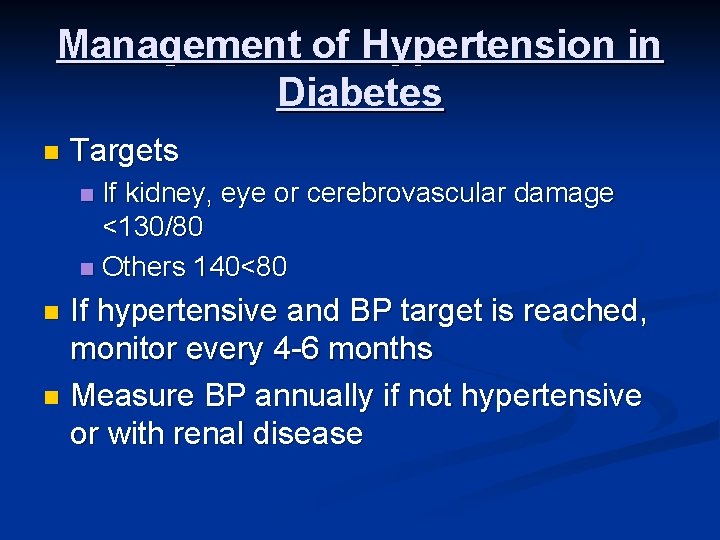
Management of Hypertension in Diabetes n Targets If kidney, eye or cerebrovascular damage <130/80 n Others 140<80 n If hypertensive and BP target is reached, monitor every 4 -6 months n Measure BP annually if not hypertensive or with renal disease n

Hypertension in Diabetes Lifestyle measures n Treatment; n Offer ACE inhibitor ( titrate dose ) (ramipril) 1 St dose effect n For African-Caribbean descent offer ACE plus diuretic or CCB n Add diuretic ( bendrofluazide 2. 5 mg in the morning) or CCB ( amlodipine 5 mg daily ) n Add other drug ( diuretic or CCB ) n Add alpha-blocker, beta blocker of potassium sparing diuretic (with caution) n
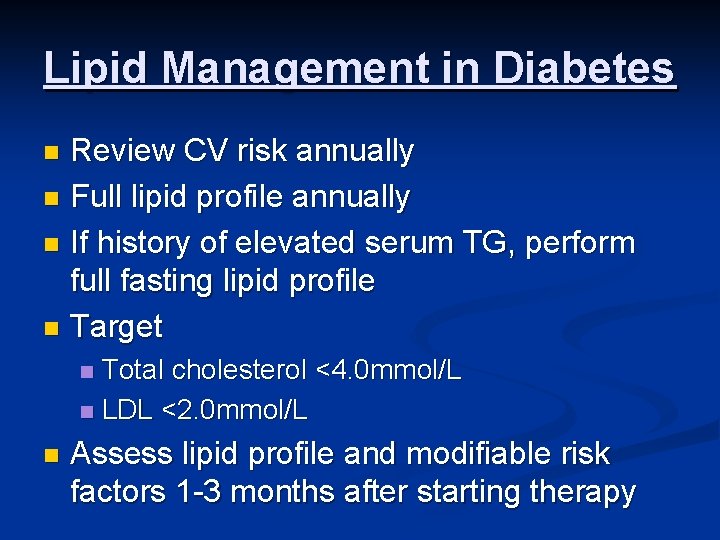
Lipid Management in Diabetes Review CV risk annually n Full lipid profile annually n If history of elevated serum TG, perform full fasting lipid profile n Target n Total cholesterol <4. 0 mmol/L n LDL <2. 0 mmol/L n n Assess lipid profile and modifiable risk factors 1 -3 months after starting therapy
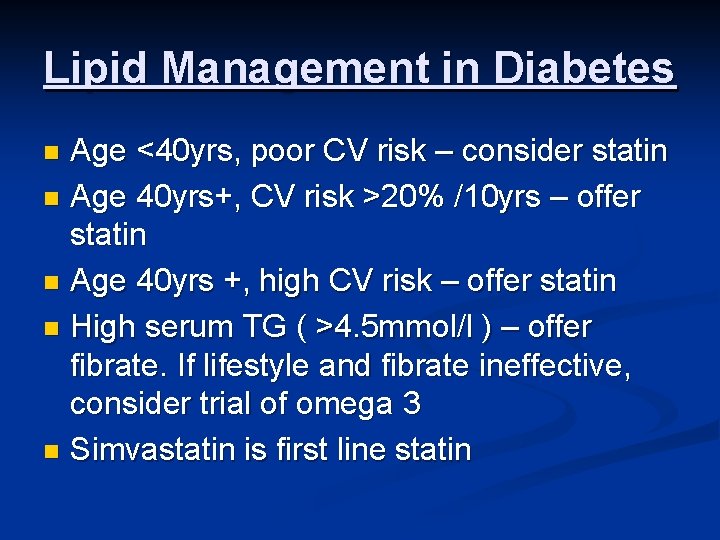
Lipid Management in Diabetes Age <40 yrs, poor CV risk – consider statin n Age 40 yrs+, CV risk >20% /10 yrs – offer statin n Age 40 yrs +, high CV risk – offer statin n High serum TG ( >4. 5 mmol/l ) – offer fibrate. If lifestyle and fibrate ineffective, consider trial of omega 3 n Simvastatin is first line statin n
NICE Guidance Aspirin is not licensed for the primary prevention of vascular events. If aspirin is used in primary prevention, the balance of benefits and risks should be considered for each individual, particularly the presence of risk factors for vascular disease (including conditions such as diabetes) and the risk of gastrointestinal bleeding. n Secondary prevention? n
NICE Guidance 87 n Age 50+ and BP <145/90 n n Offer low dose aspirin or if clear intolerance, clopidogrel Age <50 yrs and significant other CV risk factors n Offer low dose aspirin or if clear intolerance, clopidogrel
Summary Lifestlye issues are key n Patient must be at centre of care n Many options for treatment n Optimise treatment before adding in other medications n Always check compliance n Clear plan n
Prescribing Teams n Merthyr and Cynon n n Rhondda and Taf Ely n n Kate Spittle ( based at PCH ) Bev Woods ( based at RGH ) Please ask us for information / support
- Slides: 61