
Therapeutic role of exercise in treating hypertension Educational
- Slides: 31
Therapeutic role of exercise in treating hypertension
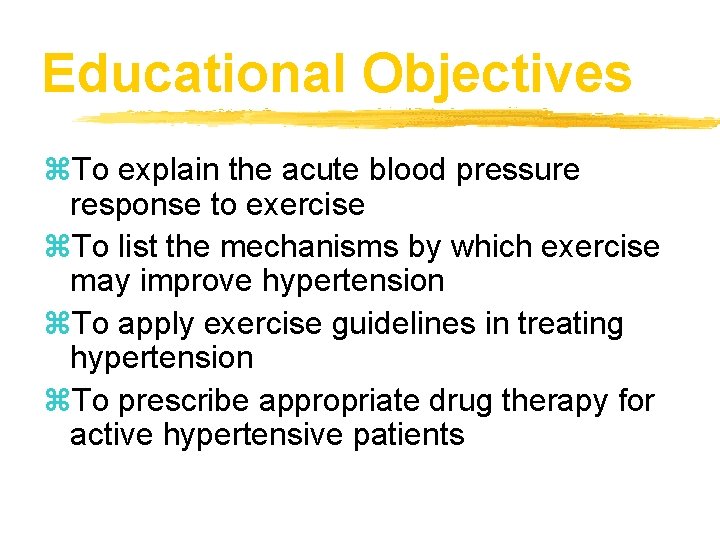
Educational Objectives z. To explain the acute blood pressure response to exercise z. To list the mechanisms by which exercise may improve hypertension z. To apply exercise guidelines in treating hypertension z. To prescribe appropriate drug therapy for active hypertensive patients
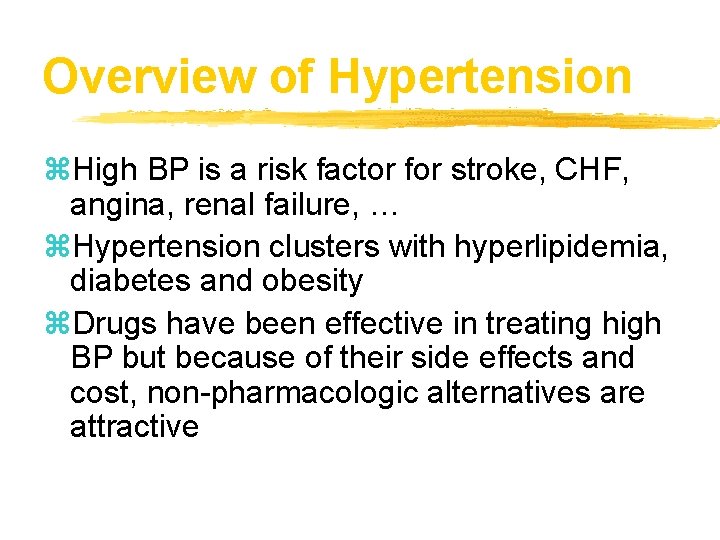
Overview of Hypertension z. High BP is a risk factor for stroke, CHF, angina, renal failure, … z. Hypertension clusters with hyperlipidemia, diabetes and obesity z. Drugs have been effective in treating high BP but because of their side effects and cost, non-pharmacologic alternatives are attractive
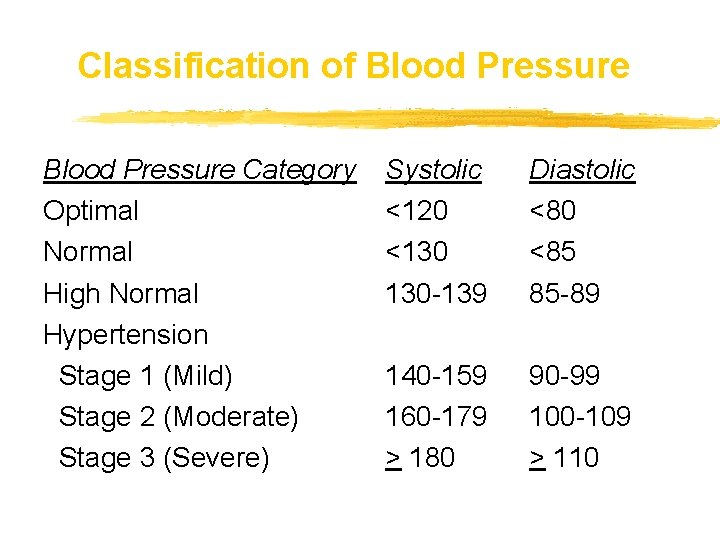
Classification of Blood Pressure Category Optimal Normal High Normal Hypertension Stage 1 (Mild) Stage 2 (Moderate) Stage 3 (Severe) Systolic <120 <130 130 -139 Diastolic <80 <85 85 -89 140 -159 160 -179 > 180 90 -99 100 -109 > 110
Pathophysiology of Hypertension z. High blood pressure is also associated with obesity, salt intake, low potassium intake, physical inactivity, heavy alcohol use and psychological stress z. Intra-abdominal fat and hyperinsulinemia may play a role in the pathogenesis of hypertension
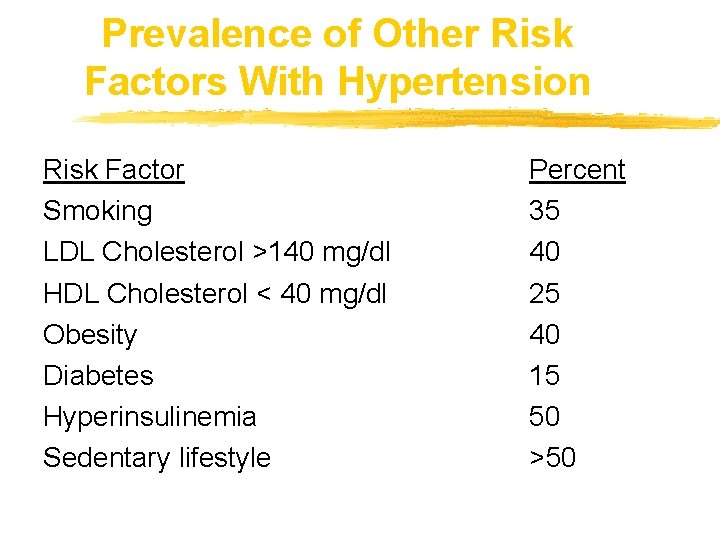
Prevalence of Other Risk Factors With Hypertension Risk Factor Smoking LDL Cholesterol >140 mg/dl HDL Cholesterol < 40 mg/dl Obesity Diabetes Hyperinsulinemia Sedentary lifestyle Percent 35 40 25 40 15 50 >50
Cardiovascular Consequences of Hypertension z. Individuals with BP > 160/95 have CAD, PVD & stroke that is 3 X higher than normal z. HTN may lead to retinopathy and nephropathy z. HTN is also associated with subclinical changes in the brain and thickening and stiffening of small blood vessels
Cardiovascular Consequences of Hypertension z. Increased cardiac afterload leads to left ventricular hypertrophy and reduced early diastolic filling z. Increased LV mass is positively associated with CV morbidity and mortality independent of other risk factors z. High BP also promotes coronary artery calcification, a predictor of sudden death
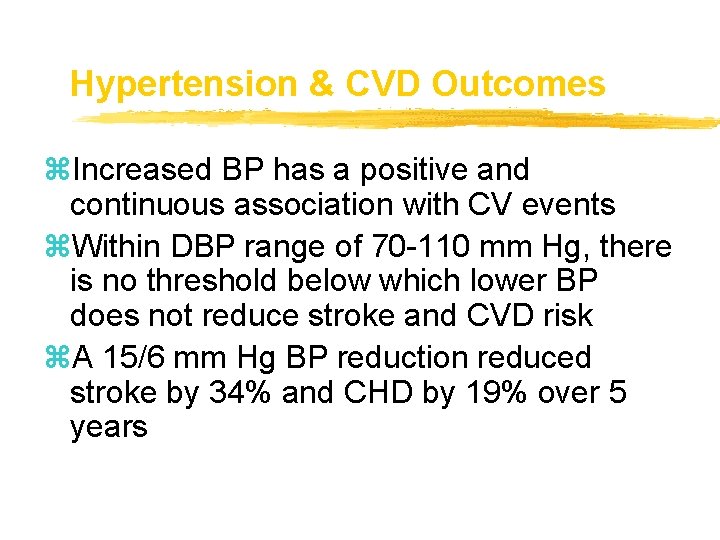
Hypertension & CVD Outcomes z. Increased BP has a positive and continuous association with CV events z. Within DBP range of 70 -110 mm Hg, there is no threshold below which lower BP does not reduce stroke and CVD risk z. A 15/6 mm Hg BP reduction reduced stroke by 34% and CHD by 19% over 5 years
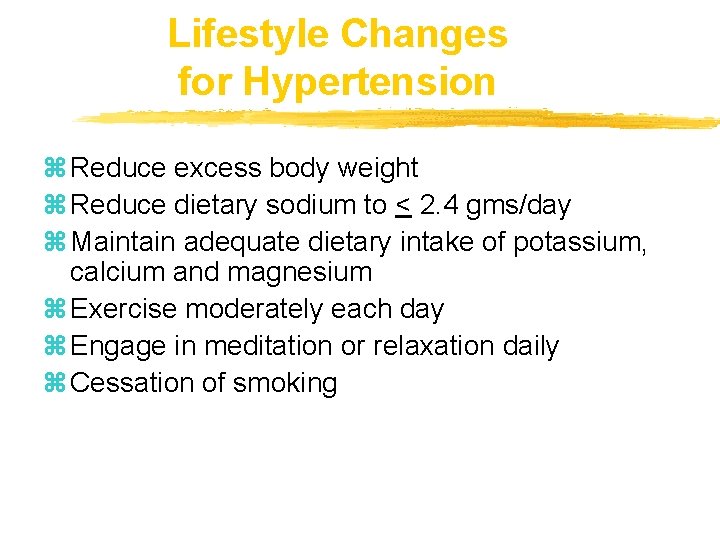
Lifestyle Changes for Hypertension z Reduce excess body weight z Reduce dietary sodium to < 2. 4 gms/day z Maintain adequate dietary intake of potassium, calcium and magnesium z Exercise moderately each day z Engage in meditation or relaxation daily z Cessation of smoking
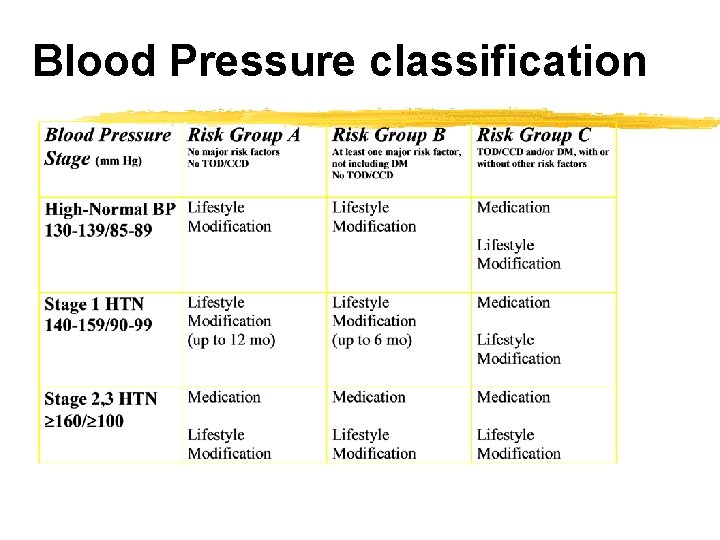
Blood Pressure classification
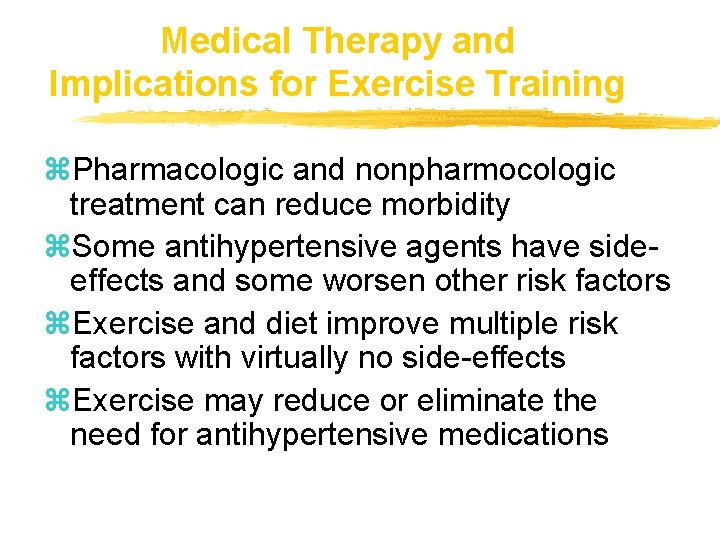
Medical Therapy and Implications for Exercise Training z. Pharmacologic and nonpharmocologic treatment can reduce morbidity z. Some antihypertensive agents have sideeffects and some worsen other risk factors z. Exercise and diet improve multiple risk factors with virtually no side-effects z. Exercise may reduce or eliminate the need for antihypertensive medications
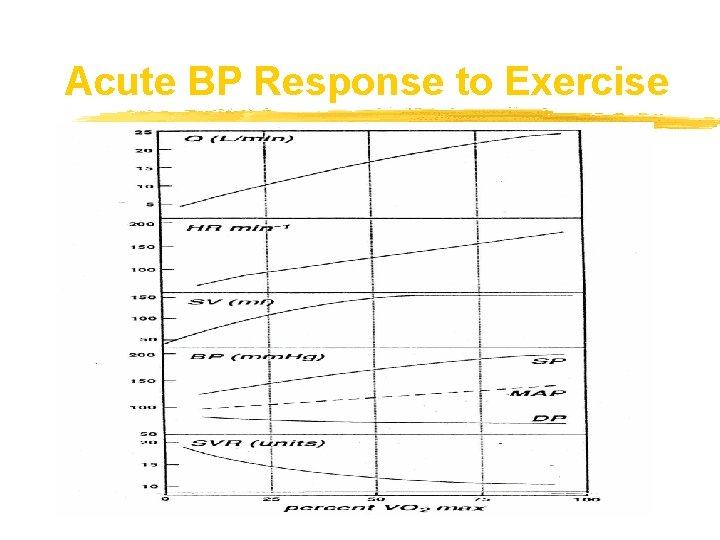
Acute BP Response to Exercise
Exaggerated BP Response to Exercise z. Among normotensive men who had an exercise test between 1971 -1982, those who developed HTN in 1986 were 2. 4 times more likely to have had an exaggerated BP response to exercise z. Exaggerated BP response increased future hypertension risk by 300% after adjusting for all other risk factors
Exaggerated BP Response to Exercise z. Exaggerated BP was change from rest in SBP >60 mm Hg at 6 METs; SBP > 70 mm Hg at 8 METs; DBP > 10 mm Hg at any workload. z. Subjects in CARDIA study with exaggerated exercise BP were 1. 7 times more likely to develop HTN 5 years later J Clin Epidemiol 51 (1): 1998
NIH Consensus Conference on Physical Activity and CV Health (1995) z Review of 47 studies of exercise and HTN z 70% of exercise groups decreased SBP by an avg. of 10. 5 mm Hg from 154 z 78% of subjects decreased DBP by an avg. of 8. 6 mm Hg from 98 z Only 1 study showed increased BP w/ EX z Beneficial responses are 80 times more frequent than negative responses Hagberg, J. , et. al. , NIH, 1995: 69 -71
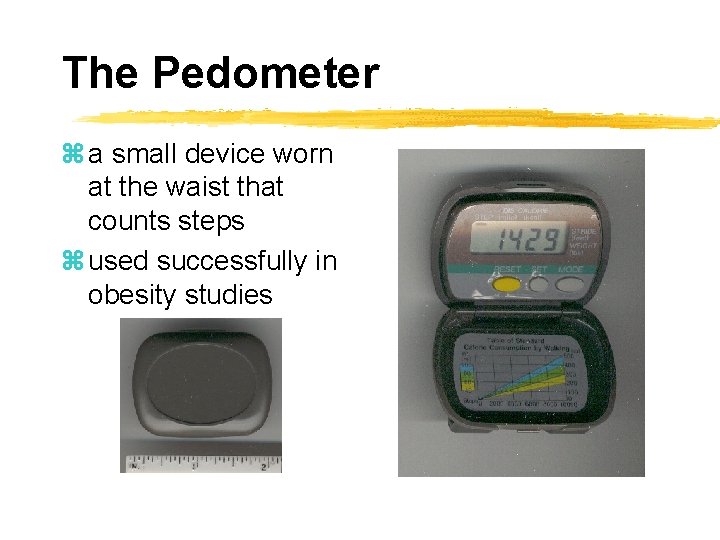
The Pedometer z a small device worn at the waist that counts steps z used successfully in obesity studies
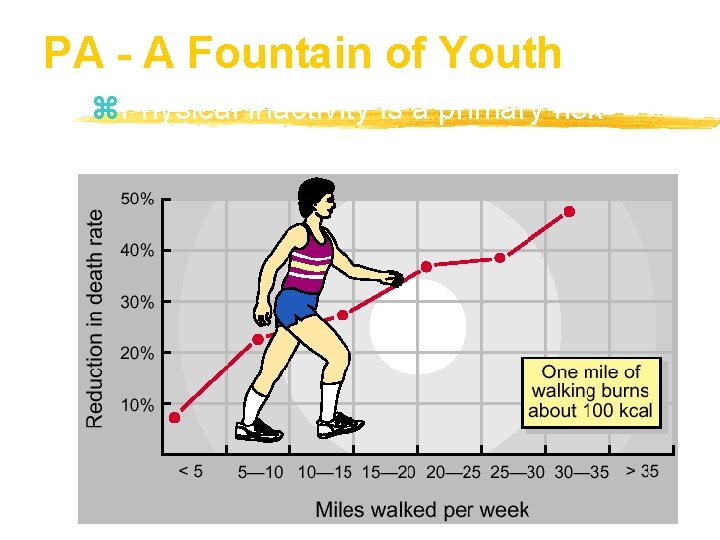
PA - A Fountain of Youth z. Physical inactivity is a primary risk factor z. Harvard Study:
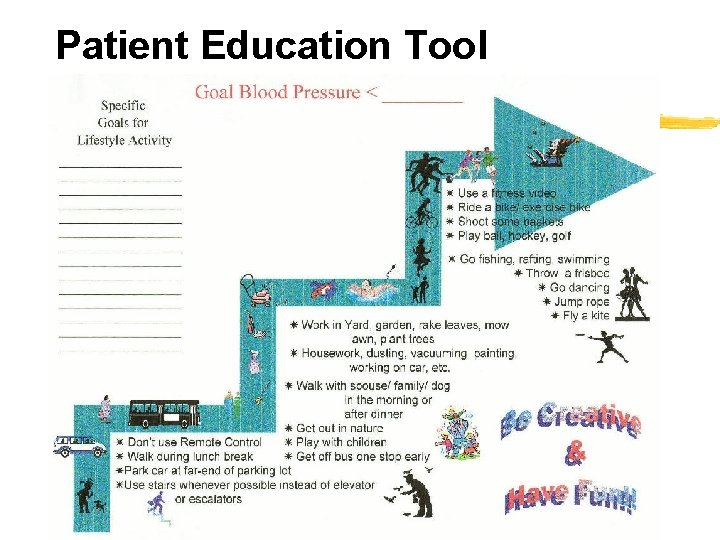
Patient Education Tool
Possible Mechanisms of BP Reduction with Exercise z. Reduced visceral fat independent of changes in body weight or BMI z. Altered renal function to increase elimination of sodium leading to reduce fluid volume z. Anthropomorphic parameters may not be primary mechansims in causing HTN
Possible Mechanisms of BP Reduction with Exercise z. Lower cardiac output and peripheral vascular resistance at rest and submaximal exercise y. Decreased HR y. Decreased sympathetic and increased parasympathetic tone y. Lower blood catecholamines and plasma renin activity
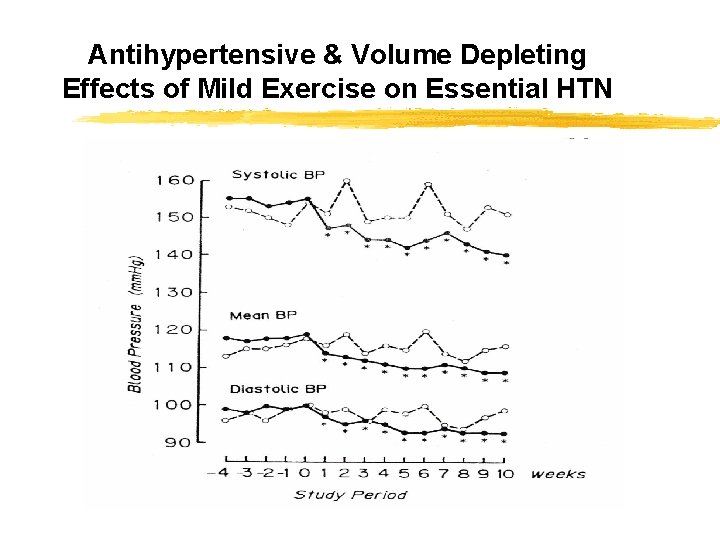
Antihypertensive & Volume Depleting Effects of Mild Exercise on Essential HTN
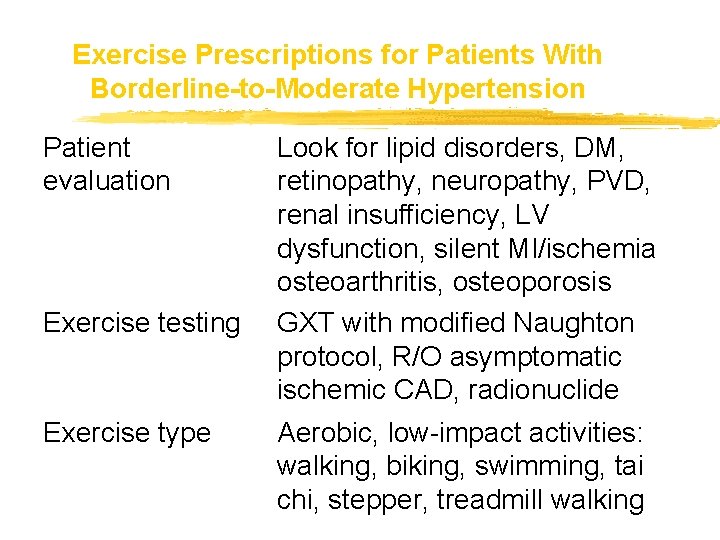
Exercise Prescriptions for Patients With Borderline-to-Moderate Hypertension Patient evaluation Exercise testing Exercise type Look for lipid disorders, DM, retinopathy, neuropathy, PVD, renal insufficiency, LV dysfunction, silent MI/ischemia osteoarthritis, osteoporosis GXT with modified Naughton protocol, R/O asymptomatic ischemic CAD, radionuclide Aerobic, low-impact activities: walking, biking, swimming, tai chi, stepper, treadmill walking
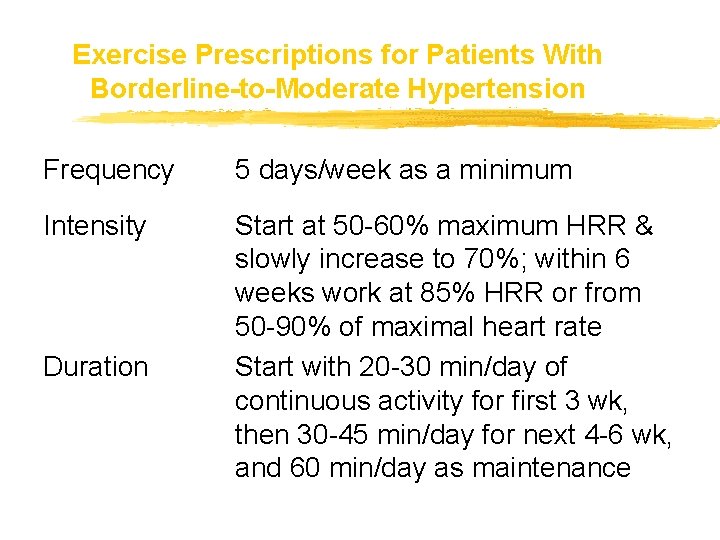
Exercise Prescriptions for Patients With Borderline-to-Moderate Hypertension Frequency 5 days/week as a minimum Intensity Start at 50 -60% maximum HRR & slowly increase to 70%; within 6 weeks work at 85% HRR or from 50 -90% of maximal heart rate Start with 20 -30 min/day of continuous activity for first 3 wk, then 30 -45 min/day for next 4 -6 wk, and 60 min/day as maintenance Duration
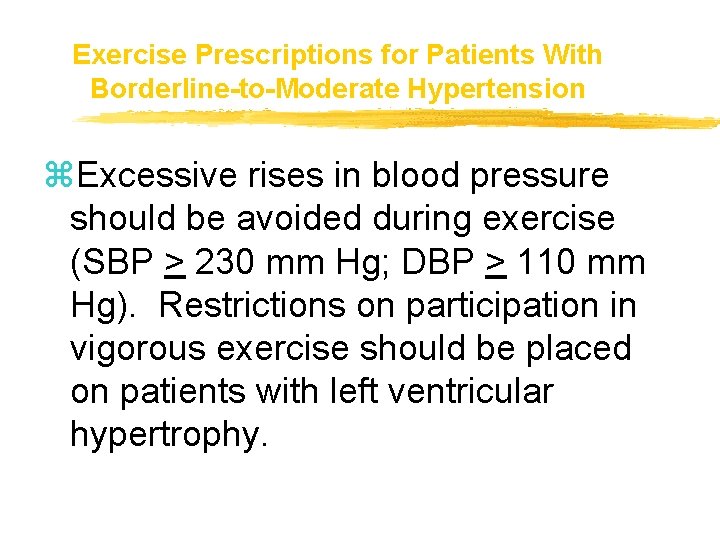
Exercise Prescriptions for Patients With Borderline-to-Moderate Hypertension z. Excessive rises in blood pressure should be avoided during exercise (SBP > 230 mm Hg; DBP > 110 mm Hg). Restrictions on participation in vigorous exercise should be placed on patients with left ventricular hypertrophy.
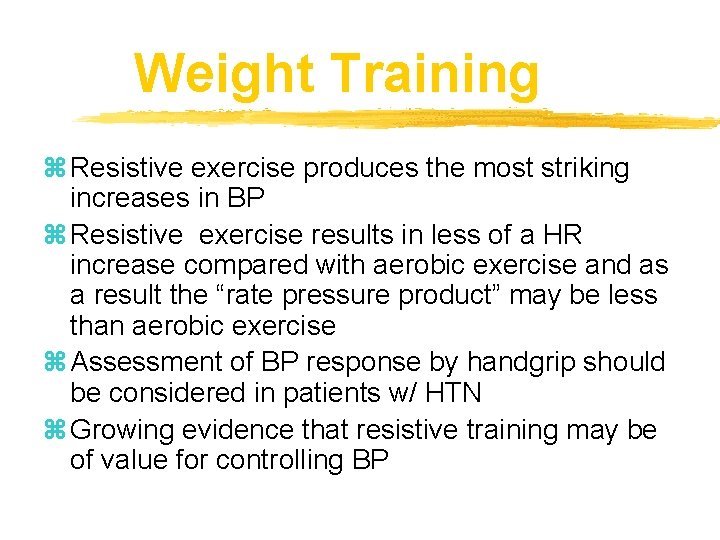
Weight Training z Resistive exercise produces the most striking increases in BP z Resistive exercise results in less of a HR increase compared with aerobic exercise and as a result the “rate pressure product” may be less than aerobic exercise z Assessment of BP response by handgrip should be considered in patients w/ HTN z Growing evidence that resistive training may be of value for controlling BP
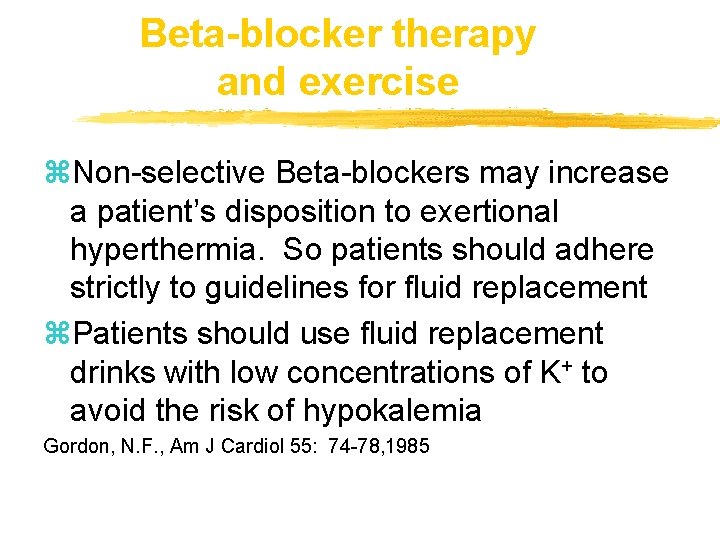
Beta-blocker therapy and exercise z. Non-selective Beta-blockers may increase a patient’s disposition to exertional hyperthermia. So patients should adhere strictly to guidelines for fluid replacement z. Patients should use fluid replacement drinks with low concentrations of K+ to avoid the risk of hypokalemia Gordon, N. F. , Am J Cardiol 55: 74 -78, 1985
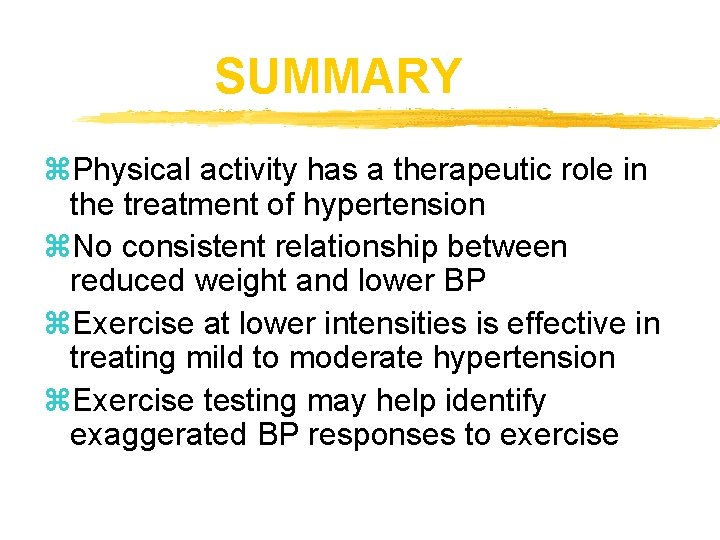
SUMMARY z. Physical activity has a therapeutic role in the treatment of hypertension z. No consistent relationship between reduced weight and lower BP z. Exercise at lower intensities is effective in treating mild to moderate hypertension z. Exercise testing may help identify exaggerated BP responses to exercise
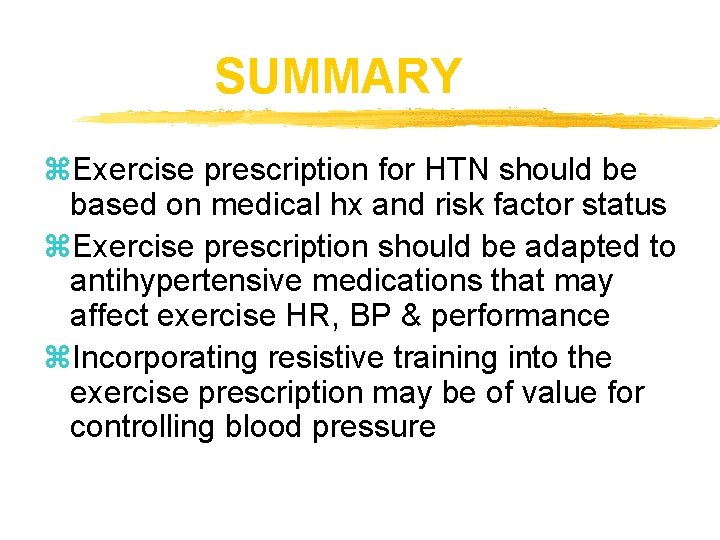
SUMMARY z. Exercise prescription for HTN should be based on medical hx and risk factor status z. Exercise prescription should be adapted to antihypertensive medications that may affect exercise HR, BP & performance z. Incorporating resistive training into the exercise prescription may be of value for controlling blood pressure
References Chintanadilok, J. , Exercise in Treating Hypertension, Phys. Sports Med 30: 11 -23, 2002 Urata, H. , Antihypertensive and Volume-Depleting Effects of Mild Exercise on Essential Hypertension, Hypertension 9: 245 -52, 1987. Tanabe, Y. , Changes in Serum Concentration of Taurine and Other Amino Acids in Clinical Antihypertensive Exercise Therapy, Clin and Exper Hyper A 11: 149 -165, 1989. American College of Sports Medicine, Physical Activity, Physical Fitness and Hypertension, Med Sci Sports Exerc 25: i - x , 1993. ACSM’s Resource Manual for Guidelines for Exercise Testing and Prescription, Baltimore, Williams & Wilkins, p. 275 -280, 1998.