
Theranostics for Prostate Cancer Michael J Morris MD



- Slides: 38
Theranostics for Prostate Cancer Michael J. Morris, MD Section Head, Prostate Cancer Memorial Sloan Kettering Cancer Center
Disclosures • Uncompensated advisor to AAA, Bayer, and Johnson • Compensated advisor to ORIC and Curium • MSK receives institutional research funding for the conduct of clinical trials in which I participate from Bayer, Endocyte, Progenics, Corcept, Roche/Genentech, and Janssen • Travel to academic meetings has been supported by Endocyte and Fujifilm
What is the field of theranostics? • A field of medicine which combines specific targeted therapy based on specific targeted diagnostic tests. A single agent is used to: • Image the presence of a target • Deliver treatment to that target to destroy it Theranostics are systems that are capable of diagnosis, drug delivery and monitoring of therapeutic response
What are the advantages of theranostics? • You spare patients treatment who would otherwise not respond – (by identifying that they don’t have the target) • You can predict who will suffer side effects that are disproportionate to the anticipated benefit – (by seeing how normal tissues would be affected by the drug) • You can determine how effective your treatment is, and then retreat if necessary
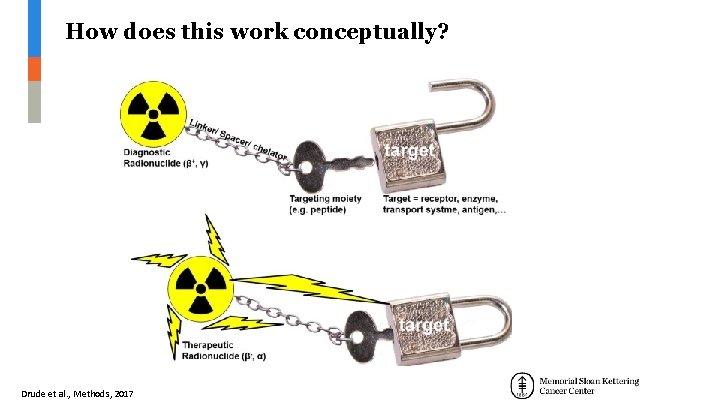
How does this work conceptually? Drude et al. , Methods, 2017
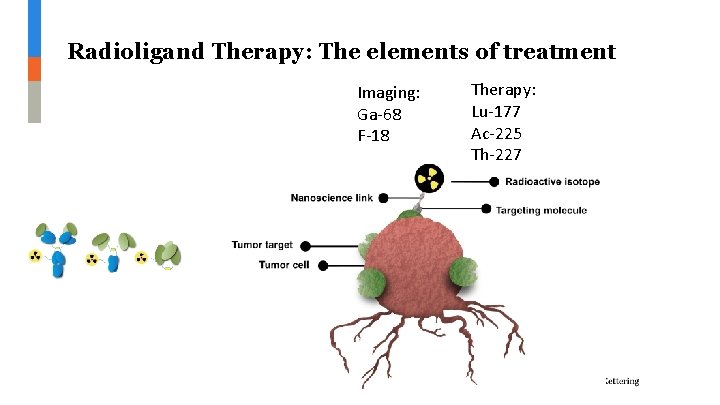
Radioligand Therapy: The elements of treatment Imaging: Ga-68 F-18 Therapy: Lu-177 Ac-225 Th-227
How does this work in prostate cancer?
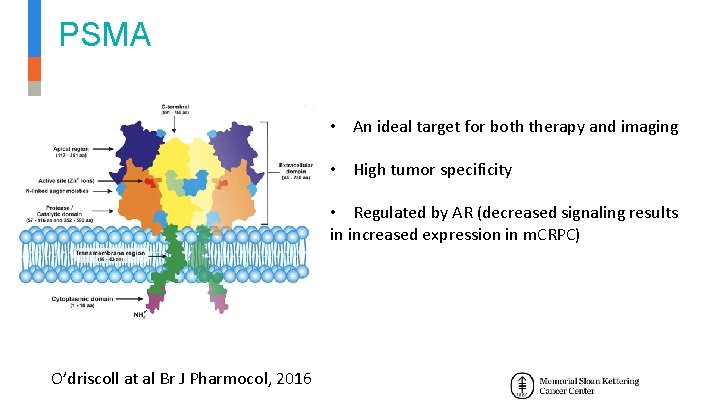
PSMA • An ideal target for both therapy and imaging • High tumor specificity • Regulated by AR (decreased signaling results in increased expression in m. CRPC) O’driscoll at al Br J Pharmocol, 2016
Where is PSMA? • On normal prostate tissue • On prostate cancer cells in the prostate • On prostate cancer cells in the lymph nodes • On prostate cancer cells in the bones • On prostate cancer cells in other organs • In very small amounts, in some rare normal tissues in the liver, kidney, gut, and nervous system
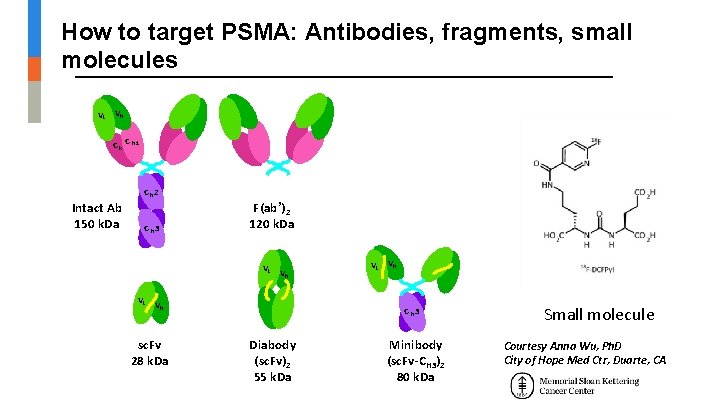
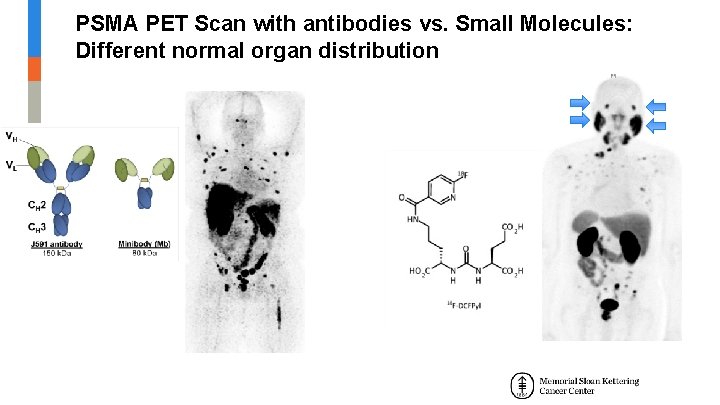
How to target PSMA: Antibodies, fragments, small molecules VL VH Ck C H 1 C H 2 Intact Ab 150 k. Da C H 3 F(ab’)2 120 k. Da VL VL VH VH sc. Fv 28 k. Da VL VH C H 3 Diabody (sc. Fv)2 55 k. Da Minibody (sc. Fv-CH 3)2 80 k. Da Small molecule Courtesy Anna Wu, Ph. D City of Hope Med Ctr, Duarte, CA
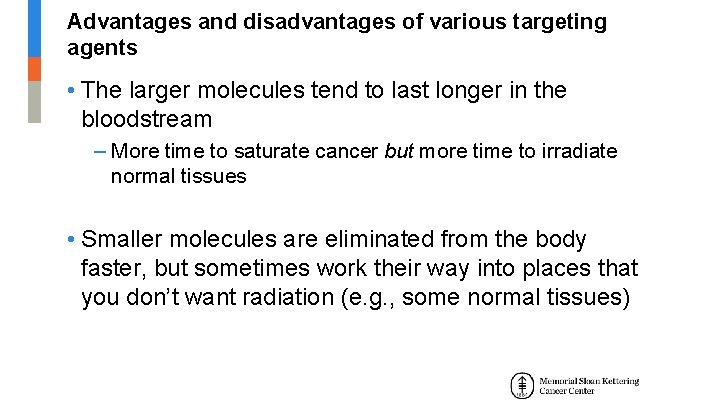
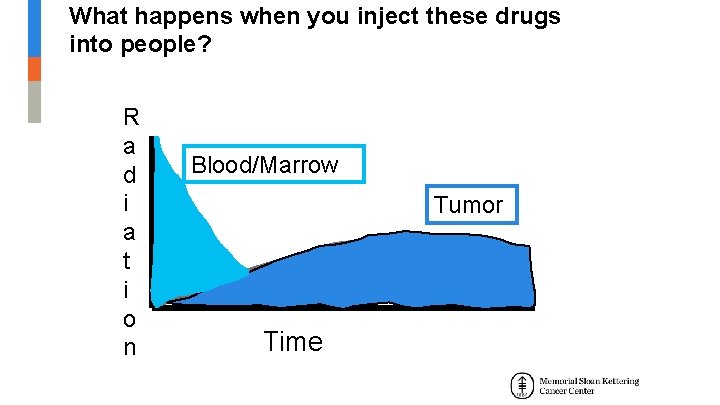
Advantages and disadvantages of various targeting agents • The larger molecules tend to last longer in the bloodstream – More time to saturate cancer but more time to irradiate normal tissues • Smaller molecules are eliminated from the body faster, but sometimes work their way into places that you don’t want radiation (e. g. , some normal tissues)
What happens when you inject these drugs into people? R a d i a t i o n Blood/Marrow Tumor Time
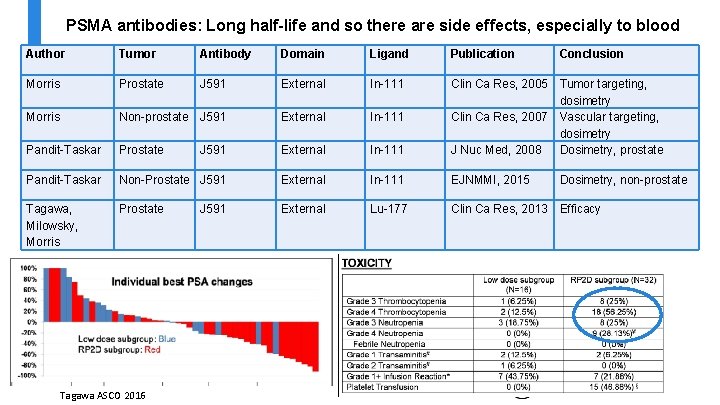
PSMA antibodies: Long half-life and so there are side effects, especially to blood Author Tumor Antibody Domain Ligand Publication Morris Prostate J 591 External In-111 Morris Non-prostate J 591 External In-111 Pandit-Taskar Prostate J 591 External In-111 Clin Ca Res, 2005 Tumor targeting, dosimetry Clin Ca Res, 2007 Vascular targeting, dosimetry J Nuc Med, 2008 Dosimetry, prostate Pandit-Taskar Non-Prostate J 591 External In-111 EJNMMI, 2015 Tagawa, Milowsky, Morris Prostate External Lu-177 Clin Ca Res, 2013 Efficacy Tagawa ASCO 2016 J 591 Conclusion Dosimetry, non-prostate
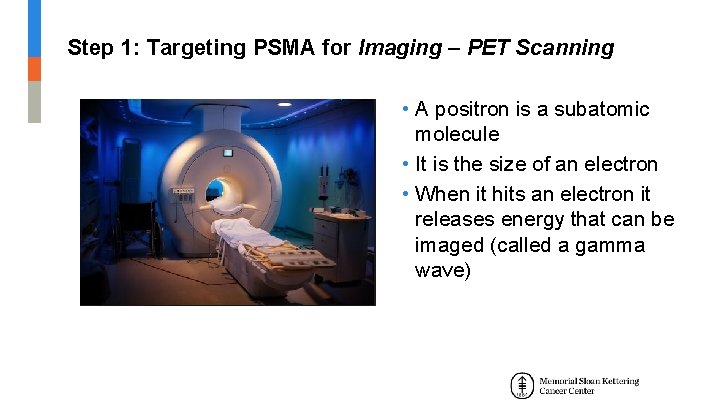
Step 1: Targeting PSMA for Imaging – PET Scanning • A positron is a subatomic molecule • It is the size of an electron • When it hits an electron it releases energy that can be imaged (called a gamma wave)
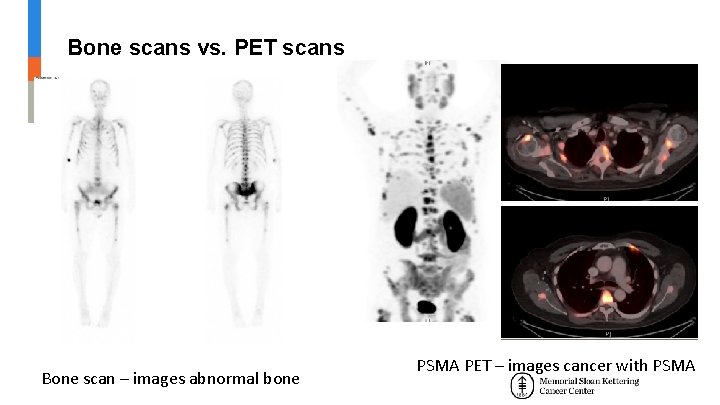
Bone scans vs. PET scans Bone scan – images abnormal bone PSMA PET – images cancer with PSMA
PSMA PET Scan with antibodies vs. Small Molecules: Different normal organ distribution
Now we can not only detect disease, but treat it… How?
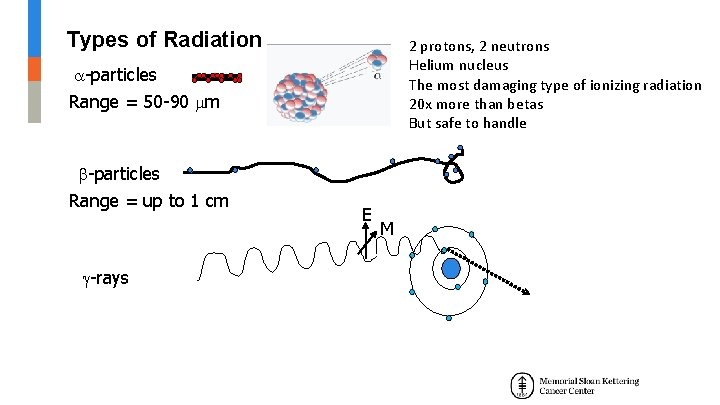
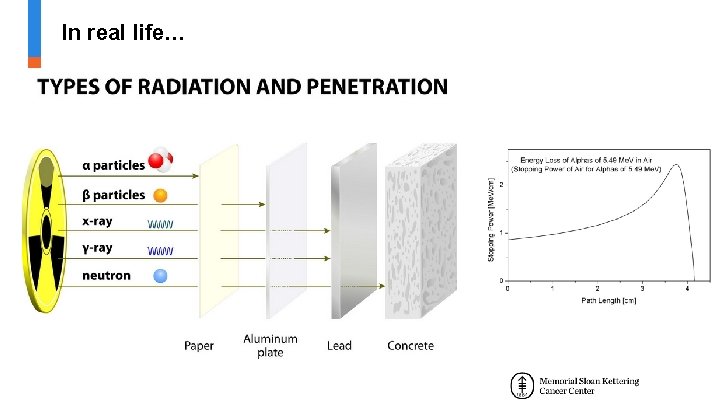
Types of Radiation 2 protons, 2 neutrons Helium nucleus The most damaging type of ionizing radiation 20 x more than betas But safe to handle a-particles Range = 50 -90 mm b-particles Range = up to 1 cm g-rays E M
In real life…
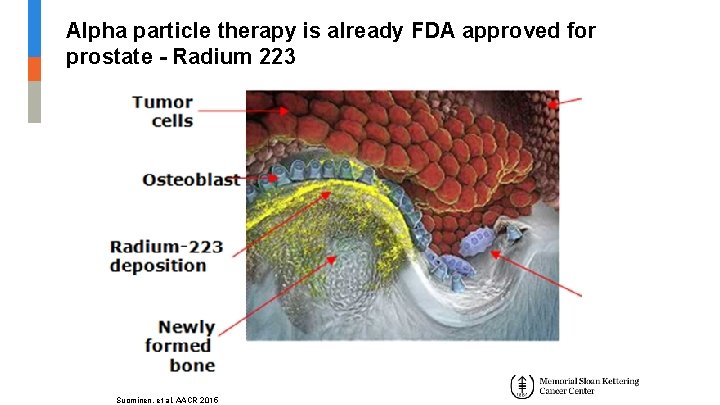
Alpha particle therapy is already FDA approved for prostate - Radium 223 Suominen, et al. AACR 2015
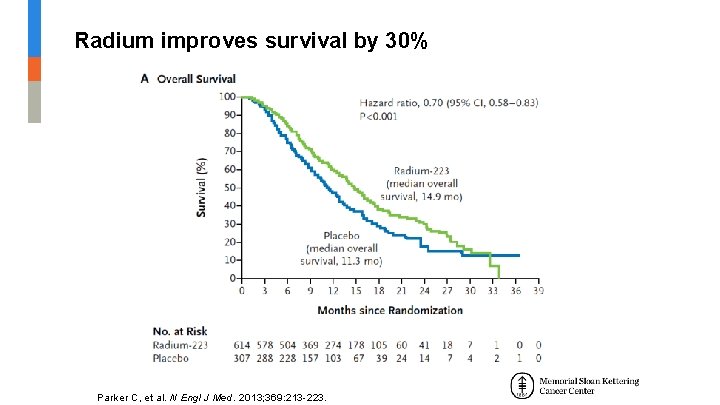
Radium improves survival by 30% Hazard ratio 95% CI P-value Time to Total ALP progression 0. 163 (0. 121 – 0. 221) < 0. 00001 Time to PSA progression 0. 671 (0. 546 – 0. 826) 0. 00015 Radium-223 n (%) Placebo n (%) P-value Total ALP response (30% reduction) 165 (43) 4 (3) < 0. 001 Total ALP normalisation* 83 (33) 1 (1) < 0. 001 who. J had elevated total ALP at baseline. Parker C, *In et patients al. N Engl Med. 2013; 369: 213 -223.
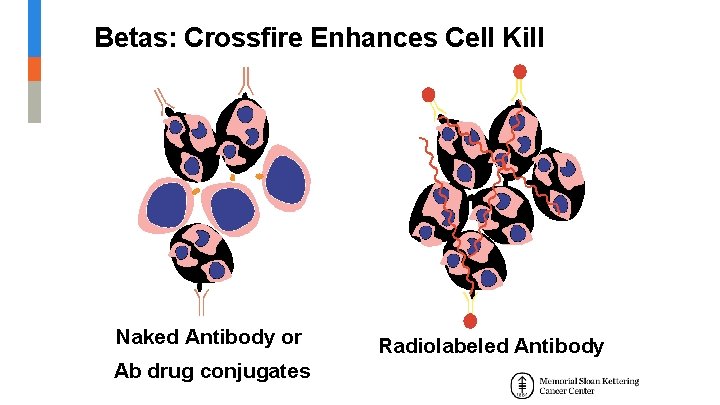
Betas: Crossfire Enhances Cell Kill Naked Antibody or Ab drug conjugates Radiolabeled Antibody
So… • Alpha and betas are used as therapy • They have very different properties – Side effects – Impact of tumor mass • Pluses and minuses for each
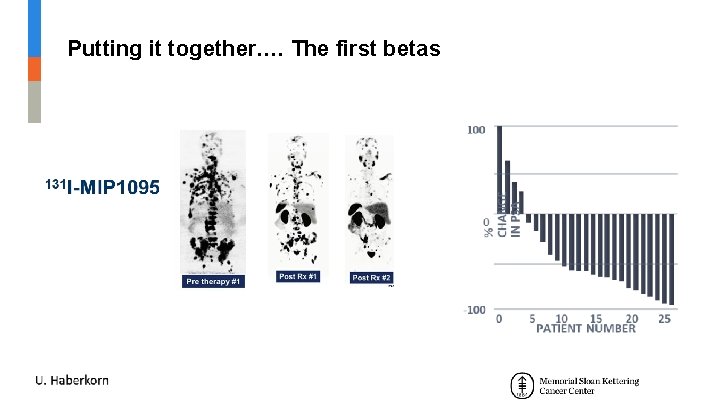
Putting it together…. The first betas
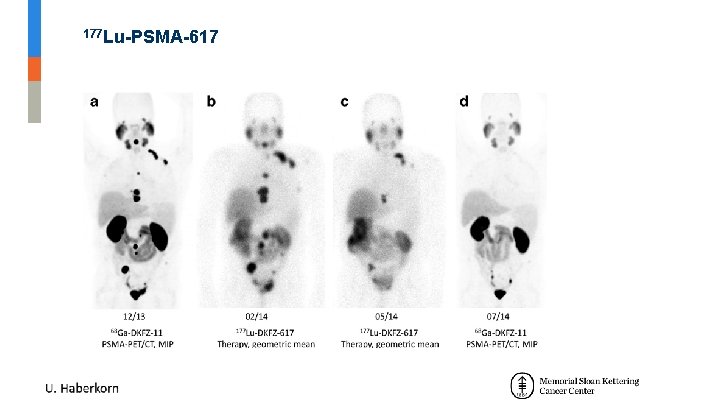
177 Lu-PSMA-617
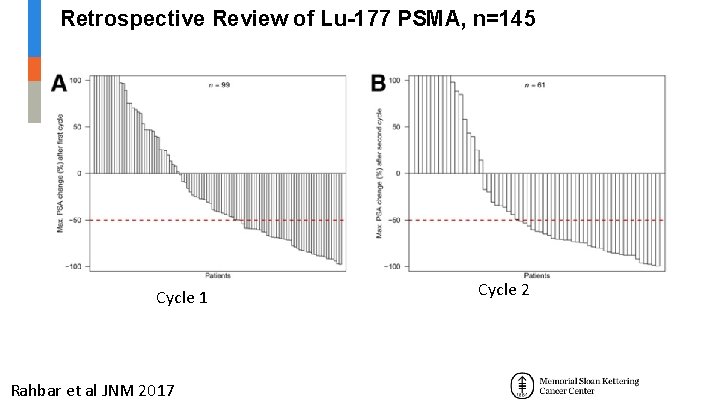
Retrospective Review of Lu-177 PSMA, n=145 Cycle 1 Rahbar et al JNM 2017 Cycle 2
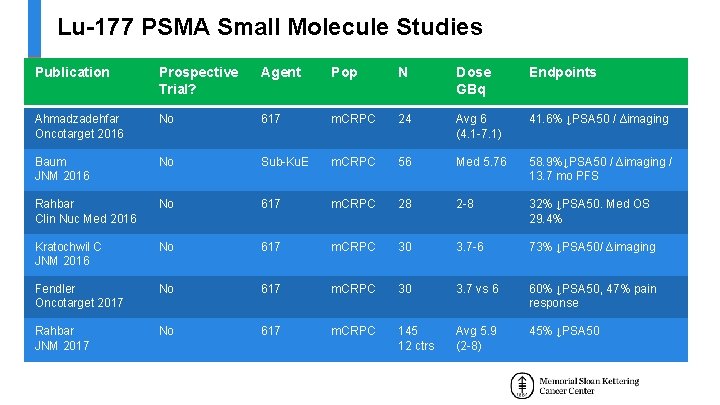
Lu-177 PSMA Small Molecule Studies Publication Prospective Trial? Agent Pop N Dose GBq Endpoints Ahmadzadehfar Oncotarget 2016 No 617 m. CRPC 24 Avg 6 (4. 1 -7. 1) 41. 6% ↓PSA 50 / ∆imaging Baum JNM 2016 No Sub-Ku. E m. CRPC 56 Med 5. 76 58. 9%↓PSA 50 / ∆imaging / 13. 7 mo PFS Rahbar Clin Nuc Med 2016 No 617 m. CRPC 28 2 -8 32% ↓PSA 50. Med OS 29. 4% Kratochwil C JNM 2016 No 617 m. CRPC 30 3. 7 -6 73% ↓PSA 50/ ∆imaging Fendler Oncotarget 2017 No 617 m. CRPC 30 3. 7 vs 6 60% ↓PSA 50, 47% pain response Rahbar JNM 2017 No 617 m. CRPC 145 12 ctrs Avg 5. 9 (2 -8) 45% ↓PSA 50
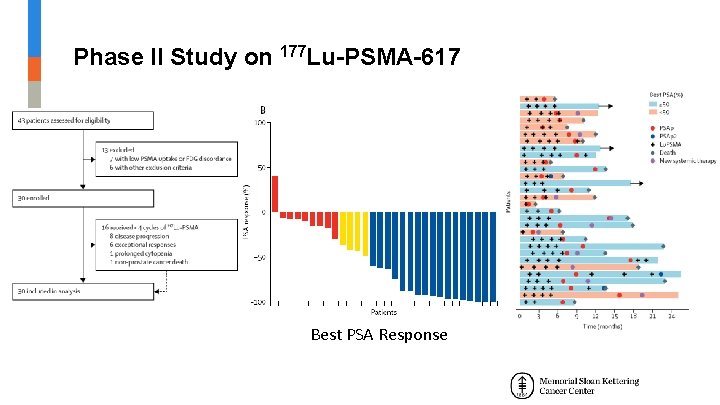
Phase II Study on 177 Lu-PSMA-617 Best PSA Response
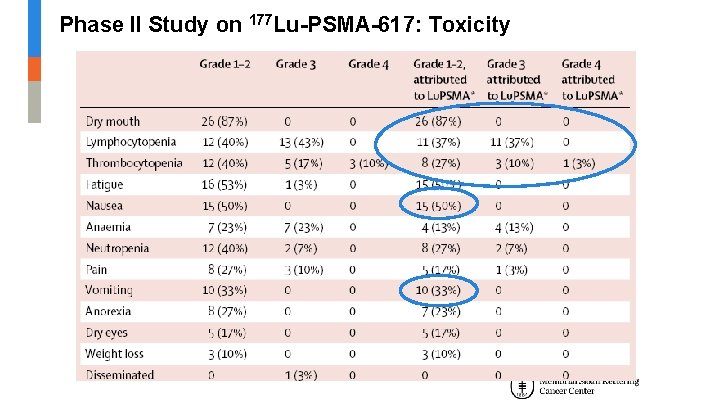
Phase II Study on 177 Lu-PSMA-617: Toxicity
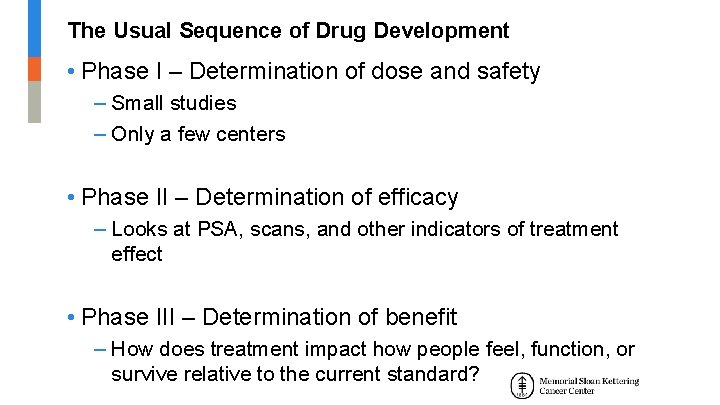
The Usual Sequence of Drug Development • Phase I – Determination of dose and safety – Small studies – Only a few centers • Phase II – Determination of efficacy – Looks at PSA, scans, and other indicators of treatment effect • Phase III – Determination of benefit – How does treatment impact how people feel, function, or survive relative to the current standard?
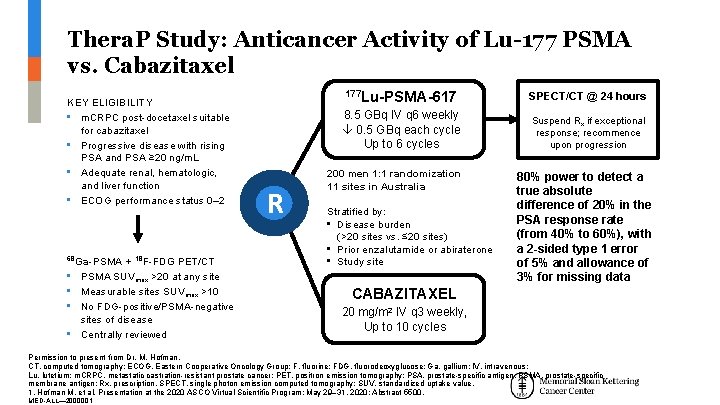
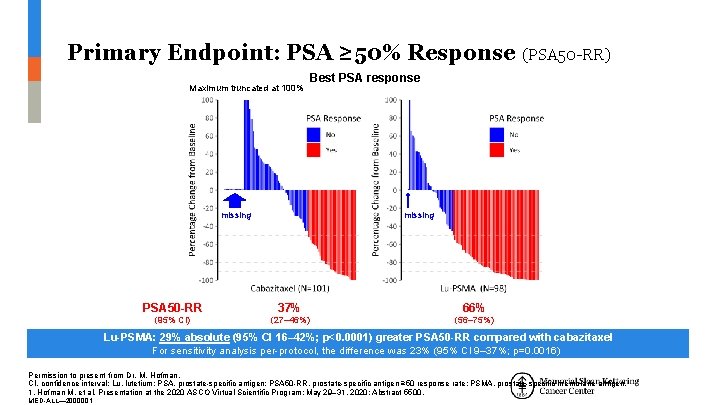
Thera. P Study: Anticancer Activity of Lu-177 PSMA vs. Cabazitaxel KEY ELIGIBILITY • m. CRPC post-docetaxel suitable for cabazitaxel • Progressive disease with rising PSA and PSA ≥ 20 ng/m. L • Adequate renal, hematologic, and liver function • ECOG performance status 0– 2 68 Ga-PSMA • • + 18 F-FDG PET/CT PSMA SUVmax >20 at any site Measurable sites SUVmax >10 No FDG-positive/PSMA-negative sites of disease Centrally reviewed R 177 Lu-PSMA-617 SPECT/CT @ 24 hours 8. 5 GBq IV q 6 weekly 0. 5 GBq each cycle Up to 6 cycles Suspend Rx if exceptional response; recommence upon progression 200 men 1: 1 randomization 11 sites in Australia Stratified by: • Disease burden (>20 sites vs. ≤ 20 sites) • Prior enzalutamide or abiraterone • Study site 80% power to detect a true absolute difference of 20% in the PSA response rate (from 40% to 60%), with a 2 -sided type 1 error of 5% and allowance of 3% for missing data CABAZITAXEL 20 mg/m 2 IV q 3 weekly, Up to 10 cycles Permission to present from Dr. M. Hofman. CT, computed tomography; ECOG, Eastern Cooperative Oncology Group; F, fluorine; FDG, fluorodeoxyglucose; Ga, gallium; IV, intravenous; Lu, lutetium; m. CRPC, metastatic castration-resistant prostate cancer; PET, positron emission tomography; PSA, prostate-specific antigen; PSMA, prostate-specific membrane antigen; Rx, prescription. SPECT, single photon emission computed tomography; SUV, standardized uptake value. 1. Hofman M, et al. Presentation at the 2020 ASCO Virtual Scientific Program; May 29– 31, 2020; Abstract 5500. MED-ALL— 2000001
Primary Endpoint: PSA ≥ 50% Response (PSA 50 -RR) Maximum truncated at 100% missing Best PSA response missing PSA 50 -RR 37% 66% (95% CI) (27– 46%) (56– 75%) Lu-PSMA: 29% absolute (95% CI 16– 42%; p<0. 0001) greater PSA 50 -RR compared with cabazitaxel For sensitivity analysis per-protocol, the difference was 23% (95% CI 9– 37%; p=0. 0016) Permission to present from Dr. M. Hofman. CI, confidence interval; Lu, lutetium; PSA, prostate-specific antigen; PSA 50 -RR, prostate-specific antigen ≥ 50 response rate; PSMA, prostate-specific membrane antigen. 1. Hofman M, et al. Presentation at the 2020 ASCO Virtual Scientific Program; May 29– 31, 2020; Abstract 5500. MED-ALL— 2000001
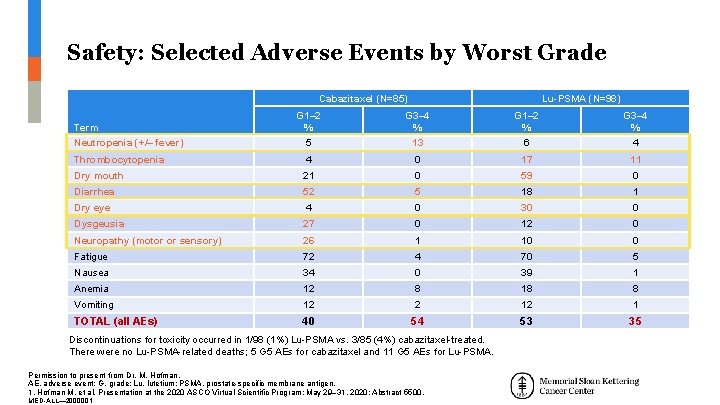
Safety: Selected Adverse Events by Worst Grade Cabazitaxel (N=85) Lu-PSMA (N=98) G 1– 2 % G 3– 4 % Neutropenia (+/– fever) 5 13 6 4 Thrombocytopenia 4 0 17 11 Dry mouth 21 0 59 0 Diarrhea 52 5 18 1 Dry eye 4 0 30 0 Dysgeusia 27 0 12 0 Neuropathy (motor or sensory) 26 1 10 0 Fatigue 72 4 70 5 Nausea 34 0 39 1 Anemia 12 8 18 8 Vomiting 12 2 12 1 TOTAL (all AEs) 40 54 53 35 Term Discontinuations for toxicity occurred in 1/98 (1%) Lu-PSMA vs. 3/85 (4%) cabazitaxel-treated. There were no Lu-PSMA-related deaths; 5 G 5 AEs for cabazitaxel and 11 G 5 AEs for Lu-PSMA. Permission to present from Dr. M. Hofman. AE, adverse event; G, grade; Lu, lutetium; PSMA, prostate-specific membrane antigen. 1. Hofman M, et al. Presentation at the 2020 ASCO Virtual Scientific Program; May 29– 31, 2020; Abstract 5500. MED-ALL— 2000001
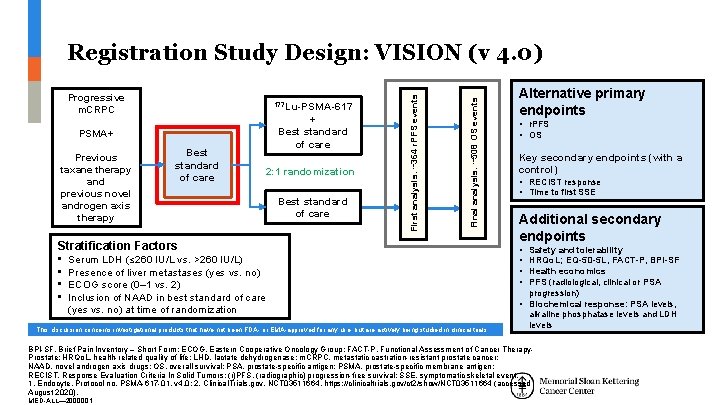
177 Lu-PSMA-617 + Best standard of care PSMA+ Previous taxane therapy and previous novel androgen axis therapy Best standard of care 2: 1 randomization Best standard of care Final analysis: ~508 OS events Progressive m. CRPC First analysis: ~364 r. PFS events Registration Study Design: VISION (v 4. 0) Stratification Factors • • Serum LDH (≤ 260 IU/L vs. >260 IU/L) Presence of liver metastases (yes vs. no) ECOG score (0– 1 vs. 2) Inclusion of NAAD in best standard of care (yes vs. no) at time of randomization This discussion concerns investigational products that have not been FDA- or EMA-approved for any use, but are actively being studied in clinical trials Alternative primary endpoints • r. PFS • OS Key secondary endpoints (with a control) • RECIST response • Time to first SSE Additional secondary endpoints • • Safety and tolerability HRQo. L; EQ-5 D-5 L, FACT-P, BPI-SF Health economics PFS (radiological, clinical or PSA progression) • Biochemical response: PSA levels, alkaline phosphatase levels and LDH levels BPI-SF, Brief Pain Inventory – Short Form; ECOG, Eastern Cooperative Oncology Group; FACT-P, Functional Assessment of Cancer Therapy. Prostate; HRQo. L, health-related quality of life; LHD, lactate dehydrogenase; m. CRPC, metastatic castration-resistant prostate cancer; NAAD, novel androgen axis drugs; OS, overall survival; PSA, prostate-specific antigen; PSMA, prostate-specific membrane antigen; RECIST, Response Evaluation Criteria In Solid Tumors; (r)PFS, (radiographic) progression-free survival; SSE, symptomatic skeletal event. 1. Endocyte. Protocol no. PSMA-617 -01, v 4. 0; 2. Clinical. Trials. gov. NCT 03511664. https: //clinicaltrials. gov/ct 2/show/NCT 03511664 (accessed August 2020). MED-ALL— 2000001 26 MAR 2018
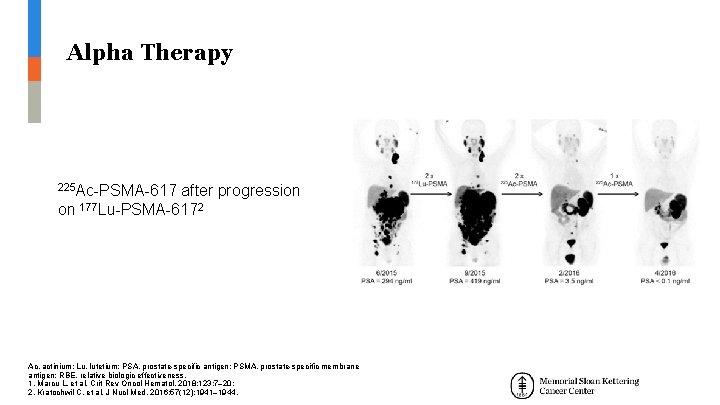
Alpha Therapy 225 Ac-PSMA-617 on after progression 177 Lu-PSMA-6172 Ac, actinium; Lu, lutetium; PSA, prostate-specific antigen; PSMA, prostate-specific membrane antigen; RBE, relative biologic effectiveness. 1. Marcu L, et al. Crit Rev Oncol Hematol. 2018; 123: 7– 20; 2. Kratochwil C, et al. J Nucl Med. 2016; 57(12): 1941– 1944.
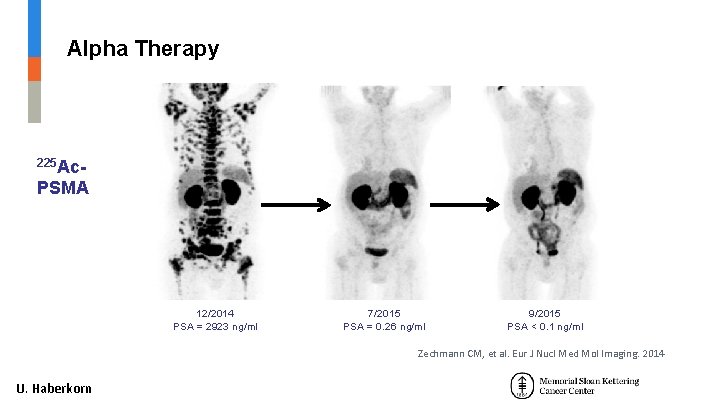
Alpha Therapy 225 Ac- PSMA 12/2014 PSA = 2923 ng/ml 7/2015 PSA = 0. 26 ng/ml 9/2015 PSA < 0. 1 ng/ml Zechmann CM, et al. Eur J Nucl Med Mol Imaging. 2014 U. Haberkorn
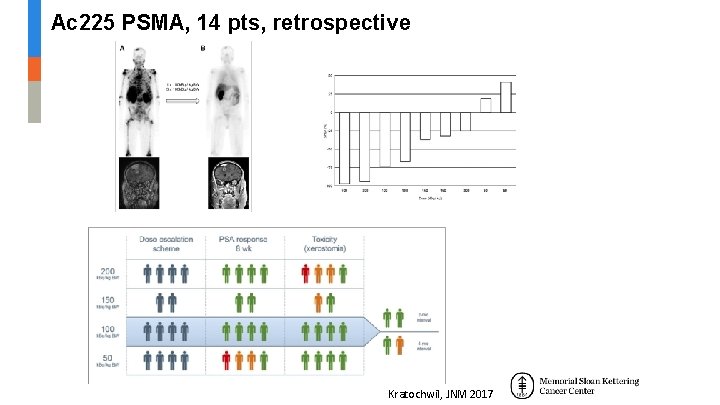
Ac 225 PSMA, 14 pts, retrospective Kratochwil, JNM 2017
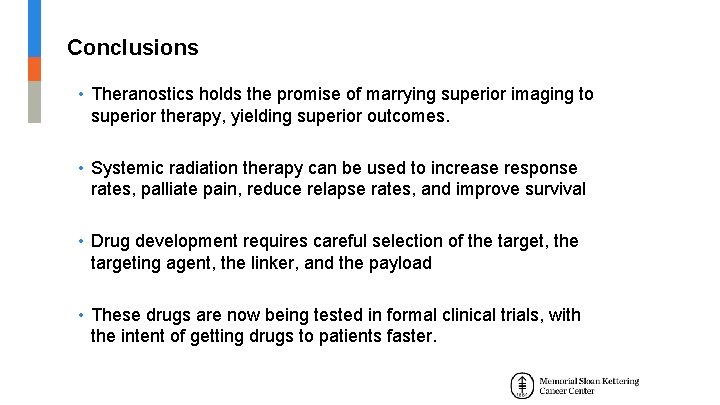
Conclusions • Theranostics holds the promise of marrying superior imaging to superior therapy, yielding superior outcomes. • Systemic radiation therapy can be used to increase response rates, palliate pain, reduce relapse rates, and improve survival • Drug development requires careful selection of the target, the targeting agent, the linker, and the payload • These drugs are now being tested in formal clinical trials, with the intent of getting drugs to patients faster.