
Theory of the PN junction Generation and Recombination
Theory of the P-N junction
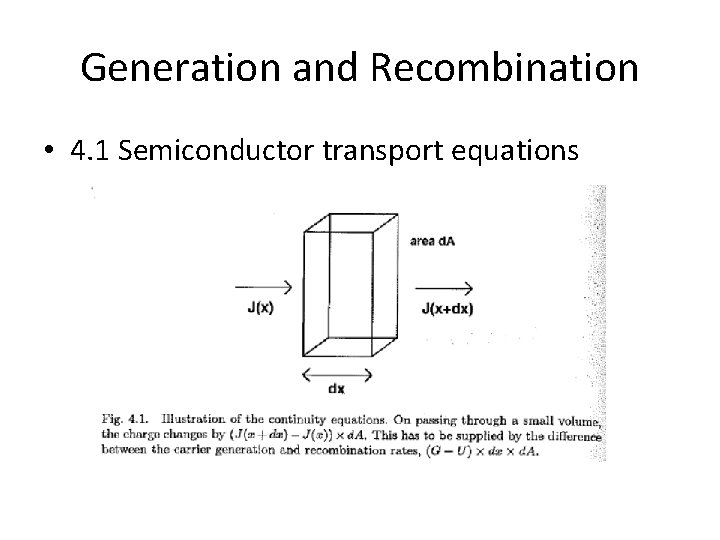
Generation and Recombination • 4. 1 Semiconductor transport equations
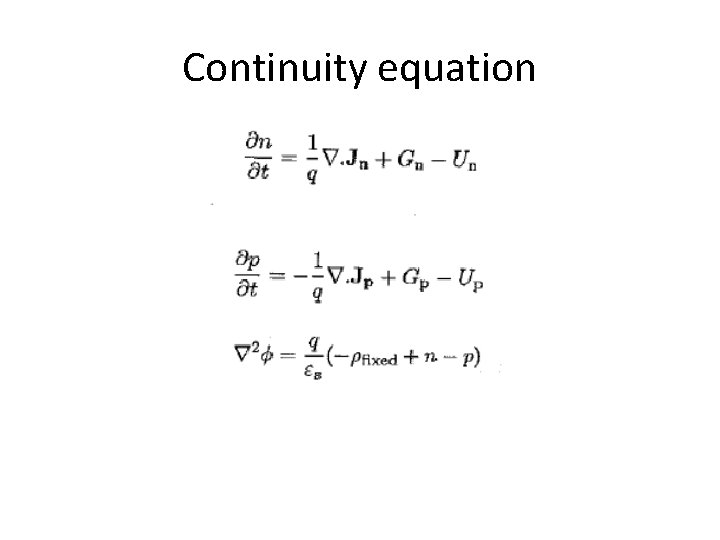
Continuity equation
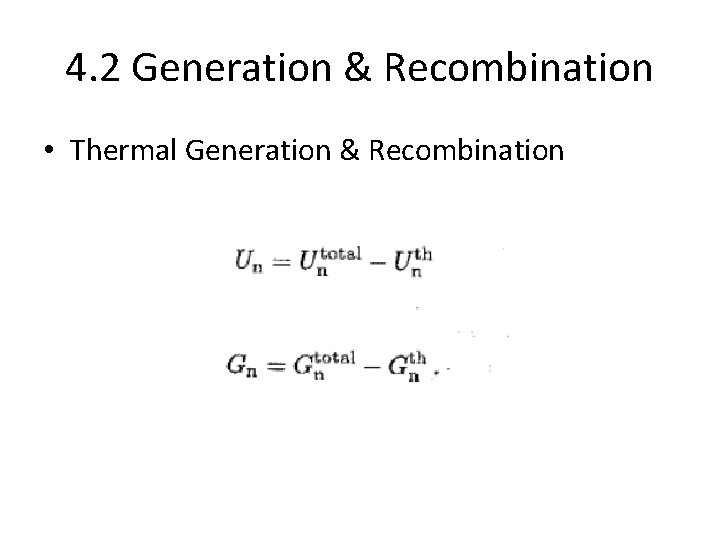
4. 2 Generation & Recombination • Thermal Generation & Recombination
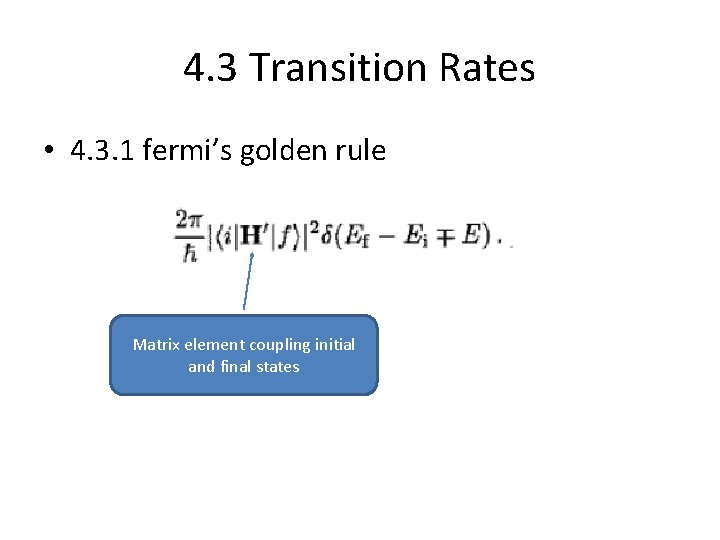
4. 3 Transition Rates • 4. 3. 1 fermi’s golden rule Matrix element coupling initial and final states

Derivation of Fermi’s golden rule
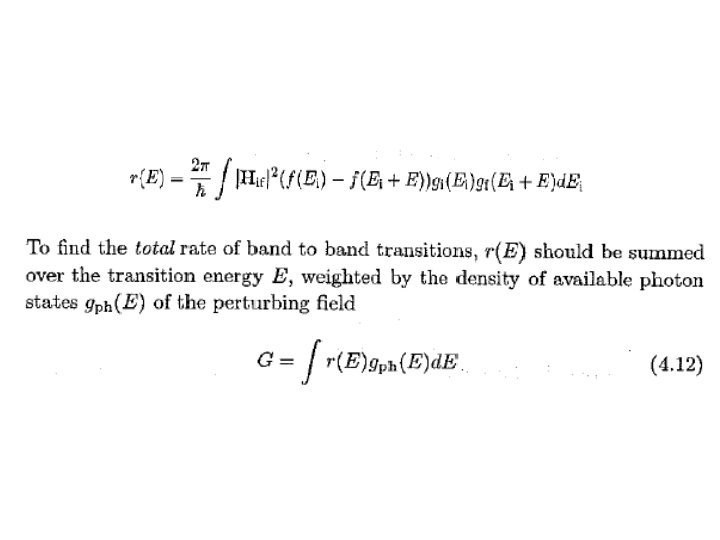
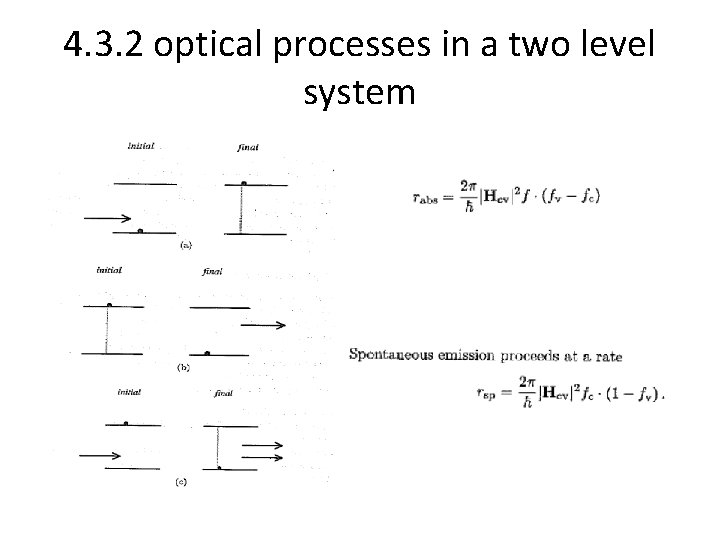
4. 3. 2 optical processes in a two level system
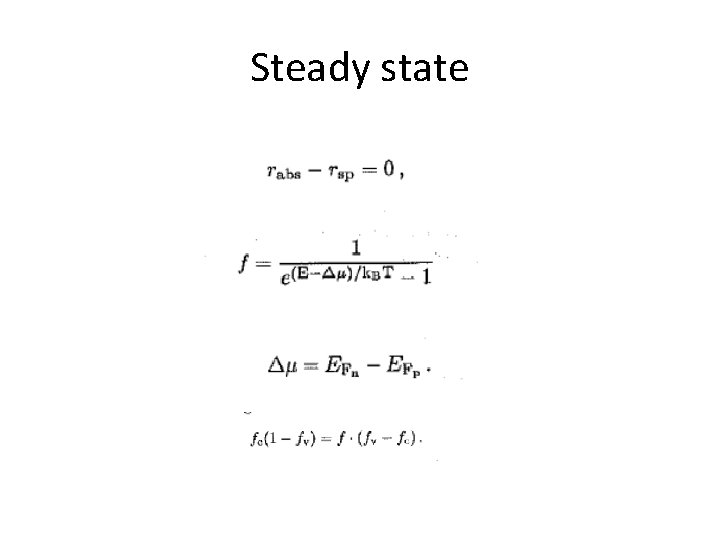
Steady state
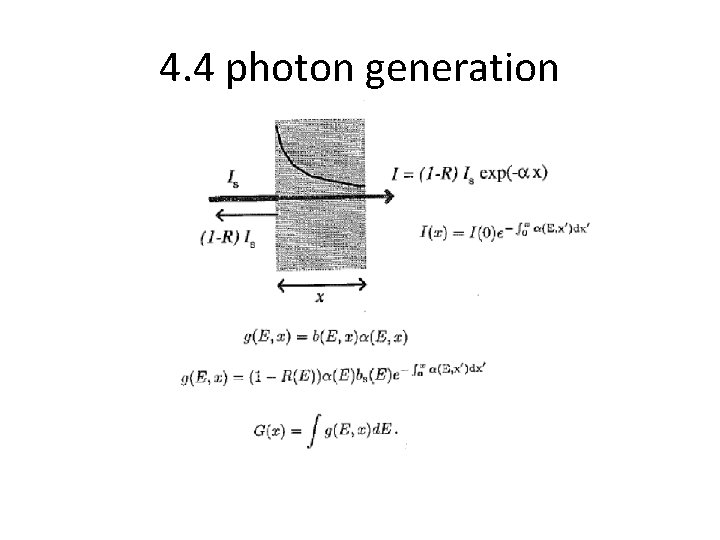
4. 4 photon generation
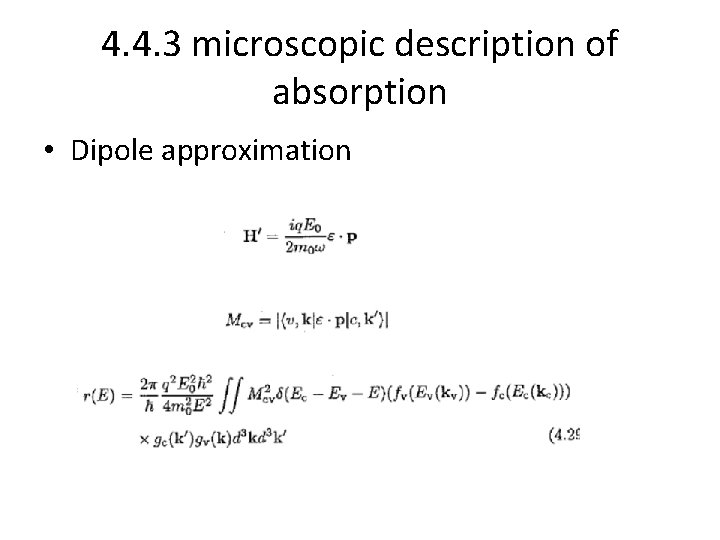
4. 4. 3 microscopic description of absorption • Dipole approximation
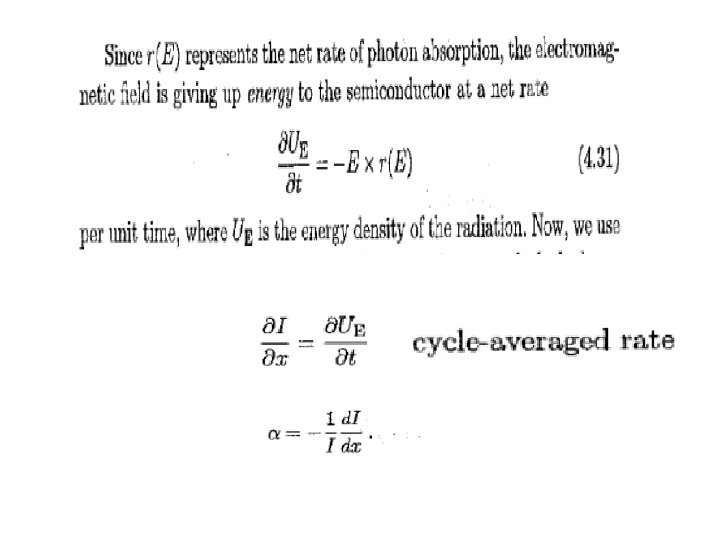
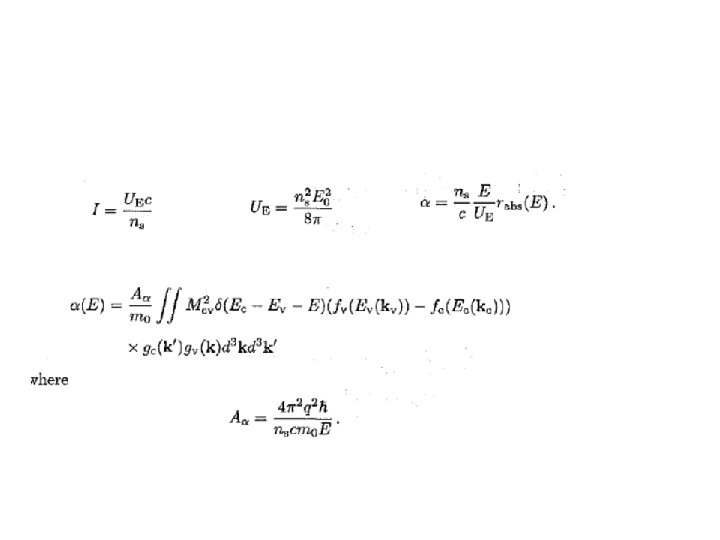
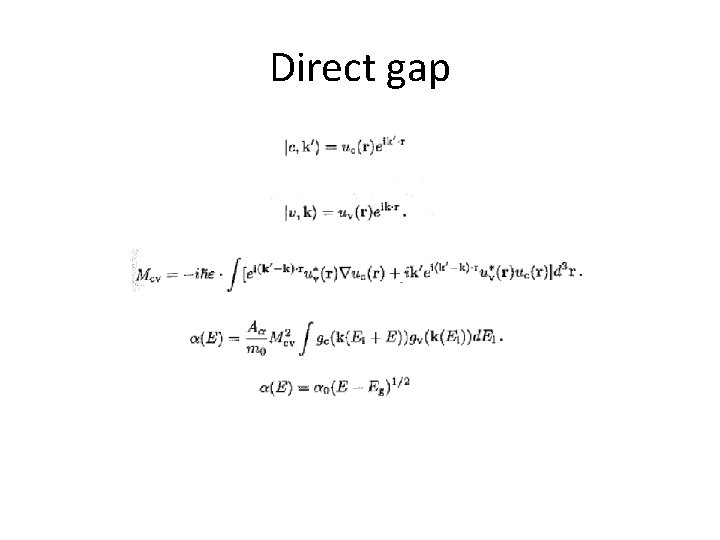
Direct gap
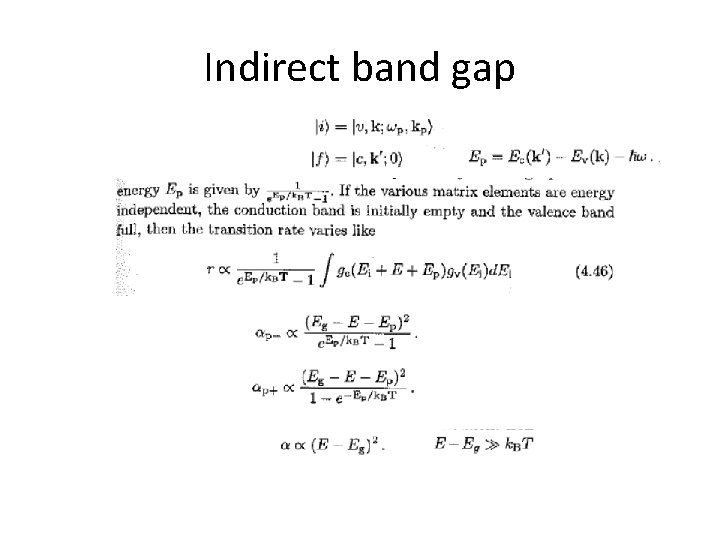
Indirect band gap
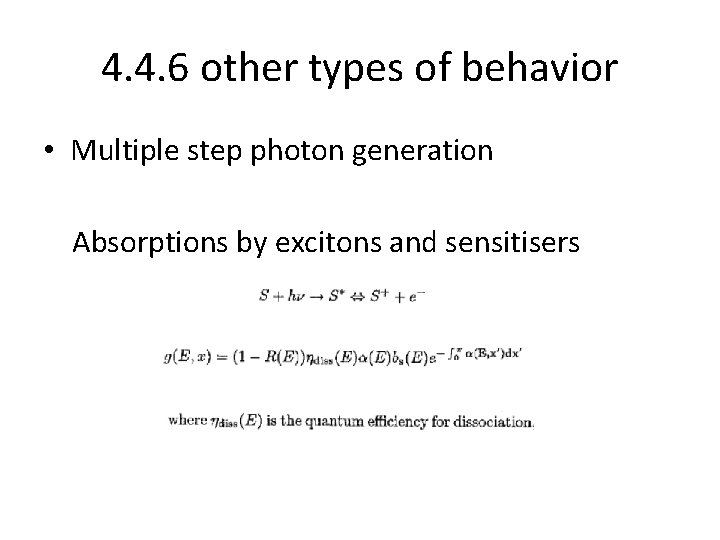
4. 4. 6 other types of behavior • Multiple step photon generation Absorptions by excitons and sensitisers
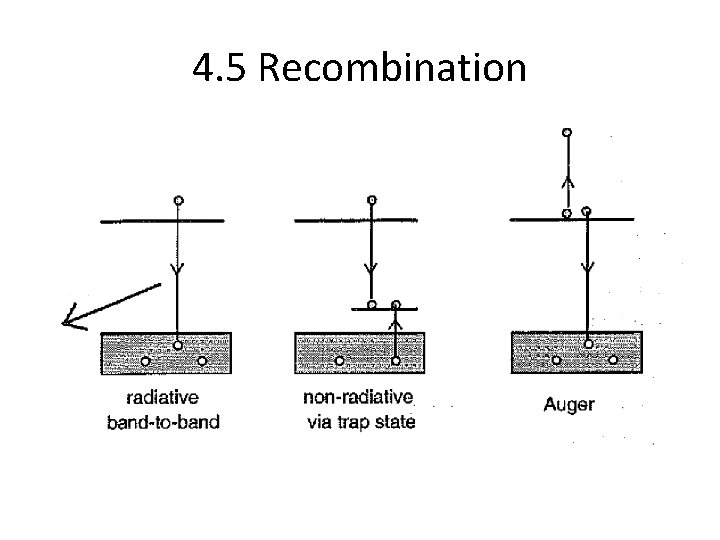
4. 5 Recombination
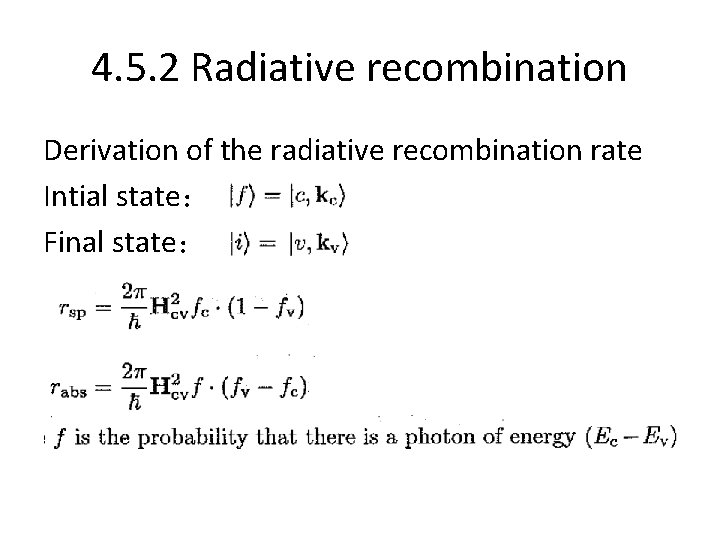
4. 5. 2 Radiative recombination Derivation of the radiative recombination rate Intial state: Final state:
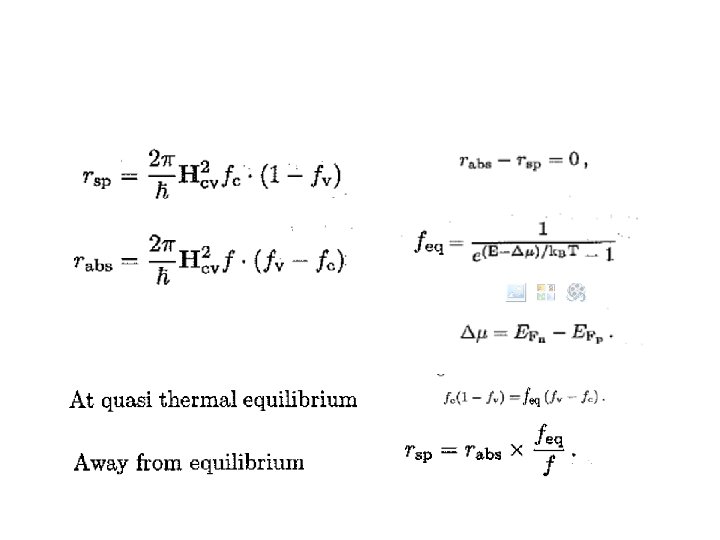
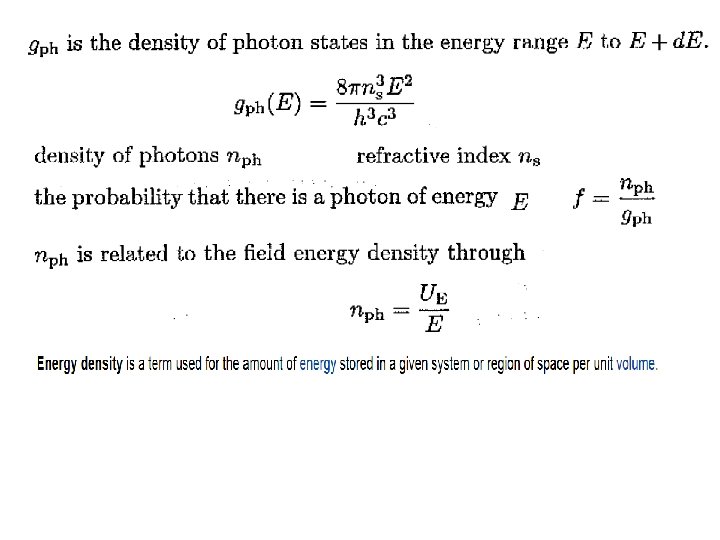
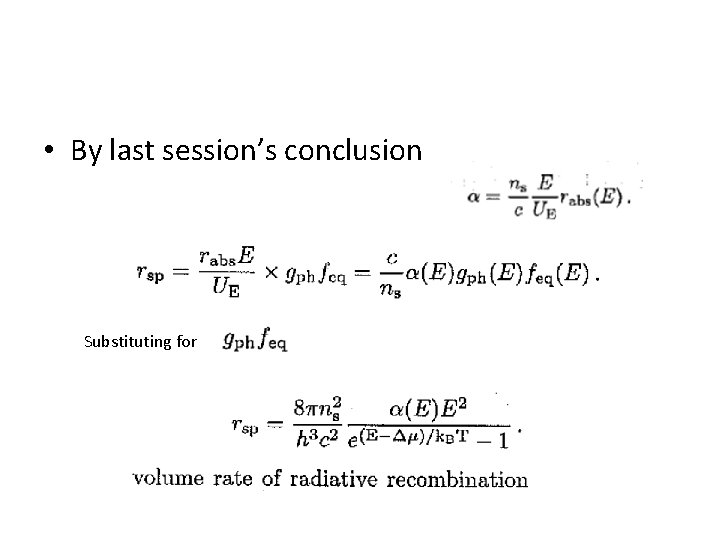
• By last session’s conclusion Substituting for
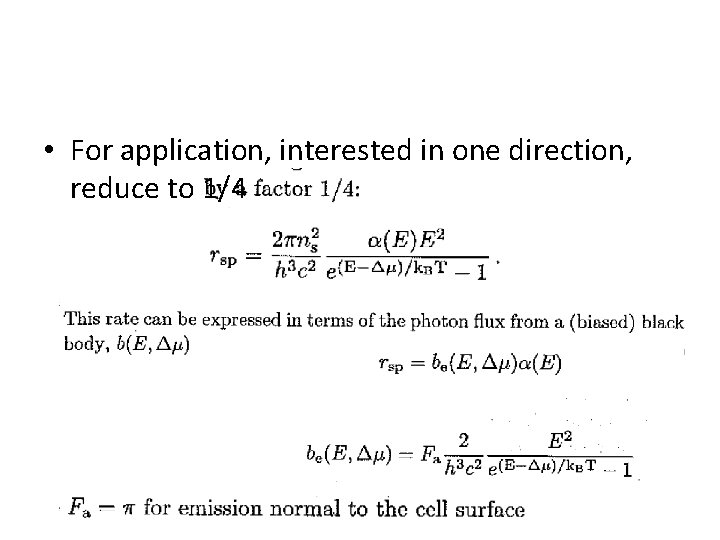
• For application, interested in one direction, reduce to 1/4
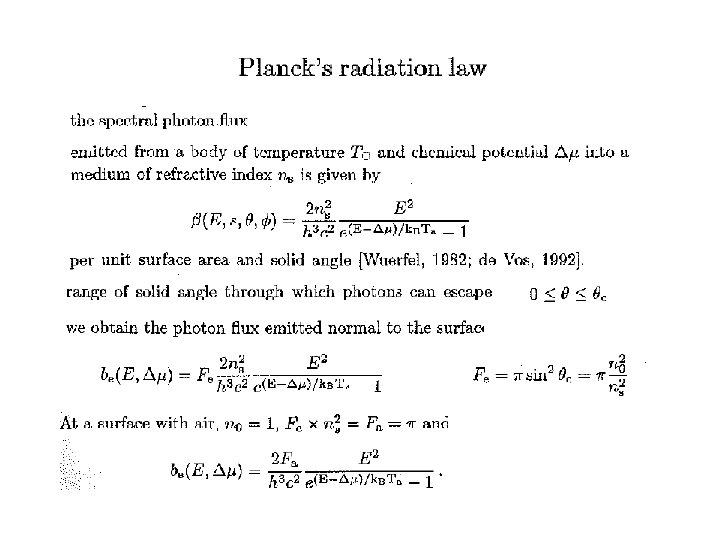
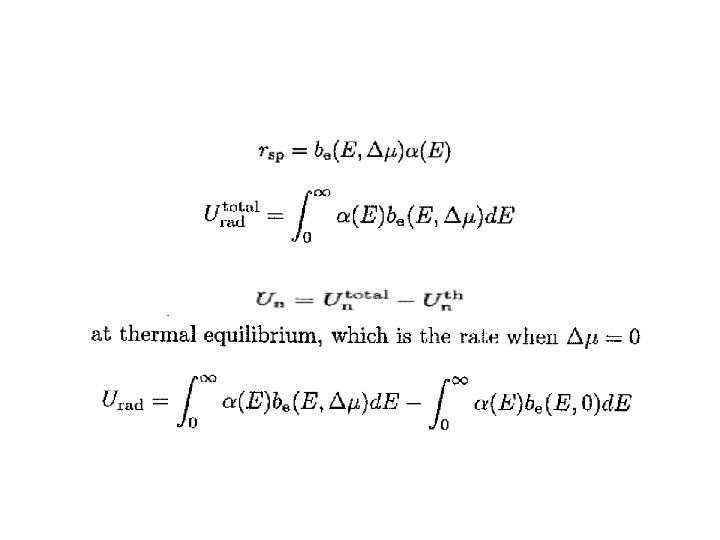
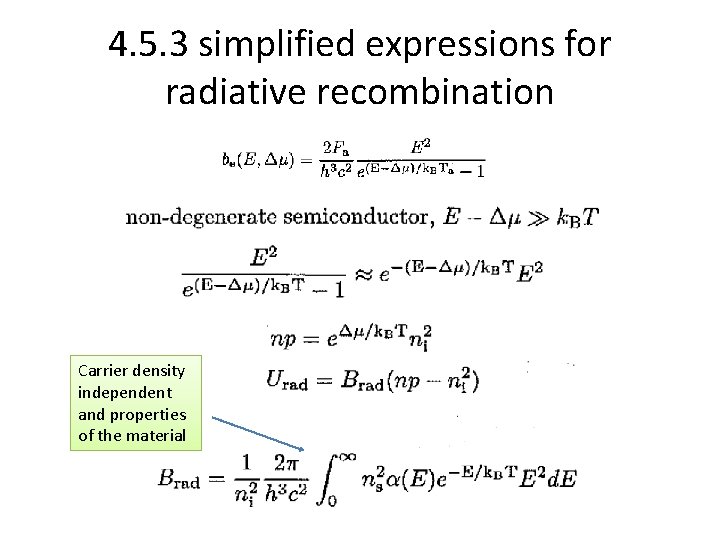
4. 5. 3 simplified expressions for radiative recombination Carrier density independent and properties of the material
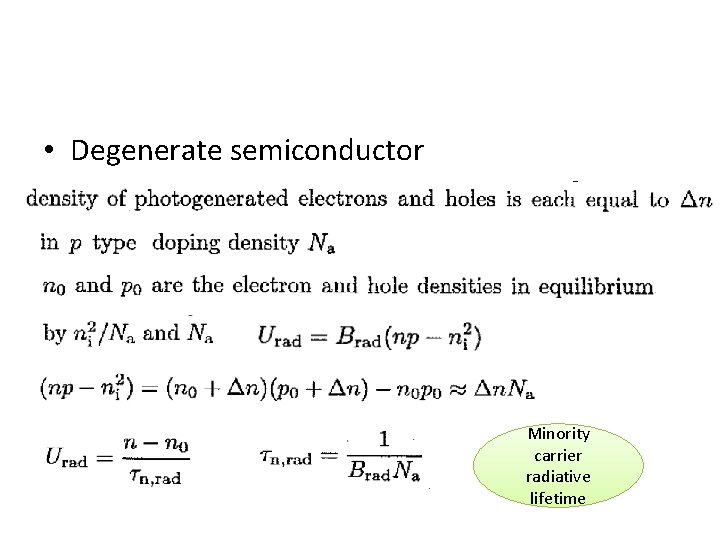
• Degenerate semiconductor Minority carrier radiative lifetime
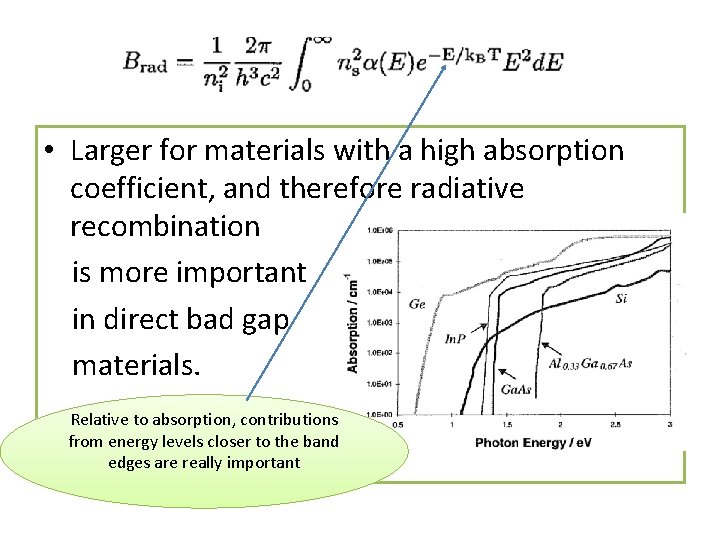
• Larger for materials with a high absorption coefficient, and therefore radiative recombination is more important in direct bad gap materials. Relative to absorption, contributions from energy levels closer to the band edges are really important
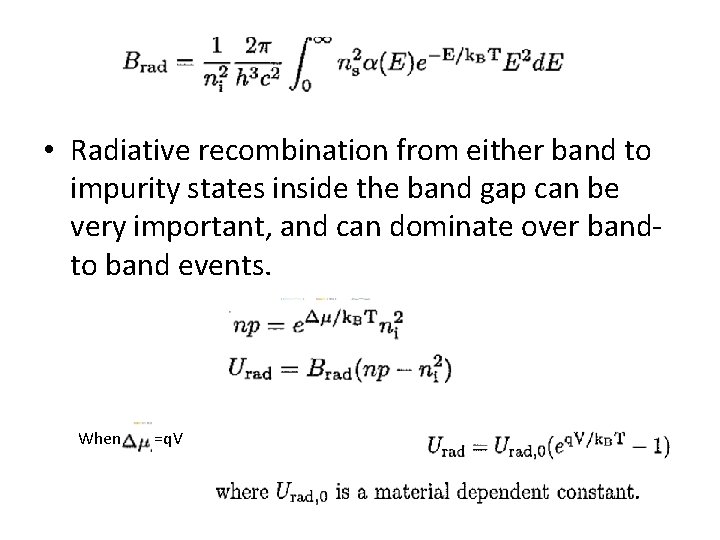
• Radiative recombination from either band to impurity states inside the band gap can be very important, and can dominate over bandto band events. When =q. V
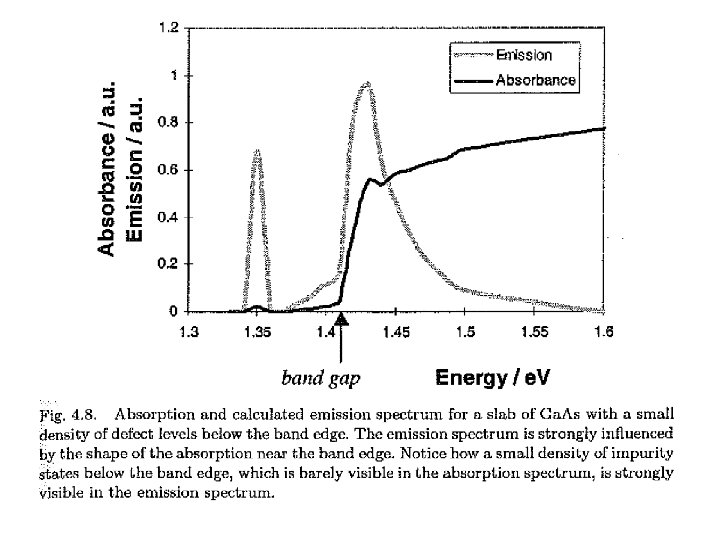
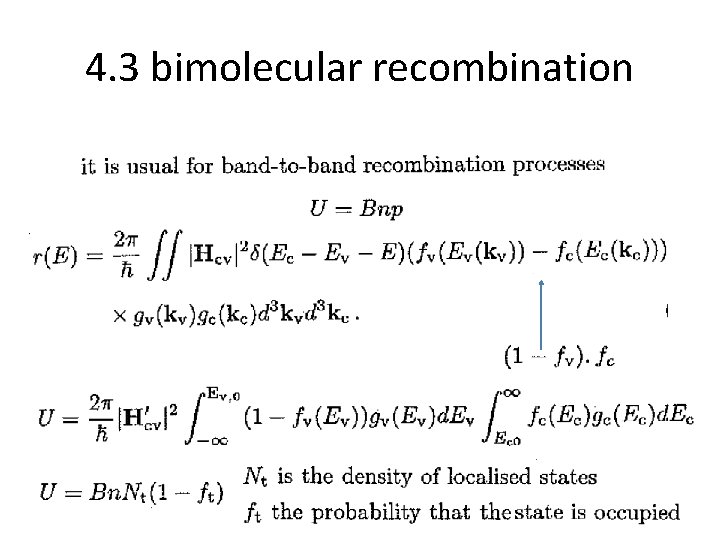
4. 3 bimolecular recombination
MULTI-STEP PROCESS? • Relaships between rates and carrier densities?
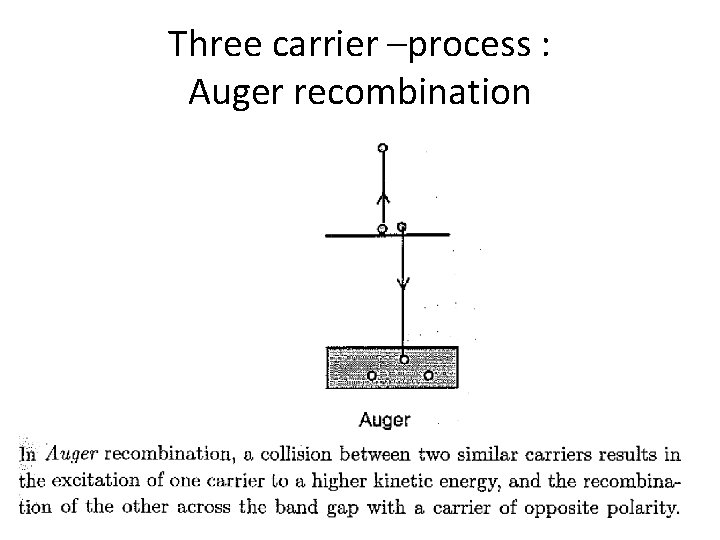
Three carrier –process : Auger recombination
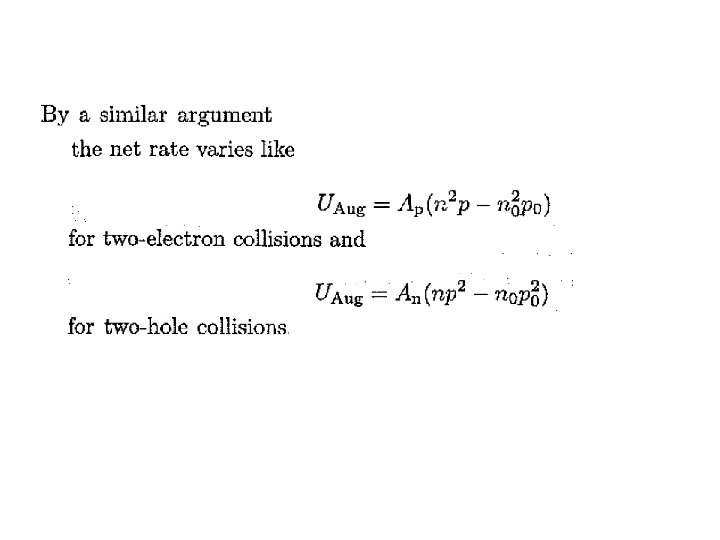
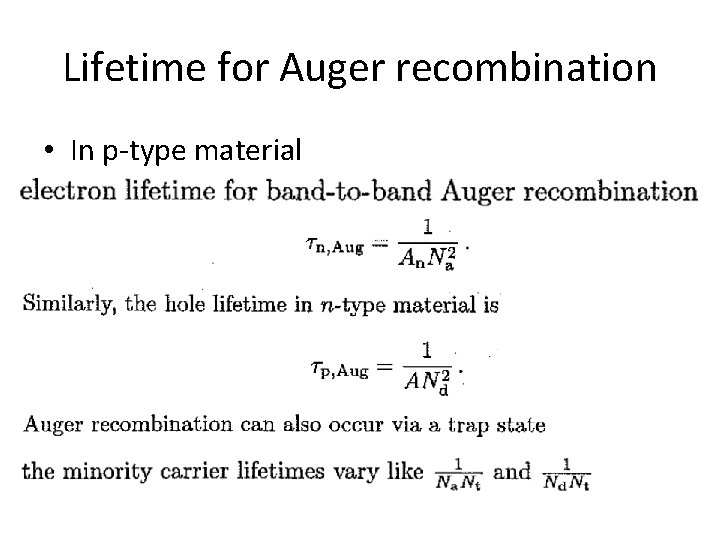
Lifetime for Auger recombination • In p-type material
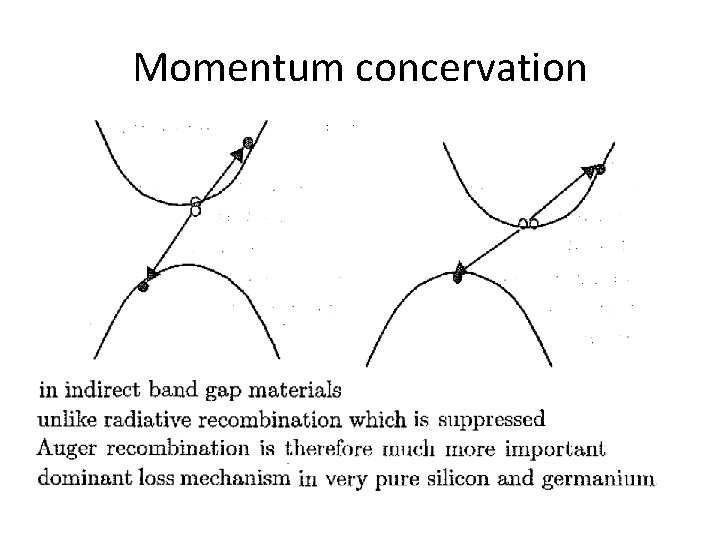
Momentum concervation
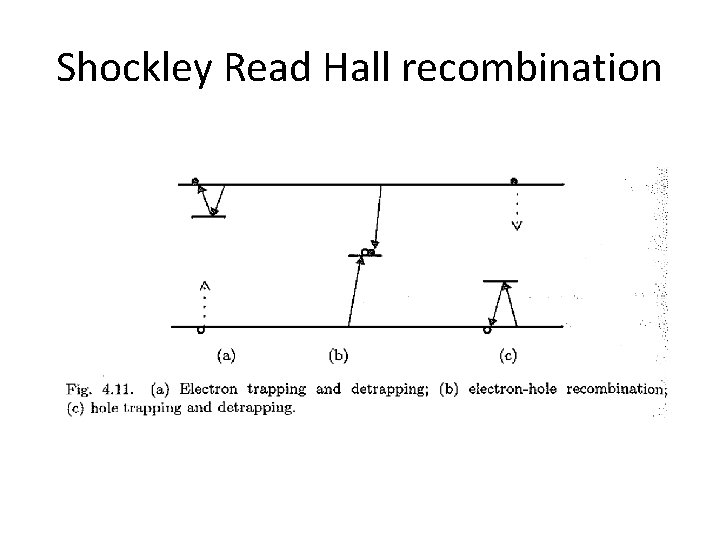
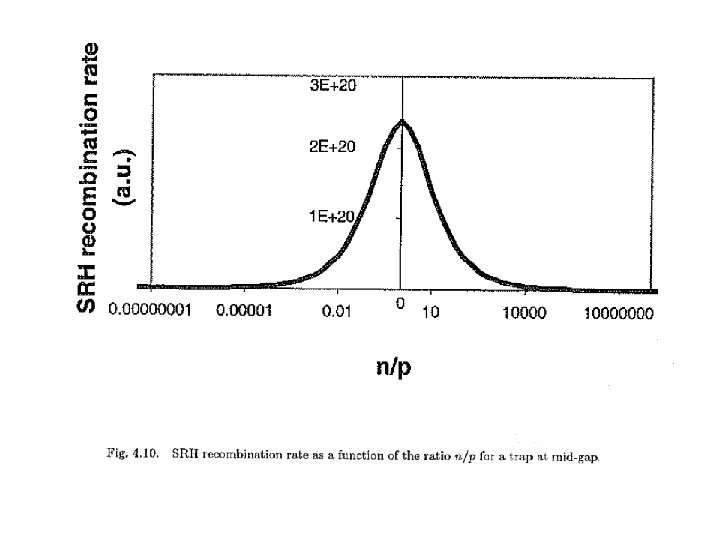
Shockley Read Hall recombination
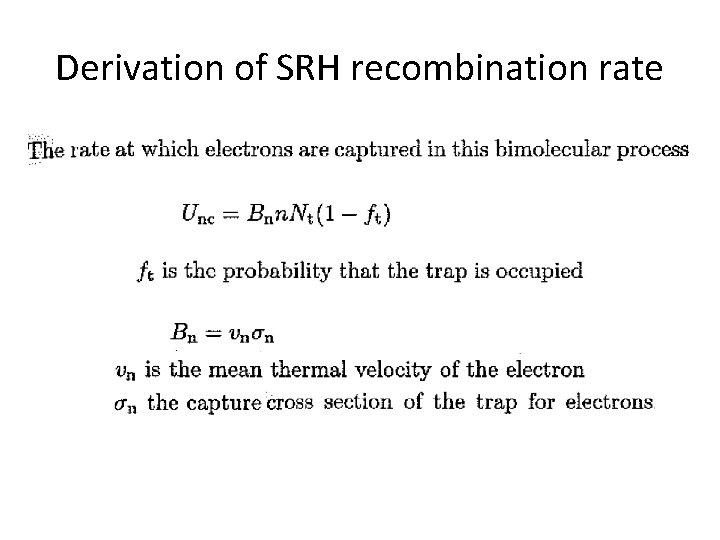
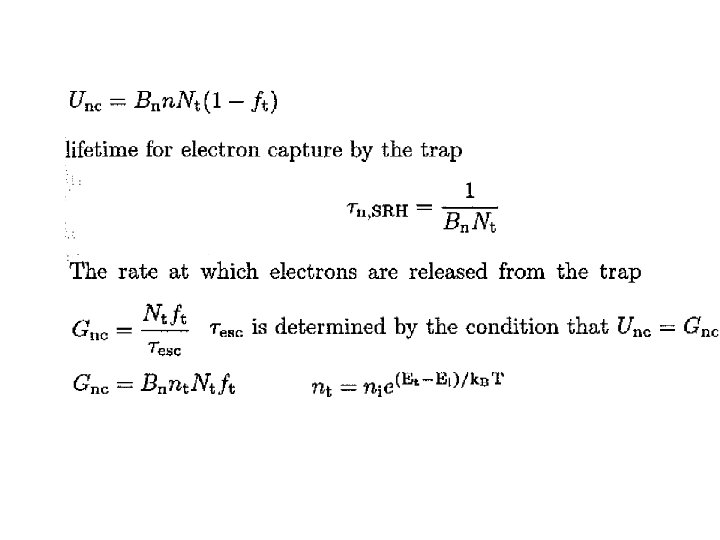
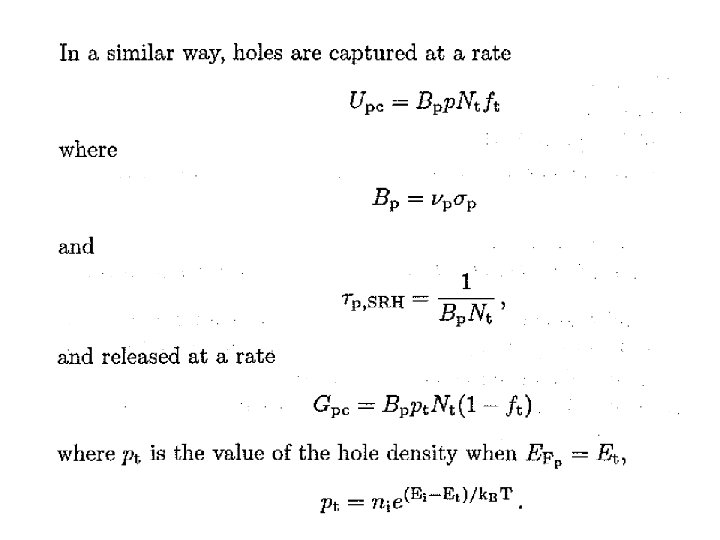
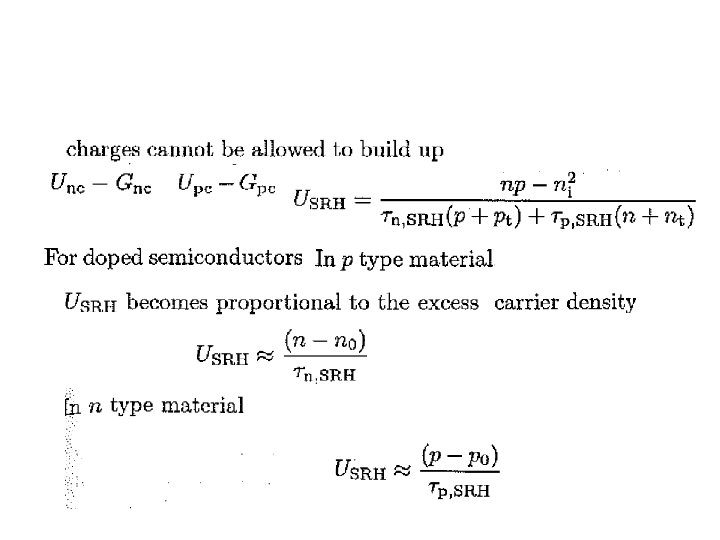
Derivation of SRH recombination rate
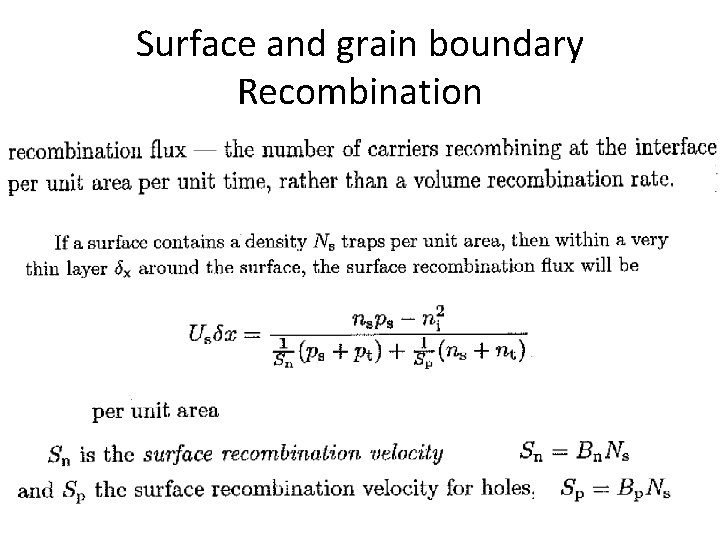
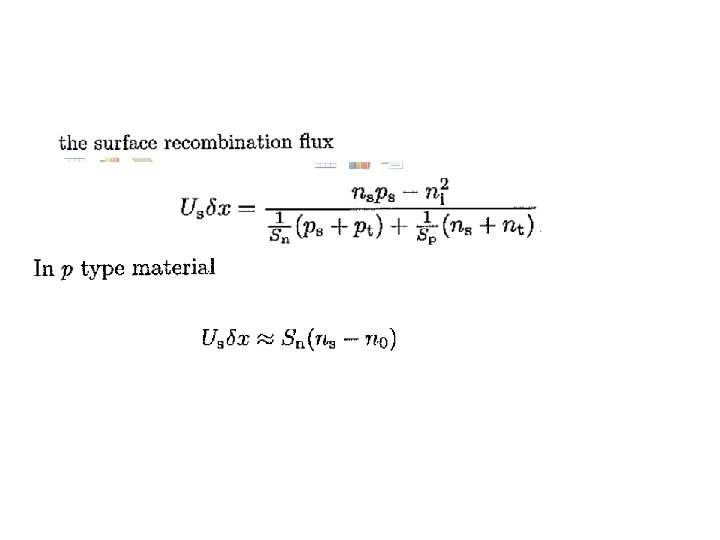
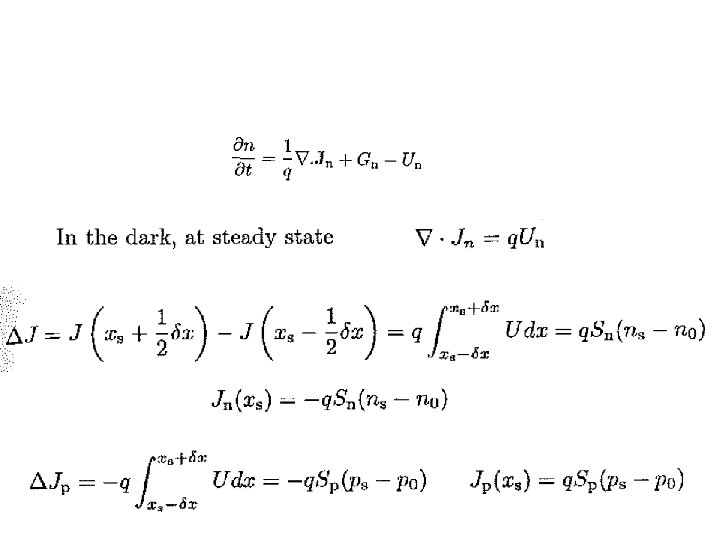
Surface and grain boundary Recombination
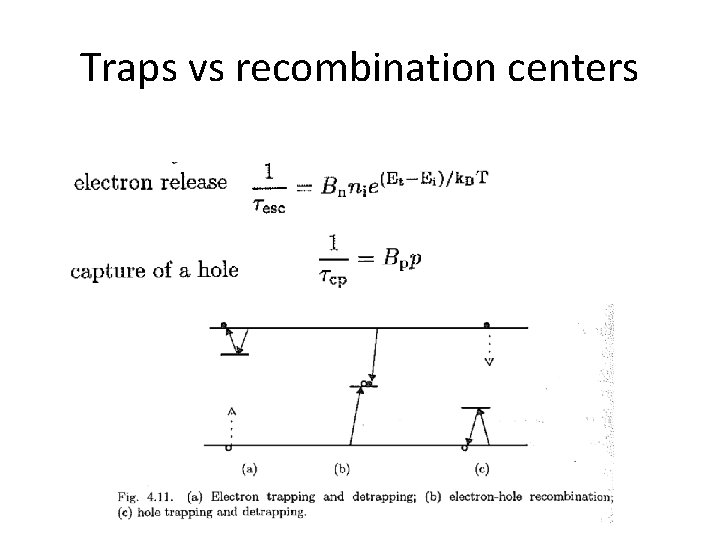
Traps vs recombination centers
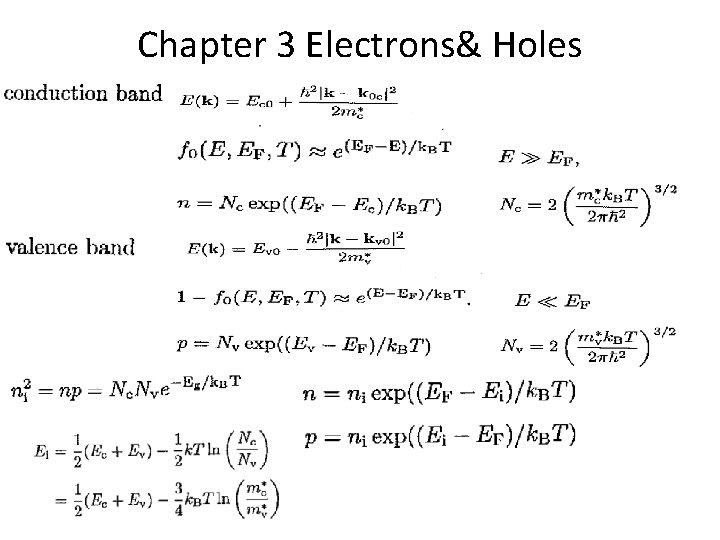
Chapter 3 Electrons& Holes
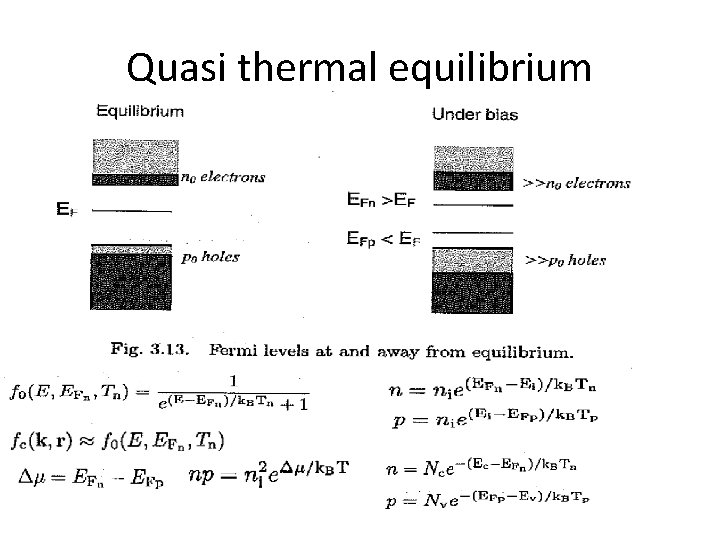
Quasi thermal equilibrium
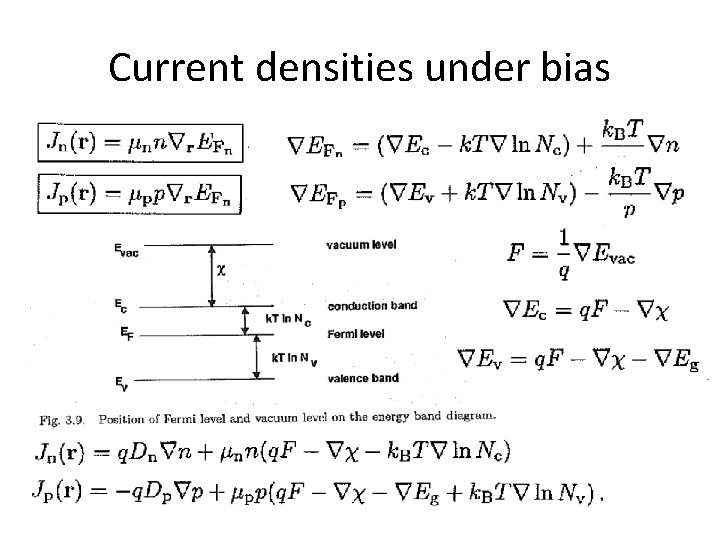
Current densities under bias
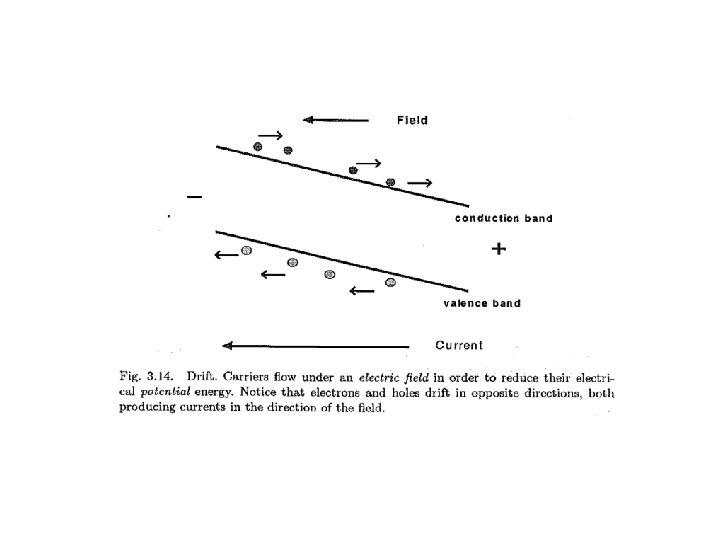
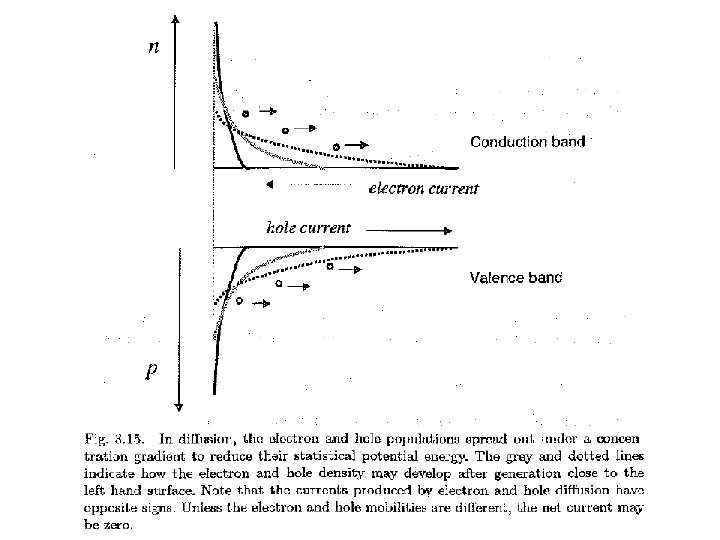
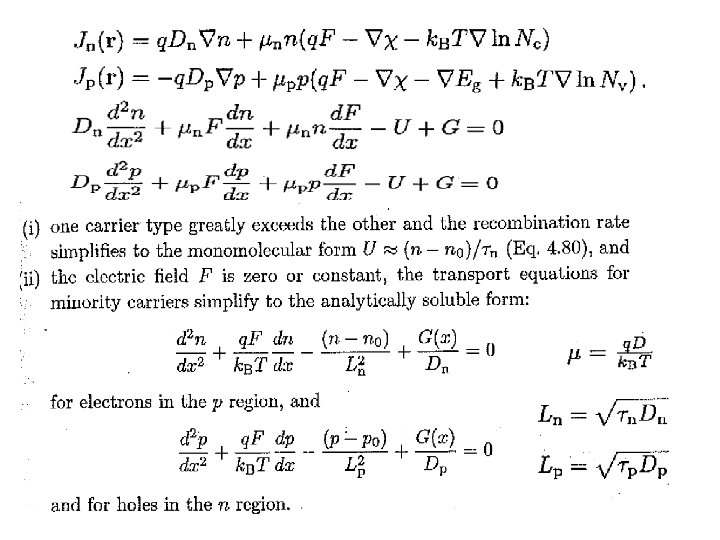
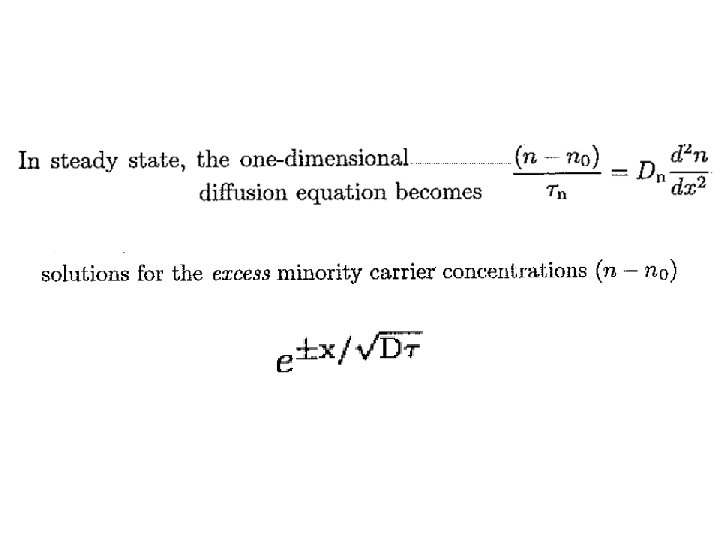
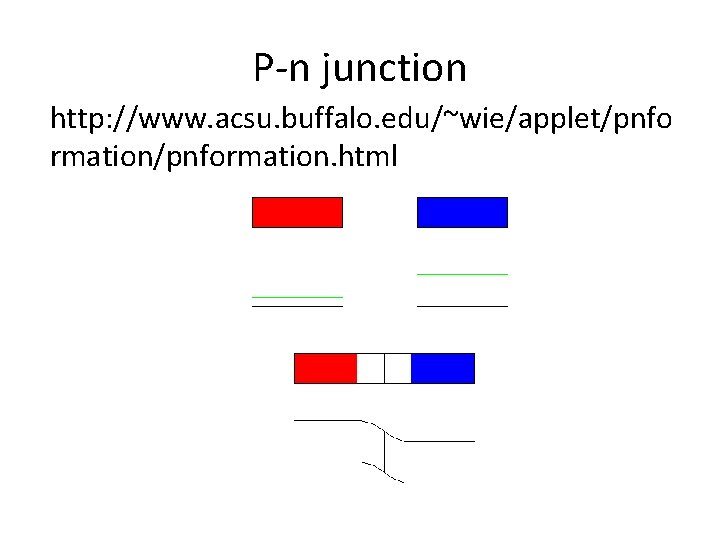
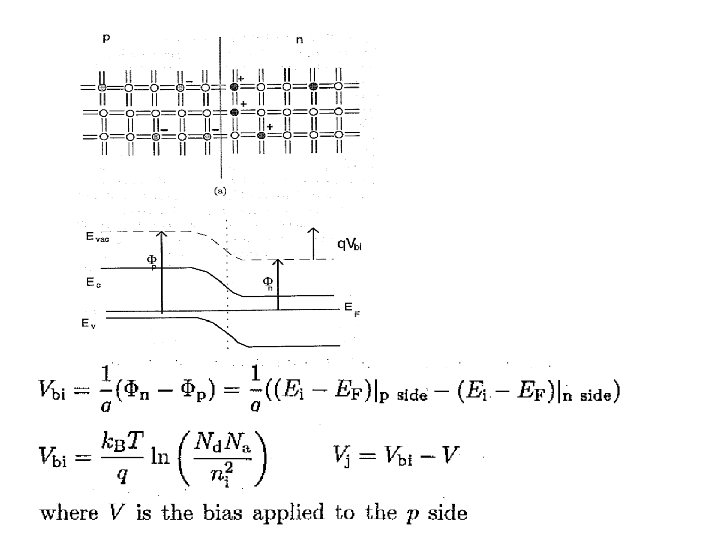
P-n junction http: //www. acsu. buffalo. edu/~wie/applet/pnfo rmation/pnformation. html
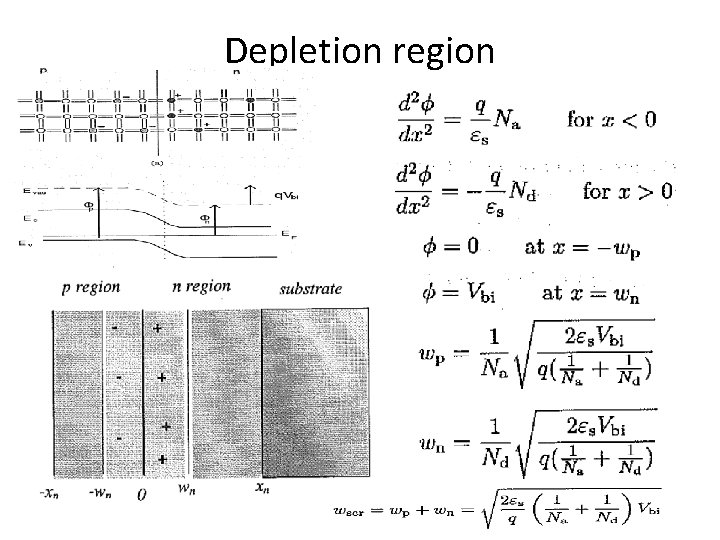
Depletion region
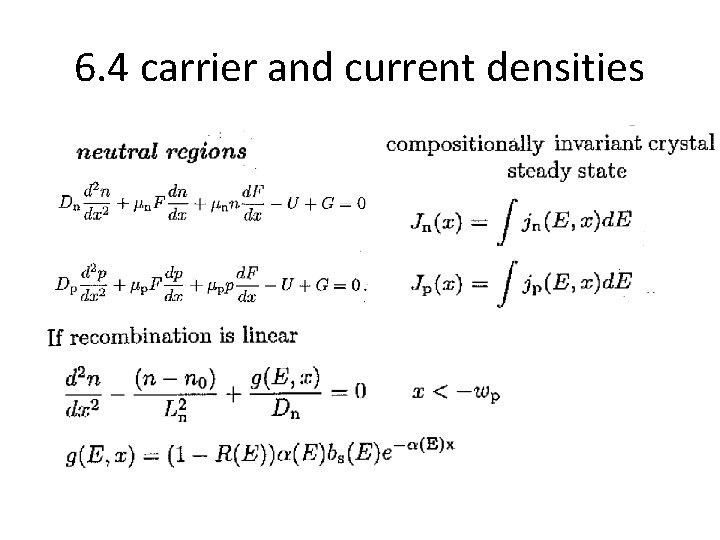
6. 4 carrier and current densities
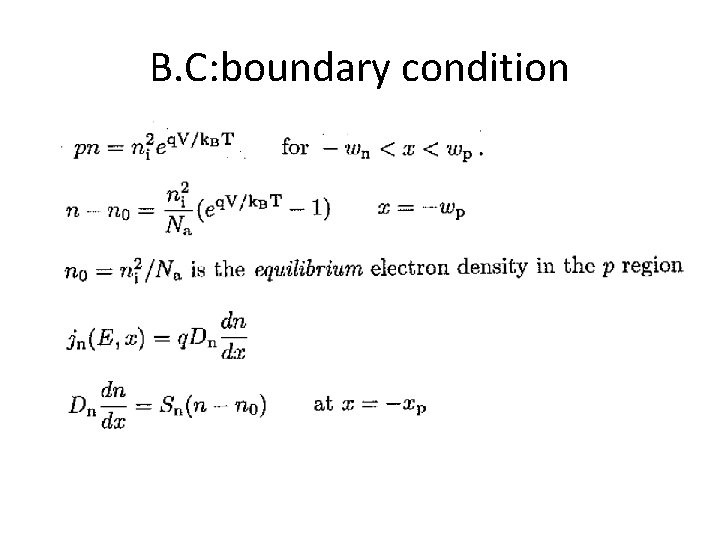
B. C: boundary condition
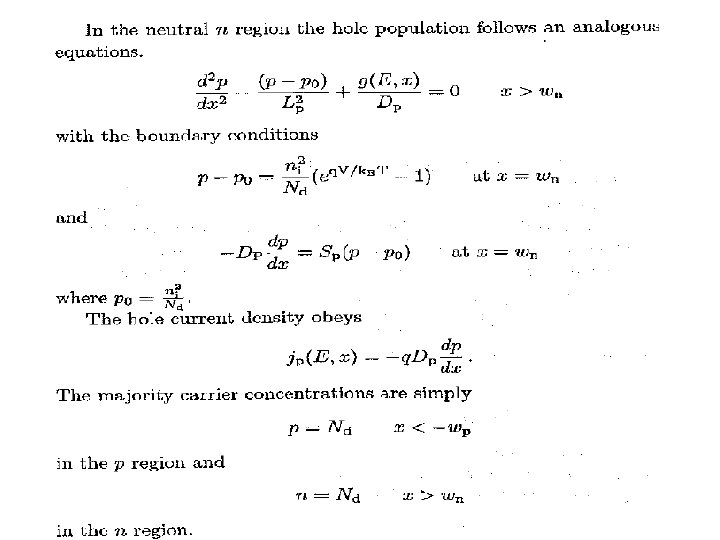
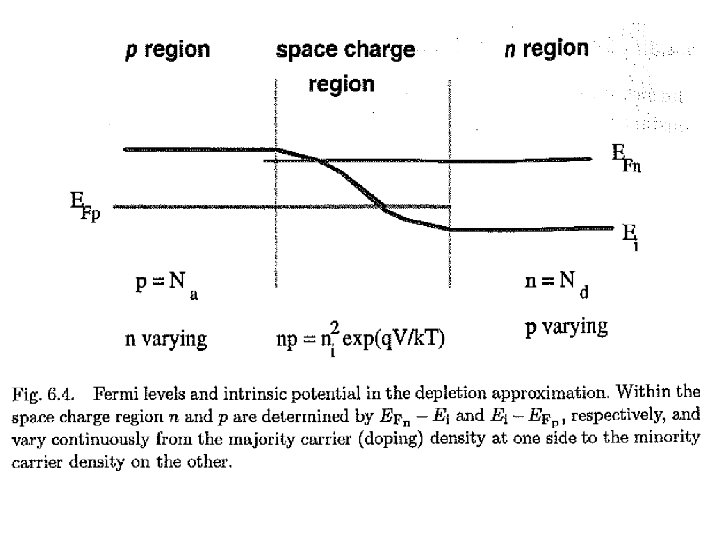
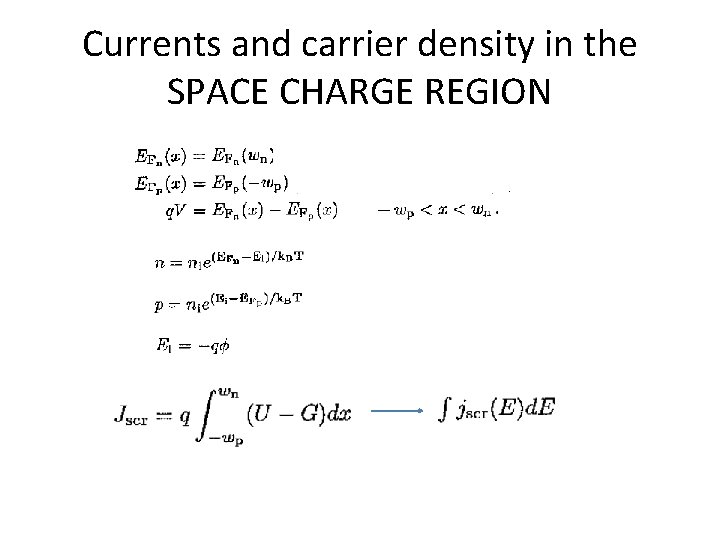
Currents and carrier density in the SPACE CHARGE REGION
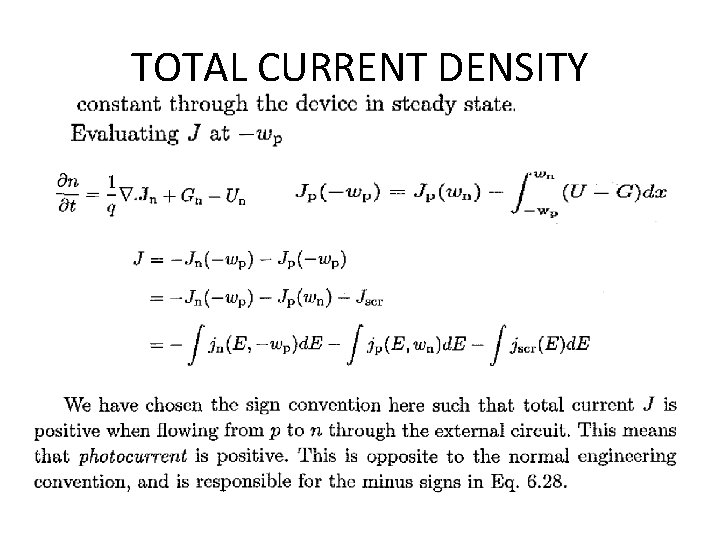
TOTAL CURRENT DENSITY
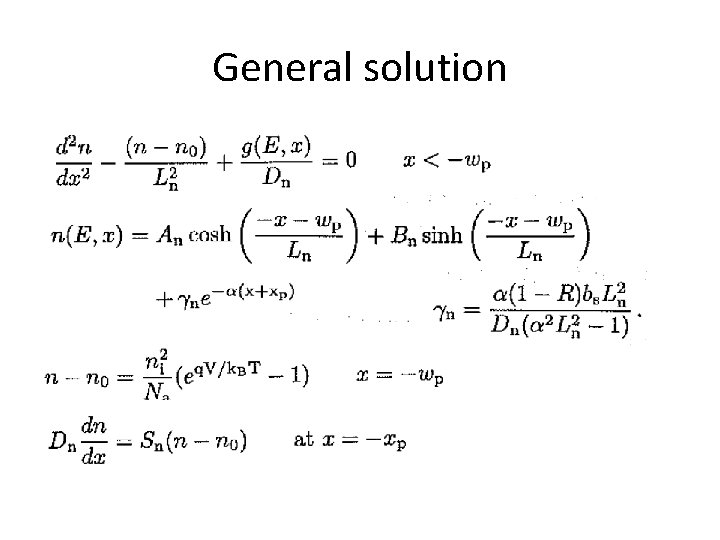
General solution
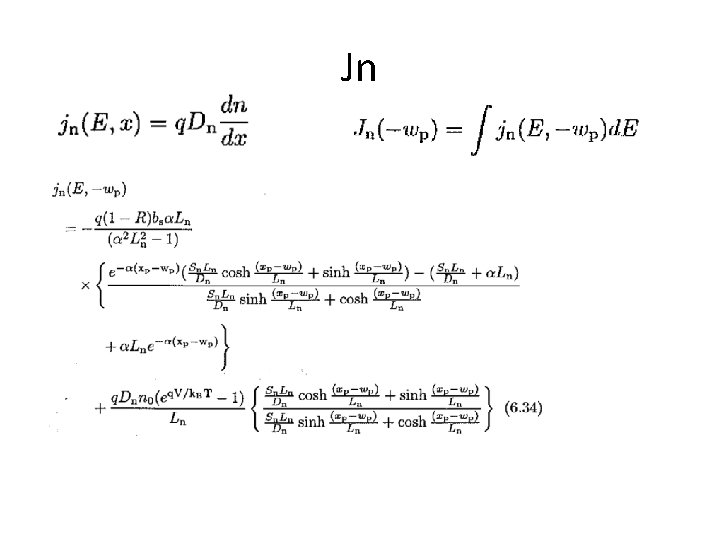
Jn
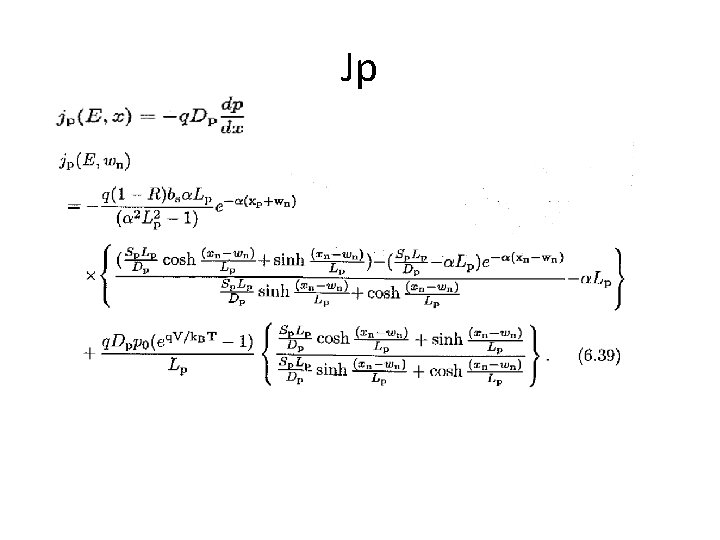
Jp
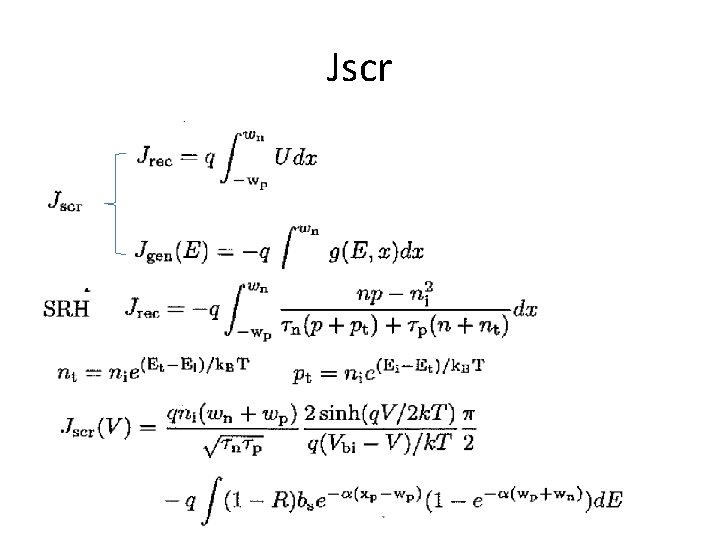
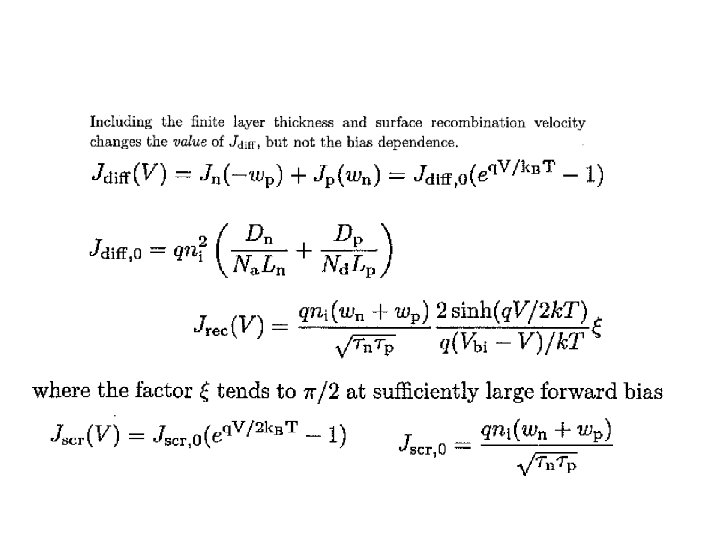
Jscr
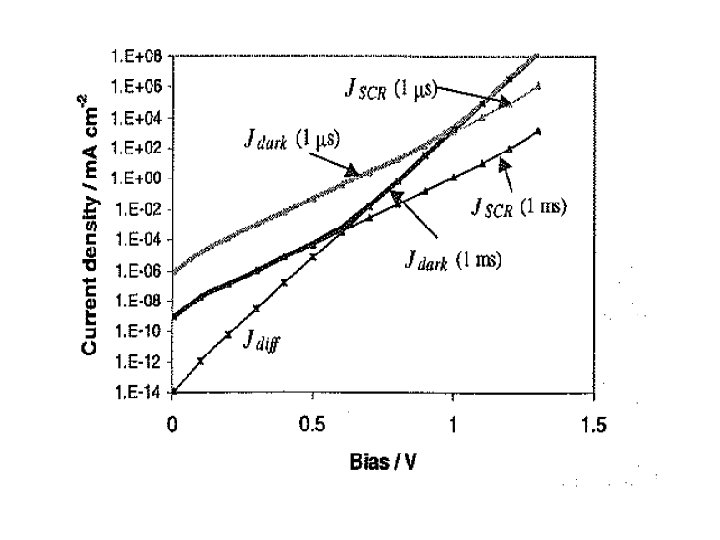
P-N JUNCTION • DARK • UNDER ILLUMINATION • characteristics
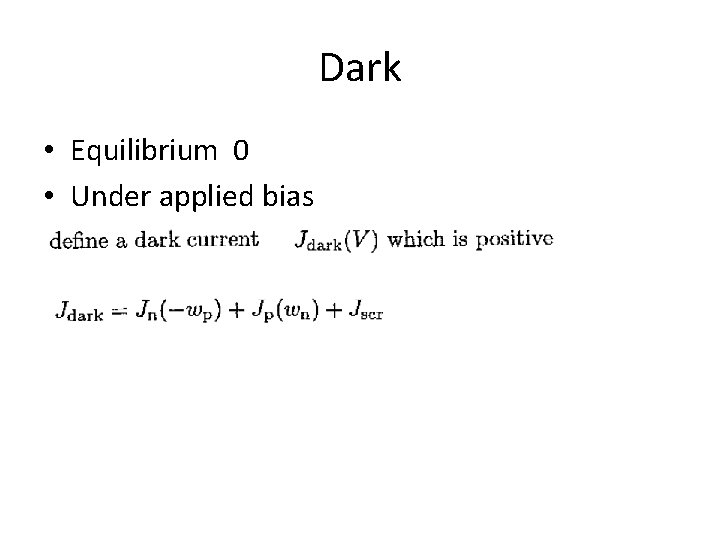
Dark • Equilibrium 0 • Under applied bias
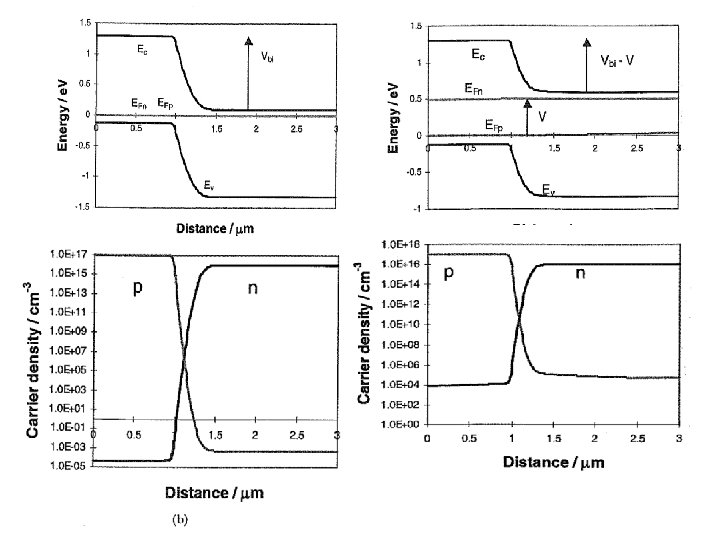

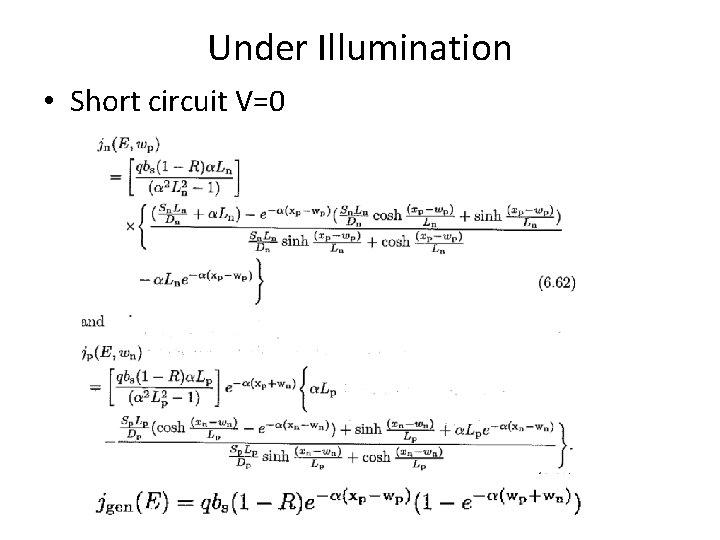
Under Illumination • Short circuit V=0
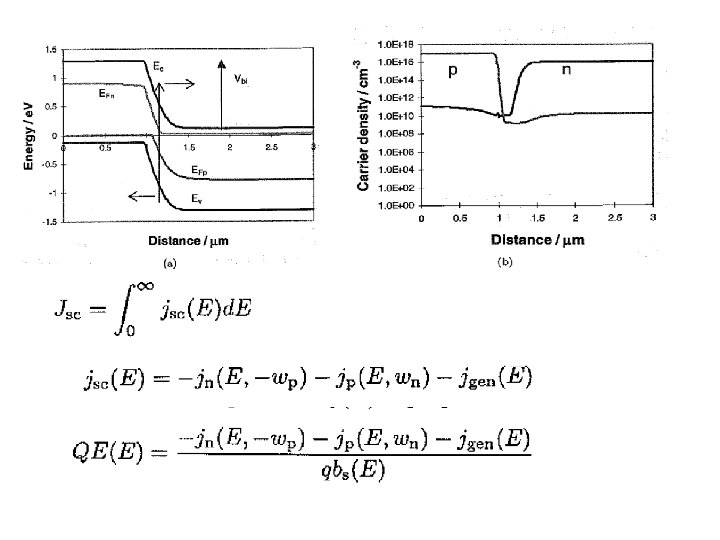
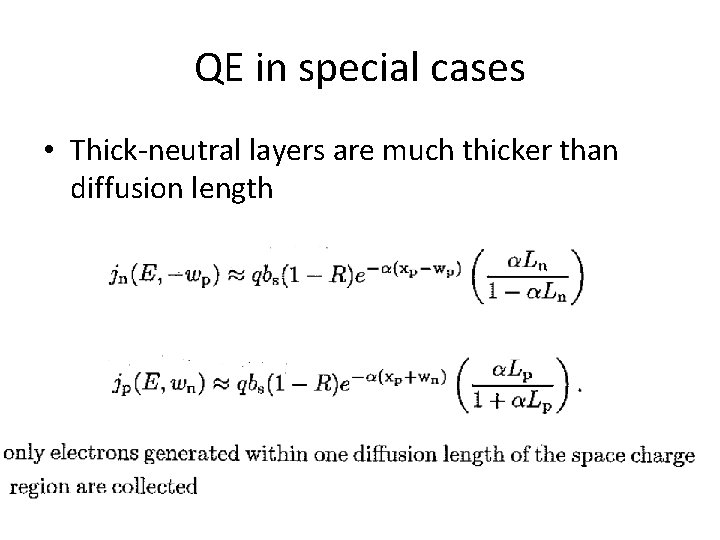
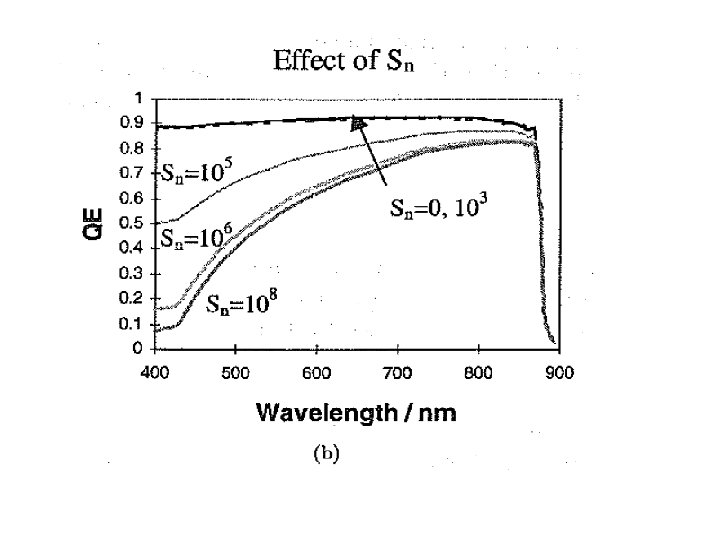
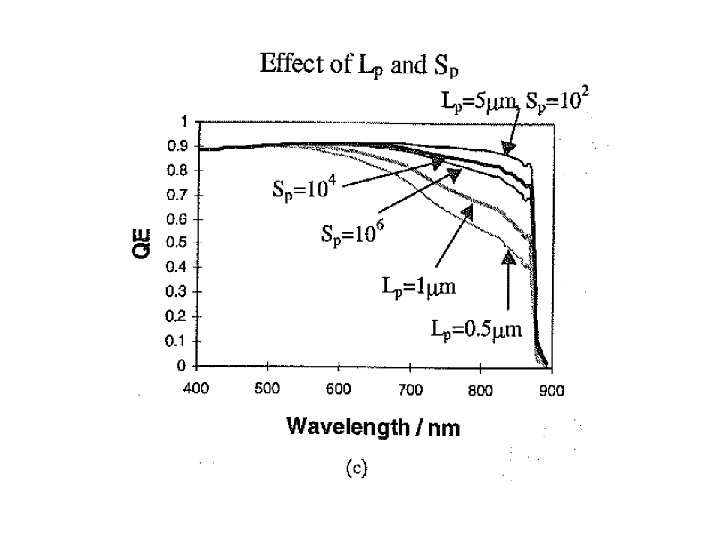
QE in special cases • Thick-neutral layers are much thicker than diffusion length
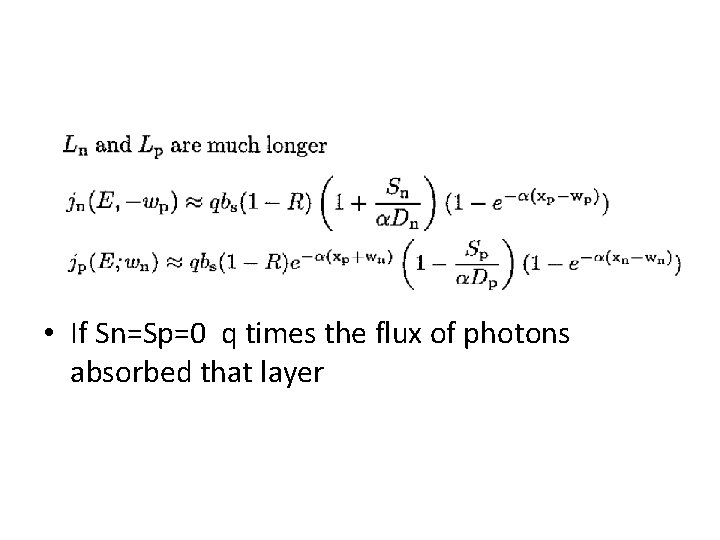
• If Sn=Sp=0 q times the flux of photons absorbed that layer
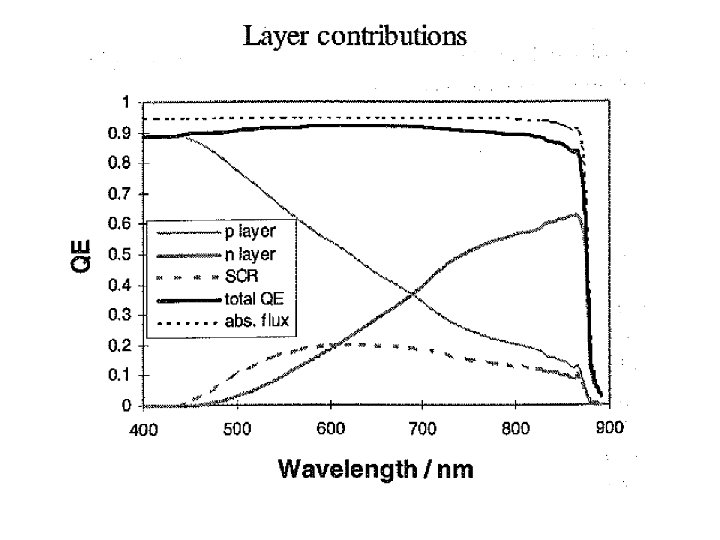
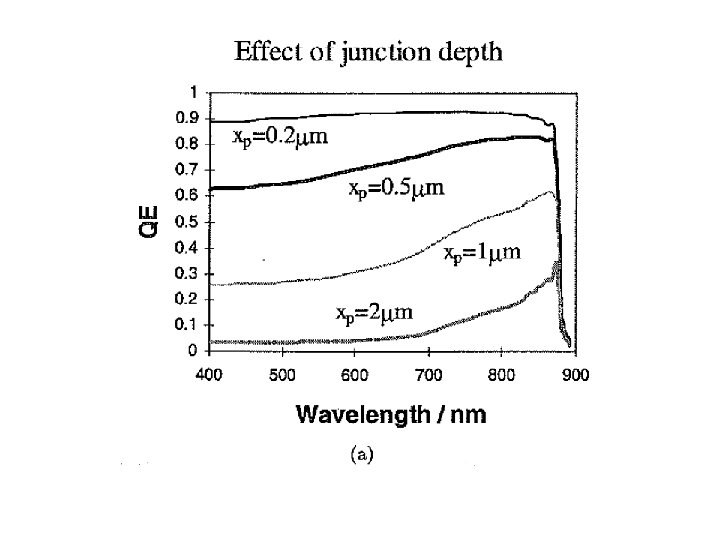
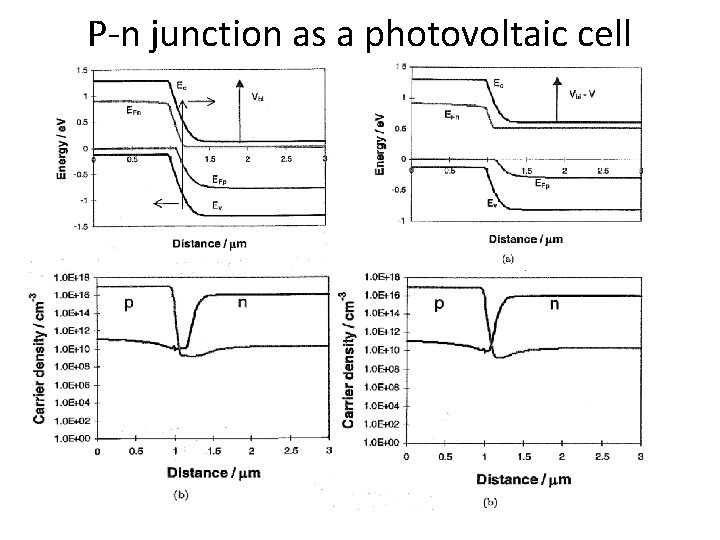
P-n junction as a photovoltaic cell
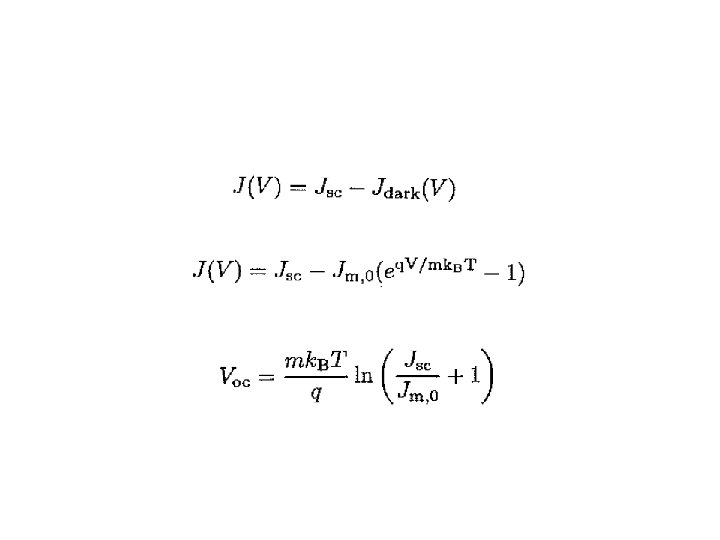
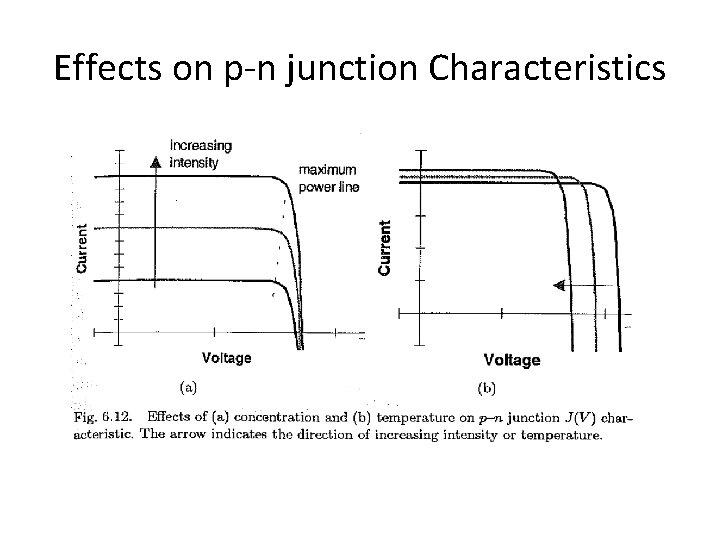
Effects on p-n junction Characteristics
- Slides: 83