
Theory of Solar Radar Experiments Combination Scattering by
Theory of Solar Radar Experiments: Combination Scattering by Anisotropic Langmuir Turbulence Licentiate seminar by Mykola Khotyaintsev Dept. of Astronomy and Space Physics, Uppsala University, Sweden November 8, 2005. Uppsala, Sweeden

Presentation outline 1. The Sun Overview Prominence, flares, and coronal mass ejections (CME's) Type III solar radio bursts 2. Solar radar experiments Overview Main experimental results 3. Theory of radar reflections from the Sun Specular reflection Volume scattering by density fluctuations Induced (combination) scattering by wave turbulence 4. Paper M. V. Khotyaintsev, V. N. Melnyk, Bo Thide' and O. O. Konovalenko “Combination scattering by anisotropic Langmuir turbulence with application to solar radar experiments”, Solar Physics, in press, 2005
Motivation of solar radar experiments radar is an additional tool for solar study to investigate dynamics of the solar corona solar wind acceleration coronal electron density profile magnetic field probing remote sensing of plasma wave turbulence detection of coronal mass ejections (CMEs) recent experiment proposals by Thide' (2002), Coles (2004), Rodriguez (2004)
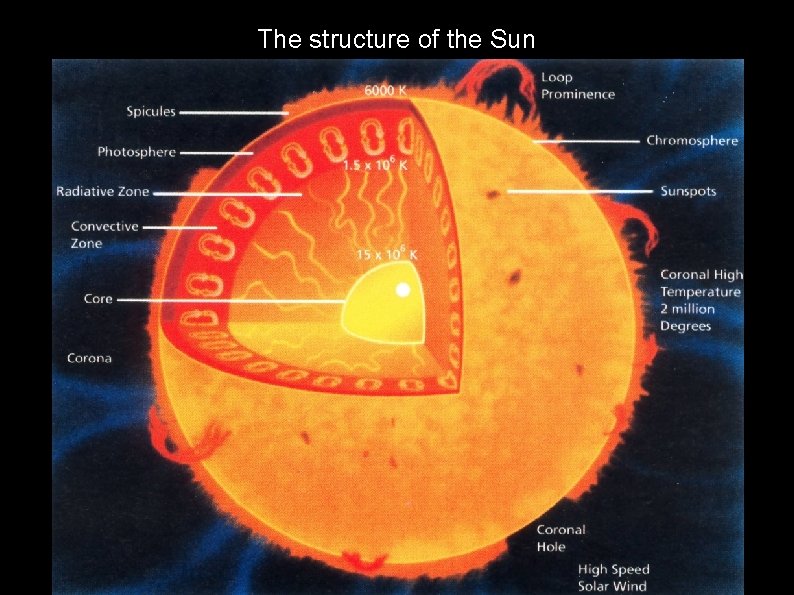
The structure of the Sun
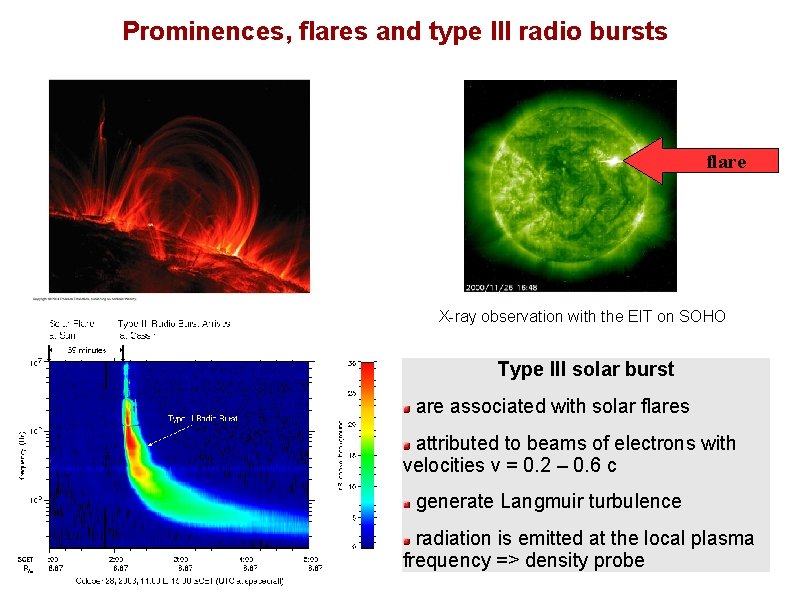
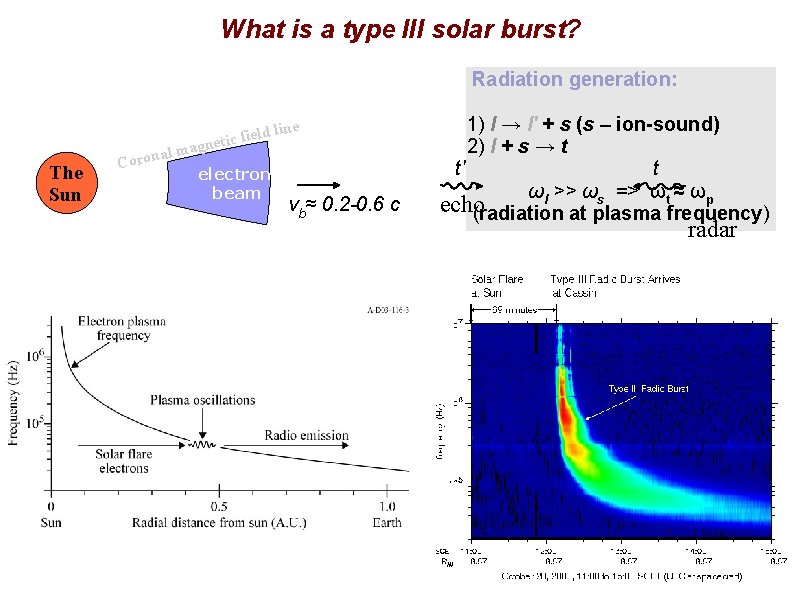
Prominences, flares and type III radio bursts flare X-ray observation with the EIT on SOHO Type III solar burst are associated with solar flares attributed to beams of electrons with velocities v = 0. 2 – 0. 6 c generate Langmuir turbulence radiation is emitted at the local plasma frequency => density probe
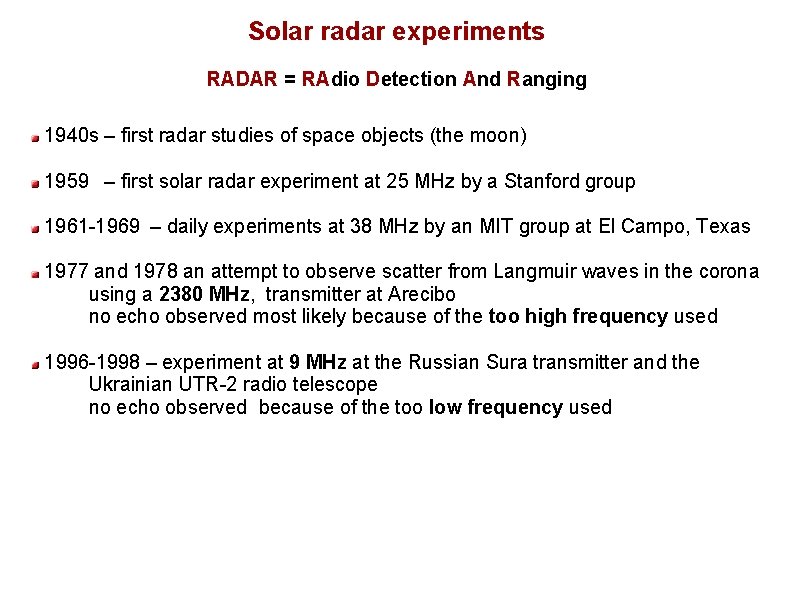
Solar radar experiments RADAR = RAdio Detection And Ranging 1940 s – first radar studies of space objects (the moon) 1959 s – first solar radar experiment at 25 MHz by a Stanford group 1961 -1969 s– daily experiments at 38 MHz by an MIT group at El Campo, Texas 1977 and 1978 an attempt to observe scatter from Langmuir waves in the corona using a 2380 MHz, transmitter at Arecibo no echo observed most likely because of the too high frequency used 1996 -1998 – experiment at 9 MHz at the Russian Sura transmitter and the Ukrainian UTR-2 radio telescope no echo observed because of the too low frequency used
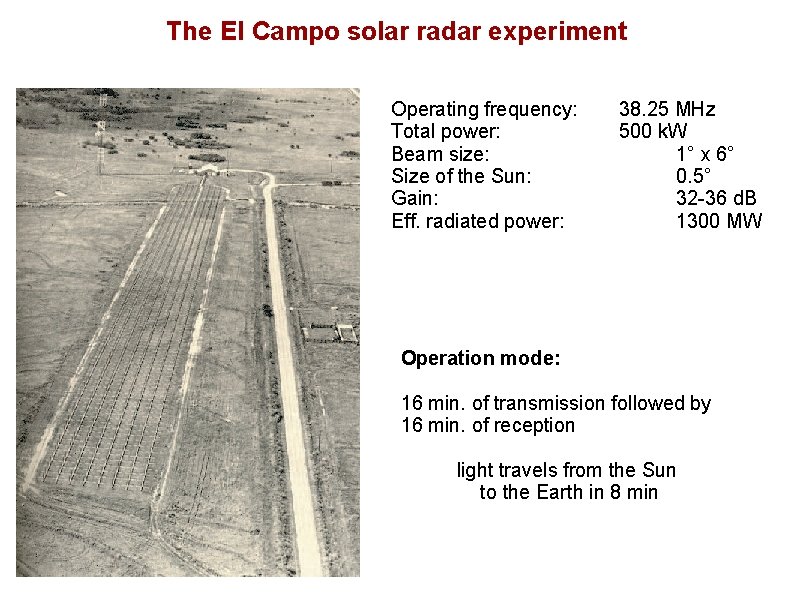
The El Campo solar radar experiment Operating frequency: Total power: Beam size: Size of the Sun: Gain: Eff. radiated power: 38. 25 MHz 500 k. W 1° x 6° 0. 5° 32 -36 d. B 1300 MW Operation mode: 16 min. of transmission followed by 16 min. of reception light travels from the Sun to the Earth in 8 min
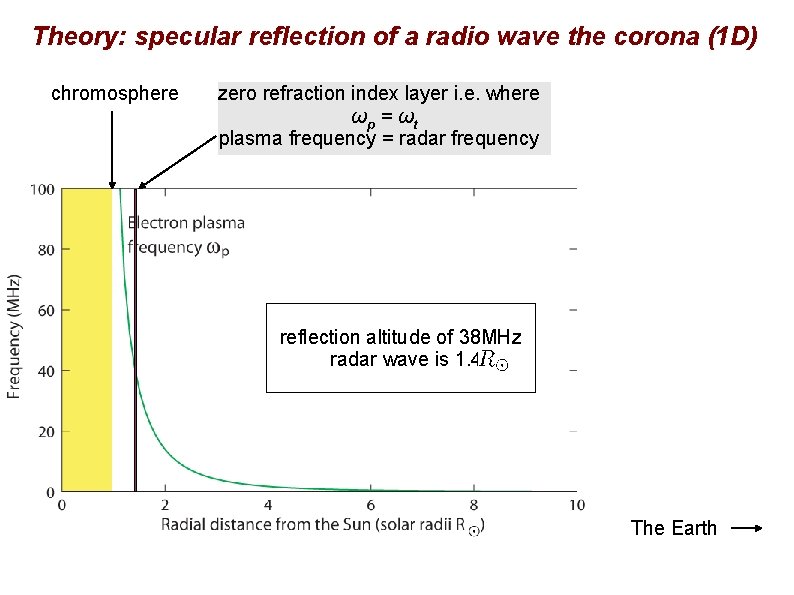
Theory: specular reflection of a radio wave the corona (1 D) chromosphere zero refraction index layer i. e. where ωp = ω t plasma frequency = radar frequency reflection altitude of 38 MHz radar wave is 1. 4 The Earth
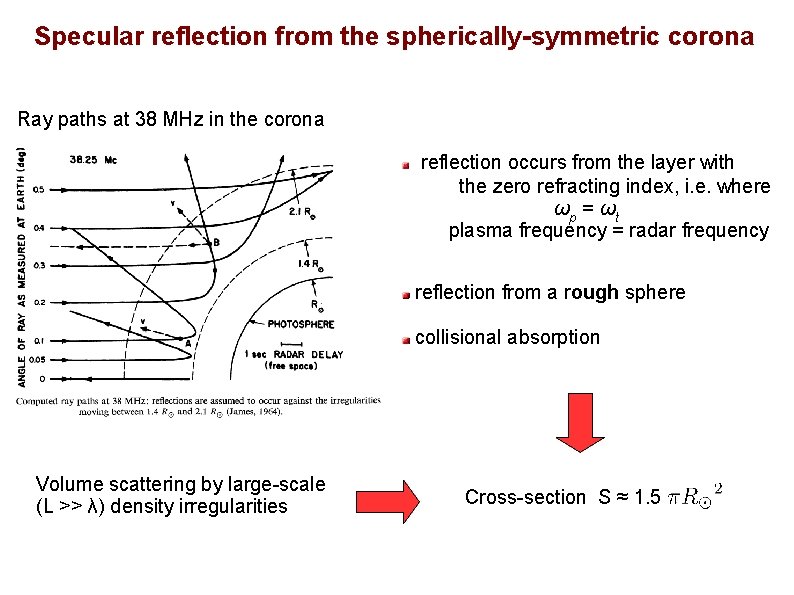
Specular reflection from the spherically-symmetric corona Ray paths at 38 MHz in the corona reflection occurs from the layer with the zero refracting index, i. e. where ωp = ω t plasma frequency = radar frequency reflection from a rough sphere collisional absorption Volume scattering by large-scale (L >> λ) density irregularities Cross-section S ≈ 1. 5
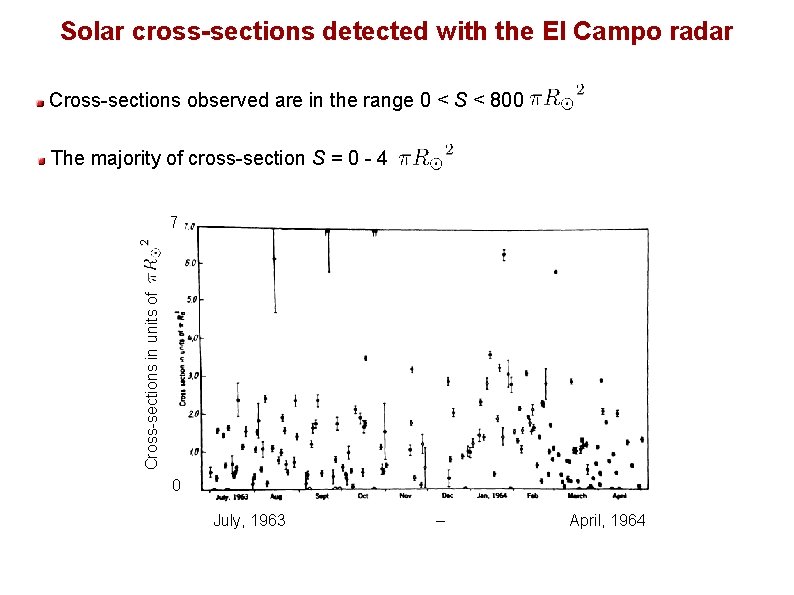
Solar cross-sections detected with the El Campo radar Cross-sections observed are in the range 0 < S < 800 The majority of cross-section S = 0 - 4 Cross-sections in units of 7 0 July, 1963 – April, 1964
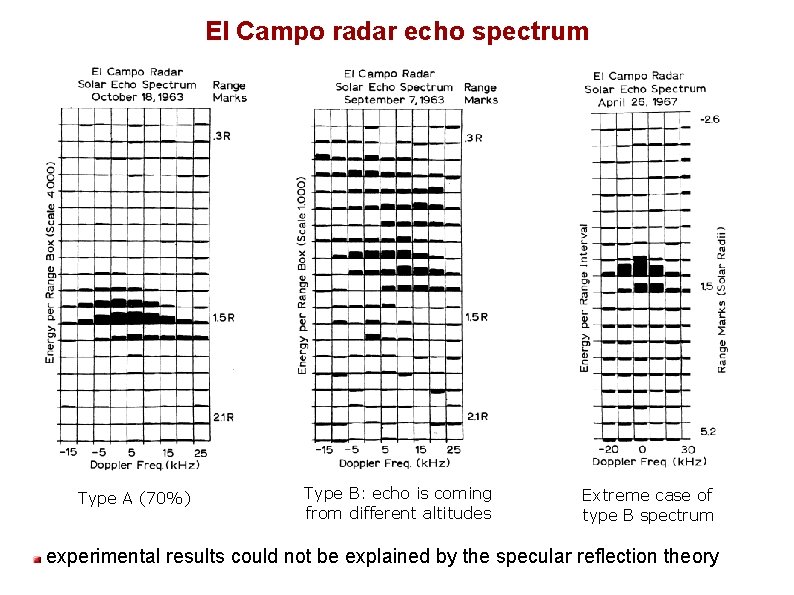
El Campo radar echo spectrum Type A (70%) Type B: echo is coming from different altitudes Extreme case of type B spectrum experimental results could not be explained by the specular reflection theory
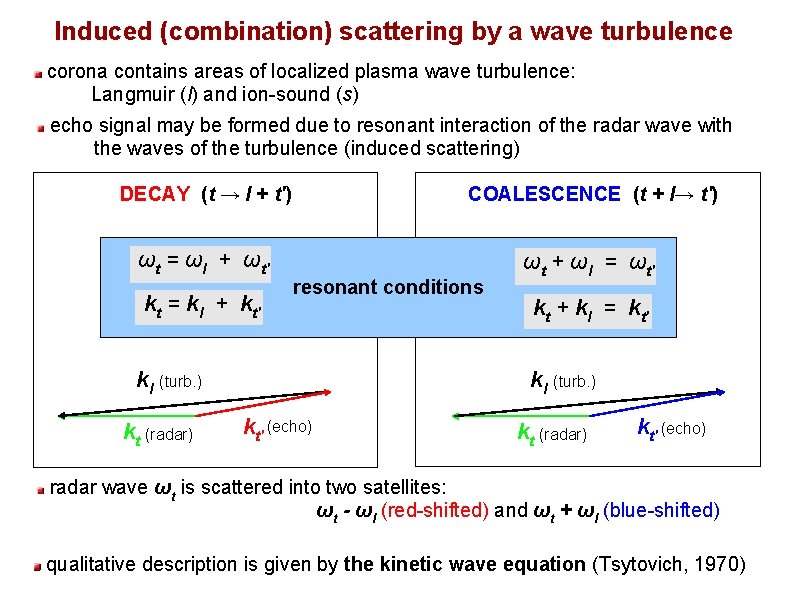
Induced (combination) scattering by a wave turbulence corona contains areas of localized plasma wave turbulence: Langmuir (l) and ion-sound (s) echo signal may be formed due to resonant interaction of the radar wave with the waves of the turbulence (induced scattering) DECAY (t → l + t') COALESCENCE (t + l→ t') ωt = ωl + ωt' ωt + ωl = ωt' kt = kl + kt' kl resonant conditions kl (turb. ) kt (radar) kt + kl = kt' (echo) (turb. ) kt (radar) kt' (echo) radar wave ωt is scattered into two satellites: ωt - ωl (red-shifted) and ωt + ωl (blue-shifted) qualitative description is given by the kinetic wave equation (Tsytovich, 1970)
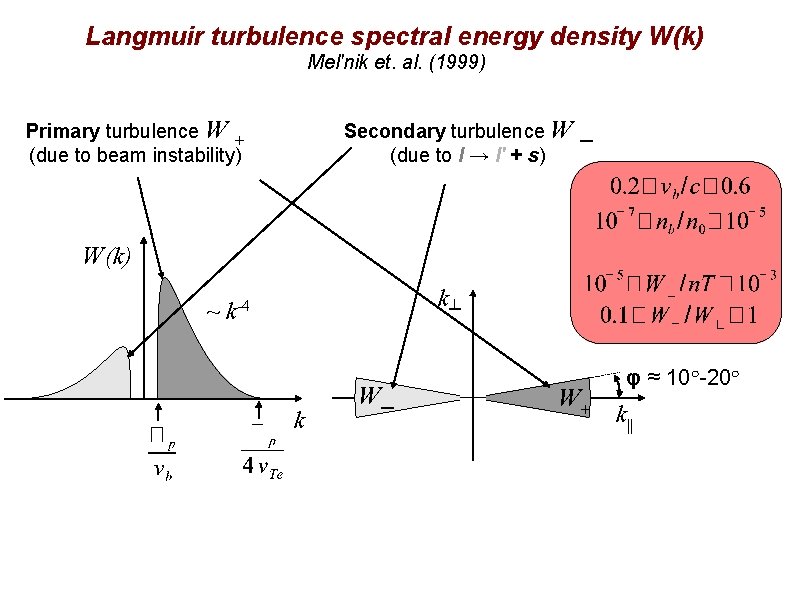
Paper : Combination scattering by anisotropic Langmuir turbulence with application to solar radar experiments Motivation can radar echoes come from type III burst turbulence? properties of the echo and what can we derive from them? to give hints for future radar experiments: transmitting freq. , receiving bandwidth, etc. We assume existence of a Langmuir turbulence generated by type III electrons (l) Existence of the radar wave (t) Induced scattering process in a weak turbulence limit Focus on backscattering
What is a type III solar burst? Radiation generation: e The Sun Coron ld lin e i f c i t ne al mag electron beam vb≈ 0. 2 -0. 6 c 1) l → l' + s (s – ion-sound) 2) l + s → t t' t ωl >> ωs => ωt ≈ ωp echo (radiation at plasma frequency) radar
Langmuir turbulence spectral energy density W(k) Mel'nik et. al. (1999) Primary turbulence W + (due to beam instability) Secondary turbulence W ─ (due to l → l' + s) W(k) k┴ ~ k-4 k W─ W+ φ ≈ 10○-20○ k||
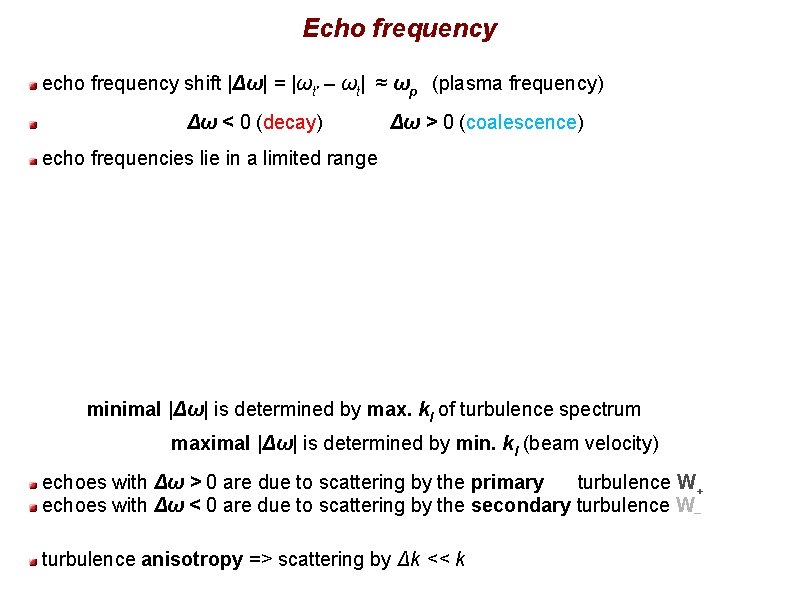
Echo frequency echo frequency shift |Δω| = |ωt' – ωt| ≈ ωp (plasma frequency) Δω < 0 (decay) Δω > 0 (coalescence) echo frequencies lie in a limited range minimal |Δω| is determined by max. kl of turbulence spectrum maximal |Δω| is determined by min. kl (beam velocity) echoes with Δω > 0 are due to scattering by the primary turbulence W+ echoes with Δω < 0 are due to scattering by the secondary turbulence W− turbulence anisotropy => scattering by Δk << k
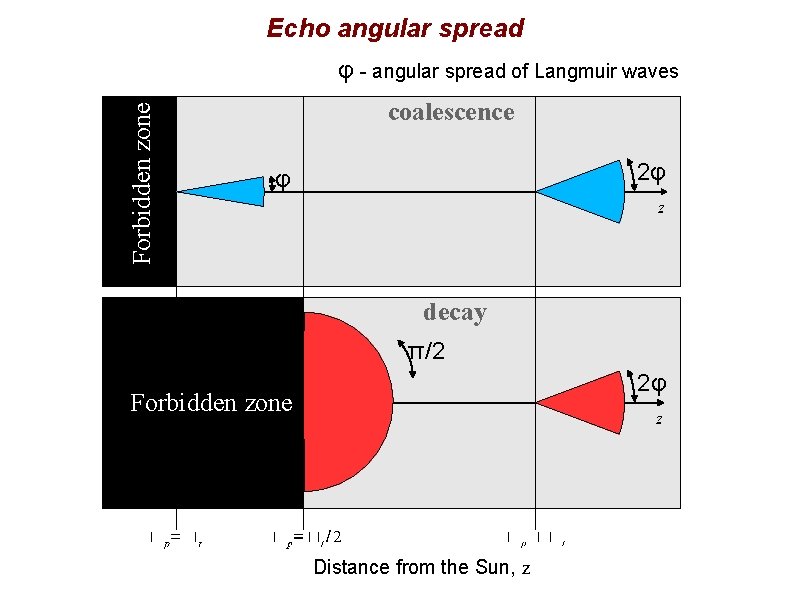
Echo angular spread Forbidden zone φ - angular spread of Langmuir waves coalescence 2φ φ decay π/2 2φ Forbidden zone Distance from the Sun, z
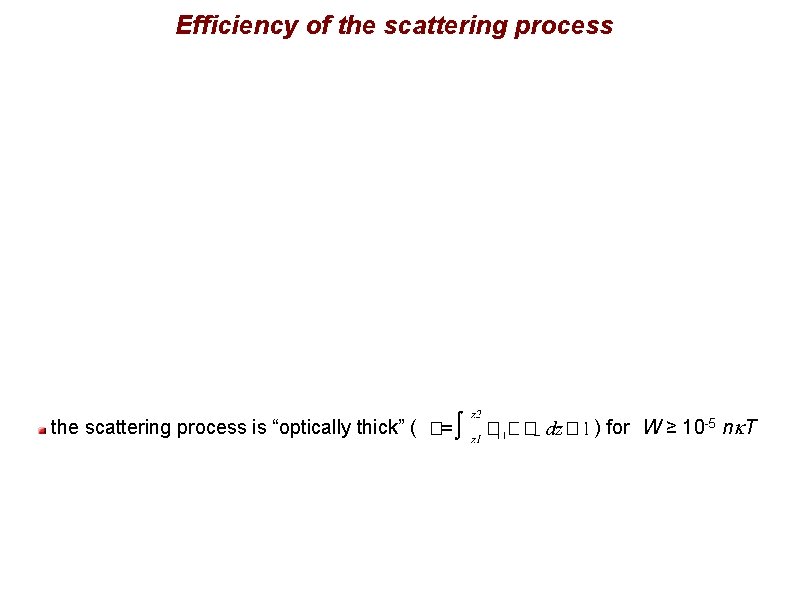
Efficiency of the scattering process is “optically thick” ( ) for W ≥ 10 -5 nk. T
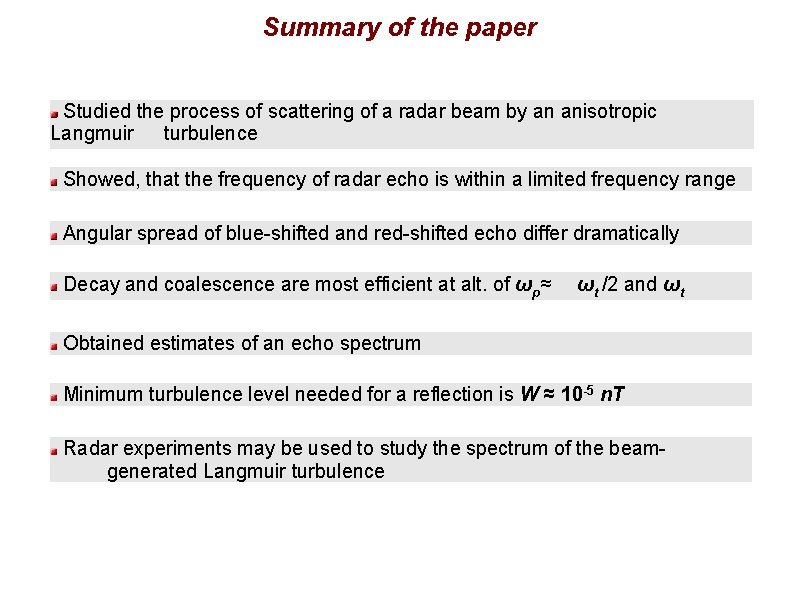
Summary of the paper Studied the process of scattering of a radar beam by an anisotropic Langmuir turbulence Showed, that the frequency of radar echo is within a limited frequency range Angular spread of blue-shifted and red-shifted echo differ dramatically Decay and coalescence are most efficient at alt. of ωp≈ ωt /2 and ωt Obtained estimates of an echo spectrum Minimum turbulence level needed for a reflection is W ≈ 10 -5 n. T Radar experiments may be used to study the spectrum of the beamgenerated Langmuir turbulence
Summary and outlook Solar radar can be a useful tool for solar studies There is a need in new radar experiments There is a need in further development of theory Future work: theory of radar reflections from CMEs
- Slides: 20