
Theory of Quantum Nonequilibrium Physics From Introduction to
Theory of Quantum Nonequilibrium Physics -From Introduction to Outlook – Ochanomizu University F. Shibata
(1) Introduction –Outlook of several theoretical methods (2) Projection operator formalism F. S. , T. Arimitsu, M. Ban and S. Kitajima, “Physics of Quanta and Non-equilibrium Systems”, chap. 3, (University of Tokyo Press, 2009, in Japanese) H. -P. Breuer and F. Petruccione, “The Theory of Open Quantum Systems” (2006, Oxford ) (3) Spin relaxation ( i ) F. S. , C. Uchiyama, J. Phys. Soc. Jpn. , 62 (1993) 381. “Rigorous solution to nonlinear spin relaxation process” (4) Spin relaxation ( ii ) Y. Hamano, F. S. , J. Phys. Soc. Jpn. , 51 (1982) 1727. “Theory of spin relaxation for arbitrary time scale”
(5) Low field resonance : exact solution F. S. -I. Sato, Physica A 143 (1987) 468. “Theory of low field resonance and relaxation Ⅰ” (6) Micro-Laser theory C. Uchiyama, F. S. , J. Phys. Soc. Jpn. , 69 (2000) 2829. “Self-organized formation of atomic coherence via photon exchange in a coupled atom-photon system”. (7) Decoherence control S. Kitajima, M. Ban and F. S. , J. Phys. B 43 (2010) 135504. “Theory of decoherence control in a fluctuating environment” (8) Outlook
(1) Introduction – Outline of several theoretical methods Damping theory : (a) Projection operator method ・・ (b) Schrodinger picture versus Heisenberg picture (c) Time-convolution (TC) type versus Time-convolutionless (TCL) type Path integral theory : Feynman – Vernon, Caldeira – Leggett Non-equilibrium Green’s function : Schwinger - Kerdysh

(2) Projection operator formalism ・・ Basic equations in Interaction picture (Schrodinger's view) Physics of Quanta and Non-equilibrium Systems”, chap. 3, (University of Tokyo Press, 2009, in Japanese) Hamiltonian Liouville-von Neumann equation where
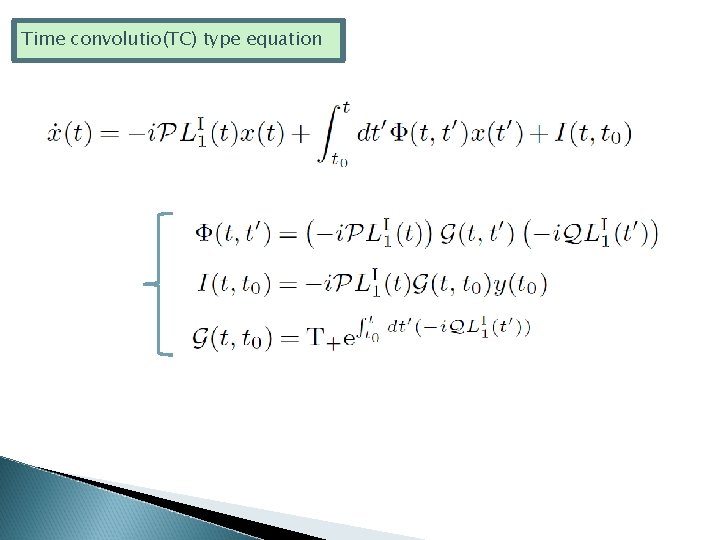
Time convolutio(TC) type equation
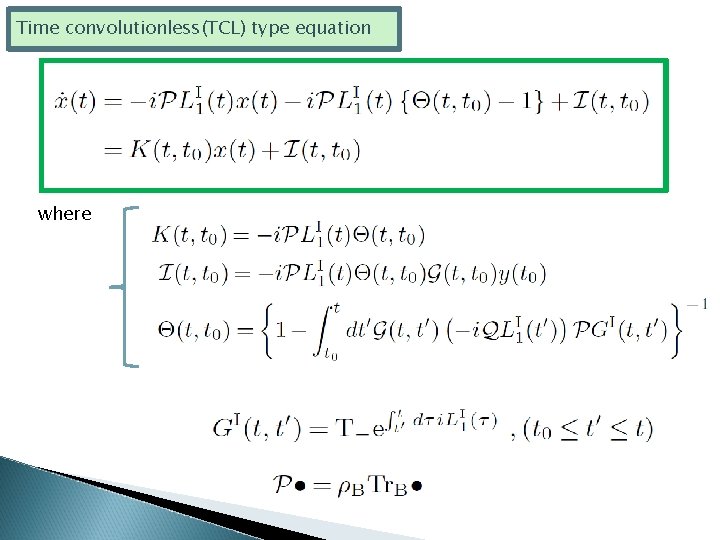
Time convolutionless(TCL) type equation where
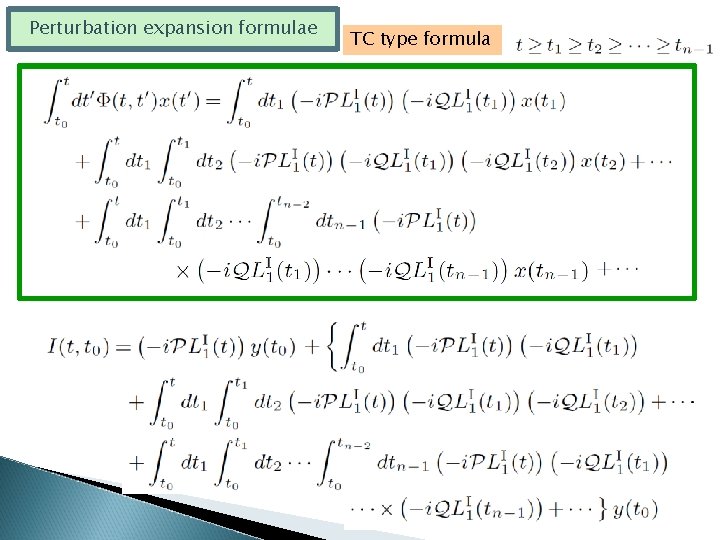
Perturbation expansion formulae TC type formula

TCL type formula
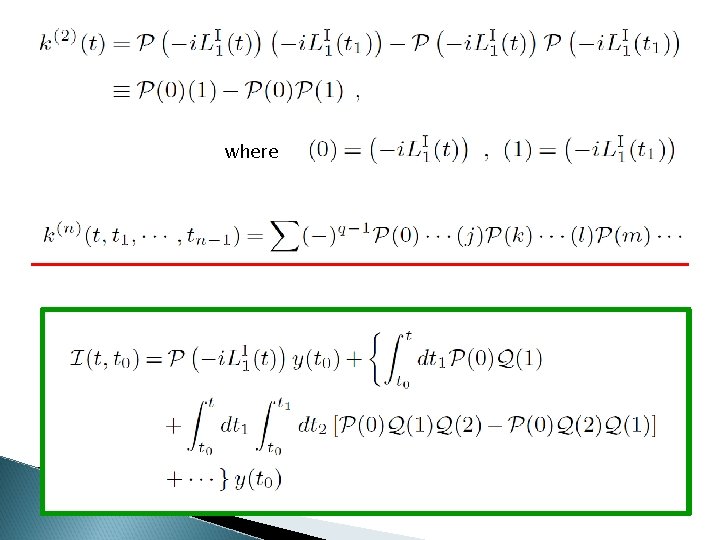
where
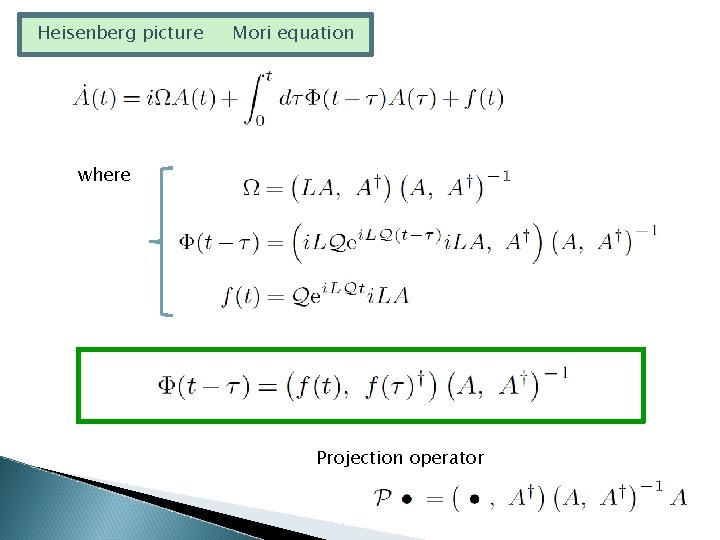
Heisenberg picture Mori equation where Projection operator
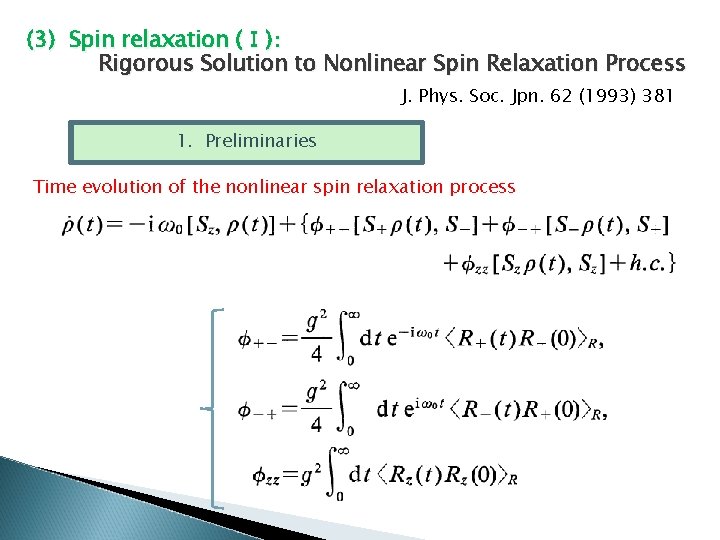
(3) Spin relaxation (Ⅰ): Rigorous Solution to Nonlinear Spin Relaxation Process J. Phys. Soc. Jpn. 62 (1993) 381 1. Preliminaries Time evolution of the nonlinear spin relaxation process
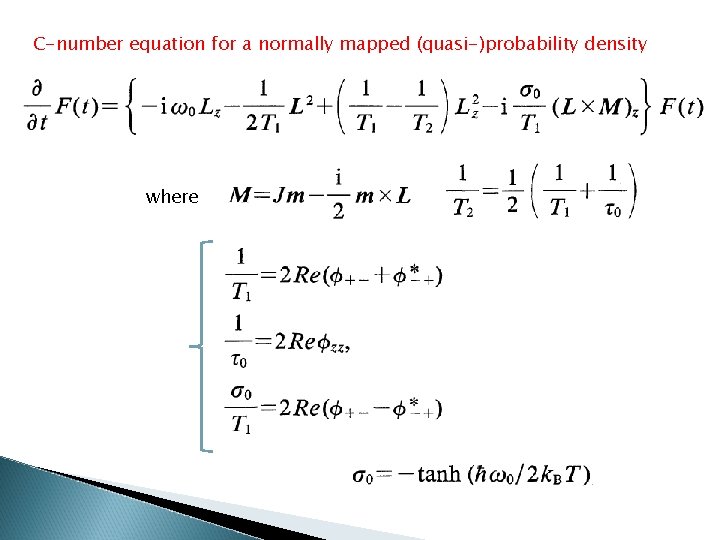
C-number equation for a normally mapped (quasi-)probability density where
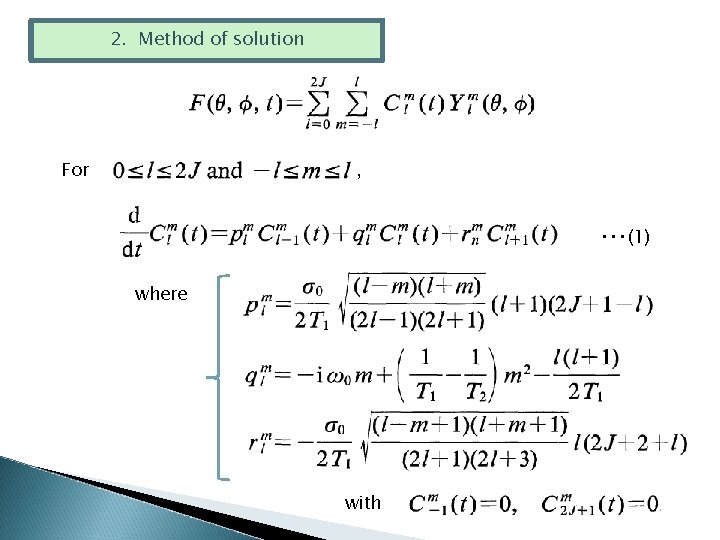
2. Method of solution For , ・・・(1) where with
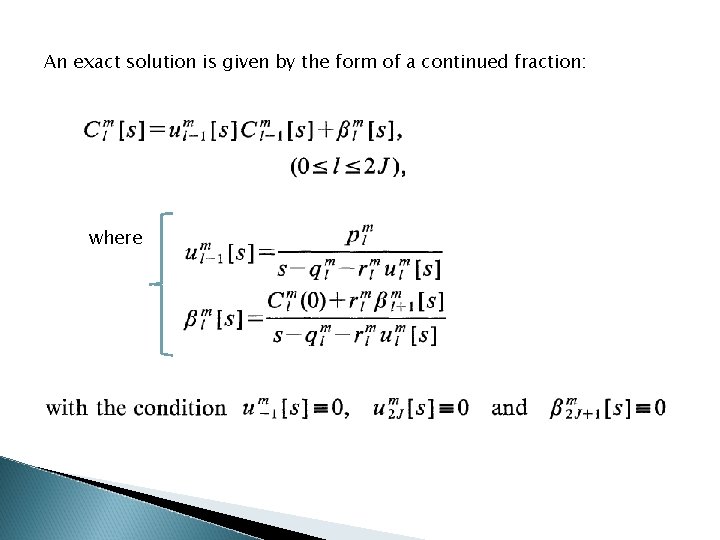
An exact solution is given by the form of a continued fraction: where
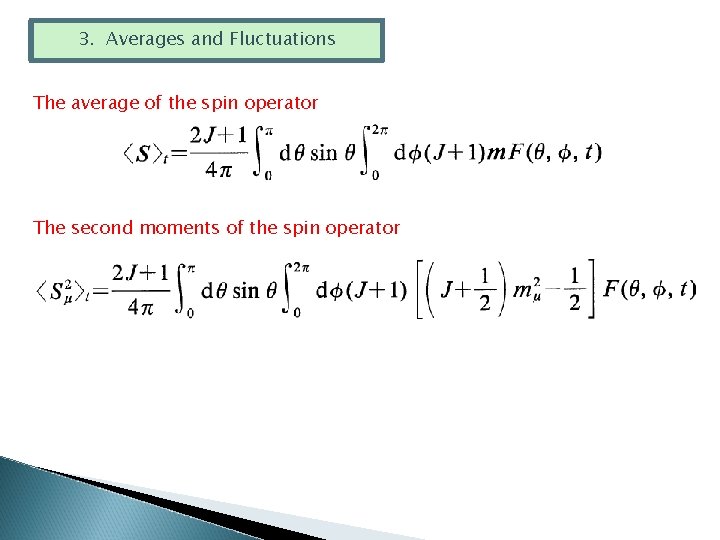
3. Averages and Fluctuations The average of the spin operator The second moments of the spin operator
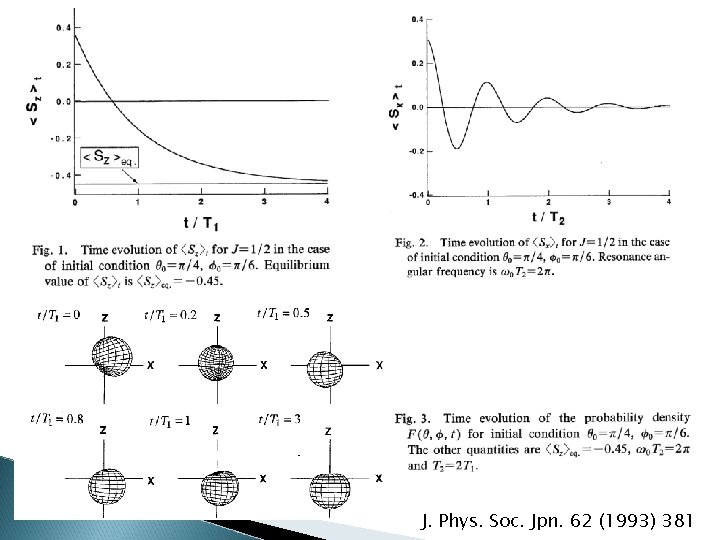
J. Phys. Soc. Jpn. 62 (1993) 381
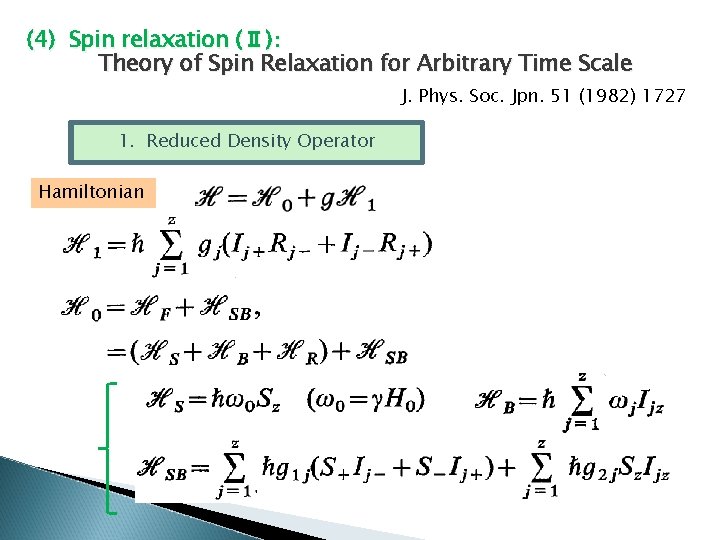
(4) Spin relaxation (Ⅱ): Theory of Spin Relaxation for Arbitrary Time Scale J. Phys. Soc. Jpn. 51 (1982) 1727 1. Reduced Density Operator Hamiltonian
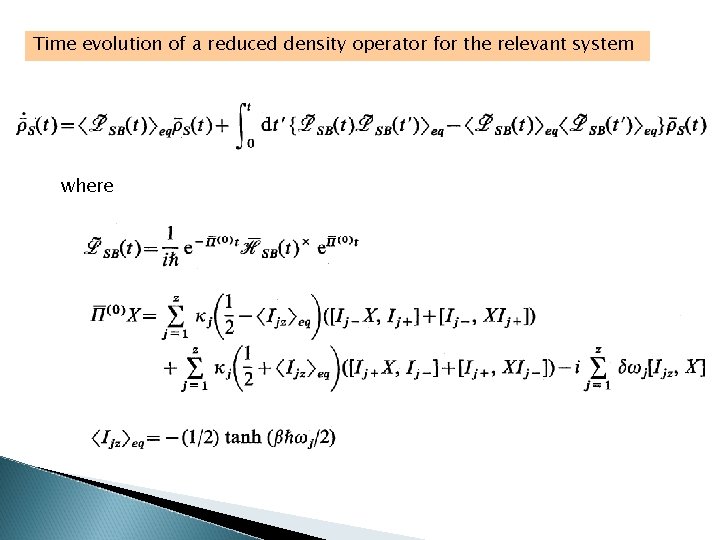
Time evolution of a reduced density operator for the relevant system where
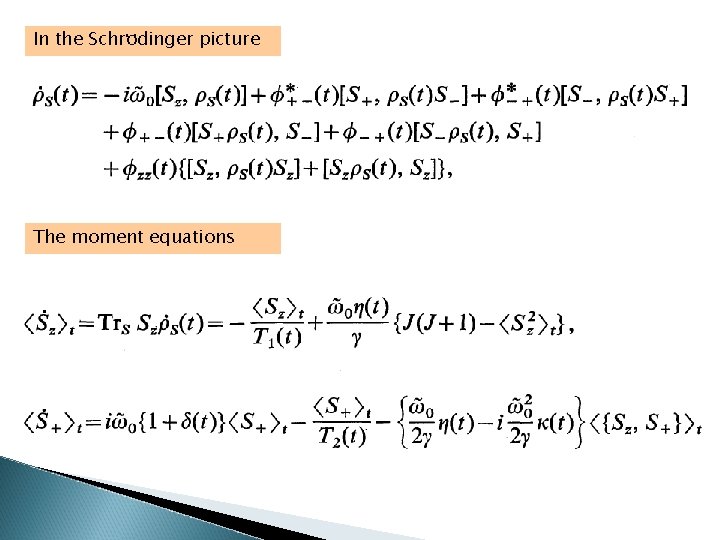
・・ In the Schrodinger picture The moment equations
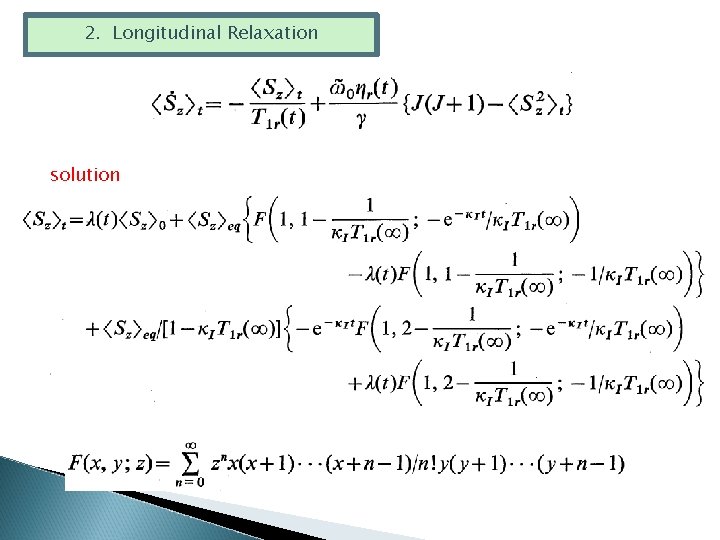
2. Longitudinal Relaxation solution
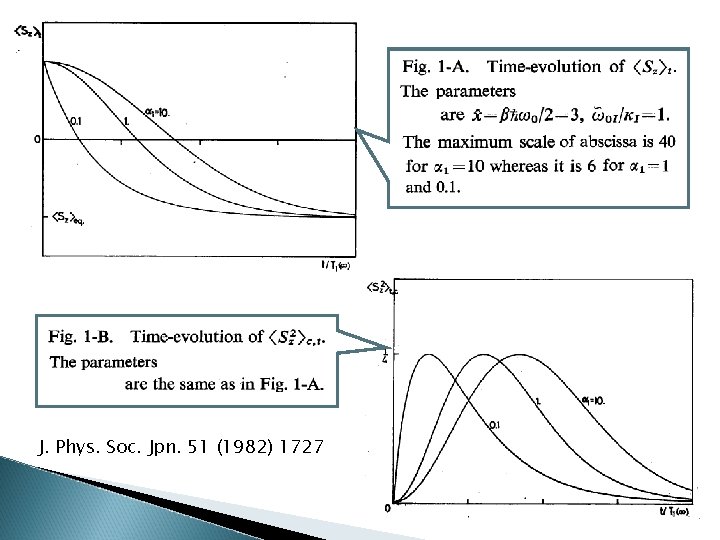
J. Phys. Soc. Jpn. 51 (1982) 1727
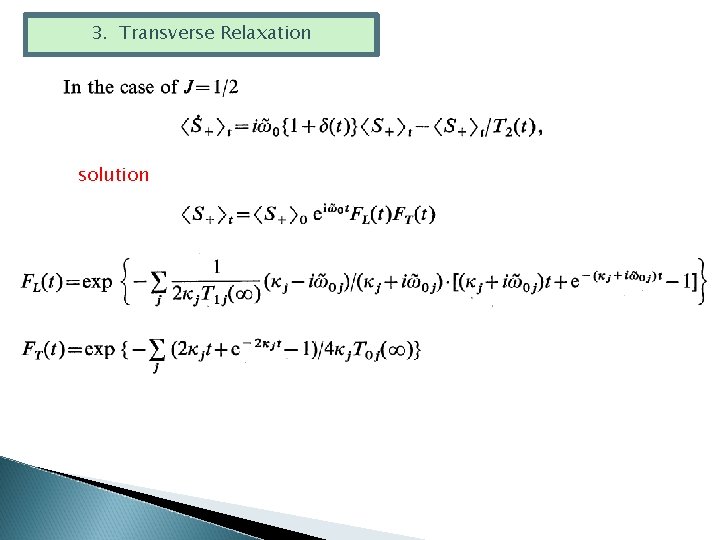
3. Transverse Relaxation solution
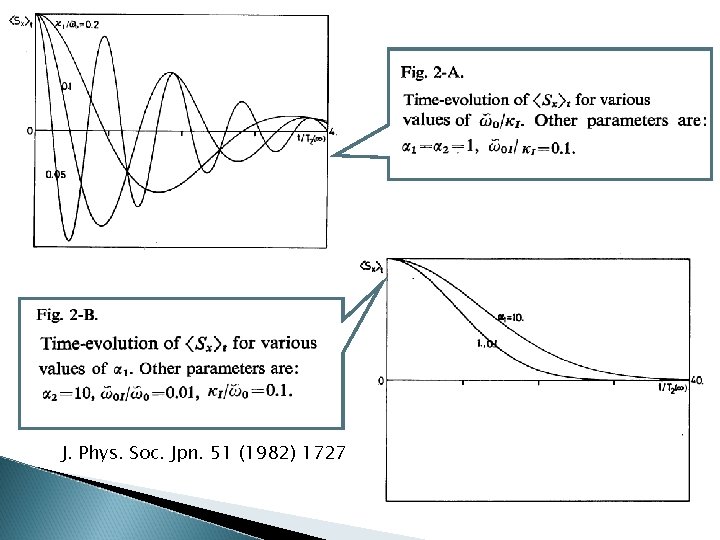
J. Phys. Soc. Jpn. 51 (1982) 1727
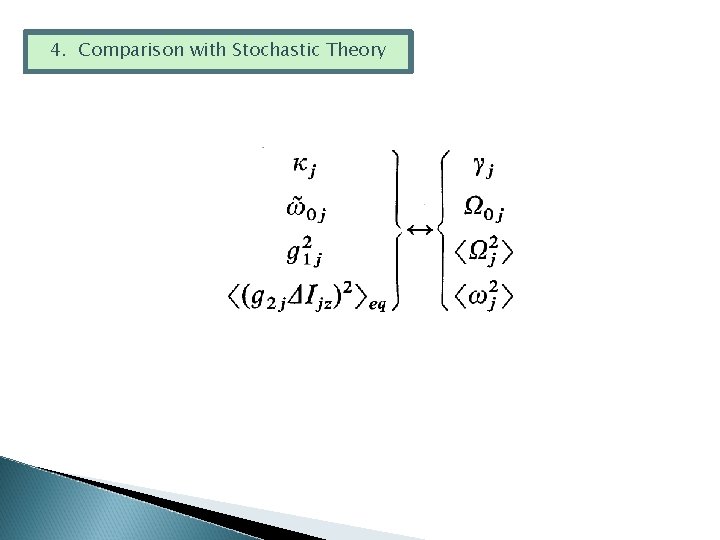
4. Comparison with Stochastic Theory
References 1) F. S. , Y. Takahashi and N. Hashitsume, J. Stat. Phys. 17 (1977) 171. 2) S. Chaturvedi and F. S. , Z. Phys. B 35 (1979) 297. 3) F. S. and T. Arimitsu, J. Phys. Soc. Jpn. , 49 (1980) 891.
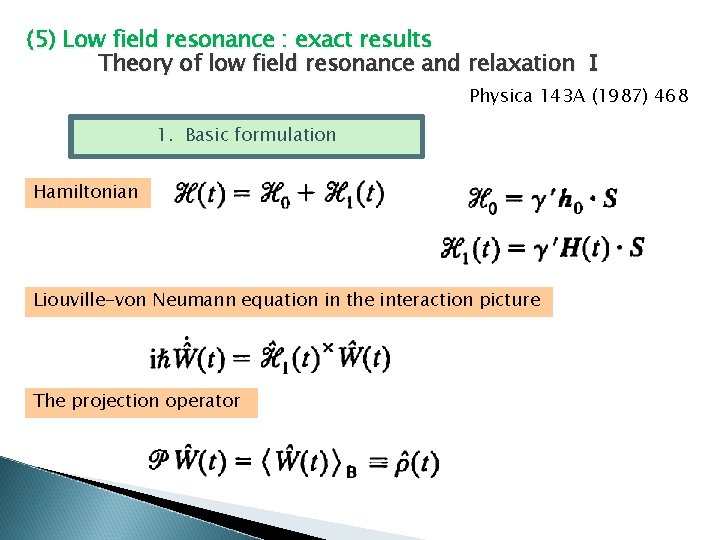
(5) Low field resonance : exact results Theory of low field resonance and relaxation Ⅰ Physica 143 A (1987) 468 1. Basic formulation Hamiltonian Liouville-von Neumann equation in the interaction picture The projection operator
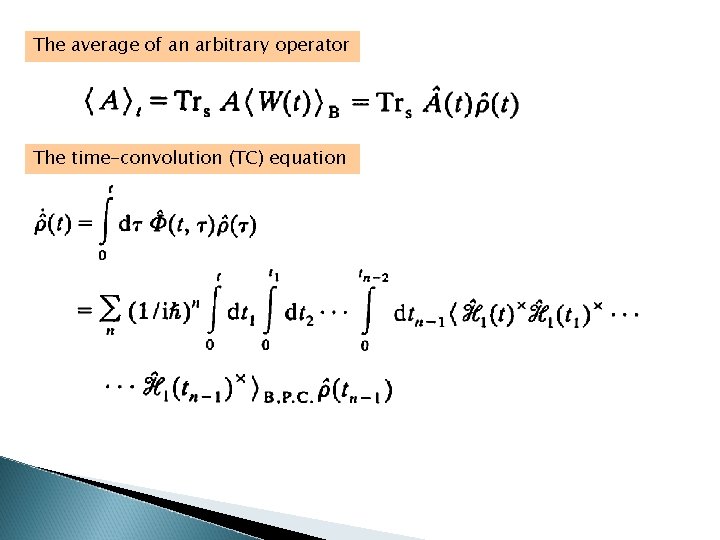
The average of an arbitrary operator The time-convolution (TC) equation
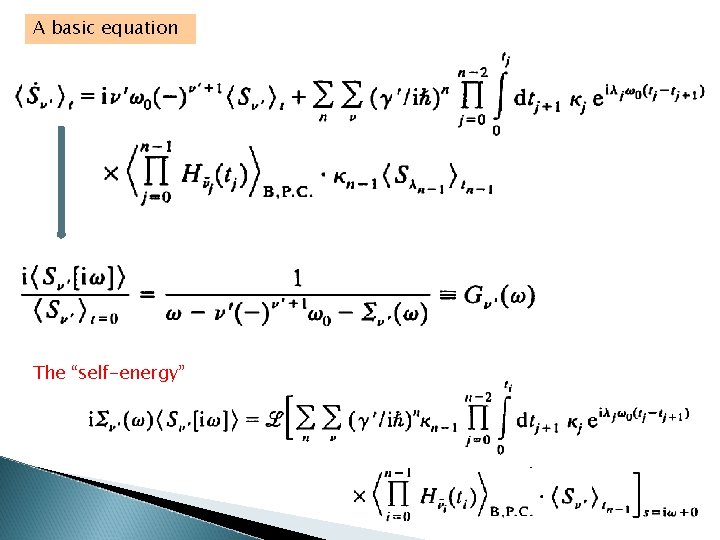
A basic equation The “self-energy”
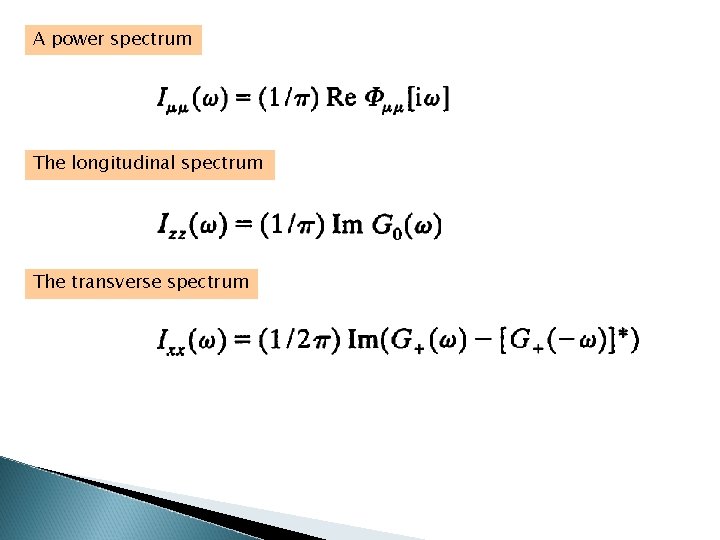
A power spectrum The longitudinal spectrum The transverse spectrum
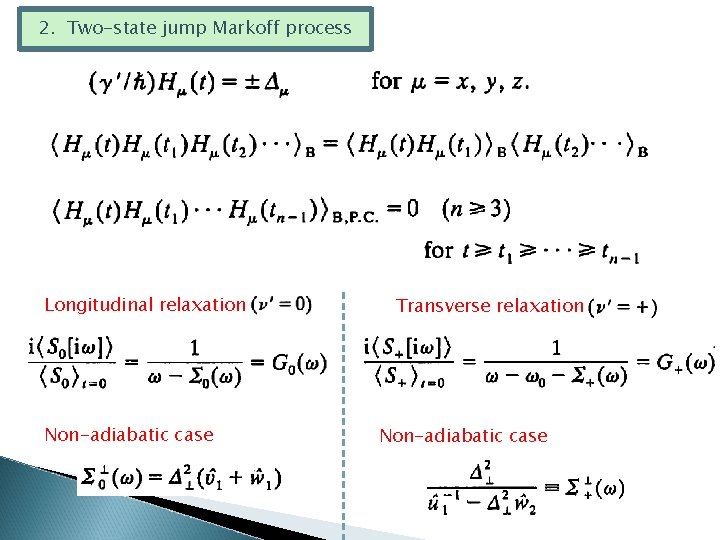
2. Two-state jump Markoff process Longitudinal relaxation Non-adiabatic case Transverse relaxation Non-adiabatic case
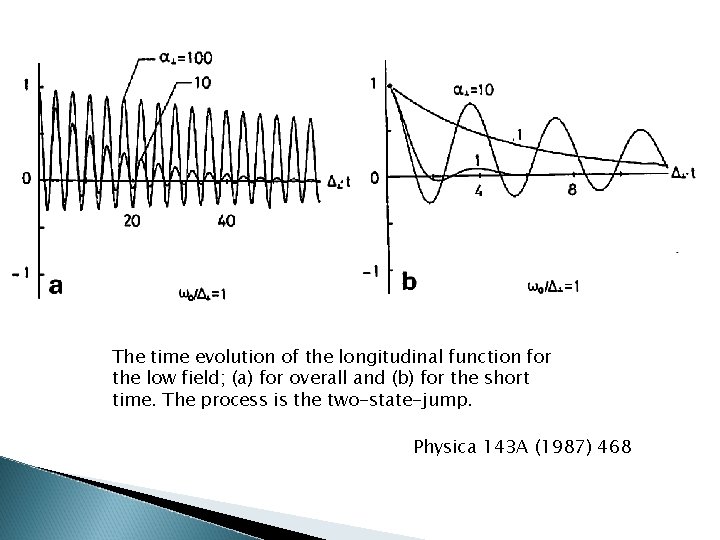
The time evolution of the longitudinal function for the low field; (a) for overall and (b) for the short time. The process is the two-state-jump. Physica 143 A (1987) 468
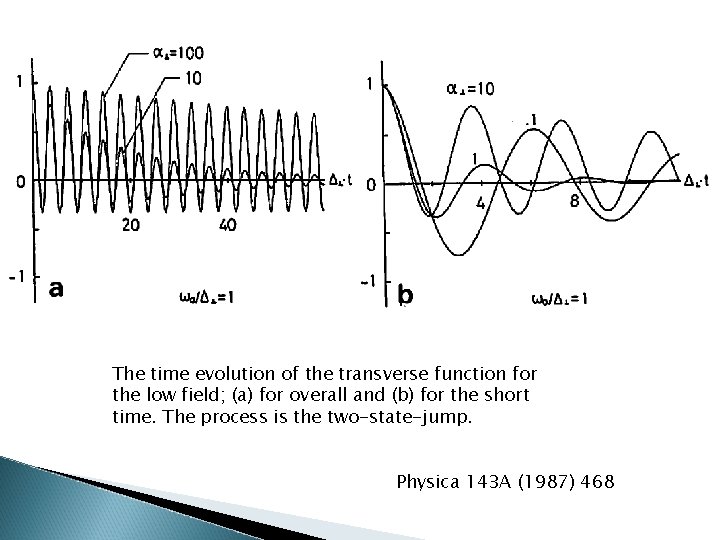
The time evolution of the transverse function for the low field; (a) for overall and (b) for the short time. The process is the two-state-jump. Physica 143 A (1987) 468
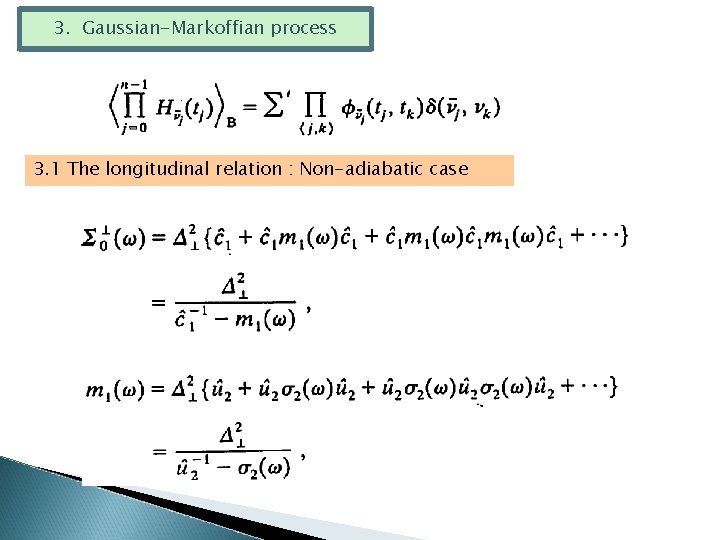
3. Gaussian-Markoffian process 3. 1 The longitudinal relation : Non-adiabatic case
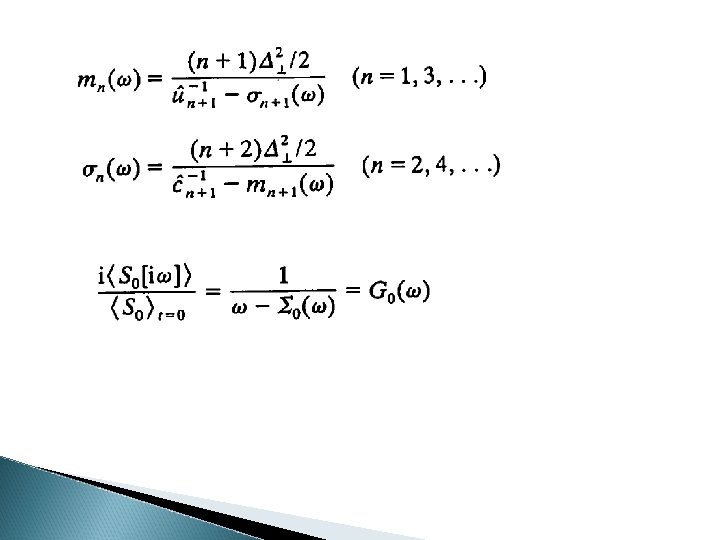
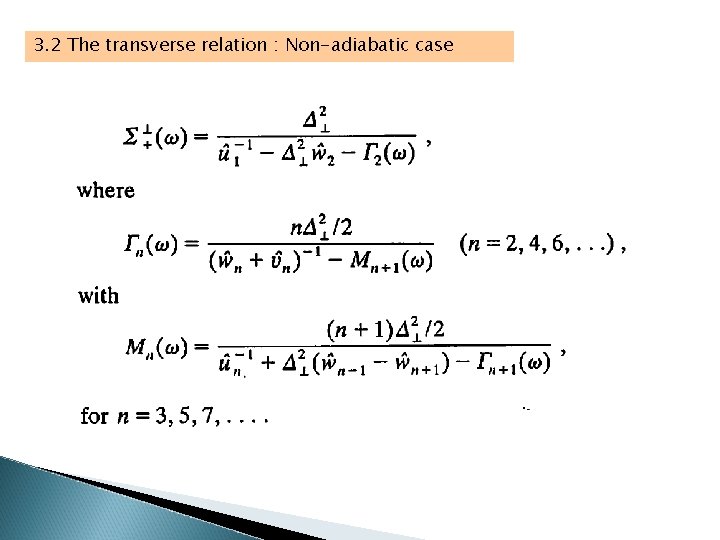
3. 2 The transverse relation : Non-adiabatic case
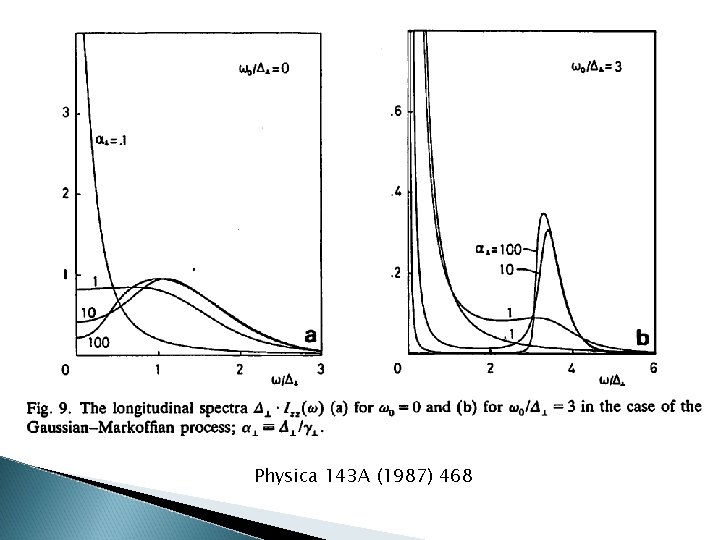
Physica 143 A (1987) 468
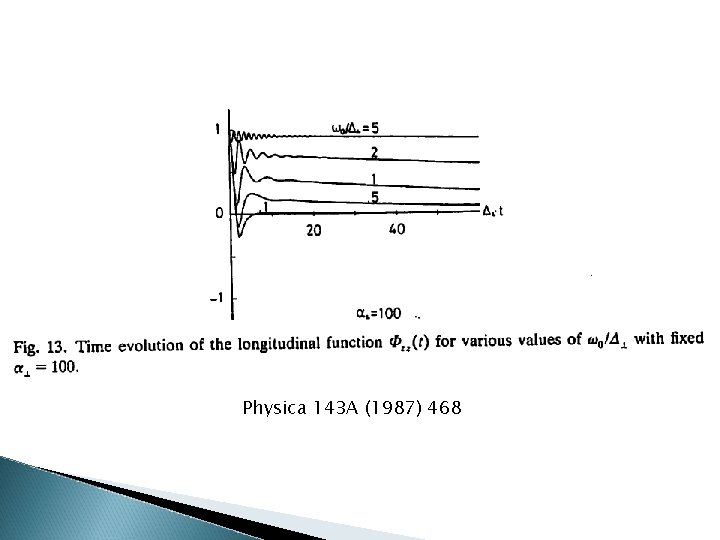
Physica 143 A (1987) 468
References 1) R. Kubo and T. Toyabe, in: Proc. of the XIVth Colloque Ampere Ljubljana 1966, Magnetic Resonance and Relaxation, R. Blinc, ed. (North-Holland, Amsterdam, 1967) p. 810. 2) R. S. Hayano, Y. J. Uemura, J. Imazato, N. Nishida, T. Yamazaki and R. Kubo, Phys. Rev. B 20 (1979) 850. 3) Y. J. Uemura and T. Yamazaki, Physica 109 & 110 B (1982) 1915; and references cited therein. Y. J. Uemura, Doctor Thesis, University of Tokyo (1982). 4) E. Torikai, A. Ito, Y. Takeda, K. Nagamine, K. Nishiyama, Y. Syono and H. Takei, Solid State Commun. 58 (1986) 839.
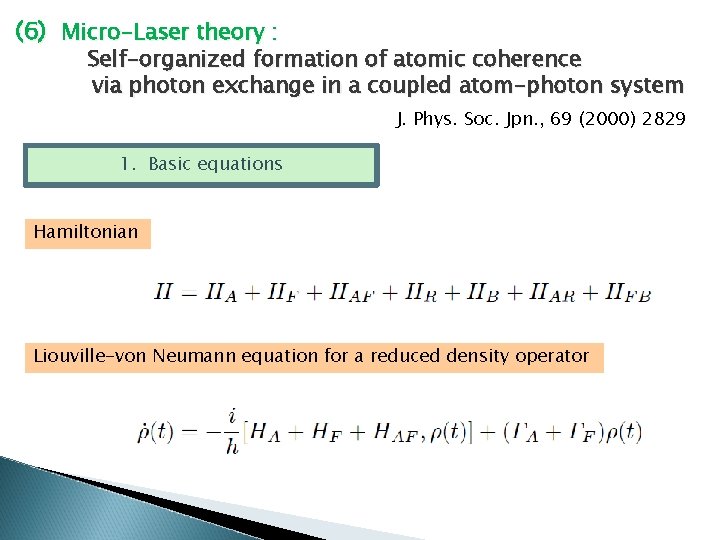
(6) Micro-Laser theory : Self-organized formation of atomic coherence via photon exchange in a coupled atom-photon system J. Phys. Soc. Jpn. , 69 (2000) 2829 1. Basic equations Hamiltonian Liouville-von Neumann equation for a reduced density operator
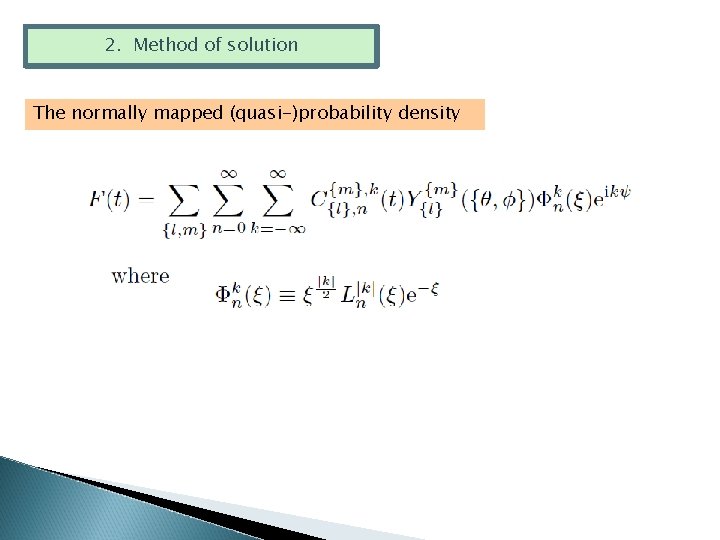
2. Method of solution The normally mapped (quasi-)probability density
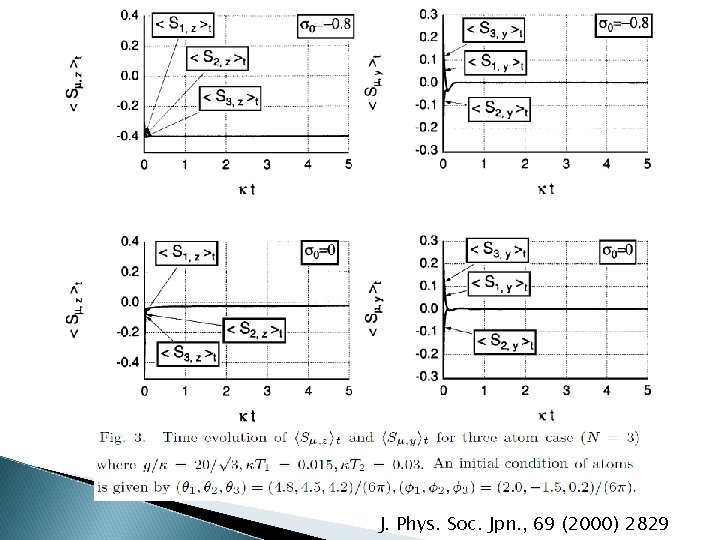
J. Phys. Soc. Jpn. , 69 (2000) 2829
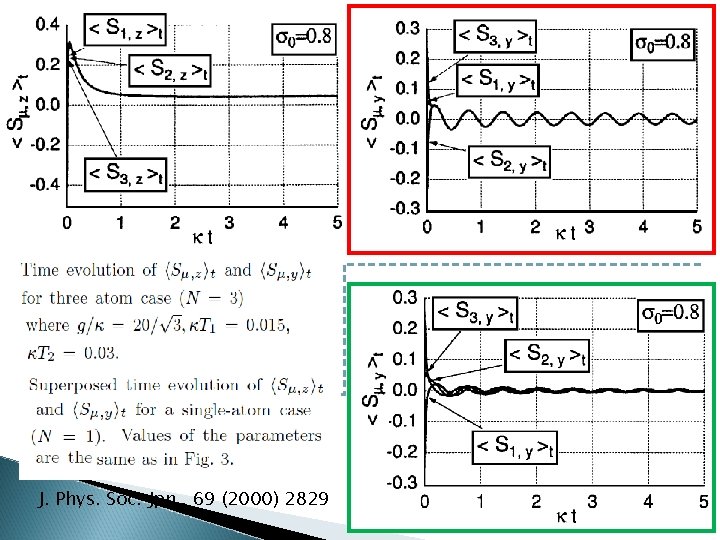
J. Phys. Soc. Jpn. , 69 (2000) 2829
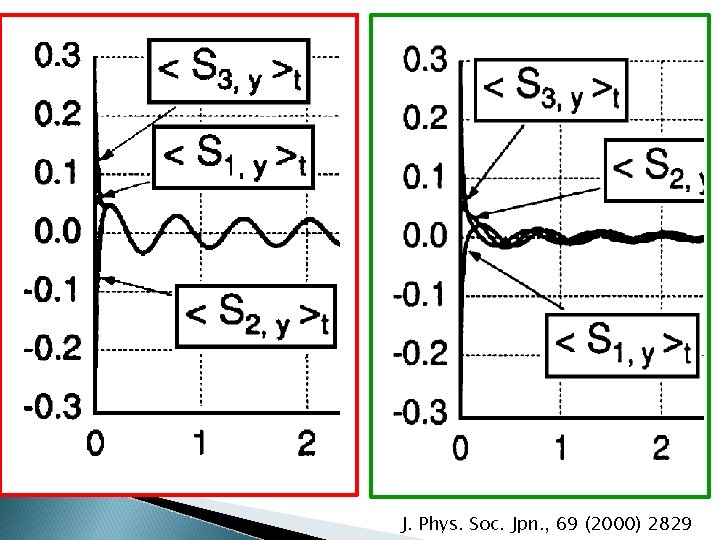
J. Phys. Soc. Jpn. , 69 (2000) 2829
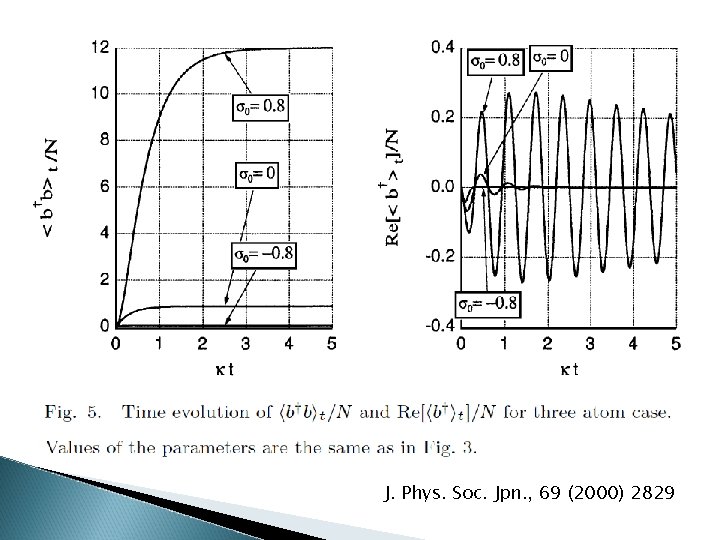
J. Phys. Soc. Jpn. , 69 (2000) 2829
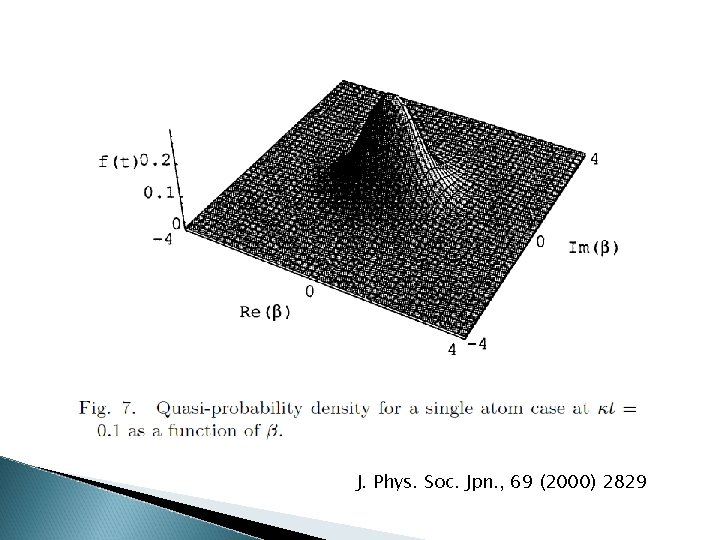
J. Phys. Soc. Jpn. , 69 (2000) 2829
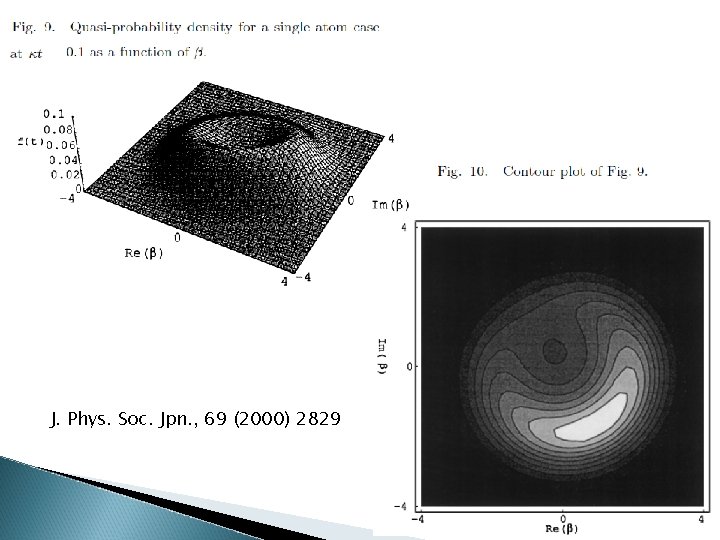
J. Phys. Soc. Jpn. , 69 (2000) 2829
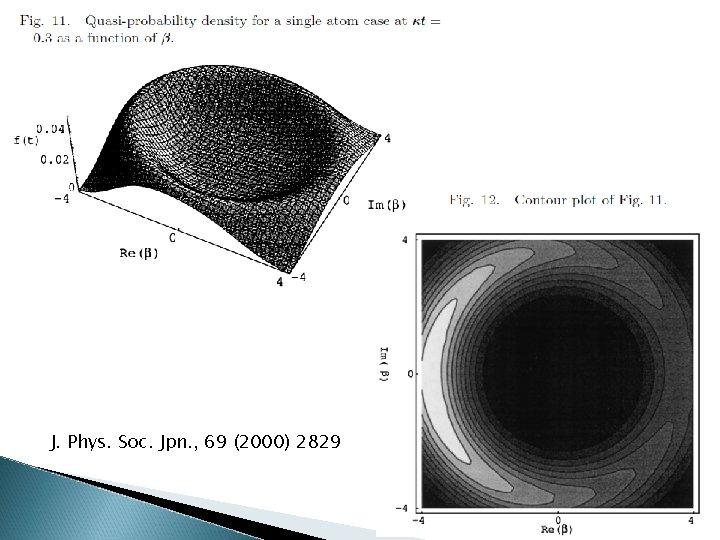
J. Phys. Soc. Jpn. , 69 (2000) 2829
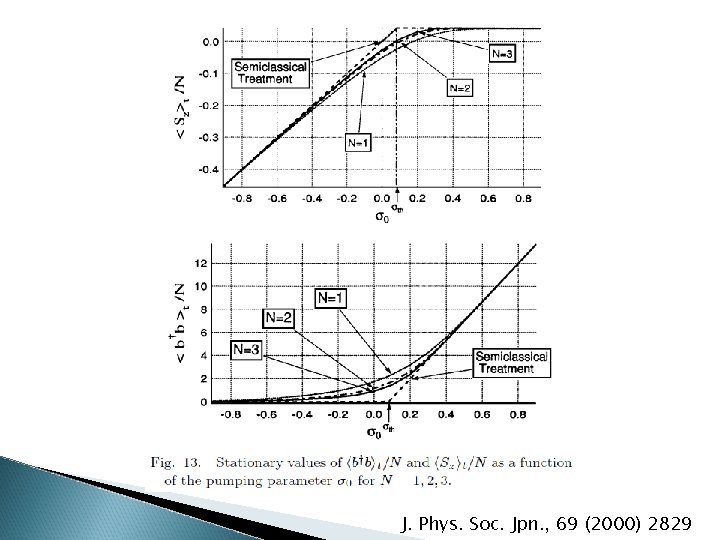
J. Phys. Soc. Jpn. , 69 (2000) 2829
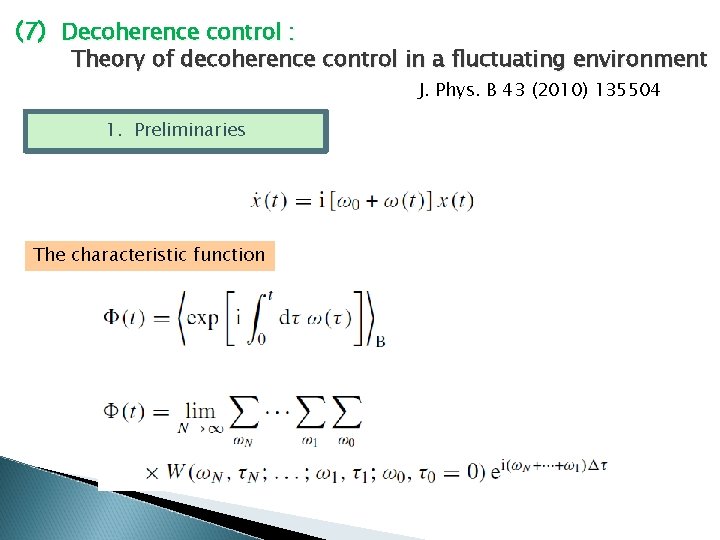
(7) Decoherence control : Theory of decoherence control in a fluctuating environment J. Phys. B 43 (2010) 135504 1. Preliminaries The characteristic function
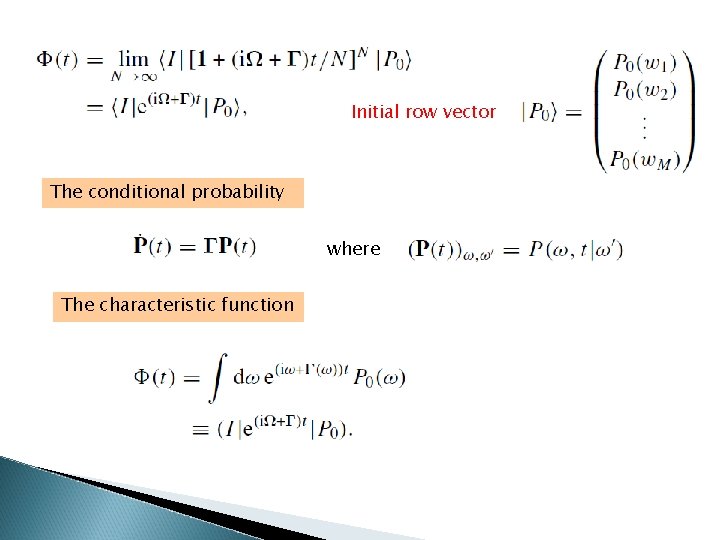
Initial row vector The conditional probability where The characteristic function
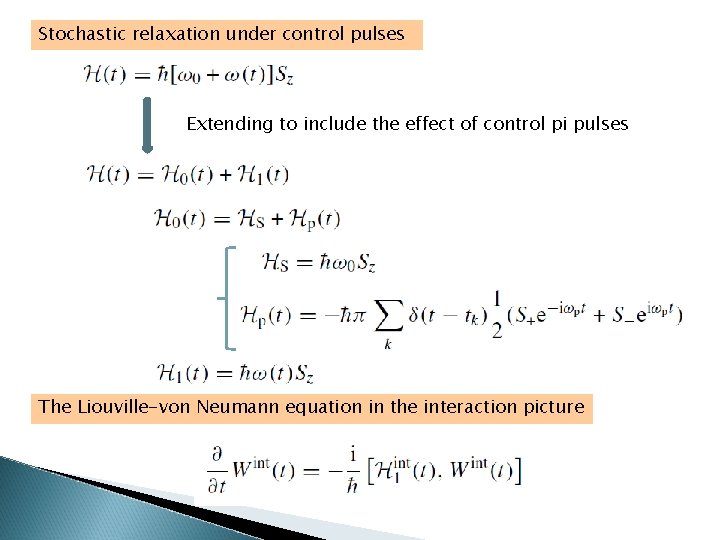
Stochastic relaxation under control pulses Extending to include the effect of control pi pulses The Liouville-von Neumann equation in the interaction picture
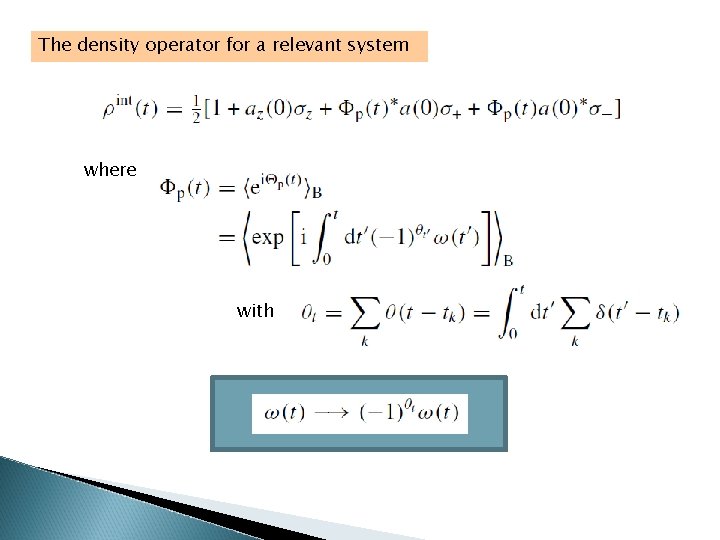
The density operator for a relevant system where with
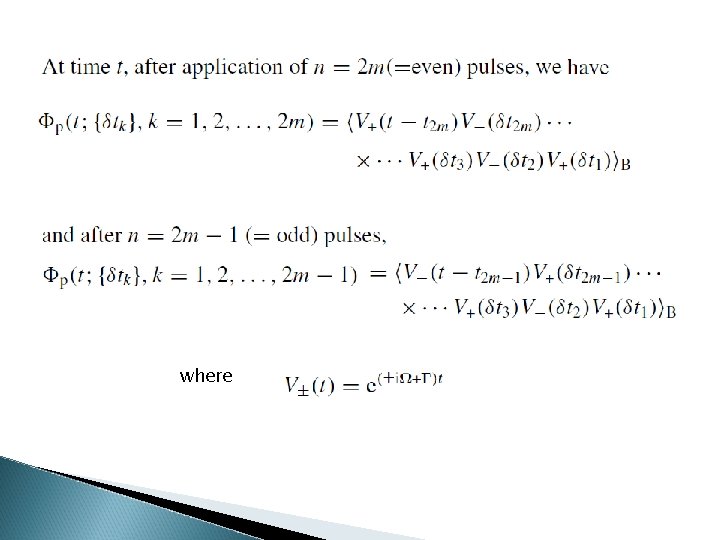
where
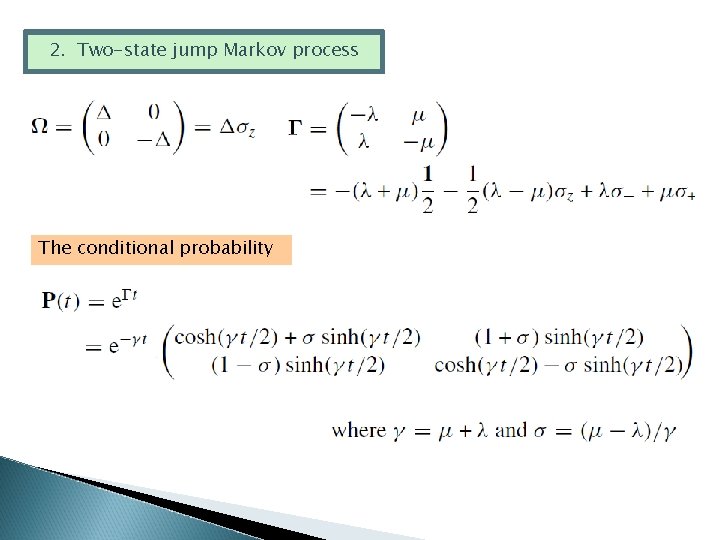
2. Two-state jump Markov process The conditional probability
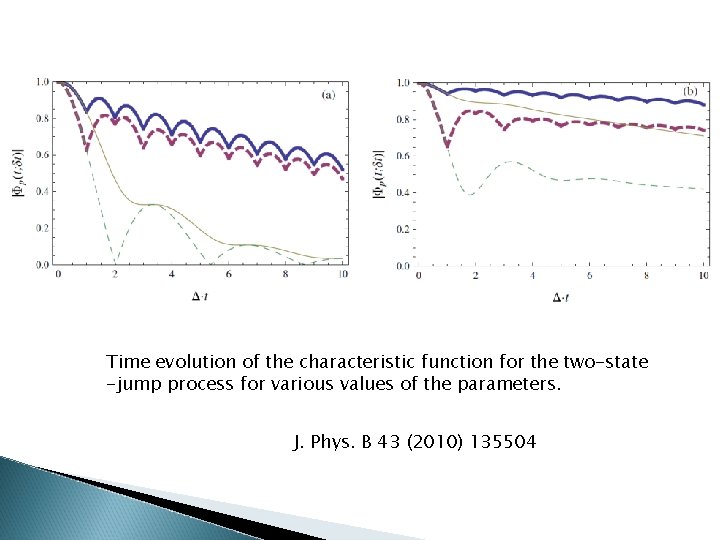
Time evolution of the characteristic function for the two-state -jump process for various values of the parameters. J. Phys. B 43 (2010) 135504
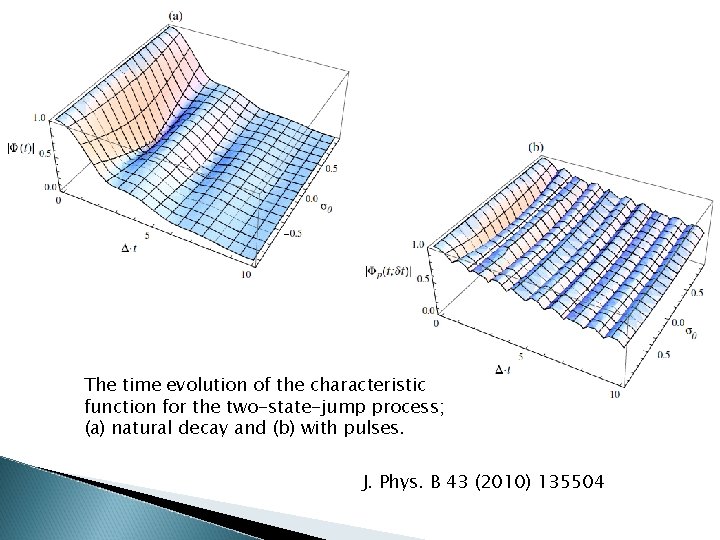
The time evolution of the characteristic function for the two-state-jump process; (a) natural decay and (b) with pulses. J. Phys. B 43 (2010) 135504
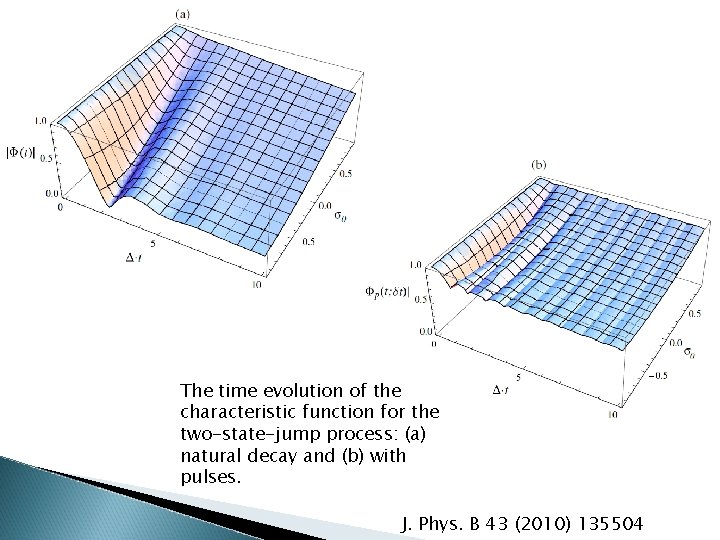
The time evolution of the characteristic function for the two-state-jump process: (a) natural decay and (b) with pulses. J. Phys. B 43 (2010) 135504
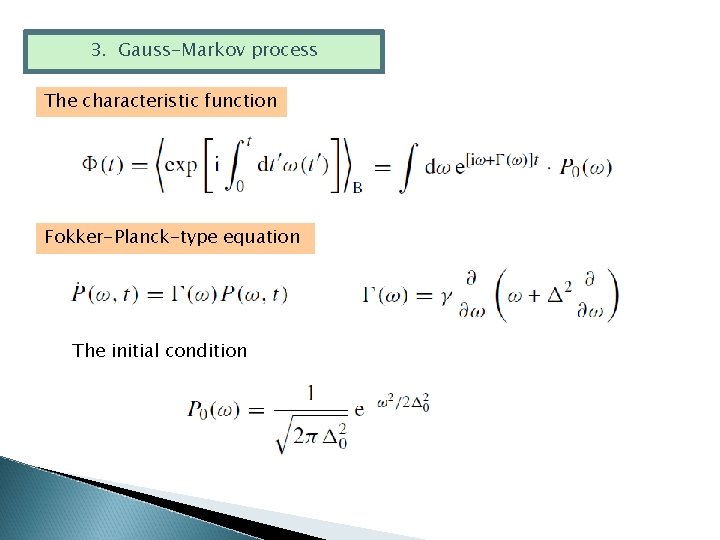
3. Gauss-Markov process The characteristic function Fokker-Planck-type equation The initial condition
3. 1 Stochastic characteristic function under control pulses ---stationary process--In the limit of equal separation time of pulses, the result coincides with the previous one : M. Ban, F. S. and S. Kitajima, JPB 40 (2007) S 229.
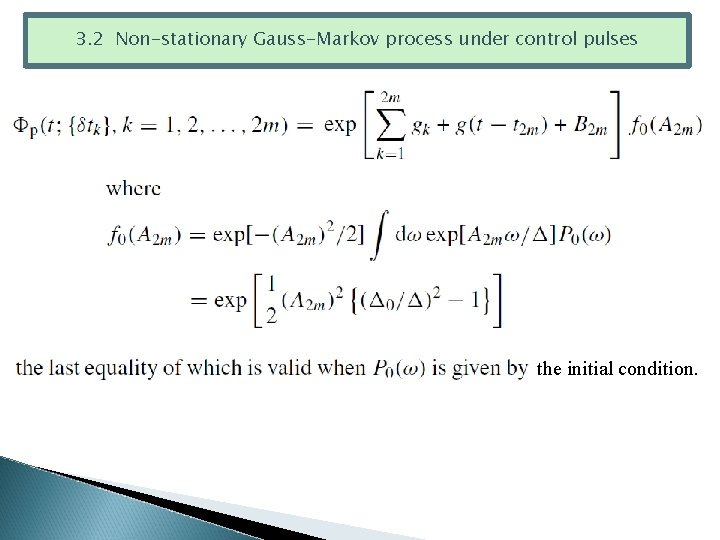
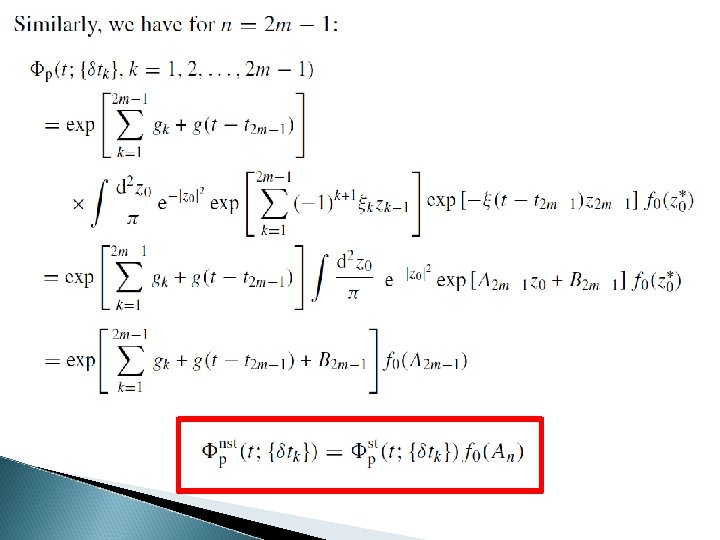
3. 2 Non-stationary Gauss-Markov process under control pulses the initial condition.
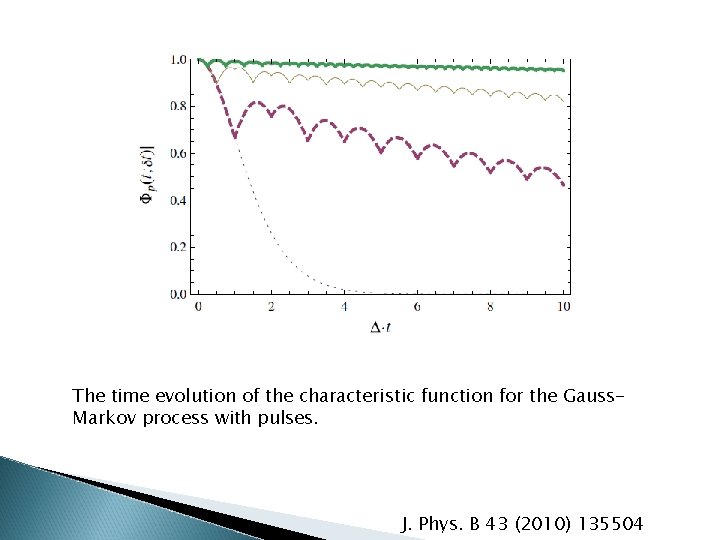
The time evolution of the characteristic function for the Gauss. Markov process with pulses. J. Phys. B 43 (2010) 135504
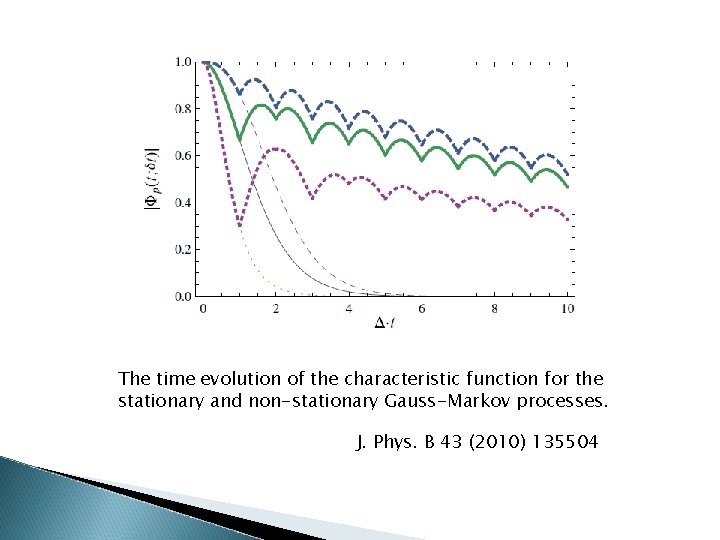
The time evolution of the characteristic function for the stationary and non-stationary Gauss-Markov processes. J. Phys. B 43 (2010) 135504
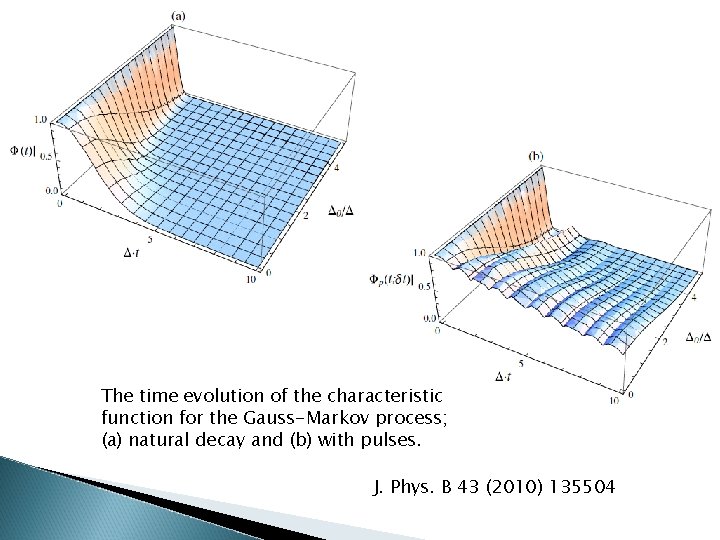
The time evolution of the characteristic function for the Gauss-Markov process; (a) natural decay and (b) with pulses. J. Phys. B 43 (2010) 135504
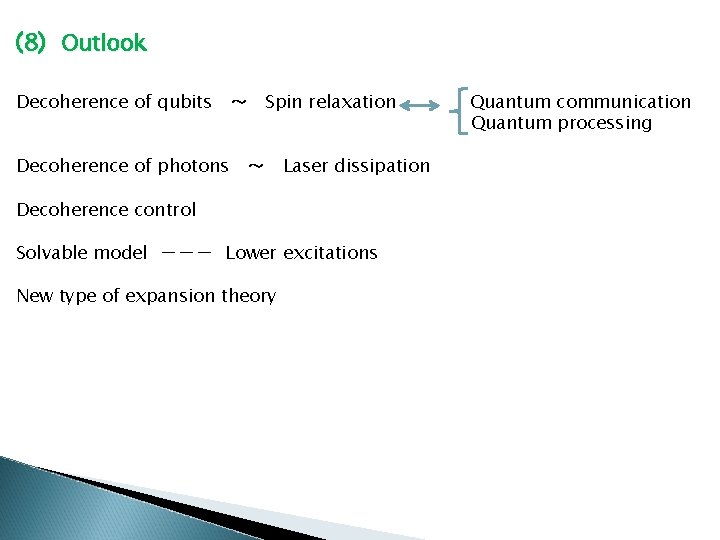
(8) Outlook Decoherence of qubits ~ Spin relaxation Decoherence of photons ~ Laser dissipation Decoherence control Solvable model --- Lower excitations New type of expansion theory Quantum communication Quantum processing
- Slides: 66