
Theory of Plate Tectonics The Theory of Plate



- Slides: 40
Theory of Plate Tectonics
The Theory of Plate Tectonics Key terms: • • • Lithospheric Plate Tectonic Plate Scientific Theory Plate Tectonics Fault Divergent Boundary
What is a theory? ! • • • Theory: well-tested concept that explains a wide range of observations. List two theories that we have talked about so far. . . Continental Drift Sea-Floor Spreading AND NOW. . . Theory of Plate Tectonics
What was wrong with theory of Continental Drift proposed by Wegener? • Think. . . • Pair. . . • Share. . . • The continents do NOT just move on their own. • It is the tectonic plates that consist of both oceanic and continental crusts that move.
What was wrong with theory of Sea-Floor Spreading proposed by Hess? • Think. . . • Pair. . . • Share. . . • The continents would have all wound up on the other side of the Earth. • The Earth can’t get bigger to support all the plates from spreading from each other.
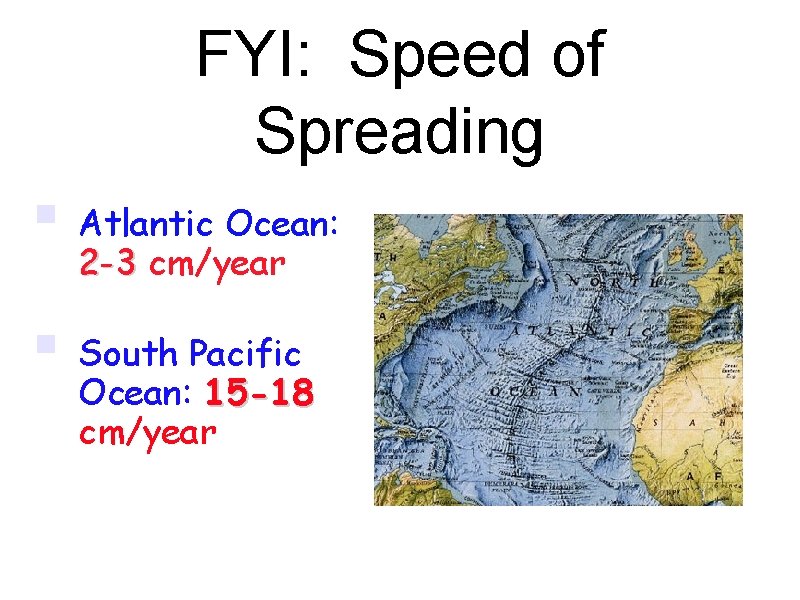
FYI: Speed of Spreading § Atlantic Ocean: 2 -3 cm/year § South Pacific Ocean: 15 -18 cm/year
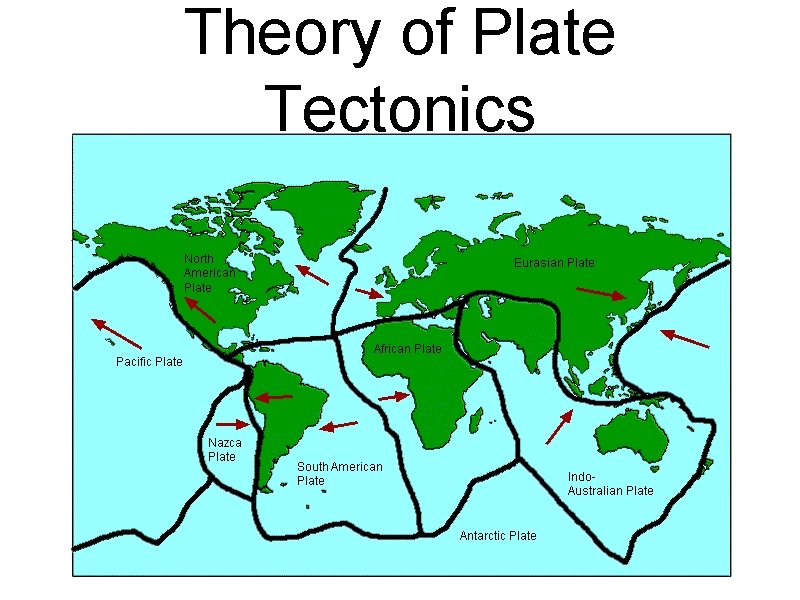
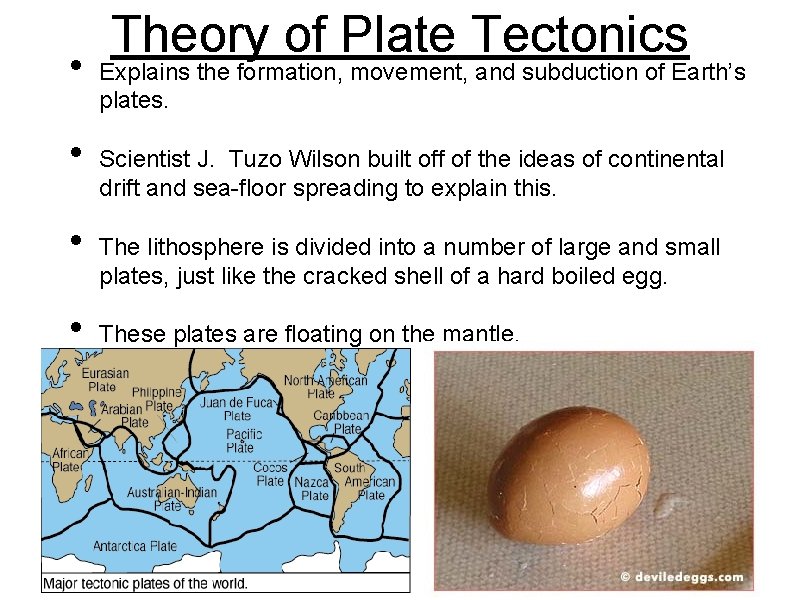
• • Theory of Plate Tectonics Explains the formation, movement, and subduction of Earth’s plates. Scientist J. Tuzo Wilson built off of the ideas of continental drift and sea-floor spreading to explain this. The lithosphere is divided into a number of large and small plates, just like the cracked shell of a hard boiled egg. These plates are floating on the mantle.
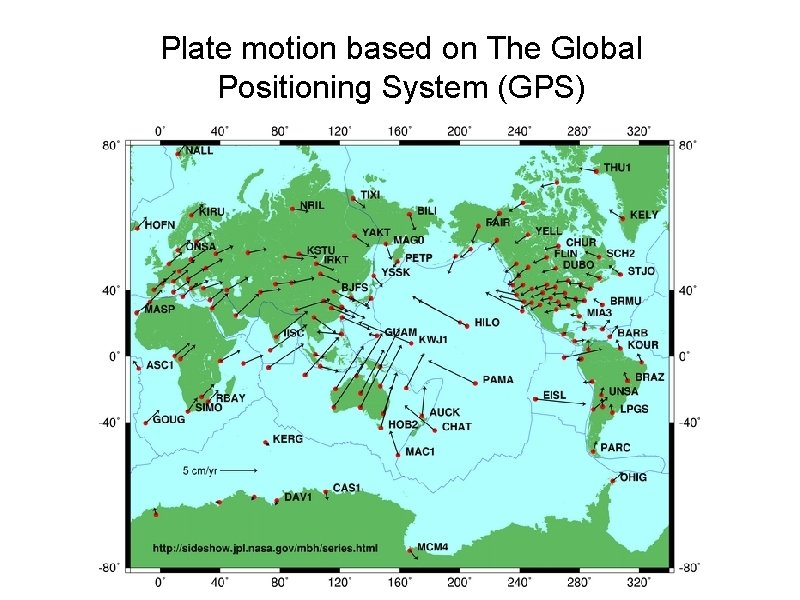
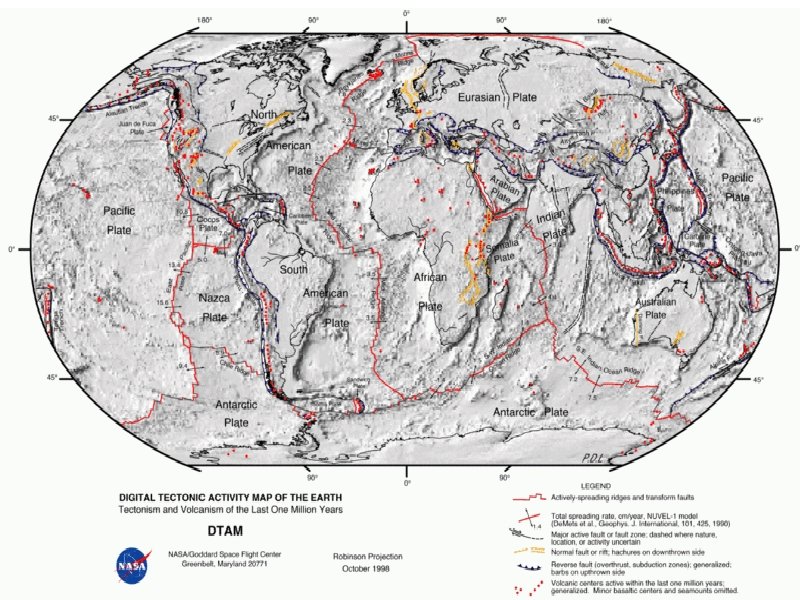
Plate motion based on The Global Positioning System (GPS)
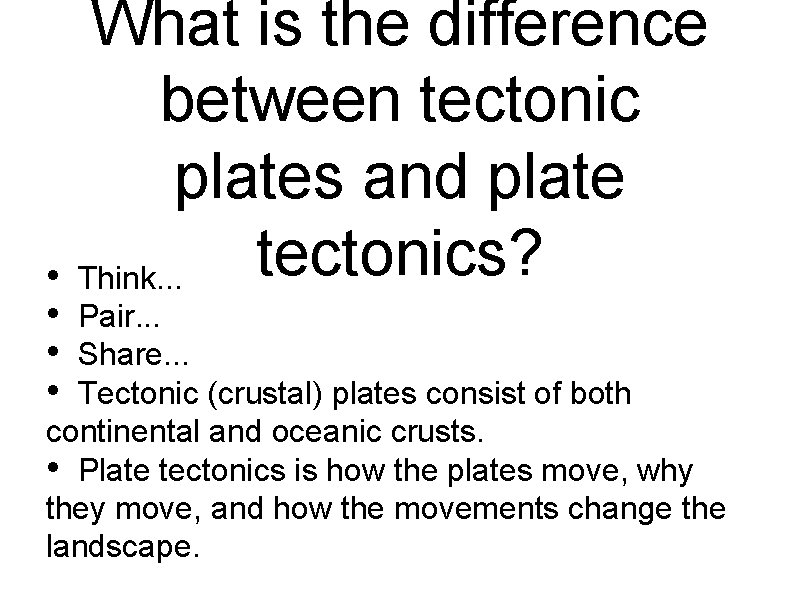
What is the difference between tectonic plates and plate tectonics? • Think. . . • • • Pair. . . Share. . . Tectonic (crustal) plates consist of both continental and oceanic crusts. • Plate tectonics is how the plates move, why they move, and how the movements change the landscape.
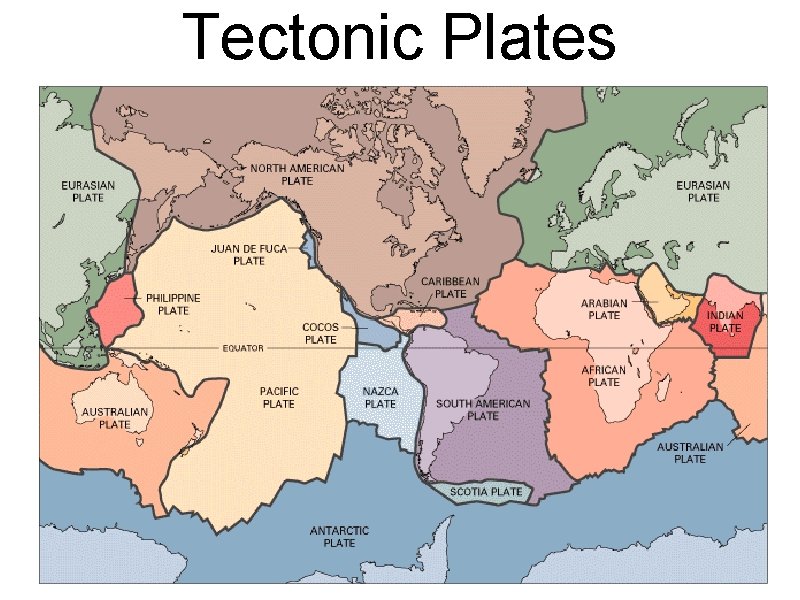
Tectonic Plates
http: //player. discoveryeducation. com/index. cfm? guid. Ass et. Id=D 6 A 4 EE 89 -14 A 7 -432 B-9 D 448 C 6 B 7 FE 3 AD 39&bln. From. Search=1&productcode=US
Big Science Ideas How can the plates move ? What force is great enough to move heavy continents? What is the difference between lithospheric plates and tectonic plates?
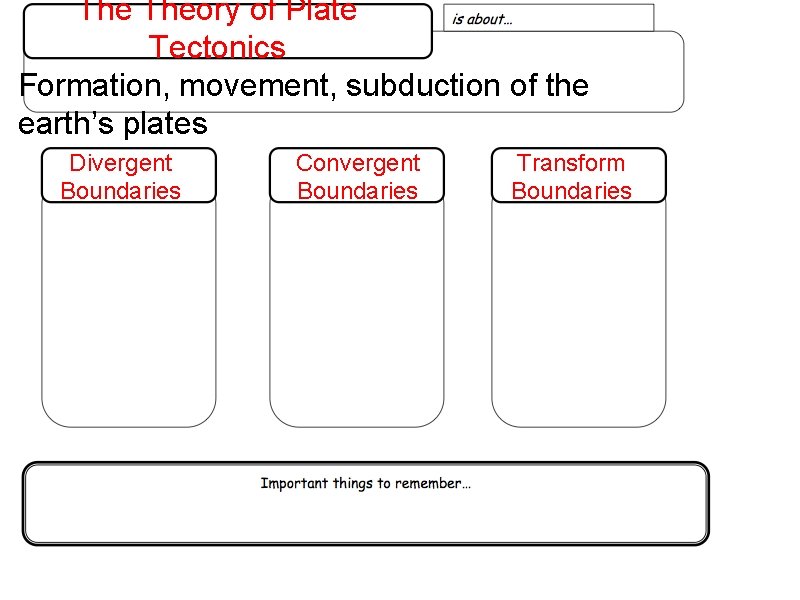
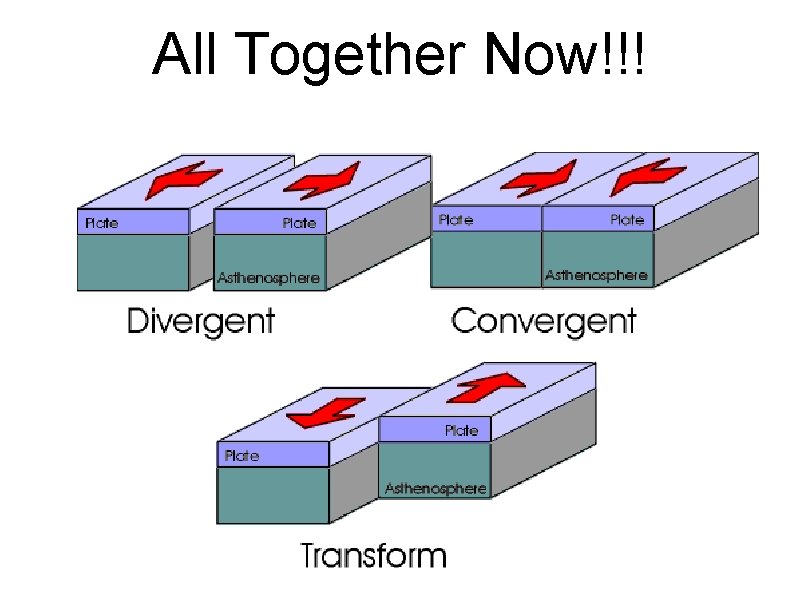
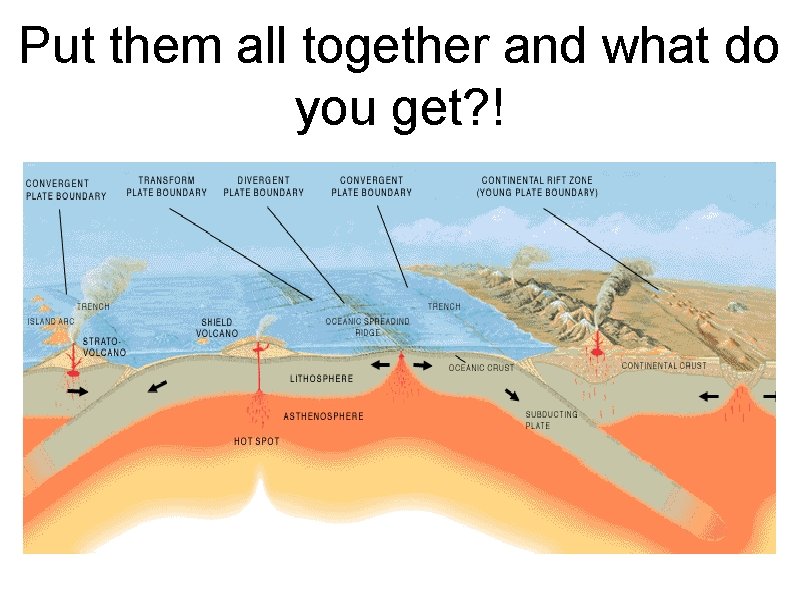
The Theory of Plate Tectonics Formation, movement, subduction of the earth’s plates Divergent Boundaries Convergent Boundaries Transform Boundaries
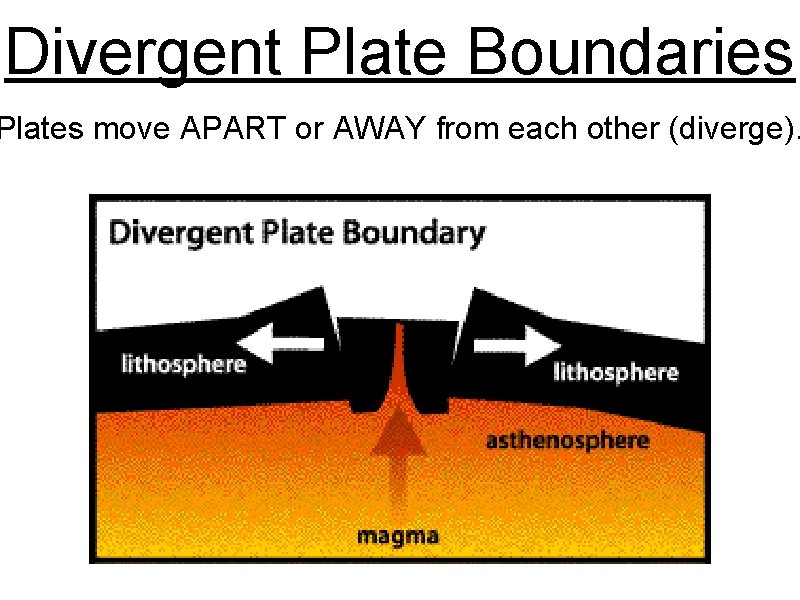
Divergent Plate Boundaries Plates move APART or AWAY from each other (diverge).
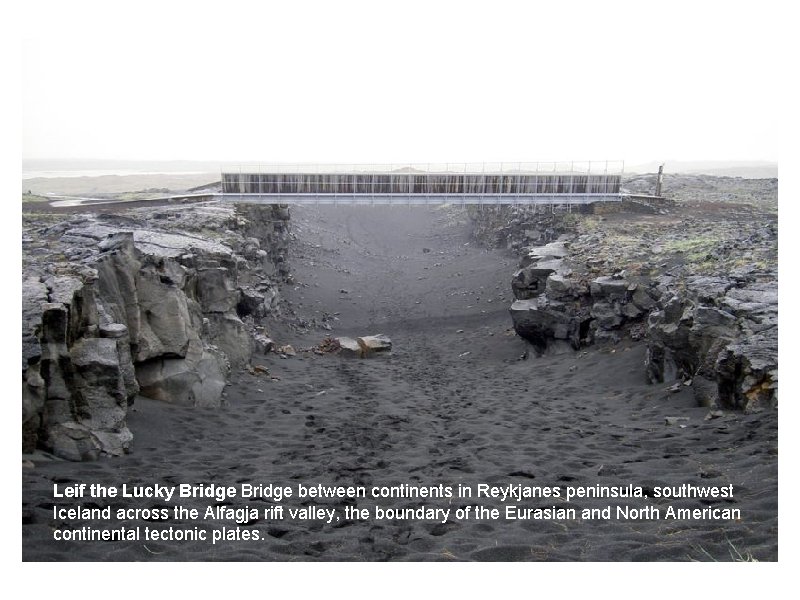
Leif the Lucky Bridge between continents in Reykjanes peninsula, southwest Iceland across the Alfagja rift valley, the boundary of the Eurasian and North American continental tectonic plates.
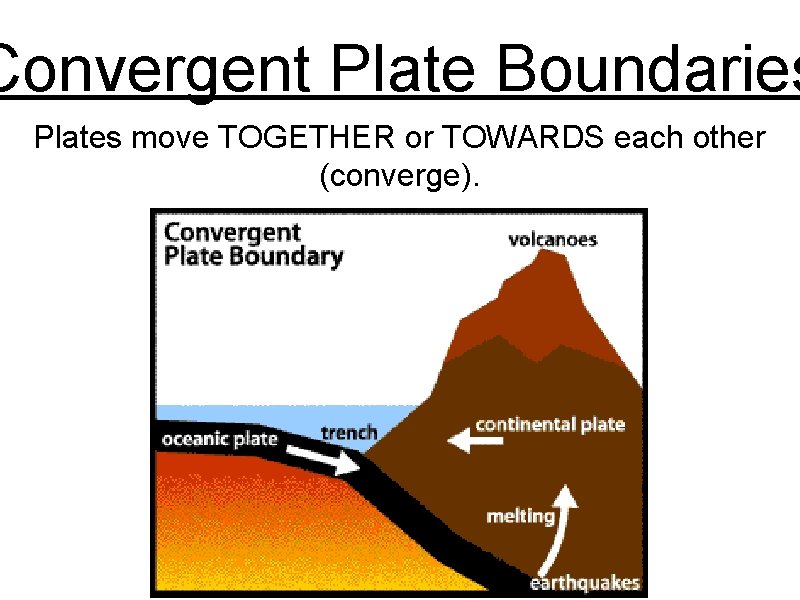
Convergent Plate Boundaries Plates move TOGETHER or TOWARDS each other (converge).
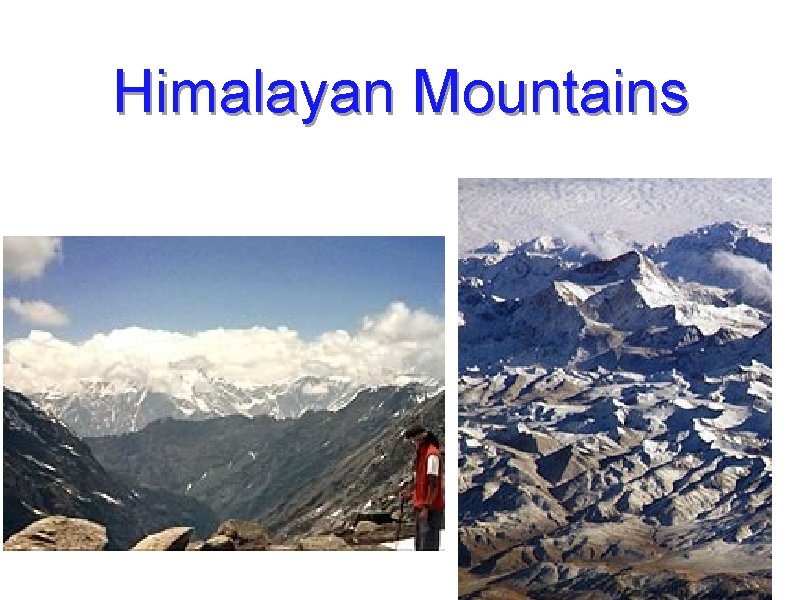
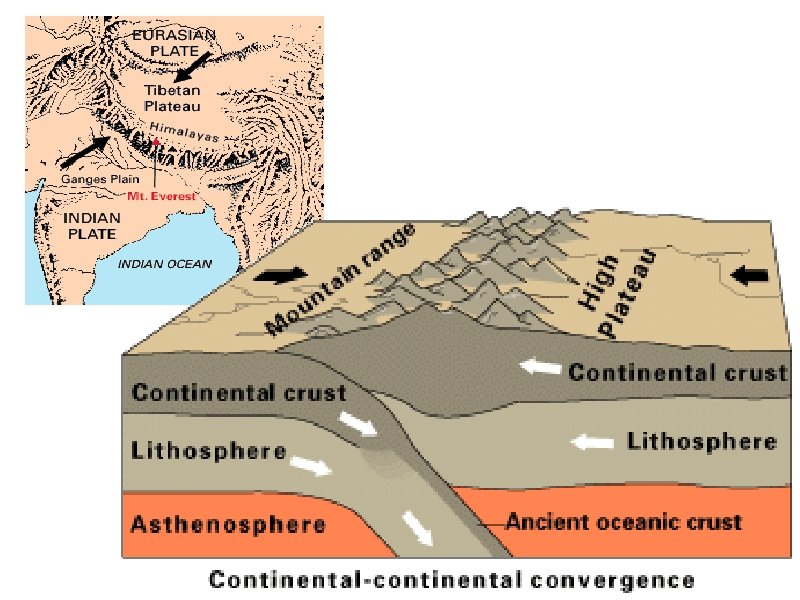
Himalayan Mountains
http: //player. discoveryeducation. com/index. cfm? guid. Ass et. Id=FB 140 E 6 C-8 CFF-4666 -997 C 8 D 1 E 12 CBE 2 ED&bln. From. Search=1&productcode=US
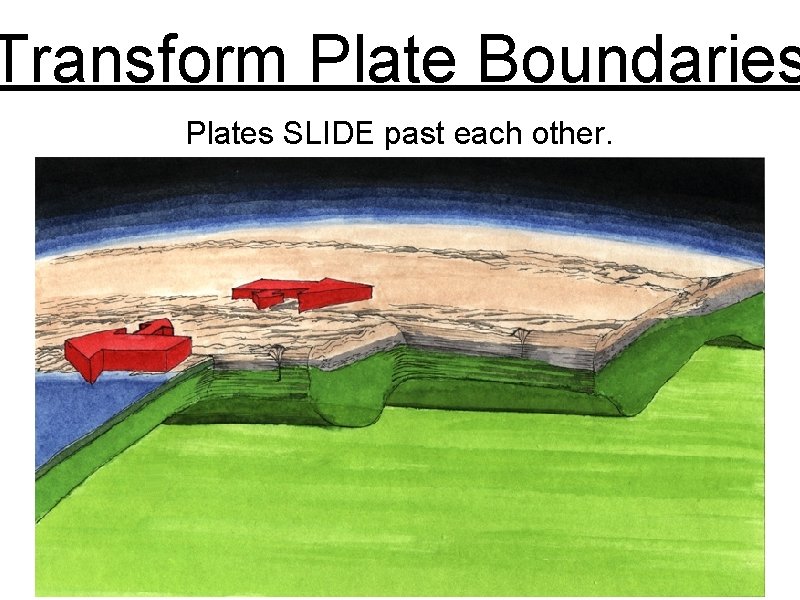
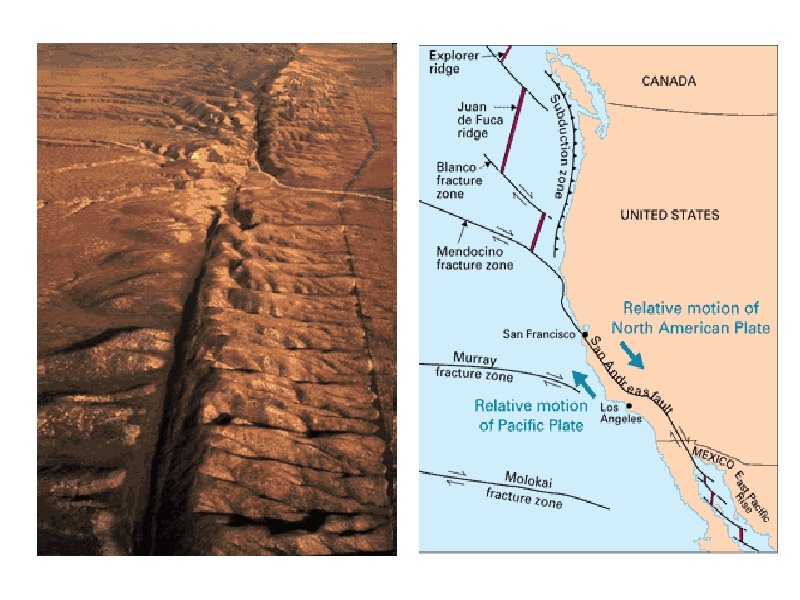
Transform Plate Boundaries Plates SLIDE past each other.
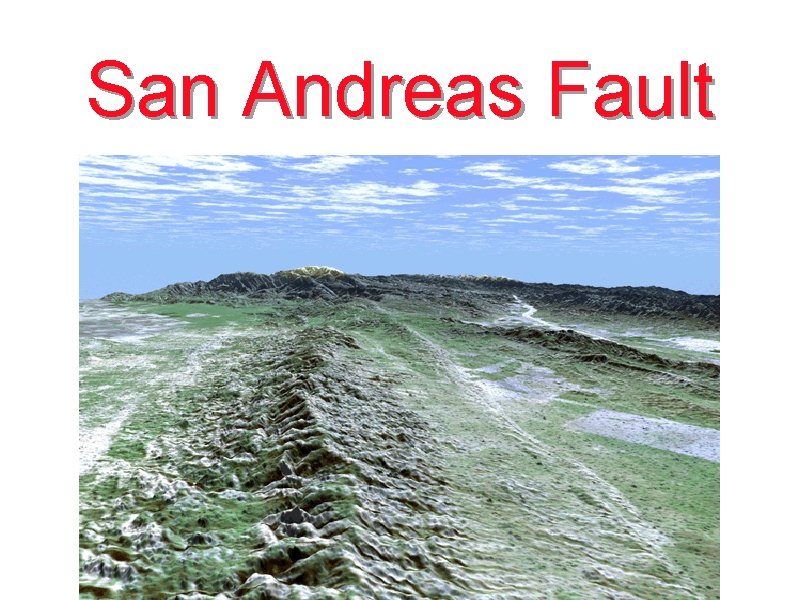
San Andreas Fault
http: //player. discoveryeducation. com/index. cfm? guid. Ass et. Id=975 F 4 C 1 A-0793 -430 D-BAEBDD 86633 B 4 F 4 C&bln. From. Search=1&productcode=US
All Together Now!!!
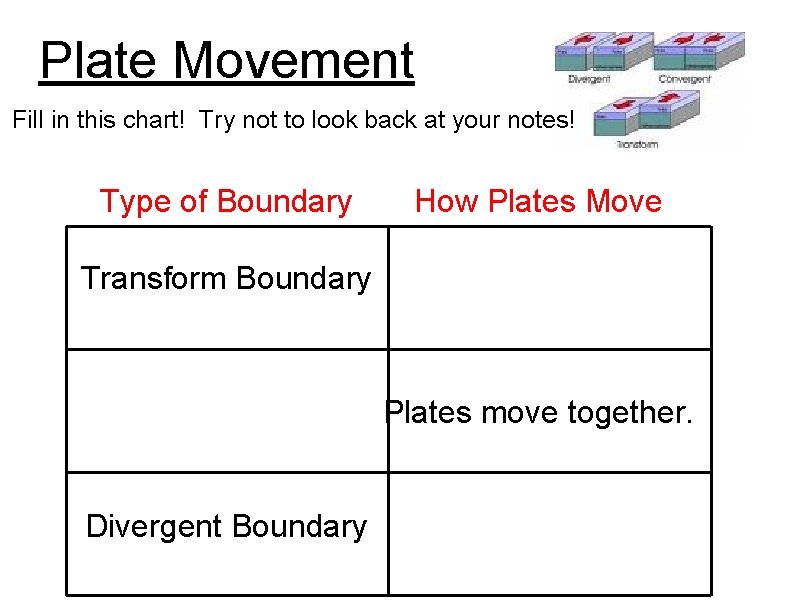
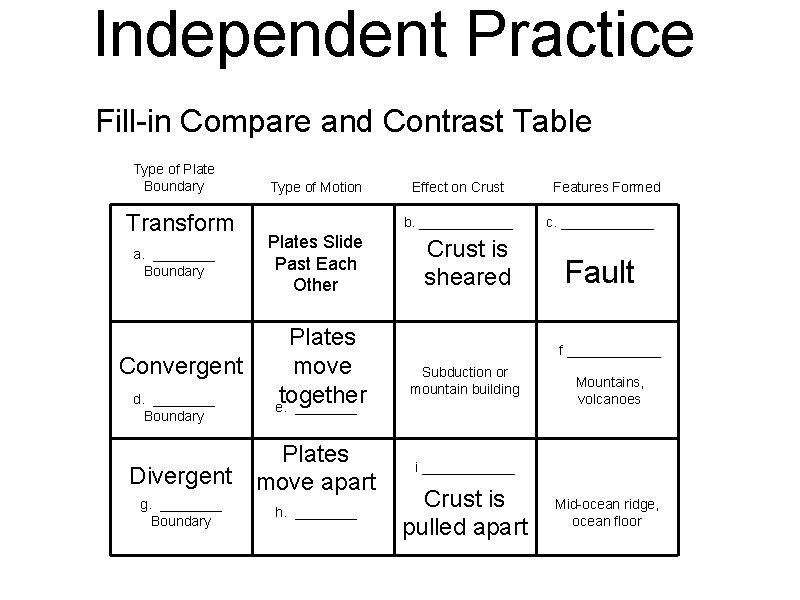
Plate Movement Fill in this chart! Try not to look back at your notes! Type of Boundary How Plates Move Transform Boundary Plates move together. Divergent Boundary
types of plate boundaries depending on the DIRECTION they are moving, and the TYPES OF CRUST that are involved. What do you think this means? !
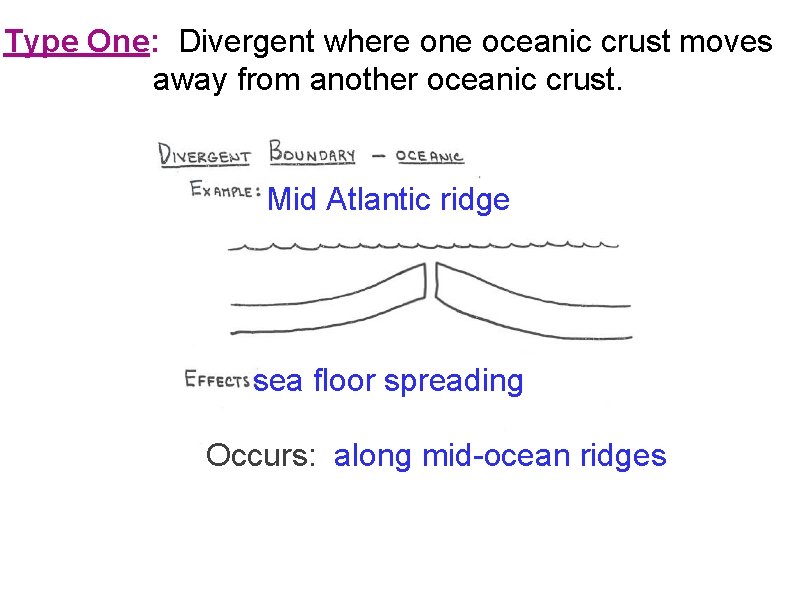
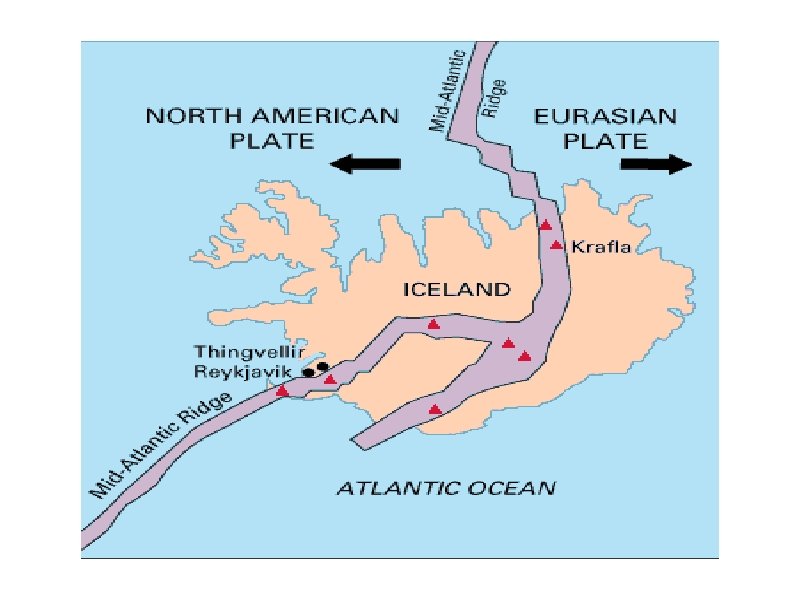
Type One: Divergent where one oceanic crust moves away from another oceanic crust. Mid Atlantic ridge sea floor spreading Occurs: along mid-ocean ridges
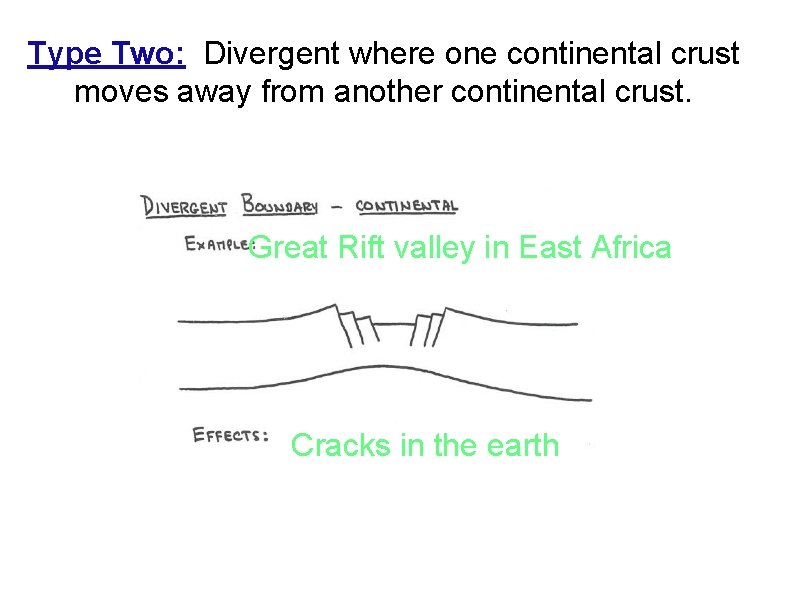
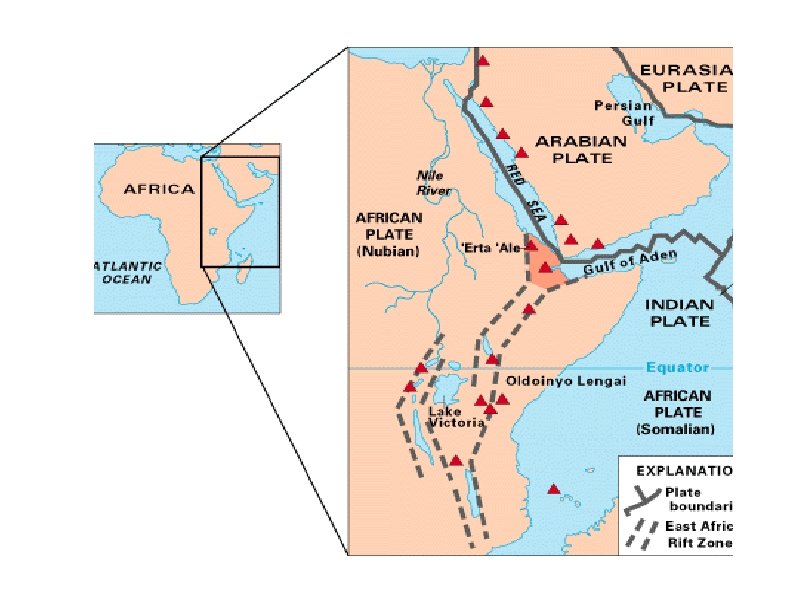
Type Two: Divergent where one continental crust moves away from another continental crust. Great Rift valley in East Africa Cracks in the earth
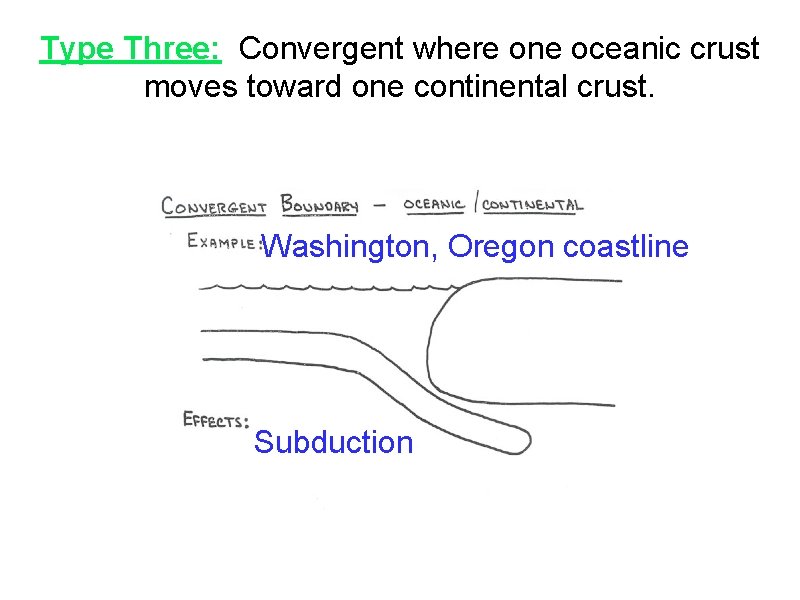
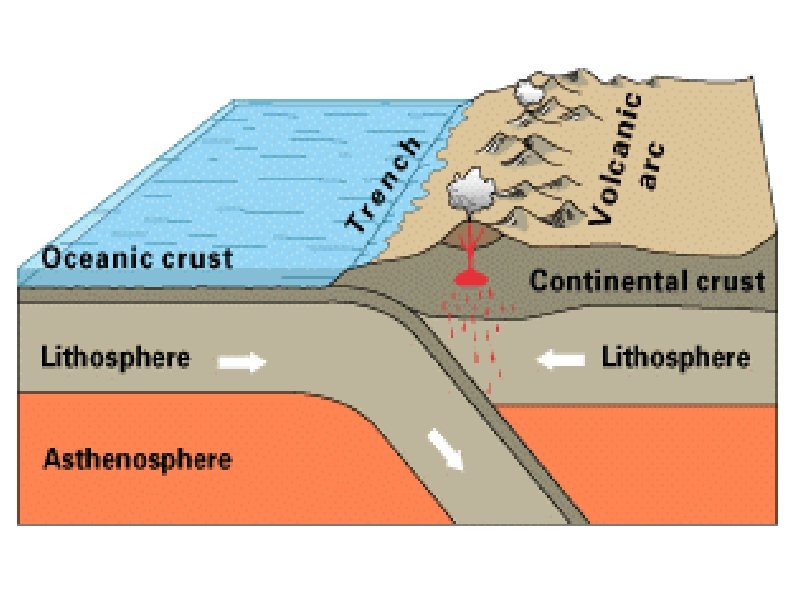
Type Three: Convergent where one oceanic crust moves toward one continental crust. Washington, Oregon coastline Subduction
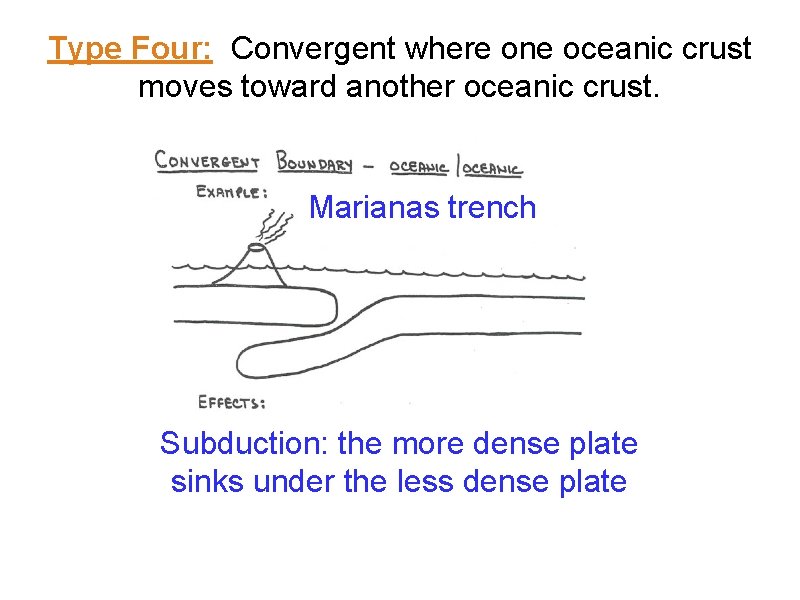
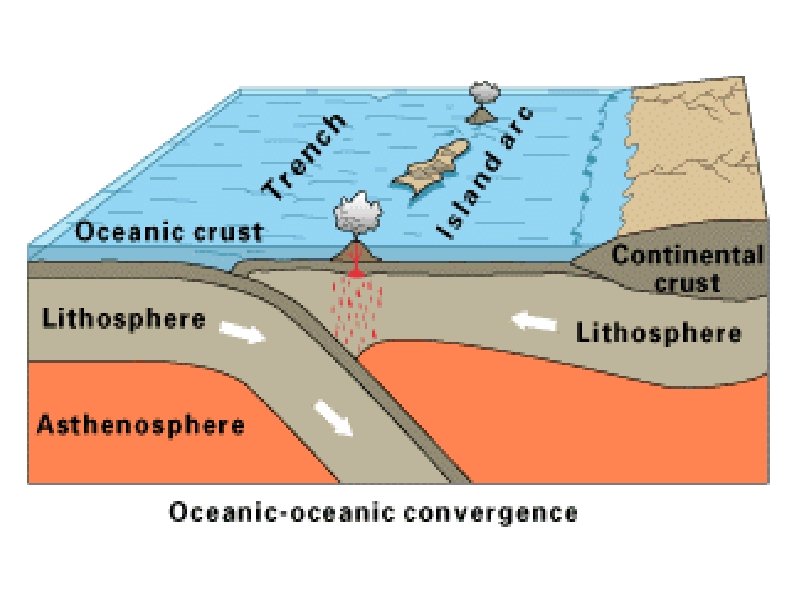
Type Four: Convergent where one oceanic crust moves toward another oceanic crust. Marianas trench Subduction: the more dense plate sinks under the less dense plate
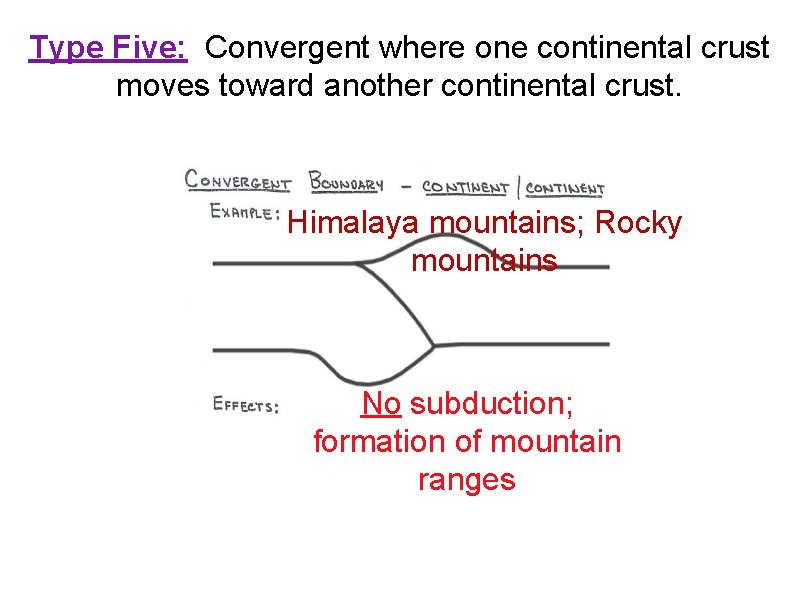
Type Five: Convergent where one continental crust moves toward another continental crust. Himalaya mountains; Rocky mountains No subduction; formation of mountain ranges
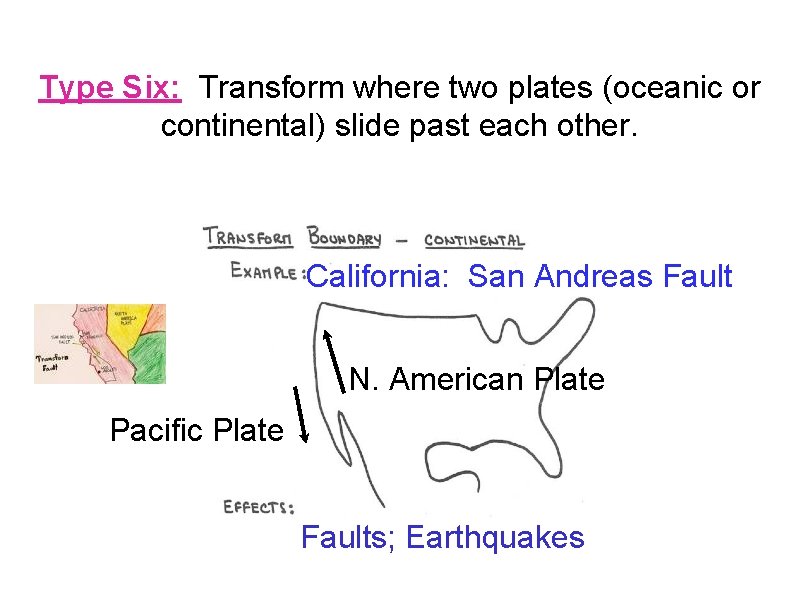
Type Six: Transform where two plates (oceanic or continental) slide past each other. California: San Andreas Fault N. American Plate Pacific Plate Faults; Earthquakes
Put them all together and what do you get? !
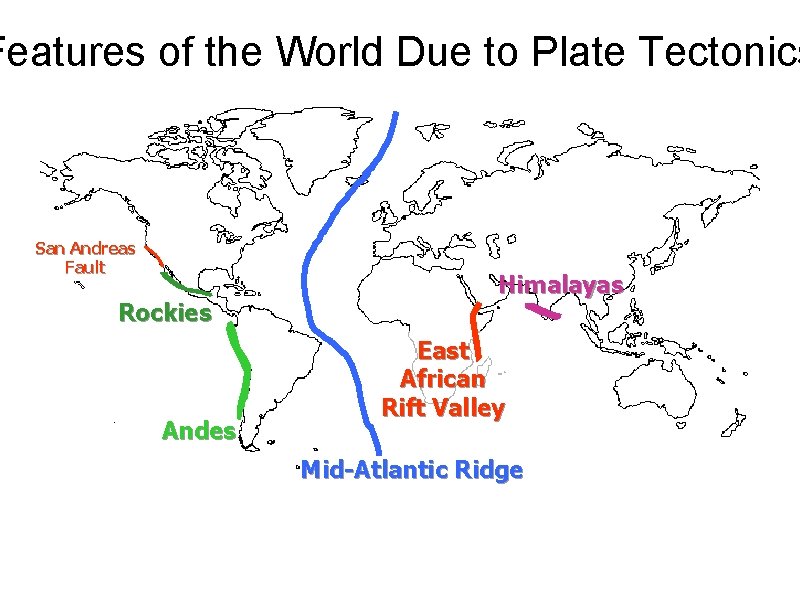
Features of the World Due to Plate Tectonics San Andreas Fault Rockies Andes Himalayas East African Rift Valley Mid-Atlantic Ridge
Independent Practice Fill-in Compare and Contrast Table Type of Plate Boundary Transform a. ____ Boundary Convergent d. ____ Boundary Type of Motion b. ______ Plates Slide Past Each Other Plates move together e. ____ Plates Divergent move apart g. ____ Boundary Effect on Crust h. ____ Crust is sheared Features Formed c. ______ Fault f ______ Subduction or mountain building Mountains, volcanoes i ______ Crust is pulled apart Mid-ocean ridge, ocean floor