
Theory of Media and Information Direct Effect Models




- Slides: 16
Theory of Media and Information
Direct Effect Models • This model assumed that audiences passively accepted media messages and would exhibit predictable reactions in response to those messages. • For example, following the radio broadcast of War of the Worlds in 1938 (which was a fictional news report of an alien invasion), some people panicked and believed the story to be true.
Agenda-Setting Theory • mass media determine the issues that concern the public rather than the public’s views. • Under this theory, the issues that receive the most attention from media become the issues that the public discusses, debates, and demands action on.
Uses and Gratifications Theory • This theory states that consumers use the media to satisfy specific needs or desires. • For example, you may enjoy watching a show like Ang Probinsyano while simultaneously tweeting about it on Twitter with your friends. Many people use the Internet to seek out entertainment, to find information, to communicate with like-minded individuals, or to pursue self-expression.
Symbolic Interactionism • states that the self is derived from and develops through human interaction. This means the way you act toward someone or something is based on the meaning you have for a person or thing. • Use of Symbols
Spiral of Silence • states that those who hold a minority opinion silence themselves to prevent social isolation, explains the role of mass media in the formation and maintenance of dominant opinions.
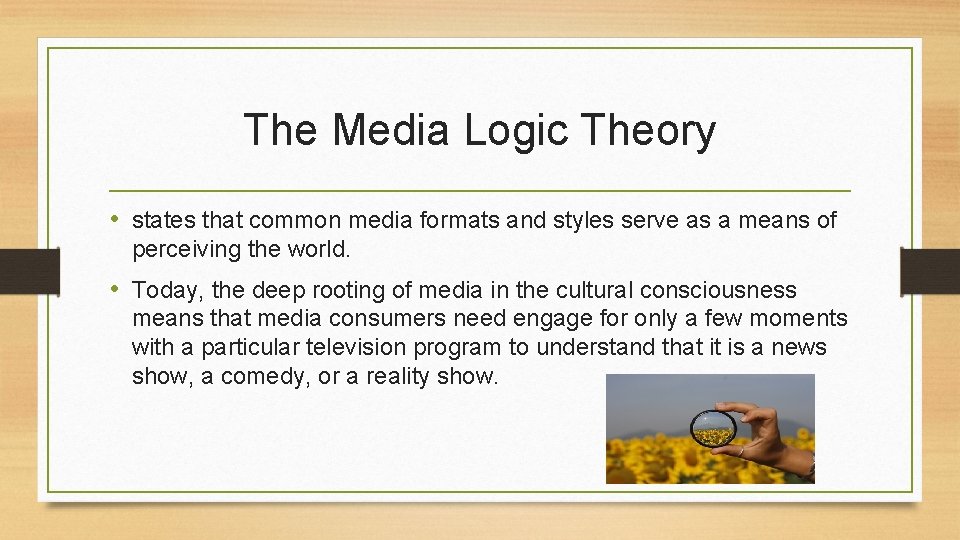
The Media Logic Theory • states that common media formats and styles serve as a means of perceiving the world. • Today, the deep rooting of media in the cultural consciousness means that media consumers need engage for only a few moments with a particular television program to understand that it is a news show, a comedy, or a reality show.
Cultivation Analysis Theory • states that heavy exposure to media causes individuals to develop an illusory perception of reality based on the most repetitive and consistent messages of a particular medium.
Summary • The now largely discredited direct effects model of media studies assumes that media audiences passively accept media messages and exhibit predictable reactions in response to those messages. • Credible media theories generally do not give as much power to the media, such as the agenda-setting theory, or give a more active role to the media consumer, such as the uses and gratifications theory.
Summary • Other theories focus on specific aspects of media influence, such as the spiral of silence theory’s focus on the power of the majority opinion or the symbolic interactionism theory’s exploration of shared cultural symbolism. • Media logic and cultivation analysis theories deal with how media consumers’ perceptions of reality can be influenced by media messages.