
Theory of Government Conservative vs Liberal Conservative suspicious
Theory of Government
Conservative vs. Liberal • Conservative – suspicious of change, favor traditional methods • Tends to describe Republican Party • Liberal – embrace change, favor newer, “progressive” methods • Tends to describe Democratic Party
Role of Federal Government Democrats Republicans • Favor strong federal government • “Party of government” – look to government to solve national problems • Example: Affordable Care Act (Obamacare) • Want to limit size of federal government • “Party of Federalism/States Rights” – believe most problems best handled at state or local level • Oppose Obamacare
Taxes Democrats Republicans • Favor tax cuts for poor, raising taxes for the wealthy • Taxes fund programs that stimulate the economy and create jobs • Example: Free 2 -year Junior College Education • Favor broad based tax cuts • Less taxes = more money for people to spend on what they want = stimulate economy and create jobs • Oppose government “handouts” in favor of personal choice
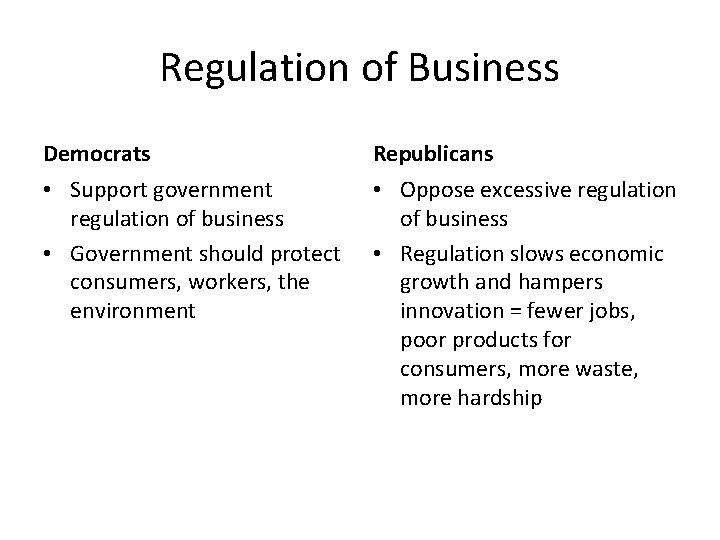
Regulation of Business Democrats Republicans • Support government regulation of business • Government should protect consumers, workers, the environment • Oppose excessive regulation of business • Regulation slows economic growth and hampers innovation = fewer jobs, poor products for consumers, more waste, more hardship
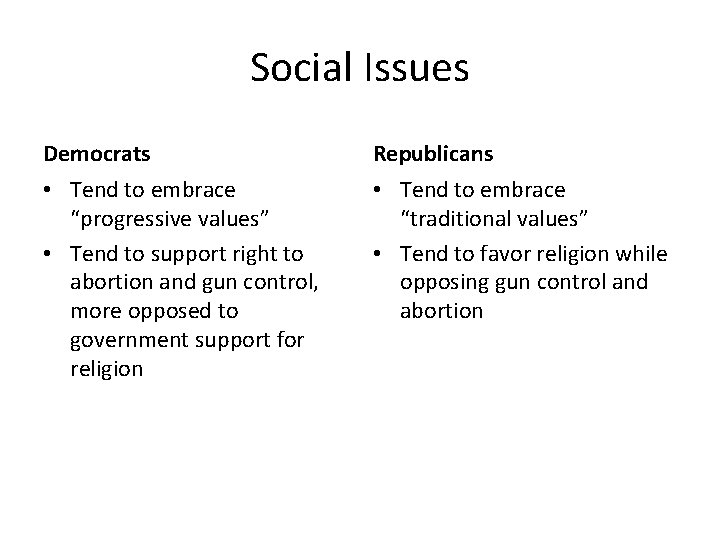
Social Issues Democrats Republicans • Tend to embrace “progressive values” • Tend to support right to abortion and gun control, more opposed to government support for religion • Tend to embrace “traditional values” • Tend to favor religion while opposing gun control and abortion
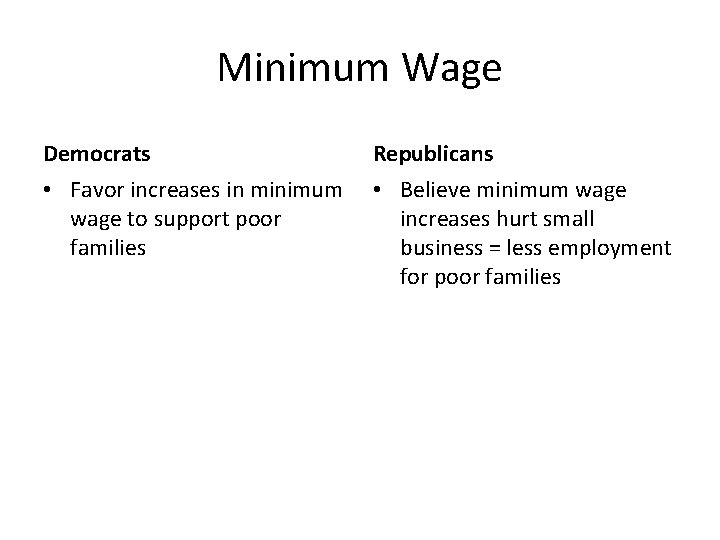
Minimum Wage Democrats Republicans • Favor increases in minimum wage to support poor families • Believe minimum wage increases hurt small business = less employment for poor families
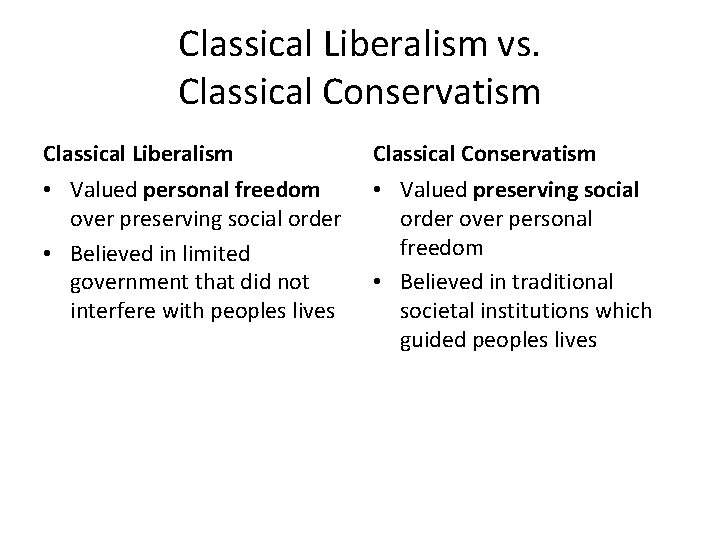
Classical Liberalism vs. Classical Conservatism Classical Liberalism Classical Conservatism • Valued personal freedom over preserving social order • Believed in limited government that did not interfere with peoples lives • Valued preserving social order over personal freedom • Believed in traditional societal institutions which guided peoples lives
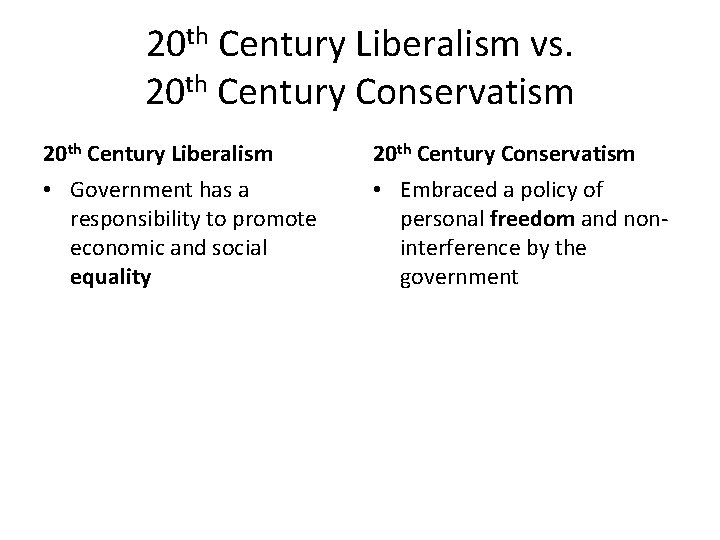
20 th Century Liberalism vs. 20 th Century Conservatism 20 th Century Liberalism 20 th Century Conservatism • Government has a responsibility to promote economic and social equality • Embraced a policy of personal freedom and noninterference by the government
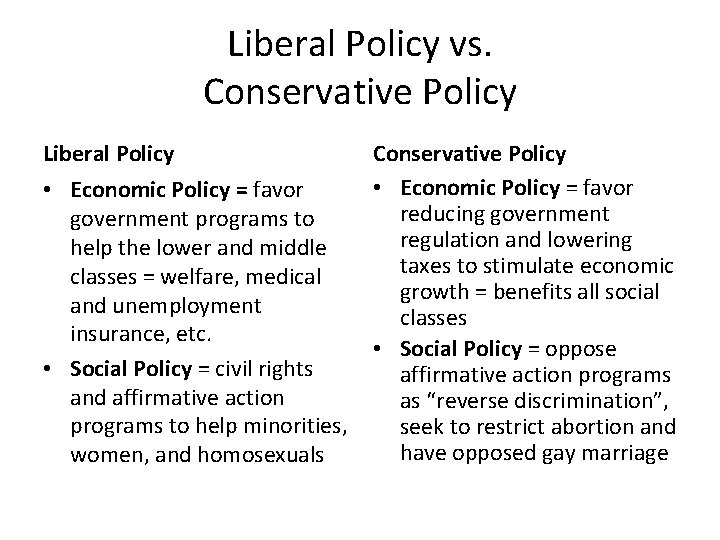
Liberal Policy vs. Conservative Policy Liberal Policy • Economic Policy = favor government programs to help the lower and middle classes = welfare, medical and unemployment insurance, etc. • Social Policy = civil rights and affirmative action programs to help minorities, women, and homosexuals Conservative Policy • Economic Policy = favor reducing government regulation and lowering taxes to stimulate economic growth = benefits all social classes • Social Policy = oppose affirmative action programs as “reverse discrimination”, seek to restrict abortion and have opposed gay marriage
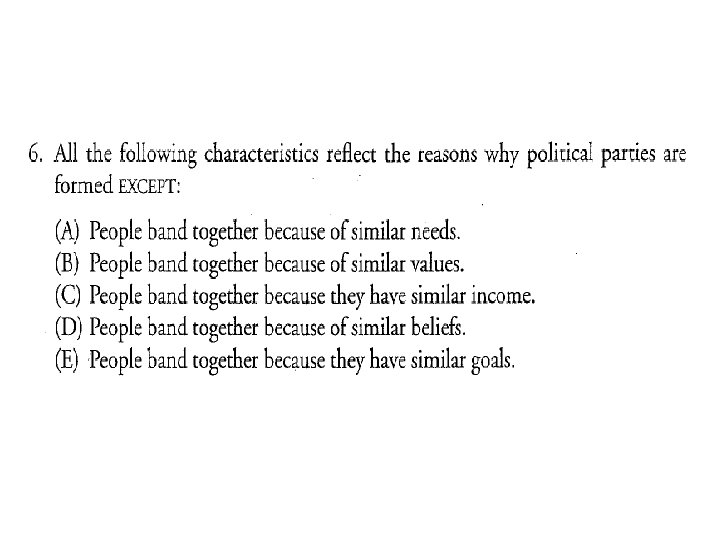
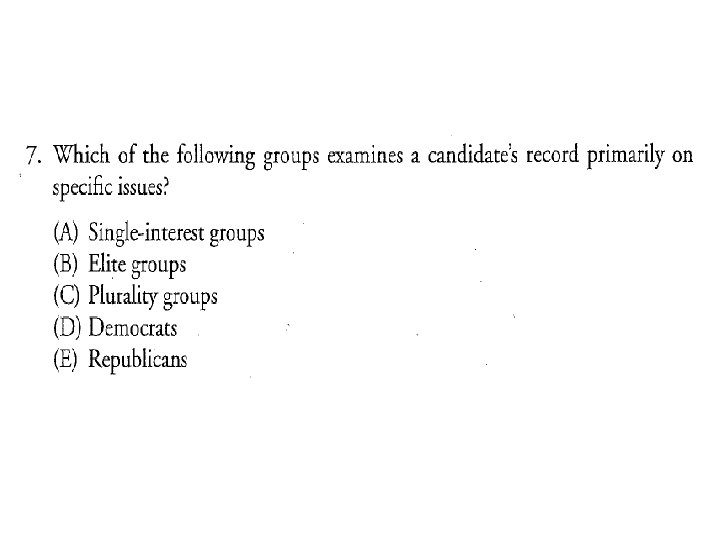
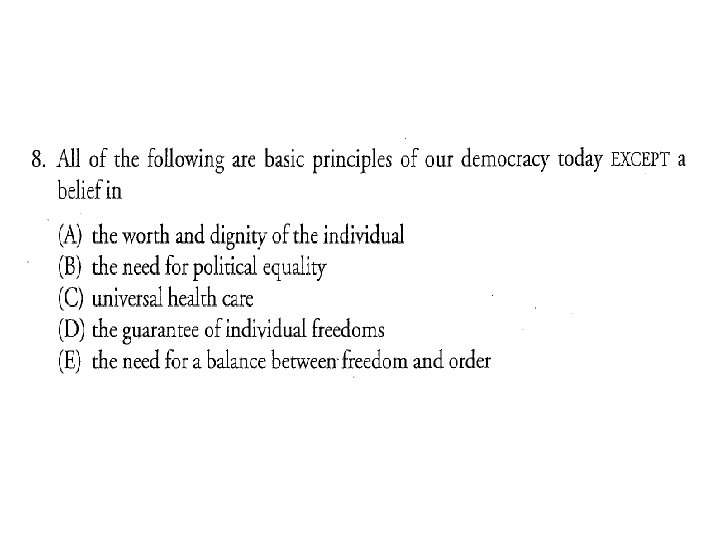
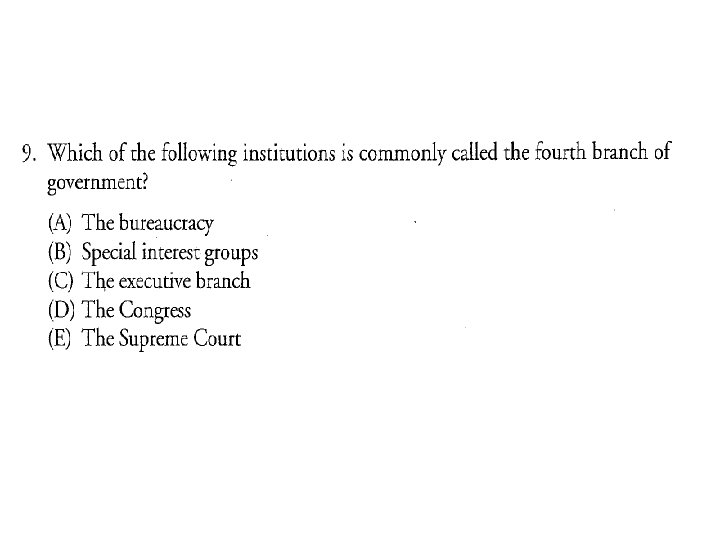
Section I MULTIPLE CHOICE
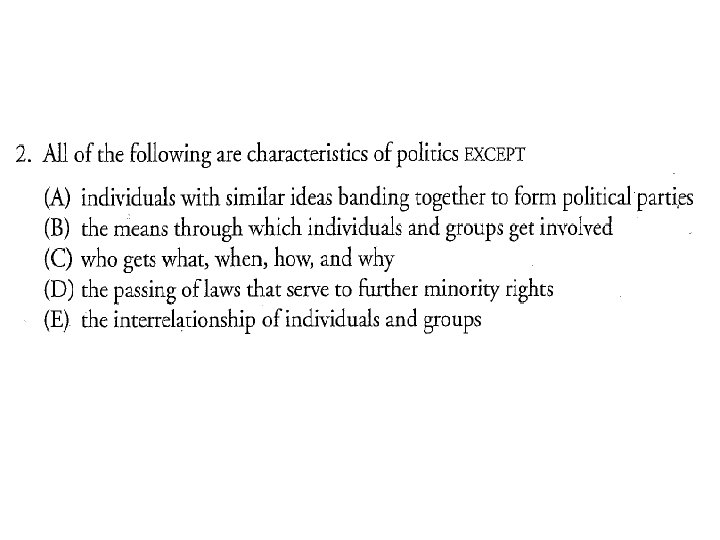
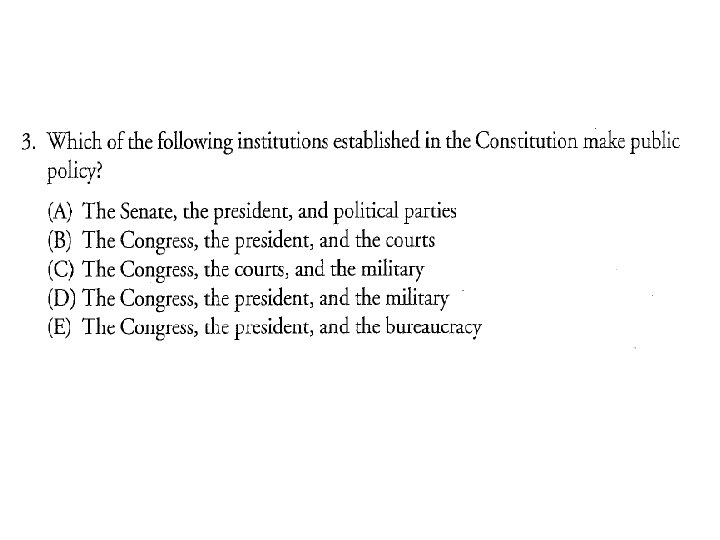
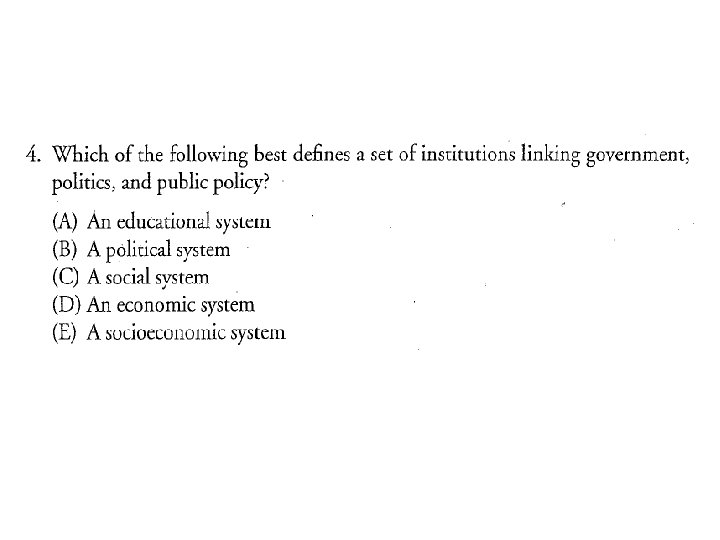
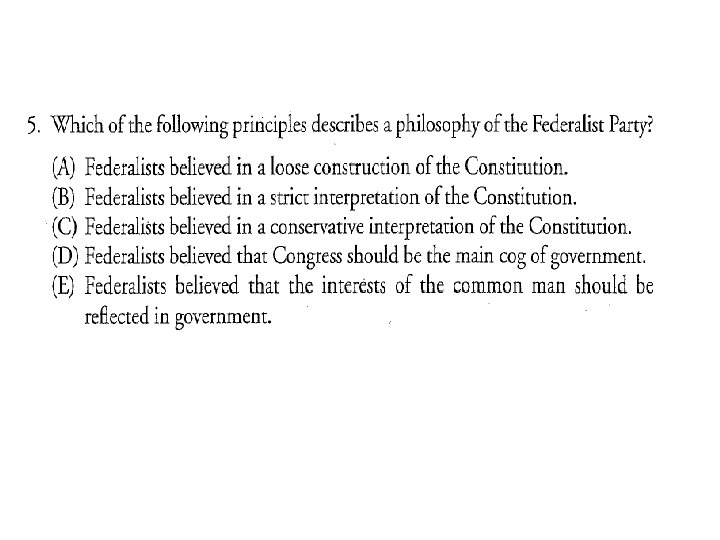
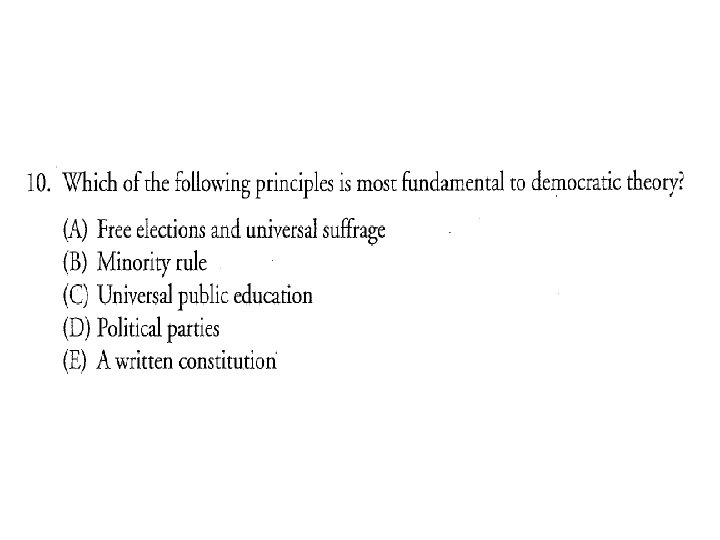
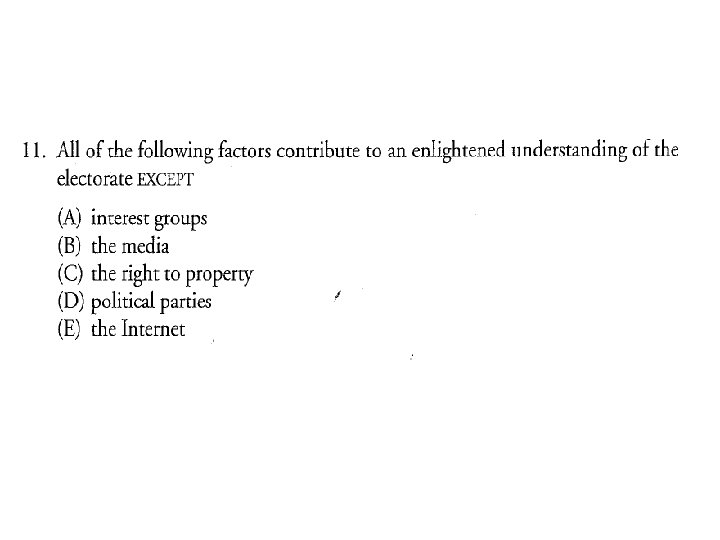
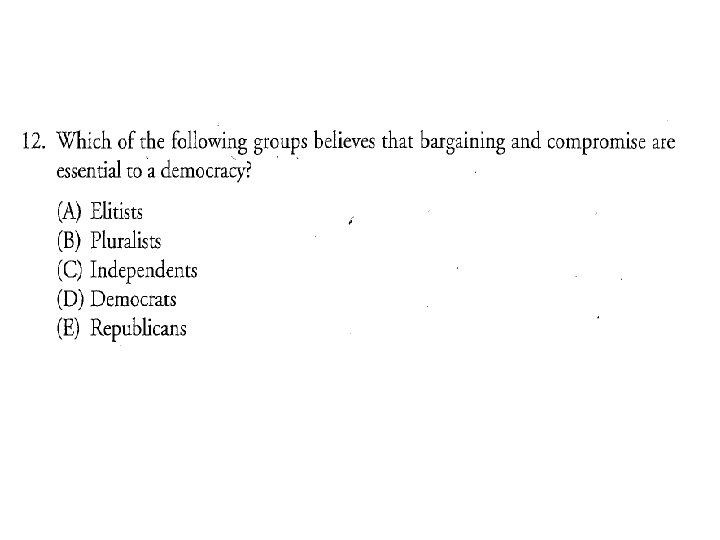
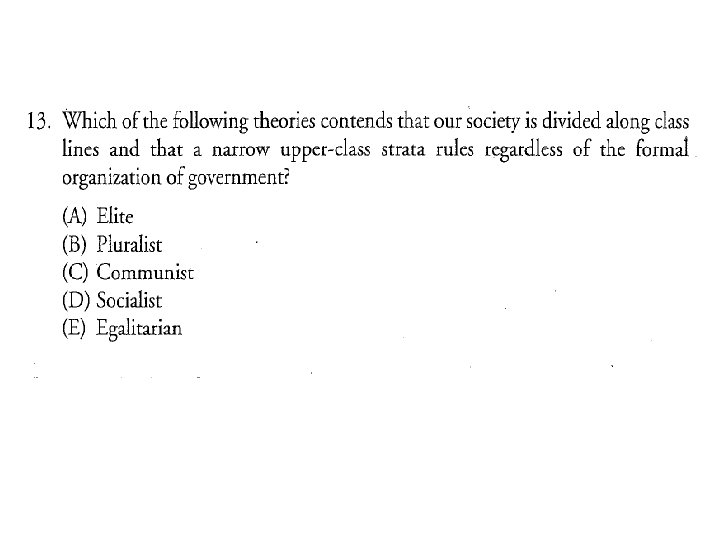
Homework for Tonight • Reread Chapter 1 • Turn in at least 2 pages of notes, including definitions of the 16 key terms (you can include them in your notes) • Pages 35 – 43 • May be submitted electronically to: bpierotte 3@gmail. com
- Slides: 25