
Theory of Flight Stability 1 X 35 min
Theory of Flight: Stability 1 X 35 min CV Peters
Outline ● ● ● Longitudinal Stability Lateral Stability Directional Stability Positive, Negative and Neutral Stability Inherent Instability Centre of Gravity Limits
Stability ● Static Stability ● The initial tendency of an aircraft, when disturbed, to return to its original position ● Dynamic Stability ● The overall tendency of an aircraft, when disturbed, to return to its original position
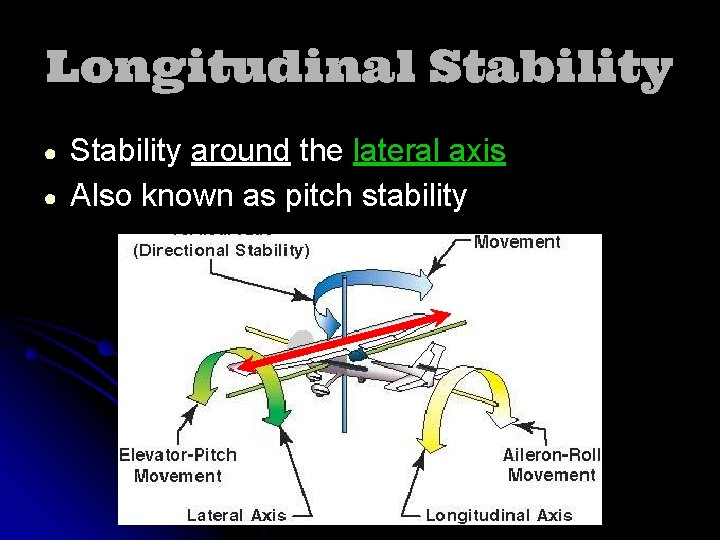
Longitudinal Stability ● ● Stability around the lateral axis Also known as pitch stability
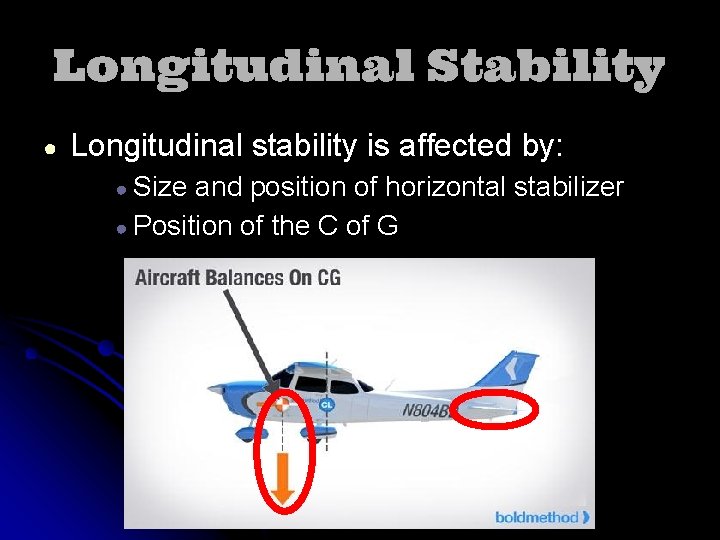
Longitudinal Stability ● Longitudinal stability is affected by: ● Size and position of horizontal stabilizer ● Position of the C of G

Lateral Stability ● ● Stability around the longitudinal axis Also known as roll stability
Lateral Stability ● Lateral stability is affected by: ● Dihedral ● The angle that each wing makes with the horizontal of the aircraft ● The lowered wing will produce more lift and will roll back into place
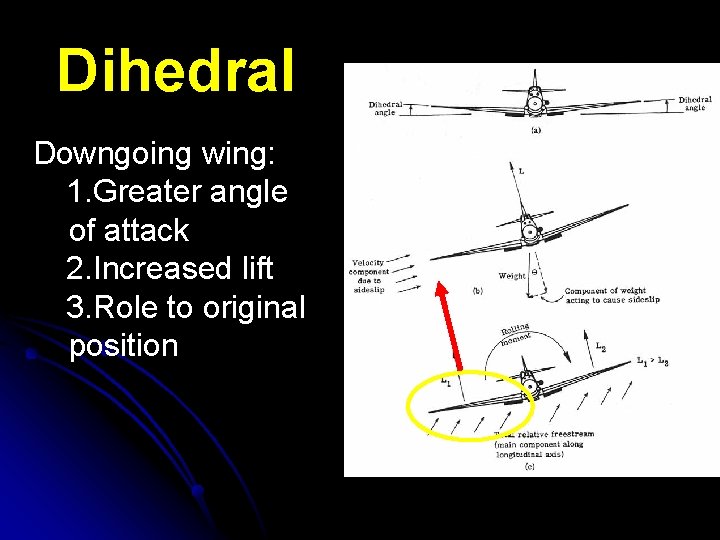
Dihedral Downgoing wing: 1. Greater angle of attack 2. Increased lift 3. Role to original position
Lateral Stability ● Lateral stability is affected by: ● Sweepback ● Leading edge of the wing slopes backward ● When one wing is more forward, it produces more lift and drag, it slows and returns to original position
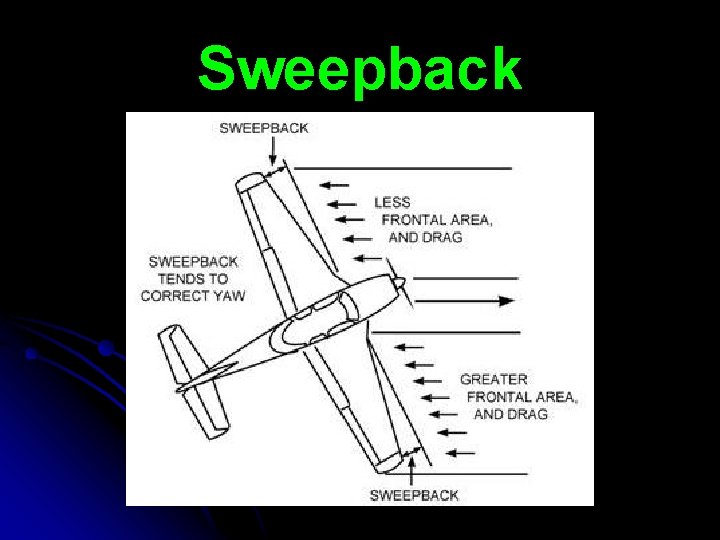
Sweepback
Lateral Stability ● Keel Effect ● Natural feature of high wing aircraft ● Weight of the aircraft lies under the wings ● When disturbed, weight of the aircraft acts like a pendulum to swing aircraft back into position
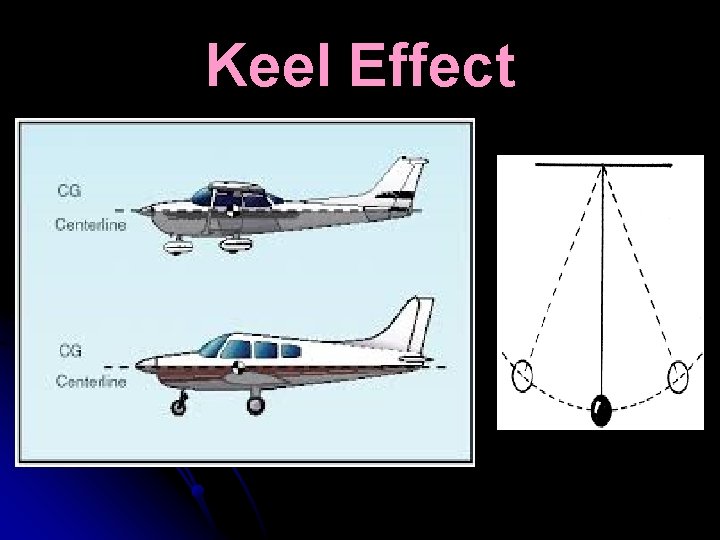
Keel Effect
Lateral Stability ● Proper Weight Distribution ● Ensuring fuel is equal in both wings ● Ensuring plane is loaded properly
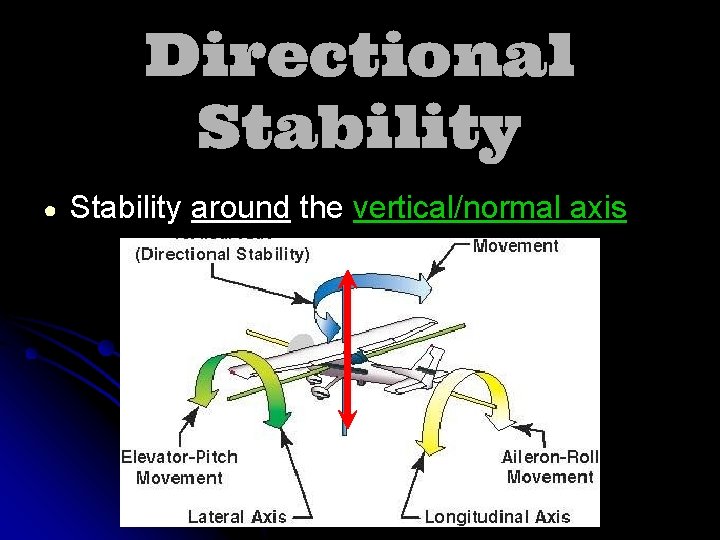
Directional Stability ● Stability around the vertical/normal axis
Directional Stability ● Vertical Tail Surface ● Airplanes have a tendency to fly directly into wind due to the vertical tail surface ● When disturbed from this, wind will hit the side of the vertical tail surface and push it back into the original position
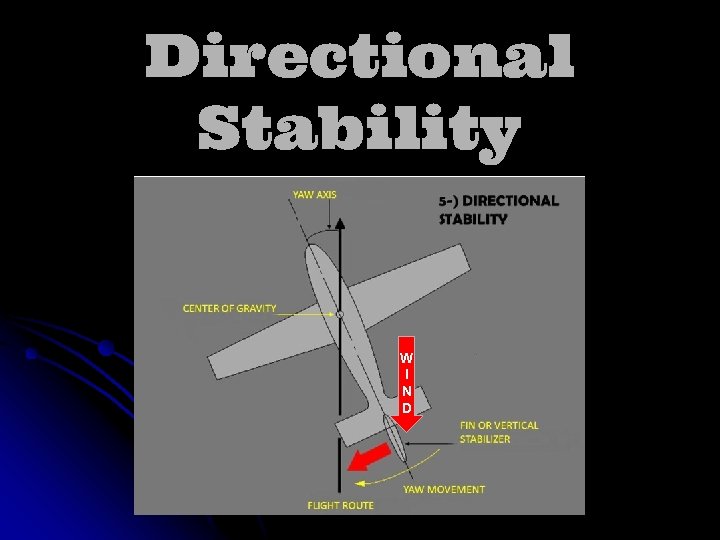
Directional Stability W I N D
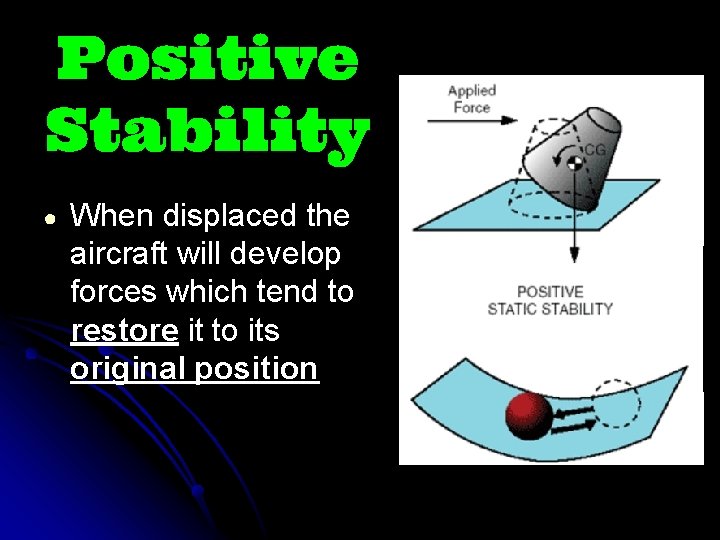
Positive Stability ● When displaced the aircraft will develop forces which tend to restore it to its original position
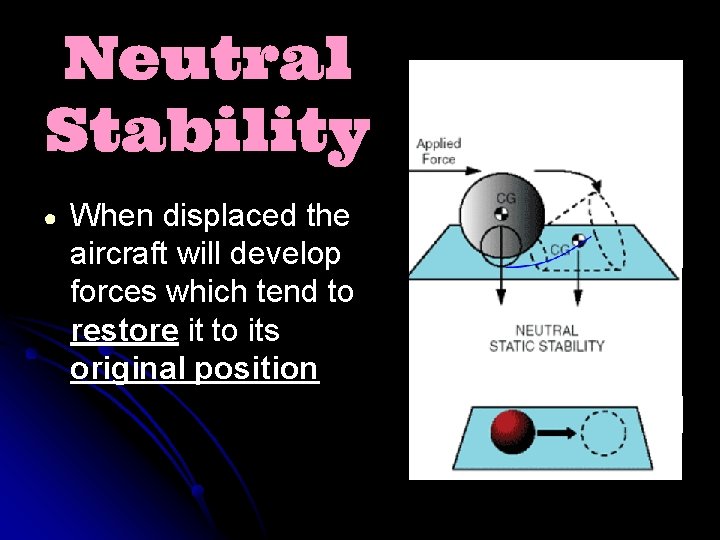
Neutral Stability ● When displaced the aircraft will develop forces which tend to restore it to its original position
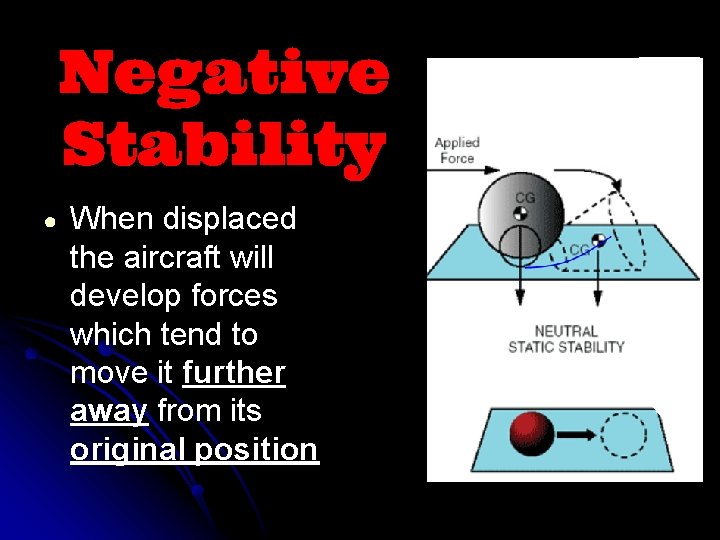
Negative Stability ● When displaced the aircraft will develop forces which tend to move it further away from its original position
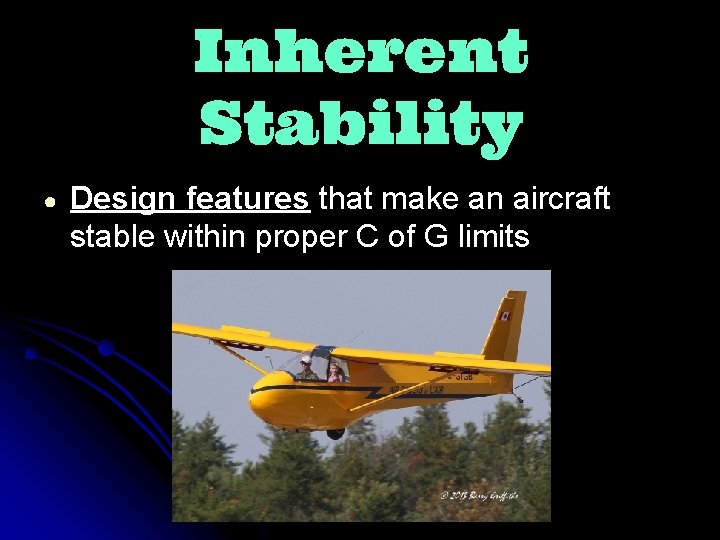
Inherent Stability ● Design features that make an aircraft stable within proper C of G limits
Centre of Gravity Limits ● C of G too far forward ● Loading on the horizontal tail surfaces increase because of increased angle of attack ● Overall weight of aircraft increases ● Stall speed increases
Centre of Gravity Limits ● C of G too far aft ● Decreased longitudinal stability because centre of gravity is behind the centre of pressure ● Violent stall characteristics ● Poor stall recovery (very dangerous!) ● Stall speed decreases
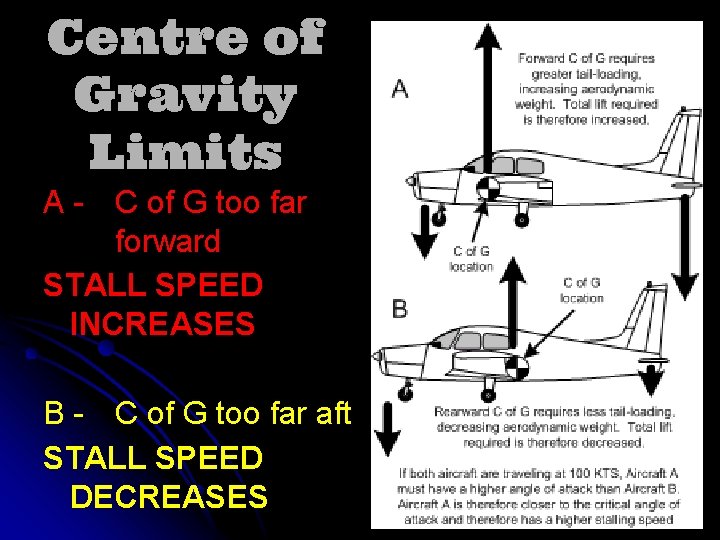
Centre of Gravity Limits A - C of G too far forward STALL SPEED INCREASES B - C of G too far aft STALL SPEED DECREASES
Is it better to have your stall speed increase or decrease? It is better to have a decreased stall speed WHY?
Example ● ● Normal operating speed = 50 mph – 70 mph Normal stall speed = 48 mph Decreased stall speed = 45 mph Increased stall speed = 51 mph The new increased stall speed, is now within normal operating speed limitations �� This means the aircraft will stall earlier and easier than normal because it must produce more lift due to the forward C of G
Please note… ● It is the pilots responsibility to ensure the airplane is loaded within the C of G limits! ● Forward and aft C of G situations are both dangerous!

Confirmation Check
What is dihedral? ● The angle that each wing makes with the horizontal of the aircraft ● The lowered wing will produce more lift and will roll back into place
What is positive stability? ● When displaced the aircraft will develop forces which tend to restore it to its original position
What is directional stability? ● Stability around the vertical/normal axis
What happens when the centre of gravity is too far forward? ● Loading on the horizontal tail surfaces increase because of increased angle of attack ● Overall weight of aircraft increases ● Stall speed increases
What have we learned today? ● ● ● Longitudinal Stability Lateral Stability Directional Stability Positive, Negative and Neutral Stability Inherent Instability Centre of Gravity Limits
- Slides: 32