
Theory of Flight 6 05 Lift and Drag


- Slides: 29
Theory of Flight 6. 05 Lift and Drag References: Transport Canada Study and Reference Guide Glider Pilot FTGU pages 91 -98
Review 1. Name the 4 forces acting on an aircraft. 2. What are Newton’s 3 laws? 3. Is an aircraft considered to be in a state of equilibrium when it is on the ground.
6. 05 Lift & Drag • MTPs: – Bernoulli’s Principle- how lift is created – Airfoil terms – Angle of attack versus lift – Angle of Incidence – Types of airfoils – Types of Drag – Wingtip Vortices – Streamlining
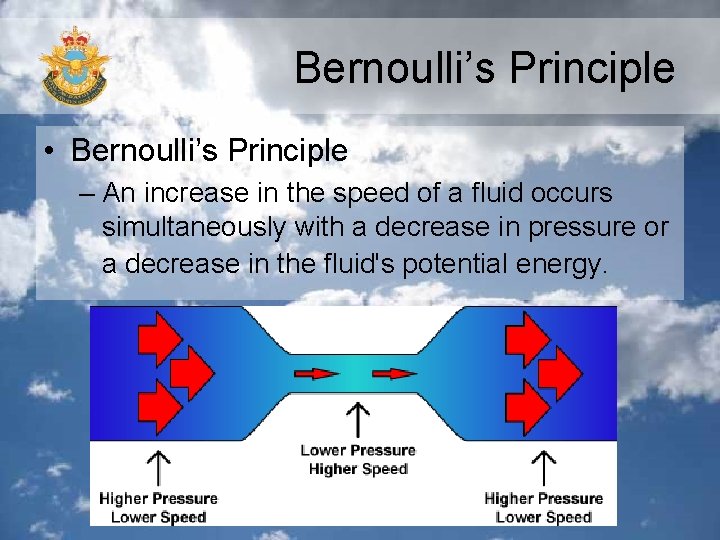
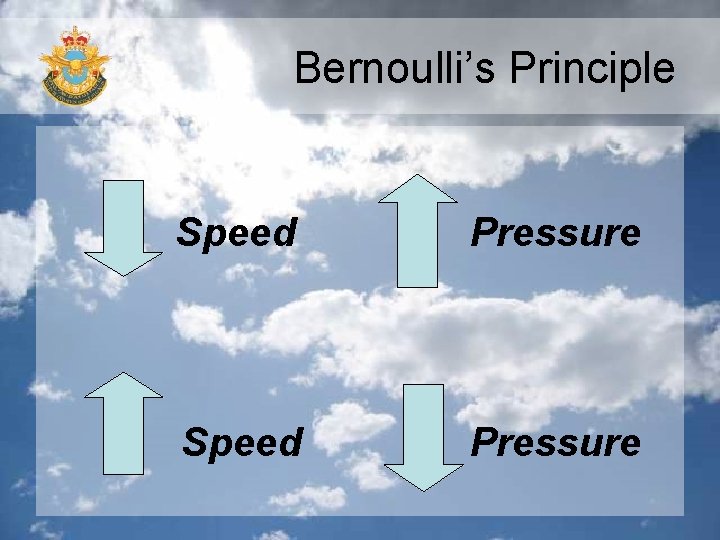
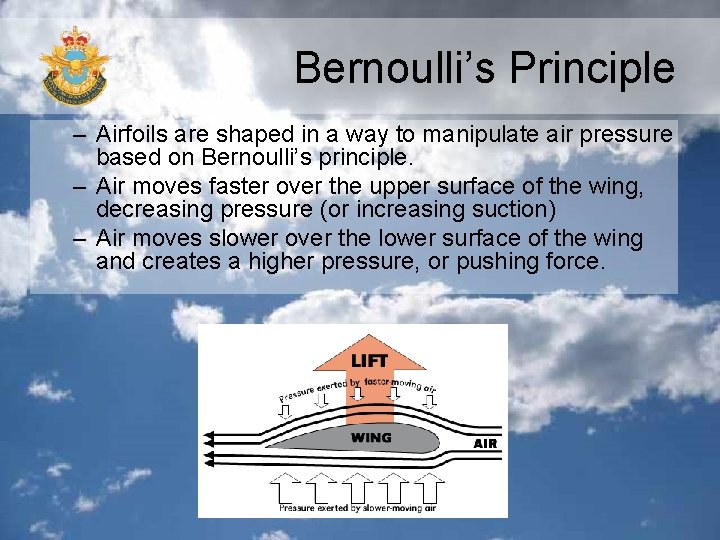
Bernoulli’s Principle • Bernoulli’s Principle – An increase in the speed of a fluid occurs simultaneously with a decrease in pressure or a decrease in the fluid's potential energy.
Bernoulli’s Principle Speed Pressure
Bernoulli’s Principle – Airfoils are shaped in a way to manipulate air pressure based on Bernoulli’s principle. – Air moves faster over the upper surface of the wing, decreasing pressure (or increasing suction) – Air moves slower over the lower surface of the wing and creates a higher pressure, or pushing force.
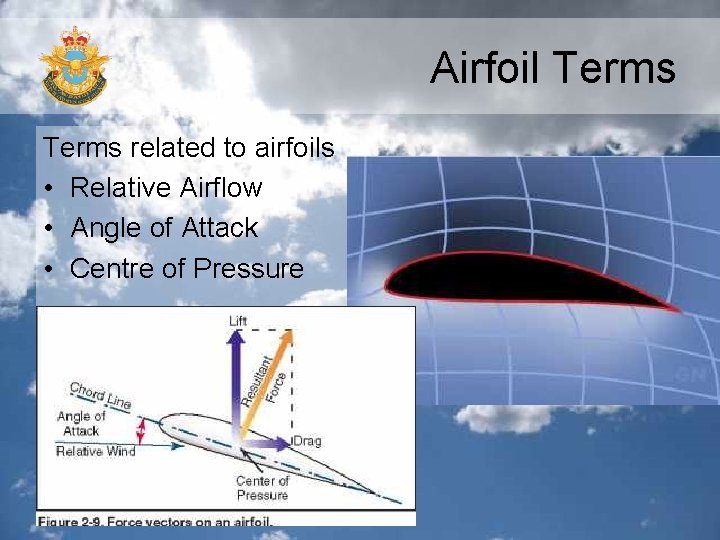
Airfoil Terms related to airfoils • Relative Airflow • Angle of Attack • Centre of Pressure
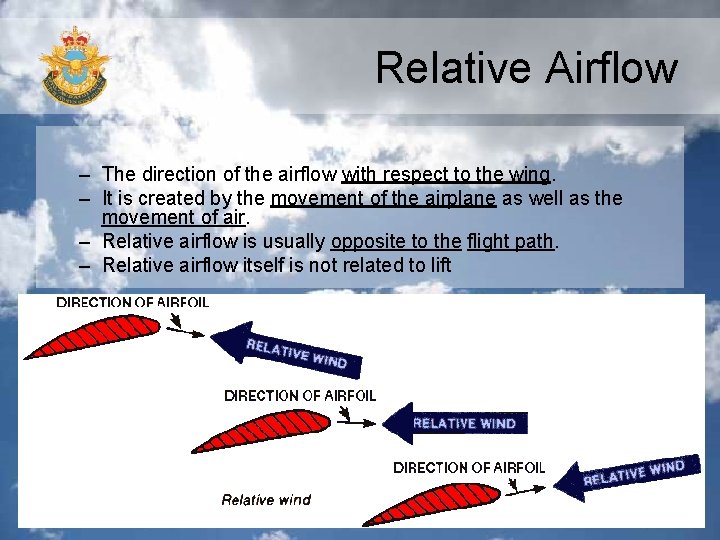
Relative Airflow – The direction of the airflow with respect to the wing. – It is created by the movement of the airplane as well as the movement of air. – Relative airflow is usually opposite to the flight path. – Relative airflow itself is not related to lift
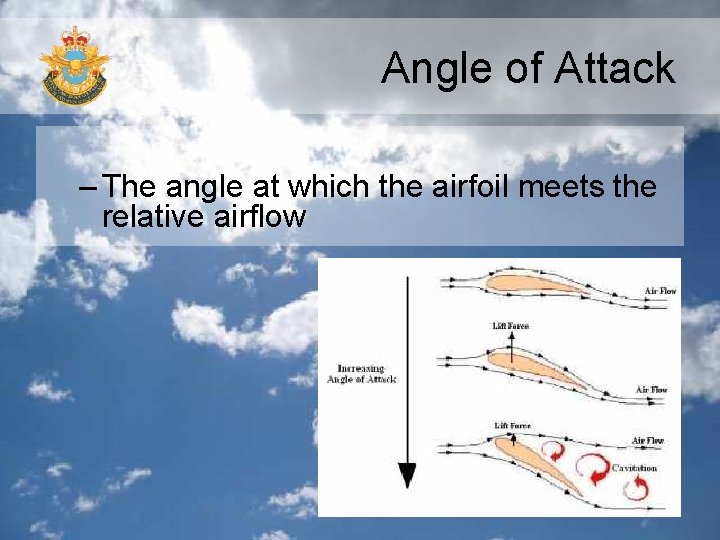
Angle of Attack – The angle at which the airfoil meets the relative airflow
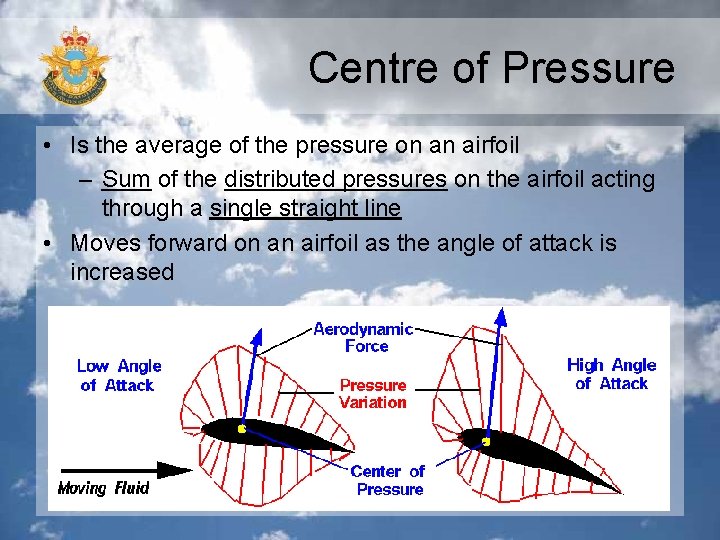
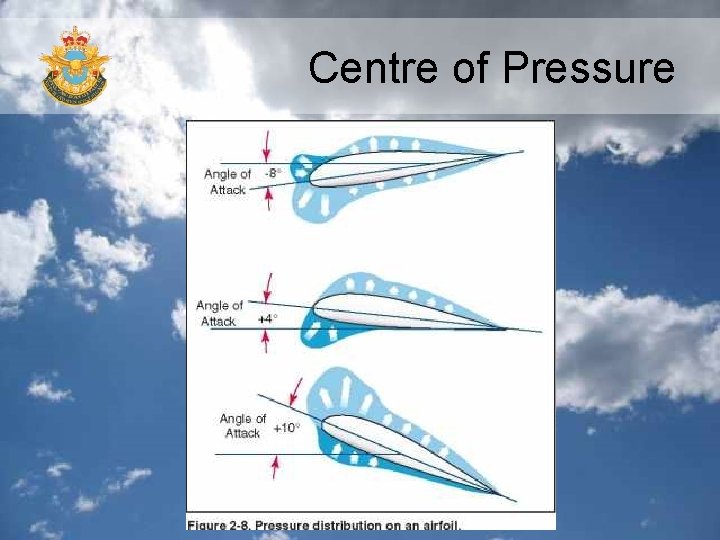
Centre of Pressure • Is the average of the pressure on an airfoil – Sum of the distributed pressures on the airfoil acting through a single straight line • Moves forward on an airfoil as the angle of attack is increased
Centre of Pressure
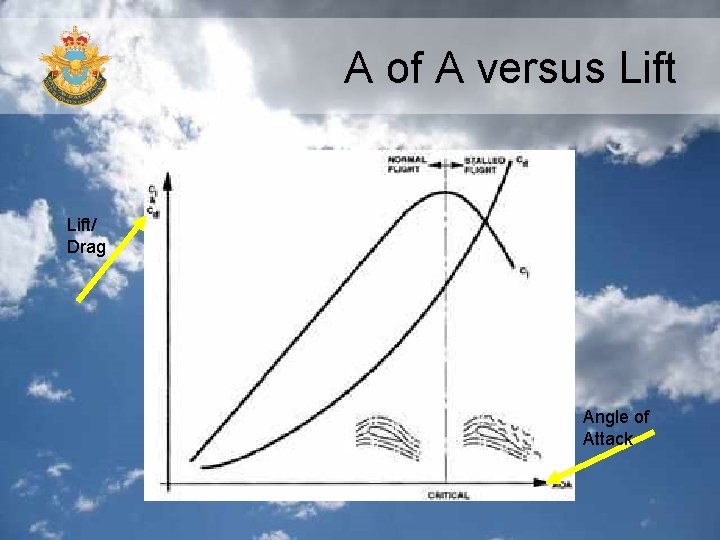
A of A versus Lift • Now we know how we get lift but how much can we get? • One factor affecting lift is Angle of Attack – As the angle of attack increases, what happens to lift? Lift Increases – BUT… As the angle of attack increases, what happens to drag? Drag Increases
A of A versus Lift/ Drag Angle of Attack
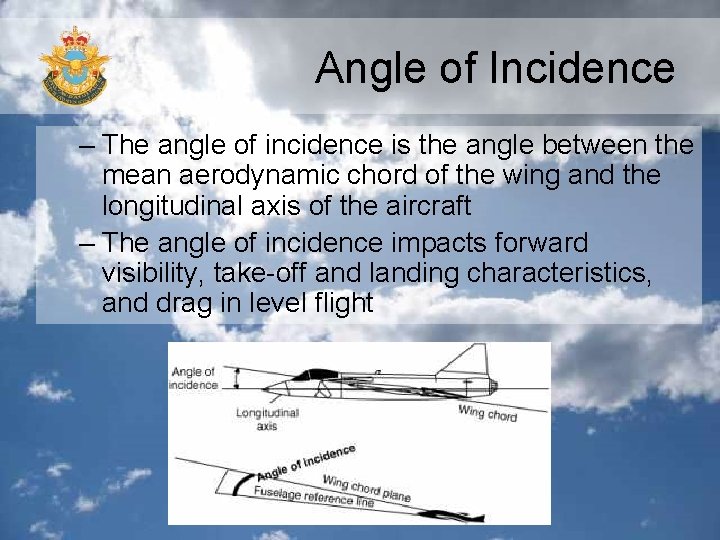
Angle of Incidence – The angle of incidence is the angle between the mean aerodynamic chord of the wing and the longitudinal axis of the aircraft – The angle of incidence impacts forward visibility, take-off and landing characteristics, and drag in level flight
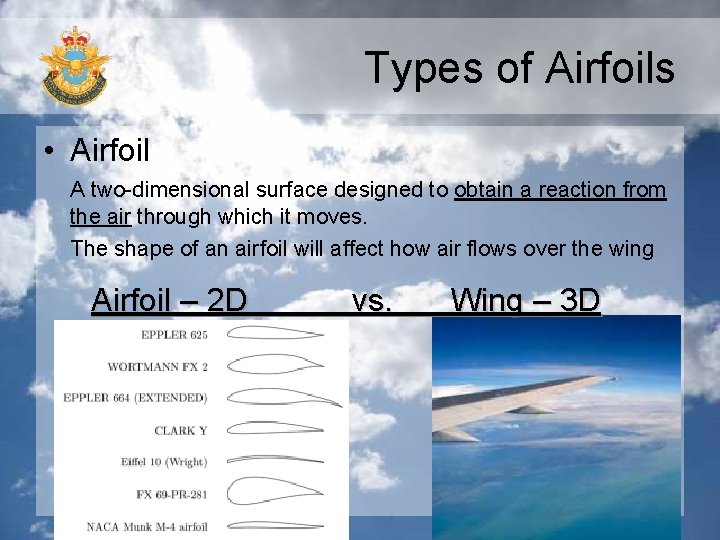
Types of Airfoils • Airfoil A two-dimensional surface designed to obtain a reaction from the air through which it moves. The shape of an airfoil will affect how air flows over the wing Airfoil – 2 D vs. Wing – 3 D
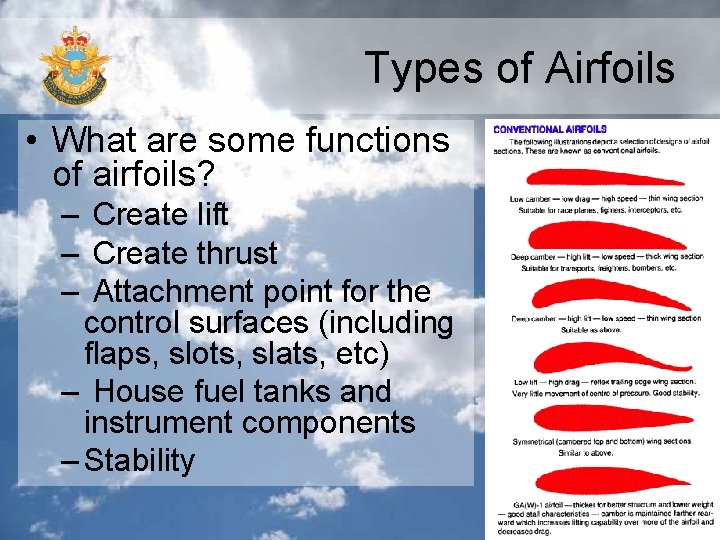
Types of Airfoils • What are some functions of airfoils? – Create lift – Create thrust – Attachment point for the control surfaces (including flaps, slots, slats, etc) – House fuel tanks and instrument components – Stability
Confirmation Check
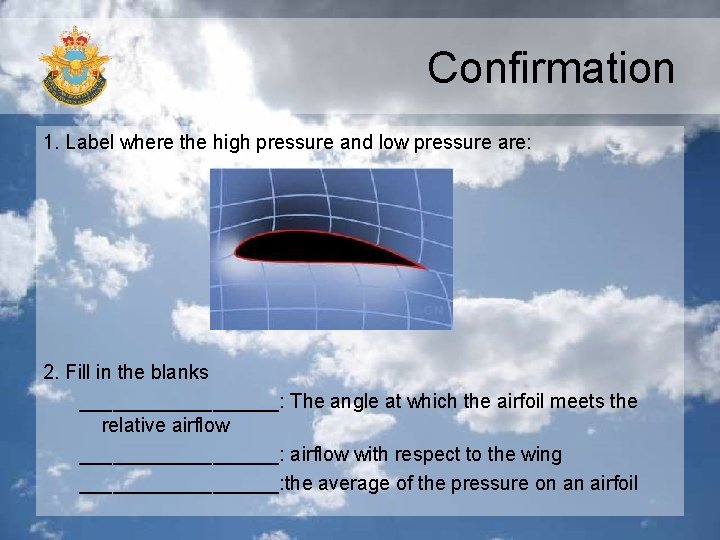
Confirmation 1. Label where the high pressure and low pressure are: 2. Fill in the blanks _________: The angle at which the airfoil meets the relative airflow _________: airflow with respect to the wing _________: the average of the pressure on an airfoil
Confirmation 3. Lift acts 90 o to the ________. 4. Bernoulli’s principle states that: An ______ (increase/decrease) in the speed of a fluid occurs simultaneously with a ___________ (increase/decrease) in pressure or a ________ (increase/decrease) in the fluid's potential energy 5. As lift increases, drag ________.
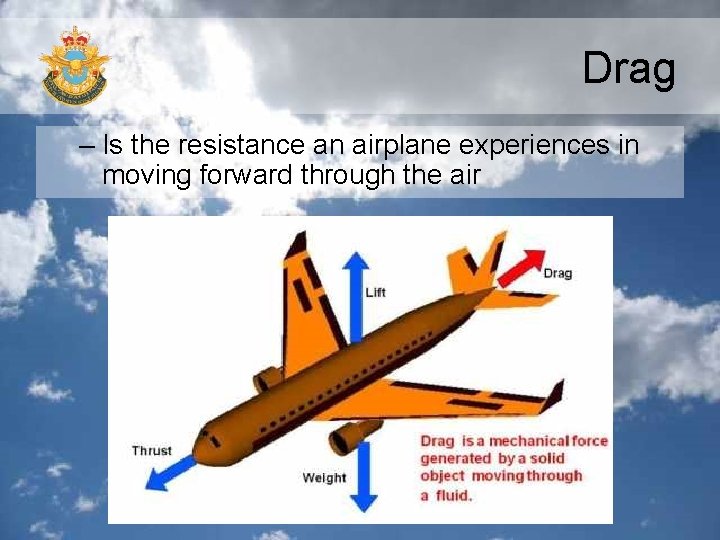
Drag – Is the resistance an airplane experiences in moving forward through the air
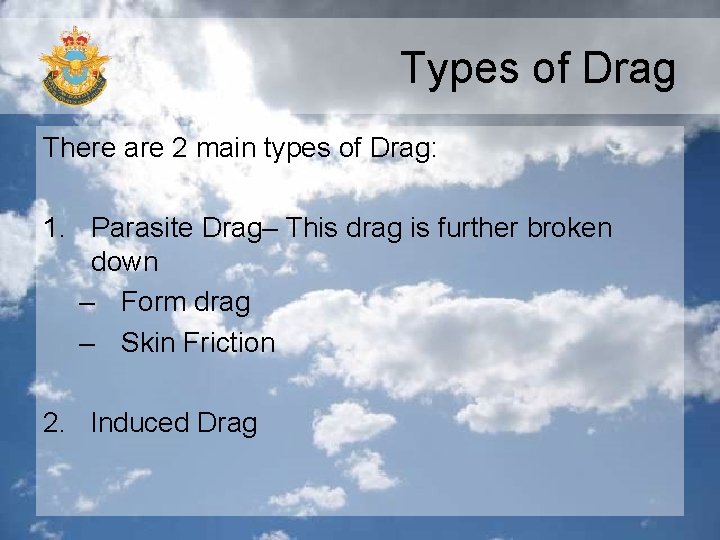
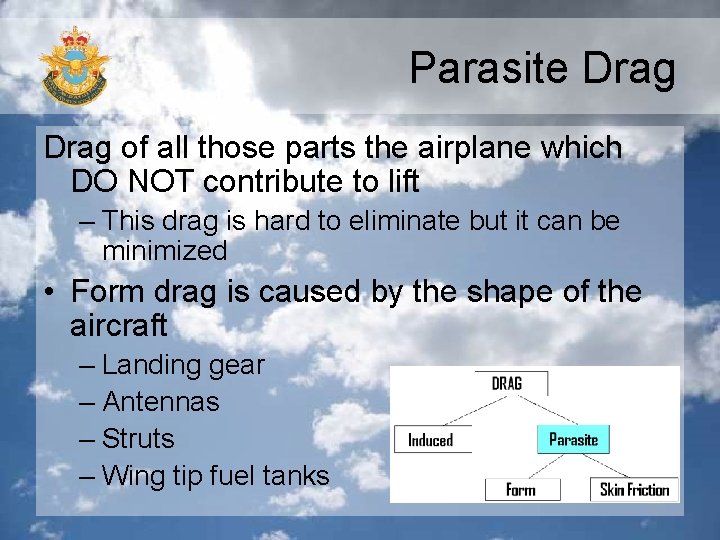
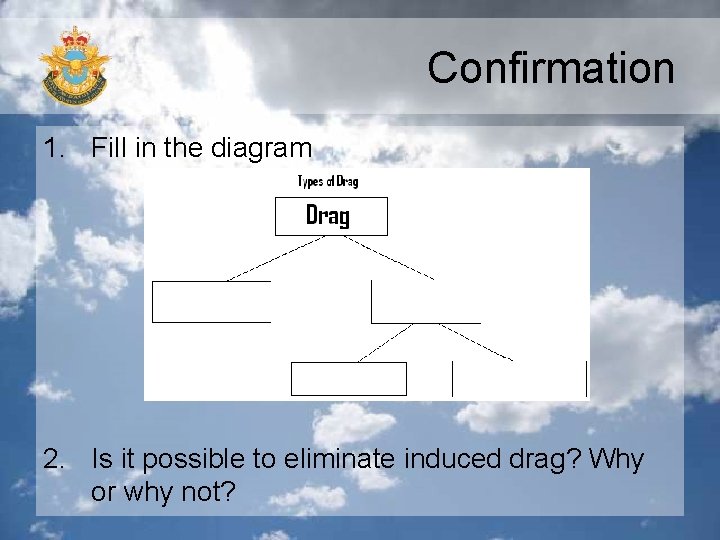
Types of Drag There are 2 main types of Drag: 1. Parasite Drag– This drag is further broken down – Form drag – Skin Friction 2. Induced Drag
Parasite Drag of all those parts the airplane which DO NOT contribute to lift – This drag is hard to eliminate but it can be minimized • Form drag is caused by the shape of the aircraft – Landing gear – Antennas – Struts – Wing tip fuel tanks
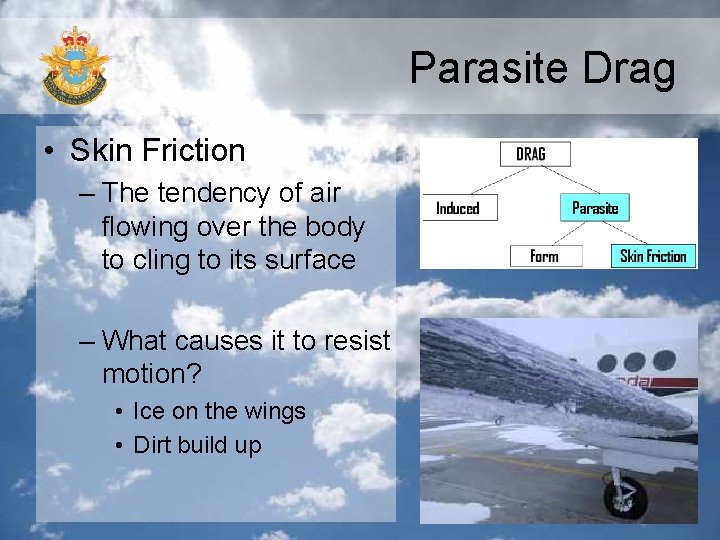
Parasite Drag • Skin Friction – The tendency of air flowing over the body to cling to its surface – What causes it to resist motion? • Ice on the wings • Dirt build up
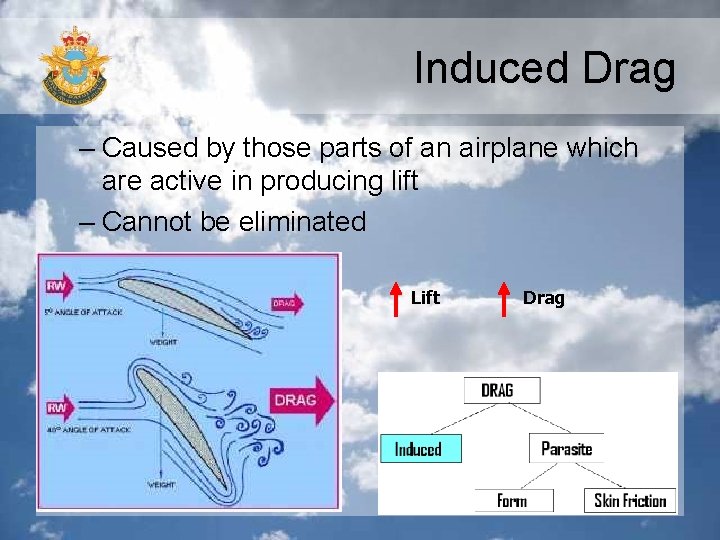
Induced Drag – Caused by those parts of an airplane which are active in producing lift – Cannot be eliminated Lift Drag
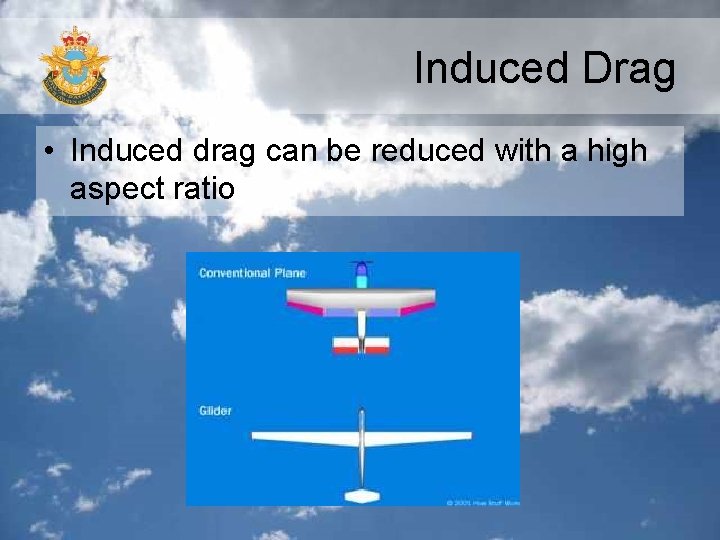
Induced Drag • Induced drag can be reduced with a high aspect ratio
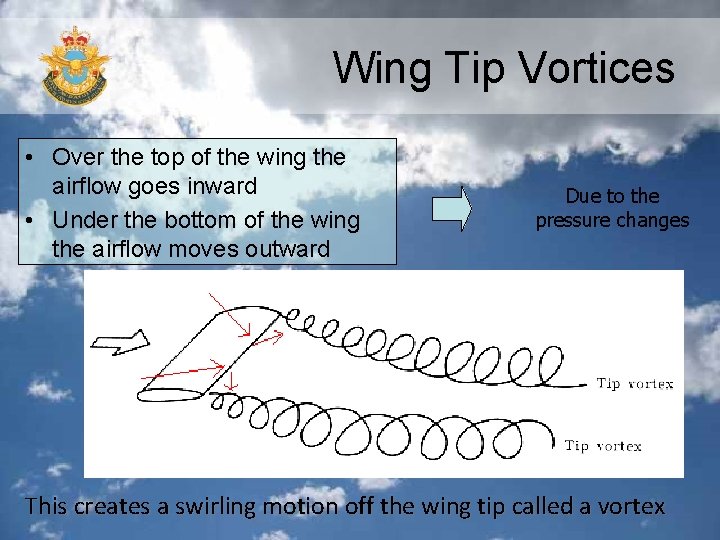
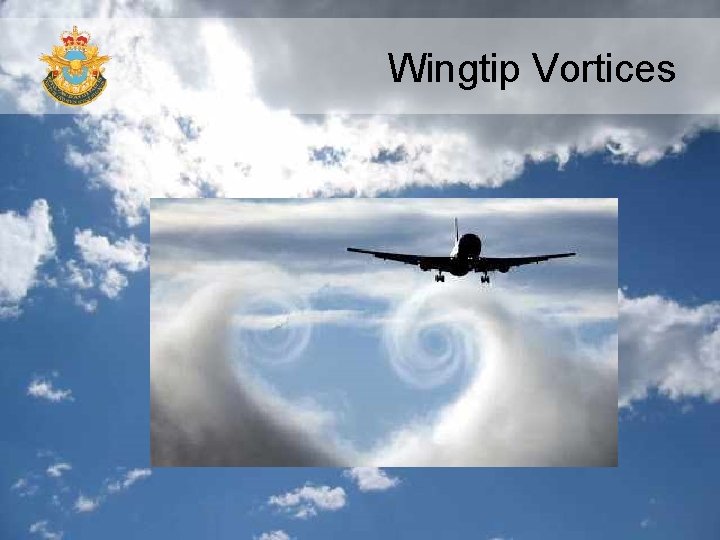
Wing Tip Vortices • Over the top of the wing the airflow goes inward • Under the bottom of the wing the airflow moves outward Due to the pressure changes This creates a swirling motion off the wing tip called a vortex
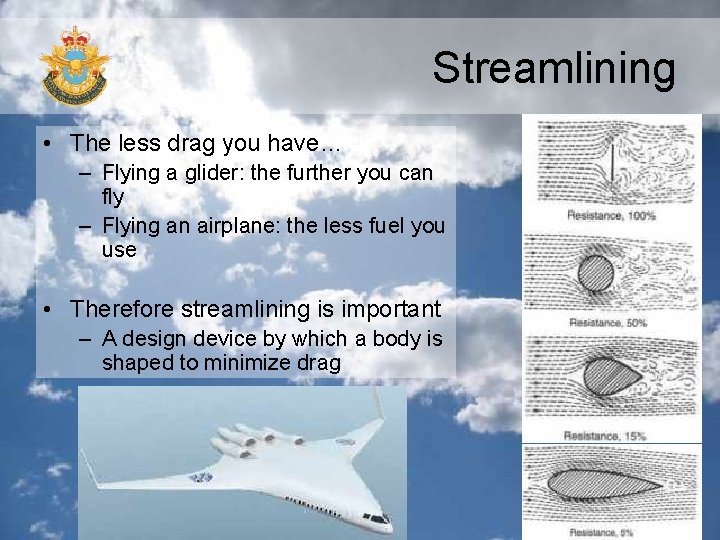
Streamlining • The less drag you have… – Flying a glider: the further you can fly – Flying an airplane: the less fuel you use • Therefore streamlining is important – A design device by which a body is shaped to minimize drag
Confirmation 1. Fill in the diagram 2. Is it possible to eliminate induced drag? Why or why not?
Wingtip Vortices