
Theory of Evolution Gradual change in a species

- Slides: 31
Theory of Evolution Gradual change in a species through adaptations over time.
Artificial Selection. Darwin noted that farmers and animal breeders bred for certain variations in plants and animals to improve crops and livestock. They would select for breeding only the largest hogs, the fastest horses, or the cows that produced the most milk. Natural Selection (“Survival of the Fittest”) Favorable variations over time that increase the organism’s ability to survive contribute to an organism's fitness in its environment. These changes are passed along to offspring Natural selection also takes place without human control or direction.
Struggle for Existence Members of each species compete regularly to obtain food, living space, and other necessities of life. Fitness Ability of an individual to survive and reproduce in its specific environment. Fitness is the result of adaptations over time Adaptation Any inherited characteristic that increases an organism's chance of survival
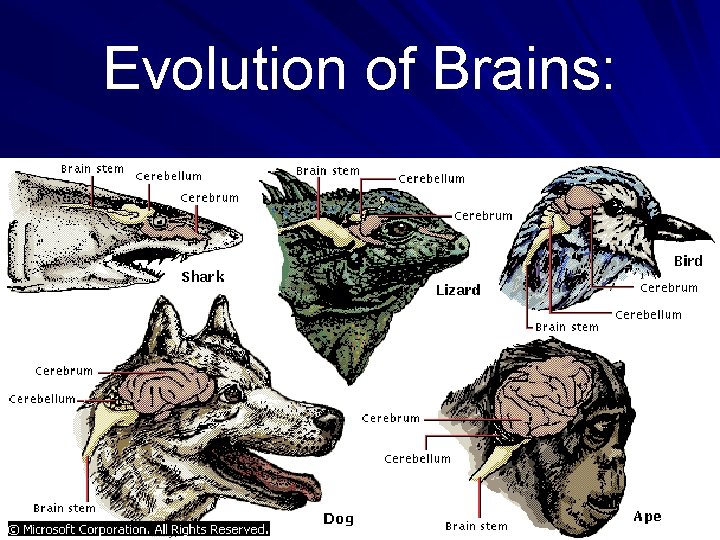
Evolution of Brains:
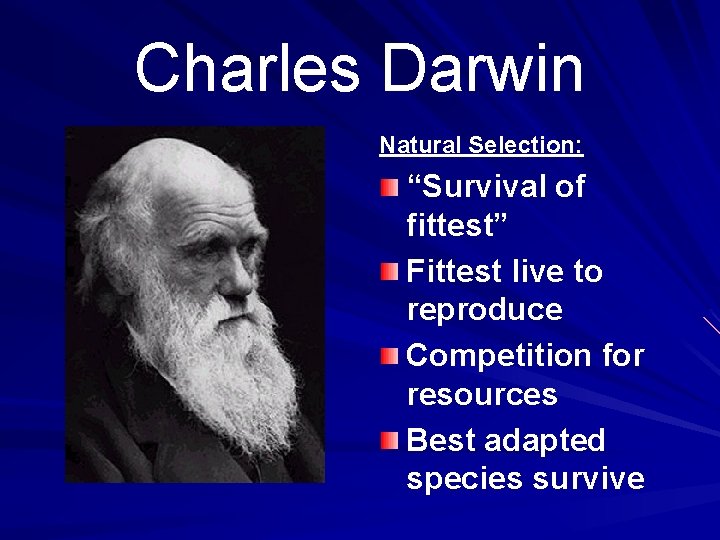
Charles Darwin Natural Selection: “Survival of fittest” Fittest live to reproduce Competition for resources Best adapted species survive
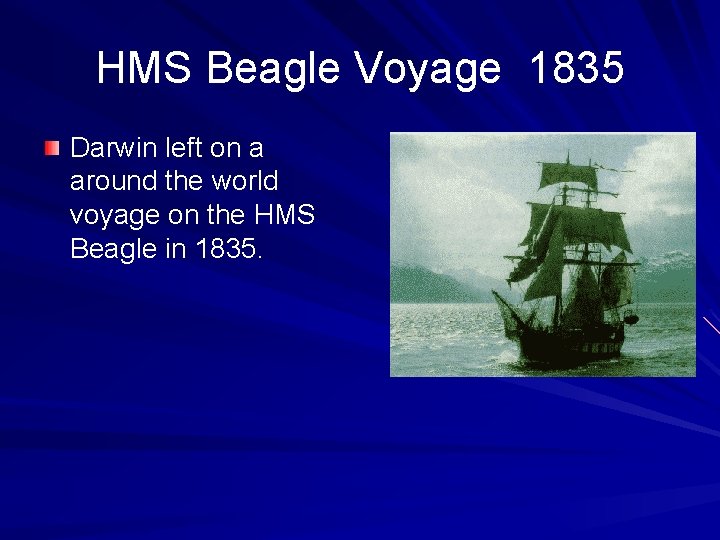
HMS Beagle Voyage 1835 Darwin left on a around the world voyage on the HMS Beagle in 1835.
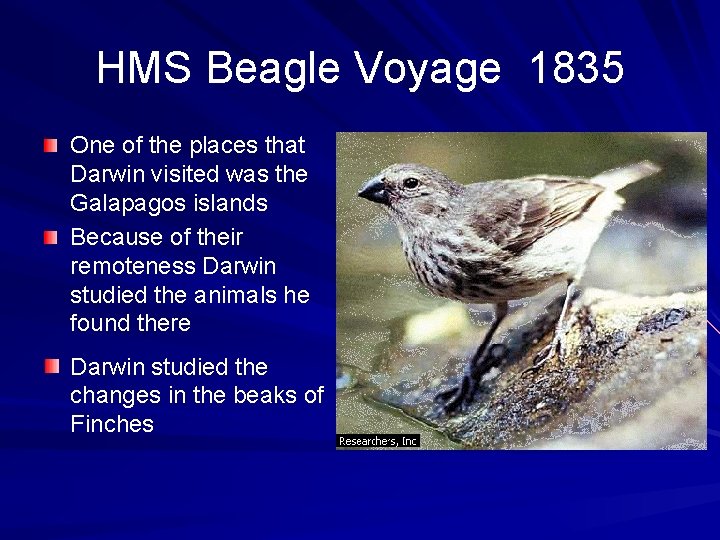
HMS Beagle Voyage 1835 One of the places that Darwin visited was the Galapagos islands Because of their remoteness Darwin studied the animals he found there Darwin studied the changes in the beaks of Finches
Darwin’s key ideas: REPRODUCTION: – Organisms produce more offspring than can survive VARIATION – Variety in traits exist SURVIVAL OF THE FIT – Some traits allow survival & are passed on Over time certain variations make up most of a population & they may be different from their ancestors
Evolution Evidence: 1. Adaptations 2. Fossils 3. Comparative anatomy 4. Comparative embryology 5. Comparative Biochemistry 6. Plate Tectonics
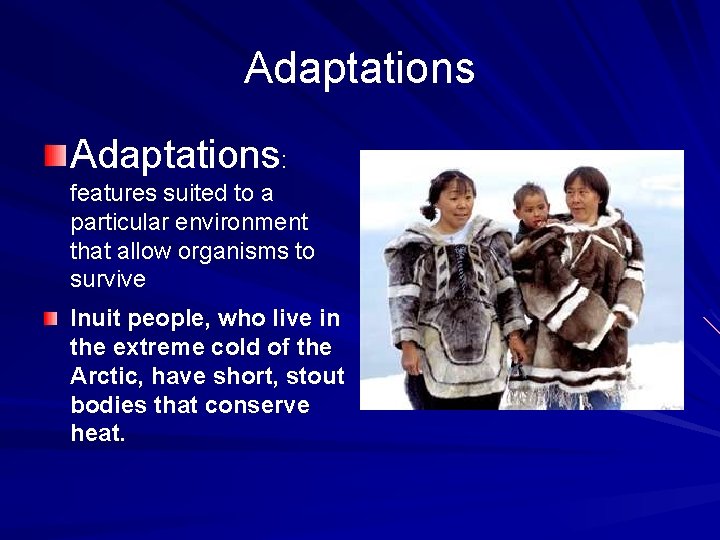
Adaptations: features suited to a particular environment that allow organisms to survive Inuit people, who live in the extreme cold of the Arctic, have short, stout bodies that conserve heat.
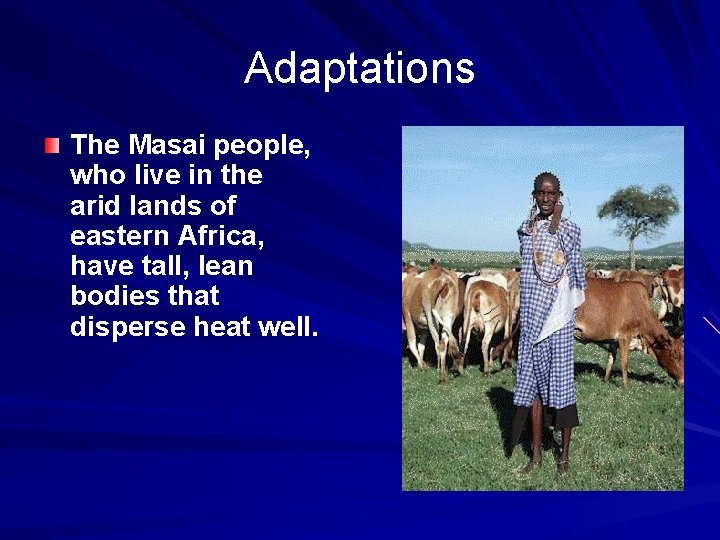
Adaptations The Masai people, who live in the arid lands of eastern Africa, have tall, lean bodies that disperse heat well.
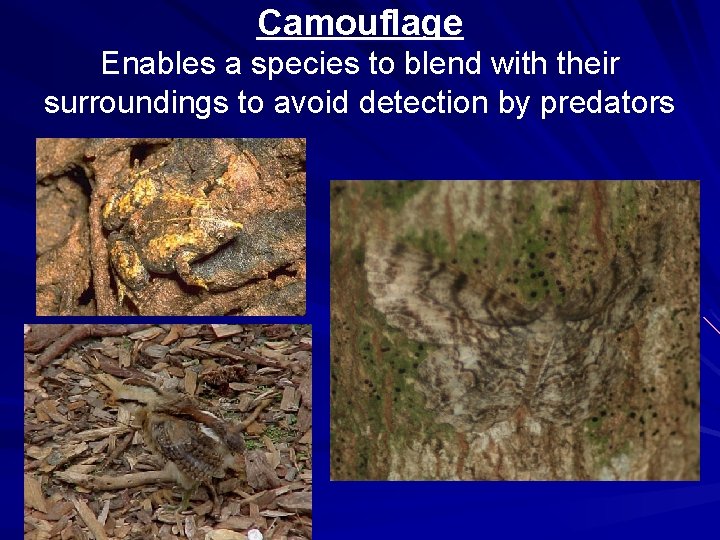
Camouflage Enables a species to blend with their surroundings to avoid detection by predators
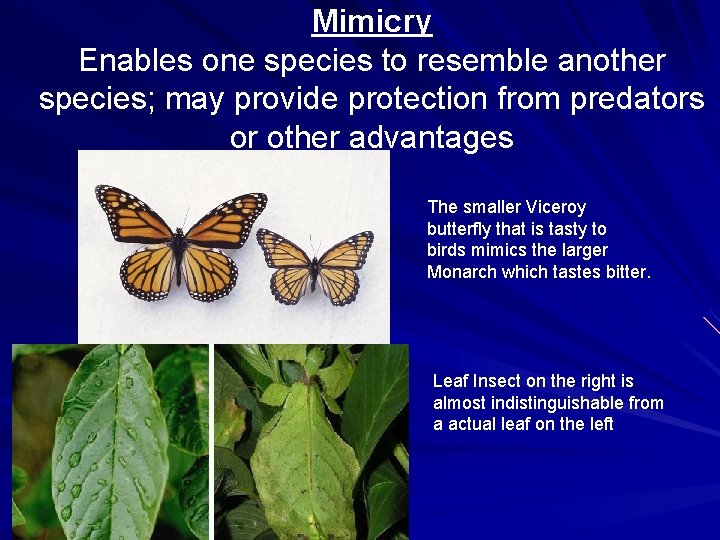
Mimicry Enables one species to resemble another species; may provide protection from predators or other advantages The smaller Viceroy butterfly that is tasty to birds mimics the larger Monarch which tastes bitter. Leaf Insect on the right is almost indistinguishable from a actual leaf on the left
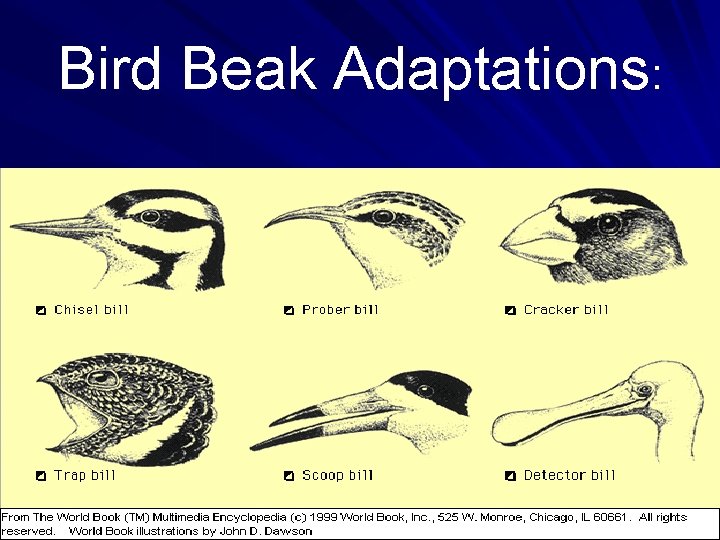
Bird Beak Adaptations:
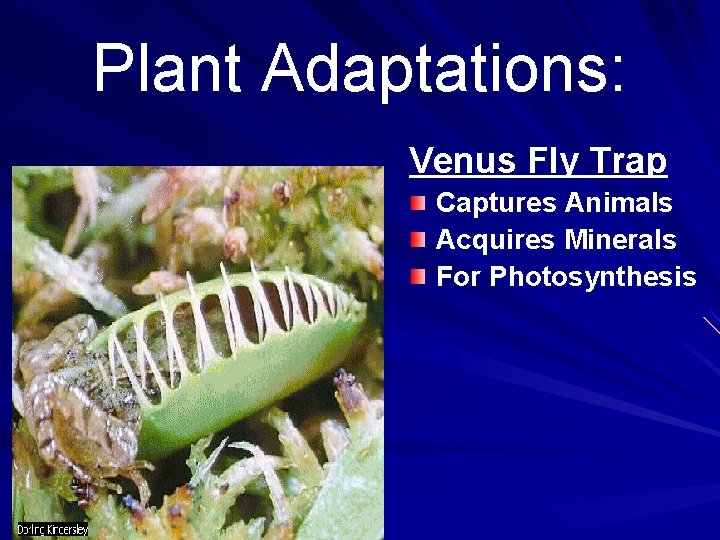
Plant Adaptations: Venus Fly Trap Captures Animals Acquires Minerals For Photosynthesis
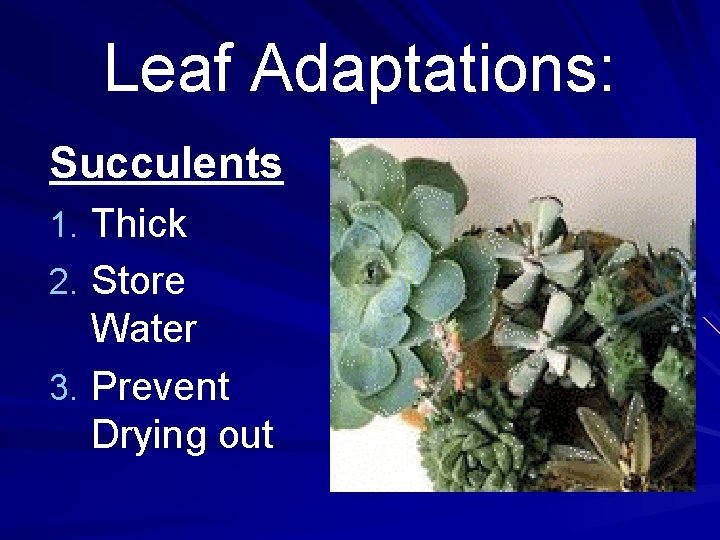
Leaf Adaptations: Succulents 1. Thick 2. Store Water 3. Prevent Drying out
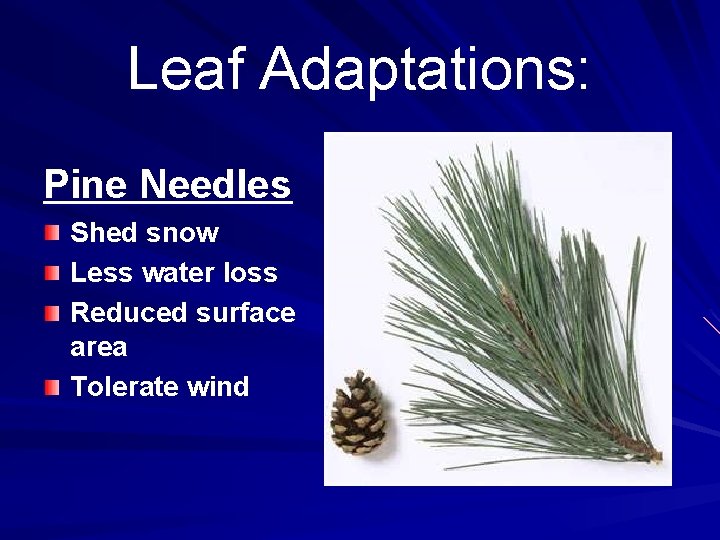
Leaf Adaptations: Pine Needles Shed snow Less water loss Reduced surface area Tolerate wind
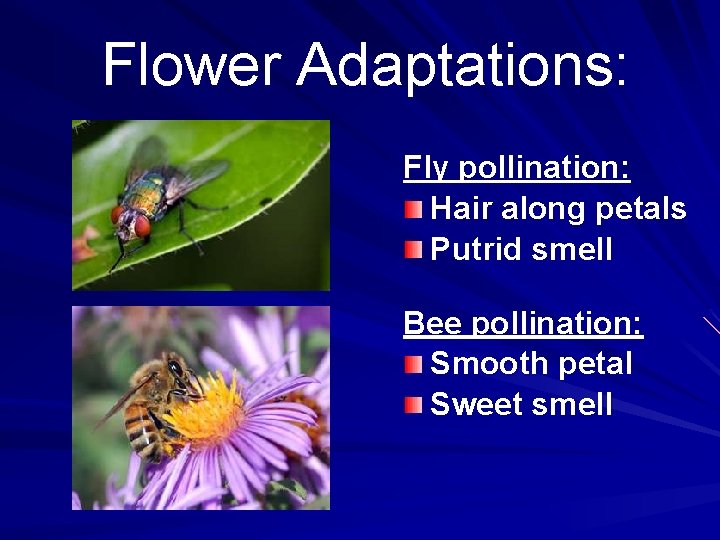
Flower Adaptations: Fly pollination: Hair along petals Putrid smell Bee pollination: Smooth petal Sweet smell
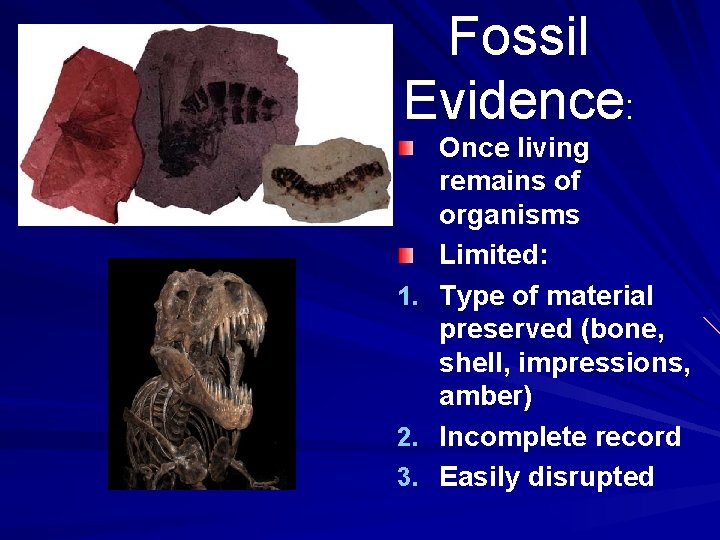
Fossil Evidence: Once living remains of organisms Limited: 1. Type of material preserved (bone, shell, impressions, amber) 2. Incomplete record 3. Easily disrupted
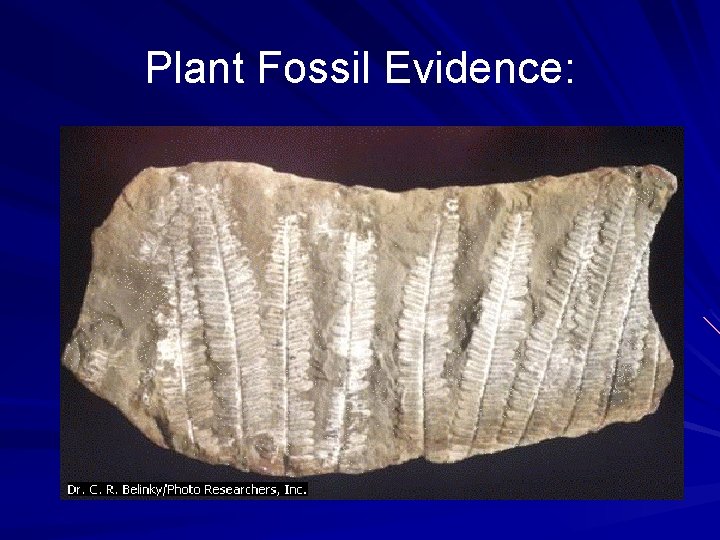
Plant Fossil Evidence:
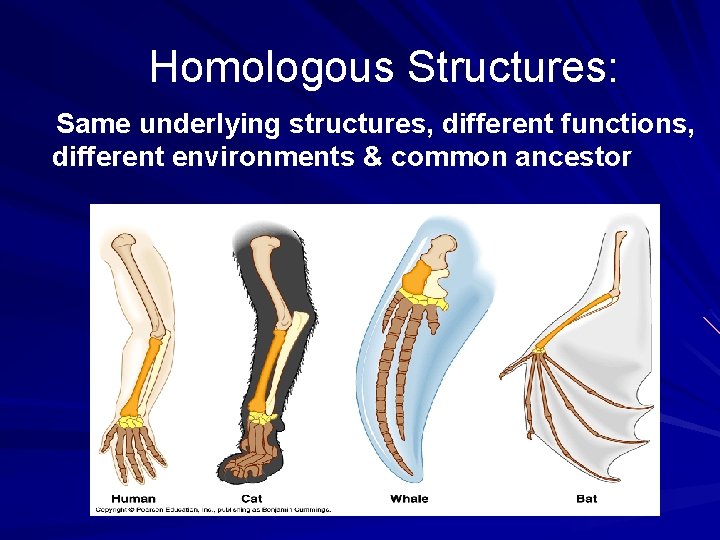
Comparative Anatomy: Structural similarities link related species
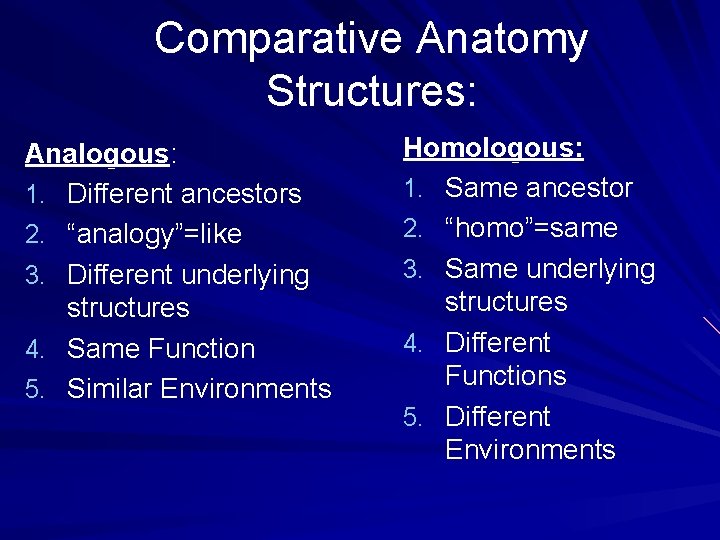
Comparative Anatomy Structures: Analogous: 1. Different ancestors 2. “analogy”=like 3. Different underlying structures 4. Same Function 5. Similar Environments Homologous: 1. Same ancestor 2. “homo”=same 3. Same underlying structures 4. Different Functions 5. Different Environments
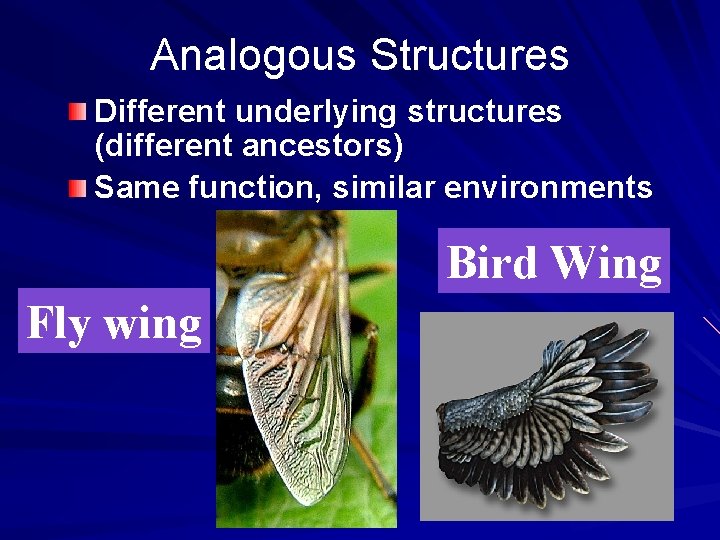
Analogous Structures Different underlying structures (different ancestors) Same function, similar environments Bird Wing Fly wing
Homologous Structures: Same underlying structures, different functions, different environments & common ancestor
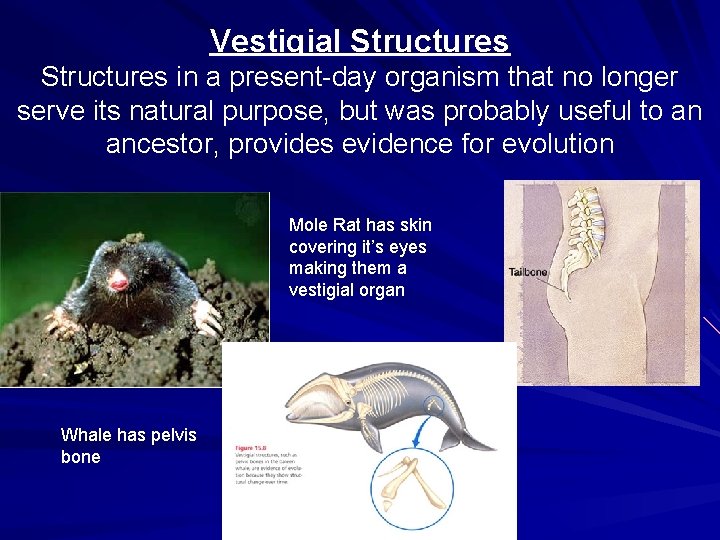
Vestigial Structures in a present-day organism that no longer serve its natural purpose, but was probably useful to an ancestor, provides evidence for evolution Mole Rat has skin covering it’s eyes making them a vestigial organ Whale has pelvis bone
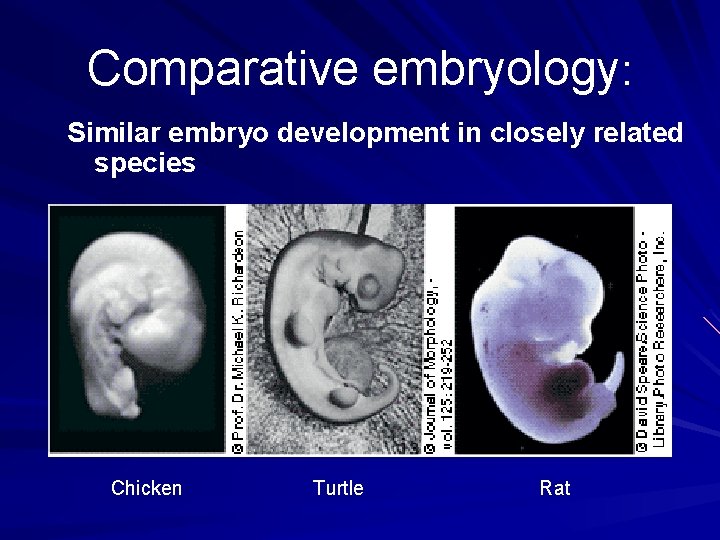
Comparative embryology: Similar embryo development in closely related species Chicken Turtle Rat
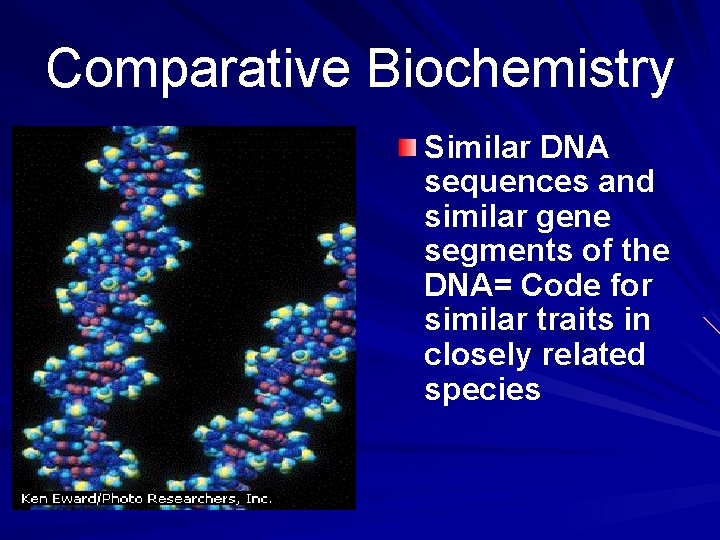
Comparative Biochemistry Similar DNA sequences and similar gene segments of the DNA= Code for similar traits in closely related species
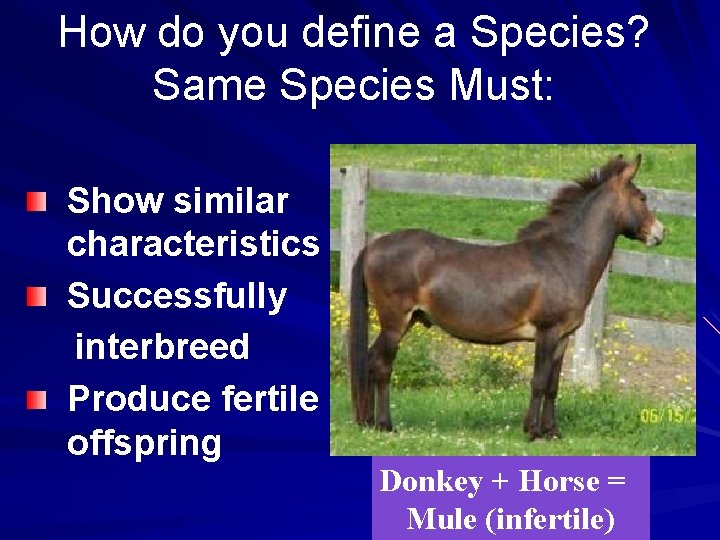
How do you define a Species? Same Species Must: Show similar characteristics Successfully interbreed Produce fertile offspring Donkey + Horse = Mule (infertile)
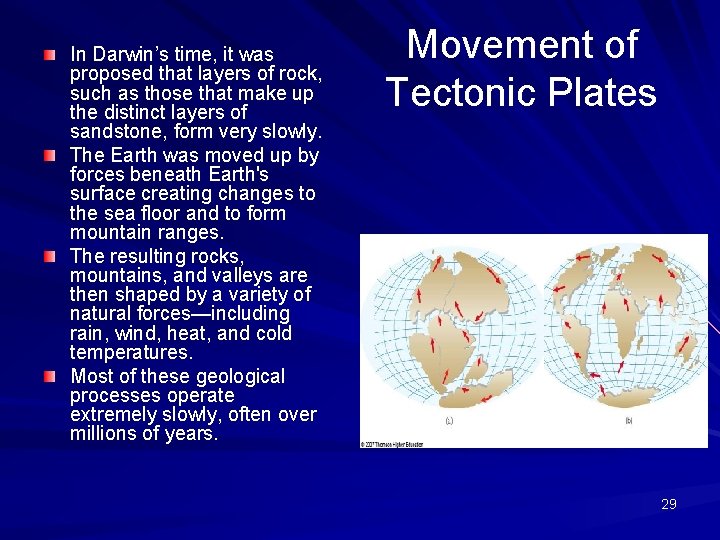
In Darwin’s time, it was proposed that layers of rock, such as those that make up the distinct layers of sandstone, form very slowly. The Earth was moved up by forces beneath Earth's surface creating changes to the sea floor and to form mountain ranges. The resulting rocks, mountains, and valleys are then shaped by a variety of natural forces—including rain, wind, heat, and cold temperatures. Most of these geological processes operate extremely slowly, often over millions of years. Movement of Tectonic Plates 29
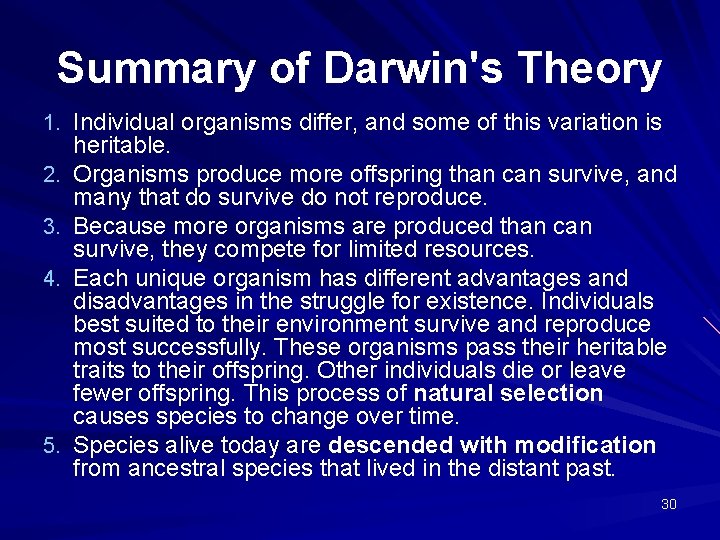
Summary of Darwin's Theory 1. Individual organisms differ, and some of this variation is 2. 3. 4. 5. heritable. Organisms produce more offspring than can survive, and many that do survive do not reproduce. Because more organisms are produced than can survive, they compete for limited resources. Each unique organism has different advantages and disadvantages in the struggle for existence. Individuals best suited to their environment survive and reproduce most successfully. These organisms pass their heritable traits to their offspring. Other individuals die or leave fewer offspring. This process of natural selection causes species to change over time. Species alive today are descended with modification from ancestral species that lived in the distant past. 30
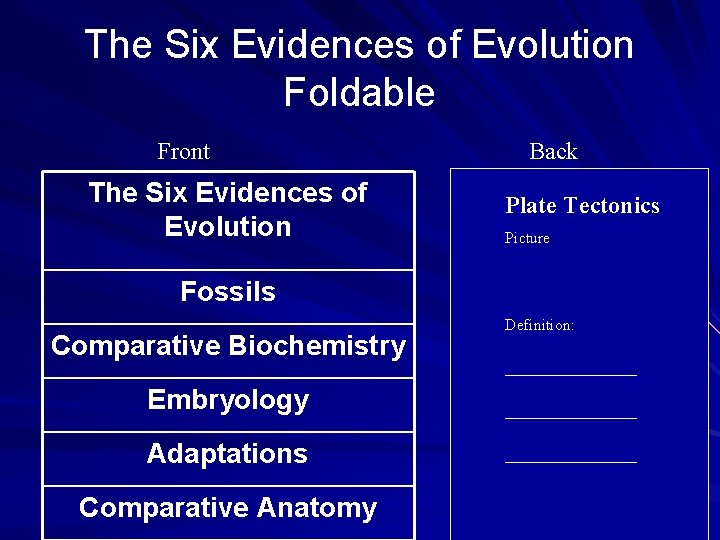
The Six Evidences of Evolution Foldable Front The Six Evidences of Evolution Back Plate Tectonics Picture Fossils Comparative Biochemistry Definition: ______ Embryology ______ Adaptations ______ Comparative Anatomy