
Theory of Evolution Evolution Definition the change in
- Slides: 17
Theory of Evolution
Evolution Definition: the change in allele frequencies in a population over time Alleles are the different variations/forms of a particular genetic trait. Allelic frequency deals with how often a particular allele appears in a population.
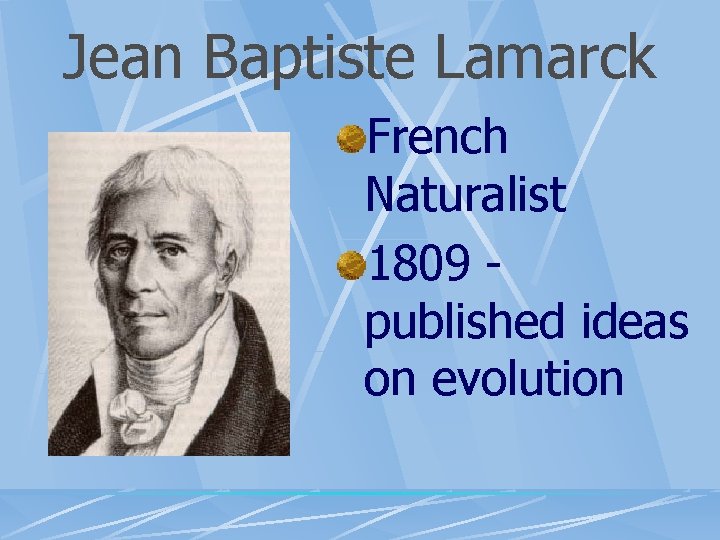
Jean Baptiste Lamarck French Naturalist 1809 published ideas on evolution
Lamarck’s Hypothesis During organism’s lifetime, physical features size b/c use or size b/c disuse Organisms pass down acquired traits to offspring
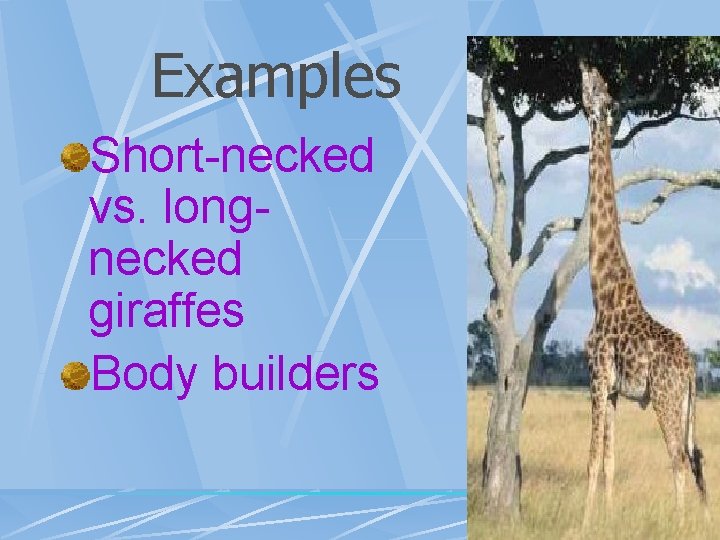
Examples Short-necked vs. longnecked giraffes Body builders
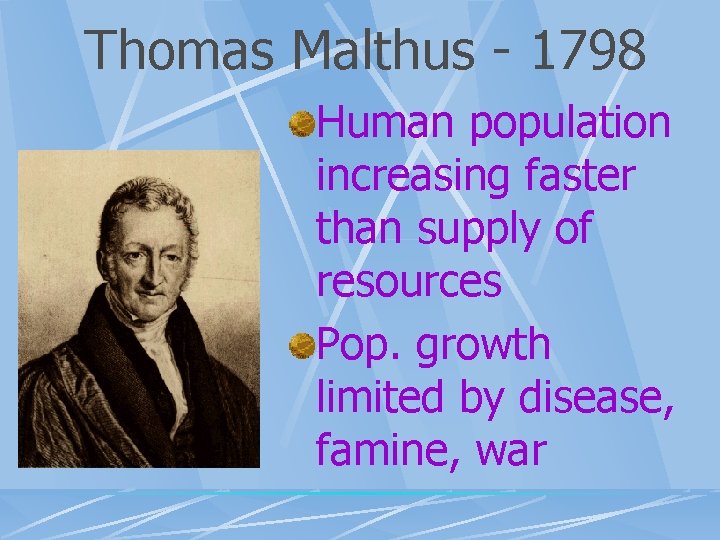
Thomas Malthus - 1798 Human population increasing faster than supply of resources Pop. growth limited by disease, famine, war
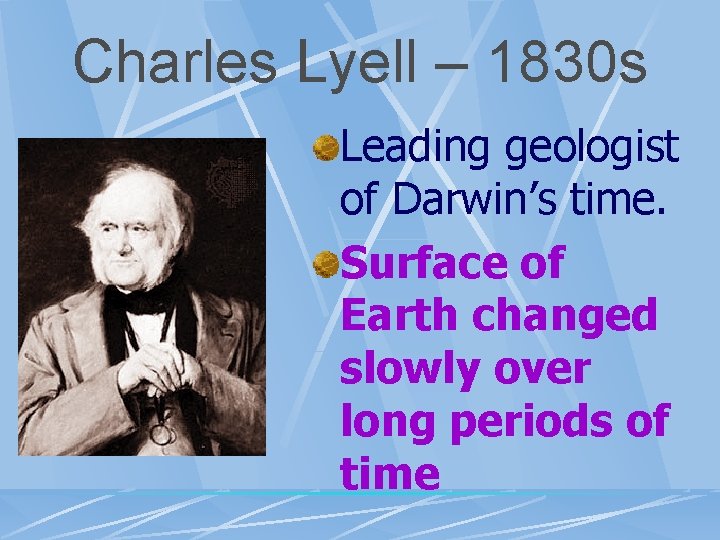
Charles Lyell – 1830 s Leading geologist of Darwin’s time. Surface of Earth changed slowly over long periods of time
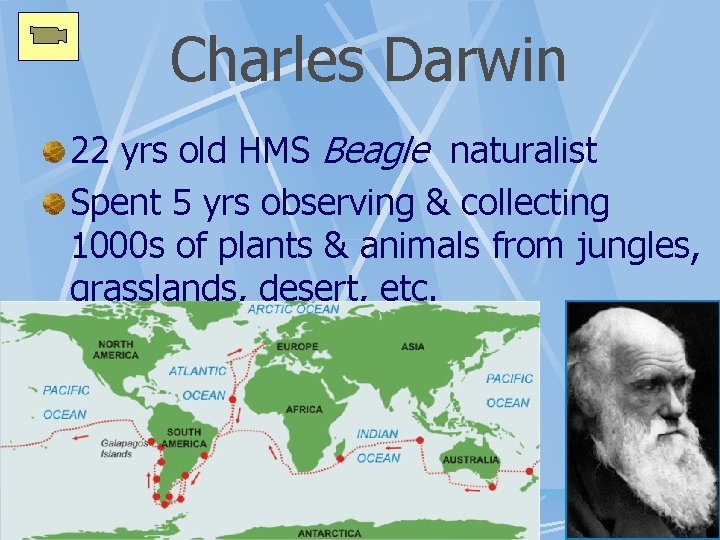
Charles Darwin 22 yrs old HMS Beagle naturalist Spent 5 yrs observing & collecting 1000 s of plants & animals from jungles, grasslands, desert, etc.
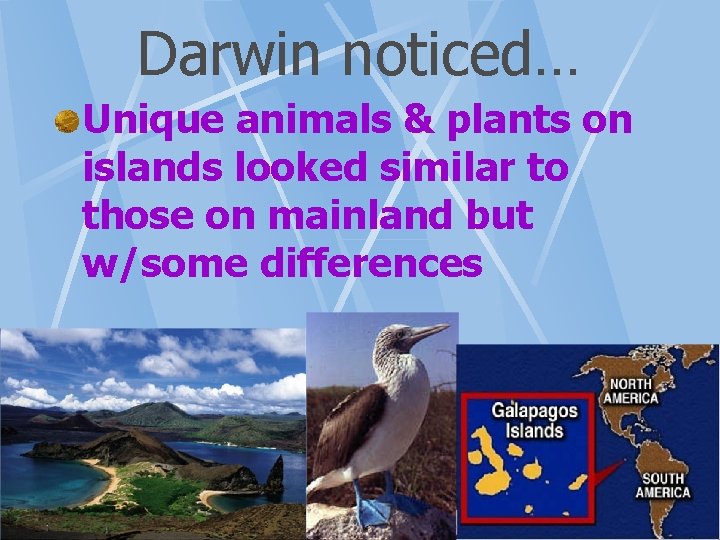
Darwin noticed… Unique animals & plants on islands looked similar to those on mainland but w/some differences
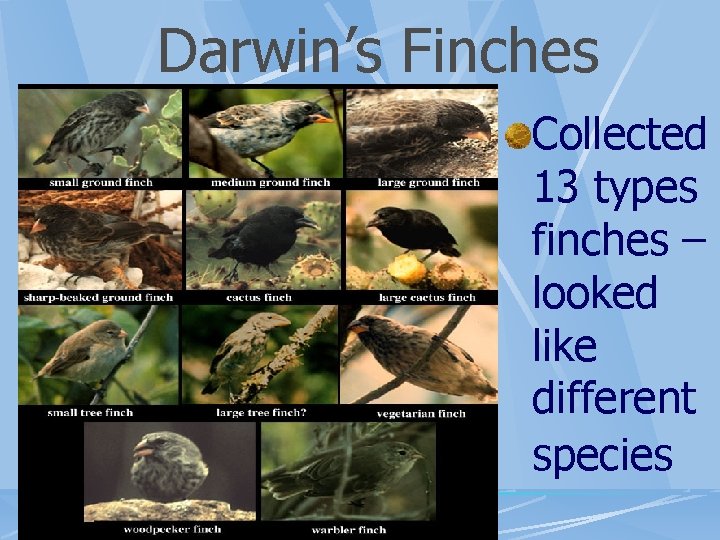
Darwin’s Finches Collected 13 types finches – looked like different species
After the Voyage… Spent 20+ years studying collections Results: variations w/in same species enable some to survive & reproduce, while those w/other variations do NOT survive or reproduce
Also studied… Farmers’ breeding of plants & animals with more desirable traits Artificial selection selective breeding of plants/animals w/desirable traits
Artificial Selection Lots of change can be achieved in a relatively short time Darwin reasoned that natural selection could change species over 100 s or 1000 s of generations
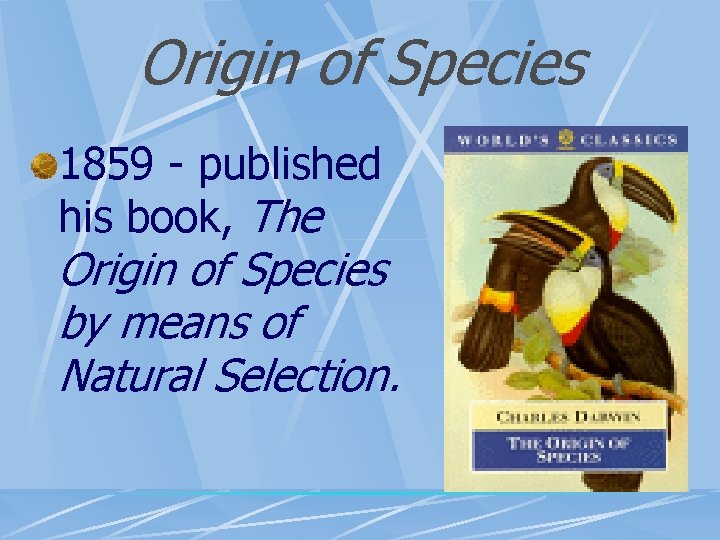
Origin of Species 1859 - published his book, The Origin of Species by means of Natural Selection.
Natural Selection Organisms w/favorable variations for a certain environment will survive, reproduce, & pass these variations to offspring “Survival of fittest” Fitness – ability of an organism to survive & reproduce in its specific environment
For example… If a rabbit lived in an environment where it snowed all the time—what color of fur would be more advantageous? l Why? Environment determines which traits are an advantage.
Main points of Darwin’s theory Genetic variations in populations Overproduction of offspring Struggle for existence Organisms w/favorable variations will survive, reproduce, & pass traits to next generation Ex. Hummingbirds w/longer beaks