
THEORY OF EVOLUTIO N Natural Selection A Mechanism
- Slides: 17
THEORY OF EVOLUTIO N Natural Selection: A Mechanism of Change
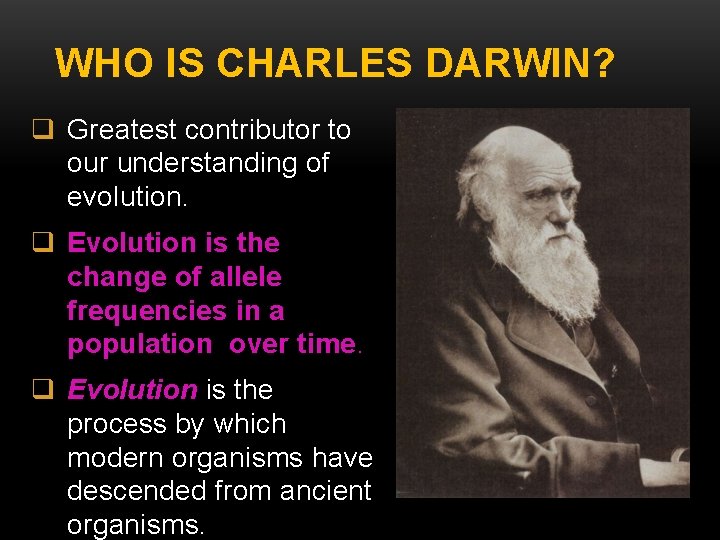
WHO IS CHARLES DARWIN? q Greatest contributor to our understanding of evolution. q Evolution is the change of allele frequencies in a population over time. q Evolution is the process by which modern organisms have descended from ancient organisms.
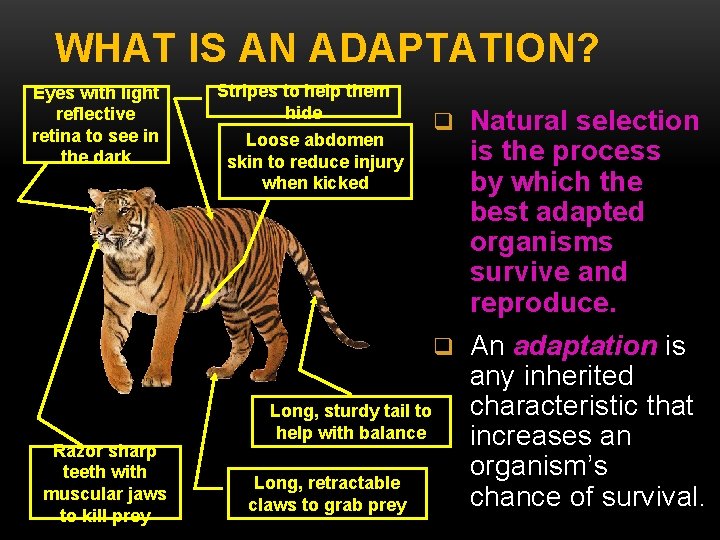
WHAT IS AN ADAPTATION? Eyes with light reflective retina to see in the dark Razor sharp teeth with muscular jaws to kill prey Stripes to help them hide Loose abdomen skin to reduce injury when kicked Long, sturdy tail to help with balance Long, retractable claws to grab prey q Natural selection is the process by which the best adapted organisms survive and reproduce. q An adaptation is any inherited characteristic that increases an organism’s chance of survival.
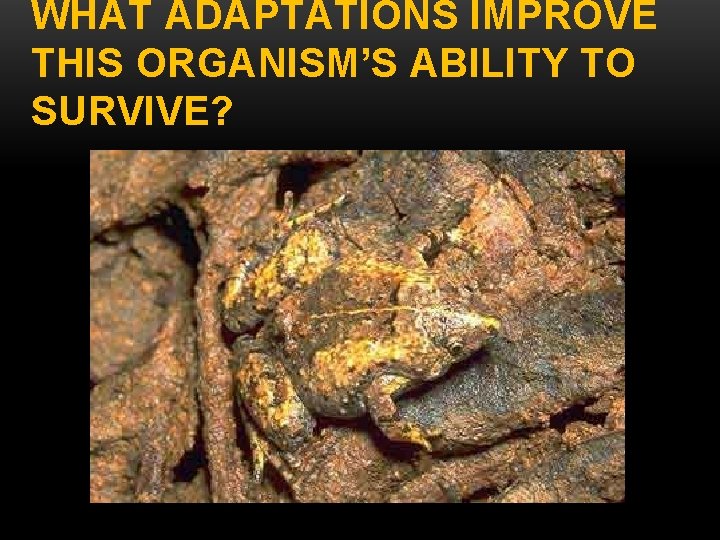
WHAT ADAPTATIONS IMPROVE THIS ORGANISM’S ABILITY TO SURVIVE?
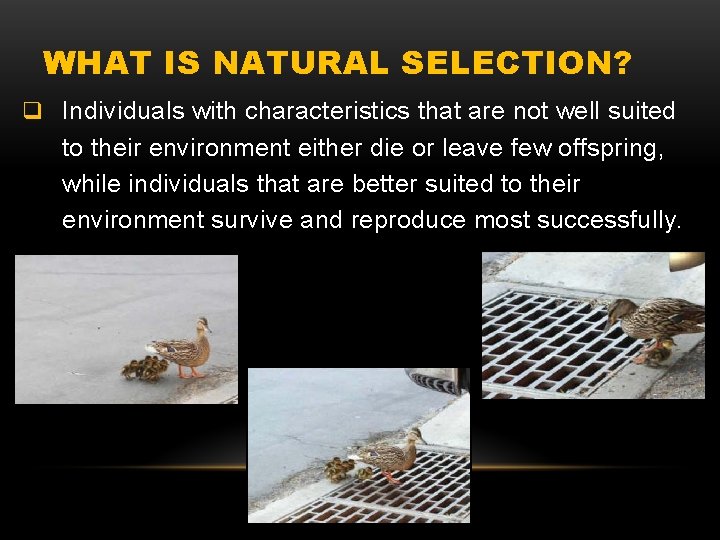
WHAT IS NATURAL SELECTION? q Individuals with characteristics that are not well suited to their environment either die or leave few offspring, while individuals that are better suited to their environment survive and reproduce most successfully.
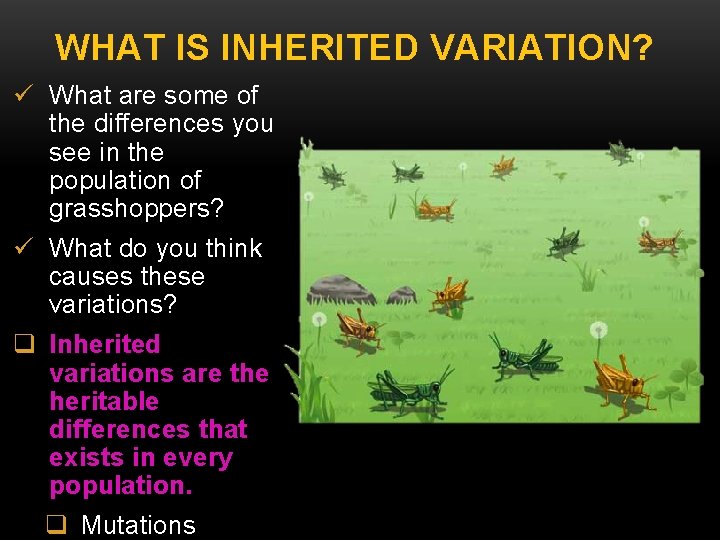
WHAT IS INHERITED VARIATION? ü What are some of the differences you see in the population of grasshoppers? ü What do you think causes these variations? q Inherited variations are the heritable differences that exists in every population. q Mutations
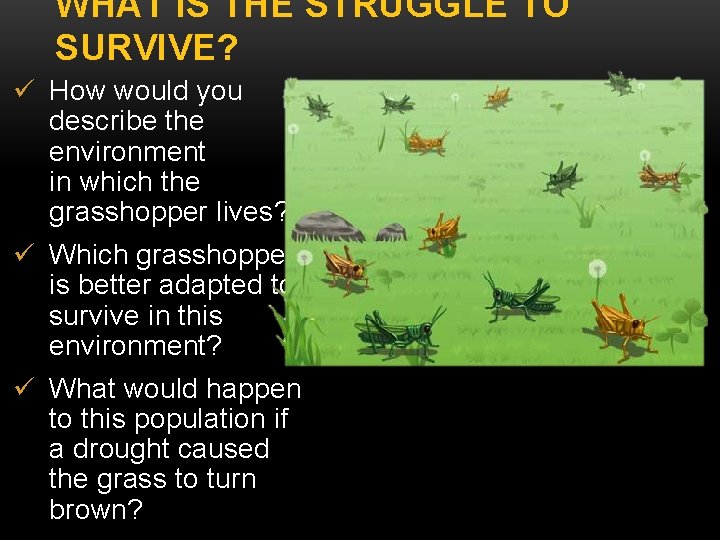
WHAT IS THE STRUGGLE TO SURVIVE? ü How would you describe the environment in which the grasshopper lives? ü Which grasshopper is better adapted to survive in this environment? ü What would happen to this population if a drought caused the grass to turn brown?
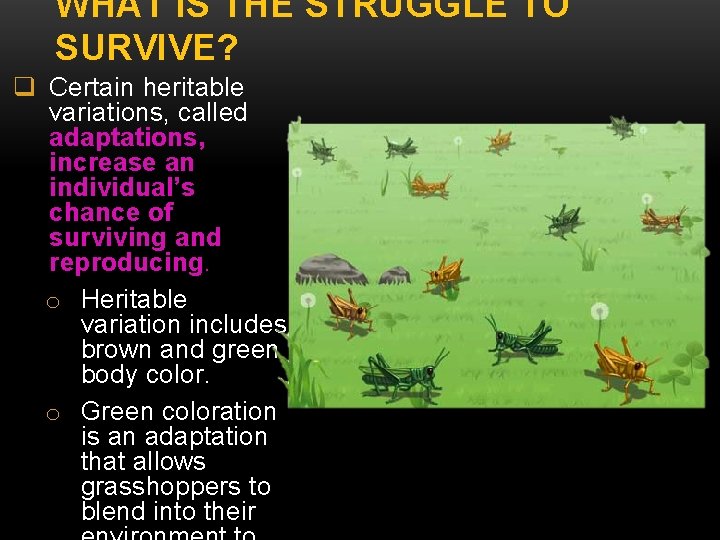
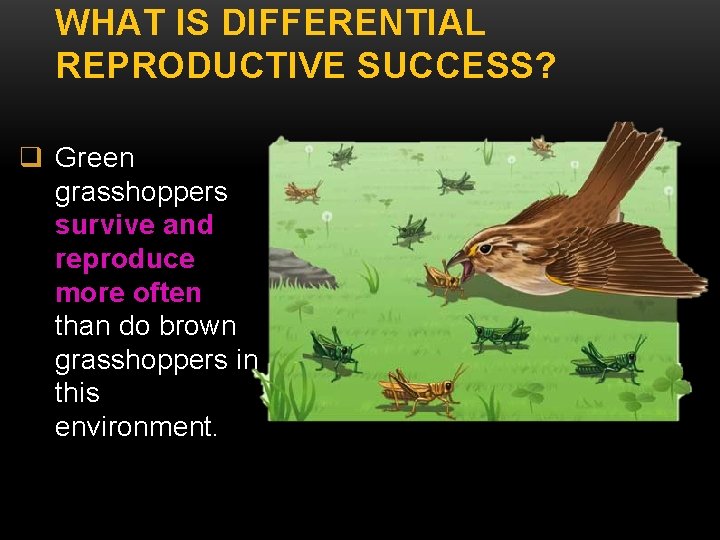
WHAT IS THE STRUGGLE TO SURVIVE? q Certain heritable variations, called adaptations, increase an individual’s chance of surviving and reproducing. o Heritable variation includes brown and green body color. o Green coloration is an adaptation that allows grasshoppers to blend into their
WHAT IS DIFFERENTIAL REPRODUCTIVE SUCCESS? q Green grasshoppers survive and reproduce more often than do brown grasshoppers in this environment.
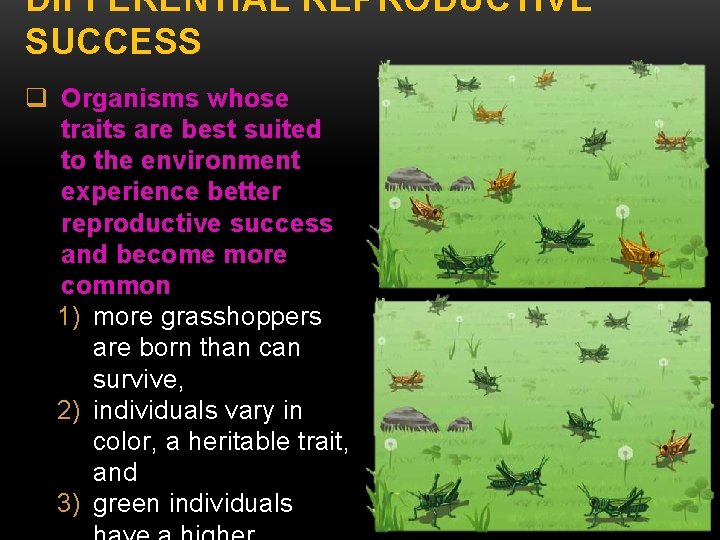
DIFFERENTIAL REPRODUCTIVE SUCCESS q Organisms whose traits are best suited to the environment experience better reproductive success and become more common 1) more grasshoppers are born than can survive, 2) individuals vary in color, a heritable trait, and 3) green individuals
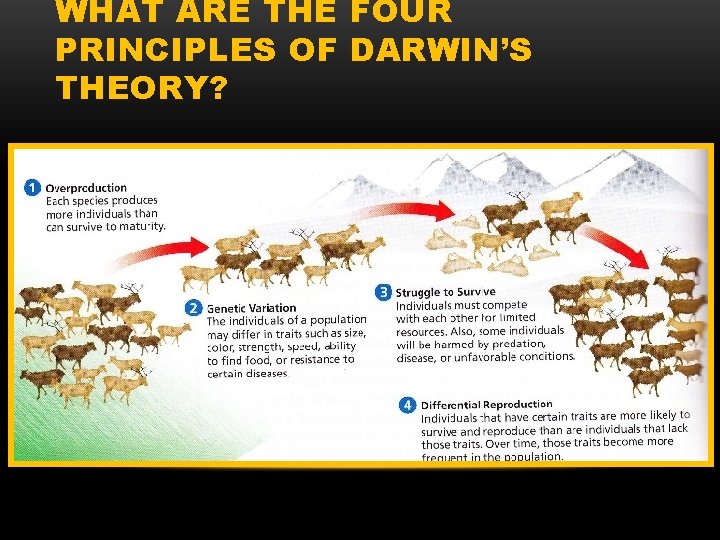
WHAT ARE THE FOUR PRINCIPLES OF DARWIN’S THEORY?
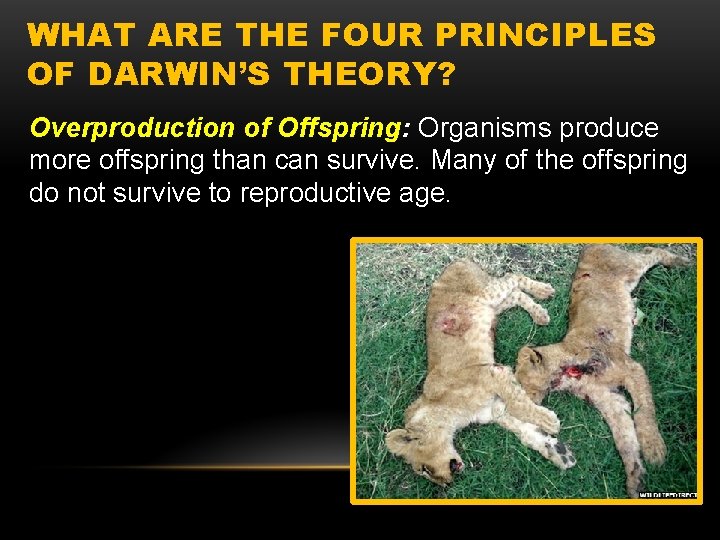
WHAT ARE THE FOUR PRINCIPLES OF DARWIN’S THEORY? Overproduction of Offspring: Organisms produce more offspring than can survive. Many of the offspring do not survive to reproductive age.
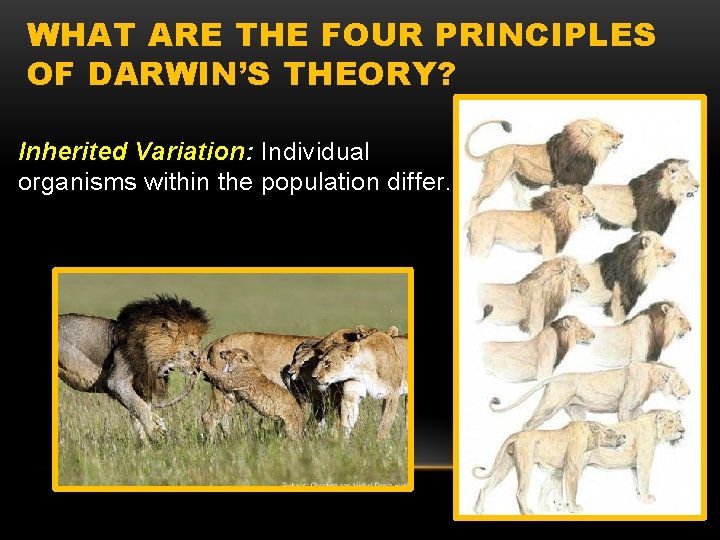
WHAT ARE THE FOUR PRINCIPLES OF DARWIN’S THEORY? Inherited Variation: Individual organisms within the population differ.
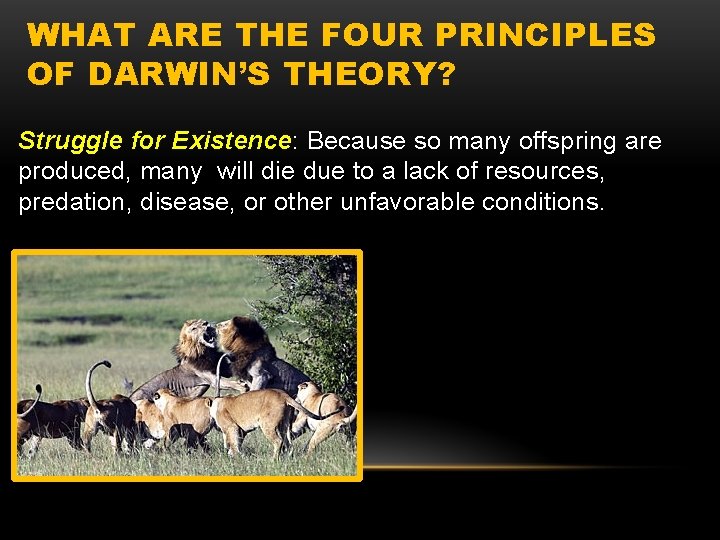
WHAT ARE THE FOUR PRINCIPLES OF DARWIN’S THEORY? Struggle for Existence: Because so many offspring are produced, many will die due to a lack of resources, predation, disease, or other unfavorable conditions.
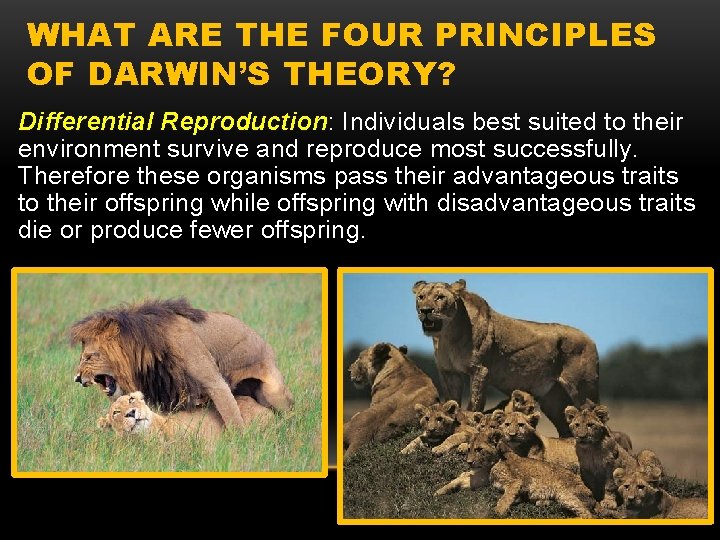
WHAT ARE THE FOUR PRINCIPLES OF DARWIN’S THEORY? Differential Reproduction: Individuals best suited to their environment survive and reproduce most successfully. Therefore these organisms pass their advantageous traits to their offspring while offspring with disadvantageous traits die or produce fewer offspring.
SUMMARY OF DARWIN’S THEORY (NATURAL SELECTION) q Individuals organisms within a species are different. q Some of these differences are passed down from parent to offspring, or heritable. q Individuals best suited, or adapted, to their environment survive to experience higher differential reproductive success. q Fitness: reproductive success (more offspring=higher fitness)
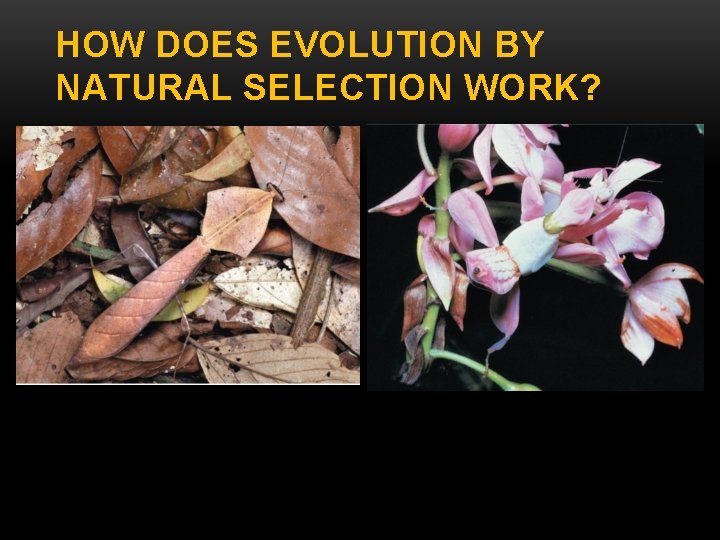
HOW DOES EVOLUTION BY NATURAL SELECTION WORK?