Theory of Architecture Fourth Stage Architecture Engineering Department
- Slides: 9
Theory of Architecture Fourth Stage Architecture Engineering Department
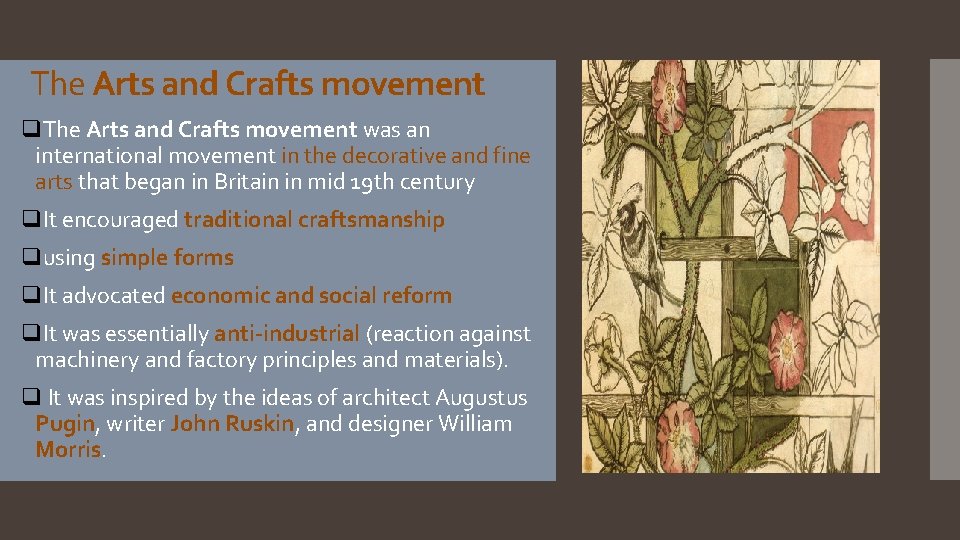
The Arts and Crafts movement q. The Arts and Crafts movement was an international movement in the decorative and fine arts that began in Britain in mid 19 th century q. It encouraged traditional craftsmanship qusing simple forms q. It advocated economic and social reform q. It was essentially anti-industrial (reaction against machinery and factory principles and materials). q It was inspired by the ideas of architect Augustus Pugin, writer John Ruskin, and designer William Morris.
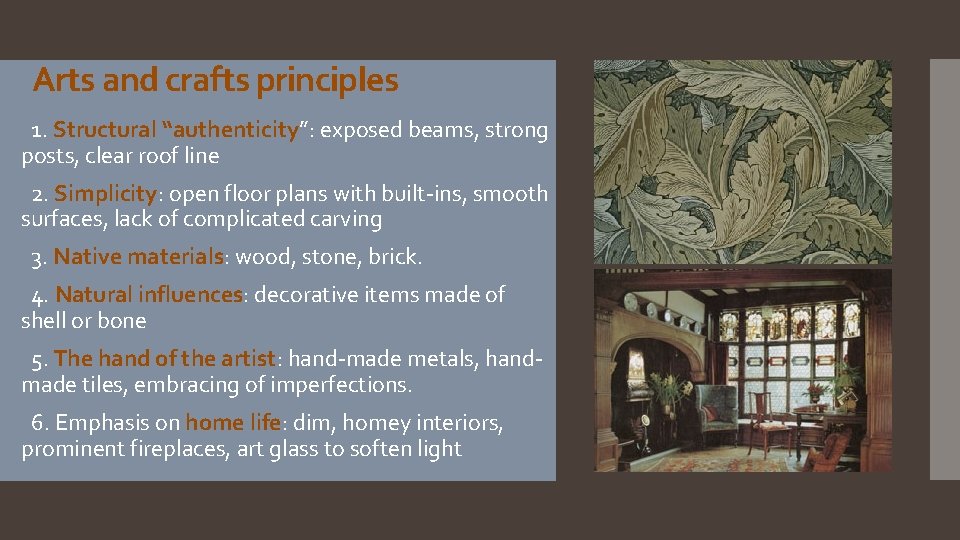
Arts and crafts principles 1. Structural “authenticity”: exposed beams, strong posts, clear roof line 2. Simplicity: open floor plans with built-ins, smooth surfaces, lack of complicated carving 3. Native materials: wood, stone, brick. 4. Natural influences: decorative items made of shell or bone 5. The hand of the artist: hand-made metals, handmade tiles, embracing of imperfections. 6. Emphasis on home life: dim, homey interiors, prominent fireplaces, art glass to soften light
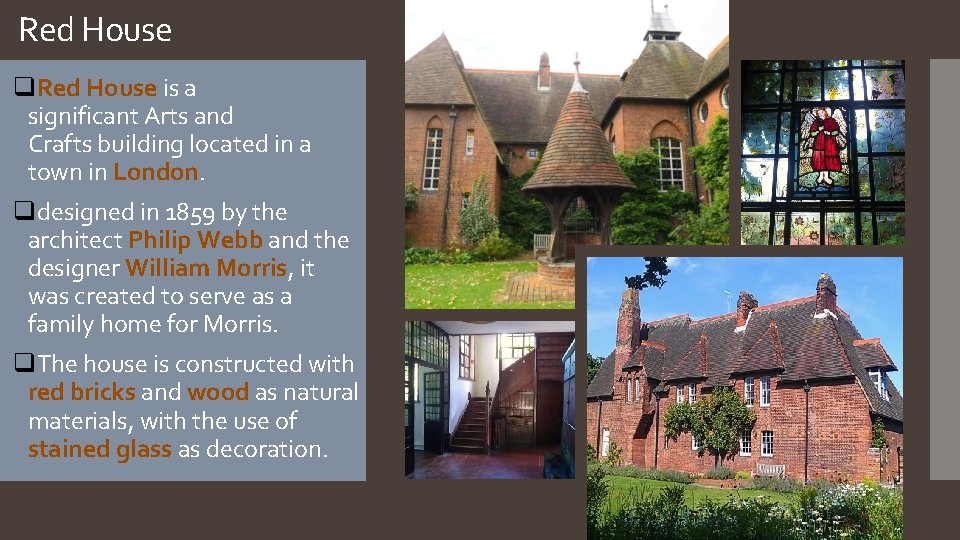
Red House q. Red House is a significant Arts and Crafts building located in a town in London. qdesigned in 1859 by the architect Philip Webb and the designer William Morris, it was created to serve as a family home for Morris. q. The house is constructed with red bricks and wood as natural materials, with the use of stained glass as decoration.
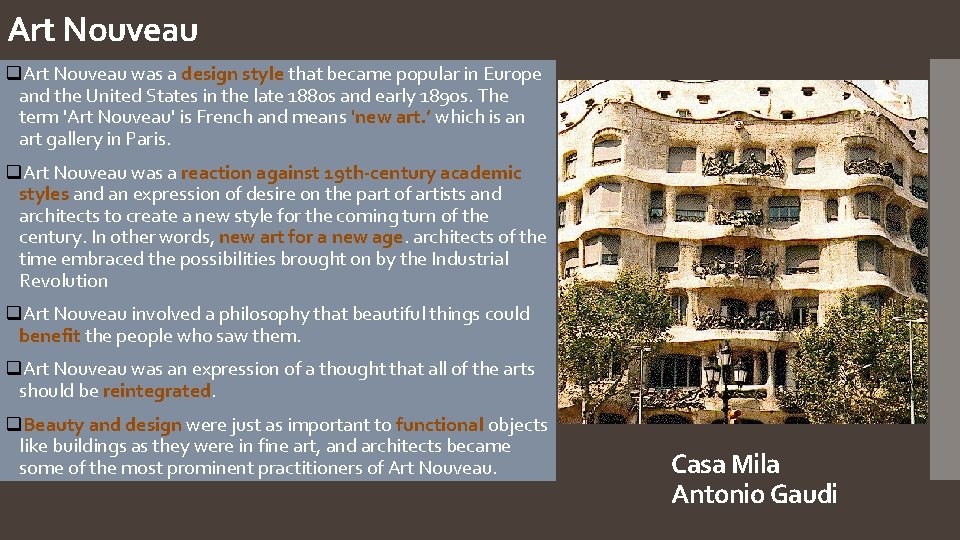
Art Nouveau q. Art Nouveau was a design style that became popular in Europe and the United States in the late 1880 s and early 1890 s. The term 'Art Nouveau' is French and means 'new art. ’ which is an art gallery in Paris. q. Art Nouveau was a reaction against 19 th-century academic styles and an expression of desire on the part of artists and architects to create a new style for the coming turn of the century. In other words, new art for a new age. architects of the time embraced the possibilities brought on by the Industrial Revolution q. Art Nouveau involved a philosophy that beautiful things could benefit the people who saw them. q. Art Nouveau was an expression of a thought that all of the arts should be reintegrated. q. Beauty and design were just as important to functional objects like buildings as they were in fine art, and architects became some of the most prominent practitioners of Art Nouveau. Casa Mila Antonio Gaudi
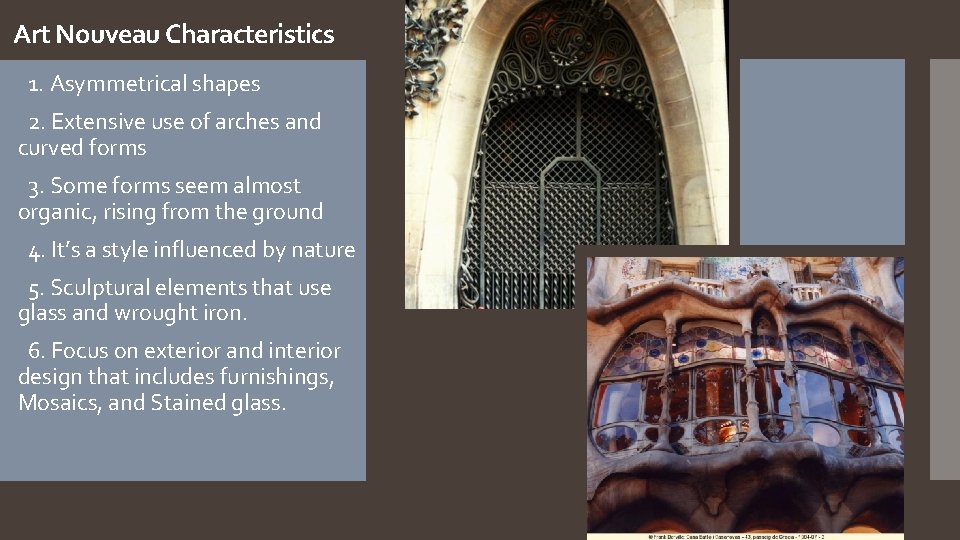
Art Nouveau Characteristics 1. Asymmetrical shapes 2. Extensive use of arches and curved forms 3. Some forms seem almost organic, rising from the ground 4. It’s a style influenced by nature 5. Sculptural elements that use glass and wrought iron. 6. Focus on exterior and interior design that includes furnishings, Mosaics, and Stained glass.
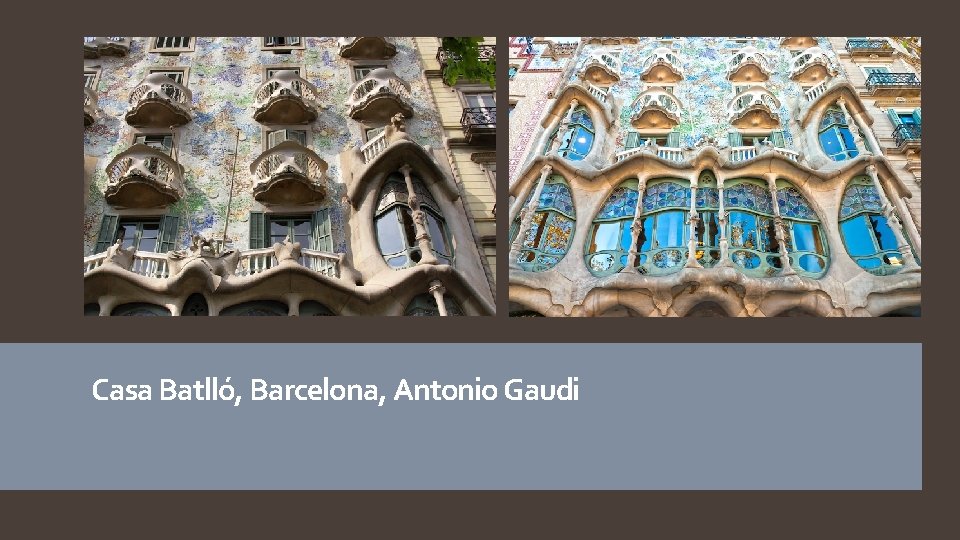
Casa Batlló, Barcelona, Antonio Gaudi
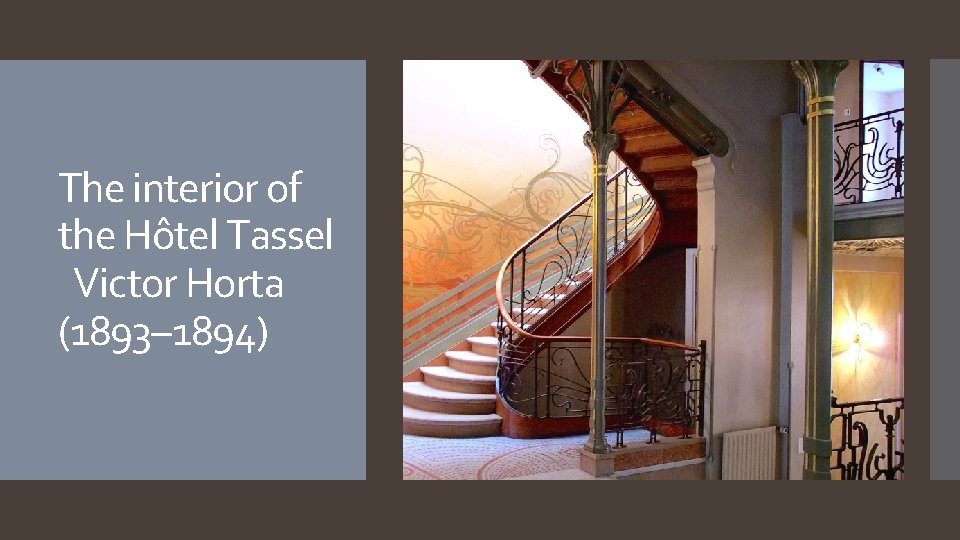
The interior of the Hôtel Tassel Victor Horta (1893– 1894)
Modern Architecture le Corbusier frank lloyd wright mies van der rohe walter Gropius alvar aalto eero Saarinen oscar Niemeyer jorn utzon