
Theory INTO Practice Moving Dabrowski Into the Classroom
Theory INTO Practice: Moving Dabrowski Into the Classroom Dr. Bob Seney Professor Emeritus Mississippi University for Women rwseney@muw. edu
Talking Points of This Presentation
Talking Points 1. Review the Concept of Dabrowski’s Overexcitabilities;
Talking Points 1. Review the Concept of Dabrowski’s Overexcitabilities; 2. Review The Elements of Art and The Elements of Literature;
Talking Points 1. Review the Concept of Dabrowski’s Overexcitabilities; 2. Review The Elements of Art and The Elements of Literature; 3. Use the works of Suzy Lee to demonstrate how the OEs can be addressed in the classroom.
Talking Points • Because of the limited time of this session, I have created a twelve-page Handout that is available by emailing me at rwseney@muw. edu • The Read-Aloud is There are Those by Nathan Levy and Janet Pica

Looking at Dabrowski’s OEs
Before we begin: It is important to know that Dabrowski’s Theory of Positive Disintegration is much more than just the Concept of Overexcitabilities.
Talking Point One Reviewing the Concept of Dabrowski’s Overexcitabilities
Dabrowski’s Overexcitabilities For the purpose of this presentation, I have chosen to use the list created by: Stephanie S. Tolan Dabrowski's Over-excitabilities: A Layman's Explanation Appendix A in the Handout

Dabrowski’s Overexcitabilities 1. Psychomotor: Physical energy and movement
Dabrowski’s Overexcitabilities 1. Psychomotor: Physical energy and movement 2. Sensual: Love for sensory things
Dabrowski’s Overexcitabilities 1. Psychomotor: Physical energy and movement 2. Sensual: Love for sensory things 3. Imaginational: Dreamers and Visual Thinkers
Dabrowski’s Overexcitabilities 1. Psychomotor: Physical energy and movement 2. Sensual: Love for sensory things 3. Imaginational: Dreamers and Visual Thinkers 4. Intellectual: Love of things academic
Dabrowski’s Overexcitabilities 1. Psychomotor: Physical energy and movement 2. Sensual: Love for sensory things 3. Imaginational: Dreamers and Visual Thinkers 4. Intellectual: Love of things academic 5. Emotional: Connections
Dabrowski’s Overexcitabilities Why is sharing the OEs important? It is unfortunate that the stronger these overexcitabilities are, the less peers and teachers welcome them, unless they, too, are gifted. Children exhibiting strong overexcitabilities are often made to feel embarrassed and guilty for being ‘different. ’ Criticized and teased for what they cannot help, they begin to believe something is wrong with them. Michael Piechowski
Dabrowski’s Overexcitabilities Why is sharing the OEs important? When we are willing to explore the social and emotional needs of the gifted from their viewpoint, we are most effective in leading them to thrive and survive the challenges that accompany high potential. Judy Galbraith
Dabrowski’s Overexcitabilities It would be hard to find a person of talent who shows little evidence of any of the five overexcitabilities. They are the underlying dimensions of thinking outside the box, the urge to create beauty; the push for stark realism, the unrelenting striving for truth and justice. Michael Piechowski
Dabrowski’s Overexcitabilities Simply put: We use a strength of most gifted students: reading, and we nurture their Overexcitabilities – not squash them – through literature especially the genre of picture books.
Talking Point Two Reviewing The Elements of Art and The Elements of Literature;
A Note on Picture Books This genre of literature has grown amazingly in sophistication in the last few years. It is a rich but often over-looked resource for all ages.
Picture Books Role of Illustrations in Picture Books: q To provide decoration to break up the text
Picture Books Role of Illustrations in Picture Books: q q To provide decoration to break up the text To amplify the text
Picture Books Role of Illustrations in Picture Books: q q q To provide decoration to break up the text To amplify the text To provide information important to plot, theme, etc in a non-textual way
Picture Books Why do picture books matter? Of course part of the reason is because they’re books, but the heart of the matter is right there in the name; it’s the pictures. Before they read words, children are reading pictures. In picture books, the illustrations work in concert with the text in a way that is unique among art forms. David Wiesner
Picture Books The Handout has a discussion on evaluating picture books and identifying the tools of analysis that combines elements from both the study of literature and the study of graphic art.
The Elements of Literature
The Elements of Literature ▫ Plot: The action/events of the story: the story line;
The Elements of Literature ▫ Plot: The action/events of the story: the story line; ▫ Characters: The fictional people the author has created to act out his/her story;
The Elements of Literature ▫ Plot: The action/events of the story: the story line; ▫ Characters: The fictional people the author has created to act out his/her story; ▫ Setting: Time and place in which the story takes place
The Elements of Literature ▫ Theme: The abstract subject matter; the “message, ” the moral;
The Elements of Literature ▫ Theme: The abstract subject matter; the “message, ” the moral; ▫ Style: The manner in which an author creates his/her message into a story: the techniques the author uses to create desired effects.
Evaluating Picture Books
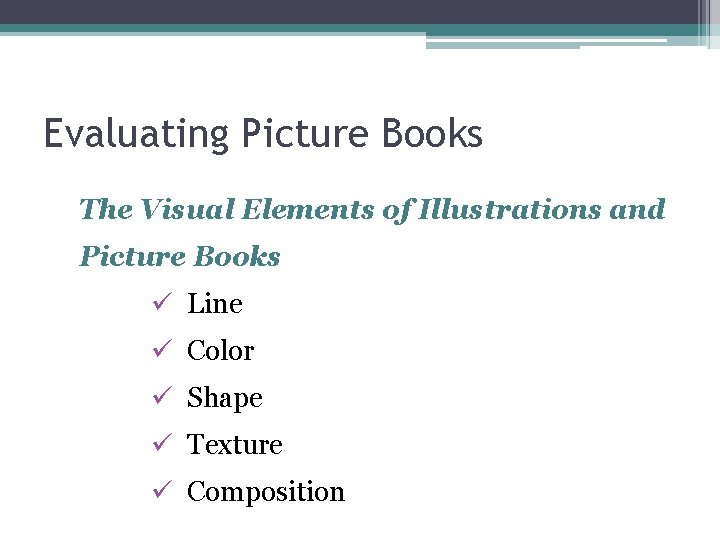
Evaluating Picture Books The Visual Elements of Illustrations and Picture Books ü Line ü Color ü Shape ü Texture ü Composition
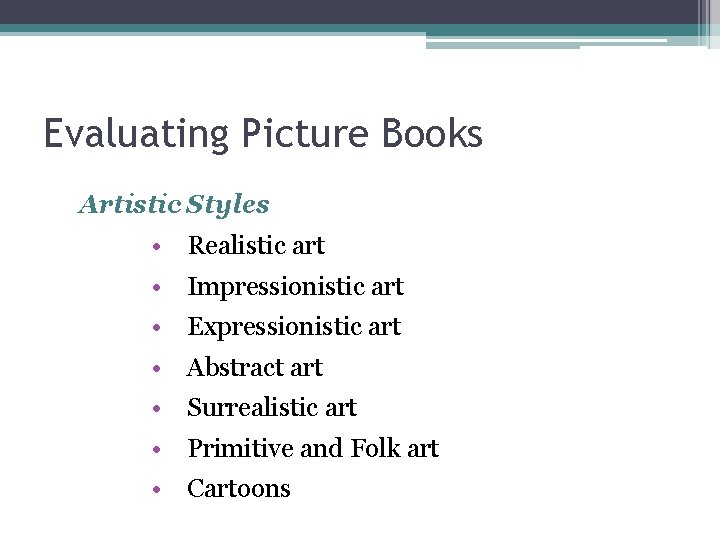
Evaluating Picture Books Artistic Styles • Realistic art • Impressionistic art • Expressionistic art • Abstract art • Surrealistic art • Primitive and Folk art • Cartoons
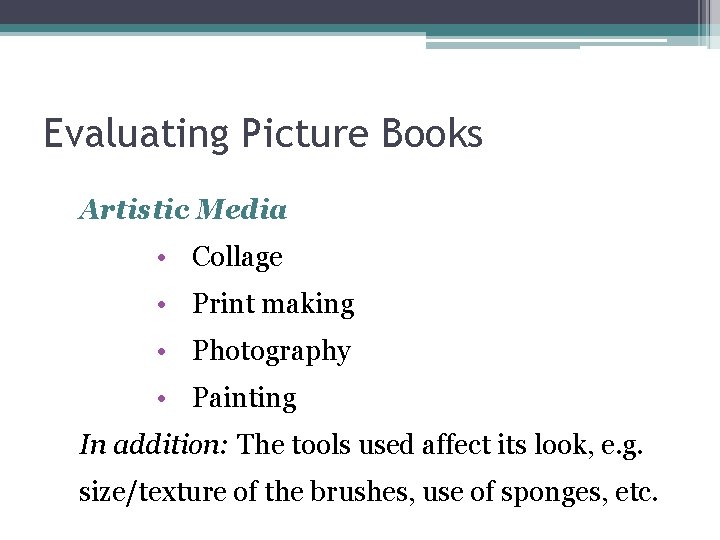
Evaluating Picture Books Artistic Media • Collage • Print making • Photography • Painting In addition: The tools used affect its look, e. g. size/texture of the brushes, use of sponges, etc.
Evaluating Picture Books I am sure that you recognize that these “elements” are elements of the graphic arts.
A Series of Observations
Observations The “techniques” of illustration speak directly to both Sensual OE and Imaginational OE;
Observations The “techniques” of illustration speak directly to both Sensual OE and Imaginational OE; And perhaps when taken as a whole to Emotional OE as well!
Observations In the Sensual OE, we have the response to color; to line; to shape; to texture and to composition – in short a response to graphic art.
Observations In the Imaginational OE, our students often respond with visual images in their “heads” often creating their own artistic media expression.
Observations The Emotional OE is brought into play with the overall response to the illustrations as individuals interpret the interaction of the elements within the illustrations.
Talking Point Three Using the works of Suzy Lee to demonstrate how the OEs can be addressed in the classroom.
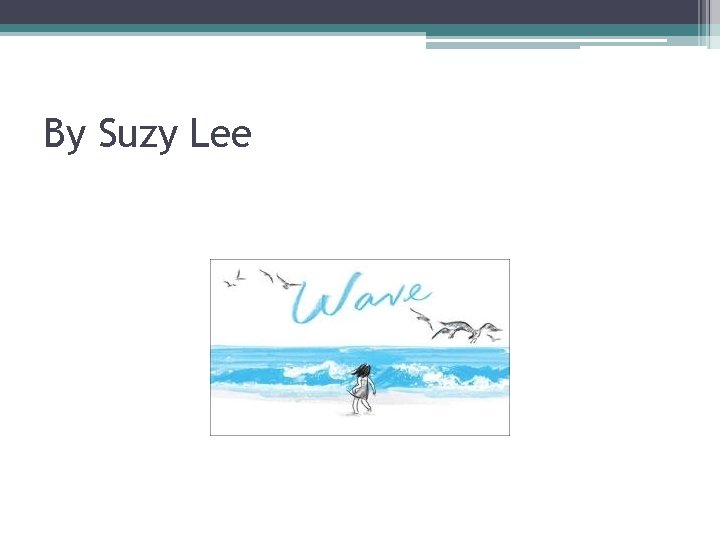
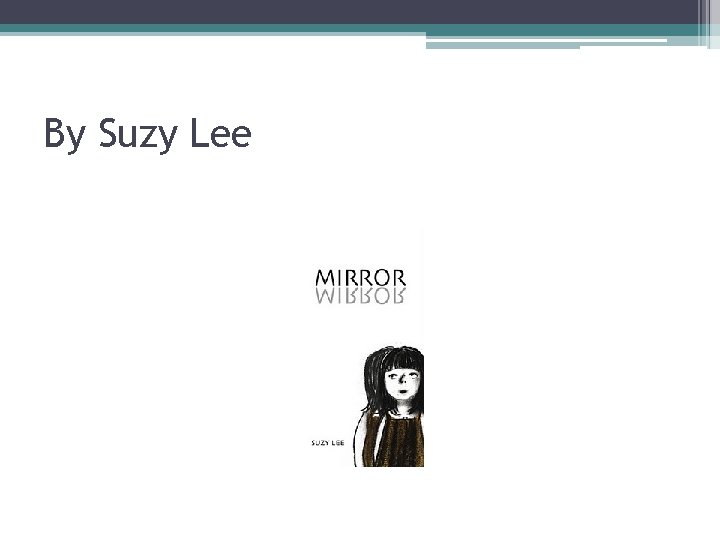
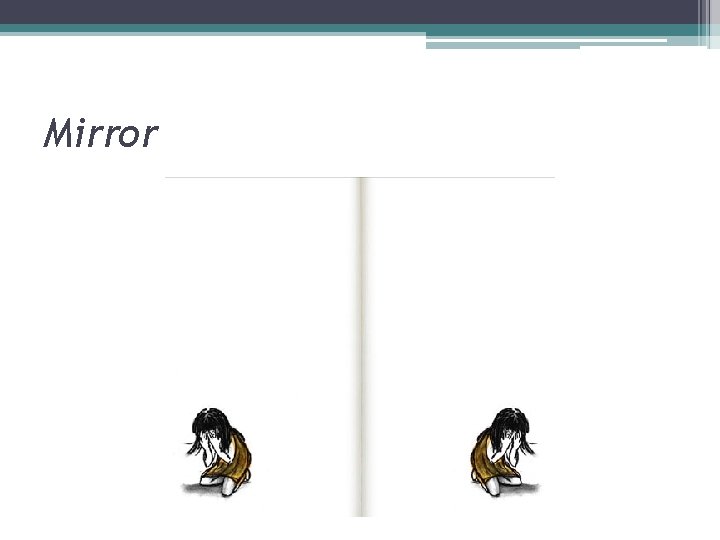
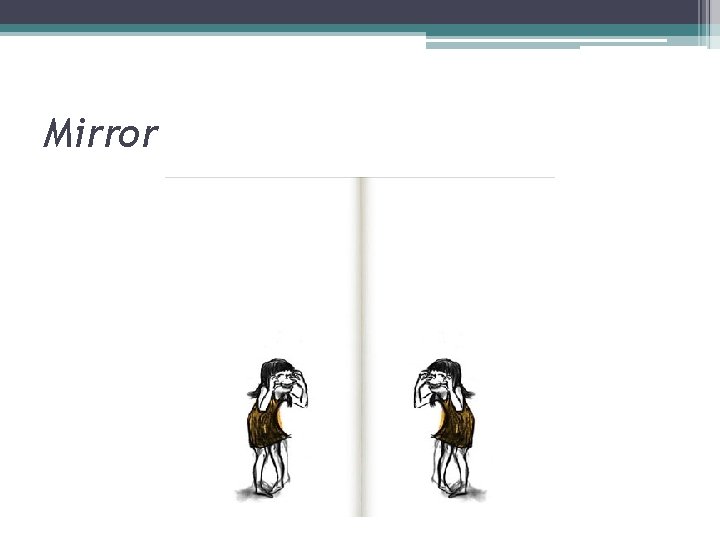
The Suzy Lee Unit Blueprint • The purpose of this Unit Blueprint is to analyze three works of illustrator/author Suzy Lee and to identify which of Dabrowski’s Overexcitabilities are expressed in the books.
The Suzy Lee Unit Blueprint • The purpose of this Unit Blueprint is to analyze three works of illustrator/author Suzy Lee and to identify which of Dabrowski’s Overexcitabilities are expressed in the books. • The focus on literature through the choice of textless books is deliberate.

The Suzy Lee Unit Blueprint In this Unit, There are: 1. Elements of Bibliotherapy; 2. Differentiation 3. Rigor 4. Acceleration 5. Addressing Common Core Standards
By Suzy Lee
By Suzy Lee
Mirror
Mirror
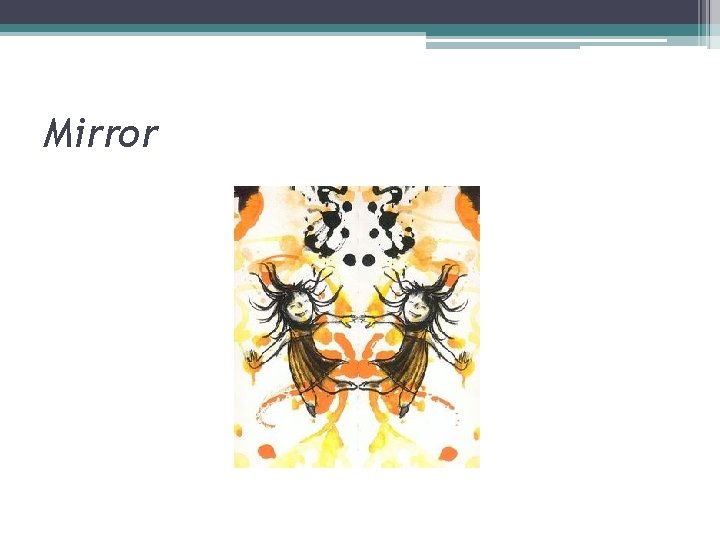
Mirror

By Suzy Lee

An Interview with Suzy Lee https: //gatheringbooks. org/2011/04/06/suzy-lees -mirror-shadow-wave/

The Suzy Lee Unit Blueprint Please Note: This a Curriculum Blueprint. It provides concepts, guidelines and resources for teachers, who are the real architects of curriculum – not just practioners, to embellish, design, and tailor to their own students.


Bibliotherapy
Bibliotherapy is a tool for helping people deal with their problems through reading novels or stories about characters that possess similar problems. Because reading appeals to the imagination, bibliotherapy provides an interaction between the readers and the story of novel, which can be less threatening than direct confrontation. Adderholdt-Elliot and Eller

Bibliotherapy Steps in Bibliotherapy

Bibliotherapy Steps in Bibliotherapy 1. Identification: The individual recognizes the novel’s conflict as a real situation.

Bibliotherapy Steps in Bibliotherapy 1. Identification: The individual recognizes the novel’s conflict as a real situation. 2. Catharsis: The individual recognizes that s/he has the same problem.

Bibliotherapy Steps in Bibliotherapy 1. Identification: The individual recognizes the novel’s conflict as a real situation. 2. Catharsis: The individual recognizes that s/he has the same problem. 3. Insight: The individual identifies possible solutions

Bibliotherapy Steps in Bibliotherapy 1. Identification: The individual recognizes the novel’s conflict as a real situation. 2. Catharsis: The individual recognizes that s/he has the same problem. 3. Insight: The individual identifies possible solutions 4. Application: The individual applies the insights to his/her own life.
Adapting Bibliotherapy The Process

Bibliotherapy: The Process • Establish a climate of trust, respect, and caring.
Bibliotherapy: The Process • Establish a climate of trust, respect, and caring. • Provide instruction in the OEs.
Bibliotherapy: The Process • Establish a climate of trust, respect, and caring. • Provide instruction in the OEs. • Select picture books that demonstrate the OE on which you wish to focus.
Bibliotherapy: The Process • Establish a climate of trust, respect, and caring. • Provide instruction in the OEs. • Select picture books that demonstrate the OE on which you wish to focus. • Introduce the selected picture book and through class discussion analyze the book.
Bibliotherapy: The Process • Establish a climate of trust, respect, and caring. • Provide instruction in the OEs. • Select picture books that demonstrate the OE on which you wish to focus. • Introduce the selected picture book and through class discussion analyze the book. • Encourage students to identify how the OE is demonstrated in the book.
Bibliotherapy: The Process • Guiding Students in a Response:
Bibliotherapy: The Process • Guiding Students in a Response: ▫ Identify and discuss the OEs.
Bibliotherapy: The Process • Guiding Students in a Response: ▫ Identify and discuss the OEs. ▫ In a written essay or discussion have students identify how the OEs related to them personally.
Bibliotherapy: The Process • Guiding Students in a Response: ▫ Identify and discuss the OEs. ▫ In a written essay or discussion have students identify how the OEs related to them personally. ▫ Allow students to select other ways to interpret their response: � � Art Poetry Music Dance
Connection Books & OEs
The Books Imaginational: Dreamers and Visual Thinkers v Where the Wild Things Are (1963) by Maurice Sendak 1964 Caldecott Medal Winner v Imagine A Day (2005) by Sarah L. Thomson; illustrated by Rob Gonsalves v Sector 7 (1999) by David Wiesner
The Books Intellectual: Love of things academic v Mosque (2003) by David Macaulay v Song of the Water Boatman & Other Pond Poems (2005) by Joyce Sidman; illustrated by Beckie Prange. v You Can’t Take a Balloon Into the Metropolitan Museum (1998) by Jacqueline Priess Weitzmann and Robin Preiss Glasser.
The Books Emotional: Connections v Bink & Gollie: Two for One (2012) by Kate Di. Camillo and Alison Mc. Ghee; illustrated by Tony Fucile. v Outside Over There by Maurice Sendak (1981) by Maurice Sendak. v Dreams: A Tale of Wonder, Wisdom & Wishes (2004) by Susan V. Bosak. v Knuffle Bunny: A Cautionary Tale (2004) by Mo Willems. 2005 Caldecott Honor Book. v Knuffle Bunny Too: A Case of Mistaken Identify (2007) by Mo Willems.
The Books Don’t forget Calvin & Hobbs! A gifted kid and friend if I ever saw one!
The Books Sensual: Love for sensory things v I See A Song (1973) by Eric Carle. v Many Luscious Lollipops: A Book about Adjectives (1989) by Ruth Heller. v The Boy Who Spoke Colors (1993) by David Gifaldi; illustrated by C. Shana Greger.
The Books Psychomotor: Physical energy and movement v Giraffes Can’t Dance (1999) by Giles Andreae; illustrated by Guy Parker-Rees v “Slowly, slowly, ” said the Sloth (2002) by Eric Carle v Kites Sail High: A Book about Verbs (1988) by Ruther Heller
Contact Information Dr. Bob Seney Professor Emeritus/Gifted Studies Mississippi University for Women 1922 Denver West Court #2424 Lakewood, Colorado 81328 rwseney@muw. edu
- Slides: 81