
Theory in community organization People have the power
- Slides: 11
Theory in community organization People have the power!
Theories can either be broad and abstract and pertaining to general patterns in society or describe patterns that occur in specific situations (i. e. communities, organizations, or specific population groups)
The role of theory in community practice • Theories in community practice describe the distribution of power & resources in society, how organizations function, and how community systems maintain themselves. • Theories must be empirically tested and verified. • Independent and dependent variables must be identified in order to test a theory. • Therefore theories contain assumptions about cause and effect relationships
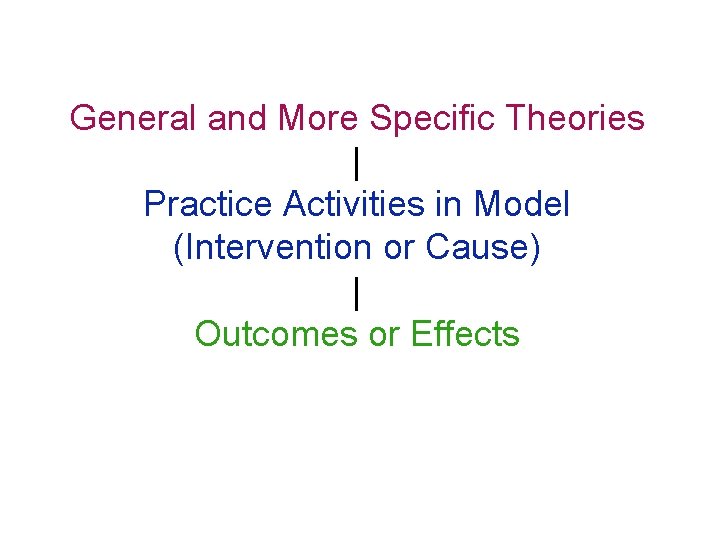
The “effect” aspect of cause and effect relationships are outcomes, things that occur because of specific events or actions. Consequently, they suggest specific actions or skills that can be used by social workers to produce results.
General and More Specific Theories | Practice Activities in Model (Intervention or Cause) | Outcomes or Effects
In social work, practice models help us use theory to define a specific set of actions or interventions that can be used to produce outcomes. Generally several theories are combined to produce practice models. We may also apply aspects of theories to certain situations.
For example, power-dependency theory tells us that resource donors acquire power by transferring money and goods to people that can’t reciprocate. This suggests that nonprofit organizations should not accept funds from a single large donor if they want to be independent.
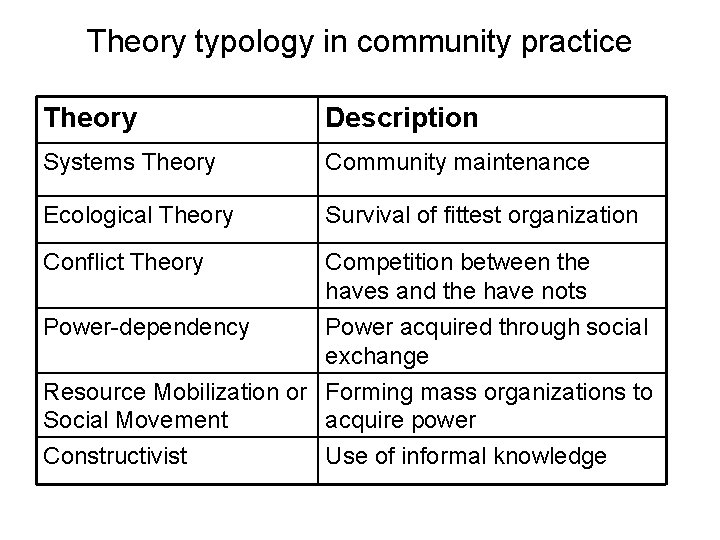
Theory typology in community practice Theory Description Systems Theory Community maintenance Ecological Theory Survival of fittest organization Conflict Theory Competition between the haves and the have nots Power-dependency Power acquired through social exchange Resource Mobilization or Forming mass organizations to Social Movement acquire power Constructivist Use of informal knowledge
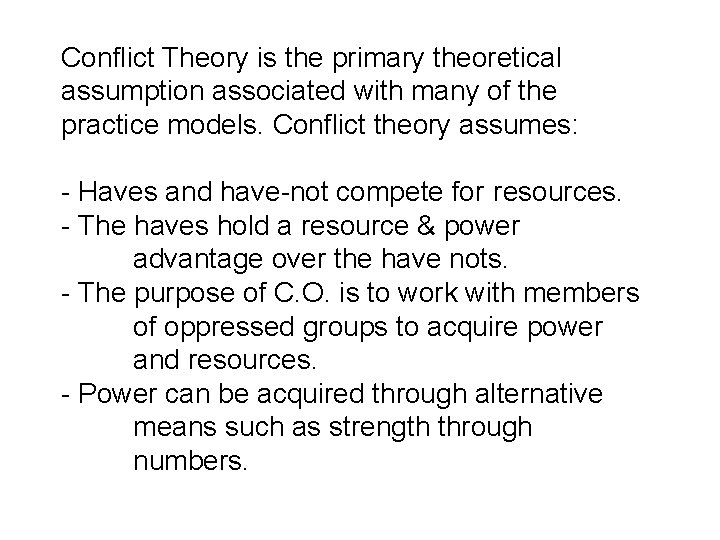
Conflict Theory is the primary theoretical assumption associated with many of the practice models. Conflict theory assumes: - Haves and have-not compete for resources. - The haves hold a resource & power advantage over the have nots. - The purpose of C. O. is to work with members of oppressed groups to acquire power and resources. - Power can be acquired through alternative means such as strength through numbers.
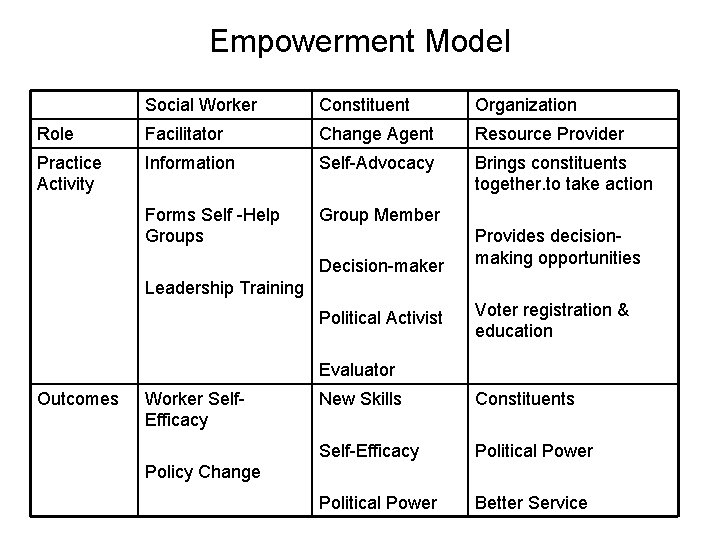
Empowerment Model Social Worker Constituent Organization Role Facilitator Change Agent Resource Provider Practice Activity Information Self-Advocacy Brings constituents together. to take action Forms Self -Help Groups Group Member Decision-maker Provides decisionmaking opportunities Leadership Training Political Activist Voter registration & education Evaluator Outcomes Worker Self. Efficacy New Skills Constituents Self-Efficacy Political Power Better Service Policy Change
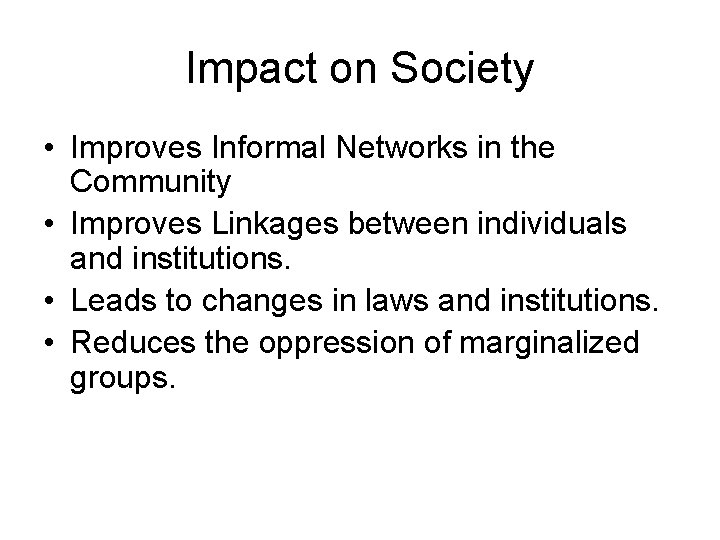
Impact on Society • Improves Informal Networks in the Community • Improves Linkages between individuals and institutions. • Leads to changes in laws and institutions. • Reduces the oppression of marginalized groups.