
Theory I What is Theory A Formal Story
- Slides: 16
Theory I. What is Theory? A. Formal Story 1. Internally Consistent 2. Rational
Theory I. What is Theory? (Cont. ) B. Two Types 1. Philosophical a. general b. not designed to be testable
Theory I. What is Theory? (Cont. ) B. Two Types (Cont. ) 2. Scientific a. specific b. testable (or disconfirmable)
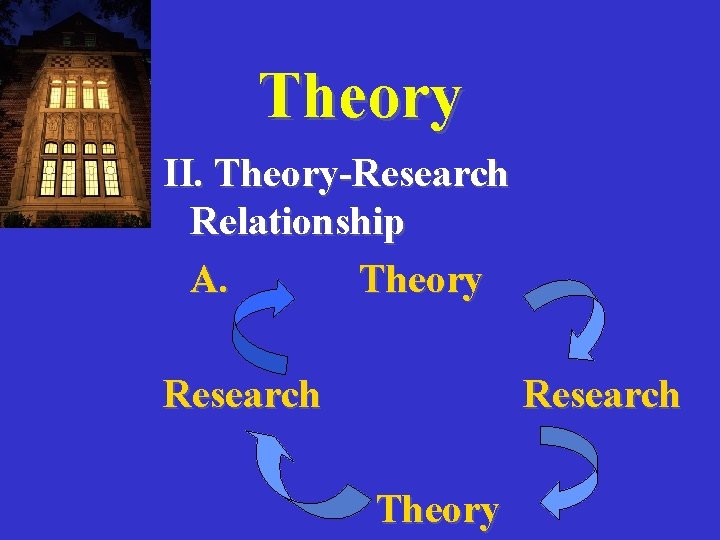
Theory II. Theory-Research Relationship A. Theory Research Theory
Theory II. Theory-Research Relationship (Cont. ) B. Tests: Turning Constructs into Operations C. Crucial Test: Pitting Theories Against Each Other
Theory III. Personality Theory A. Grand Theories B. Specific Variable Theories C. Back to the Future: NEOPI
Theory IV. Three Grand Theories A. Different Assumptions about Human Nature B. Different Beliefs about Volition and Determinism C. Developed During Different Eras in Psychology
Theory V. GT 1: Freud’s Psychodynamic Theory A. Pessimistic Assumption about Human Nature B. Ignored Volition, Reflects Determinism C. Developed in the Prepsychology Era
Theory V. GT 1 (Cont. ) D. Parts of Personality 1. Id 2. Superego 3. Ego E. Levels of Awareness
Theory V. GT 1 (Cont. ) F. Psychosexual Stages 1. Oral 2. Anal 3. Phallic 4. Latent 5. Genital
Theory VI. Grand Theory 2: Learning Theory A. Neutral Assumption about Human Nature B. Ignored Volition, Reflects Determinism C. Developed in the Freudian Era
Theory VI. GT 2 (Cont. ) D. Classical Conditioning: Pavlov’s Dog E. Operant Conditioning: Watson’s 12 Healthy Infants and Skinner’s Rats F. Social Learning: Bandura and his Bo. Bo Dolls
Theory VII. Grand Theory 3: Humanistic/Existential Theory A. Positive Assumption about Human Nature B. Supports Volition, Rejects Determinism C. Developed in the Learning Era
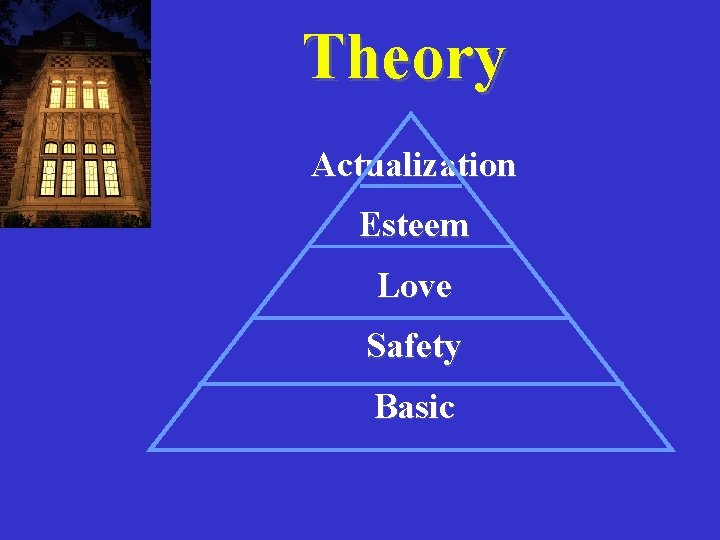
Theory VII. GT 3 (Cont. ) D. Carl Rogers’s Theory 1. Self Theory 2. Development Theory E. Abraham Maslow’s Prepotent Hierarchy of Need
Theory Actualization Esteem Love Safety Basic